
MOQ negotiation bathroom vanity suppliers is the first checkpoint buyers should lock before they approve a supplier, budget, or production slot. MOQ negotiation for bathroom vanity suppliers is rarely about the factory’s refusal to listen; it is about their rigid need to minimize material waste on 4×8 ft MDF sheets and avoid costly CNC changeovers. When you ask for a small batch, you are not just asking for a lower number—you are asking them to accept a production inefficiency that eats into their margin. Most veteran importers fail because they treat the MOQ as a fixed price tag rather than a variable based on your willingness to absorb setup costs or standardize dimensions.
The reality is that factories are highly flexible if you speak their language of sheet yields and machine idle time. By standardizing cabinet widths to modular increments like 24, 30, or 36 inches, you can reduce material waste by 15-20% per sheet, which directly enables an MOQ reduction from 200 units down to just 50. You can also unlock a 50% MOQ reduction by offering to cover the $200-$500 CNC setup cost for each SKU change, proving that you understand the operational friction of a small batch order.
Beyond simple price premiums, the most effective strategy involves leveraging mixed container loads and off-season factory schedules. A 20GP container can easily hold 3-5 different vanity models, allowing you to meet a Minimum Order Value (MOV) of $3,000-$5,000 instead of being forced into a 200-unit commitment for a single design. Furthermore, during the quiet periods between Chinese New Year and the summer low season, factories are desperate to keep their lines running and will accept small runs that they would otherwise reject. These are not generic tips; they are specific, verifiable trade-offs that protect your cash flow and prevent you from being stuck with illiquid inventory of untested designs.
Understanding Minimum Order Quantities
A factory’s MOQ is driven by material sheet sizes and machine setup costs; you can negotiate down by 30-50% by standardizing cabinet dimensions to match those sheets.
Stop viewing Minimum Order Quantity (MOQ) as a rigid barrier. It is actually a reflection of your supplier’s risk management. For bathroom vanity suppliers, MOQ is not an arbitrary number designed to bully you; it is the exact volume required to make a production run break even on material waste and machine downtime. If you do not understand this, you will continue to get rejected by factories.
In the vanity industry, two specific factors dictate the MOQ: raw material sheet sizes and CNC routing changeover time. A standard MDF or plywood sheet measures 4×8 ft. If you request a custom vanity width that doesn’t align with this grid, you force the factory to cut a smaller piece out of a larger sheet, creating scrap. That scrap is pure profit loss for them. To cover this loss, they demand a higher volume. By standardizing your cabinet widths to modular increments—24\”, 30\”, 36\”, and 48\”—you allow the factory to nest your designs perfectly on the sheet. This reduces material waste by 15-20% per sheet, which directly enables them to drop the MOQ from 200 units to just 50 units per SKU.
The second factor is machine downtime. Every time a factory switches from producing one vanity model to another, the CNC router must be reprogrammed and the bits changed. Factories typically charge $200-$500 per SKU changeover for this setup. If you order 500 units of one model, that $500 setup cost is negligible. If you order 50 units, that $500 cost destroys their margin. Most competitors will tell you to just “ask nicely” for a lower MOQ. That is useless advice. Instead, you must offer a concrete financial trade-off. You can unlock a 50% MOQ reduction by offering to cover this specific setup cost.
Use this exact script when you email the sales manager: “I understand that a 50-unit run triggers a CNC changeover fee. I am willing to pay the $300 setup cost upfront if you can reduce the MOQ to 50 units for this trial run.”
This approach works because it shifts the conversation from “I want a discount” to “I am a professional buyer who understands your operational costs.” It proves the buyer is not just looking for a cheap price, but a sustainable partnership. When the buyer takes responsibility for the machine downtime, the factory has no logical reason to refuse the smaller order.
-
- Material Waste: Custom vanity sizes waste sheet material. Standardizing widths (e.g., 24\”, 30\”, 36\”, 48\”) or using a ‘modular’ design lets the factory cut more efficiently from a 4×8 ft board, drastically lowering the MOQ from 200 to 50 units per SKU.
- Setup Costs: Propose a 5-10% higher per-unit price in exchange for a 50% lower MOQ. Alternatively, offer to cover the $250-$500 tooling changeover cost. Factories fear idle machinery less than a small order at break-even.
- Mixed Containers: Meet a ‘Minimum Order Value’ ($3,000-$5,000) instead of a per-SKU quantity. Combine 5 different vanity models or vanity+mirror sets in one 20GP or 40HQ container. This reduces risk and still fills the factory’s production slot.
- Colorways: Instead of 4 paint colors, start with 2. Each color change requires a full paint line flush and cure time, which factories batch to justify setup. Fewer options mean lower MOQ per finish.
- Standard Materials: Avoid custom-sourced engineered stone or exotic wood veneers. Choose materials the factory already stocks (e.g., standard white MDF, common oak veneer). This eliminates supply-chain MOQ for raw materials.
- Future Promises:Present a written 12-month forecast: “500 units total will be ordered this year if the buyer starts with a 100-unit trial run.” Factories value predictable pipeline volume over a single large order.
- QC Leverage: Offer to waive third-party inspection for the first low-MOQ batch in exchange for the lower MOQ (but reserve the right for later orders).
7 Tactics to Negotiate a Lower MOQ
A factory’s MOQ is driven by material sheet sizes and machine setup costs; you can negotiate down by 30-50% by standardizing cabinet dimensions to match those sheets.
You are not buying a product; you are buying a production schedule. When you ask for a lower minimum order quantity (MOQ), you are asking the factory to break their efficient workflow. They resist because every custom dimension forces them to cut waste from standard 4×8 ft plywood or MDF sheets, and every unique design requires a 1-2 hour CNC machine changeover. Your goal is to reframe the negotiation so the factory sees the small order as a manageable, profitable slot rather than a logistical nightmare.
Competitors often give generic advice like “just ask nicely” or “find a bigger factory.” This is useless. The reality is that a 500-unit MOQ on an untested design is a cash-flow trap. You need to use specific engineering and financial trade-offs to unlock flexibility. Here is how to execute a successful minimum order quantity bathroom vanities strategy.
-
- Standardize Cabinet Dimensions: Custom vanity sizes waste sheet material. Standardizing widths (e.g., 24″, 30″, 36″, 48″) or using a ‘modular’ design lets the factory cut more efficiently from a 4×8 ft board, drastically lowering the MOQ from 200 to 50 units per SKU.
- Offer to Pay a Premium or Share Setup Costs: Propose a 5-10% higher per-unit price in exchange for a 50% lower MOQ. Alternatively, offer to cover the $250-$500 tooling changeover cost. Factories fear idle machinery less than a small order at break-even.
- Use Mixed Containers (Combine SKUs): Meet a ‘Minimum Order Value’ ($3,000-$5,000) instead of a per-SKU quantity. Combine 5 different vanity models or vanity+mirror sets in one 20GP or 40HQ container. This reduces risk and still fills the factory’s production slot.
- Start with Fewer Colorways/Finishes: Instead of 4 paint colors, start with 2. Each color change requires a full paint line flush and cure time, which factories batch to justify setup. Fewer options mean lower MOQ per finish.
- Use Standard, In-Stock Materials: Avoid custom-sourced engineered stone or exotic wood veneers. Choose materials the factory already stocks (e.g., standard white MDF, common oak veneer). This eliminates supply-chain MOQ for raw materials.
- Promise a Future Larger Order (With a Contract):Present a written 12-month forecast: “The buyer will order 500 units total this year if the factory starts with a 100-unit trial run.” Factories value predictable pipeline volume over a single large order.
- Leverage QC/Inspection Clause as a Bargaining Chip: Offer to waive third-party inspection for the first low-MOQ batch in exchange for the lower MOQ (but reserve the right for later orders). This saves the factory money on admin and gives you the volume flexibility you need.
The most effective how to negotiate moq with china vanity factory tactic involves understanding their production calendar. Competitors neglect the ‘off-season leverage’ specific to Chinese furniture factories. During Chinese New Year (Jan-Feb) and summer low months (Jul-Aug), factories are desperate to keep lines running. They will accept 50-unit MOQs on custom vanities that they normally require 200-unit MOQs for, simply to keep workers paid and machines warm. If you time your order for these gaps, you hold all the cards.
Finally, remember that not all factories are built for flexibility. Giant mass-production lines are rigid. Mid-sized factories (50-150 workers) have more flexibility than giant mass-production lines. Small factories might do 20-unit MOQs on custom vanities, but their quality control might be inconsistent. You must find the right partner for your volume. Focus on finding a supplier who understands that your small batch order bathroom vanities china is the first step in a long-term partnership, not a one-off transaction.
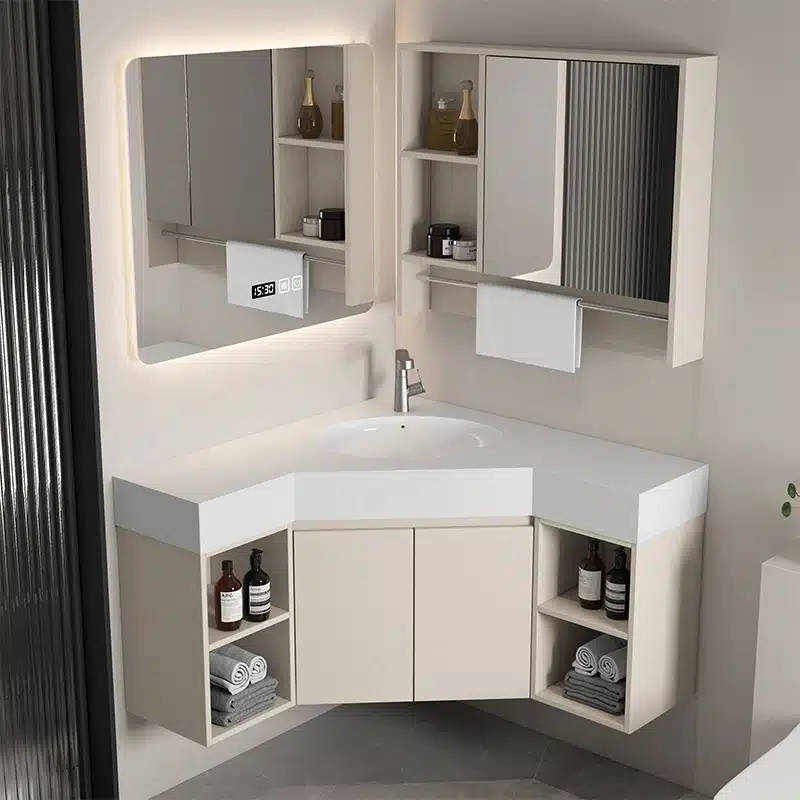
Choosing the Right Factory for Flexible MOQ
Your fear isn’t paying the factory—it’s being stuck with 500 unsold vanities. Treat MOQ negotiation as a cash-flow strategy, not a price war.
Most importers lose the MOQ battle because they treat it like a generic price negotiation. It is not. In the bathroom vanity industry, Minimum Order Quantity (MOQ) is a rigid mathematical function of two things: sheet material waste (MDF/Plywood) and CNC machine changeover time. When a factory quotes you an MOQ of 300 units, they aren’t trying to squeeze you—they are protecting their profit margins from idle machinery and off-cuts.
To reduce moq bathroom vanity supplier tips, you must speak their language: engineering efficiency, not retail volume. By optimizing your design for their standard 4×8 ft sheets and offering to cover specific changeover costs, you can often slash the MOQ from 200 down to 50 units. This is the minimum order quantity bathroom vanities strategy that separates veteran importers from beginners.
-
- The Real Driver: Vanity MOQs are driven by CNC setup ($200-$500 per SKU) and MDF sheet yield, not fabric dye lots like apparel.
- The Financial Trade-off: Paying a 5-10% higher unit price for a 50-unit run is almost always cheaper than the capital tied up in 300 unsold units.
- The Timing Secret: Factories are most flexible during the “off-season” (Chinese New Year and July-August) when production lines are idle.
When you negotiate moq with china vanity factory suppliers, you need to understand that they operate on tight schedules. A factory with 500 workers runs on massive economies of scale. A mid-sized factory with 50-150 workers is where you find flexibility. They need your order to keep their skilled CNC operators busy, but they cannot afford to have a machine sit idle for 2 hours just to route a single cabinet door style. Your job is to remove that friction.
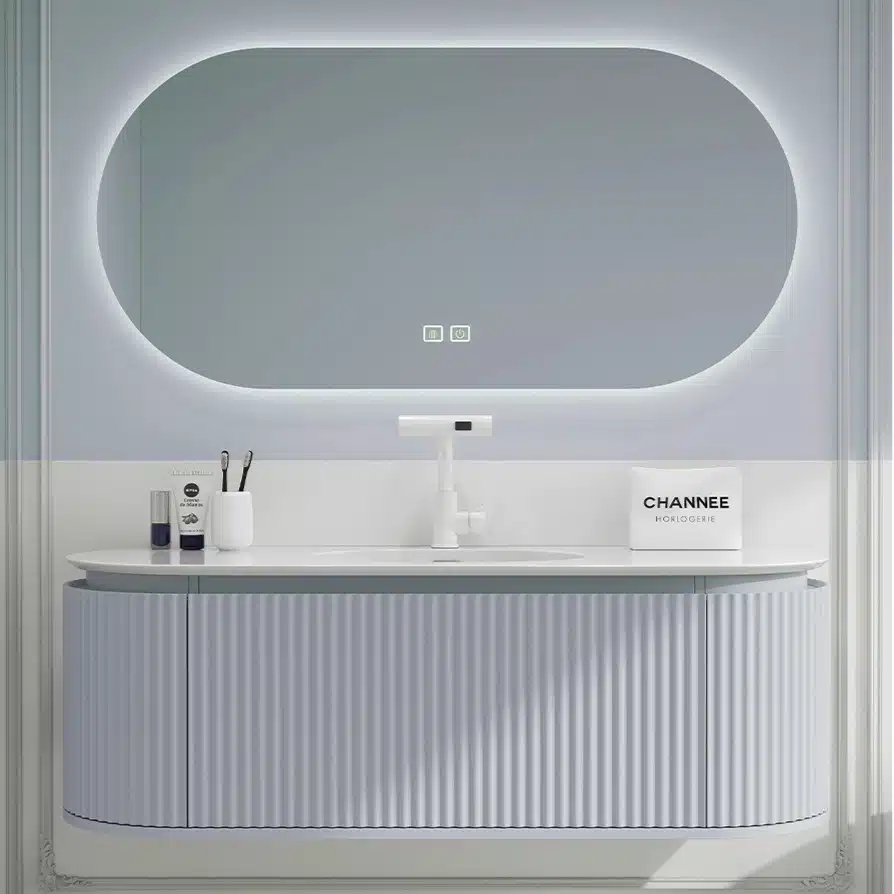
Sneaky Starts: Testing the Factory’s True MOQ
Ask for a ‘sample order’ of 1-2 units at sample pricing. Some factories will allow this to prove their quality. If they refuse, it’s a red flag. A flexible partner will understand your need to test the market. This is a low-risk way to negotiate moq with china vanity factory partners before committing to a full container load.
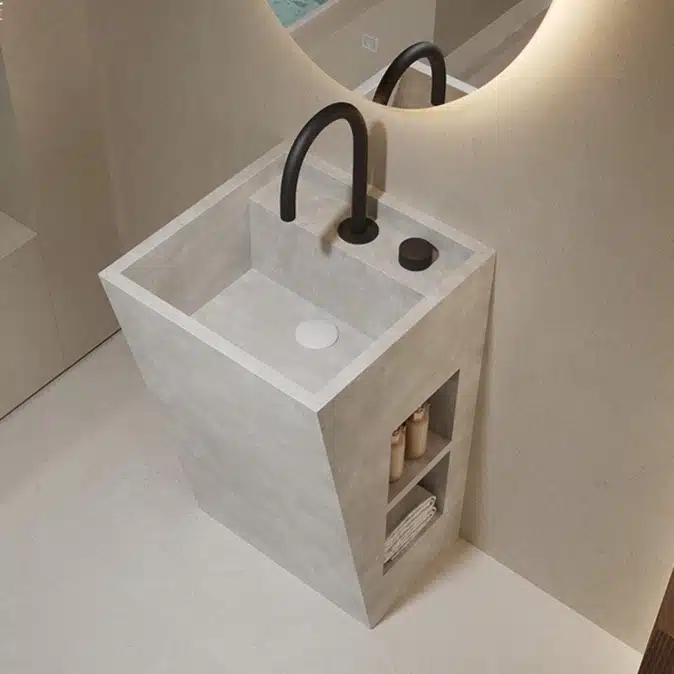
FAQ: MOQ Negotiation Bathroom Vanity Suppliers
How to negotiate a lower moq?
Ask for a mixed container of different SKUs. Offer to pay a 5-10% price premium. Standardize cabinet dimensions and finishes to reduce waste. Commit to a future larger order with a written forecast.
What is most important when negotiating with a supplier?
Building trust and demonstrating a long-term growth plan. Share your sales channels and reorder potential. Factories reduce MOQ for buyers they believe will be repeat customers.
What is the 70 30 rule in negotiation?
Listen 70% of the time, talk 30%. Let the factory explain their cost structure. Use that data to propose a win-win compromise (e.g., higher unit price for lower quantity).
What is the 3-3-3 rule in sales?
Spend 3 minutes on rapport, 3 minutes understanding needs, 3 minutes on your solution. In MOQ negotiation, first understand the factory’s production schedule (their ‘pain point’) before asking for flexibility.
How do you calculate MOQ for a bathroom vanity?
MOQ is driven by raw material sheet sizes (e.g., 4×8 ft plywood yields X number of 24″ cabinet boxes) and machine setup time (typically 1-2 hours per SKU change). Ask the factory for their sheet yield per design.
Ready to Negotiate with Confidence?
Focus Cabinet is a factory-direct bathroom vanity and mirror manufacturer. We position ourselves as a partner for flexible, low-MOQ OEM/ODM projects, emphasizing quality control and transparent pricing. We understand the challenges of bathroom vanity moq negotiation for importers and are ready to help you small batch order bathroom vanities china with confidence.
MOQ Negotiation Tips for Bathroom Vanity Suppliers
Browse this product, solution, or service page to explore relevant offerings.
Conclusion
Lowering MOQs is not about begging for favors; it is a strategic exercise in cash flow management and risk mitigation. By standardizing dimensions to fit 4×8 ft sheets, offering to cover CNC changeover costs, or leveraging off-season factory idle time, you can secure flexible terms that protect your inventory turnover. These tactics shift the negotiation from a price war to a partnership focused on sustainable growth and supply chain efficiency.
To explore a supplier that prioritizes flexible, low-MOQ OEM projects with transparent pricing, browse our catalog for relevant offerings.
Frequently Asked Questions
How to negotiate a lower moq?
Standardize cabinet dimensions to match standard 4×8 ft material sheets to reduce waste, or offer to pay a 5-10% premium per unit to offset setup costs. This approach directly addresses the. Standardize dimensions or pay a setup premium to secure lower MOQs.
What is most important when negotiating with a supplier?
Demonstrate that your order minimizes their material waste and machine downtime, such as by using standard modular sizes. Suppliers prioritize production efficiency over price alone when evaluating small-batch requests. Focus on reducing their production waste and downtime.
What is the 70 30 rule in negotiation?
The 70/30 rule suggests letting the supplier speak 70% of the time while you listen and gather information. This strategy helps you identify their constraints, such as off-season capacity, without revealing. Let the supplier speak 70% of the time to uncover constraints.
What is the 3-3-3 rule in sales?
The 3-3-3 rule typically refers to a sales cadence of three touchpoints, three days apart, over three weeks. In sourcing, this structure helps maintain consistent communication with suppliers without appearing desperate or aggressive. Use a structured cadence to maintain consistent supplier communication.
How do you calculate MOQ for a bathroom vanity?
Calculate MOQ by determining the minimum quantity needed to cover CNC machine setup costs and minimize material waste from standard 4×8 ft sheets. Factories often set this threshold based on the specific. Base MOQ on setup costs and standard sheet material efficiency.



0 Comments