

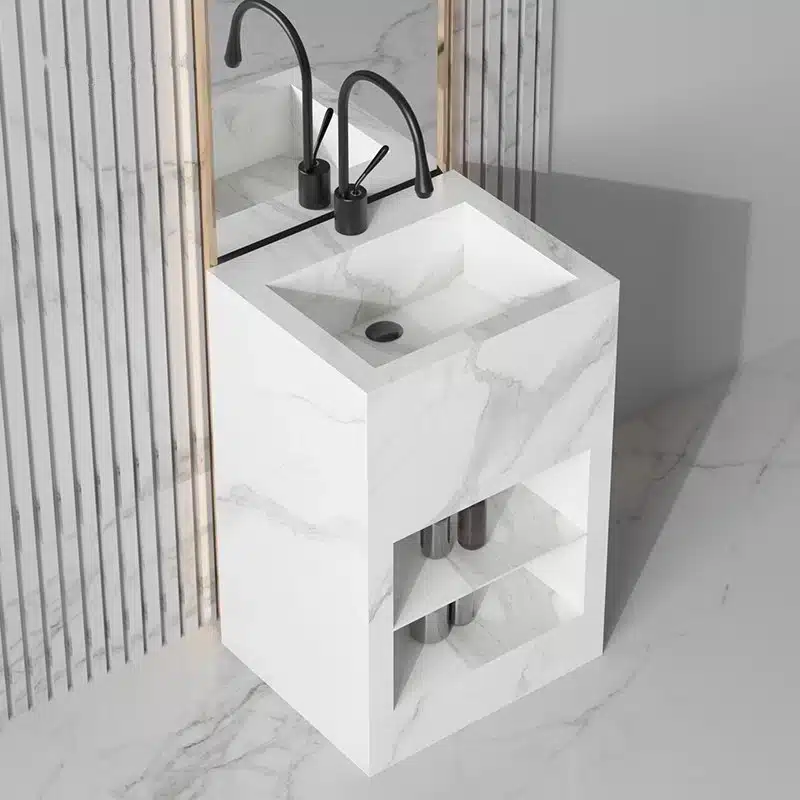
Sintered stone vanity trends now drive wholesale buying decisions more than any single finish category. The material’s numbers explain the momentum: Mohs hardness of 7–8, heat resistance to 300°C, and a non-porous surface that resists stains and UV fading. Hotel procurement teams and distributors read those properties as a direct answer to high-turnover bathrooms.
This guide turns those trends into a 2026–2027 selection list for wholesalers and hotel project buyers. It walks through texture and veining directions, large-format top sizing, basin pairing, and the sourcing checks that keep a line on schedule. Every number below comes from MFBATH’s documented product line, so the spec sheet doubles as contract input.
Key Takeaways
- Sintered stone rates 7–8 on the Mohs hardness scale and withstands heat up to 300°C, a combination suited to commercial bathroom duty.
- The surface is non-porous, stain resistant, and stable under UV exposure, with antimicrobial properties and no resin binders.
- Floating vanities span 600–1800mm; floor-standing models span 800–2000mm, in single or double basin layouts.
- Tops and basins can come from the same sintered stone, keeping veining and color consistent across one vanity.
- Custom orders start at 15 sets per model, color, and size, and mixed containers keep stocking flexible.
- Free samples ship in 10 working days, bulk production runs 20–30 days, and US, Canada, and Mexico delivery totals 4–6 weeks.
- Every piece passes 5 inspection checks, with optional third-party inspection by SGS or TÜV.
Table of Contents
- Why Sintered Stone Keeps Moving Up Vanity Lines
- Texture and Veining Directions to Stock
- Large-Format Tops Change the Cabinet Spec
- Pairing Basins With Sintered Stone Tops
- Sourcing Checks for the 2026-2027 Line
- Turning Sintered Stone Trends Into Orders
- Frequently Asked Questions
- The Bottom Line
Why Sintered Stone Keeps Moving Up Vanity Lines
Sintered stone is a mineral surface, not a resin product. Natural quartz, feldspar, and silica are fired under high temperature and high pressure until the particles fuse into a dense sheet. The sintering process explains the difference: no resin binder, no polymer layer, just mineral density that behaves like quarried stone without its weak points.
Hardness drives the commercial case. A Mohs rating of 7–8 places the surface near the top of the Mohs scale of mineral hardness. Guests drag metal soap dishes across the top, and daily cleaning adds scuffs. Resin-bound surfaces wear faster under the same traffic, so the harder material wins on maintenance cost. That trade-off is why the number sits near the top of every buyer spec sheet.
Heat and moisture add to the argument. The top tolerates 300°C, so curling irons, straighteners, and hot water bottles leave no mark. A non-porous surface means spills cannot soak in, which removes the staining cycle common to sealed stone. UV exposure does not fade the color, and the surface carries antimicrobial properties for hygiene-sensitive settings. Housekeeping staff see fewer stubborn stains, and designers get a surface that keeps its tone over time.
Consider the busiest bathroom in a 300-room property. The top meets hot styling tools, abrasive cleaner sprays, and standing water every day. On a non-porous mineral surface, those inputs leave no record. On a resin-bound surface, the same inputs accumulate into dull patches and edge wear that shows up in guest reviews.
A material with these properties changes the conversation at bid stage. Architects can specify the top, the basin, and the cabinet body from one supplier, which shortens the approval chain. Maintenance teams get a surface that does not need periodic sealing, and procurement gets one set of numbers for the whole unit. That alignment keeps sintered stone near the top of 2026–2027 buying lists.
For a wholesaler, this changes inventory logic. One material family covers tops, basins, and vanity bodies, so the buying list shrinks while the story to hotel clients strengthens. MFBATH has produced this line since 2015 with 95 staff and a 10,000㎡ factory, which is the scale needed to hold consistent quality at volume. The 2026 bathroom vanity trends review shows where the material sits inside the wider category.
Quartz countertops offer a familiar reference point, but they are resin bound. Sintered stone skips that binder, which changes how it behaves under heat and impact. For buyers comparing surfaces, the quartz countertop construction page explains the distinction in detail. The comparison matters because hotel procurement often swaps one stone category for another at spec stage.
Texture and Veining Directions to Stock
Texture variety is the first decision a buyer faces. Sintered stone lines now stock four visual families: marble veining, granite-like grain, cement tones, and solid colors. Finishes add another layer, with matte, satin, and polished surfaces changing how light and water marks read on the top. Each family carries the same physical properties, so the choice is visual, not structural.
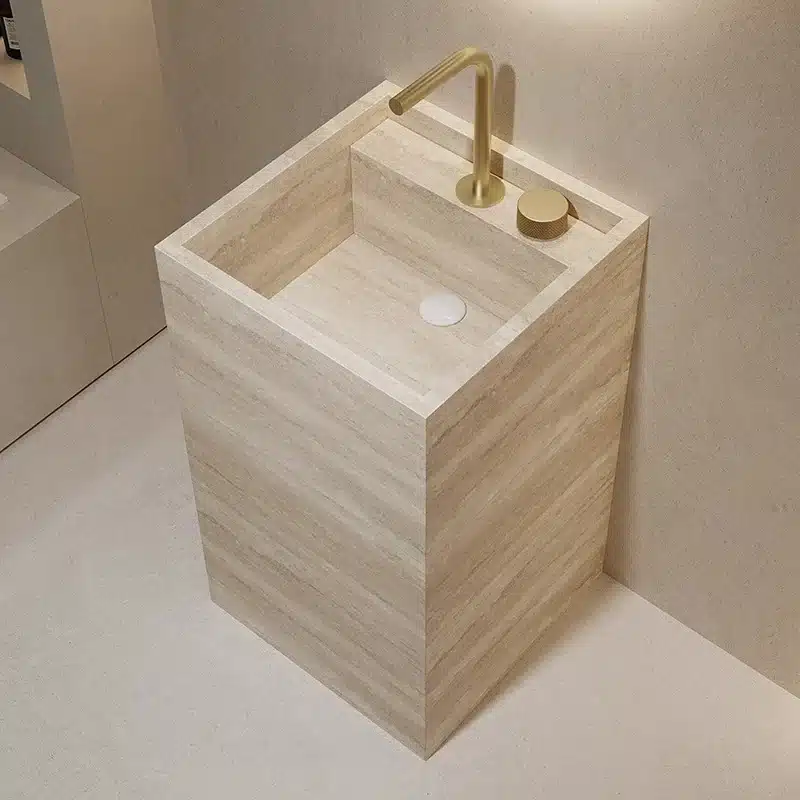
Matte and satin finishes earn their place in commercial bathrooms. Polished stone shows every water spot, while a matte face keeps a clean look between cleanings. Satin tops also photograph consistently, which matters when the same unit repeats across dozens of rooms. Specifiers moving toward quieter surfaces will find satin and matte easier to sell across property tiers.
Polished finishes still hold a role at the premium tier. They read as luxury in suites where the housekeeping schedule supports frequent wiping. The finish choice then becomes an operational decision, not just a design one.
Marble Veining at Full Scale
Veining direction is a large-format story. On an 1800mm or 2000mm top, wide continuous veins read as a single design statement, while small-scale patterns look busy. Ask the supplier to confirm that the vein pattern will match across top, basin, and splash. Mismatched lots create visible breaks that guests notice and inspectors flag.
Cement Tones and Solids for the Middle of the Line
Cement and solid tones serve the middle of the range. Grey cement finishes carry a commercial look with low visual risk, and solid colors make basin integration simpler. These options rarely dominate a container, but they round out a range that spans budget and premium rooms. Buyers who skip them narrow the sales floor for mid-tier projects.
Project type should drive texture selection. Boutique properties lean on bold veining as a design signature, while business hotels favor cement and solid tones that read neutral in photographs. A distributor carrying both directions can quote the same manufacturer for either brief. The veining intensity becomes a conversation point, not a gamble, once the sample is in hand.
Stock depth matters more than finish count. A practical 2026–2027 line carries two or three finishes, each tied to a property tier: polished for premium suites, satin for standard rooms, matte for heavy-use washrooms. Every finish keeps the same performance core, so the risk sits in appearance, not durability.
Verification beats assumption at order time. Request a physical sample before committing a container, and confirm the finish tone against the production batch. The free sample policy makes this easy: 10 working days and no product charge.
Large-Format Tops Change the Cabinet Spec
Large-format tops change more than looks; they change the cabinet specification. Floating vanities run 600–1800mm, and floor-standing models run 800–2000mm, with single or double basin layouts available across the range. An 1800mm top means fewer joints on the vanity run, which simplifies cleaning and reduces the places where moisture can collect.
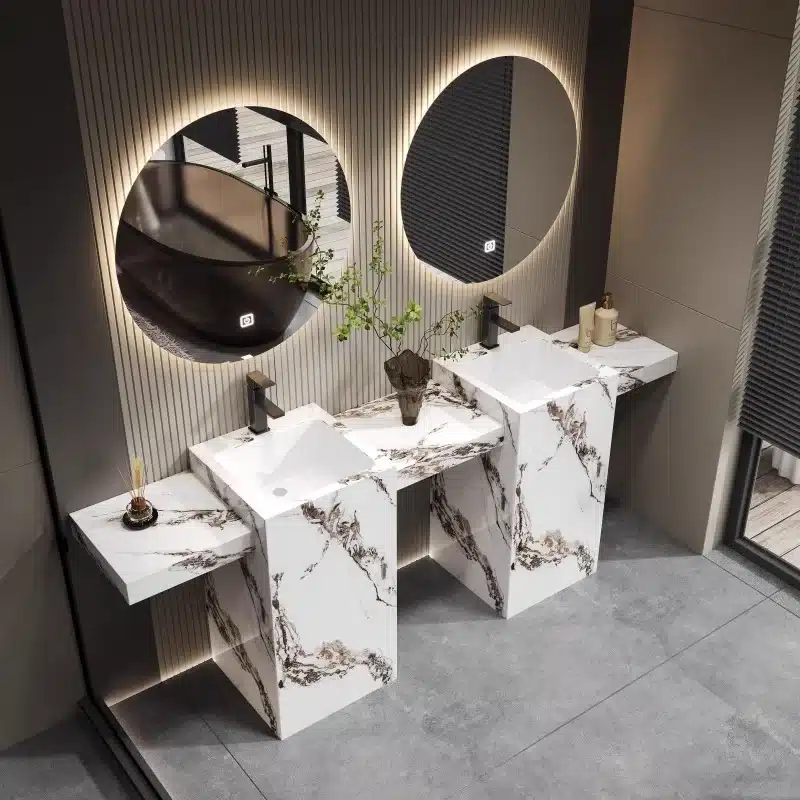
Weight and span change the cabinet build. A large sintered stone top on a floating cabinet demands solid wall fixing and a frame that resists torsion, while a floor-standing unit spreads the load through its legs. Buyers should confirm the supplier’s structural spec before approving a large-format top for a new room plan. Door clearances and stair access deserve the same attention at the project stage.
Measure the route before the size. A 2000mm floor-standing unit has to move through corridors, elevators, and doorways designed decades ago. Confirm the largest panel dimension against the tightest opening on site. Suppliers can advise on panel splits, but the buyer should log every constraint in the room plan.
Double basin layouts change the plumbing story. Two basins need drain positions that line up with the cabinet interior, and supply lines must clear the drawers. Confirm the rough-in drawing against the vanity spec before the tile work starts. Rework after delivery is the most expensive kind of change.
Sintered Stone Vanity Trends in Cabinet Sizing
| Configuration | Width Range | Basin Layout | Typical Placement |
|---|---|---|---|
| Floating vanity | 600–1800mm | Single or double basin | Hotel guest rooms and compact powder rooms |
| Floor-standing vanity | 800–2000mm | Single or double basin | Suites, rental units, and larger commercial washrooms |
| Sintered stone basin | Pairs with tops across the range | Single or double basin | Matched veining and color for integrated vanity sets |
Use the table as a checklist, not a catalog. Confirm the exact width your room plan needs, then verify the basin count and the top’s support spec. The sintered stone basin installation guide lists the fitting details that affect both the cabinet and the plumbing layout. Drain positions for double basins need confirmation before production, not after delivery.
Sintered Stone Vanities and Basins for Wholesale Buyers
Browse this product, solution, or service page to explore relevant offerings.
Pairing Basins With Sintered Stone Tops
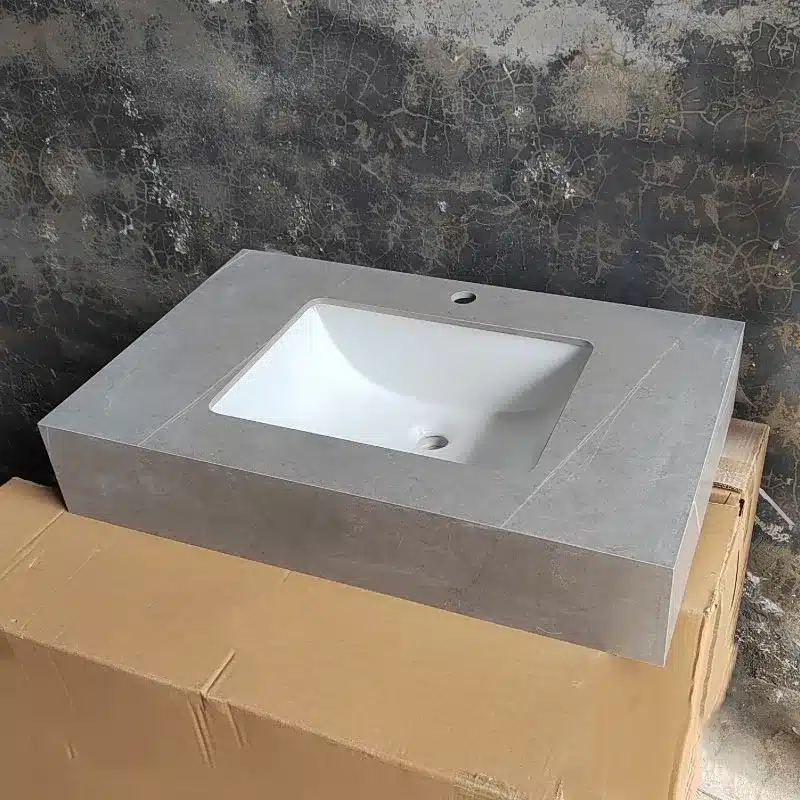
A basin that matches the top changes the final look. MFBATH produces sintered stone basins with the same material properties as the tops: Mohs 7–8 hardness, 300°C heat resistance, and a non-porous surface. Specifying both from one supplier keeps veining, color, and edge detail consistent.
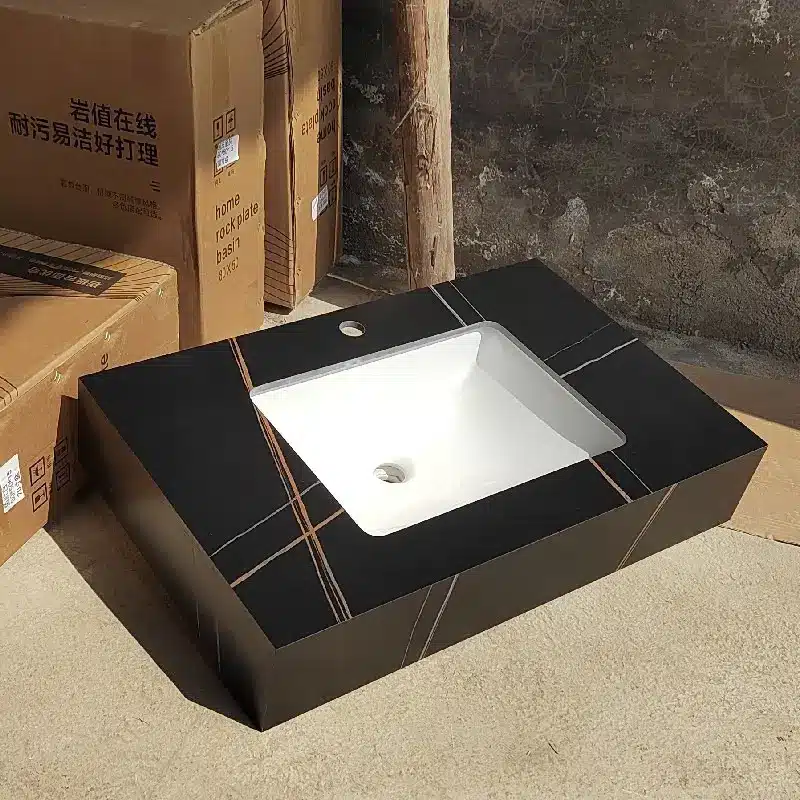
Width logic stays simple. A basin set works across the 600–2000mm span, so single-basin units cover compact rooms and double-basin layouts serve suites. Ordering top and basin together also reduces the number of suppliers a project team must manage. Replacement risk drops because the same lot keeps the look identical.
Material choice deserves a side taken. For commercial lines, a sintered stone basin pairs with the top in durability and appearance. Ceramic adds a second inventory family with a different look and feel. The sintered stone vs ceramic basin comparison lays out the trade-offs for buyers weighing both.
Cleaning chemistry is gentler on sintered stone. Strong disinfectants sit on the non-porous face without soaking in, so the surface holds its tone under daily sanitizing. Housekeeping standards vary by brand, and the antimicrobial surface narrows the gap between budget and premium protocols.
Basin profiles can be specified to match the top’s edge treatment. Confirm whether the design calls for an integrated basin, an undermount fit, or a vessel look before the sample order. The sample stage is the moment to settle this, because changing the profile after production starts costs time on a 20–30 day clock.
Edge treatments deserve a written spec. Beveled, squared, and eased edges each change the visual weight of the basin, and the choice should appear on the production drawing. Buyers who leave this to the sample stage risk an extra production cycle.
Certification paperwork follows the material. ISO 9001 and ISO 14001 have been in place since 2017 and were confirmed in 2025, with CE and UL held for relevant products. CSA, NOM, and ADA items are designed to meet the applicable requirements, so confirm documentation per project. The sintered stone basin certifications page details the compliance picture.
Sourcing Checks for the 2026-2027 Line
Order terms shape the whole line plan. The minimum order quantity (MOQ) is 15 sets per model, color, and size. Mixed containers mean different models can share one shipment once the total reaches the MOQ. Payment runs 30% at order placement, with the balance due within one week after the draft bill of lading is issued.
Timing decides whether a line launches on schedule. Free samples arrive in 10 working days with freight paid by the buyer. Bulk production takes 20–30 days, and the full US, Canada, and Mexico delivery window runs 4–6 weeks including logistics, with real-time tracking available. Shipments leave from Qingdao Port under free on board (FOB) terms, which keeps the cost structure predictable. MFBATH’s logistics setup saves about 15% on freight for US, Canada, and Mexico customers, a figure worth modeling into landed cost.
Put the sourcing checks into a short questionnaire before the first call. Ask for the MOQ in writing, the sample lead time, the production window, and the third-party inspection policy. Request the payment schedule in the same document, because deposit and balance terms vary across suppliers. Written answers turn a quote into a contract draft.
Quality checks protect the container, not just the showroom. Every piece passes 5 inspection checks before packing. Buyers can book third-party inspection with SGS or TÜV in advance, which matters for hotel projects with their own quality teams. The whole cabinet carries a 2-year warranty, and the return rate sits below 1%. Loading also deserves a review, and the sintered stone container loading protection note explains how tops and basins travel without edge damage.
Environmental claims show up in hotel RFPs. Panels meet E1 with formaldehyde at or below 0.1ppm, CARB Phase 2, and TSCA Title VI. FSC-certified wood is optional, and low-VOC finishes come standard. Those credentials turn a sourcing conversation into a compliance answer.
Customization closes the deal for branded projects. MFBATH offers 40,000+ custom combinations, from Pantone color matching to logo printing, laser engraving, and custom packaging. The company has run this line since 2015 out of Changge, Henan, with a 10,000㎡ factory, 95 employees, and monthly capacity of 5,000 sets. More than 1,000 dealers across 20+ countries stock MFBATH products. The 2025 catalog runs 100+ pages at no cost, and founder Anna Jiang brings 20+ years of manufacturing and design experience to the product decisions buyers rely on.
Turning Sintered Stone Trends Into Orders
Sintered stone vanity trends for 2026–2027 resolve into four buying actions. First, lock a short texture list: two or three families with matte or satin finishes. Second, confirm large-format sizing against room plans, using the 600–1800mm floating and 800–2000mm floor-standing ranges. Third, pair basins from the same material so veining and color match. Fourth, verify sourcing terms before the first container.
One caution applies to every step: buy from the same batch. Veining and finish vary slightly between production runs, so a container that mixes lots can look inconsistent in adjacent rooms. State the lot requirement in the order, and keep the sample as the reference standard for the full run.
A real project makes the sequence concrete. The 300-room hotel renovation case study walks through specification, sampling, and delivery for a property that needed consistent units across hundreds of rooms. The same four steps that applied there apply to a distributor’s first container.
Start the line with evidence, not estimates. Request the 2025 catalog with 100+ pages. Order free samples on the 10-working-day clock. Place a 15-set trial order to validate texture, fit, and finish before scaling to volume.
Frequently Asked Questions
What makes sintered stone different from ceramic or quartz?
Sintered stone is a mineral sheet fired at high temperature and pressure without resin. It rates 7–8 on the Mohs scale, resists heat to 300°C, and stays non-porous and stain resistant.
What sizes do sintered stone vanities come in?
Floating vanities span 600–1800mm, and floor-standing models span 800–2000mm. Both support single or double basin layouts, which covers compact powder rooms through full hotel suites.
What is the minimum order for custom sintered stone vanity sets?
Custom orders start at 15 sets per model, color, and size. Mixed containers are accepted, so the total order can combine different models and sizes to reach the MOQ.
The Bottom Line
Vanity lines for 2026–2027 favor textured surfaces, controlled veining, and large-format tops backed by hard material numbers. Lock the spec early: Mohs 7–8 hardness, 300°C heat resistance, and non-porous surfaces across tops and basins. Run the sourcing checks, order the free sample, and test a 15-set mixed container before scaling the line.



0 Comments