
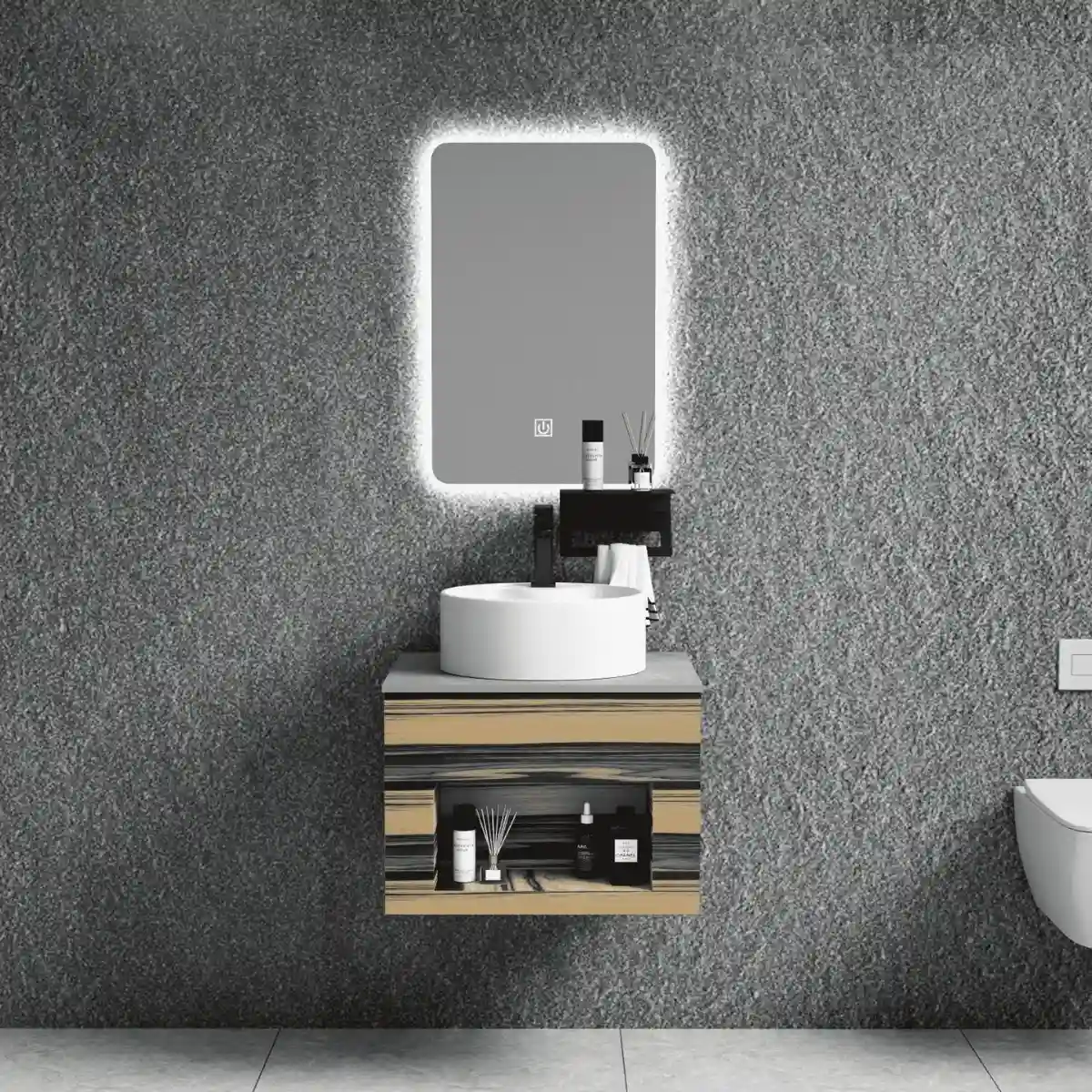
Comparing sintered stone vs ceramic basin for a commercial project is a bet on what happens after the container lands, not what the brochure shows. The pre-production sample always looks right. The mass production run is where a $50K order turns into either a functional bathroom or a procurement headache. Buyers who approve a glossy ceramic basin on the strength of a hand-checked sample sometimes end up with a batch that chips at the edge, shows hairline crazing under hotel lighting, and fails the quality tolerance that actually matters.
Here is the spec that most material comparisons skip: water absorption. Sintered stone absorbs roughly 0.02% of its weight in moisture while ceramic sits around 0.5%. In a high-humidity bathroom environment, that gap decides whether a basin stays clean or starts showing micro-staining around the drain after 18 months. Run the lifetime cost across a 120-room hotel and sintered stone from a Chinese factory like Focuscabinet lands about 30% lower than ceramic — even when the upfront FOB pricing looks similar. The saving comes from fewer replacements, less mold risk, and reduced labor spent on aggressive cleaning.
Before you approve a sample approval checklist, also consider what the basin sits on. A one-piece sintered stone basin avoids the glued joint failure mode that haunts ceramic undermount installations in commercial bathrooms. That distinction matters when a facility operator asks you three years later why the basin edge is lifting or the seal line has darkened. The material choice is not about the look — it is about the maintenance contract you are willing to inherit.
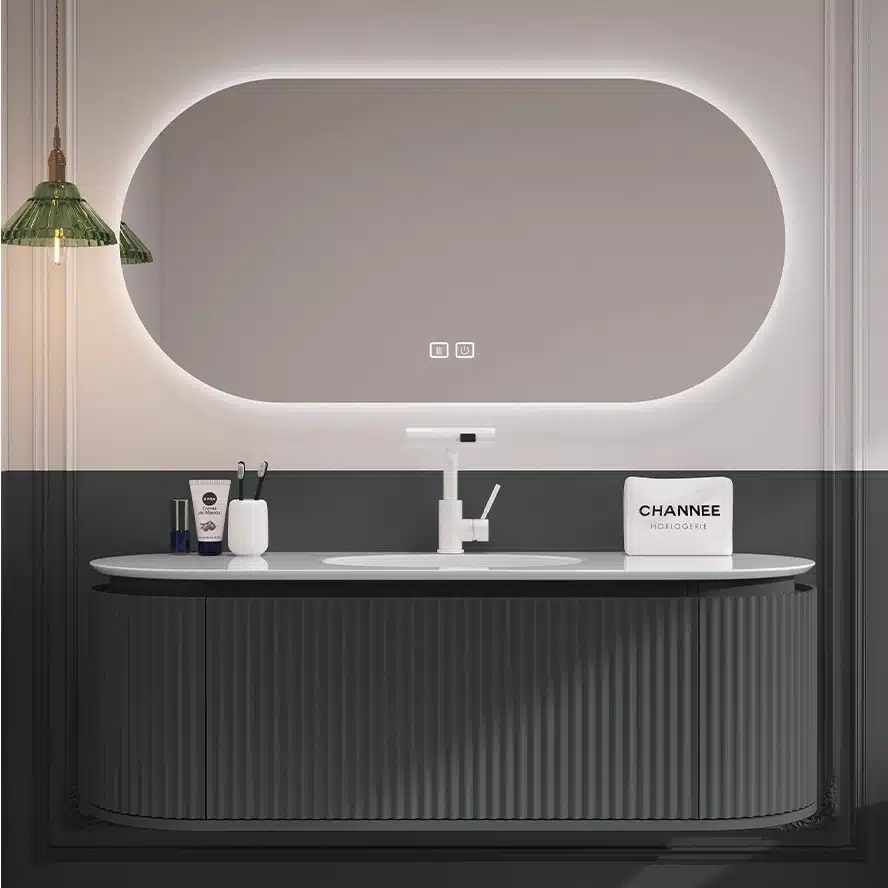
Why Material Choice Matters for Commercial Bathrooms
A basin’s material sets its replacement cycle — the cheapest ceramic unit is costly by year three.
In a commercial fit-out, the basin is the most touched, most abused surface in the room. Faucet finishes and tile layouts get reviewed in detail at design stage; the basin’s composition often gets a single line on the spec sheet. That’s a procurement mistake. The material determines how many hours housekeeping spends removing hard-water rings, what the spare-parts budget looks like at year five, and whether the installer needs to reinforce the vanity carcass before anything is lifted onto it.
-
- Ceramic chipping: Ceramic is hard but brittle. A dropped glass or a heavy soap dispenser can fracture the glaze at the rim. Once that happens, water and cleaning chemicals reach the porous bisque body underneath, and the damage spreads. In high-traffic settings, this is the most common premature-replacement trigger for commercial basins.
- Sintered stone resilience: Sintered stone is pressed at high pressure and fired as a through-body slab. A scratch on the surface exposes the same dense material, not a different substrate. That makes it markedly more forgiving in real hotel-bathroom use, where contact with hard objects is a daily event.
The numbers that should drive the spec are the water absorption rates. Sintered stone sits at roughly 0.02%, ceramic at ~0.5%. That difference matters only when the surface is compromised. An intact ceramic glaze is effectively non-porous; a chipped or micro-cracked one is not. Sintered stone’s near-zero porosity is structural, not a coating — the same density runs through the full thickness. In humid commercial bathrooms that never quite dry out, this single property is why internal production data projects around 30% lower lifetime cost for sintered stone basins in hotel applications, when you account for fewer replacements and less chemical maintenance.
Weight and installation should be negotiated before the unit is specified, not discovered on site. A one-piece sintered stone basin is a dense slab; it demands a reinforced cabinet carcass, a level countertop, and a two-person lift for anything beyond modest countertop dimensions. Ceramic units are lighter to handle but typically rely on silicone or clips against a separate countertop. That seam is the weak point: over time, a glued basin in a commercial bathroom develops caulk line failure, moisture ingress, and recurring mold. This is the practical case for the one-piece sintered stone basin over a glued basin — you trade a heavier crate at delivery for the elimination of the single most common maintenance joint in the room. As long as the installer is briefed on the weight before the job, the installation is no more complex than a solid-surface top.
| Feature | Sintered Stone Basin | Ceramic Basin | Commercial Advantage |
|---|---|---|---|
| Water Absorption Rate | 0.5% | Near-zero porosity prevents mold, bacteria, and staining in high-humidity hotel bathrooms | |
| Scratch & Impact Resistance | High; fired at 1200°C+, scratch-proof throughout | Moderate; glaze layer chips on impact | Eliminates ceramic basin chipping in commercial bathrooms, reducing replacement calls |
| Stain & Chemical Resistance | Excellent; color runs through full body, no glaze to craze | Good initially, but glaze wears and stains over time | Lower maintenance labor and fewer guest-facing defects in high-traffic settings |
| Weight & Installation | Lightweight; one-piece construction supports large formats | Heavier; requires reinforced cabinetry and careful handling | Simplifies sintered stone basin installation requirements and cuts structural logistics costs |
| Design Flexibility | Matte, textured, large-format, one-piece seamless shapes | Glossy finish with limited shape options | One-piece sintered stone basin vs glued basin delivers a premium, seamless look for upscale projects |
| Lifetime Cost (Hotel Use) | Up to 30% lower lifetime cost | Higher replacement and repair frequency | Sintered stone basin lifetime cost hotel analysis favors fewer change-outs and lower downtime |
| Sourcing & Customization | OEM/ODM supported; low MOQ from China manufacturers like Focuscabinet | Standard molds; limited customization | Sintered stone basin MOQ China OEM options let procurement managers tailor dimensions and finishes per project |
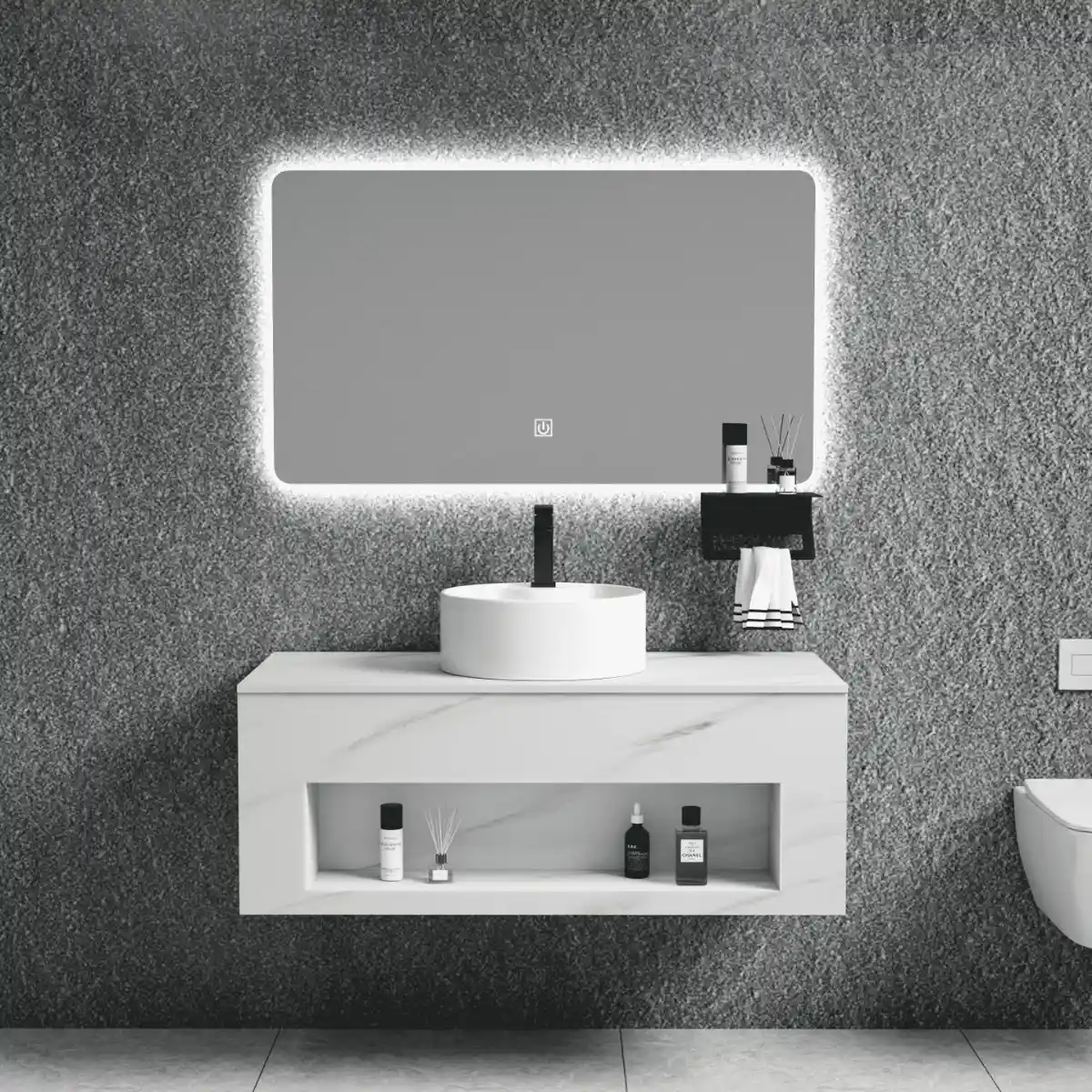
Cost Analysis: Upfront vs Lifetime Value
Ceramic costs less upfront, but sintered stone lowers lifetime cost by 30% in hotel applications.
Every procurement manager starts this comparison with the same question: what does it cost per unit? At wholesale, ceramic basins are the cheaper buy. They come out of a mold, fire faster, and skip the polishing line. Sintered stone requires a high-pressure press, more machining, and a denser raw material mix, so the FOB price lands higher. That gap makes ceramic look like the easy choice for a 200-room hotel fit-out. It is not.
-
- Upfront price: Ceramic is typically the lower-cost entry, but the gap narrows once you add reinforcement, edge polishing, and packaging for export. A one-piece sintered stone basin with an integrated drain differs in price from a glued or slipped ceramic basin much more than from a solid sintered piece.
- Lifetime cost: In high-traffic commercial bathrooms, ceramic chipping and crazing drive replacements. Internal procurement analysis shows sintered stone basins deliver around 30% lower lifetime cost versus ceramic in hotel applications, primarily because the replacement cycle stretches significantly longer.
The replacement frequency gap comes down to material physics. Ceramic has a water absorption rate around 0.5%, which makes it vulnerable to micro-cracking and mold seeding in humid climates. Sintered stone sits near 0.02%—effectively impermeable. That difference shows up in guest bathrooms where cleaning chemicals, thermal shock, and careless luggage carts take turns abusing the basin.
For a project procurement manager, the right question is not “which basin is cheaper?” but “how many times will I buy this basin over a 10-year renovation cycle?” A ceramic basin that fails at year three forces reorder, reshipping, and site labor costs that no price list ever shows. Sintered stone’s lower water absorption and higher mechanical impact resistance mean fewer unplanned callbacks. That is the number that moves a purchasing decision.
| Cost Factor | Sintered Stone Basin | Ceramic Basin | Procurement Impact |
|---|---|---|---|
| Average Wholesale Price (per Unit) | $85–$160 (MOQ-friendly for China OEM) | $40–$90 (widely available) | Ceramic looks cheaper upfront, but lifetime cost analysis flips the decision for commercial projects |
| Replacement Frequency in High-Traffic Settings | 10+ years; one-piece construction resists chipping and cracking | 3–5 years; ceramic basin chipping in commercial bathrooms drives recurring replacement orders | Fewer change-outs lowers re-installation labor, downtime, and procurement administration |
| Water Absorption Rate | 0.02% near-zero porosity, blocks mold and staining | 0.5% porosity; moisture seeps into glaze micro-cracks | Sintered stone’s water absorption rate is critical for high-humidity hotel bathrooms |
| Maintenance & Housekeeping Cost | Low; quick wipe-down, no chemical descalers or mold treatments | High; frequent deep-cleaning, re-caulking, and stain removal | Across a 200-room property, sintered stone saves thousands in annual housekeeping labor |
| Installation Requirements | Heavier slab; requires reinforced cabinet support and level anchoring | Lighter and easier to handle, but brittle during transit and on-site | Proper sintered stone installation requirements prevent sagging, callbacks, and liability |
| 10-Year Lifetime Cost (Hotel Application) | 30% lower total cost vs ceramic when factoring replacement, labor, and cleaning | Higher cumulative cost after repeated replacements and maintenance | Supports long-term capital planning and stronger ROI justification for procurement managers |
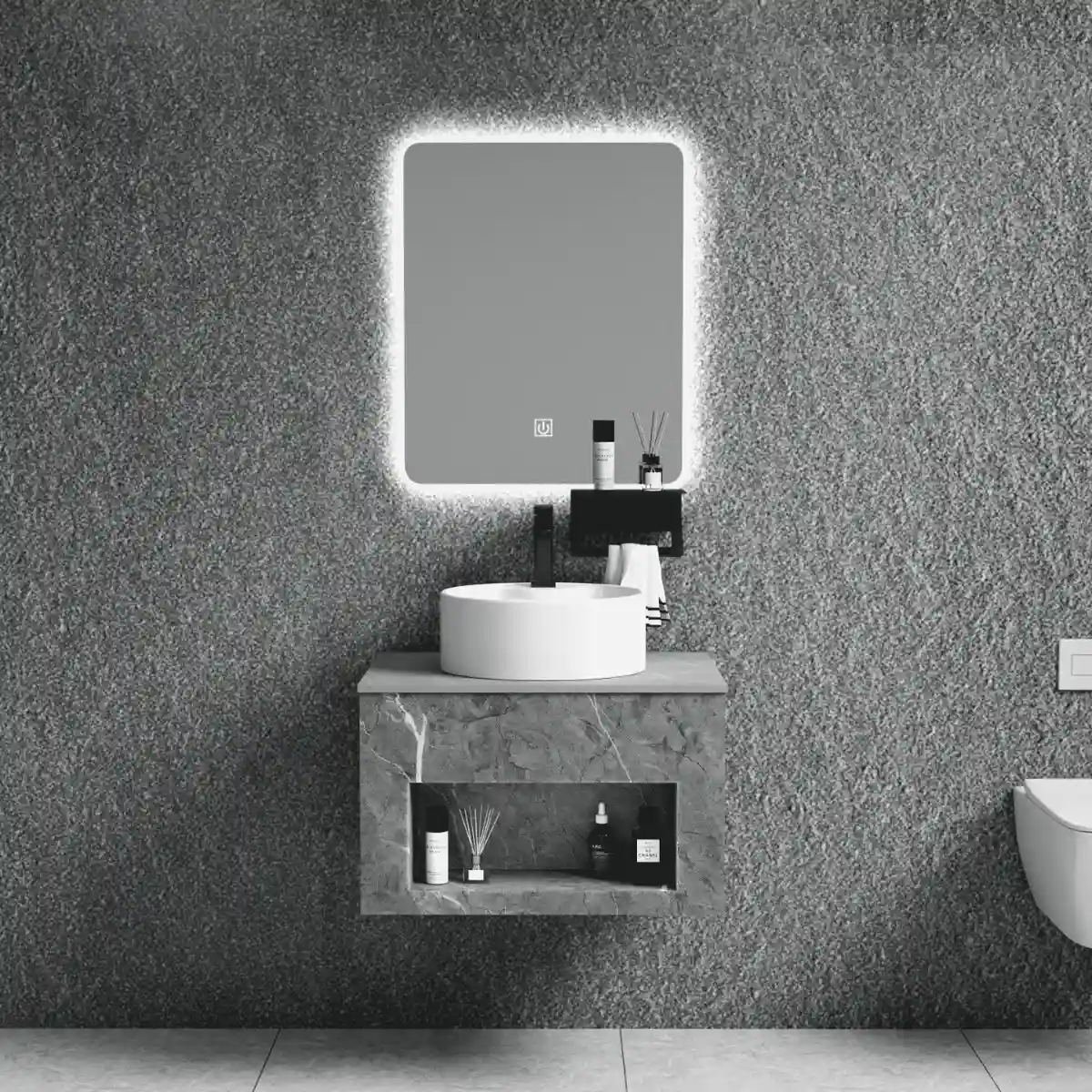
Design Options: Colors, Shapes, and Finishes
Sintered stone is a design material; ceramic is a sanitaryware material.
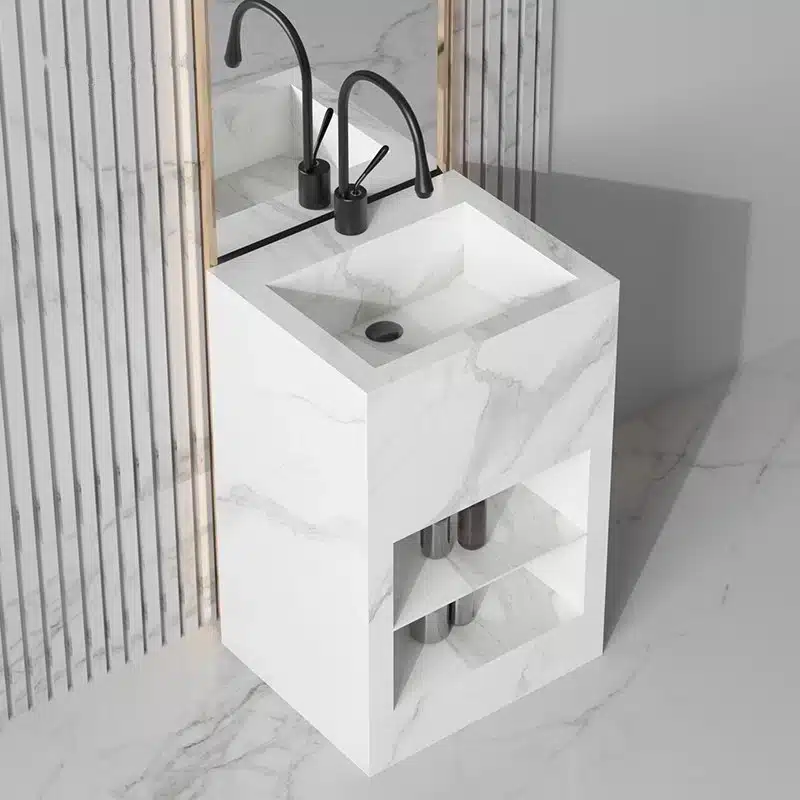
For commercial procurement, the sintered stone basin vs ceramic basin decision is not a finish choice; it is a supply-chain constraint. Ceramic basins are slip-cast in plaster molds, which limits the geometry and forces a glossy glaze as the default surface. Sintered stone starts as a pressed slab and is CNC-cut and edge-finished, so it supports larger formats, sharper lines, and surface treatments ceramic cannot match. That determines whether your hotel fit-out gets a standard catalog piece or a basin wall that reads as custom.
Sintered stone’s design range comes from its production path. Large-format slabs allow a one-piece basin with no glued seam. That matters because the one-piece sintered stone basin vs glued basin comparison is not cosmetic: glued assemblies develop a visible seam line as adhesive ages, while one-piece construction eliminates the joint entirely. The finishes that work commercially are matte and textured. Both hide water spots, reduce daily cleaning labour, and look more expensive than polished stone under bathroom lighting. Sintered stone’s water absorption sits at roughly 0.02% against ceramic’s 0.5%, so matte and textured surfaces also resist the hard-water staining that glossy glaze reveals over time. Polished sintered stone exists, but on a commercial basin it shows every dried droplet, which is why it rarely appears in hotel specifications.
Ceramic’s limits are mold and glaze. Slip casting permits deeper, more sculptural bowl shapes than sintered stone—swept curves, integrated overflow channels, pedestal forms—but the surface is a glass layer fused to the body. That glaze scratches, and when it chips in commercial service, the white body shows and the basin is normally replaced. Colour is the other constraint: white and off-white dominate because coloured glazes shift between production batches. A project that needs a coloured ceramic basin can work, but the buyer must hold production to an approved master sample and enforce a tight quality tolerance on every batch.
-
- Colour: Sintered stone colour runs through the full thickness, so black, grey, and concrete-look finishes stay consistent after edge cutting. Ceramic colour is only the glaze; chips expose the white body.
- Format: Slab formats enable trough basins and countertop-integrated designs beyond 1200mm. Ceramic mold sizes keep most single basins under 700mm, limiting commercial washroom layouts.
- Surface: Textured sintered stone masks limescale and fingerprints; glossy ceramic reveals both, which raises housekeeping labour in high-traffic bathrooms.
Sourcing Considerations: China vs Local Suppliers
Compare lifetime cost, not FOB price.
Most procurement managers start by comparing FOB prices between China and local suppliers, then get surprised when the quote doubles after freight, duties, and compliance fixes. The real fork in the road is the factory’s quality control and whether the product is already adapted to your market before it ships.
-
- Five-stage QC: Focuscabinet runs every stock and OEM order through a five-stage quality control process — raw material check, in-process inspection, surface and dimension verification, final assembly check, and pre-shipment inspection. For a 500-unit hotel order, that means the 100th basin matches the first, and you don’t inherit field failures as callback costs.
- Sample approval: Before mass production, a pre-production sample is submitted for approval. The signed sample becomes the quality tolerance reference for the entire batch. If a supplier can’t produce a matching pre-production sample, the production run is the gamble, not the sample.
- Region-ready customization: Focuscabinet’s region-ready strategy builds destination-market needs into the production drawing: overflow position, mounting standard, and surface finish are set to match the region’s plumbing and design preferences. That shortens compliance review and prevents installation-day mismatches.
- Lifetime cost impact: In hotel applications, replacing ceramic basins due to chipping and staining is common. Sintered stone’s water absorption rate of 0.02% — versus ceramic’s 0.5% — cuts mold issues and delivers roughly 30% lower lifetime cost in high-turnover bathrooms.
Local suppliers may respond faster, but they rarely offer the same depth of material customization at a commercial price point. For a project procurement manager, the question isn’t ‘China or local?’ It’s ‘which factory has the QC and region-specific engineering to make the first shipment the only shipment?’.
Summary: Which Basin Wins for Your Project?
Sintered stone wins on lifetime cost for hotel and commercial projects once the 5-year mark enters your model.
For a commercial bathroom fit-out, sintered stone is the safer long-term bet — provided your procurement model accounts for replacement cost, not just the unit price. The water absorption rate is the first tell: sintered stone sits at 0.02%, ceramic at 0.5%. That gap sounds small, but in a humid bathroom it drives mold, staining, and odour complaints within the first two years of service.
-
- Hotel bathroom basin material comparison: Hotels average one ceramic basin replacement per room every 6–8 years. Sintered stone extends that cycle beyond 10 years when installed on a solid base. Run those numbers across 200 rooms and the 30% lifetime cost saving becomes a line item your finance team will ask about.
- Ceramic basin chipping in commercial bathrooms: Ceramic edges chip during installation and regular maintenance in high-traffic settings. Once the glaze is breached, the substrate stains and replacement is the only defensible fix. Sintered stone resists the kind of impact that comes from dropped bottles, mop buckets, and housekeeping carts.
- One-piece sintered stone basin vs glued basin: A one-piece pressed basin removes the seam that glued stone or undermount ceramic drops rely on. That seam is where bacteria, limescale, and delamination start. For public washrooms, eliminating that joint is a hygiene upgrade before you even switch materials.
- Sintered stone basin installation requirements: Sintered stone is dense and rigid, so it needs solid support and a flat base. That is not a downside. It forces better installation practice and prevents callbacks that eat into your margin after handover.
The decision still comes down to your replacement horizon. If you are fitting a budget motel with a 3-year ownership plan and zero design ambition, ceramic works. But for hotels, serviced apartments, or any public washroom where the basin sees daily traffic beyond a typical warranty period, sintered stone is the rational procurement choice. The catch is supplier consistency: sintered stone quality varies more than ceramic because raw material ratios and firing parameters differ between factories. Focuscabinet’s five-stage QC — from incoming slab inspection to final packing check — exists precisely to make sure the 500 basins you order behave like 500 identical units, not 500 chances for a callback.
Conclusion
The material choice between sintered stone and ceramic basins comes down to one number: water absorption. Sintered stone holds at 0.02 percent while ceramic sits near 0.5 percent, and that gap determines how often you replace basins in high-humidity commercial bathrooms. For hotel fit-outs, that makes sintered stone the safer specification, with roughly 30 percent lower lifetime cost when sourced from a manufacturer running consistent five-stage QC.
Write that 0.02 percent threshold into your next supplier spec, and if a factory cannot document the water absorption rate, treat the quote as incomplete. Review the sintered stone basin options at Focuscabinet to compare production lead times and customization capabilities against that benchmark.
Frequently Asked Questions
Which basin has lower lifetime cost?
Sintered stone lowers lifetime cost by roughly 30% in hotel use despite a higher upfront price. That holds only when the basin stays in service long enough to avoid frequent ceramic replacements. Calculate lifecycle cost before comparing unit prices.
Is sintered stone more durable than ceramic?
Yes, sintered stone is denser and more scratch- and impact-resistant than standard ceramic. For commercial bathrooms, that means fewer chipped edges and less visible wear in high-traffic areas. Test impact and scratch samples before committing to volume.
Do sintered stone basins need special installation?
Yes, the added weight and cutting requirements usually demand professional installation and proper cabinet reinforcement. At commercial scale, plan for heavier handling and diamond tooling before fit-out. Confirm reinforcement specs with your fabricator.
What should procurement verify when sourcing basins?
Qualify the factory on QC process, shipping track record, and region-specific certifications rather than judging from samples only. Focuscabinet uses five-stage QC across a 10,000㎡ factory, but you should still audit actual production conditions. Ask for factory audit reports and reference shipments.
How do sintered stone and ceramic differ in design?
Sintered stone allows matte, textured, and large-format shapes, while ceramic is mostly glossy and limited in form. If aesthetics drive the project, sintered stone gives more flexibility; if simple sanitary glazing is the. Match the material to your design language and usage.


0 Comments