


The least expensive line item on a vanity order is paperwork, and it is the one most likely to stop a container. A missing or mismatched certificate of origin for furniture export turns a clean 20–30 day production run into a week of emails among factory, forwarder, and bank. You order vanities, but you clear cargo on paper.
This guide covers the certificate of origin furniture export buyers need, plus the commercial invoice, packing list, and bill of lading that travel with every MFBATH order. You will learn who issues a CO, how Harmonized System (HS) codes shape your duty bill, and why our payment terms, 30% deposit at order and the balance within one week of the draft bill of lading, put documents at the center of your cash flow.
Key Takeaways
- MOQ (Minimum Order Quantity): 15 sets per model, color, and size, with mixed-container loading supported.
- Payment: 30% deposit places the order; the balance is due within one week after the draft bill of lading.
- Lead times: samples ship in 10 working days; bulk production runs 20–30 days.
- Trade terms: all shipments leave Qingdao Port on FOB (Free On Board) terms, with 4–6 weeks total to the US, Canada, and Mexico.
- Compliance: ISO 9001 and ISO 14001 are held, along with CE and UL listings.
- What Is a Certificate of Origin
- The Export Document Set Behind a Vanity Order
- HS Codes and Rules of Origin Shape Duties
- Document Mistakes That Delay Your Container
- FOB Qingdao and the Document Timeline
- Frequently Asked Questions
What Is a Certificate of Origin
A Certificate of Origin (CO) is a document that states the country where your goods were manufactured. For bathroom vanities built in China, the CO answers one question: where was this cabinet made? Customs reads the answer against its duty schedule, and trade agreements read it before granting reduced rates.

The CO is not a quality certificate. It says nothing about materials, safety, or testing. It proves origin only, and it must line up with the goods on the commercial invoice and the packing list. Ship 80 vanities and certify 80 vanities; anything else invites a customs query.
Who issues a CO depends on the destination and the trade deal in play. In China, chambers of commerce and the customs authority issue certificates of origin, and most commercial COs come through chamber channels. The issuing body signs against your production records, so the factory’s export records must match the document. A standard CO lists the exporter, consignee, product description, HS code, quantity, and the origin criterion claimed, and it carries the issuing body’s stamp. When you review a draft CO, check that the exporter name matches the factory’s export license and the consignee matches your broker’s entity.
Destination customs wants a CO for two reasons: to confirm origin for duty calculation and to police preferential trade deals. Claim a reduced rate under a trade agreement without the right origin document, and you pay the general rate instead. That gap is real money, so treat the CO as part of the product, not as an afterthought.
COs come in two families: non-preferential certificates, which simply state origin, and preferential certificates, which support claims under trade agreements and carry stricter rules and specific forms. Your broker can tell you which family your destination requires; the wrong family is as useless as no CO at all. A CO also matters when your bank is involved. Under a documentary credit, the bank checks the CO against the credit terms before it releases funds, and any discrepancy stalls payment. Ask your forwarder or bank at the start which CO form they expect; some markets require a specific chamber form or a legalized copy.
The Export Document Set Behind a Vanity Order
Every container that leaves Qingdao Port travels with four documents that matter to you: the commercial invoice, the packing list, the bill of lading, and the CO when the destination asks for it. Each answers a different question, and they must agree line by line.
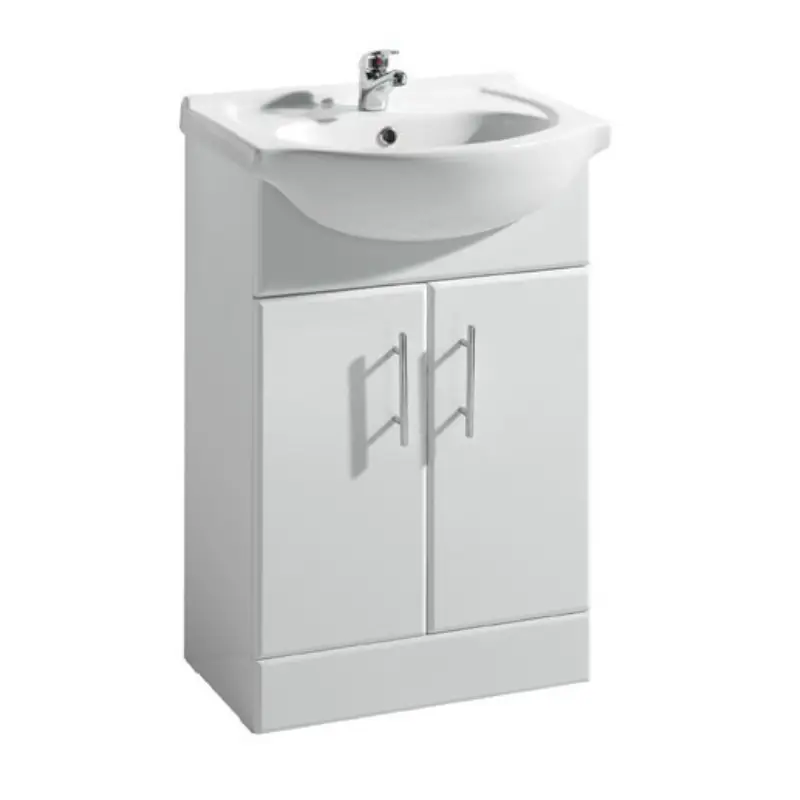
The commercial invoice is the primary record. It states the seller, buyer, product description, unit value, quantity, and trade terms, and customs uses it to assess duty. The description must match the HS code you declare; a vague line like “bathroom cabinet” can pull the wrong rate. Keep the invoice wording aligned with the factory’s own spec sheet, because the same cabinet can be sold under different names in different catalogs. The free 100+ page MFBATH catalog is a useful reference here: the model names in it are the names that should appear on the invoice.
The packing list covers the physical cargo: carton count, weight per carton, dimensions, and shipping marks. Port handlers and your freight forwarder work from it, and a mismatch with the invoice is the classic hold-up at customs. For mixed loads, each model and size should appear as its own line with its own carton count.
The bill of lading (BL) is the carrier’s receipt and the contract of carriage, and the draft BL is the preliminary copy issued when your cargo is loaded. It shows the vessel, container number, port of loading, and sailing date. MFBATH ties payment to it: you pay 30% to place the order, and the balance within one week after the draft bill of lading is sent. The logic is simple. The draft BL proves your goods are on the water before you release the remaining 70%.
Read the draft BL for the three things that matter: the consignee name exactly as your customs broker needs it, the container number, and the date of sailing. A wrong consignee name on a BL is a correction request to the shipping line, and those take days.
Once the balance clears, most shipments release by telex release, which lets the consignee collect cargo without the original paper bill of lading. Ask your forwarder which release method your destination accepts, because some ports still require the original. Telex release suits most wholesale repeat orders, while banks financing the shipment may want originals; your forwarder will tell you which applies.
The documents travel in a set, but they are produced at different moments. The invoice is issued at loading, the packing list after the final carton count, the CO during production, and the BL after the vessel sails. Their dates tell a story, and customs reads the story. Verify four fields on every document before you pay the balance: the total number of sets, the total carton count, the unit price in the agreed currency, and the trade term. These four fields appear on the invoice, the packing list, and the CO, and they are the ones customs compares.
Export Document Checklist for a Certificate of Origin Furniture Export Order
| Document | Issued By | What It Does | When You Need It |
|---|---|---|---|
| Certificate of Origin | Chamber of commerce or customs authority | Proves country of manufacture | Preferential duty claims; some markets always |
| Commercial Invoice | Seller (MFBATH) | States value, description, trade terms | Customs declaration and duty assessment |
| Packing List | Seller (MFBATH) | Carton count, weights, dimensions, marks | Port handling and freight reconciliation |
| Bill of Lading | Shipping line via forwarder | Receipt of cargo, contract of carriage | Payment release; draft BL at sailing |
HS Codes and Rules of Origin Shape Duties
An HS code is a six-digit classification under the Harmonized System, the international naming standard for traded goods. National customs schedules extend those six digits into longer codes with their own duty rates, so the same vanity can carry a different rate in the US, Canada, or Mexico.
The code sits on the import declaration, not on the packing list, and it decides what duty you pay. Classification comes from what the cabinet is made of and how it is built, which is where a factory’s material data earns its keep. Get the material breakdown in writing with the quotation, and your broker can classify before the order exists.
Worked example: a PVC vanity and a solid oak vanity may fall under different headings, because PVC board, plywood, and solid wood are different materials with different duty treatment. The same logic applies to basins: a sintered stone basin and a ceramic basin are distinct products under the schedule. MFBATH quotes every product line with its material breakdown, PVC, plywood grades, solid wood species, and sintered stone, so nothing is left to guesswork.
Ask the factory for a written material statement with each quotation. MFBATH provides the board grade, wood species, or stone type behind every model, so the classification conversation starts with facts. The HS code itself is declared by you or your broker, and the forwarder needs it before booking, not at the port.
Rules of origin decide whether your goods qualify for preferential rates under agreements such as the United States–Mexico–Canada Agreement (USMCA) and the Regional Comprehensive Economic Partnership (RCEP). A compliant Certificate of Origin, or an equivalent origin statement, is the ticket to the reduced rate. Buyers who skip it pay the general tariff, and retroactive claims are harder than getting the paper right the first time.
The two agreements work differently. RCEP applies between China and other member markets, and its preferential certificate of origin must list the origin criterion claimed. USMCA follows another path: importers can certify origin themselves using a compliant certificate, without a chamber stamp. Know which mechanism your destination uses before you order the paper.
For the border side of that process, see our Mexico distribution logistics playbook. Duties, freight, and documents all land in one number, your landed cost, and our landed cost calculation guide shows how the HS code and the CO change that figure.
Wholesale Vanity Orders With Complete Export Documents
Browse this product, solution, or service page to explore relevant offerings.
Document Mistakes That Delay Your Container
The mistakes that delay containers are rarely dramatic. They are small mismatches: the invoice says bathroom vanity, the CO says wooden cabinet, the packing list shows 80 cartons while the invoice shows 78 sets, and the shipping marks on the boxes do not match the marks on the documents. Customs notices each one.
One unit-count error can move your container into a query lane while storage charges run at the port. A consignee name typo can stop the importer of record from filing at all. Fixing the paper from China takes days, and the container waits the whole time. The cost of the mistake is not the paper; it is the wait.
HS code misalignment is the costliest version of the same problem. If the broker declares one code and the invoice describes goods that fit another, customs can reclassify and bill the difference. Keep the invoice description, the CO, and the declared code on the same page before the vessel sails.
- Request scanned copies of the commercial invoice, packing list, and CO before shipment; check sets, cartons, and total volume.
- Confirm the HS code with your broker while production is still running.
- Match the shipping marks on the cartons to the marks printed on the documents.
- Choose the release method, original bill of lading or telex release, before the container reaches the destination port.
When a scan shows an error, ask the factory to reissue the document before the vessel sails. Reissuing after departure means amendments on the shipping line side and a new round of checks at the destination. The rule is simple: every correction costs less before departure than after.
The supplier side matters too. A factory that ships the documents with the cargo, or sends scanned copies ahead of it, removes the slowest part of the process. MFBATH sends the document set with each shipment and provides scanned copies for review before sailing, so discrepancies surface while there is still time to fix them. Third-party inspection reports (SGS, TÜV) join the set when you book them in advance; inspections are welcome before loading, and the report becomes another line of evidence your broker can use.
Mixed-container loads make accuracy harder, because every model and size becomes its own line. MFBATH supports mixed loading at a 15-set MOQ per model, color, and size, and the LCL vs FCL container loading guide covers how load plans interact with packing lists. First-time buyers should run the full pre-shipment checklist in our first-container import strategy guide.
FOB Qingdao and the Document Timeline
FOB (Free On Board) Qingdao means the factory’s responsibility ends when your cargo is loaded on board the vessel at Qingdao Port. The factory handles production, export packing, export customs clearance, and the export document set. You handle ocean freight, insurance, and everything after the vessel sails, including import clearance and duties. Each side keeps the documents it is responsible for, and the handover point is the draft BL.

- MFBATH provides: commercial invoice, packing list, CO when required, draft bill of lading, and export clearance paperwork.
- You arrange: freight booking, ocean freight, insurance, import declaration, duties, and destination delivery.
The document timeline runs ahead of the cargo. Samples leave in 10 working days, with a proforma invoice and a courier waybill as their document set; the proforma invoice also becomes the reference for the commercial invoice on the bulk order, so keep it accurate. Bulk production takes 20–30 days, the factory drafts the export document set in the final production week, and the draft BL follows within days of sailing. Your balance payment is due within one week after you receive it. From order to delivery in the US, Canada, or Mexico, plan for 4–6 weeks total.
Every cabinet passes five quality checks before packing, and the QC records stay on file if your market asks for proof. Ask for the scanned document set when production finishes, not after the vessel sails; that gives you a review window of roughly a week before departure. Book freight while production runs, and our pre-booking freight rates guide explains how locking capacity early keeps the document timeline from turning into a cost problem.
Hold the original or scanned set with your import records. Origin claims under USMCA and RCEP can be audited months later, and the exporter’s file and your file should tell the same story.
What This Means for Your Order
Export documents decide how fast your container clears and how much duty you pay. The certificate of origin, commercial invoice, packing list, and bill of lading must agree with each other, and the HS code must match what the factory built. Handle them on schedule and the 20–30 day production run ends in a clean release.
- Confirm the CO requirement and the HS code with your broker before production ends.
- Pay 30% at order, review the draft bill of lading, and clear the balance within one week.
- Ask for scanned copies of every document before the container sails.
- Plan 10 working days for samples, 20–30 days for bulk production, and 4–6 weeks to North America.
- Confirm the release method, original bill of lading or telex release, with your forwarder.
The fastest way to test the whole chain is a 15-set trial order. Browse the wholesale bathroom vanity range, request a quote, and ask for the document set alongside your samples.
Frequently Asked Questions
Do I need a Certificate of Origin for every vanity order?
Not always. Some destinations accept the commercial invoice alone. You need a CO when customs asks for origin proof or when you claim a preferential rate under USMCA or RCEP. Ask your broker before production starts, because issuing a CO takes time.
What happens if my documents show the wrong HS code?
Customs can reclassify the goods and charge the difference, and some ports add penalties. Keep the invoice description, packing list, and declared code consistent. Confirm the code with your broker before the vessel sails.
Can I pay the balance before the draft bill of lading arrives?
Yes. Many buyers pay on factory photos or video instead. The draft BL clause protects you because it proves the cargo is loaded and sailing, so the balance is due within one week after MFBATH sends it.





0 Comments