

Since the UK left the EU, the two markets have formally split their product-marking regimes: the EU uses CE marking, and Great Britain created UKCA (UK Conformity Assessed) marking. If you import bathroom cabinets and sell them — directly or through distributors — into both markets, you now need to answer a question that did not exist before 2021: which marking applies to which unit, and can one product serve both?
This guide maps the CE vs UKCA landscape specifically for bathroom cabinets and mirrors in 2026: which products are actually in scope, what the marking requires in practice, how the UK’s indefinite CE recognition changes your decisions, and how to verify that a supplier’s compliance claims are real.
CE and UKCA: What They Are (and Are Not)
Both CE and UKCA are conformity markings: a manufacturer’s declaration that a product meets the applicable legal requirements of the market where it is sold. Neither is a quality rating, a safety guarantee, or a certificate of manufacturing excellence. A marked product is a product whose maker has done the paperwork and testing required by law — and can prove it.
- CE marking applies to products sold in the EU/EEA. It is mandatory for product categories covered by EU harmonization legislation (electrical goods, machinery, toys, medical devices, and so on). The manufacturer (or the EU-based importer acting as responsible economic operator) declares conformity and affixes the mark.
- UKCA marking is the UK’s domestic equivalent, created for Great Britain (England, Scotland, Wales) after Brexit. Northern Ireland follows a separate regime that continues to recognize EU rules.
The critical 2026 fact for importers: the UK government extended recognition of CE marking for most products indefinitely (announced in August 2023). This means that for most bathroom cabinet products, a unit carrying CE can still be sold in Great Britain without a separate UKCA mark. UKCA remains legally available and can be used voluntarily, but for the majority of goods it is no longer a practical requirement.
That does not make UKCA irrelevant. Some product groups were carved out of the CE recognition, standards can diverge between the regimes over time, and your customers may still request UKCA documentation for their own compliance files. The decision framework below tells you when it actually matters.
Where Bathroom Cabinets Sit in the Marking System
The most common misconception in the furniture import trade is that “CE certification” is a single generic certificate you can apply to any cabinet. In reality, CE marking only applies where EU legislation creates a legal obligation — and a plain wooden bathroom cabinet sits in an interesting grey zone.
A non-electrical cabinet carcass (plywood, PVC, MDF, or solid wood structure with hinges and drawers) is generally not covered by CE-specific harmonized directives the way electronics or machinery are. What applies instead is the General Product Safety Regulation (GPSR), which requires products to be safe and the supply chain to be traceable, but does not use the CE marking machinery. Sales of such cabinets into the EU do not require a CE mark by themselves — a fact that surprises many first-time importers, and one that some suppliers exploit to sell “CE certified” plain cabinets at a premium that means nothing.
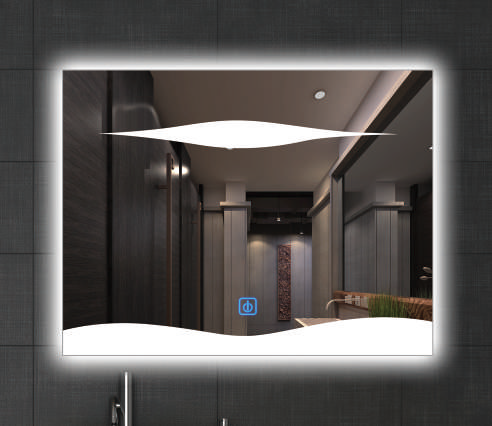
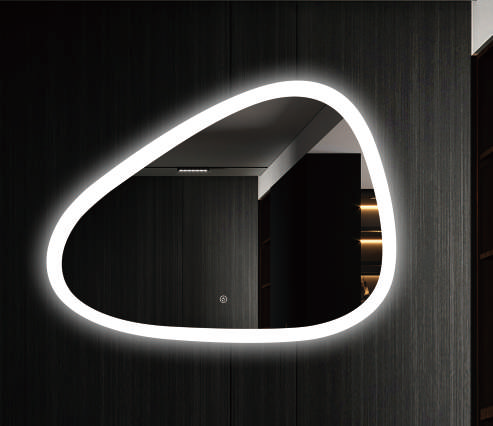
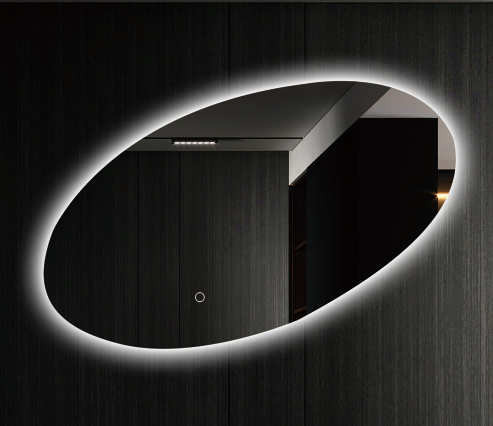
The picture changes when you add electrical components — and this is where bathroom mirrors and smart vanities come in. An LED mirror or a vanity with integrated lighting, heating, or touch controls falls under the electrical harmonized directives:
| Directive / Reg. | Scope | Applies to |
|---|---|---|
| Low Voltage Directive 2014/35/EU | Electrical equipment 50–1000V AC | LED mirrors, integrated lighting, power supplies |
| EMC Directive 2014/30/EU | Electomagnetic compatibility | Any unit with electronics |
| RoHS 2011/65/EU | Restricted hazardous substances | Electronics and cables |
| WEEE 2012/19/EU | Waste electrical equipment | Products with electronics |
| GPSR (EU) 2023/988 | General product safety | All consumer products incl. plain cabinets |
So the practical rule for bathroom products: if it plugs in or has electronics, CE marking (and its technical file) sc a real legal requirement for the EU; if it is a purely mechanical cabinet, the compliance burden is GPSR-based rather than CE-based. For the UK the equivalent structure applies — ukca for electrical goods where it remains relevant, and the UK’s own GSPR-equivalent (the General Product Safety Regulations 2005, with updates) for general products.
This distinction matters when you are buying: a supplier who shows you a “CE certificate” for a plain PVC cabinet is showing you either a voluntary document or something marketing-heavy; a supplier who shows a CE technical file for their LED mirror line is showing real legal compliance. Our step-by-step CE marking guide for bathroom cabinets walks through the documents a compliant supplier should be able to produce.
What the Technical File Must Contain
Whether the route is CE or UKCA, the conformity assessment leaves the same paper trail. If you buy from a factory, these documents should come with the product — and they are the fastest way to tell a compliant supplier from a marketing exercise:

- Declaration of Conformity (DoC) — signed statement naming the product, the applicable legislation and standards, and the manufacturer/importer taking responsibility. The DoC is the actual “certificate”; the CE mark on the product is just the visible flag that a DoC exists.
- Test reports — EMC and electrical safety test results from a recognized laboratory for the electrical components. Ask whether the tests cover the exact model you are buying, not a similar one.
- Technical documentation — design drawings, component lists, and production control records showing the product matches what was tested.
- Responsible economic operator — an EU-based importer or authorized representative who holds the paperwork and can be contacted by market surveillance authorities. This is a legal requirement, not an optional service.
- Traceability — model marking on the product and packaging so the DoC can be matched to the physical unit.
The UK’s requirements mirror this structure. For a bathroom cabinet line with LED mirrors, the complete set runs to roughly the same documents — which is why a factory that sells the same electrical vanity into both markets typically maintains one technical file with both regimes in mind.
CE vs UKCA: The Buyer’s Decision Table
| Question | CE marking | UKCA marking |
|---|---|---|
| Applies to products sold in | EU/EEA | Great Britain |
| Recognized in the other market? | Recognized in GB (indefinite extension for most goods) | Not recognized in the EU |
| Mandatory for plain (non-electric) cabinets? | No (GSPR applies) | No (UK GSPR applies) |
| Mandatory for LED mirrors / smart vanities? | Yes | Not currently, while CE recognition holds |
| Typical documentation | DoC, EMC/LVD test reports, tech file | Same documents, UK legislation references |
| Status for most bathroom products in 2026 | The marking to ask for | Optional; increasingly requested by UK distributors for their files |
The one-line version for buyers: for bathroom cabinets and mirrors, CE is the marking that matters in 2026, because CE is accepted in both the EU and Great Britain for most products, while UKCA is accepted nowhere outside Britain. Buy a CE-compliant electrical vanity and you can sell it in Amsterdam and Manchester with the same stock — provided your paperwork names the right responsible operator for each market.
Two caveats before you rely on that sentence. First, standards drift: the UK is free to diverge from EU standards, and sectors that diverge will see UKCA regain practical force. For bathroom furniture specifically, no divergence currently affects the products in this category, but this is a market to re-check annually — treat any article promising “permanent” equivalence with suspicion. Second, Northern Ireland: NI continues to follow EU rules under the Windsor Framework, so CE remains the operative marking there, and separate NI arrangements exist for some goods.
How to Verify a Supplier’s Compliance Claims
Compliance claims are easy to print and hard to verify — which is why verification is a sourcing skill, not a paperwork exercise. Run these checks before you commit volume:
1. Ask for the DoC, not the “certificate.” A worth one page Declaration of Conformity naming the exact model and the applied directives is worth more than a framed generic certificate. If the supplier cannot produce a DoC for a product they claim is CE-compliant, the claim is decorative.
2. Check the standards references. The DoC should name concrete standards — for LED mirrors, typically EN 60598-1 for luminaires and EN 55015/EN 61000 for EMC. Vague references like “compliant with European standards” without numbers are a red flag. Our certification standards guide explains how UL, CE, and WELS references differ in practice.
3. Match the model. Test reports must reference the model you are buying. A report for the “2023 LED mirror series” does not cover a 2026 model with a different driver or touch panel.
4. Ask who the responsible EU operator is. If the factory cannot name one, you are being asked to assume that legal role yourself — which makes you the importer of record with all the liability that implies. Budget for that role or buy from a supplier who has it arranged.
5. Verify the factory’s quality infrastructure, separately. CE and UKCA say nothing about manufacturing consistency. ISO 9001 certification (quality system, held by MFBATH since 2017 and verified current in 2025) and ISO 14001 (environmental management) are the documents that speak to production control — ask for both, and for the same “exact model” logic, ask whether the certification scope covers the factory and product lines you are buying. The global market compliance checklist ties these threads together for multi-market importers.
CE-Compliant Bathroom Cabinets and Smart LED Mirrors
Browse this product, solution, or service page to explore relevant offerings.
Common Compliance Mistakes in the EU/UK Trade
The mistakes that cost importers real money in this category are rarely about the marking itself — they are about mismatched assumptions. The recurring patterns:
Buying “CE certified” plain cabinets. As covered above, a non-electrical cabinet does not carry a CE obligation. If you are paying a premium for a CE mark on a plain cabinet, you are paying for a decoration. What you actually want for plain cabinets is GPSR compliance (safety + traceability) and honest materials documentation (emissions classes, CARB/FSC where relevant) — see the CARB and formaldehyde guide for the emissions side.
Ignoring the electrical/mechanical split in your own range. Many distributors sell one “vanity” SKU that internally splits into a plain model and an LED-mirror model. The two SKUs have different compliance obligations. If your ERP and your supplier treat them as one product, your technical file will not match your shipments — the discrepancy surfaces at the first customs or market-surveillance check.
Assuming the certificate covers the importer. The manufacturer’s DoC covers the product; it does not transfer legal responsibility. In the EU, the importer is a responsible economic operator with their own obligations (contactability, documentation retention, corrective action duties). Importing without an EU-based operator arrangement is the most common structural gap in small-importer compliance.
Forgetting environmental and wood traceability rules. Beyond product marking, the EU Timber Regulation (EUTR) and its successor EUDR (EU Deforestation Regulation, phased in with transitional provisions) require due diligence on the wood in your cabinets — separate from CE/UKCA entirely. A supplier with FSC-option sourcing and documented wood origin makes this paperwork straightforward; one without it can leave you unable to prove legality of the timber. The ISO 14001 and EU compliance guide covers the environmental compliance layer for vanity imports.
Building a Compliance File for Both Markets
If you are setting up dual-market sales for the first time, the practical sequence is:
- Classify your SKUs: plain mechanical units vs. electrical units (LED mirrors, integrated lighting).
- For electrical SKUs, request the CE technical file (DoC, test reports matching the exact model, tech documentation) from the factory.
- Confirm an EU responsible economic operator arrangement for EU sales; for UK sales, confirm the same role on the UK side (or rely on the supplier’s UK arrangement where available).
- Keep the wood traceability paperwork (FSC/emissions documents) with the same file.
- Re-check the UKCA question annually — the CE recognition extension is the current policy, but the category is monitored, not frozen.
This is not a compliance burden designed to scare importers away — for a product line like ours it is a fixed set of documents maintained once and reused across every shipment. MFBATH holds CE and UL certification for its product lines and runs ISO 9001/14001 systems; the import compliance mistakes guide lists the five failures that cost importers most at customs, and the CE marking walkthrough shows the full document set for a bathroom cabinet line.
Frequently Asked Questions
Can one SKU be sold in both the EU and Great Britain?
For most bathroom cabinets and mirrors, yes — a CE-compliant unit is accepted in both markets under the current recognition extension. The paperwork, not the product, is what needs the dual-market arrangement: your EU responsible economic operator for EU sales and the UK-side operator for British sales. Keep the technical file valid for both and you run a single stock line.
Will UKCA become mandatory for my products?
Not unless the UK diverges from EU standards in a way that affects bathroom furniture or its electrical components — nothing in force in 2026 does. The market to watch is electrical: if the UK adopted a different version of the luminaire standard, LED mirror SKUs would be the first affected. An annual check of the product category is enough for a distributor; do not pay for UKCA documentation in 2026 unless a customer contractually requires it.
Who should hold the technical file — the factory or me?
The manufacturer (or their authorized representative) holds the file; the importer must be able to access it for market surveillance. In practice, buy from factories that provide a document pack with every shipment: DoC, matching test reports, and material declarations. If you have to assemble it yourself from scraps, your compliance chain is already fragile.
What if the marking is damaged in transit or the model label is missing?
Conformity marking and model traceability must survive to the consumer. A missing label on arrival is a compliance defect, not a logistics nicety — it can trigger a market-surveillance inquiry because the unit cannot be matched to its DoC. Confirm with your supplier that markings and labels are applied durably (embossed or printed on the product, not just on packaging) and add a label check to your incoming QC.
Does a plain cabinet really need no CE mark?
Correct — a purely mechanical cabinet (no electrical components) has no CE obligation under the harmonized directives; the applicable requirement is the General Product Safety Regulation, which is about safety, traceability, and documentation rather than marking. The same cabinet sold in Great Britain sits under the UK’s equivalent general safety rules. Keep this distinction in mind when suppliers quote “CE certification” as an add-on for plain furniture: for electrical units it is a legal requirement; for plain cabinets it is a marketing line unless it refers to specific voluntary product standards.
Where do mirror cabinets and smart vanities fall?
Any unit with integrated lighting, heating, sensors, or touch controls is an electrical product for marking purposes. That includes mirror cabinets with built-in lighting and demister pads, and smart vanities with USB or wireless charging. These are the SKUs where CE compliance documentation genuinely matters — treat the LED mirror component and the cabinet as one electrical product when checking the technical file, because the DoC covers the unit as sold.
For bathroom cabinets and mirrors in 2026, CE marking is the operative standard for selling into the EU, and it remains accepted in Great Britain under the UK’s indefinite recognition extension — which means one CE-compliant product line can serve both markets for now. UKCA is not dead, but for most bathroom products it is optional. What has not changed is the underlying discipline: the marking is only as valuable as the technical file behind it. Verify the Declaration of Conformity, match test reports to exact models, and confirm the responsible economic operator arrangement before you commit volume to either market.




0 Comments