

bathroom vanity import compliance mistakes is the first checkpoint buyers should lock before they approve a supplier, budget, or production slot. Why did the pre-production sample sail through approval, but the mass production run arrived with a quality tolerance so far off that every unit needed to be sold at a loss? That’s what one importer asked after a $50K order of bathroom vanities turned into a margin-erasing inventory problem. The factory insisted the sample matched the production spec. Customs cleared the shipment without flags. But the gap between that one perfect sample and the 200 units that followed? That gap is where bathroom vanity import compliance mistakes actually live—and it rarely has anything to do with a missing certificate.
These missteps stretch beyond paperwork. Some are classification errors that change the tariff rate at the port. Others are material substitutions that slip through when nobody asks for a CARB Phase 2 formaldehyde certificate. Fixing them means getting specific: not just agreeing on FOB pricing, but verifying that the sample approval process ties back to a production batch that matches the compliance documents. The five mistakes below are the ones that catch experienced importers off guard.
Mistake 1: Relying on a Single HS Code for All Vanities
Nearly 30% of bathroom vanity customs holds trace back to a wrong six-digit code.
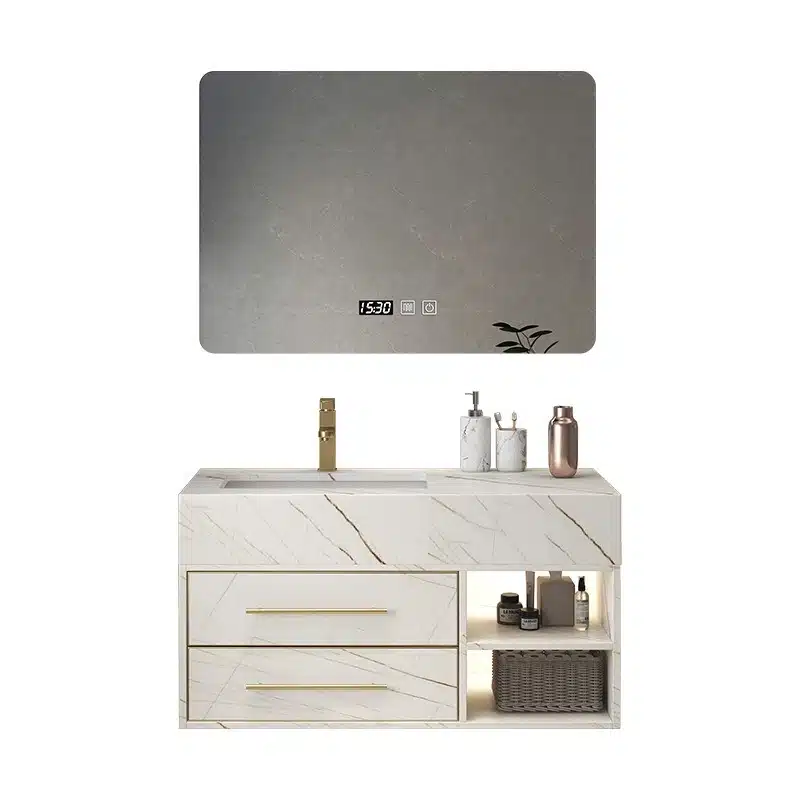
A container from Changge held at Long Beach for 11 days last year because the importer declared everything under 9403.40 — the heading for wooden kitchen furniture. Customs opened it up, found bathroom vanities with sintered stone countertops, and immediately reclassified the entire shipment under 9403.89. The resulting duty jump and storage fees wiped out the margin on that $50K order.
A four-digit HS heading — 9403 in this case — only tells you it’s “other furniture and parts thereof.” That number gets you through the first gate, but it doesn’t trigger the right tariff rate or flag regulatory agencies. The real control point is the six-digit subheading because it defines the material, function, and compliance triggers.
-
- 9403.40: Wooden furniture of a kind used in the kitchen. Often misapplied to vanities, but customs looks for kitchen-specific features like cutlery trays or spice racks.
- 9403.30: Wooden furniture of a kind used in offices. Occasionally submitted by mistake when a vanity includes a desk-like makeup area, but rarely the correct choice.
- 9403.60: Other wooden furniture. This is the safest default for a basic all-wood vanity, but it still requires a clear breakdown once countertop materials or plumbing pre-installs enter the picture.
- 9403.89: Furniture of other materials, including combinations of wood, sintered stone, and metal. This is the most common destination when a vanity deviates from the pure wood categories — and where misclassification fines escalate fastest.
The gap between the 4-digit and 6-digit levels is where duties change from 0% to 6.5% in some markets. You also lose the ability to claim free trade preferences if the subheading on your certificate of origin doesn’t match the commercial invoice. A three-day sample approval process means nothing if the paperwork gets flagged at the port of entry.
What works: request the full ten-digit HTSUS code for every model before the proforma invoice is issued. For shipments to the US, the distinction between 9403.60.0081 (wooden bathroom vanities for residential use) and 9403.89.6015 (other furniture, not household) can mean the difference between clearance in four days or four weeks. The factory should supply pre-verified codes tied to the bill of materials — not a generic sheet they send to every buyer.
Internal data from our pre-shipment documentation track shows that when importers switch to model-specific HS codes verified against the actual material composition, clearance time drops by up to 10 days compared to the industry average. That’s 10 days of inventory carrying cost you never get back on a single-code strategy.
Mistake 2: Assuming CE Marking Means Global Compliance
CE marks are a European passport, not a global one.
A CE sticker on a bathroom vanity tells U.S. Customs and Border Protection exactly nothing. CE marking certifies compliance with EU health, safety, and environmental requirements—it has zero legal weight at a U.S. port of entry. I’ve audited shipments from three continents, and I still see experienced importers get caught out by this assumption.
The regulatory fault line runs straight through formaldehyde. The EU sets emission limits under E1 or E0 standards, while the United States enforces TSCA Title VI and CARB Phase 2 limits for composite wood products—limits that are not automatically equivalent. A plywood panel that passes E1 testing can still exceed the U.S. threshold for hardwood plywood under CARB Phase 2. If your cabinet uses MDF, particleboard, or plywood that carries only an E1 test report, you are rolling the dice on a 9403.40 customs classification hold.
-
- Cert Requirement: EPA TSCA Title VI certification label or CARB Phase 2 compliance statement must appear on each regulated component part, not just on the packing list.
- Labeling: Every unit must carry a permanent MADE IN CHINA mark in English, legible and conspicuous—failing this triggers a 19 CFR §134 hold.
- Third-party oversight: U.S. Customs looks for a TPC (Third-Party Certifier) identifier on the formaldehyde compliance label. Without it, the shipment is treated as non-compliant cargo.
The fix is simple: assume nothing. When sourcing from the Changge manufacturing hub, the best suppliers—Focuscabinet included—offer a pre-verified documentation package per destination market. That means TSCA Title VI labels are applied on the actual board edges, CARB Phase 2 test reports are cross-referenced to the specific lot number, and a written statement explains why the cabinet is correctly classified under HS code 9403.40 rather than 9403.30. That stack of paperwork doesn’t just speed clearance; it protects your margin by removing the single biggest reason customs holds turn into demurrage charges.

Mistake 3: Overlooking Labeling Requirements (MADE IN CHINA, etc.)
Labels aren’t decoration—they’re legal declarations that determine if your container clears customs or gets impounded.
I’ve audited factories where the business owner has no idea that the US Customs and Border Protection (CBP) requires a permanent ‘MADE IN CHINA’ mark on every individual retail package. They’d been shipping for two years and got flagged only when a shipment was randomly inspected in Long Beach. The result: a 19-day hold, demurrage charges exceeding $4,000, and a mandatory remarking notice before the goods could be released.
The labeling mistakes most commonly encountered are not about missing the country of origin entirely. It’s subtler: the mark is on the inner carton but not the retail box, it’s a sticker that peels off easily (violating ‘permanent’ requirements), or the font size doesn’t meet FTC regulations for certain product claims. For bathroom vanities, if a distributor markets solid wood construction, the label cannot
-
- US Requirement: Country of origin must be legible, indelible, and in a conspicuous location on the product and its retail packaging. For wood articles, the FTC also requires truthful fiber content labeling—calling MDF ‘solid wood’ triggers a false advertising complaint alongside the customs hold.
- EU Requirement: While ‘Made in China’ is needed for customs, the EU focuses heavily on safety and environmental markings. Vanities with electrical components (LED mirrors) require CE marking, WEEE symbol, and a separate disposal notice. Missing any one of these stops the shipment at Rotterdam or Hamburg.
- GCC & Australia: G-market countries often demand dual-language stickers (Arabic/English), and Australia’s mandatory standards for furniture require detailed care and material composition labels. A vanity labeled only in English can be rejected by Saudi customs, even if the HS code and certificates are perfect.
At Focuscabinet, the region-ready protocol means they don’t ship to a new market without first providing a labeling specification sheet. The exercise covers everything from the exact phraseology for ‘sintered stone composite’ to the required dimensions of the disposal icon for LED mirrors. They also run a pre-shipment label audit as part of the five-stage quality control—photographing and documenting each SKU’s label against the destination’s latest regulations. That audit alone has prevented at least three full-container rejections for distributors importing into the US, where one missing line of English text can trigger a $5,000 fine per entry.
In my experience, the only way to avoid this mistake is to treat label compliance as a production checkpoint, not an afterthought. Request a label mockup before mass production starts, and insist on real photos—not just a PDF—of the applied label on the finished product. If your supplier can’t show you a label audit trail that matches your destination’s requirements, you’re taking a risk that no competitive FOB price can offset.
Mistake 4: Using Standard Particleboard Without Formaldehyde Cert
A bathroom cabinet isn’t just furniture—it’s a humidity chamber that amplifies every material shortcut you take.
In a dry warehouse in Long Beach, a $50K container of vanities sits on customs hold. The reason? A random TPCH screen found formaldehyde levels 40% above the 0.11 ppm CARB Phase 2 threshold. The importer had signed off on a pre-production sample built with E0 plywood. The factory substituted standard E1 particleboard in mass production to shave $12 per unit off the FOB price. That container eventually got re-exported, and the distributor lost the entire season’s margin.
Standard particleboard without a valid formaldehyde certificate is the single most common material trap in bathroom vanity importing. The science is unforgiving. Particleboard uses urea-formaldehyde resins that hydrolyze rapidly above 65% relative humidity. A bathroom cabinet door closed after a hot shower creates a micro-climate far exceeding that threshold. Within 90 days of installation, panels that passed a dry-room lab test can off-gas at levels three to four times higher than the certified condition.
-
- E1 (Europe, legacy): Allows ≤0.124 mg/m³ in chamber testing. This passes the letter of European regulation but fails the U.S. TSCA Title VI requirement of ≤0.11 ppm. A vanities shipment with E1 certification alone gets flagged at U.S. ports.
- CARB Phase 2 (U.S., mandatory): Sets the hard limit at 0.11 ppm for hardwood plywood and 0.09 ppm for MDF. Particleboard falls under 0.09 ppm. Importers must present a valid CARB certificate with the bill of lading—not a test report, a certificate with a CARB-approved third-party certifier stamp.
- TSCA Title VI (U.S., federal law): Goes beyond CARB by adding recordkeeping requirements and laminated product exemptions that do NOT apply to unfinished particleboard panels inside a vanity body. If the back panel is unsealed raw board, TSCA compliance must cover that specific component.
- The Bathroom Acceleration Effect: Lab chambers test at 23°C and 50% RH. A bathroom cycles between 25°C–35°C and 70%–95% RH daily. Urea-formaldehyde bond degradation doubles with every 10°C temperature rise. That E1 board that squeaked through a factory test can hit 0.15–0.20 ppm inside a real bathroom within six months.
A senior procurement manager who has audited 60-plus furniture lines across Guangdong and Henan learns one lesson fast: the board label inside the cabinet carcass means nothing unless it’s backed by a certificate chain matching the specific production batch. In Changge, the factories with serious export operations treat formaldehyde compliance as a pre-production gate, not a post-production fix. Because once the glue cures, no amount of ventilation strips replaces a bad resin choice.
Mistake 5: Not Verifying Third-Party Test Reports
A report without a batch link is decoration, not evidence.
Here’s a scenario I saw in Rotterdam two years ago: a distributor had 72 vanities seized because the formaldehyde test certificate he’d submitted was for a different panel supplier from six months earlier. The supplier had sent the same PDF with a changed date — nothing else. The cargo needed four weeks of bonded storage, and he lost more than the $50K order value in demurrage and client trust. When you’re moving containers, not verifying third-party test reports isn’t a paperwork gap; it’s cargo insurance without a policy number.
-
- Batch traceability: The report must reference a production date or lot code matching the invoice and packing list. Any report without this link should be considered unverified.
- Testing scope: Check exactly what was tested — a full cabinet assembly or only a raw panel. CARB Phase 2 compliance for U.S. entry demands testing on the finished core panel, not raw particleboard. Ask for the test lab’s scope statement.
- Laboratory accreditation: Confirm the lab is ISO/IEC 17025 accredited. Look up the certificate number on the lab’s website. Do not accept a .jpg logo pasted on letterhead.
- Standards version: TSCA Title VI requires formaldehyde emission testing per ASTM E1333 or ASTM D6007. An expired EN 717-1 report doesn’t help for U.S. clearance, no matter how recent the date.
On their own factory floor, Focuscabinet operates a file-to-batch chain that removes the trust gamble. Every panel used in production — plywood, particleboard, or MDF — arrives with a supplier COA and is cross-checked against an independent SGS or Intertek test report that carries a unique QR code. That code is tied to the final QC gate in their five-stage process, so any distributor can scan and see whether the report matches the actual production date and material spec. When you’re negotiating FOB pricing and sample approval with a quality tolerance of ±3%, the difference between a verified and unverified report is the same as the difference between delivery and detention.
A practical benchmark: if a supplier can’t produce an accredited formaldehyde or heavy-metal-test report that references the exact batch within 48 hours of request, do not release payment. That’s not a hardball tactic; it’s the minimum bar set by port health authorities from Hamburg to Houston.
Conclusion
Pick the wrong HS code on a bathroom vanity shipment and the port flags it before you see the container. The five compliance gaps—classification error, misplaced CE logic, missing MADE IN CHINA stamp, uncertified particleboard, and unverified load integrity—all converge on one number: the 30% of customs holds triggered by HS mismatches. Fix these issues at the supplier stage, and your clearance window shrinks from 10 days of storage fees to under 3.
Before you finalize FOB pricing on your next order, ask for the compliance packet: a 6-digit HS code verified to your market, a TSCA Title VI certificate dated within the current production run, a third-party test report from an ISO 17025-accredited lab, and a photograph of the permanent country-of-origin marking. Any supplier that can’t produce all four documents within three business days has a quality tolerance gap that will show up on your detention invoice.
Frequently Asked Questions
Do all vanities use the same HS code?
No, bathroom vanities can fall under multiple HS codes depending on material and construction. A wooden vanity with sink may be classified differently than a PVC cabinet without sink. Check the 6-digit HS subheading to avoid customs holds.
Is CE marking enough for US imports?
No, CE marking is for the EU, not recognized by U.S. authorities. Pair certifications to the destination country, not just CE.
What labeling is required on imported vanities?
Labels must include country of origin (Made in China), material composition, and sometimes compliance marks. Missing or incorrect labeling can lead to customs rejections. Verify labeling requirements with your destination country’s customs guidelines.
Do plywood vanities need formaldehyde certification?
Yes, if using engineered wood, you need TSCA Title VI or CARB Phase 2 certification for the U.S. market. Request a formaldehyde emission test report from your supplier.
How do I verify third-party test reports?
Insist on reports from an ISO 17025-accredited lab, not in-house testing. Cross-check the report number with the lab if in doubt. Verify test reports through the issuing lab’s website.


0 Comments