
Successful contract manufacturing white label bathroom vanity programs for big box stores depend on passing strict compliance audits that can halt your entire supply chain. A single failed social audit, a misconfigured EDI system, or the inability to finance Net 90 payment terms can get your products delisted from thousands of stores overnight. The factory’s ability to produce the vanity is just the price of entry; the real challenge is meeting the retailer’s rigid logistical, financial, and ethical standards.
This guide provides a technical breakdown of the non-negotiable requirements for supplying major retailers. We’ll cover the operational demands, from proving factory capacity for high-volume orders to implementing mandatory Electronic Data Interchange. We will also dissect critical compliance frameworks like C-TPAT and FSC, the financial strain of extended payment terms, and the key differences between a “program buy” and a “special order.” This is the operational playbook for preparing your facility to become a core supplier.
The Big League: What Does It Take to Sell to Big Box Retailers?
Selling to major retailers is less about product innovation and more about mastering their unique ecosystems of compliance, logistics, and non-negotiable cost structures.
Retailer-Specific Compliance and Labeling
Entering the big box retail supply chain means adapting to a complex web of retailer-specific rules. Each chain—from Home Depot to Costco—operates with its own set of compliance and labeling mandates that are not interchangeable. A supplier must have the systems in place to manage these varied requirements without error, as mistakes often lead to chargebacks.
Beyond procedural compliance, material standards are a common prerequisite. Adherence to sustainability and safety regulations, such as CARB Phase 2 for formaldehyde emissions or E1 VOC standards for volatile organic compounds, is frequently a non-negotiable entry ticket. For furniture suppliers, reliable Ready-To-Assemble (RTA) designs are also critical. A product that is difficult to assemble or has missing parts generates customer complaints and retailer callbacks, damaging the relationship and profitability.
Operational Models and Production Logistics
Most suppliers engage with big box retailers through private-label or white-label arrangements. This means your factory produces goods that will be sold under the retailer’s brand. The entire operation must be geared toward aligning production timelines with retailer demand forecasts, which can be unforgiving. Lead times can range from as short as 10 days for in-stock products to a more standard 6–8 weeks for custom production runs.
Minimum order quantities (MOQs) also vary widely, from just a few units to over twenty, depending on the product category and your factory’s capacity. Your logistical framework needs to be flexible enough to handle these fluctuations while maintaining consistent delivery schedules. Failure to meet delivery windows is one of the fastest ways to incur penalties and lose trust.
Cost Efficiency and Sourcing Strategy
A competitive advantage in this market is built on aggressive cost management. Retail buyers are focused on margin, and they expect their suppliers to deliver significant savings—often 30–50% below standard retail prices. This requires a highly efficient sourcing and manufacturing strategy, typically involving overseas production hubs like Vietnam to achieve the target cost structure.
Your ability to develop and deliver rapid prototypes is another key factor. It demonstrates production agility and helps the retailer visualize the final product, accelerating the decision-making process. Ultimately, while quality and compliance are essential, cost efficiency is the primary driver for securing the large-volume contracts that define success in the big box arena.
A consistent order of 1,000 units per week is a standard benchmark for established Asian bathroom vanity manufacturers, but the actual fulfillment timeline is dictated by product complexity and customization.

Factory Capacity: Can You Handle a Volume of 1000 Units Per Week?
Big box retailers measure a factory’s value by its ability to reliably deliver large, consistent orders. A weekly volume of 1,000 units, or roughly 4,300 units per month, is a typical requirement for a dedicated program. This level of output separates casual suppliers from strategic manufacturing partners capable of supporting national retail operations. While many factories can claim high peak capacity, sustaining this volume requires sophisticated production lines, efficient supply chain management, and rigorous quality control systems that operate under pressure.
FocusCabinet’s Readiness for High-Volume Production
Our manufacturing facility is engineered specifically for the demands of large-scale distributors. With a demonstrated monthly output of up to 5,000 vanity units, we comfortably manage sustained weekly orders of 1,000 units. This capacity is not just theoretical; it’s a proven metric based on our current infrastructure and production scheduling. We have the systems in place to ensure that high volume does not compromise quality or delivery timelines.
- Our 10,000㎡ facility uses high-precision CNC machines and automated production lines to maintain both speed and consistent quality across thousands of units.
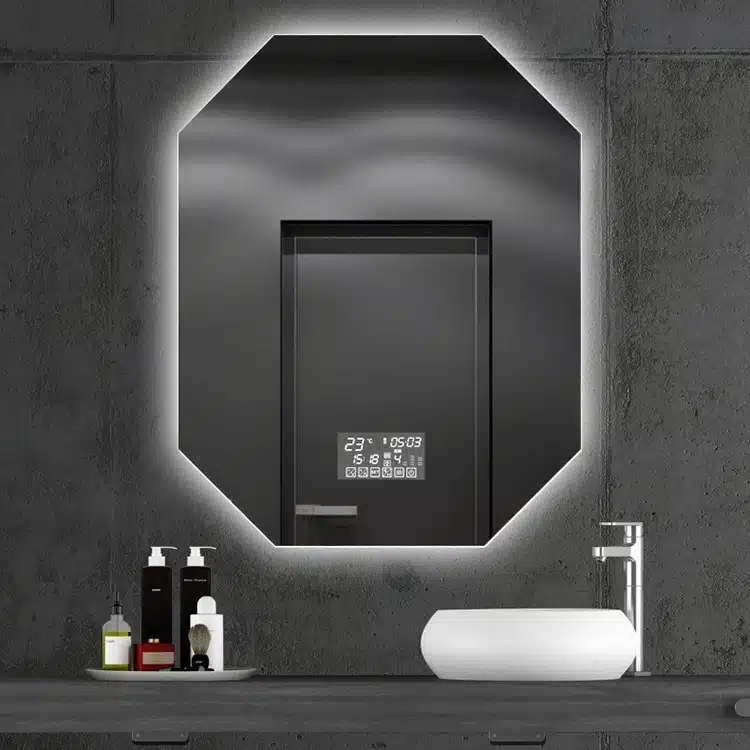
- Beyond cabinets, we have a separate production line capable of producing up to 50,000 smart LED mirrors monthly, showing our ability to handle large, comprehensive orders for complete bathroom solutions.
- This production scale provides reliable and timely delivery for major retail programs, private label lines, and large-scale development projects.
Factors That Influence Order Fulfillment Speed
While our factory’s total capacity is high, the fulfillment time for any specific 1,000-unit order depends on several key variables. These factors determine the final production schedule and must be accounted for when planning a retail program. Open communication about these details allows us to set accurate and dependable delivery timelines.
- Customization requirements, like unique Pantone color matching or sourcing client-branded hardware, directly influence material procurement and lead times.
- The complexity of the vanity design, including material choices like solid oak versus high-density PVC, affects tooling, finishing, and assembly processes.
- Standard lead times for custom production orders range from 20 to 45 days. This window allows for rigorous quality control at each of our five inspection stages before shipment.
Get Custom Bathroom Vanities for Your Market

EDI Integration: Why Is Electronic Data Interchange Mandatory?
For high-volume retail partnerships, Electronic Data Interchange (EDI) is not an optional upgrade; it’s the fundamental operating system for automating transactions, ensuring data accuracy, and maintaining supply chain visibility.
Automating Transactions for Speed and Efficiency
Large retailers depend on Electronic Data Interchange to automate the exchange of business documents like purchase orders, advance ship notices (ASNs), and invoices. This system eliminates slow, error-prone manual processes, allowing transactions to be processed up to 61% faster while drastically reducing administrative overhead for manufacturers. For a supplier like FocusCabinet, this means handling a massive volume of orders without a proportional increase in back-office staff.
- EDI integrates directly into a retailer’s inventory and procurement systems, removing the need for any manual data entry.
- It standardizes document formats (like the ANSI X12 standard common in North America), ensuring flawless communication between different business systems.
- This automation is the only practical way for both the manufacturer and the retailer to manage a high velocity of orders efficiently.
Minimizing Errors and Compliance Risks
Manual order processing is a liability. It introduces human error that leads to incorrect shipments, billing disputes, delivery delays, and costly chargebacks. EDI enforces data accuracy through standardized protocols, ensuring the information sent from our system is identical to the information received by the retailer. This digital handshake is critical for maintaining a reliable supply chain and meeting strict vendor compliance rules.
- By eliminating manual keying, EDI reduces the risk of errors in order quantities, item numbers, pricing, and shipping addresses.
- Big box retailers have zero tolerance for non-compliance. Automated EDI helps ensure every transaction meets their standards without fail.
- Clean, accurate data exchange builds trust and solidifies a supplier’s reputation as a dependable, low-maintenance partner.
Providing Real-Time Supply Chain Visibility
For a large retailer, knowing the precise status of inventory and incoming orders is not just important—it’s essential for business operations. EDI provides this real-time visibility into the supply chain. It allows retail partners to track products from the moment a purchase order is sent to FocusCabinet to its final delivery confirmation. This level of transparency is foundational to modern inventory management and forecasting.
- Retailers can automatically receive and process order confirmations, advance shipping notices, and inventory level updates.
- This data flow helps them manage stock, prevent out-of-stock situations that kill sales, and optimize logistics.
- For any global manufacturer, this degree of system integration is a baseline requirement to be considered a serious candidate for a large-scale retail program.
Compliance Standards: Why Are C-TPAT, Social Audits, and FSC Essential?
Failing to secure C-TPAT, social audit, and FSC certifications is a non-starter for serious B2B partnerships, effectively locking manufacturers out of major retail supply chains.
Compliance isn’t about optional badges; it’s the fundamental price of entry for selling to major retailers. These standards are non-negotiable requirements that validate a manufacturer’s operational integrity, from supply chain security to ethical labor and sustainable sourcing. Without them, your factory is invisible to the big players.
C-TPAT for Supply Chain Security
The Customs Trade Partnership Against Terrorism (C-TPAT) is a U.S. government framework that secures international supply chains. For a manufacturer, certification proves you have robust physical security, access controls, and procedural checks to protect goods in transit. Retail partners see C-TPAT as a critical risk-reduction measure. It streamlines customs processing at the U.S. border, making your shipments far more predictable and less prone to costly inspection delays. This reliability is essential for retailers managing tight inventory schedules.
Social Audits for Ethical Operations
Large retailers invest billions in their brand reputation and will not risk it on a supplier with questionable labor practices. Social audits are independent verifications that your factory meets fair labor standards, including reasonable working hours, fair wages, and a safe workplace. Passing these audits is a hard requirement. It demonstrates ethical alignment and protects both your business and your retail partner from the severe reputational damage associated with unethical manufacturing. Trust in this area forms the basis of any long-term B2B relationship.
| Standard | Primary Focus | Impact on Retail Partnership |
|---|---|---|
| C-TPAT | Supply Chain & Logistics Security | Reduces customs delays, ensures predictable delivery, and builds confidence in your operational control. |
| Social Audits (e.g., SMETA) | Ethical Labor & Workplace Safety | Protects the retailer’s brand reputation and is a non-negotiable requirement for corporate social responsibility. |
| FSC Certification | Sustainable & Responsible Material Sourcing | Meets stringent environmental procurement policies and provides a competitive edge with eco-conscious consumers. |
FSC Certification for Sustainable Sourcing
The Forest Stewardship Council (FSC) certification provides a verified chain of custody for wood-based materials. For products like solid wood or plywood bathroom vanities, this is not just a “nice-to-have.” It’s a critical requirement for retailers with strong environmental stewardship policies. FSC guarantees that the wood used in your products comes from responsibly managed forests that protect biodiversity. This certification acts as a powerful differentiator, meeting buyer mandates and appealing directly to consumers who prioritize and pay more for verifiably eco-friendly products.
Retail Packaging: How Do You Design for High-Impact Shelf Presence?
Packaging has evolved from a simple container into a critical sales tool, where data-driven design, sustainable materials, and structural innovation directly influence purchasing decisions on the crowded retail floor.
Using Consumer Data to Drive Design
Effective packaging no longer relies on guesswork. Modern brands use consumer research and behavioral psychology to engineer designs that connect with a target audience visually and emotionally. With reports showing that over 70% of purchasing decisions are influenced by packaging, this data-driven approach is non-negotiable. It’s about creating a direct line from shelf to shopping cart by understanding what makes a buyer stop and look.
- Analyze shopper data to select colors, fonts, and imagery proven to capture the attention of your specific demographic.
- Build your brand story directly onto the box with clear messaging that quickly communicates the product’s core value.
- Incorporate transparent windows or photorealistic product images to manage expectations and build immediate trust with the consumer.
Sustainable Materials as a Brand Differentiator
Environmental responsibility is now a powerful market differentiator. Using eco-friendly materials is no longer a niche strategy but a core expectation for a growing segment of consumers. Sustainable packaging serves as a clear signal of brand values and can become the deciding factor for shoppers comparing otherwise similar products. It’s a tangible demonstration of a brand’s commitment to more than just profit.
- Choose recyclable, compostable, or post-consumer content materials to align with the values of environmentally conscious buyers.
- Clearly communicate sustainability features on the packaging itself to educate consumers and justify a premium price point.
- Engineer the structural design to minimize material waste, which reduces your carbon footprint and can also lower shipping costs.
Structural Innovation for Visual Impact
In a saturated retail environment, a standard rectangular box is invisible. Custom structural forms, unique opening experiences, and robust protection create a memorable physical presence that captures interest. For example, brands selling through e-commerce channels need packaging that goes beyond aesthetics. Our own E-commerce Upgrade packaging uses 6-sided molded foam and reinforced cardboard, engineered to pass the ISTA 3A Drop Test. This isn’t just protection; it’s a guarantee of quality that reduces returns and protects brand reputation.
- Develop unique packaging shapes and custom forms that break the visual pattern and create a distinctive silhouette on the shelf.
- Use 3D rendering and virtual mockups to validate how your packaging will appear in a real retail setting before committing to a full production run.
- Add tactile finishes like embossing or soft-touch coatings that encourage shoppers to physically engage with the product.

Payment Terms: Can Your Business Sustain the Reality of Net 60 or Net 90?
Net 60 and Net 90 terms are standard for big-box retailers, but they create a critical cash flow gap that can cripple unprepared manufacturers who must pay their own suppliers on much shorter cycles.
Managing Cash Flow Under Extended Terms
Extended payment terms like Net 60 or Net 90 are a non-negotiable part of landing enterprise clients. While attractive on paper, they delay critical cash inflows and can severely strain your working capital. The core problem is a mismatch in payment cycles: you pay your material suppliers on Net 30 terms but wait up to three times as long to collect from your customer. This imbalance creates a predictable cash flow deficit, often forcing manufacturers to rely on expensive external financing just to cover payroll and operational costs.
| Payment Term | Impact on Manufacturer Cash Flow | Typical Scenario |
|---|---|---|
| Net 30 | Standard cycle. Generally manageable as it aligns with supplier payment schedules. | Raw material suppliers, smaller B2B accounts, standard invoicing. |
| Net 60 | Significant strain. Creates a 30-day cash gap that requires financial planning or a credit line. | Large retailers, wholesale distributors, and project-based contracts. |
| Net 90 | Severe cash flow gap. High risk and only sustainable for well-capitalized firms with large reserves. | Major big-box programs (e.g., Costco) and large-scale government contracts. |
Creditworthiness and Industry Norms
Offering Net 60 or Net 90 terms is common in industries where buyers operate on long budgeting cycles, like construction or large-scale retail. The challenge is that your own suppliers are unlikely to grant you the same flexibility. Securing extended terms from them requires a strong, established credit history and significant negotiating power. Wholesale Net 90 terms are almost always reserved for large, financially proven brands, leaving smaller manufacturers to absorb the financial pressure themselves.
Strategies to Mitigate Payment Risks
Longer payment cycles naturally increase the risk of late or non-payment, which directly erodes profit margins. To make these terms sustainable, you must build in mechanisms to protect your cash flow. One effective strategy is offering an early payment discount, such as “2/10 Net 60,” which gives clients a 2% discount for paying within 10 days. Other options include negotiating for partial upfront payments to cover material costs or tying payment schedules to specific production milestones. Automating your invoicing and payment tracking is also essential for managing collections efficiently and flagging overdue accounts before they become a serious problem.
“Program Buy” vs. “Special Order”: How Do These Purchasing Models Differ?
A “Program Buy” locks in volume and cost efficiency through forecasting, while a “Special Order” provides the flexibility for on-demand customization to meet specific project needs.
The “Program Buy” Model: High-Volume, Standardized Purchasing
A “Program Buy” is a purchasing model for large-scale distributors committing to consistent, high-volume orders of standardized products from a catalog. This approach is a classic Make-to-Stock (MTS) manufacturing strategy. We plan production based on long-term forecasts, not individual custom requests. This lets us optimize production lines for maximum efficiency and pass significant cost advantages on to our partners.
- Distributors commit to a set volume of products over a defined period, which enables true economies of scale.
- Production based on forecasts ensures a steady supply chain and minimizes lead times for popular, in-demand items.
- This model works best for partners stocking retail showrooms or supplying large developments that require product consistency.
| Attribute | Program Buy (Make-to-Stock) | Special Order (Make-to-Order) |
|---|---|---|
| Best For | High-volume distributors, retail stock replenishment. | Custom projects, unique client requirements, market testing. |
| Production Trigger | Long-term sales forecast and stock levels. | Specific, confirmed customer purchase order. |
| Minimum Order (MOQ) | High (e.g., 1x 40HQ Container). | Low (e.g., 20 Sets Per Model for production). |
| Customization Level | Standardized catalog items only. | High (custom dimensions, materials, colors, hardware). |
| Inventory Risk | Held by manufacturer and distributor. | Minimal; production starts only after the sale is confirmed. |
The “Special Order” Model: Customization and On-Demand Production
The “Special Order” model uses a Make-to-Order (MTO) strategy for bespoke product requests. This approach is for non-standard items, specific project requirements, or when a distributor needs unique configurations for its clients. Our full OEM/ODM services are built on this model, giving you direct control over the final product specifications to match market demands precisely.
- Partners can specify custom dimensions, Pantone colors, materials, or even branded hardware to meet unique project demands.
- Manufacturing begins only after a specific order is placed, which reduces inventory risk for highly specialized or experimental products.
- We support this model with a low MOQ of just 20 units per model, allowing partners to test market-specific designs or serve niche clients without a large upfront investment.
Conclusion
Selling to major retailers is a test of operational excellence, not just product quality. Mastering the non-negotiables like EDI integration, strict compliance, and challenging payment terms is the price of entry. These systems separate aspiring suppliers from long-term partners.
Before you commit to a full program, assess if your potential manufacturing partner meets these standards. We invite you to test our quality and process with a fully refundable sample tailored to your market’s needs.
Frequently Asked Questions
How to sell products to Home Depot?
To sell to Home Depot, you must first become an approved vendor through their online supplier portal. This process involves demonstrating robust supply chain capabilities, including EDI (Electronic Data Interchange) for automated ordering, and meeting their strict requirements for product safety, packaging (ISTA standards), and liability insurance. Success often depends on aligning your products with the needs of their category merchants and proving your ability to deliver consistently and on time.
Manufacturing for Costco?
Manufacturing for Costco requires a focus on high-volume production, exceptional quality control, and aggressive cost-competitiveness. Suppliers must pass rigorous factory audits for social and safety compliance. Products must be designed for value and packaged in “retail-ready” configurations for pallet display. Given Costco’s high-volume, low-margin model, a highly efficient and scalable supply chain is essential for a successful partnership.
What is EDI for furniture?
EDI (Electronic Data Interchange) is the standardized digital language used between furniture suppliers and retailers to automate business transactions. Instead of manual emails or faxes, EDI handles critical documents like Purchase Orders (850), Advance Ship Notices (856), and Invoices (810) electronically. For furniture suppliers, EDI is a non-negotiable requirement for working with big box retailers as it eliminates errors, speeds up the order-to-payment cycle, and ensures seamless integration with their logistics systems.
C-TPAT certification for furniture?
C-TPAT (Customs-Trade Partnership Against Terrorism) is a voluntary U.S. Customs and Border Protection program that strengthens international supply chain security. For a furniture importer, certification means demonstrating secure practices from the overseas factory to the U.S. warehouse. While not mandatory, C-TPAT certification is highly valued by big box retailers because it signals a low-risk, reliable supply chain, leading to faster customs clearance and fewer shipping delays.
Big box retailer supplier requirements?
Key requirements for big box suppliers include strict adherence to compliance and operational standards. This involves meeting product sustainability regulations like CARB Phase 2 and E1 VOC standards, ensuring reliable RTA (Ready-to-Assemble) construction to minimize returns, and achieving significant cost efficiency. Furthermore, suppliers must have robust EDI capabilities for order processing, meet stringent packaging and labeling rules for distribution centers, and carry sufficient liability insurance.
Private label vs white label furniture?
Both are models for selling manufacturer-produced goods under a retailer’s brand. Private Label is an exclusive arrangement where a product is custom-designed and manufactured for a single retailer (e.g., Crate & Barrel’s “Axis” sofa). White Label, in contrast, involves a manufacturer producing a generic product that multiple different retailers can purchase and sell under their own individual brand names. The core product is non-exclusive, but the branding is unique to each retailer.




0 Comments