
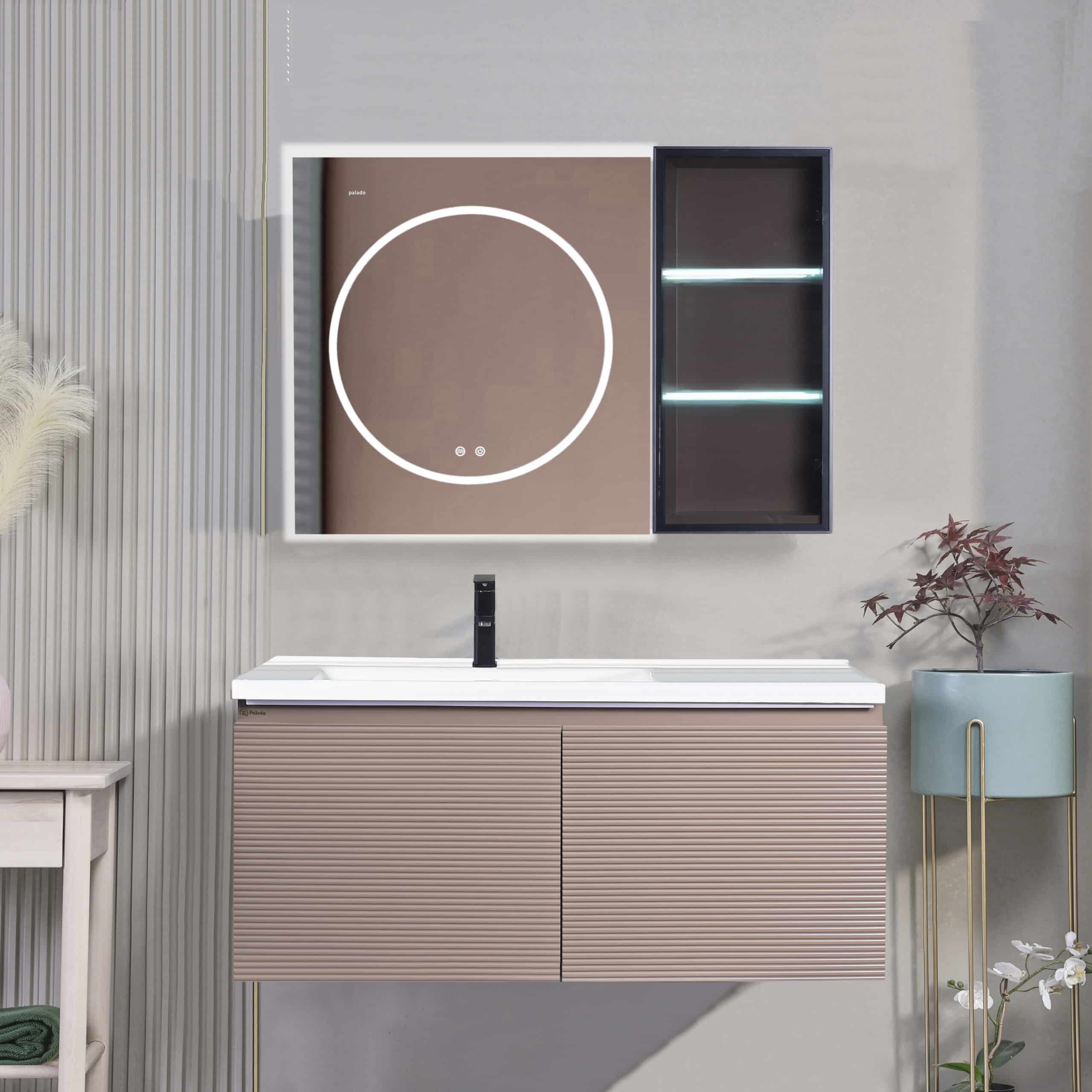
You are about to sign a purchase order for a container of bathroom vanities, and the only thing standing between you and a clean deal is the warranty. Most importers skim a supplier’s warranty page once, nod, and move on. That is a mistake. A bathroom vanity warranty terms comparison done before you order shows which supplier will stand behind the cabinet when a drawer slide fails on a job site, and which one hides behind fine print. Those differences surface months later, in claim emails and freight bills.
This guide decodes the warranty language you will meet in supplier contracts, the benchmarks worth tracking, and the questions to ask before the deposit clears. It uses Main Focus Cabinet (MFBATH), a bathroom vanity factory in Changge, Henan, China, as a working example, because a concrete contract makes abstract clauses easier to test against your own.
Key Takeaways
- MFBATH’s 2-year full-cabinet warranty covers the whole unit — structure, finish, and hardware — not just manufacturing defects, as confirmed by its users in 2026.
- The reported return rate sits below 1%, a benchmark to request from every supplier in the same units.
- Every cabinet passes 5 inspection checks before packing, and third-party inspection by SGS or TÜV is available with advance arrangement.
- The MOQ (minimum order quantity) is 15 sets per model, color, and size, with mixed loading allowed and the same 2-year coverage on every set.
- Free samples ship within 10 working days; bulk production runs 20–30 days, and total lead time to the US, Canada, and Mexico is 4–6 weeks.
- An ISO 9001 certified quality system, obtained in 2017 and confirmed valid in 2025, sits behind the factory’s quality claims.
Table of Contents
- Key Takeaways
- Table of Contents
- What a 2-Year Full-Cabinet Warranty Actually Covers
- The Warranty Terms That Matter in a B2B Contract
- Return Rates and Defect Benchmarks to Compare
- How to Compare Warranty Terms Across Suppliers
- Warranty Claims in Practice: The After-Sales Workflow
- Frequently Asked Questions
- The Bottom Line
What a 2-Year Full-Cabinet Warranty Actually Covers
Most suppliers sell warranties by the part. The frame gets 12 months, the finish gets 6, and the hardware gets nothing you would want to quote to a customer. MFBATH’s 2-year term takes a different shape: it covers the cabinet as a whole, and it does not limit itself to manufacturing defects. That one sentence changes how you plan replacement stock, how you answer a contractor’s complaint, and what a claim actually costs you in the end.
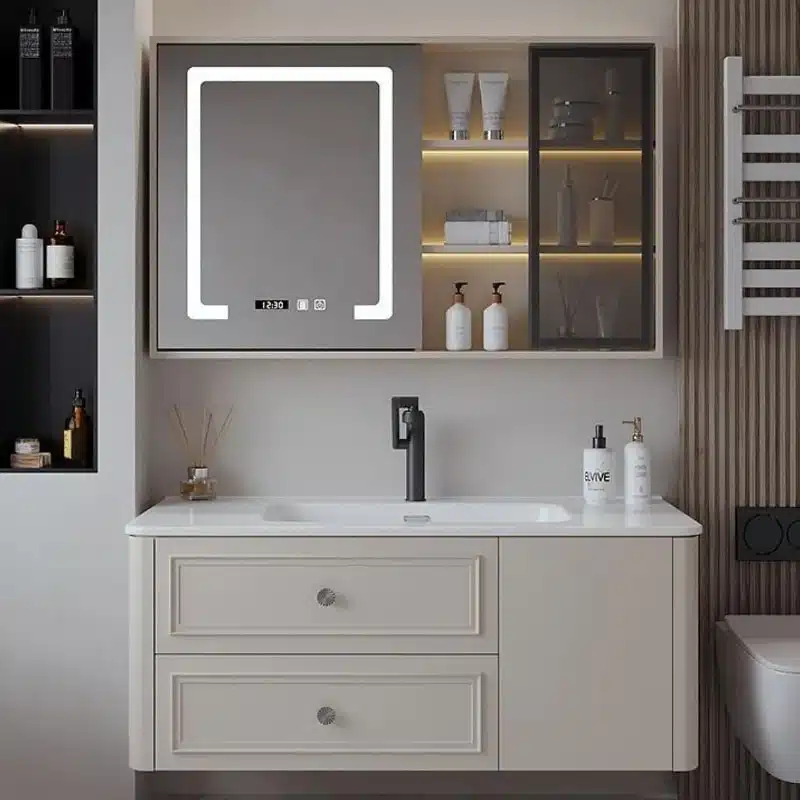
The distinction matters more than the number of months. A parts-only warranty forces you to argue over which component failed and whether the failure counts, and every argument costs a week and an email thread. A whole-cabinet warranty removes that debate: if the unit fails within the term, the claim covers the cabinet. For an importer reselling to contractors, that simplicity is worth something on its own, because you can promise your own customers a straight answer.
What the term includes is the second thing to check, and this is where a bathroom vanity warranty terms comparison that stops at the year count misses half the story. The 2-year term covers the structure, the finish, and the hardware: hinges, drawer slides, doors, and the box itself. What you should confirm in writing is what happens after the term — which spare parts stay available, for how long, and at what price.
Ask yourself what you actually sell. If your customers are contractors, the warranty they pass along matters as much as the one you hold. A full-cabinet 2-year term gives you something you can quote in your own sales documents without footnotes, and that is a positioning advantage no discount can replace.
What Buyers Usually Misunderstand
The most common misreading is that a cabinet warranty excludes finish and hardware. Some buyers assume a 2-year structural warranty covers only the box, then discover that a scratched door or a failing hinge counts as a consumable. Ask the supplier to state, in the contract, that hardware is included. If they hesitate, you have your answer.
Material quality belongs in the same conversation, because a warranty claim usually starts with a material complaint. The factory builds with PVC that is 100% waterproof, plywood in standard, BWR, and marine grades, solid wood with a multi-layer PU waterproof coating, and sintered stone rated at Mohs 7-8 hardness with 300°C heat resistance. Emission limits matter too: E1 at or below 0.1ppm, CARB Phase 2 and TSCA Title VI compliant boards, and low-VOC finishes keep the product defensible in regulated markets.
Finish claims are the most common source of warranty disputes in this product category, and the fix is procedural. Photograph the finish standard before the container leaves the factory, keep the sample card, and write the finish specification into the order. When a dispute arrives, you want a documented baseline, not a memory.
Warranty terms and order size intersect at the 15-set MOQ per model, color, and size. A 15-set first order is small enough to test the after-sales process without risking a full container, and mixed loading lets you combine models in one shipment while keeping the same 2-year coverage. If you are still pricing first orders, the unit price tiers guide shows what changes at different volumes.
Mixed loading is worth restating, because it changes the economics of testing. You can combine several models, colors, and sizes into one shipment at the 15-set per-SKU threshold, so the first container tests warranty service across your whole lineup rather than a single item.
The Warranty Terms That Matter in a B2B Contract
Warranty language only matters when it is written down. Verbal assurances from a sales manager do not survive a change of staff, and they definitely do not survive a dispute. The five clauses below decide what a claim actually costs you, and every one of them belongs in the purchase order, not in a chat window.
Coverage period comes first. A 2-year term is only meaningful when the start date is defined, so confirm whether it runs from shipment, arrival, or installation — each choice shifts your exposure by weeks. Repair versus replacement is second: a supplier who can choose to repair every time can keep sending you patched units while your customer waits.
The response window matters because a silent claims desk turns a covered defect into a lost resale. Ask how many days the factory takes to reply and what happens if they miss it. Freight responsibility is the clause importers overlook most: on a small order, shipping a replacement can cost more than the cabinet itself.
| Term | What to Ask | Why It Matters |
|---|---|---|
| Coverage period | When does the 2-year term start, and what event extends it? | Shipment, arrival, and installation dates each shift your exposure by weeks. |
| Repair vs. replacement | Does the supplier repair, replace, or refund, and who chooses? | A repair-only clause leaves you with patched units and unhappy end customers. |
| Response window | How many days before the factory replies to a claim? | A silent claims desk turns a covered defect into a lost resale. |
| Freight responsibility | Who pays shipping on the replacement unit? | On small orders, freight can exceed the value of the cabinet. |
| Written terms only | Will the terms be attached to the purchase order? | Unwritten promises vanish when the sales contact changes. |
Repair versus replacement matters twice: once for the claim itself, and once for what you tell your customer. If the remedy is repair, ask how long it takes and whether it happens at the factory or on site. In practice, a fast replacement beats a slow repair every time a customer is waiting.
Response windows deserve a number in the contract. Ask for the factory’s standard reply time in days, and ask what evidence the claims desk expects on day one, so you are not re-litigating the process while a customer waits.
Payment terms belong in the same review. MFBATH works on 30% deposit to order, with the balance due within one week of the draft bill of lading, FOB (free on board) Qingdao Port. Nothing about that structure is unusual, but it means your warranty leverage is strongest before the deposit is paid — use it. The same principle shows up in regulated markets, where EU consumer protection law and UK consumer rights rules treat warranty language as binding, and the purchase guide library applies the same plain-language standard to pricing, production, and lead times.
Return Rates and Defect Benchmarks to Compare
A warranty is only as good as the defect rate underneath it. A supplier can promise the moon in clause 4 and still cost you a season of claims if units leave the factory with problems. That is why the return rate belongs inside any bathroom vanity warranty terms comparison: MFBATH reports a return rate below 1%, and you should ask every supplier for the same number, in the same units, over the same period.
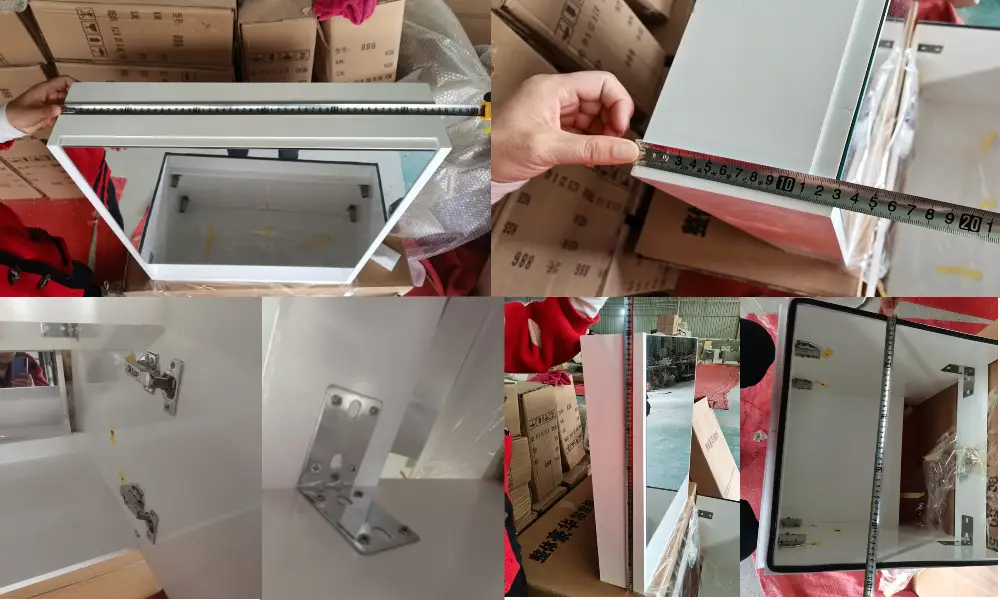
Behind that number sits a process you can verify. Every product passes 5 inspection checks before it is packed, and the buyer gets the evidence: internal quality control (QC) reports plus photos and video are shared with buyers as standard. When a supplier offers inspection data instead of anecdotes, the warranty discussion changes tone entirely.
Independent verification is available too. Third-party inspection through SGS or TÜV can be arranged in advance, and the factory in Changge has the capacity to absorb it — 10,000 m² of floor space, 95 employees, and roughly 5,000 sets per month. Those numbers matter less than the habit behind them: a factory that opens its process to inspectors tends to write warranties it can keep.
Ask how the 5 inspection checks are distributed across production. In a factory running 5,000 sets per month, the difference between five checks on one sample and five checks on every unit is the difference between a statistic and a process. Get that detail in writing.
Context helps you read the number fairly. The factory serves 1000+ dealers across 20+ countries, which means the return rate has been tested across real shipments, not pilot runs. A benchmark built on volume is harder to fake than one built on a single friendly account.
The sub-1% figure only means something if the supplier can define it. Ask whether returns are measured against units shipped, whether they include cosmetic issues or only functional failures, and whether the count covers all models or just the top-selling ones. Consistent definitions are what make a benchmark comparable.
Return rates are one half of the benchmark; defect categories are the other. The vanity defect rate benchmarks article breaks down where failures actually occur in this category, so you can compare a supplier’s claims against the patterns you see in your own market.
Warranties You Can Rely On
Browse this product, solution, or service page to explore relevant offerings.
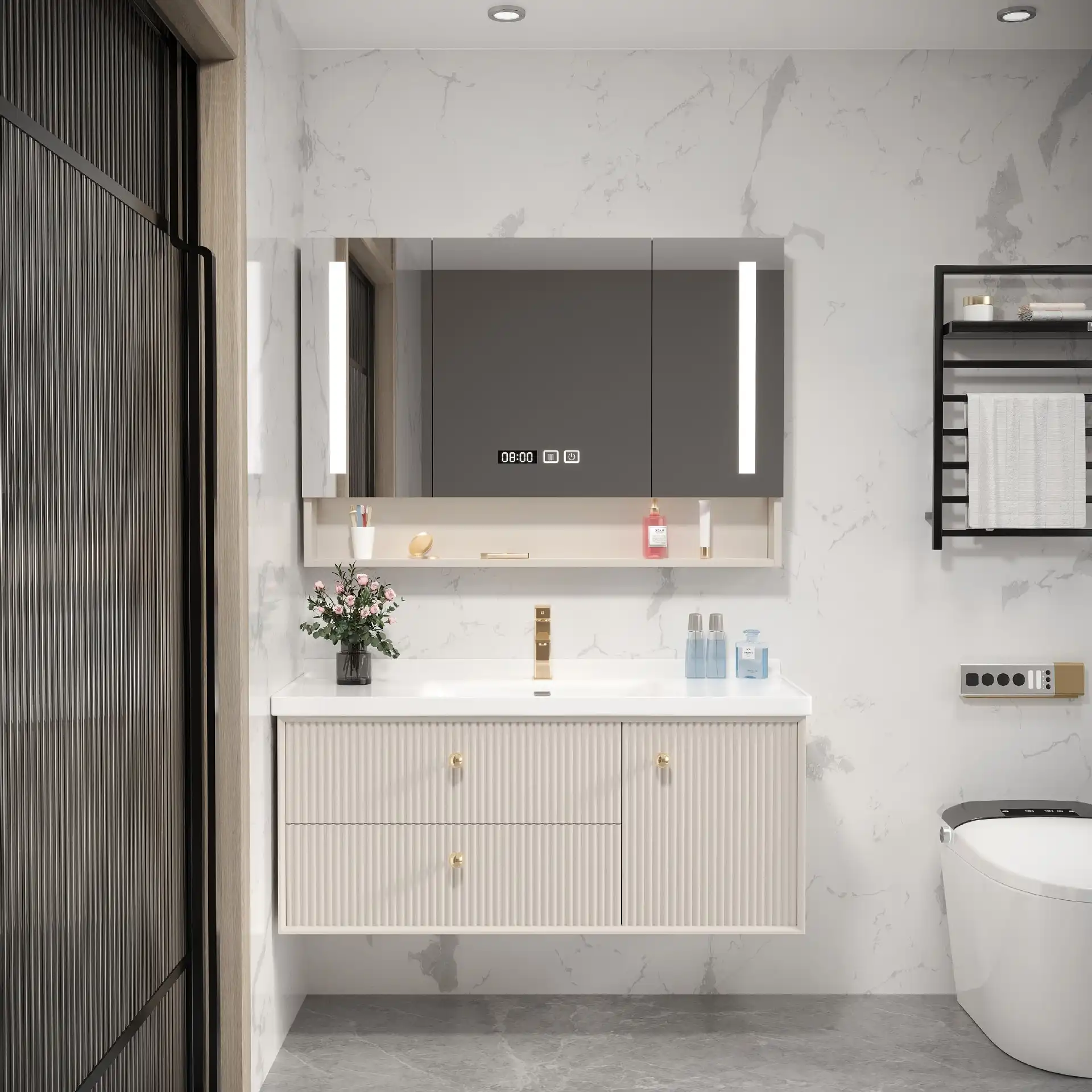
How to Compare Warranty Terms Across Suppliers
The fastest way to run a bathroom vanity warranty terms comparison is to ask the same six questions in writing and grade the answers against each other. Vague replies cost nothing to write and nothing to fix later. Concrete answers, with dates and names attached, are what survive a dispute.
The Six-Question Checklist
- How long is the warranty, and does it cover the whole cabinet or selected parts?
- What is your return rate, and can you show me the data behind it?
- How many inspection checks does each unit pass, and can I see the QC records?
- What evidence opens a claim, and who pays freight on the replacement?
- Which spare parts do you stock, and for how long after the term ends?
- Will all of this be written into the purchase order before the 30% deposit is paid?
Notice that question 6 is the hinge. A 2-year warranty that exists only in a sales call is a marketing claim; the same sentence inside the purchase order is a contract. Treat the written version as the only version, and ask for it before the 30% deposit is paid.
Written versus verbal is the distinction that creates most of the follow-up emails in this business. A salesperson’s “we take care of our customers” is not a clause; the same sentence on letterhead, dated and signed, is. Collect the written version from every supplier you shortlist, and you will find the comparison does itself.
Evidence requirements deserve their own paragraph, because claims die there. MFBATH asks for photos or video of the issue plus the packing list and order number, and internal QC reports back the review. If a supplier demands a third-party laboratory report for every claim, price that into your decision — proving the defect can cost more than the cabinet.
Spare parts planning is the last item. Ask which components are stocked and how the factory handles a cabinet beyond repair. With 40,000+ customization combinations across sizes, colors, and logos, matching a replacement panel is easier when the factory keeps finish and material records for each order.
Once the terms line up, the product still has to justify the contract. Review the bathroom vanity product lines on the product page and check that the models you are pricing exist in the sizes and finishes your customers actually order. A warranty on the wrong product is still the wrong product.
Warranty Claims in Practice: The After-Sales Workflow
Paper terms describe the warranty; claims define it. The practical question is what happens after you email the supplier a photo of a failed hinge with an unhappy customer on the phone.

First, gather what the factory will ask for: photos or video of the issue, the packing list, and the order number. Second, send it through the channel your contact agreed to. Third, expect the factory to pull the internal QC records for that batch — this is where the 5 inspection checks pay off, because the file exists. Fourth, agree on the remedy. Fifth, arrange the replacement and close the loop with your customer.
The evidence standard sets the tone for the whole claim. When a factory already shares internal QC reports plus photos and video with buyers, the review starts from a shared record of what left the factory. Compare that with a supplier who has never produced a QC document, and you can predict how painful the first dispute will be.
Set expectations for how long a remedy takes. Bulk production runs 20–30 days, and total lead time to the US, Canada, and Mexico is 4–6 weeks, so a replacement unit will not arrive overnight — plan spare stock accordingly. The lead time planning article walks through scheduling so a claim does not strand your own customers.
Some warranties are not worth the paper they are printed on, and you can usually tell by the escape hatches. If the supplier keeps an undefined response window, if freight always sits with the buyer, or if the remedy is left “at our discretion,” the warranty is a marketing artifact — and the lesson carries back into your bathroom vanity warranty terms comparison: promises you cannot test are promises you do not have.
Claims also test whether the factory treats the warranty as a cost center or a relationship. Watch how fast the reply comes, whether the remedy matches what was promised, and whether the same person stays on the file from opening to close. That pattern tells you more than any clause.
One final check: keep your free sample. It ships within 10 working days, and it gives you and your customers a physical reference point when a finish or color dispute arrives.
Frequently Asked Questions
Does the 2-year warranty cover hardware like hinges and drawer slides?
Yes, the full-cabinet 2-year term covers the cabinet as a whole, including hardware, not just structural defects. Before ordering, confirm in writing that no parts are excluded, because parts-only language is where most disputes start.
What does MFBATH require to process a warranty claim?
Photos or video of the issue, plus the packing list and order number, are the starting point. Internal QC reports and inspection records from the 5 checks per unit back the claim review, so keep your order paperwork organized from day one.
How do return rates and warranty terms relate to MOQ?
The return rate below 1% and the 15-set MOQ work together: you can test a small first order and still receive the same 2-year full-cabinet coverage on every set, which keeps your initial exposure and risk low.
Does the warranty transfer if I resell the vanities to my own customers?
Yes, and that is the point of a full-cabinet term. You can pass the same 2-year coverage to contractors or retailers without narrowing it, because the term covers the cabinet as a whole. Put the pass-through in writing so claims stay clean.
The Bottom Line
The useful version of a bathroom vanity warranty terms comparison ends with a decision, not a file folder. Put the 2-year full-cabinet term, the sub-1% return rate, the 5 inspection checks, and the evidence requirements in writing, and place a 15-set test order before you scale. If the terms survive those questions, they will survive a claim.




0 Comments