

Bathroom vanity lead time planning lives or dies on one date: the day your customer expects delivery. Promise a 4-6 week window first, and you will find that production, ocean transit, and customs clearance together eat the whole calendar. A 20-30 day production run consumes half that window. Ocean transit from Qingdao needs 12-16 days to the U.S. West Coast and 25-35 days to the East Coast, while clearance plus inland haul adds 3-7 days more. The math collapses before a container is booked.
Buyers who work backwards from the target arrival date keep their schedules honest. Missed store openings, idle installation crews, and rebooked freight at peak rates all trace back to a promise made without a dated plan. This guide covers the real duration of each stage, the contract language that protects you, and a scheduling template you can hand to a supplier this week.
Key Takeaways
- Work backwards from the customer’s arrival date; the first date you lock is the last one that can move.
- Free sample confirmation takes 10 working days; bulk production runs 20-30 days at Main Focus Cabinet (MFBATH).
- Ocean transit from Qingdao runs 12-16 days to the U.S. West Coast and 25-35 days to the East Coast via the Panama Canal.
- Destination clearance plus inland haul adds 3-7 days after the vessel arrives.
- MFBATH quotes 4-6 weeks total for U.S., Canada, and Mexico orders, including production, ocean transit, and real-time tracking.
- Add a 10-15% buffer to every commitment, and expect August-October peaks to stretch the ocean leg.
- Name the Free On Board (FOB) date, delay clause, and partial shipment rights in writing before you pay the 30% deposit.
In This Guide
- Plan the Timeline Backwards from Delivery Day
- What Each Stage Really Takes
- Peak Season, Holidays, and Uncertainty
- Locking Lead Time into the Contract
- A Scheduling Template for Distributors and Buyers
- Frequently Asked Questions
Plan the Timeline Backwards from Delivery Day
Reverse the usual order of planning. Start with the delivery date your customer has already promised, then subtract every stage in reverse until you reach the order date. A distributor with a six-week commitment to a contractor can run this test in five minutes. Production at MFBATH takes 20-30 days. Ocean transit from Qingdao needs 12-16 days to the West Coast, and clearance plus inland haul takes 3-7 days after arrival.
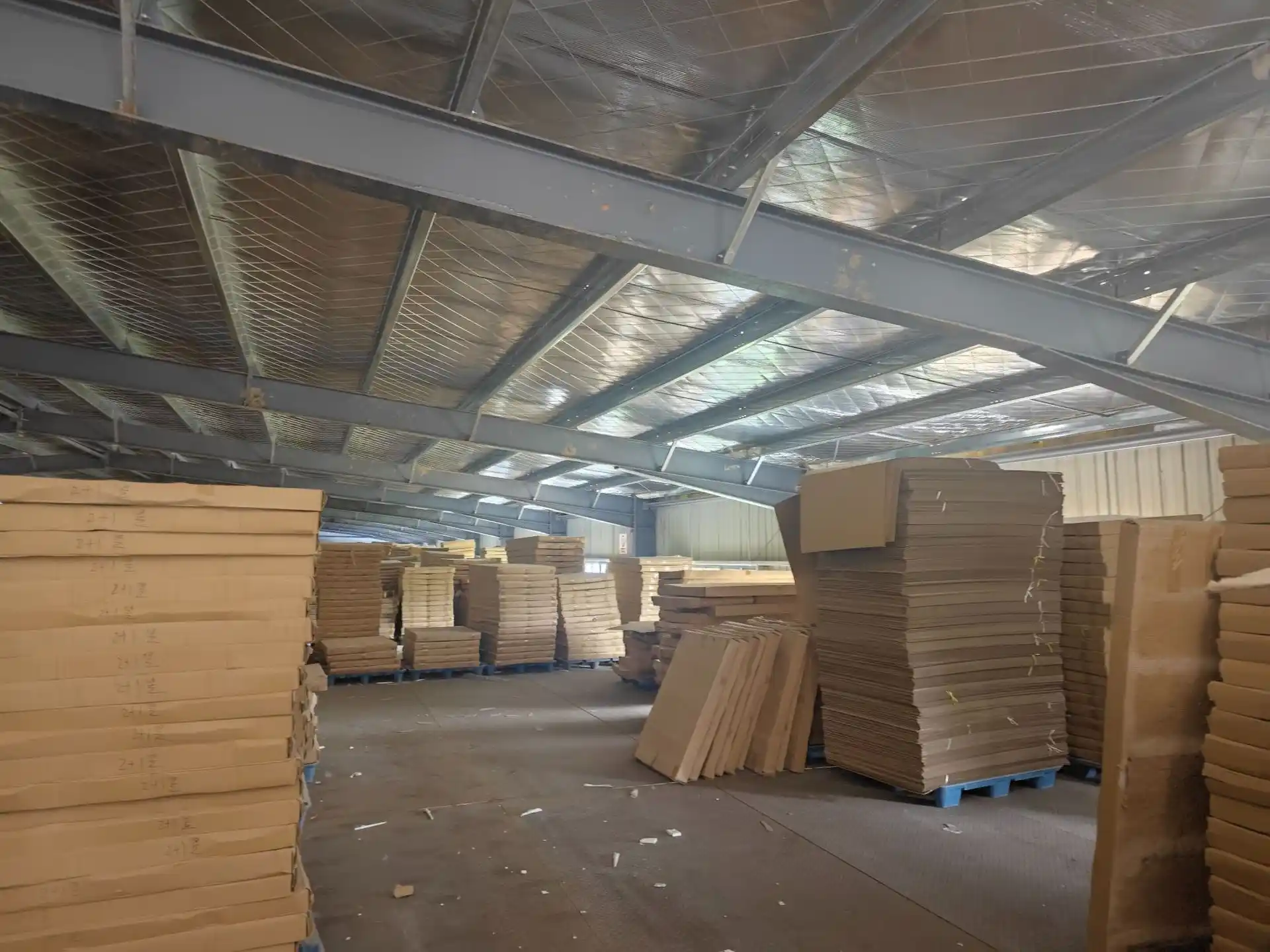
Run the arithmetic forward and the gap appears in week four, when the container has not sailed and the contractor’s crew is scheduled. Do the math backwards and the conflict surfaces before anyone signs. Reverse planning converts a vague promise into dated milestones that each party can verify. The factory’s own numbers anchor the plan: Main Focus Cabinet, founded in 2015 in Changge, Henan, runs 95 employees. Its 10,000 m² plant carries 5,000 sets of monthly capacity.
Capacity figures tell you how many orders move in parallel, not just how long one order takes. A factory at full load queues new orders behind existing ones, so the quoted production window widens. Ask for the current load before you trust a 20-30 day window. The table below works backwards from a June 30 target arrival at a U.S. West Coast warehouse.
Working backwards from a June 30 target arrival (U.S. West Coast)
| Step | Working backwards | Date |
|---|---|---|
| Target arrival at warehouse | Customer promise fixes this | June 30 |
| Clearance and inland haul (3-7 days) | Vessel arrives at port | June 23-27 |
| Ocean transit (12-16 days) | Container sails from Qingdao | June 7-15 |
| Bulk production (20-30 days) | Production starts | May 8-18 |
| Sample confirmation (10 working days) | Order placed with factory | April 24 – May 4 |
The table exposes the real deadline: the order must reach the factory between April 24 and May 4, roughly eight weeks before the target arrival. Add the recommended 10-15% buffer and the working order date moves earlier still. That cushion keeps a store opening or a project installation intact when a single segment slips. Every week you delay the order placement narrows the buffer you can afford.
Most buyers plan forward: they place the order, then count days until the container arrives. That method looks fine on a spreadsheet and fails the moment production runs long and the sailing date moves. Reverse planning inverts the question from when the factory can ship to when the factory must ship. The answer becomes the FOB date you write into the contract. Start with the last date, and every earlier date falls into place.
Assign an owner to every line of the timeline. The factory owns sample confirmation and production. Your freight forwarder owns the booking and the sailing date. Clearance belongs to your customs broker. When one owner misses a milestone, the next owner needs notice the same day, not a week later; a timeline without owners is a wish list.
What Each Stage Really Takes
Each stage in the chain runs on its own clock, and none of them wait for your sales calendar. Sample confirmation at MFBATH takes 10 working days on free samples. Bulk production then runs 20-30 days, with every piece passing 5 inspection checks before it packs. ISO 9001 and ISO 14001 certified plants follow documented processes that make these windows repeatable, not accidental.
Sample rounds set the production clock. MFBATH sends free samples within 10 working days, and buyers who approve the sample in that window keep the order on schedule. Each revision round adds another 10 working days. Custom dimensions and colors need 15 sets minimum, so confirm those details during sampling, not during production. Repeat buyers who skip the sample round shorten the chain by the full 10 working days.
Know which segment you control and which one you do not. Order confirmation, sample approval, and the payment sequence sit inside the factory relationship. Ocean transit belongs to the carrier, and clearance belongs to customs and your broker. Treat every handover as a date with an owner.
Production and Shipping Windows
Production time depends on what you order, not just on a quote. Custom sizes and colors at MFBATH start at 15 sets per model, and the Minimum Order Quantity (MOQ) applies per model, color, and size. Mixed container loading lets you combine different models and sizes in one container, which keeps volume high without overordering a single SKU. A standard 20-30 day run covers most single-model orders.
Real durations by stage
| Stage | Window | What decides it |
|---|---|---|
| Order confirmation and free samples | 10 working days | Model, materials, finish approval |
| Bulk production | 20-30 days | Custom sizes, colors, factory load |
| Ocean transit to U.S. West Coast | 12-16 days | Carrier schedule, port congestion |
| Ocean transit to U.S. East Coast | 25-35 days | Panama Canal transit, weather |
| Clearance plus inland haul | 3-7 days | CBP filing, truck and rail availability |
Container choice changes cost more than speed. A Less than Container Load (LCL) shipment pays per cubic meter and shares the box with other cargo. Taking the whole box is the Full Container Load (FCL) route, which simplifies handling at both ends. The loading math, including how many vanities fit per box, is worked out in the FCL vs LCL container loading guide.
Production windows widen when the order mixes many models. Every line change costs setup time on the floor, so a multi-model container runs longer than a single-model order at the same volume. MFBATH supports mixed container loading with different models and sizes in one container, which spreads the setup cost across your order instead of into your schedule. Ask for a production plan per model, not one date for the whole order.
Clearance and Inland Haul
Customs is the stage buyers forget most often, and it is the one that breaks schedules. U.S. Customs and Border Protection (CBP) expects the entry filing and supporting documents before the vessel arrives. Clearance plus inland trucking or rail typically runs 3-7 days after discharge. A broker who pre-files lands at the short end of that range. First-time importers who file late land at the long end, so start with the CBP import basics page before you book anything.
Inland distance matters as much as port speed. A West Coast arrival with rail to the Midwest behaves differently from an East Coast arrival with a short truck leg. Confirm the final delivery mode before you fix the target date. The 4-6 week total MFBATH quotes for U.S., Canada, and Mexico covers production plus logistics with real-time tracking on every container.
The free sample round doubles as your timing audit. A factory that returns a correct sample in 10 working days usually holds its production dates too. Plants that drift on the sample, on drawings, or on the proforma invoice will drift again on the container. Track the early signals, because they predict the later ones.
Peak Season, Holidays, and Uncertainty
The calendar has seasons, and freight has a peak. Between August and October, carriers tighten space and raise rates as importers stock for the holidays. A booking that clears in May can stall through the peak, and carriers roll delayed containers onto the next sailing. The pre-booking freight playbook explains how to lock space and rate before the rush.
Peak Season Math
Buffer policy costs nothing until you need it, and it protects the whole schedule. Add 10-15% of the total window to every promise you make to a customer. A 4-6 week commitment with a 15% buffer becomes a 4-7 week plan, and the extra week absorbs most realistic slippage. Distributors who skip the buffer end up rebooking freight at peak rates, which costs more than the buffer ever did.
Watch weather and port congestion as well. Typhoon season on the China coast and winter storms in North America both delay sailings. Real-time tracking from MFBATH shows where the container sits, which lets you warn your customer early instead of late. An early warning preserves the relationship even when the date moves.
Chinese Factory Holidays
Chinese factory holidays move the production clock in ways Western calendars do not. The Spring Festival (Chinese New Year) and the National Day week in early October stop production while workers travel home. Orders placed just before those breaks wait for the plant to restart and re-ramp. Ask the factory to publish its holiday shutdown dates in the quotation, then plan the order to clear the factory before the break.
When a delay does happen, act on the first notice. Shift the booking to the next available sailing, split the shipment if partial shipment rights exist, or air-freight the missing pieces when the customer date cannot move. Each option costs different money, and deciding late costs more than deciding early. A written notice obligation in the contract forces the factory to surface the problem while you still have options.
Plan Your Vanity Order Timeline with Us
Browse this product, solution, or service page to explore relevant offerings.

Locking Lead Time into the Contract
A lead time is not a promise unless the contract names dates and consequences. The MFBATH order flow runs: 30% deposit to place the order, production over 20-30 days, and the balance due within one week after the draft Bill of Lading (BL) arrives. That preliminary bill appears when the vessel sails. The factory releases the container once the balance clears.
Three clauses decide whether the schedule survives contact with reality. The Free On Board (FOB) date sets when the factory must have goods ready at the port of Qingdao. A delay clause states what happens when that date slips. Partial shipment rights let the factory ship finished models while the rest of the order continues production. The International Chamber of Commerce (ICC) publishes the Incoterms rules that define the FOB handover point.
The FOB Date
Name a shipment-ready date, not a production month. A contract that reads FOB Qingdao with a specific date gives you a measurable trigger for the balance payment and the freight booking. When the factory misses the date, the delay clause applies without argument. Choosing FOB instead of Delivered Duty Paid (DDP) also changes who controls clearance and inland freight; the FOB vs DDP landed-cost comparison shows how that choice moves the total.
Delay and Partial Shipment Clauses
Write down what happens when production slips. A practical clause obliges the factory to notify you within a set number of days of any delay and to book the earliest next sailing. Partial shipment rights protect your schedule without cancelling the order. MFBATH supports mixed container loading, so a partial Full Container Load (FCL) can carry several models at once. Buyers who skip these clauses wait for the whole order or pay extra to split it later.
Payment Terms as a Scheduling Lever
The 30% deposit does more than fund materials; it places the order in the production queue. Factories schedule by deposit date, so an order that pays in May starts before an order that pays in June. The balance due within one week of the draft BL keeps documents moving while the vessel is at sea. Hold the payment sequence and the schedule holds with it.
Certifications are schedule evidence, not decoration. An ISO 9001 certified plant documents its production and inspection steps, which makes delay diagnosis faster. ISO 14001 covers environmental management. Both standards sit behind the 5 inspection checks on every vanity, and MFBATH backs full-container orders with a 2-year warranty for defects that surface after the goods land.
Put the milestone dates in the purchase order, not just in the chat thread. A written production start date, a written FOB date, and a written notice obligation give you leverage when something slips. Keep the correspondence chain short: one order number, one email thread, one set of dates. When the factory updates a date, ask for the reason in one line and the revised date in the next.
A Scheduling Template for Distributors and Buyers
Attach this template to every purchase order. It assumes a U.S. West Coast target and uses the ranges from the earlier tables. East Coast buyers swap the 12-16 day ocean window for the 25-35 day Panama Canal window. Every party that touches the order updates its own line when reality moves.
Order-to-arrival schedule for one SKU line (U.S. West Coast target)
| Milestone | Window | Owner |
|---|---|---|
| Sample confirmed | 10 working days | Factory and buyer |
| Production complete, FOB Qingdao | 20-30 days | Factory |
| Vessel arrives at West Coast port | 12-16 days after sailing | Carrier |
| Clearance and inland haul complete | 3-7 days after arrival | Broker and buyer |
| Goods at your warehouse | 4-6 weeks total | Buyer |
Run the template once per SKU line, because custom sizes and colors start at 15 sets and can shift the production window. Add the 10-15% buffer to the total before you promise anything to your customer. If the buffered date lands past the contractor’s deadline, you know before payment, not after. That is the entire point of reverse planning.
New importers should treat the first container as a learning run and keep the mix small. Trial orders move differently: a 15-unit air shipment versus a 500-unit sea shipment changes the cost and schedule picture completely, and the trial-order landed cost guide lays out the difference. Distributors starting from zero can follow the first-container strategy playbook. MFBATH logistics planning for U.S., Canada, and Mexico also saves roughly 15% on freight, which matters when the buffer adds carrying cost.
The template works for any market, not just North America. More than 1,000 distributors across 20+ countries that already buy from MFBATH operate on the same reverse calendar. What changes is the ocean leg and the clearance rules at the destination. Keep the structure, swap the numbers, and the plan stays honest.
Frequently Asked Questions
How long does a bathroom vanity order from China really take?
For U.S., Canada, and Mexico, MFBATH quotes 4-6 weeks total, including 20-30 days of production and ocean transit, with real-time tracking on every container. Add a 10-15% buffer when the order runs in peak season or carries custom sizes and colors.
What buffer should I add to a vanity delivery promise?
Add 10-15% of the total window on top of the factory quote. Clearance alone can take 3-7 days, and a missed sailing in peak season stretches the ocean leg. The buffer covers the segments you do not control.
Can I ship part of my vanity order while the rest is still in production?
Yes, if the contract grants partial shipment rights. MFBATH supports mixed container loading, so completed models and sizes ship first. The Minimum Order Quantity (MOQ) of 15 sets per model, color, and size still applies to each line.
The Bottom Line
Lead time is a contract, not a hope. Work backwards from the customer’s delivery date, subtract clearance, ocean, production, and sampling, then add a 10-15% buffer before you commit. Name the FOB date, delay terms, and partial shipment rights in writing, and pay the 30% deposit only when the schedule fits. Start the clock at least 4-6 weeks out for U.S., Canada, and Mexico shipments.





0 Comments