
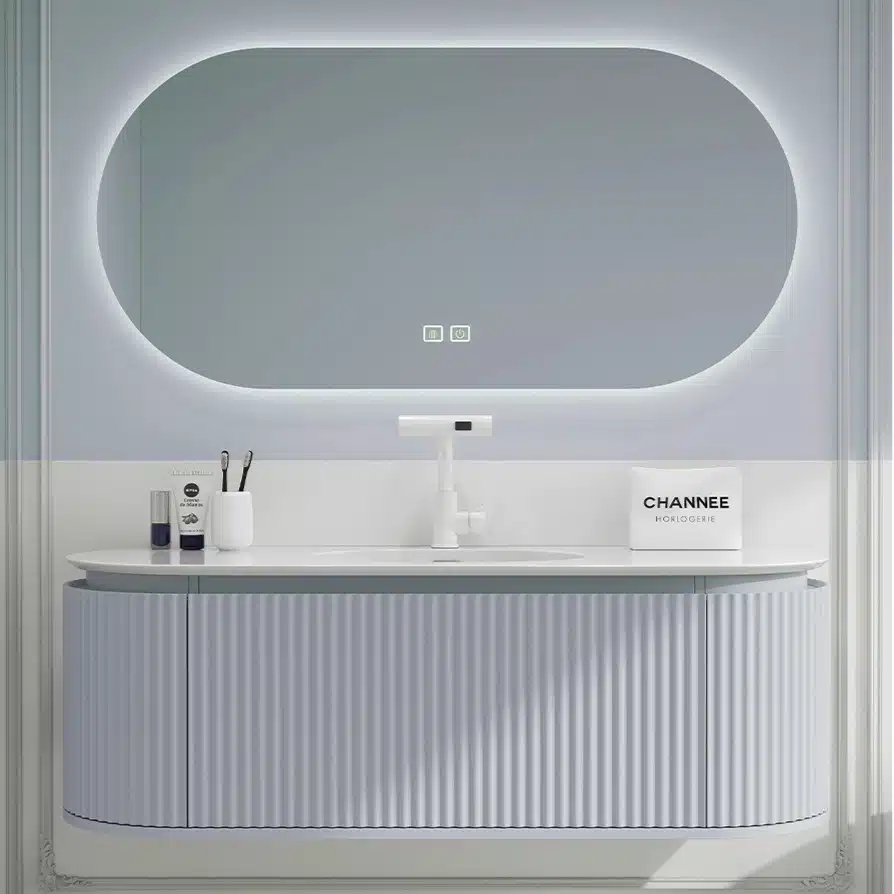
Bathroom vanity sourcing China is a minefield of middlemen who claim to be manufacturers. Over 60% of suppliers on Alibaba advertising “factory direct” are actually trading companies or small workshops. They take your order, mark up the price by 30%, and hand it off to a different factory that has no quality control. You pay more and get lower quality. MFBATH owns its 10,000-square-meter facility in Changge, Henan. We do not outsource our production. We control the CNC machines, the edge banders, and the five-stage inspection process from raw material to final loading.
Distinguishing a real factory from a broker requires more than checking a business license. Trading companies rent factory floors for an hour to film a quick video tour. A real manufacturer will show you specific machine model numbers, like a CNC 2040, and let you watch the production line run. They also have consistent material sourcing records. If you receive a perfect sample but the bulk order arrives with different hardware or thinner panels, you have been sold by a trader. Direct factories cut out the intermediary markup and guarantee consistent lead times of 30-45 days, compared to the unpredictable 60+ days typical of brokered orders.
Why Most “Factory Direct” Deals Are a Trap
Over 60% of Alibaba ‘factory direct’ claims are trading companies.
Most novice importers lose money because they pay a 15-30% markup for a middleman who cannot guarantee quality. Trading companies source from multiple workshops, meaning your first sample might be perfect, but your bulk order will come from a cheaper, lower-quality source. This is the “sample trap” that destroys distributor margins.
A real factory owns its production line and shows you specific machine model numbers, like a CNC 2040, rather than generic photos. If a supplier cannot show you their exact production schedule or specific equipment during a video call, they are likely a trader renting a factory floor for an hour.
-
- The Factory Tour Trick: Traders rent space for an hour. A real factory has workers in uniform and consistent production lines you can see live.
- The Sample Trap: Traders send a perfect sample from a real factory, but bulk orders use cheap MDF instead of plywood to make margin.
- The Price Floor Secret: If a quote is 20% lower than average, they are swapping materials. Real factory pricing is raw material cost plus labor.
- The Quality Gap: A 5-stage QC process reduces defects to under 2%. Traders have no oversight, leading to 8-12% defect rates and delayed shipments.
3 Red Flags: How to Spot a Trading Company
Over 60% of Alibaba ‘direct’ suppliers are traders hiding behind rented factory tours.
The bathroom vanity industry in China is flooded with middlemen posing as manufacturers. If you are sourcing for a large project, you cannot afford to pay a 15-30% intermediary markup or risk receiving inconsistent quality. Trading companies are excellent at marketing, but they have zero control over the production line, material sourcing, or lead times. To protect your margin and reputation, you must learn to spot the red flags that separate a real factory from a virtual trading company.
-
- The ‘Factory Tour’ Trick: Trading companies often rent a factory floor for an hour to show buyers. A real manufacturer, like MFBATH, owns a 10,000㎡ facility and can show you specific machine models (e.g., high-precision CNC cutters) and workers in uniform. If they cannot give you a live video call of the active assembly line, they are likely a trader.
- The ‘Everything Store’ Inventory: If a supplier claims to manufacture everything from sintered stone basins to PVC vanities, solid wood mirrors, and generic sanitary ware, they are sourcing from multiple third parties. A true OEM factory specializes in specific material paths (like PVC or plywood) to maintain quality control. If their catalog is too broad, their quality is likely diluted.
- Vague MOQs and Lead Times: Real factories operate on strict production schedules. A genuine manufacturer can guarantee consistent lead times of 30-45 days for bulk orders. Traders often provide vague timelines because they are waiting on their own upstream suppliers. Furthermore, a real factory supports a low MOQ of 10-20 units for custom Pantone color matching, whereas traders often inflate minimums to force bulk purchases of stock items.
- Missing Certification Details: Trading companies rarely have direct access to the actual test reports for the materials they sell. A verified factory will provide specific, verifiable certifications such as UL/CSA for North America, CE and E1 grade formaldehyde emissions for Europe, and AS/NZS standards for Oceania. If they cannot show you the official ISO 9001 or ISO 14001 certificates under their own company name, do not trust them.
Real Factory vs. Trader: A Cost & Quality Breakdown
A direct factory undercuts trading companies by 15-30% on unit price while guaranteeing consistent 30-45 day lead times.
The difference between a real manufacturer and a trading company is not just the label on the invoice. It is the margin you lose and the risk you take. Over 60% of suppliers on Alibaba claiming to be “factory direct” are actually trading companies or small workshops. Buying from a trader means you are paying a 15-30% markup that vanishes if you source from a direct manufacturer.
-
- Price Per Unit: Direct factories cut out the intermediary markup. Expect a 15-30% price advantage over trading companies for the exact same material specifications and hardware.
- MOQ Differences: Trading companies often offer low MOQs (10-20 units) to attract novices, but they source from multiple factories. A real factory typically requires higher MOQs (50+ units) for standard runs, though some offer low MOQs for custom OEM testing.
- Lead Time: A factory with 5,000+ units/month capacity (like MFBATH) guarantees consistent lead times of 30-45 days. Traders rely on third-party schedules, often pushing delivery to 60+ days with zero accountability for delays.
- Quality Consistency: A rigorous 5-stage QC process (incoming material, in-process, final, pre-shipment, loading) reduces defect rates to under 2%. Traders have no control over the factory floor, leading to variable quality and 8-12% defect rates in bulk orders.
- Customization Capability: Direct factories offer high customization, including Pantone color matching, branded hardware, and specific material sourcing (e.g., 100% waterproof PVC or E1 grade plywood). Traders are limited to the stock catalogs of the factories they happen to know.
| Feature | Specification | Advantage |
|---|---|---|
| Unit Price | 15-30% Lower | Eliminates intermediary markup |
| MOQ | 10-20 Units | Low-risk market testing |
| Lead Time | 30-45 Days | Consistent, reliable delivery |
| Quality Control | 5-Stage Inspection | <2% defect rate |
| Customization | 40,000+ Options | Full OEM/ODM capability |
How to Vet a Real Chinese Bathroom Vanity Factory
Trading companies rent factory floors for an hour; real factories show you specific machine model numbers and batch records.
Most Alibaba “factory direct” claims are traps. Over 60% of suppliers claiming to be factories are actually trading companies or small workshops. They rent a factory space for an hour to show you a generic production line. You cannot verify their actual capacity or quality control. To avoid getting scammed, you must demand hard evidence of their manufacturing capabilities.
-
- Live Video Tour: Demand a live, unedited video call of the assembly line. A trading company will show you a pre-recorded video or a rented floor. A real factory will show you workers in uniform and active machinery. Ask them to move specific items to prove it is live.
- Specific Machine Photos: Ask for photos of specific machine models, like a CNC 2040 or a specific edge bander. Trading companies source from multiple workshops and cannot provide specific equipment details. A real factory owns its high-precision CNC machines and can show you the exact model numbers.
- Export Documentation: Check their export documents for consistent HS codes. A trading company will source from different factories, leading to inconsistent documentation. A real factory will have consistent export records and batch production logs that match your order specifications.
- Certification Verification: Verify certifications like ISO 9001, UL/CSA, and CE against official databases. Trading companies often use certificates from the factories they source from. A real factory will have its own valid certificates and can show you the original documents with their company name.
- Order a Sample: Order a sample, not a stock unit. A trading company can send you a perfect sample from a real factory, but the bulk order will come from a lower-quality source. A real factory will have consistent material sourcing and can show you batch production records for the sample.
The ‘sample trap’ is the most common way buyers get burned. A trading company sends you a perfect sample, but the bulk order uses cheaper materials like MDF instead of plywood. To avoid this, always order a custom sample that matches your exact specifications. This forces the supplier to produce a unit that reflects their actual quality and capabilities. If they refuse or charge an exorbitant fee, walk away.
Conclusion
Sourcing directly from a facility with verified CNC machinery and a documented five-stage QC process eliminates the 15-30% markup and quality variance inherent in trading companies. This approach ensures that your custom bathroom vanity OEM orders meet specific regional compliance standards, such as UL certification for the USA or CE marking for Europe, without the risk of material substitution.
Frequently Asked Questions
Who is the best supplier for bathroom vanities?
The best supplier is a direct manufacturer with region-specific compliance and low MOQs, such as MFBATH. They offer 40,000 customization options and start at just 10-20 units for testing. Verify factory audits and regional certifications before committing.
Who makes the highest quality bathroom vanities?
High-quality vanities come from factories using five-stage QC and advanced CNC machinery, like MFBATH. Their rigorous inspection process ensures durability and aesthetic perfection for global markets. Request detailed quality control reports and factory videos.
Are there any bathroom vanities made in the USA?
While some brands assemble in the USA, most high-volume, cost-effective vanities are sourced from specialized manufacturers in China. MFBATH produces UL/CSA-compliant units in China that meet strict US safety standards. Check for UL/CSA certification rather than just origin.
Who makes sanitary fittings in China?
Major Chinese manufacturers like MFBATH produce comprehensive bathroom solutions including vanities, smart mirrors, and sintered stone basins. They serve over 1,000 distributors across 20+ countries with integrated product lines. Confirm integrated product capabilities and export history.
Which brand vanity is best?
The best vanity brand depends on your target market’s regulatory and climate needs, such as MFBATH’s region-ready strategies. They adapt designs for North American cold or European sustainability standards. Match the brand’s compliance to your specific region.


0 Comments