

The EU’s Registration, Evaluation, Authorisation and Restriction of Chemicals (REACH) candidate list passed 240 entries in 2025, and every new entry can reach into a bathroom vanity. Wood panels, PVC films, glues, lacquers, hinges, and mirrors all carry chemicals that the regulation tracks. A single component above a set concentration changes what you must disclose to customers. For an importer, that makes compliance a document problem long before it becomes a customs problem.
This guide covers bathroom vanity REACH compliance furniture checks: which substances matter, what evidence a factory can produce, and which documents belong in your import file. The factory facts come from Main Focus Cabinet (MFBATH), a bathroom vanity manufacturer in Changge, Henan. The plant runs 95 employees across 10,000 m² and serves more than 1,000 dealers in 20+ countries, including Europe. Every number below is a number you can ask a supplier to match.
Key Takeaways
- The REACH candidate list holds more than 240 substances as of 2025, and each annual update adds communication duties for importers.
- REACH is a regulation, not a certificate: no European body issues one, so verify compliance through test reports, substance of very high concern (SVHC) declarations, and material data sheets.
- The Article 33 trigger is 0.1% by weight per article; one hinge or one PVC film over that line changes what you must disclose to buyers.
- Formaldehyde is the main battleground for vanity panels, and the European benchmark is the E1 formaldehyde emission class at 0.1 ppm or less.
- The California Air Resources Board (CARB) Phase 2 measure and the Toxic Substances Control Act (TSCA) Title VI rule are the stricter export panel standards.
- MFBATH holds ISO 9001 and ISO 14001 certificates dated 2017 with validity confirmed in 2025, plus CE and UL marks and Forest Stewardship Council (FSC) certified wood options.
- Demand the compliance file before the PO: SVHC declarations and emission reports should arrive as fast as the samples, which MFBATH ships in 10 working days.
Table of Contents
- What REACH Is and Who It Applies To
- How REACH Applies to Bathroom Vanity Furniture
- What a Factory Can Show You
- Documents Importers Should Collect
- Frequently Asked Questions
- The Bottom Line
What REACH Is and Who It Applies To
REACH stands for Registration, Evaluation, Authorisation and Restriction of Chemicals. It is Regulation (EC) No 1907/2006, in force since June 1, 2007, and it governs nearly every chemical that industry places on the EU market. Registration duties begin at one tonne per year, while restriction and authorization provisions apply at any volume. The regulation text on EUR-Lex is the authoritative reference importers should bookmark.
The regulation reaches you through your product, not through your office. Buying bathroom vanities from China and selling them in the EU means you are placing articles on the market, and REACH treats that act as a legal event. The importer, not the factory, is the entity the authorities hold accountable. A customs officer at Antwerp or Hamburg reads your documentation the moment the container arrives. The import compliance mistakes that stop shipments are almost always gaps in that file.
A Regulation, Not a Certificate
The first thing to unlearn is the idea that REACH can be certified. No European authority issues a certificate for REACH compliance; the regulation obliges every actor in the supply chain to know what is in the article and document it. What exists in practice is a compliance file: test reports, SVHC declarations, safety data sheets, and material specifications. Compare that with CE and UL marks, which are real certificates that MFBATH holds. REACH asks for evidence, not a seal.
Where Bathroom Vanity Furniture Sits in the Scope
A bathroom vanity is an “article” under REACH: an object whose shape, surface, or design determines its function. Articles trigger two kinds of obligations for the supplier. If an SVHC sits in the article above 0.1% by weight, the supplier must communicate that information downstream. Substances listed in Annex XVII may not be used in specific products at all, whatever the concentration.
Now look at the vanity’s anatomy. Plywood or PVC panels, structural adhesive, edge sealing, lacquer, stone tops, mirrors, hinges, and LED wiring form a dozen material streams. Each stream has its own chemical fingerprint, and each fingerprint is checked separately. A factory that can document the chemistry of every component is what you actually need.
The threshold works per component, not per container. A vanity with 20 components needs 20 answers, because 0.1% by weight is measured against each article as shipped. A brass hinge with lead above the line triggers disclosure even when the panels are clean. That is why importers ask for declarations at component level, not one letter for the whole cabinet.
How REACH Applies to Bathroom Vanity Furniture
Compliance work runs through four layers: screening the candidate list, checking Annex XVII restrictions, communicating SVHC information, and keeping the file updated when either list changes. The layers stack, so a vanity can pass one and fail another. A panel with compliant formaldehyde emissions can still carry a PVC film with a restricted plasticizer. That is why the check runs per material, not per cabinet.

Run that screen before the PO, not after the container sails. Ask the factory to run the screen before production and to attach the result to the batch records. A factory that does this internally can show you the output in a morning. One that has never run it will discover the gaps during customs clearance, when the container is already in transit.
The SVHC Candidate List
The candidate list names substances of very high concern that the EU plans to control, and it grows every year. More than 240 substances sit on the list as of 2025, according to the ECHA candidate list. Listing alone triggers Article 33: any article containing the substance above 0.1% by weight carries a duty to inform buyers. Consumers can request the same information, and suppliers must answer within 45 days.
Several candidate-list substances appear in normal vanity production. Plasticizers keep PVC films flexible, and some phthalates are SVHCs. Binders and laminates can release formaldehyde, which is itself a candidate-list substance. Pigments and adhesives may carry lead, cadmium, or borates. None of this means the factory is non-compliant; it means the file must show which substances are present and at what concentration.
Restricted Substances in Annex XVII
Annex XVII is the ban list: where the candidate list creates communication duties, its entries prohibit substances outright in defined products. Dimethylfumarate (DMF) shows how this hits furniture. Anti-mold sachets packed inside cartons have shipped DMF into the EU for years, and entry 61 bans the substance in articles above 0.1 mg/kg. Lead in PVC, cadmium in paints, and formaldehyde releases from wood panels are restricted through the same annex. The ECHA restricted substances database lists every entry with its conditions.
The practical read for an importer: ask where each material sits on both lists before you order. The table below lists the substances that appear most often in bathroom vanity furniture. Read it as a screen, not a verdict. Presence of a substance does not equal non-compliance; concentration and use decide that. Your file must answer both questions for every row.
| Substance | Where It Shows Up in a Vanity | REACH Status |
|---|---|---|
| Formaldehyde | Binders in plywood and MDF, laminates, glues | SVHC candidate; Annex XVII entry 77 limits emissions from wood-based articles |
| Phthalates (DEHP, DBP, BBP) | Plasticizers in PVC film wraps, edge banding, sealing strips | SVHC candidates; restricted in specific articles under Annex XVII entry 51 |
| Lead compounds | Brass hinges, faucet fittings, metal coatings | SVHC candidates; restricted in PVC and jewelry articles under entry 63 |
| Cadmium compounds | Pigments in paints, colored stone, adhesives | Restricted in paints and colorants under Annex XVII entry 23 |
| Borates | Adhesive formulations, some flame-retardant backings | SVHC candidates; on the authorization list (Annex XIV) |
| Dimethylfumarate (DMF) | Anti-mold sachets and treated packaging in cartons | Banned in articles above 0.1 mg/kg under Annex XVII entry 61 |
The DMF line deserves special attention for furniture imports from China. Desiccants and anti-mold sachets are standard packing on humid routes, and a careless packer can cost a whole container. Ask the factory to state the packing chemical list in writing. Inspect the cartons at loading, not at the destination port.
Customs holds are the visible cost; delisting is the invisible one. An EU retailer that receives a market surveillance inquiry about a model will pause orders until the file arrives. If the file takes weeks, the line gets delisted and the MOQ work resets with another factory. Surveillance happens after sale, which is why the file must survive the shipping season.
Source Vanities with a Documented Compliance File
Browse the product pages to match compliant materials, finishes, and sizes to your import plan.

What a Factory Can Show You
A factory that takes REACH seriously can produce evidence on demand. Emission test reports name the standard and the result, for formaldehyde in panels and volatile organic compounds (VOC) in finishes. Material declarations trace every board, film, and adhesive back to its supplier. Process certificates show the management systems that keep the picture stable. Here is what those documents look like for a vanity factory, using MFBATH’s published facts.
Low-Formaldehyde Panels: E1, CARB Phase 2, and TSCA Title VI
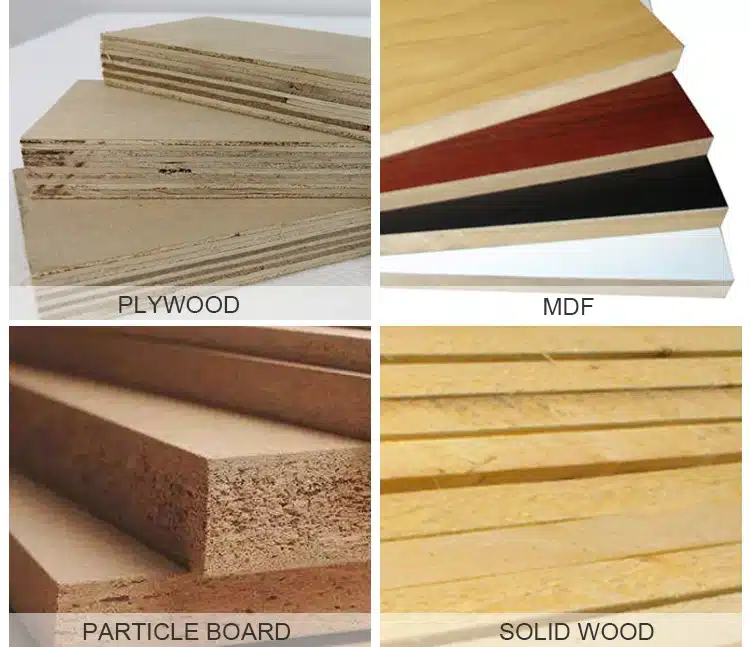
Formaldehyde dominates the panel discussion because it binds plywood and MDF together. The E1 emission grade limits release to 0.1 ppm or less, and MFBATH’s standard panels meet that line. CARB Phase 2 and TSCA Title VI set the stricter benchmarks for North American orders. Export to both markets on one line, and the panel must satisfy the tighter of the two.
Ask for the test report, not the label. A stamp printed on a board edge proves nothing; a chamber test report names the method, the batch, and the result. MFBATH quotes the same panels at an MOQ of 15 sets per model, color, and size, with mixed loading. The report you receive with samples should match the production you receive later. Check the batch number on the report against the batch in the container.
European panel testing follows chamber methods such as EN 717-1, and a credible report names the laboratory and the test date. Ask whether the report covers the actual batch or a sister batch from the same line. That detail decides whether the paper protects you at the border. Most importers who fail an audit fail on this single point.
Low-VOC Finishes and Surface Materials
Finishes are the second emission source. Water-based lacquers and UV-cured coatings keep VOC levels low, while solvent-based alternatives push them up. For wet rooms, the surface choice matters more. MFBATH’s PVC line is 100% waterproof, while plywood, solid wood, and sintered stone tops cover the rest of the menu. Color and finish options run past 40,000 custom combinations, which matters when your customer’s spec becomes part of your compliance file.

Treat any “low VOC” claim as a claim, not a fact. The question that separates factories is which standard the report cites and when the test ran. An emission report older than the batch you are buying is a paperwork decoration. Keep the standard, the batch, and the date on one line in your file.
FSC-Certified Wood and Environmental Management
Wood sourcing adds an optional layer. The Forest Stewardship Council (FSC) runs a chain-of-custody system that traces timber from certified forest to finished board. FSC-certified wood is available from MFBATH on request, and European retailers increasingly ask for it. It is a sourcing option, not a REACH requirement. The FSC-certified wood sourcing guide covers the traceability documents you would need.
Management systems sit underneath the product file. MFBATH holds ISO 9001 for quality management and ISO 14001 for environmental management, both certified in 2017 and confirmed valid in 2025. CE and UL certificates cover product safety on the same file. Note the separation: ISO 14001 shows a factory manages its environmental impact, while REACH compliance shows it knows the chemistry of the article. Do not let one stand in for the other when you evaluate a supplier.
MFBATH reports a return rate below 1% and a 2-year whole-cabinet warranty across its dealer network in 20+ countries. That record is what disciplined documentation produces over time. Read the wider map: the compliance and certification library collects the CE vs UKCA comparison, the California Prop 65 rules, and the other guides for bathroom cabinet imports.
Documents Importers Should Collect
The compliance file is a deliverable, like the packing list, and it should arrive before the goods do. Collect it at sampling stage, when MFBATH ships samples in 10 working days. Verify it during the 20–30 day production run, and keep it for every SKU you reorder. The table below lists the documents and what each one proves.
| Document | What It Proves | When You Need It |
|---|---|---|
| SVHC declaration (Article 33) | Candidate-list substances above or below 0.1% by weight in each component | Every EU order; attach the requirement to the PO |
| Formaldehyde emission test report | Panel compliance with the E1 grade at 0.1 ppm or less | At sampling and for each production batch |
| Material safety data sheets (SDS) | Chemical content of glues, finishes, PVC films, and sealants | Downstream communication and retail audits |
| ISO 9001 and ISO 14001 certificates | Quality and environmental management systems; MFBATH’s date from 2017, confirmed 2025 | Supplier screening |
| CE and UL certificates | Product safety for the applicable categories | Market access where certificates apply |
| FSC chain-of-custody certificate | Traceable wood sourcing when FSC wood is ordered | Retailer requests on FSC-specified products |
| Third-party inspection report | Goods match the PO and the declared materials | Before loading, on each shipment |
Run the file through a consequence test. Your EU retail customer asks for an SVHC declaration on a reorder. If the answer takes three weeks and arrives as a generic letter without batch data, the next question is whether the same gap exists in the panels. One documentation failure at retail level costs more than the margin on the container.
Two adjacent rules deserve their own files. The CE vs UKCA comparison matters for every shipment that touches Great Britain. The California Prop 65 rules apply to the same product line when it reaches US retailers. Compliance is a set of overlapping documents, not one certificate, so build the file per market and per SKU.
Frequently Asked Questions
Is REACH compliance something a factory can certify?
No. REACH is a regulation, and no European body issues a certificate for it. What a factory can provide is a compliance file: SVHC declarations, emission test reports, and material data sheets. If a supplier sells a “certificate” with no test data behind it, treat the document as decoration and ask for the underlying reports.
What does the 0.1% SVHC threshold mean for my vanity order?
Under Article 33, a supplier must disclose any candidate-list SVHC present above 0.1% by weight in an article. Each component is assessed separately, so a hinge, a film, and a panel each get their own check. Above the line, you must pass the information to your buyers and answer consumer requests within 45 days. Below the line, a written declaration is still the proof you need on file.
The factory is in China — does REACH still apply?
Yes. REACH obligations attach to the company that places the article on the EU market, not to the location of production. Your Chinese factory cannot be the duty holder, but its documentation decides whether you can meet your own duties. Put the SVHC declaration, test reports, and batch data in the PO, and verify them before the balance payment.
The Bottom Line
Bathroom vanity REACH compliance furniture work is a documentation discipline, not a mystery. Screen every material stream against the candidate list and Annex XVII, collect test reports and declarations per batch, and rebuild the file whenever the lists change. Request MFBATH’s compliance file with your sample order, and check every document against this guide. Review the MFBATH product range and start the file with the models you plan to reorder.




0 Comments