

Every summer, furniture importers watch the same pattern repeat. A June freight quote looks workable, so the booking waits. By mid-July, the same lane costs more, and carriers start stacking surcharges on top. The vanities in the container have not changed. The booking window has. Pre-booking freight rates for furniture means securing container space and a confirmed price before that window closes.
This guide is for the person who plans inbound shipments: sourcing managers and operations leads at vanity importers. It covers how peak-season surcharges work, the three ways to lock a rate, who books under FOB Qingdao terms, free-time traps at destination, and a booking timeline built backward from a 20–30 day production window. All rate figures are nominal worked examples, not quotations.
How Peak Season Resets the Freight Market
Trans-Pacific carriers treat July through October as peak season. Importers stock shelves ahead of the US holiday quarter, and booking volume concentrates into a few months. Carriers respond with two pricing tools. A General Rate Increase (GRI) raises the base rate on a trade lane from a set date. A Peak Season Surcharge (PSS) is a temporary add-on layered on top during demand spikes. Both are announced in advance and applied by effective date.

The mechanism matters more than the headline. Announcements land weeks before the effective date, which gives planners a window. Bookings confirmed before the change typically hold the prior level; bookings placed after it usually pay the new one. Treat every announcement as a deadline, not news. If your cargo-ready date falls near an effective date, confirm in writing which level applies to your booking.
Furniture feels these moves harder than dense cargo. Bathroom vanities are bulky: a single intermodal container may hold only a few dozen sets, so order volume translates into many boxes. When space tightens, carriers prioritize contract cargo, and spot bookings get rolled — moved to a later vessel because the ship is overbooked. A rolled vanity container in September can push stock past the holiday selling window. That is the real cost: not the surcharge, but the missed season.
None of this is unpredictable. Peak timing is public knowledge, and the surcharge calendar follows the same rhythm year after year. Importers who treat mid-year as the planning cutoff pay for the privilege. Importers who book ahead convert the same certainty into a locked price.
Your forwarder is the early-warning channel here. Carriers publish the announcements, and forwarders relay them with lane-by-lane impact. Ask for the surcharge calendar on your lane at the start of the year, and put the effective dates into your planning file. A date in the calendar beats a memory of a headline.
Contract Rates, Spot Rates, and Booking-Time Locks
There are three practical ways to lock pre-booking freight rates for furniture shipments, and they suit different volumes. The first is a contract rate: a fixed base price negotiated for a validity period, usually a quarter or a year. The second is the spot rate: the live market price at the moment you book. The third is a middle path — a rate confirmed at booking time for one specific sailing window, arranged through a freight forwarder.
A contract rate buys certainty, not automatic savings. If your furniture volume is steady — say, a container every week — a contract shields the base rate from peak spikes. Read the surcharge clause carefully. A contract fixes the ocean freight; items like fuel adjusters or PSS may still pass through depending on wording. The downside works both ways: when the market softens, contract holders keep paying the agreed level.
Spot pricing buys flexibility at full exposure. You pay whatever the market asks the week you book, which is fine for trial orders and fine for quiet months. In peak season, spot is where GRI and PSS land first and hardest. Use spot deliberately — for the container you did not plan — never as a peak-season strategy.
Booking-time locks are the pragmatic tool for most vanity importers. Your forwarder confirms an all-in figure for a named vessel or loading window, and that figure holds as long as the cargo is ready on schedule. Before you lock anything, pin down order volume. The number of sets per model determines container count, and a mixed catalog — like the full MFBATH vanity range — lets you consolidate models into fewer boxes under one MOQ (minimum order quantity) structure.
Whichever mode you choose, feed the confirmed figure into landed cost, not into a spreadsheet column labeled freight estimate. Ocean freight, surcharges, destination charges and duty together decide your margin. The companion piece on landed cost for vanity importers walks through that build-up line by line.
Three ways to lock pre-booking freight rates for furniture shipments
| Criterion | Contract rate | Spot rate | Booking-time lock |
|---|---|---|---|
| How the price is set | Negotiated for a validity period | Live market level at booking | Confirmed per sailing window |
| Peak surcharge exposure | Base fixed; surcharges per clause | Full exposure to GRI and PSS | Fixed for that one shipment |
| Volume that fits | Steady, recurring container flow | Ad hoc and trial orders | One peak-season load at a time |
| Main risk | Overpaying when the market softens | Paying the spike during crunches | A cargo delay voids the lock |
| Planning effort | High: annual negotiation cycle | Low: quote and book | Medium: sync with production |
For a vanity importer shipping one to three containers per month, the booking-time lock covers most peak-season needs without an annual commitment. Move toward contract rates once monthly volume becomes predictable enough to defend a commitment.
What FOB Qingdao Means for Booking Responsibility
MFBATH quotes FOB — Free On Board — Qingdao. That term splits the shipment into two halves at the ship’s rail. The factory handles everything on the China side: production, the five-step inspection, export documentation, inland trucking to Qingdao, and loading the container on board. The importer owns everything from the vessel onward: ocean freight, destination clearance, and delivery to the warehouse.
Insurance sits on your side of that line too. FOB ends the factory’s responsibility once cargo crosses the ship’s rail, so marine cargo cover for the ocean leg is the importer’s call. Furniture claims are document-driven: photos at loading, a sealed-container record, and a clear damage note at unloading. Arrange coverage before the container lands on the vessel, not after.
The practical consequence surprises first-time importers: booking the vessel is your job, not the factory’s. In practice the work flows through a freight forwarder, who takes your booking request, secures space with a carrier, and coordinates the empty-container and loading schedule with the supplier. The factory’s obligation is a cargo-ready date it can defend.
Two failure modes dominate peak season. In the first, space is booked but production slips; the booking goes dead, and the forwarder must rebook, sometimes at a higher level or on a later vessel. In the second, goods finish on time but no space exists, and loaded containers wait at the port while free days burn. Both failures share one root cause: the booking was driven by an optimistic production estimate instead of a confirmed cargo-ready date.
Build the handoff into your order process. Ask the factory for a written cargo-ready date after inspection, then have your forwarder book against that date with a small buffer. Payment terms follow the same rhythm: a 30% deposit starts production, and the balance falls due within a week of the draft bill of lading — the document issued once cargo is on board. If the booking never lands, neither does that document, and the whole sequence stalls.
If this is your first container out of Qingdao, expect extra coordination overhead and budget time for it. The first-container strategy guide covers the document sequence in detail, from booking confirmation to release at destination.
Free Time, Detention, and the Cost of a Slow Unload
Rate locking gets the container onto the ship. Free time decides what happens after it lands. Carriers allot a number of free days for you to pick up the container, unload it at your warehouse, and return the empty box. Keep the container longer, and a daily detention charge starts. Demurrage is the parallel charge for a full container sitting inside the terminal. Furniture importers mostly live on the detention side, because unloading happens at their own dock.

Vanities unload slowly. Assembled cabinets do not stack like flat-pack boxes, and a mixed container — several models, colors and sizes in one box — needs sorting as it comes off the truck. Nominal worked example: a 40-foot box with seven free days. Trucking round-trip consumes two, a careful unload takes two more, and one scheduling slip adds a paid day. At a nominal USD 150 per day detention, that single day costs more than asking for extra free days would ever have.
Rollover complicates the arithmetic. If your container gets bumped to the next vessel, arrival shifts by a week or two, but your free days have not started yet — they count from discharge, not from booking. The risk is downstream: your warehouse slot, your trucker, your labor plan. Confirm the discharge window with the forwarder before you schedule the unload crew.
Ask, then. Destination free time is negotiable at booking, and forwarders routinely request extended days for furniture lanes. Put the request in the booking instruction, not in a follow-up email. The same conversation should cover whether your order ships assembled or flat-pack. RTA — ready-to-assemble — vanities compress more sets per container and unload faster, which changes both container count and free-day math. The RTA logistics guide covers that trade in depth.
Packaging decides part of this equation too. Extra handling during a slow unload is where corner damage happens, and damaged cabinets turn free-time savings into claims. The zero-breakage packaging standards article explains what protective packing should look like before the container is sealed.
Plan Peak-Season Containers Around a Factory Calendar
Browse this product, solution, or service page to explore relevant offerings.

Building the Booking Timeline Around Production Lead Time
Here is the part most furniture freight articles skip: the booking date is not set by the shipping calendar. It is set by the production calendar. MFBATH samples take 10 working days, bulk production runs 20–30 days, and total lead time to the US, Canada and Mexico lands at 4–6 weeks. Work backward from your shelf date and the rate lock falls out of the math automatically.
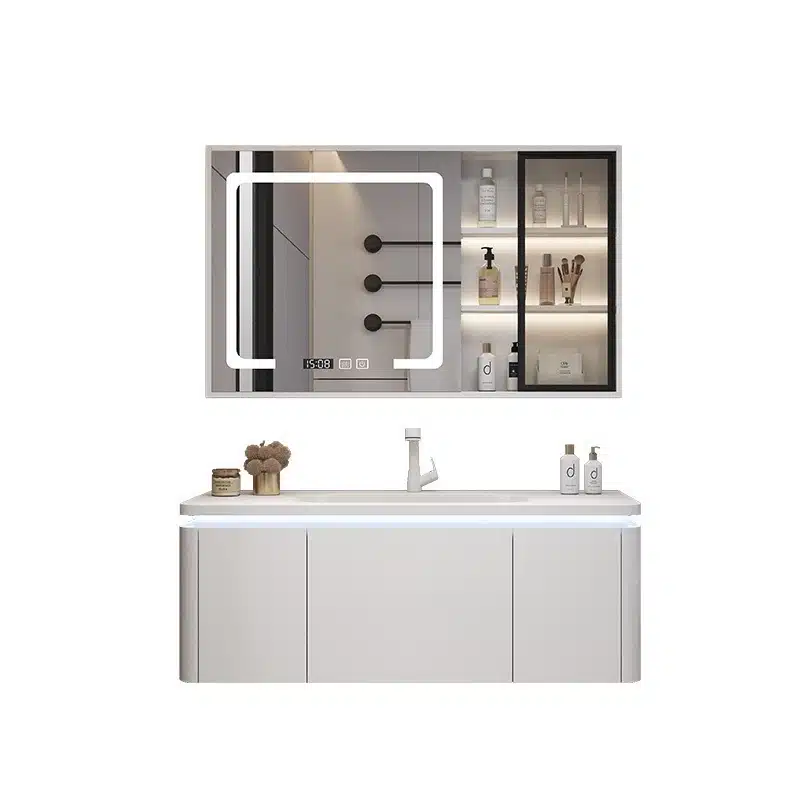
A backward-planned timeline reads like this. All dates are nominal worked examples for illustration:
- Delivery target: vanities in your US warehouse by late October, ahead of holiday demand.
- Buffer: hold one to two weeks for port congestion, inspection or trucking delays.
- Ocean leg plus terminal handling at both ends: the forwarder confirms current sailing time when you book.
- Loading at Qingdao: early September in this example, FOB terms, factory delivers on board.
- Production finish: late August, after the five-step inspection and any third-party check by SGS or TÜV.
- Production start: late July, allowing the full 30-day side of the 20–30 day range.
- Deposit: early July, since the 30% advance is what puts the order into the production queue.
- Sample approval: early June — samples ship in 10 working days, and approval must be clean before bulk starts.
- Rate lock: June, before peak announcements take effect on your lane.
Read the list from the bottom. The freight decision happens in June for an October delivery — not in September when the goods are ready. Booking practice follows the same shape: importers commonly place bookings several weeks before cargo-ready in normal season, and earlier during peak, though exact windows vary by carrier and lane. Your forwarder’s current advice beats any rule of thumb.
Once the booking lands, verify the confirmation in writing: vessel and voyage, loading port, closing dates for the gate and the paperwork, and the rate validity tied to that sailing. A confirmation missing any of those invites surprises. Keep it beside the cargo-ready date — the two documents only work as a pair.
Plan for the slip anyway. Production delays happen even at disciplined factories, and peak-season vessels do not wait. If the cargo-ready date moves, tell the forwarder the same day. Rebooking a confirmed slot is usually cheaper than a missed one, and a same-week vessel often exists on major lanes. Silence is the expensive option: an unannounced miss can turn a booking into dead freight.
The timeline also changes with container strategy. A full containerload (FCL) booking locks one box on one vessel. A less-than-containerload (LCL) shipment rides on a consolidator’s schedule, which adds cutoff dates of its own. The FCL versus LCL loading guide shows how vanity dimensions decide which option fits your order.
Notice where inspection sits: before loading, inside the production window. Third-party inspection agencies need booking too, and peak season fills their calendars as fast as vessel space. Tell the factory early if SGS or TÜV will inspect your order, and schedule the check before you confirm the final cargo-ready date.
Should You Stock Ahead in the Off Season
The strongest rate lock is a container that sails before the squeeze starts. Off-season stocking means shipping a few weeks of inventory during the demand lull, storing it, and entering peak season with stock already in the country. You trade warehousing cost for freight certainty — and for many vanity SKUs, that trade clears.
Nominal worked example: a fast-moving 36-inch model that turns over every six weeks. Shipping eight weeks of stock in one off-season container, at nominal warehouse cost, removes two peak-season bookings from exposure. If peak surcharges push freight nominally above the storage bill, pre-stocking wins. Run the numbers on your own turns; the structure, not the digits, is the point.
Bathroom demand helps this logic. Remodel activity and replacement sales run year after year with a seasonal tilt, and standard vanity widths move steadily rather than in fads. Predictable SKUs are exactly what pre-stocking rewards. If your sales history shows a steady 36-inch white seller, eight weeks of it in a quiet-month container is a low-drama decision.
Factory-side timing favors this too. Monthly capacity of 5,000 sets means production slots fill during peak as surely as vessels do. Placing the off-season order early reserves both: a production slot and a booking at pre-peak levels. MFBATH’s MOQ of 15 sets per model, color and size keeps the trial cost low — test a slow mover inside a mixed container before committing volume to it.
Be honest about the risks. Pre-stocking ties up cash in inventory, forecasts can miss, and stored goods need clean, dry space. Keep custom colors and project-specific sizes on in-season bookings; reserve pre-stocking for the standard widths that sell year after year. The site’s logistics setup, which states roughly 15% freight savings for US, Canada and Mexico customers, points in the same direction: consolidate early, never pay the surge.
Frequently Asked Questions
How far ahead should I book ocean freight for a peak-season vanity order?
Book from the production calendar, not the sailing calendar. With 20–30 day production and 10-working-day samples, an October delivery means locking rates around June. In peak, earlier beats later.
Does a contract rate protect against every peak-season surcharge?
Not automatically. A contract fixes the base ocean freight for its validity. Surcharges such as PSS or fuel adjusters may still pass through depending on clause wording. Confirm in writing which items stay fixed.
Under FOB Qingdao, who books the vessel — the factory or the importer?
The importer. FOB puts ocean freight on the buyer’s side, so your freight forwarder secures space. The factory’s duty is delivering inspected cargo on board at Qingdao by the agreed cargo-ready date.
Plan Backward From the Shelf Date
Peak-season freight punishes the same mistake every year: waiting for the goods to be ready before thinking about the ship. The fix is procedural, not heroic. Understand how GRI and PSS announcements work, choose the locking mode that matches your volume, book against a confirmed cargo-ready date, and hold the free days you need to unload without a stopwatch.
- Peak season runs July through October; treat surcharge announcements as booking deadlines, not news.
- Booking-time rate locks suit one-to-three-container importers; contracts fit predictable monthly volume.
- Under FOB Qingdao the importer books the vessel; the factory owes a defensible cargo-ready date.
- Production math drives everything: 10-working-day samples, 20–30 day bulk, 4–6 weeks total to North America.
If you are mapping next season’s container plan, start with the order itself. The sourcing and supply chain archive on this site covers the cost side of importing, and the free MFBATH catalog is the next step when you are ready to turn a rate lock into a production slot.




0 Comments