

Water finds its way into a vanity the same way every time: through the edges. A cabinet can ship with a clean face, tight joints, and a good finish, then fail in service because the raw panel edges were never properly protected. That is why bathroom vanity edge banding quality deserves the same scrutiny you give hinges, drawer slides, and countertops. The banding strip is the last line of defense between humid air and the board underneath it.
Shower steam, floor splashes, and damp air trapped inside a closed cabinet all concentrate along panel perimeters. Moisture that slips past a weak edge does damage no surface coating can undo. Buyers who inspect edge treatment before ordering avoid the swelling and delamination complaints that surface later. This guide covers what good banding looks like, which materials suit which construction, and how to verify edge quality at the factory, using the checks run by Main Focus Cabinet as a working example.
Key Takeaways
- PVC board is 100% waterproof: it does not absorb water and will not warp, which removes the moisture risk that plywood and MDF edges carry.
- Every MFBATH product passes 5 inspection checks, and buyers receive internal QC reports plus photos and video before shipping.
- Plywood meets E1 emissions at or below 0.1 ppm and CARB Phase 2, with FSC documentation available as an option.
- Third-party inspection from SGS or TÜV is supported with advance arrangement, so edge checks can sit on your inspector’s list.
- Free samples arrive within 10 working days; bulk production runs 20–30 days, and total lead time to the US, Canada, and Mexico is 4–6 weeks.
- The 10,000 m² factory in Changge, Henan, founded in 2015, runs ISO 9001 and ISO 14001 systems with a 5,000-set monthly capacity.
Table of Contents
- Key Takeaways
- Table of Contents
- Why Edge Banding Quality Decides Cabinet Lifespan
- What Good Edge Banding Looks Like
- Edge Banding Materials: PVC, ABS, and Veneer
- How to Inspect Edge Banding at the Factory
- Factory Process Checks That Protect the Edge
- Frequently Asked Questions
- The Bottom Line
Why Edge Banding Quality Decides Cabinet Lifespan
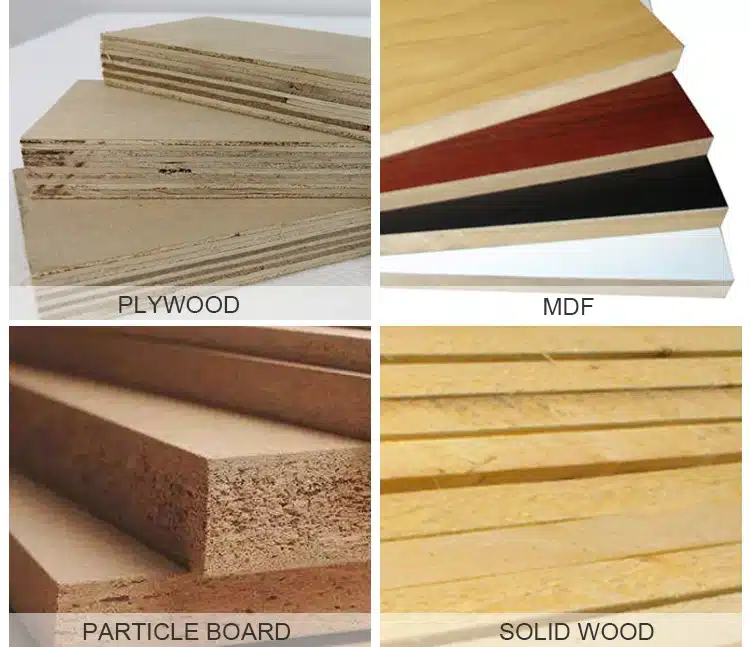
Bathroom vanity edge banding quality starts with the board beneath the band. Standard plywood and MDF panels are built from layers or fibers bonded with adhesives, and every cut exposes that internal structure. A saw blade or router bit creates the exact surface where moisture will try to enter for the life of the cabinet. If the factory leaves that cut unprotected, no care elsewhere changes what happens at the edge.
The failure chain is predictable. Moisture moves into the exposed core, wood fibers swell, and the swelling pushes against the face veneer until it lifts. Once the face separates, the banding loses its anchor and peels back, and the edge turns rough, dark, and eventually soft. Delamination is not a surface problem; it is structural, and it usually starts at a corner or along a bottom edge where water pools.
Bathrooms accelerate the process. Steam from showers keeps humidity high for hours, condensation forms on doors and side panels, and floors stay wet around the base. A cabinet in a dry hallway might tolerate a weak edge for years; the same cabinet in a bathroom can fail within a season of use. The environment does not need to be extreme to cause damage, just routinely damp.
The Board Sets the Ceiling
MFBATH offers plywood from standard stock through BWR (boiling water resistant) and marine-grade panels, with E1 emissions at or below 0.1 ppm under CARB Phase 2 — the same thresholds covered by the EPA formaldehyde emission standards for composite wood products.
Buyers who want to verify board grades on their own can consult the APA wood standards, which define veneer grades and glue bonds for structural plywood. The distinction matters because furniture-grade board and structural plywood behave differently at a cut edge, and banding cannot compensate for a weak core.
The material contrast is sharp at the edge. Sintered stone tops, with Mohs 7-8 hardness and 300°C heat resistance, do not wick water and need no banding at all. Plywood and MDF panels are the opposite: their edges are the single most vulnerable surface on the cabinet, which is why moisture protection on panel edges is a material decision rather than a decoration decision.
For the wider view of how edge sealing fits into a waterproofing strategy, our panel edge sealing guide covers sealing practices across board types. A factory that explains why it treats a plywood edge one way and a PVC edge another has made the decision deliberately, and that deliberation usually shows in the finished product.
What Good Edge Banding Looks Like
Good edge banding is easy to recognize once you know what to look for, and bathroom vanity edge banding quality is one of the few factory details you can judge with a light and your own fingers. Hold the panel at eye level, run a nail along the transition between face and band, and a well-finished edge reads as one surface: no step, no dip, no gap. The band should match the panel thickness so closely that you cannot feel where one ends and the other begins.
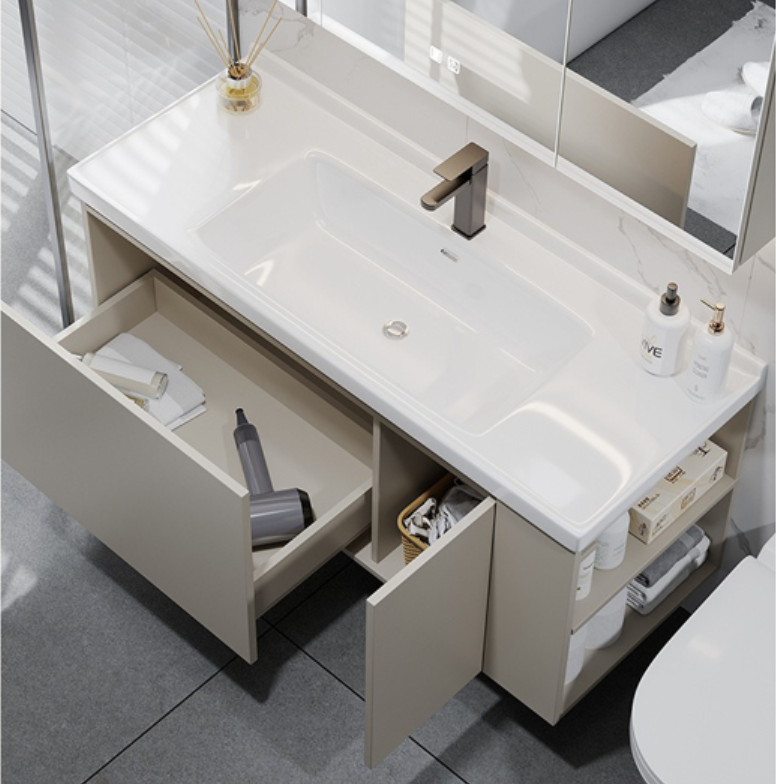
The glue line is the next tell. Good banding leaves no visible squeeze-out and no dark line between band and board. When adhesive oozes onto the panel face, it usually means the machine applied too much or the pressure settings drifted, and excess glue leaves a raised edge that collects dirt and moisture over time.
Corners are where most factories reveal themselves. Wrapping requires the band to be heated, bent, and pressed around the corner radius without cracking, and the wrap should continue unbroken from one side to the next. A butt joint at the corner, where one strip simply ends and a fresh strip begins, leaves a seam that opens as the panel moves with humidity.
A Field Checklist for Cabinet Edges
- Seam flushness: the band sits level with the panel face, with no step you can feel.
- Glue lines: no adhesive on the face and no dark line between band and board.
- Corner wrapping: the band bends around the corner without cracks or butt seams.
- Thickness match: the band aligns with the panel so the edge reads flat.
- Radius quality: the corner curve is even, with no flats or lumps.
- Lifting signs: no curled ends, no bubbles, and no soft spots when you press the band.
Run these checks on every sample and on the first unit of a production run, not just the showroom piece. Edge treatment is repetitive work, and the machine that produced one good corner will produce thousands of bad ones if its settings drift. Consistency is the actual product.
Color and gloss continuity is a softer check, but it catches batch drift. Banding sourced from different lots can shade slightly differently under bathroom lighting, and a multi-vanity order will sit side by side in the same room. Compare the edge color against the panel finish in daylight, not just under the factory lights.
Edge Banding Materials: PVC, ABS, and Veneer
Edge banding materials are usually chosen to match the panel underneath, and each option has a different job. In the MFBATH range, bathroom vanity edge banding quality is matched to the construction line: PVC banding dominates waterproof vanities because it aligns with the material itself. PVC board is 100% waterproof, does not absorb water, and does not warp, so a PVC band on a PVC panel keeps the entire edge in the same moisture-tight family.
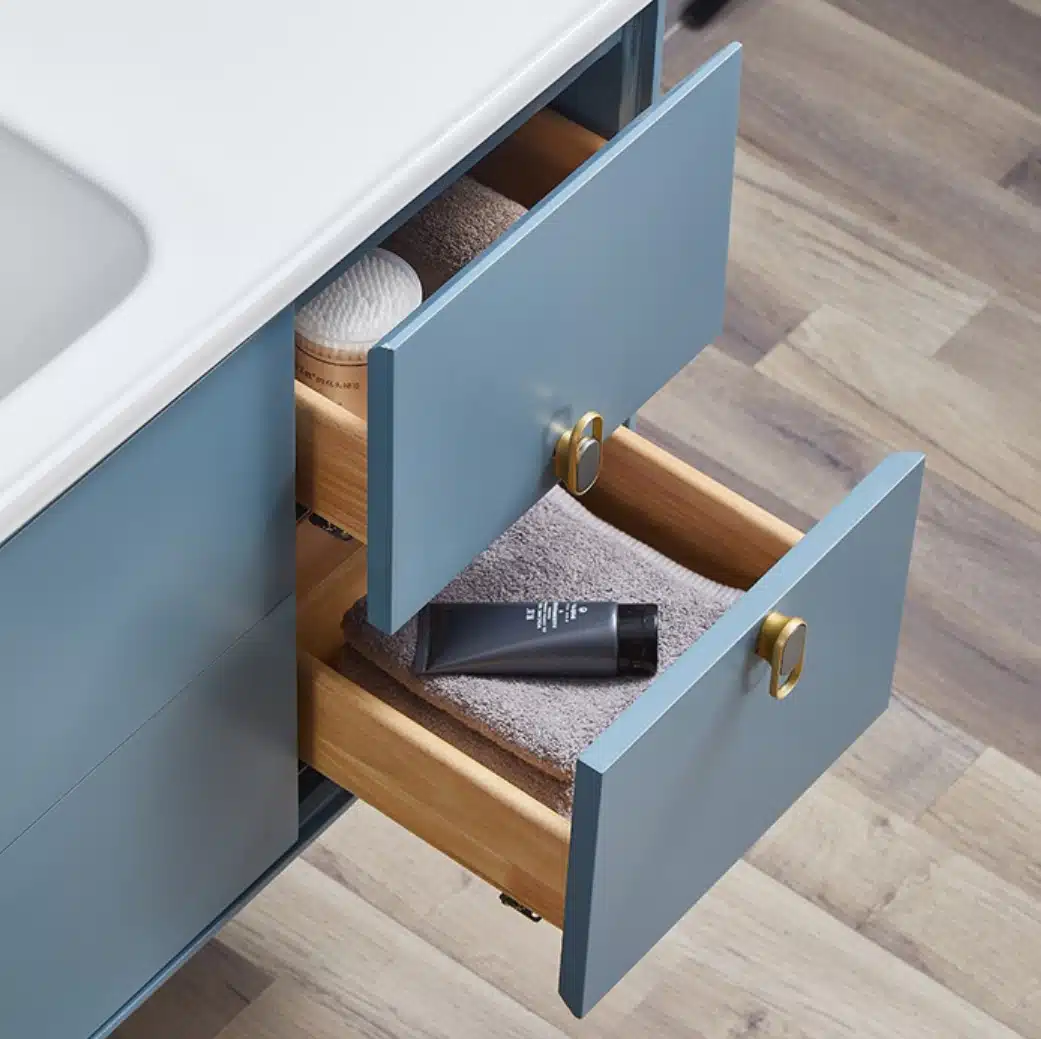
ABS banding shares PVC’s polymer lineage but adds impact resistance. That matters in colder climates and in cabinets that take knocks during shipping and installation. The two look similar at a glance; the difference shows in how the edge absorbs abuse over time.
Veneer banding takes the opposite approach. It is a thin slice of real wood applied over the panel edge so the cabinet reads as solid wood from every angle. It pairs with solid-wood lines and with plywood panels where a natural grain matters more than polymer consistency. The trade-off is real: wood veneer needs the same protection as the board behind it, which is where the multi-layer PU waterproof coating on solid-wood vanities does its work — our solid wood waterproof coating guide explains that system in detail.
Matching the Band to the Board
The working rule is simple: the band should not be more vulnerable than the panel. Putting a veneer edge on a waterproof PVC panel creates a weak point that did not exist before. Putting a PVC band on solid wood protects the cut end grain while the top and face finishes handle the rest. MFBATH matches band to board by construction line rather than by convenience.
Custom work extends the same logic to color. With 15 standard finishes, a finish library of 1,000+ options, and Pantone color matching, the banding can follow the panel finish instead of the other way around. Custom sizes, colors, and logos start at 15 sets, which opens more than 40,000 customization combinations before you even discuss edge profiles.
| Property | PVC Edge Banding | ABS Edge Banding | Veneer Edge Banding |
|---|---|---|---|
| Durability | Flexible and tough; holds up to everyday impacts and stays stable in humid rooms | Higher impact resistance than PVC, especially in cold conditions | Real wood that lasts, but softer than polymer banding |
| Water resistance | Fully waterproof, matching 100% waterproof PVC panels | Water resistant, but the panel core behind it still needs sealing | Depends on the finish; the panel behind it must be sealed |
| Look | Uniform matte or gloss color across the whole run | Similar to PVC with a slightly harder, cooler feel | Natural wood grain for solid-wood and veneer lines |
| Typical use | Waterproof PVC vanities and high-humidity bathrooms | Cabinets that face rough handling and cold-climate shipping | Solid-wood vanity ranges and furniture-grade plywood |
Edges Built to Last
Browse this product, solution, or service page to explore relevant offerings.
How to Inspect Edge Banding at the Factory
Factory inspection is where bathroom vanity edge banding quality moves from claim to evidence. MFBATH runs 5 inspection checks on every product before it leaves the line, and the internal QC reports plus photos and video go to the buyer. Those documents are only useful if you know what to ask for, and what to look for when samples arrive.
Start with your hands. Run fingers along every edge of a sample, including the back of the cabinet and the bottom panels, where inspection habits tend to skip. A smooth, level transition everywhere tells you the banding machine is holding its settings. A catch in one spot tells you to keep looking.
Then use light. Set the sample so a raking light hits the edge at a low angle; shadows make steps and glue lines visible that disappear in even lighting. Check the seam on all four sides of each panel, not just the front, because the visible side is usually the one the factory paid most attention to.
On plywood and MDF, a handheld moisture meter gives a quick qualitative read on the boards before banding. Dry, conditioned stock and damp stock return noticeably different readings, and a factory that tracks them can show you a pattern. Treat it as a screening step, not a lab test: it tells you whether boards were stored and conditioned properly.
Inspection Options That Fit Your Budget
If you want a second set of eyes, MFBATH supports third-party inspection from SGS or TÜV with advance arrangement. Put seam flushness, corner wrapping, glue lines, thickness match, and lifting signs on the checklist, and ask the inspector to photograph the same corners you will check on your own sample.
Sample orders are the low-risk entry point. Free samples arrive within 10 working days, and bulk production runs 20–30 days after approval, with 4–6 weeks total lead time to the US, Canada, and Mexico. The MOQ (minimum order quantity) is 15 sets per model, color, and size, so a first order stays small while you confirm edge quality in person. If you are comparing suppliers on construction detail, the plywood bathroom vanity line is where edge banding matters most, and it is worth a close look before you finalize a shortlist.
Orders run on a 30% deposit, with the balance due within one week of the draft bill of lading, FOB (free on board) Qingdao Port. Payment terms do not change the inspection math: the same 5 checks, the same reports, and the same photographs apply whether you are buying 15 sets or a full container.
Guides like this one live in the manufacturing excellence library, where the series covers the construction details worth verifying before you commit to a container.
Factory Process Checks That Protect the Edge
Edge banding quality is decided in the process, not in the inspection. A factory that produces good edges by habit can ship consistent cabinets for years; a factory that produces good edges by accident will frustrate every order. The saw sets the baseline for every edge that follows.

Panel cutting comes first. A dull blade or a rushed feed leaves chipped, fuzzy cut edges, and banding cannot fully hide a damaged edge — the chip-out shows through as a small shadow under the band. Clean cuts give the adhesive a flat, even surface to grip, which is why well-run factories keep panel saws sharp and feed rates steady.
Glue application is where consistency shows up as uniformity. Too little adhesive leaves voids that let moisture travel under the band; too much creates squeeze-out and spots where the band sits proud of the panel. Modern edge banders apply a controlled film at temperature, and the operator’s job is to keep feed speed and heat inside the window the adhesive supplier specifies.
Banding machine setup decides corner quality. The machine heats the band, bends it around the corner radius, and presses it into place; if the temperature runs low or the pressure runs light, the band springs back or lifts at the curve. Skilled setup shows up in the corner wrap you inspected on the sample, which is why the same machine should run your sample and your bulk order.
For plywood panels, edge sealing closes the loop that banding alone does not. The band protects the outside of the edge, but interior edges — shelves, partitions, and drawer box tops — need their own seal when they are cut from plywood or MDF. Factories that treat interior edges as an afterthought tend to carry the same attitude into banding.
What QC Reports Should Show You
A useful QC report is boring and specific. It names the checks performed, the results at each station, and the units covered, and it is paired with photos or video of the actual cabinets, not a generic template. MFBATH shares internal QC reports plus photos and video with buyers, and the 5 inspection checks apply to every product — ask to see the reports for the units that will ship in your container, not the ones from last month.
The process sits inside a documented quality system: ISO 9001 has anchored it since 2017 (confirmed valid in 2025), and ISO 14001 covers environmental management. Both are audit trails you can request from an ISO 9001 and ISO 14001 certified operation, and both point to records that survive inspection. For the other structural detail worth verifying on a vanity box, our cabinet box joint construction guide explains how joints, not just edges, carry the load.
Frequently Asked Questions
Can I see edge banding quality before placing a bulk order?
Yes. Free samples arrive within 10 working days, and every product passes 5 inspection checks with QC reports and photos you can review before production starts. That means edge banding is not a surprise you discover after the container ships.
Is edge banding needed on 100% waterproof PVC vanities?
PVC board does not absorb water, so the edge is less exposed, but banding still protects appearance and impact resistance. On plywood and solid wood cabinets, sealed edges are critical for moisture survival. Banding also gives edges a finished profile that matches the cabinet.
What should my third-party inspector check on edges?
Seam flushness, corner wrapping, glue lines, thickness match, and signs of lifting. MFBATH supports third-party inspection from SGS or TÜV when arranged in advance. Ask the factory to share the inspector’s findings alongside its own QC reports before production.
How long does edge banding stay intact in a humid bathroom?
Humidity resistance depends on the adhesive and edge material, not the age of the band alone. Check the glue line on the sample, and ask whether the banding uses waterproof hot-melt adhesive, the standard practice for bathroom cabinets.
The Bottom Line
The edge of a panel is the first place moisture wins and the last place most buyers look. Inspect the seam, the corners, and the glue line on samples; ask for QC reports and photos; and put edge checks on your third-party inspector’s list. Few details tell you more about a factory’s discipline than its bathroom vanity edge banding quality, and MFBATH matches banding to material across its plywood, PVC, and solid-wood lines. Sample first, inspect early, and let the edges tell you what the brochure cannot.




0 Comments