

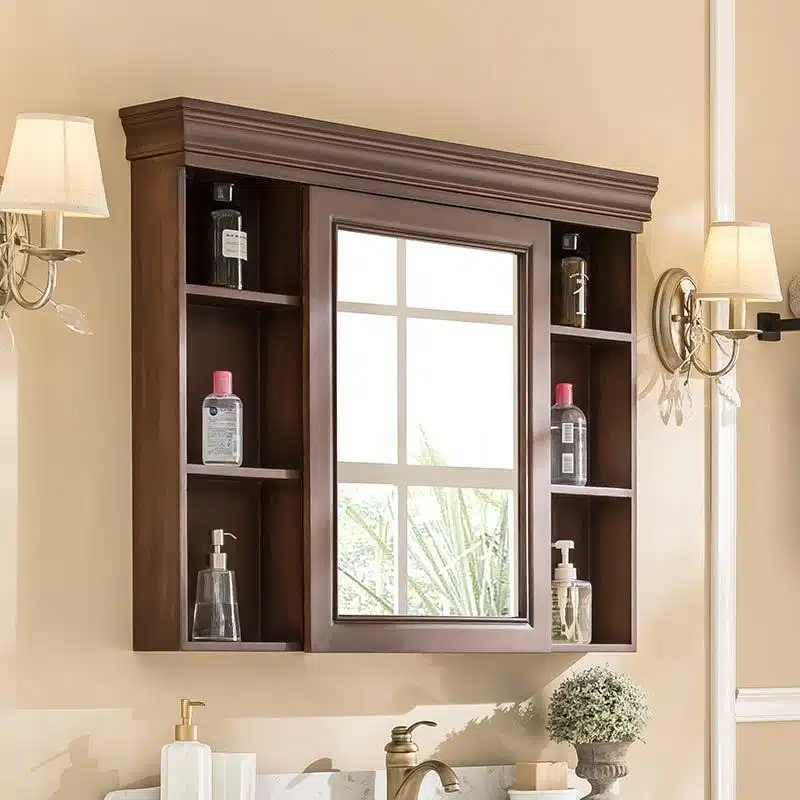
Restaurant restrooms are the hardest-working rooms in any foodservice building. Guests may judge a lounge by its cocktail list, but they remember a bathroom by its condition. For facility managers, contractors, and procurement teams, that makes every fixture decision count — especially the vanity. This guide explains what non-residential bathrooms demand from a restaurant bathroom vanity commercial purchase: material logic for wet, chemical-heavy spaces, hygiene and compliance expectations, and the procurement workflow from sample to shipped container. Whether you outfit a fast-casual location, a neighborhood bar, or a high-end lounge, understanding the trade-offs before you order reduces rework and replacement costs.
Why Restaurant and Lounge Bathrooms Are Different
A guest restroom in a restaurant or lounge is not a residential powder room with busier hours. It is a production environment. During a dinner service, a single stall can cycle through dozens of users, and by closing time the space has absorbed hours of moisture, splash, and foot traffic. It is also cleaned aggressively: commercial sanitizers, bleach-based sprays, and degreasers are standard in foodservice maintenance programs, and they stress cabinet surfaces far beyond anything a home cleaner will ever do.
Three forces separate commercial vanities from residential models. First is volume: more users per day means more moisture and more impact per square foot. Second is chemistry: commercial cleaning products can break down finishes that survive for years in a home. Third is scrutiny: health departments inspect foodservice facilities, and a water-damaged vanity is exactly the kind of detail an inspector notices.
There is also a brand dimension. In hospitality, the restroom is a visible part of the guest experience: a lounge that charges premium prices for drinks still gets judged by the state of its fixtures at closing time. Operators who treat the vanity as a disposable fixture end up replacing it during busy season, at labor rates that erase any initial savings. Specifying for the environment — not for the showroom — is the more economical decision over the full service life.
A vanity that fails in a home is an inconvenience. A vanity that fails in a restaurant is a compliance risk — a warped, stained cabinet can harbor bacteria and trigger a failed inspection. That is why sourcing for non-residential projects starts with material behavior, not appearance. If your operation runs multiple locations, the same logic applies at scale, and our guide to commercial PVC vanity sourcing covers the procurement side in detail. For materials that tolerate continuous moisture, start with our roundup of waterproof vanity materials.
Material Selection: Matching the Vanity to the Commercial Environment
Choosing a restaurant bathroom vanity commercial unit comes down to matching cabinet and countertop materials to the abuse they will take. In practice, three material families cover most foodservice projects: PVC, plywood, and sintered stone. Each solves a different set of problems, and the right choice depends on traffic volume, cleaning schedule, and design level.
PVC: The Workhorse for Wet, Chemical-Heavy Restrooms
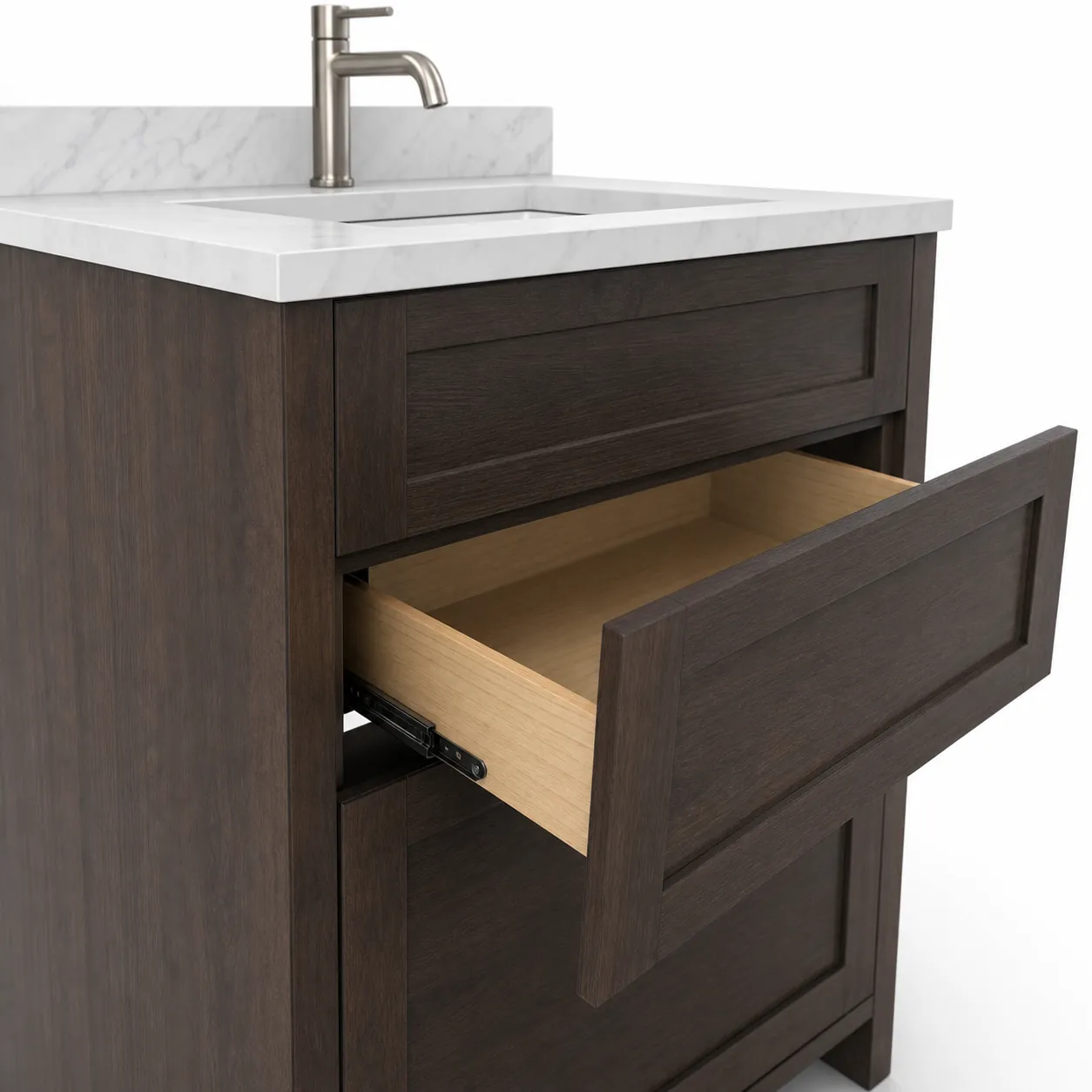
PVC bathroom cabinets are 100 percent waterproof. The material does not absorb water and does not warp, which makes it a predictable choice for spaces where water is present every hour of the day. Surfaces are easy to clean — a damp cloth and standard sanitizer are enough — and the material resists scratches from janitor carts, buckets, and mop handles. For operations that prioritize value and durability, PVC is a cost-effective baseline, available in standard widths from 24 to 60 inches and depths from 18 to 24 inches.
PVC also handles the hygiene basics well: no pores for bacteria to hide in, no swelling when the floor gets wet, and no finish to chip around the sink. When restrooms are cleaned several times a shift, that simplicity compounds. For chains, the PVC route also simplifies maintenance — one material, one cleaning protocol, one spare-part list across every location. Because the cabinet body and finish are the same material, there is no film or veneer to wear through, and repairs are limited to hinges and hardware. That predictability is why PVC appears in the highest-volume foodservice programs.
Plywood: Structure and Stability for Custom Fronts
Plywood vanities bring structure to projects that need a wood appearance or custom facades. Multi-layer construction resists warping, and waterproof edge banding protects the vulnerable cut edges where water damage usually begins. For high-moisture settings, BWR (boiling water resistant) or marine-grade plywood is available, and every plywood option uses E1 low-formaldehyde boards with CARB Phase 2 and TSCA Title VI compliance available for projects that require documentation.
Edge treatment is where plywood cabinets succeed or fail in commercial restrooms. Water finds the exposed cut edges first — around the sink cutout, the toe kick, and the door bottoms. Waterproof edge banding closes those routes, and BWR or marine-grade panels add a second layer of insurance for restrooms that flood during cleaning or sit next to dish areas. Specify the edge treatment in the same sentence as the panel grade.
Solid wood — oak, walnut, maple, or ash — remains an option for design-forward spaces, protected by a multi-layer polyurethane waterproof coating, with FSC-certified sourcing available. The trade-off is straightforward: wood brings warmth and a custom look, while PVC and sintered stone bring unconditional wet-room behavior. For most restaurant restrooms, wood is chosen for the visible front and paired with a waterproof structure behind it.
Sintered Stone: The Surface Standard for Upscale Lounges
For bars, lounges, and premium dining rooms, sintered stone is the strongest surface statement a restroom can make. Sintered stone basins and countertops are non-porous, which means nothing soaks in: no wine spills, no sanitizer stains, no lingering odors. The material rates 7 to 8 on the Mohs hardness scale, resists heat up to 300°C, and does not fade under UV exposure, so it holds its color through years of commercial cleaning. Surfaces come in marble, granite, cement, and solid-color patterns, in matte, satin, or polished finishes, and in 600–2000 mm single- or double-basin formats.
Finish choice affects both look and maintenance. Polished surfaces show water spots in hard-water regions, while matte and satin finishes mask filming between cleanings — a practical detail for busy lounges. Because the factory presses basins and countertops from the same sheet, color continuity across counter, basin, and backsplash stays consistent, which matters when the design calls for a monolithic look.
Because the surface is antibacterial and stain-resistant, sintered stone cuts the deep-cleaning labor that other materials demand. It is the choice for operators who want restrooms that still look new at inspection time. For a side-by-side comparison of sintered stone against quartz, see our sintered stone vanity guide.
| Factor | PVC Cabinet | Plywood Cabinet | Sintered Stone Cabinet |
|---|---|---|---|
| Water resistance | 100% waterproof; does not absorb water or warp | Multi-layer build with waterproof edge banding; BWR or marine grade available | Non-porous surface; nothing absorbs into the material |
| Scratch resistance | Scratch-resistant surface for carts and cleaning equipment | Moderate; depends on finish and edge protection | Mohs hardness 7–8; resists everyday impact |
| Cleaning | Wipes clean with standard sanitizers | Requires sealed edges and dry joints | Wipes clean; resists stains, sanitizer, and odors |
| Expected service life | Long in wet, high-traffic restrooms | Long when edges stay sealed and dry | Longest of the three in high-traffic settings |
| Typical application | Quick-service restaurants, family dining, staff restrooms | Projects needing wood fronts or custom finishes | Lounges, bars, upscale restaurants |
The table summarizes how the three families behave under restaurant conditions. Hybrids also work well: a sintered stone countertop over a PVC base pairs the most hygienic surface with the most waterproof structure, and MFBATH builds that combination in the same 24–60 inch width range.
Hygiene, Compliance, and Cleaning Chemistry
Hygiene is the non-negotiable in foodservice restrooms, and it starts at the surface. The restaurant bathroom vanity commercial units that pass inspection share a few traits: non-porous surfaces, sealed or seamless joints, and finishes that survive sanitizers without degrading. Porous materials absorb moisture and organic matter; non-porous surfaces deny bacteria a place to live. That is why sintered stone and PVC dominate high-traffic installations, and why an integrated basin design removes the seams where grime collects — the maintenance logic is explained in our integrated sink vanity top guide.
Finishes matter as much as the substrate. MFBATH uses low-VOC finishes, and all boards meet E1 formaldehyde limits of 0.1 ppm or less, with CARB Phase 2 and TSCA Title VI compliance available. Keeping emissions low matters in enclosed restrooms where ventilation is limited. The U.S. Environmental Protection Agency (EPA) maintains resources on indoor air quality and building product emissions, and the International Code Council (ICC) publishes model building and plumbing codes that commercial restrooms must satisfy — verify local adoption of those codes before you finalize specs.
Documentation is part of the compliance package. Emission reports, finish data, and material declarations belong in the project file before the inspector walks the building. MFBATH provides the relevant documentation with each order so facility managers can answer questions on formaldehyde limits, VOC content, and accessibility posture without chasing paper after installation.
Accessibility is a separate compliance track. Public restroom vanities can be designed to meet ADA (Americans with Disabilities Act) clearance, reach-range, and knee-space requirements when the project specifies them. The same design posture extends to CSA requirements for Canadian projects and NOM requirements for Mexican installations. Where vanities include electrical components or lighting, those items carry CE and UL markings held in accordance with the applicable directives; confirm the marking requirements with your local authority before specifying.
Antibacterial sintered stone surfaces add another layer of defense on top of the physical ones. Hotel operators face the same selection questions when specifying sintered stone basins, and the decision framework in our sintered stone basin selection guide transfers directly to restaurant projects.
Commercial Vanities for Restaurant and Lounge Traffic
Browse this product, solution, or service page to explore relevant offerings.
Sizing, Layout, and Basin Configuration
Before you order, lock down the dimensions. MFBATH’s PVC, plywood, and solid wood vanities come in standard widths from 24 to 60 inches and depths from 18 to 24 inches, which covers most code-driven layouts. Sintered stone vanities are offered as floating units from 600 to 1800 mm with single or double basins, and floor-standing units from 800 to 2000 mm, also single or double. For unusual alcoves or accessible layouts, custom sizing starts at the same 15-set minimum as standard orders, and the catalog spans more than 40,000 combinations of size, finish, basin, and hardware.

Single-basin versus double-basin is the first decision. In a bar or lounge, a double-basin vanity cuts queue time during peak hours; in a compact cafe, a single basin preserves floor space. Our single vs double sink guide walks through the traffic math and the maintenance implications of each configuration.
Basin material is the second decision. Sintered stone basins combine the countertop and sink into one seamless piece, eliminating the seam where water and bacteria collect, and they are available in marble, granite, cement, and solid-color looks with matte, satin, or polished finishes. Ceramic basins can also be customized to match a specific aesthetic. For operators standardizing across multiple locations, fixing one basin style and one finish at the design stage makes future reorders — and spare parts — simpler.
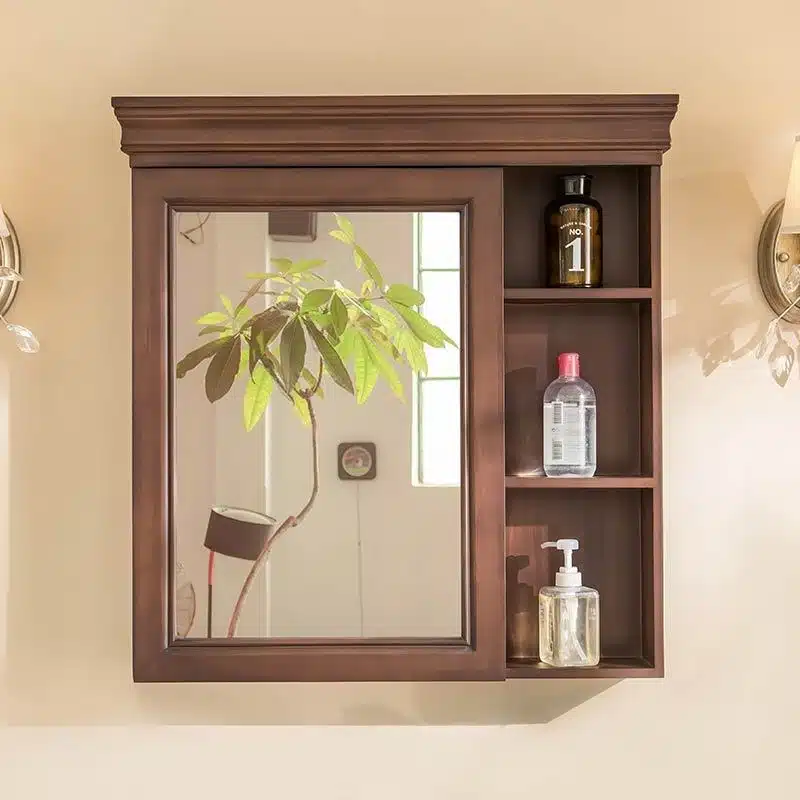
Layout thinking also extends to what surrounds the vanity: mirror placement, lighting, and outlet positioning affect the final assembly, and coordinating them at the specification stage removes one coordination point for the general contractor. Standardized sizing across a multi-location program also lets the facilities team carry common spare parts instead of one-offs.
Sourcing, Quality Control, and Logistics
Commercial sourcing is a process, not a purchase order. For a restaurant bathroom vanity commercial program, the workflow runs: spec, sample, inspect, ship. MFBATH’s MOQ (minimum order quantity) is 15 sets per model, per color, per size — a threshold low enough for a single location yet consistent enough for a chain rollout. Mixed container loading is supported, so a multi-unit operator can combine models and colors in one shipment and control freight costs.
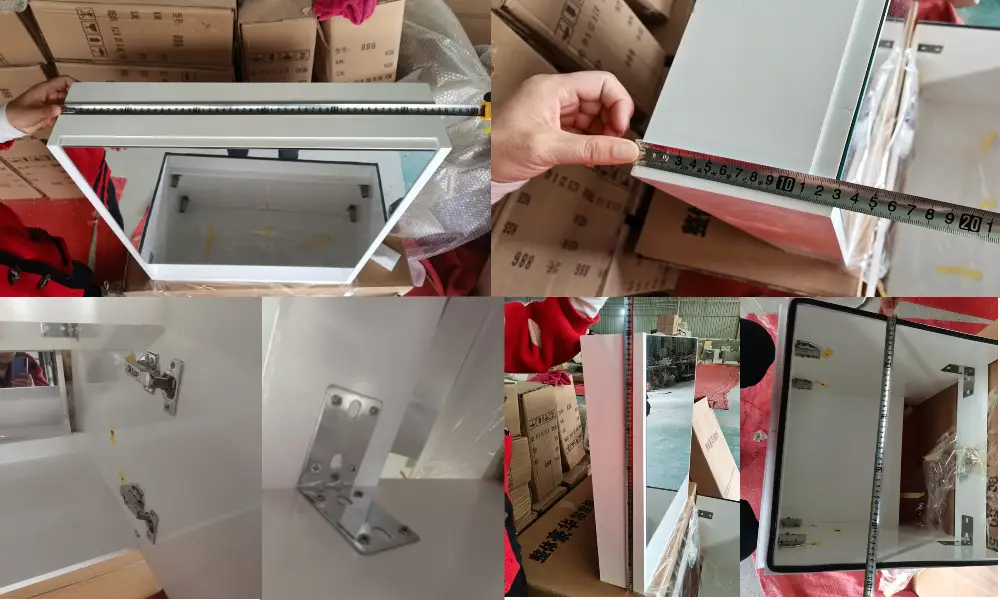
Sampling comes first. Samples take 10 working days to produce, and they should be tested against your actual cleaning chemicals before you commit to a full order. Bulk production runs 20 to 30 days, and total delivery to the United States, Canada, and Mexico is 4 to 6 weeks from order, shipped from Qingdao port on FOB (free on board) terms. Payment terms are 30 percent upfront with the balance due within one week of the draft bill of lading.
Scheduling discipline protects the opening date. Because samples, production, and shipping run sequentially, any delay at the specification stage pushes everything downstream. Confirming color, basin type, and door hardware in the first order conversation — rather than after the sample arrives — keeps the 20-to-30-day production window intact.
Quality control is layered. Every product passes five in-house quality checks, and the factory’s return rate is below 1 percent. For independent assurance, third-party inspection and factory audits — by SGS, TÜV, or similar firms — can be arranged when booked in advance. Buyers who want an external set of eyes before shipment should build inspection into the order schedule from day one. The full cabinet carries a two-year warranty.
Documentation matters as well. The factory has been ISO 9001 (quality management) and ISO 14001 (environmental management) certified since 2017, confirmed current in 2025. Solid wood components can be FSC-certified when the project requires certified sourcing, following the chain-of-custody standard defined by the Forest Stewardship Council (FSC). When writing plywood specs, buyers can reference the APA – The Engineered Wood Association (apawood.org) for engineered wood product standards.
Finally, plan for installation. Vanities that arrive on schedule still need skilled installers and a sequenced site plan, and contractors on tight restaurant schedules will find our commercial vanity installation guide useful. For the flagship specification, review the sintered stone bathroom vanity product page to see the full floating and floor-standing line.
Frequently Asked Questions
What is the minimum order for restaurant bathroom vanity commercial projects?
The MOQ is 15 sets per model, per color, per size. That means a single restaurant can order 15 identical vanities, or a chain can split the minimum across locations as long as each model, color, and size combination reaches 15. Mixed container loading lets you combine different models and colors in one shipment, so a two-location rollout can still consolidate freight and hit the MOQ efficiently.
Can restaurant bathroom vanities be designed to meet ADA requirements?
Yes. MFBATH builds vanities designed to meet ADA clearance, reach-range, and knee-space requirements when the project specifies them — ADA is the U.S. Americans with Disabilities Act. The same design posture extends to CSA requirements for Canadian projects and NOM requirements for Mexican installations. Confirm the applicable local codes with your authority having jurisdiction before finalizing drawings, and request the design documentation during the sample stage.
How long does a commercial vanity order take from sample to delivery?
Samples take 10 working days to produce. Once the sample is approved, bulk production runs 20 to 30 days. Total delivery time to the United States, Canada, and Mexico is 4 to 6 weeks from order confirmation, shipping from Qingdao port on FOB terms. Third-party inspections by SGS or TÜV must be booked in advance, so add inspection days to the schedule. Plan backwards from your opening date and request samples early enough to test finishes against your cleaning chemicals.
The Bottom Line
A restaurant bathroom vanity commercial purchase is not a commodity buy — it is a specification decision that shows up in every health inspection and every guest review. Start with non-porous, waterproof materials, confirm hygiene and accessibility requirements before ordering, and build sampling, third-party inspection, and lead time into the schedule. MFBATH’s 15-set MOQ, mixed container loading, and 4-to-6-week delivery window fit both single-location and chain programs.





0 Comments