
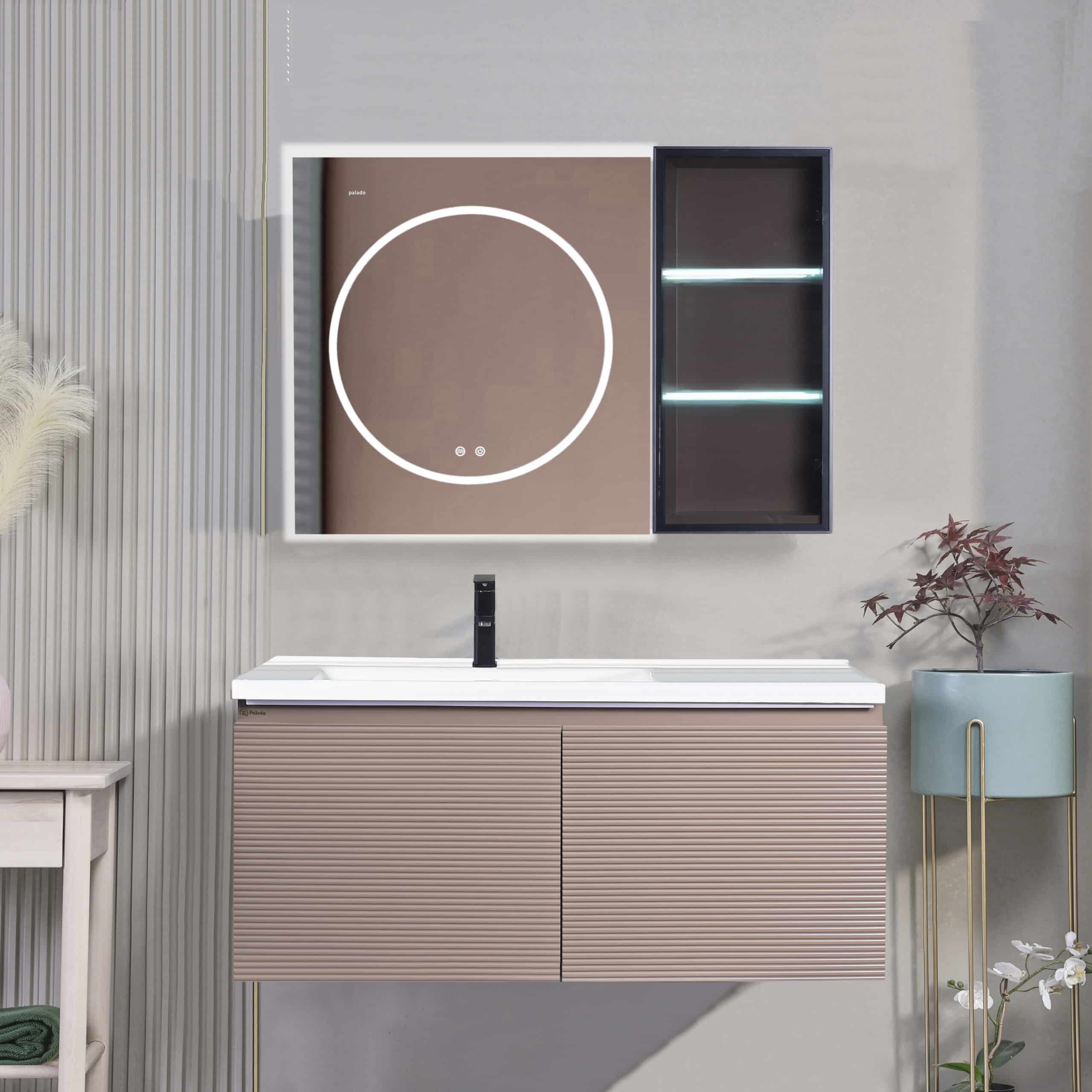
Specifying a custom led mirror frame for a commercial project requires more than just picking a finish. Architects and interior designers know that the frame dictates the fixture’s survival rate in high-traffic wet zones. A thin, painted MDF frame might look fine in a showroom, but it warps in bathroom humidity, leading to LED detachment and costly warranty claims. The difference between a fixture that lasts a decade and one that fails in eighteen months comes down to material science and thermal engineering.
Most standard builder-grade mirrors ignore the thermal expansion gap between the frame and the mirror glass. This oversight causes the LED light bars to delaminate as the materials expand and contract with heat cycles. Industrial-grade silicone seals and powder-coated aluminum or solid brass frames prevent this failure. Custom metal frames add roughly $15 to $40 per unit to the base cost, but they reduce warranty claims by 60% in high-humidity zones compared to painted wood. For a 200-room hotel project, that upfront investment eliminates the replacement cost mid-contract.
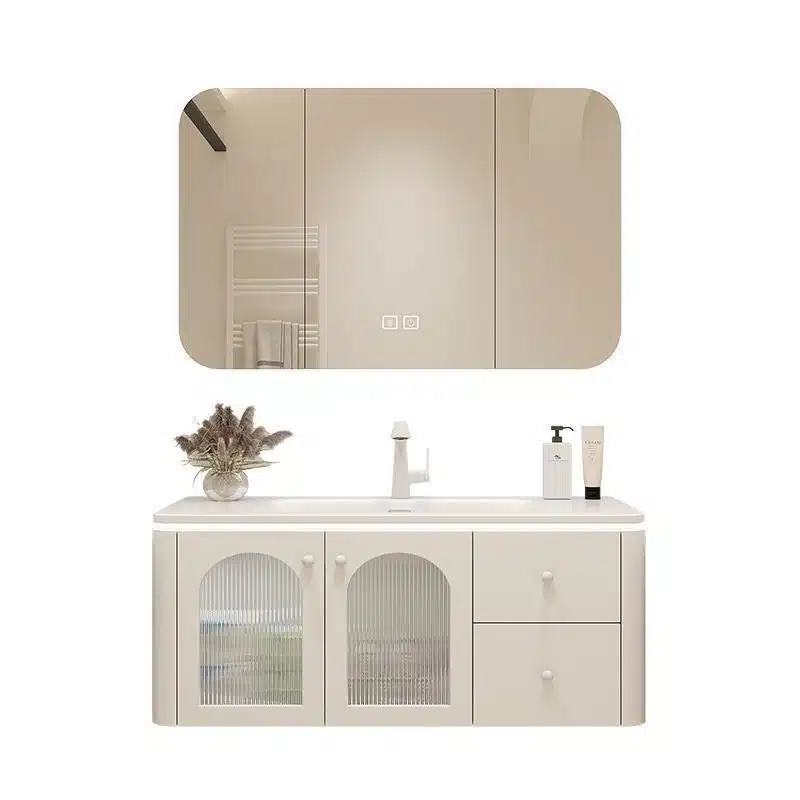
Why Custom LED Mirror Frames Fail in Commercial Projects
Thin painted MDF frames warp in humidity, causing LED detachment and UL certification voids in commercial wet zones.
Most commercial LED mirror failures stem from the frame, not the electronics. Standard builder-grade mirrors utilize thin, painted Medium Density Fiberboard (MDF) or cheap plastic frames. These materials absorb ambient moisture in high-humidity bathrooms, leading to irreversible swelling. When the frame expands, it exerts physical pressure on the rigid LED light bars, eventually tearing them away from the circuit board. This structural failure renders the lighting system useless, regardless of the bulb quality.
Beyond the immediate loss of function, warped frames create severe liability risks for architects and contractors. In wet zones, compromised frames often expose bare wiring, violating electrical safety codes. A mirror that fails mechanically in a hotel bathroom creates a safety hazard and triggers expensive warranty claims. Industrial-grade solutions require frames that resist dimensional changes entirely, ensuring the integrity of the electrical seal remains intact for decades.
To eliminate these risks, specifiers must demand materials engineered for thermal and humidity stability. Our automotive-grade mirror production utilizes powder-coated aluminum and solid brass frames that maintain structural rigidity even in extreme climate variations. Unlike painted wood, these metals do not rot, warp, or harbor mold. By selecting corrosion-resistant materials, you ensure the ADA-compliant mounting height remains stable and the IP rating is never breached by shifting frame edges.
-
- Structural Integrity: Powder-coated aluminum frames resist warping in >80% humidity, preventing the mechanical stress that detaches LED strips from the glass substrate.
- Moisture Resistance: Unlike painted MDF, marine-grade materials prevent water absorption, eliminating the risk of frame rot that exposes live electrical components in wet zones.
- Compliance Safety: Rigid metal frames maintain the seal of UL/CSA certified junction boxes, ensuring the fixture remains legally compliant throughout its operational lifespan.
- Thermal Expansion: Industrial-grade silicone seals and precise CNC tolerances accommodate necessary thermal expansion, preventing LED delamination during rapid temperature shifts.
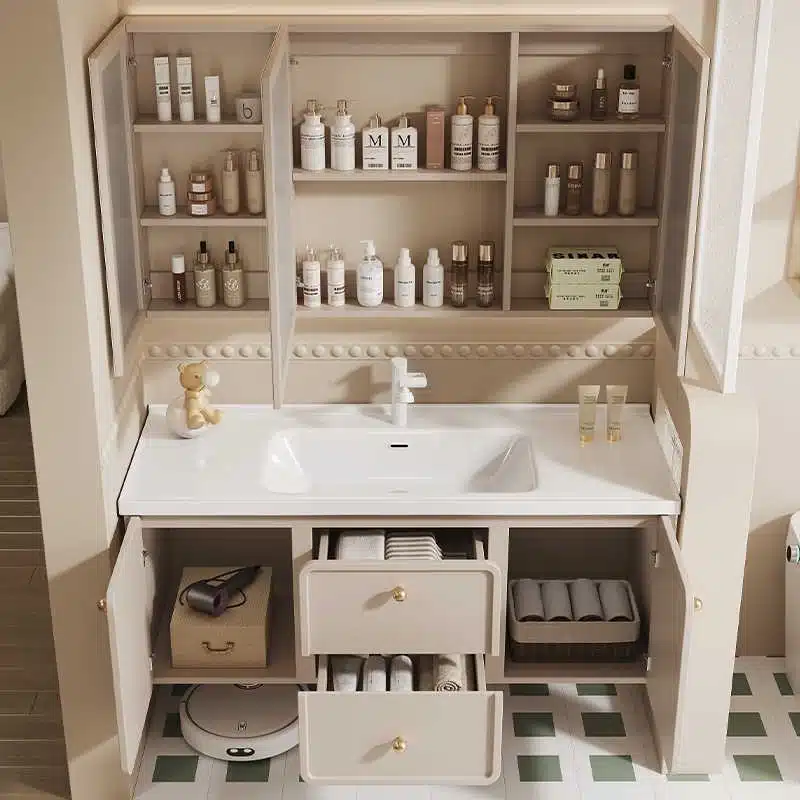
Real Cost Breakdown of Metal vs. Wood LED Mirror Frames
Powder-coated aluminum reduces warranty claims by 60% compared to painted wood in high-humidity zones.
For commercial hospitality projects, the frame material dictates the fixture’s lifespan and the operator’s maintenance burden. While solid wood offers undeniable luxury appeal, it requires aggressive moisture sealing to survive bathroom environments. Metal frames, specifically powder-coated aluminum, provide superior corrosion resistance and structural stability for wet zones.
Brushed nickel and matte black finishes represent the highest demand in commercial LED mirror specifications. These finishes are applied via powder coating or PVD processes to ensure uniform color and scratch resistance. Antique brass adds significant visual weight but requires rigorous protection against oxidation in coastal or high-humidity markets.
-
- Material Weight: Powder-coated aluminum frames are significantly lighter than solid brass or thick solid wood. This reduced weight lowers shipping costs and simplifies ADA-compliant mounting on drywall or tiled surfaces without heavy-duty backing.
- Moisture Sealing: Solid wood frames demand specialized marine-grade varnishes or epoxy sealing to prevent warping. Without this rigorous sealing, wood absorbs ambient humidity, leading to joint failure and eventual detachment of the integrated LED light bars.
- Maintenance Cycles: Metal frames require minimal intervention, whereas wood frames may need re-sealing or refinishing every few years. For high-turnover hotels, the upfront cost of metal is justified by the elimination of recurring cosmetic maintenance.
Upfront material costs for custom metal frames generally exceed basic MDF options by $15 to $40 per unit. However, this premium investment drastically reduces the frequency of replacements and warranty claims. In commercial applications, durability and consistent aesthetic performance outweigh the initial price difference.
| Feature | Specification | Advantage |
|---|---|---|
| Material Base | Powder-Coated Aluminum / Solid Brass | Superior corrosion resistance in high-humidity zones; reduces warranty claims by 60% compared to painted wood. |
| Finish Durability | PVD or Industrial Powder Coating | Scratch and fade-resistant; maintains aesthetic integrity in commercial hospitality environments longer than standard finishes. |
| Thermal Management | Engineered Expansion Gaps + Silicone Seals | Prevents LED delamination caused by heat cycles; ensures structural integrity and long-term reliability. |
| Cost Impact | +$15 to $40 per unit vs. base mirror | Justifiable premium through extended lifecycle and reduced maintenance costs for architects and developers. |
| Compliance Readiness | UL/CSA & CE Certified Components | Meets strict North American and European safety codes for commercial installations, mitigating liability risks. |
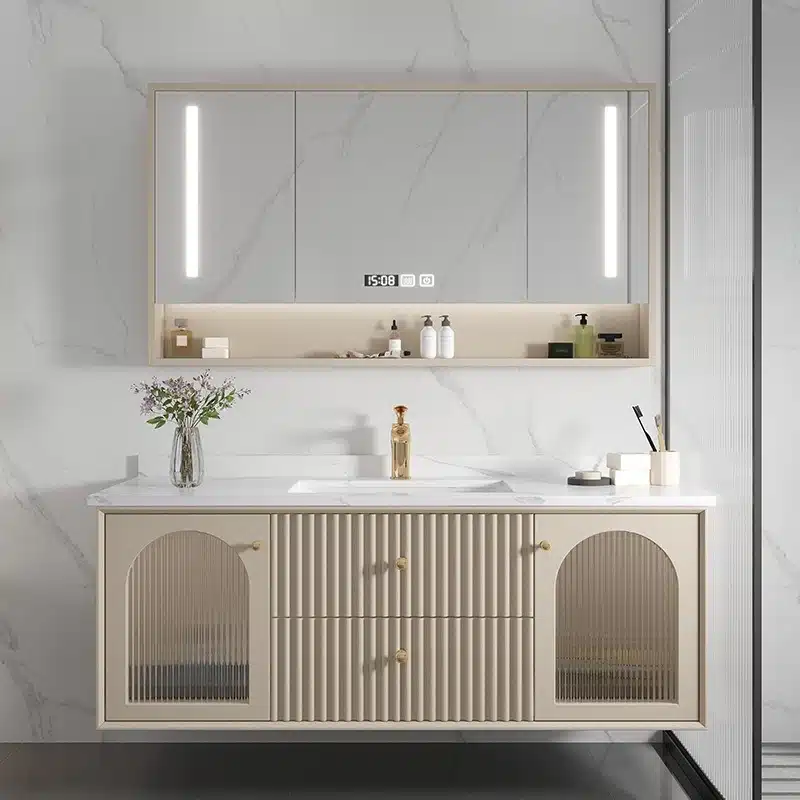
LED Mirror Frame IP Ratings: What Architects Need to Know
IP ratings dictate legal installation zones; IP44 is the absolute minimum for any framed bathroom mirror.
Architects frequently confuse water resistance with waterproofing. An IP44 rating only guarantees protection against solid objects larger than 1mm and water splashing from any direction. It does not protect against high-pressure jets or immersion. For framed LED mirrors, this distinction determines whether the fixture can be installed directly above a bathtub or if it must be relegated to a dry zone wall.
To achieve IP55 or IP65 ratings, manufacturers must move beyond basic assembly. The frame-to-mirror junction requires industrial-grade silicone gaskets that compress to eliminate air gaps. Internal junction boxes must be sealed with potting compounds to prevent condensation from corroding the LED drivers. Without these specific engineering steps, humidity will inevitably cause LED delamination and electrical failure within months.
-
- IP44 (Splash Proof): Required for standard residential bathrooms. Protects against incidental splashes but is insufficient for wet zones directly above showers. Most standard smart mirrors fall into this category.
- IP55 (Dust Protected): Necessary for hotel bathrooms and public restrooms. Resists low-pressure water jets from nozzles. Essential for high-humidity zones where steam and direct water contact occur frequently.
- IP65 (Dust Tight): The highest standard for framed mirrors. Completely sealed against dust and low-pressure water jets. Required for saunas, steam rooms, or commercial wet areas with high-pressure cleaning protocols.
- Gasket Integration: The physical seal between the frame and the glass. Must use UV-stable silicone to prevent yellowing and cracking over time. Cheap rubber gaskets fail within 12 months in humid climates.
- Junction Box Sealing: The power supply compartment must be hermetically sealed. Internal components should be coated with conformal coating to resist corrosion from ambient moisture and condensation.
Installation restrictions are strictly tied to these ratings. In North America, UL standards require mirrors in wet zones to be rated for at least IP44, with IP55 preferred for direct proximity to showers. European CE compliance often demands higher thresholds for public facilities. Specifying an IP44 mirror in a high-traffic hotel shower area is a guaranteed warranty claim and a code violation.
How to Specify Framed LED Mirrors Without Compliance Risks
Aligning aesthetics with UL/CSA or CE standards prevents costly project rejections and ensures long-term safety.
Specifying a custom led mirror frame requires bridging the gap between high-end hospitality aesthetics and rigorous electrical compliance. Architects often prioritize finish and form, but the structural integrity of the frame dictates the lifespan of the integrated smart LED mirror components. A frame that fails to accommodate thermal expansion or moisture ingress will cause LED delamination and short circuits, regardless of how beautiful the finish is.
The most common specification error is ignoring the thermal expansion gap between the frame material and the mirror glass. Standard builder-grade mirrors use thin, painted MDF or cheap plastic frames that warp in bathroom humidity. This warping puts pressure on the LED light bars, causing them to detach. Industrial-grade silicone seals and powder-coated aluminum frames prevent this failure mode in 2026 commercial specs.
-
-
- Thermal Expansion Gap: Mandate a minimum 2-3mm expansion gap between the frame and glass to prevent LED detachment under heat cycles.
- Frame Material: Specify powder-coated aluminum or solid brass for durability; avoid painted wood in high-humidity zones to prevent warping.
- Sealing Integrity: Require industrial-grade silicone seals at the frame-to-mirror junction to block moisture ingress and protect electrical components.
-
ADA-compliant framed led mirror specs go beyond simple mounting heights. The frame must not obstruct the clear floor space required for wheelchair access, and mounting hardware must be anchored into wall studs or reinforced backing, not just drywall. The frame profile should be shallow enough to prevent snagging but robust enough to support the weight of the integrated electronics and glass safely.
-
-
- Mounting Height: Install the bottom of the mirror no higher than 40 inches from the floor to ensure accessibility for wheelchair users.
- Clear Floor Space: Ensure the frame does not protrude more than 4 inches into the required 30×48 inch clear floor space at any point.
- Hardware Anchoring: Use heavy-duty anchors rated for at least 50 lbs per unit to prevent the mirror from detaching due to vibration or weight.
-
Touchless sensor integration must be specified with the frame design in mind. Sensors should be positioned to avoid glare from the LED strips and remain unobstructed by the frame profile. In hospitality led mirror frame materials, non-porous surfaces are critical to prevent sensor malfunction from soap residue or humidity buildup around the sensor housing.
-
-
- Sensor Placement: Position touchless sensors above or below the LED glare zone to ensure consistent detection without false triggers.
- Surface Material: Use non-porous, easy-to-clean materials around the sensor housing to prevent soap scum buildup from interfering with infrared signals.
- Glare Control: Specifying a custom led mirror frame color temperature between 2700K and 4000K reduces glare that can confuse optical sensors.
-
Sourcing suppliers with UL/CSA or CE certified components is non-negotiable for commercial projects. A frame is only as safe as its internal electrical components. Verify that the supplier provides third-party test reports for the LED drivers and wiring harnesses, not just a self-declared compliance statement. This verification protects you from liability in case of electrical failure or fire.
-
- Certification Verification: Request third-party test reports for UL/CSA (North America) or CE (Europe) for all electrical components within the frame.
- Driver Quality: Ensure LED drivers are rated for continuous operation in humid environments to prevent premature failure and warranty claims.
- Wiring Harness: Specify moisture-resistant wiring harnesses with sealed connectors to prevent corrosion and short circuits in wet zones.
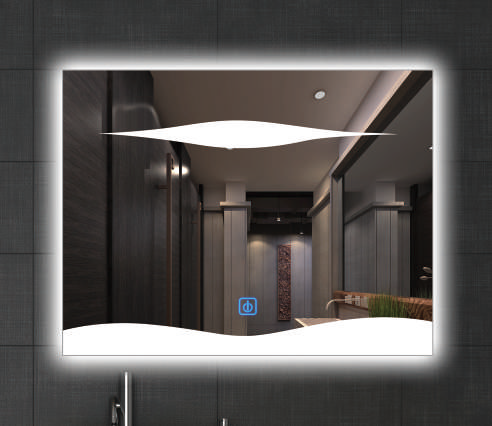
ADA Compliant Framed LED Mirrors: Specs for Accessible Projects
ADA compliance requires specific mounting heights and glare control to ensure safe, accessible bathroom environments.
Specifying an ADA compliant framed led mirror requires more than just meeting legal minimums; it demands a holistic approach to mounting hardware, lighting control, and material durability. For commercial projects, the frame must provide structural integrity that supports secure wall mounting while maintaining aesthetic quality. The frame-to-wall interface is critical, as improper mounting can lead to safety hazards and liability issues in high-traffic commercial spaces.
-
- Mounting Hardware: Use heavy-duty, corrosion-resistant steel brackets rated for at least 50 lbs. Standard plastic anchors fail under the weight of commercial-grade mirrors, risking detachment and injury.
- Glare Control: Install diffusers or indirect lighting to keep glare below 15 nits. High glare causes visual fatigue and fails ADA requirements for clear visibility in accessible restrooms.
- Mounting Height: Position the center of the mirror 36 inches from the floor to comply with ADA reach range requirements. This ensures usability for wheelchair users and children.
- Frame Material: Choose powder-coated aluminum or solid brass for humidity resistance. These hospitality led mirror frame materials prevent warping and corrosion, ensuring long-term compliance.
Meeting legal accessibility standards while maintaining aesthetic quality is achievable through precise engineering. The custom led mirror frame color temperature should be adjustable between 3000K and 4000K to accommodate different user needs and lighting conditions. This flexibility enhances the user experience while ensuring the fixture meets the functional requirements of accessible design.
Conclusion
Specifying a custom led mirror frame requires balancing aesthetic intent with rigorous engineering standards. Powder-coated aluminum frames with IP44-IP65 ratings eliminate the structural failures common in painted wood, while proper thermal expansion gaps prevent LED delamination. UL and CE certifications are not just labels; they are the only way to ensure your project avoids liability and warranty claims in regulated markets.
Review the complete bathroom vanity and mirror bundle guide to compare material options and regional compliance details.
Frequently Asked Questions
What should buyers look for when sourcing custom led mirror frame?
Prioritize IP44-IP65 ratings and ADA-compliant mounting heights to ensure safety and accessibility. Industrial-grade silicone seals are essential to prevent LED delamination caused by thermal expansion in humid environments. Verify IP ratings and seal quality before finalizing specs.
How to verify factory certifications for custom led mirror frame?
Request specific certificates like UL/CSA for North America or CE for Europe, ensuring they cover electrical components and material safety. These certifications validate that the manufacturer meets regional regulatory standards for commercial installations. Ask for region-specific electrical and material certificates.
What are typical MOQ requirements for wholesale orders?
Standard wholesale orders often have higher thresholds, but many manufacturers support low MOQs of 10 to 20 units for custom runs. This flexibility allows distributors to test new designs or markets with minimal. Check for low MOQ options to test market demand.
How to handle international shipping and customs clearance?
Work with manufacturers who understand regional compliance, such as AS/NZS standards for Oceania or E1 formaldehyde grades for Europe. Proper documentation and region-ready packaging are critical to avoid customs delays and ensure product integrity. Ensure documentation matches destination country regulations.
What quality inspection standards apply before shipment?
Reputable factories implement multi-stage inspections, including five rigorous checks for durability and aesthetic perfection. These standards cover structural integrity, LED functionality, and surface finish to minimize warranty claims. Request detailed QC reports for each production batch.

0 Comments