
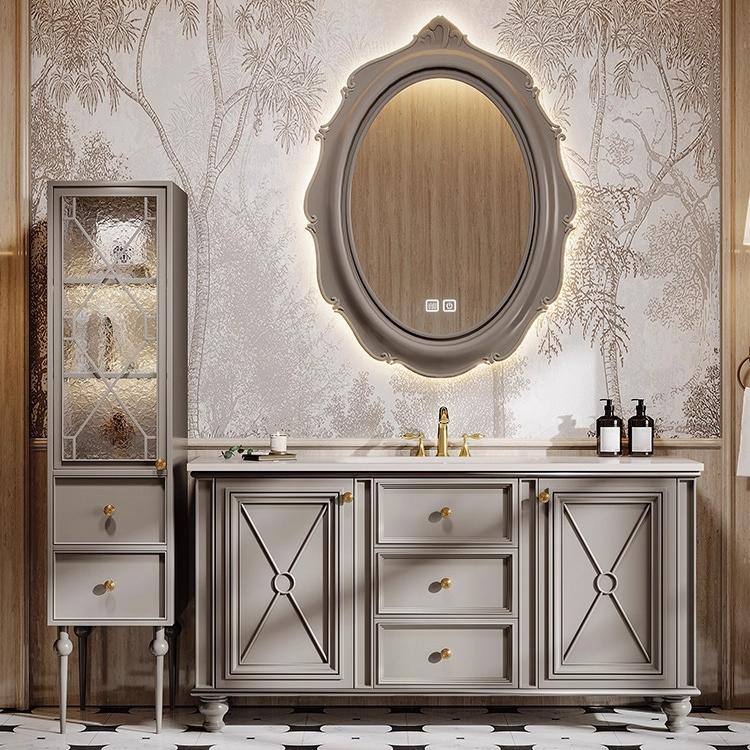
Misunderstanding climate sourcing for wood vanity cracking is a direct path to expensive warranty claims and long-term damage to your brand reputation. A cabinet can pass every quality check in the factory, only to fail months after installation when exposed to the dry air of a desert home or the persistent humidity of a coastal condo. These post-installation failures create logistical headaches and financial liabilities, eroding profit margins and straining relationships with contractors and distributors.
This guide provides a technical framework for sourcing cabinetry that is properly matched to its destination climate. We will analyze how relative humidity causes solid wood to crack and standard MDF to swell, and explore engineered solutions like floating center panels and all-climate plywood. We’ll also cover the critical manufacturing process of calibrating wood moisture content for a specific region and explain how to structure warranty clauses to protect your business from climate-related claims.
How Does Relative Humidity (RH) Affect Cabinets in Dry vs. Humid Climates?
Wood cabinetry is engineered for a stable indoor relative humidity of 30-55%; moving outside this range causes material stress, leading to cracking in dry air and swelling in humid conditions.
The Ideal Humidity Range for Cabinet Stability
Maintaining a stable environment is the most important factor for wood cabinet longevity. Industry standards identify a specific relative humidity (RH) range where wood neither absorbs nor loses significant moisture, preventing stress on its structure. Most manufacturers build and calibrate cabinets assuming they will be installed in a climate-controlled space that stays within this balanced zone.
- The industry-recommended relative humidity for wood stability is between 30% and 55%.
- Factories typically calibrate their products for an assumed indoor average of 40-50% RH.
- When ambient humidity moves outside this ideal range, wood fibers begin to change dimension, leading to structural problems.
Material Contraction and Cracking in Dry Climates
In arid or low-humidity environments, wood releases its internal moisture into the drier surrounding air. This process causes the wood fibers to shrink, leading to overall contraction. The surface of the wood dries and shrinks much faster than its core, creating a stress gradient that can eventually fracture the material. Over time, this cumulative stress on cabinet joints and panels results in visible gaps or cracks.
- Low humidity forces wood to lose moisture, causing it to contract.
- This contraction is a primary cause of cracking along joints and in solid wood panels.
- Managing indoor humidity with humidifiers can help reduce the risk of this type of damage in dry regions.
Material Swelling and Warping in High-Humidity Environments
In humid or tropical climates, wood acts like a sponge, absorbing excess moisture from the air. This absorption causes the wood fibers to expand, a process known as swelling. As cabinet components swell, they can push against each other, leading to doors that stick, drawers that bind, and panels that warp out of shape. The damage can become permanent if the material is repeatedly exposed to high moisture levels.
- High humidity causes wood to absorb ambient moisture, which makes it swell and expand.
- Swelling often prevents doors and drawers from operating correctly and can cause permanent warping.
- Proper ventilation and the use of dehumidifiers are essential for protecting cabinetry in humid locations.
Why Does Solid Wood Crack in Dry Desert Climates?
Solid wood cracks in dry climates because its surface loses moisture and shrinks much faster than its core, creating internal tension that eventually splits the wood grain to relieve the pressure.
Rapid Moisture Loss and Internal Stress
In dry air, a wood cabinet’s surface loses moisture much faster than its core. This imbalance causes the surface to shrink and tighten around the still-expanded interior, building internal stress. The surface layer dries and contracts while the core remains moist and expanded, creating a significant tension differential. Eventually, this stress exceeds the wood’s natural tensile strength, forcing cracks to form along the grain as a physical release of the pressure.
Uneven Shrinkage from Wood Grain Structure
Wood is an anisotropic material, meaning its physical properties change depending on the direction of the grain. It shrinks at different rates tangentially (along the growth rings) and radially (from the center out), creating internal conflict within the material as it dries. The cellular structure of wood forces it to shrink more in certain directions than others. This differential movement generates powerful internal stresses, a problem made much worse by the rapid drying common in arid climates.
Amplifying Factors in Desert Environments
Desert climates create a uniquely challenging environment for wood. The combination of three factors accelerates cracking:
- Low relative humidity constantly draws moisture out of the wood, accelerating the drying process.
- Significant daily temperature fluctuations cause the wood to expand and contract repeatedly, adding mechanical stress.
- Intense UV radiation can make the wood surface brittle, making it more susceptible to cracking over time.
Unlock 40,000+ Custom Bathroom Cabinet Designs

Why Does Standard MDF Swell in Humid and Tropical Climates?
Standard MDF fails in humid climates because its porous wood fibers act like a sponge, absorbing atmospheric moisture that breaks down the internal resin binders and causes irreversible swelling.
The Hygroscopic Nature of Wood Fibers
Standard Medium-Density Fiberboard (MDF) is engineered from fine wood fibers held together with resin. These fibers are naturally hygroscopic, so they absorb and release moisture to match the surrounding air. In humid regions, the high concentration of airborne water vapor gets drawn directly into the board. The material’s porous, fiber-based structure acts just like a sponge, and the massive surface area of the fine particles accelerates moisture absorption until the board’s internal moisture content equalizes with the high ambient humidity.
Structural Breakdown and Volumetric Expansion
As wood fibers absorb water, they physically expand. This swelling creates constant stress on the resin binders that give the board its structure. Over time, this pressure weakens the binders, causing them to fail. The board swells in thickness and volume, losing its structural integrity permanently. This damage is most obvious along cut edges or any location where the protective finish has been compromised, resulting in warping, delamination, and a complete loss of strength.
Limitations of Standard Sealing and Finishing
Most standard MDF is sealed with paint or laminate, but these finishes often provide inadequate protection in high-humidity environments. Micro-cracks, screw holes, and poorly sealed edges become entry points for moisture. Once water bypasses this outer layer, it gets trapped inside, speeding up the swelling and internal degradation.
- Proper edge treatment is the most critical defense, since exposed edges are the primary point of moisture entry.
- The industry has responded by developing High Moisture Resistant (HMR) MDF grades, which use specialized resins and superior sealing processes for better performance in damp conditions.
- For consistently wet environments like bathrooms in tropical climates, more robust materials like marine-grade plywood or solid PVC are far better long-term solutions.
How Does the “Floating Center Panel” Solution Prevent Wood Cracking?
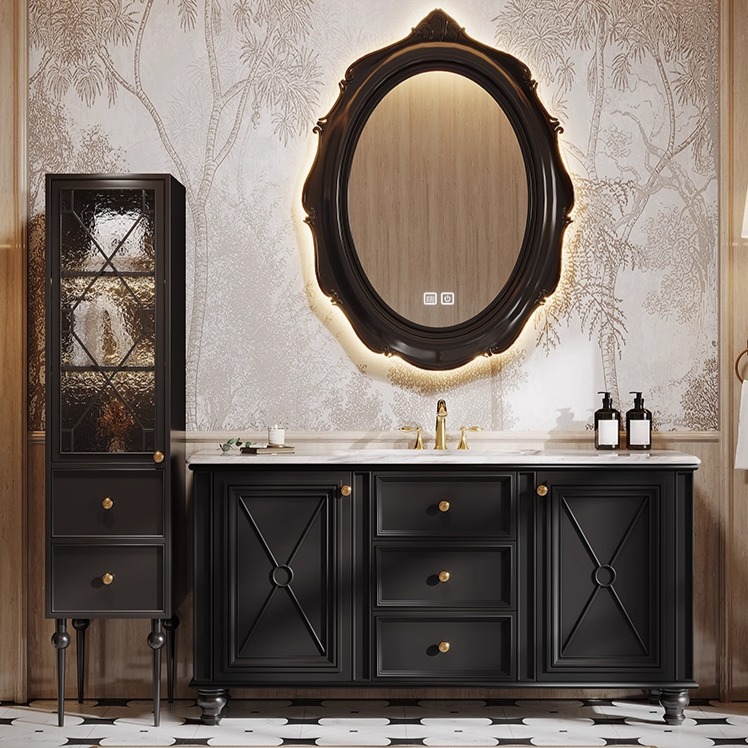
A floating center panel is a construction method that intentionally leaves a solid wood panel unglued within its frame, allowing it to expand and contract with humidity changes and preventing the stress that causes cracking.
The Core Mechanism: Accommodating Natural Wood Movement
A floating panel works by not being glued into its frame. This simple but critical design choice allows the solid wood to expand and contract freely as humidity levels change. Solid wood primarily shrinks and swells across its grain, and when rigidly fixed, this movement builds immense internal stress. The floating design accommodates this natural behavior, preventing the pressure that would otherwise cause the panel to split or crack over time.
Installation and Design
In this technique, the panel is fitted into a groove that runs along the inside of the frame. To keep the panel centered and prevent rattling, small dowels are often drilled through the back of the frame and slightly into the panel’s edge. These restraints secure the panel vertically but do not restrict its ability to move laterally within the groove. This method is an industry standard for quality woodworking, especially for large solid wood surfaces like cabinet doors and furniture side panels intended for environments with fluctuating humidity.
A Proactive Solution for Environmental Stress
This construction method directly mitigates the risk of damage from rapid environmental shifts. For example, when indoor heating is activated at the start of winter, humidity can drop sharply, forcing wood to shrink unevenly. A rigidly mounted panel would resist this change, leading to failure. A floating panel, on the other hand, is engineered to tolerate these dimensional shifts, making it a proactive and durable solution for climate-related stress on wood products.
Why Is Plywood Considered the Best All-Climate Compromise for Cabinetry?
Plywood’s cross-laminated construction provides superior dimensional stability, making it the most reliable engineered wood for handling humidity swings in both arid and tropical regions.
For cabinetry specified in projects with diverse or extreme climates, material selection is the primary factor determining long-term structural integrity. While solid wood cracks and MDF swells, plywood offers a balanced, high-performance solution. Its engineered structure directly counters the forces that cause other materials to fail when exposed to fluctuating temperature and humidity.
Structural Stability from Cross-Laminated Construction
Plywood’s core strength comes from its cross-laminated construction, where thin wood veneers are layered with alternating grain directions. This design creates a self-reinforcing structure that actively resists the warping, cracking, and sagging common in solid wood. The alternating grain pattern distributes stress evenly across the entire panel, preventing the development of weak points. This gives it superior dimensional stability in both humid and dry conditions, which is why we at FocusCabinet leverage this material to ensure cabinets maintain their form and function globally, from the arid Middle East to humid Southeast Asia.
| Material | Primary Weakness in Climate Extremes | Performance Benchmark |
|---|---|---|
| Plywood (Water-Resistant) | Minimal; requires proper edge sealing to prevent delamination in extreme wet conditions. | 10+ year lifespan; retains up to 100% of bending strength. |
| Solid Wood | Cracks and splits in low humidity; swells and warps in high humidity. | Stable only within a narrow humidity range (30-55% RH). |
| Standard MDF / Particle Board | Readily absorbs moisture, causing irreversible swelling, warping, and structural failure. | Short lifespan (5-7 years for particle board) in damp environments. |
Superior Moisture Resistance Compared to MDF and Particle Board
In high-moisture environments like bathrooms or coastal regions, plywood demonstrates clear superiority. Specialized formulations like marine-grade and Boiling Water Proof (BWP) plywood maintain their integrity where standard MDF and particle board would swell and disintegrate. Industry data shows plywood can retain nearly all of its bending strength after a decade of use, while particle board has a much shorter effective lifespan of 5-7 years in similar conditions. The use of waterproof adhesives in FocusCabinet’s plywood prevents delamination, ensuring longevity even in constantly steamy bathrooms.
Long-Term Durability and Value
While plywood may have a higher initial cost, its extended durability offers better long-term value. Its resilience reduces the need for frequent replacements, making it a more economical and sustainable choice over the product’s life cycle. Industry data shows plywood has a significantly lower annual replacement cost compared to materials like particle board. Selecting quality plywood provides distributors with a product that minimizes warranty claims and customer complaints related to climate-induced damage.
How Do Factories Calibrate Moisture Content (MC) for Different Target Climates?
Factories prevent post-installation wood failure by conditioning materials to a specific moisture content that matches the product’s destination climate, using precisely calibrated tools in controlled environments.
To ensure wood stability, manufacturers must calibrate moisture content by simulating the temperature and humidity of the product’s final destination. This process prevents materials from swelling or cracking after installation. Without accounting for the target environment, a cabinet built in a humid factory environment would quickly lose moisture and crack if shipped to a dry desert climate. The opposite is true for cabinets moving from dry to humid regions.
Calibrating in Target Environment Conditions
Modern production lines use controlled rooms that replicate the exact climate of the target region, whether dry and arid or hot and humid. For example, at FocusCabinet, we condition wood stock for North American and European markets to an average of 6-8% MC. For humid Southeast Asian regions, where relative humidity is much higher, materials are stabilized closer to a 10-12% MC to match the local equilibrium.
| Target Climate Region | Average Relative Humidity (RH) | Required Wood Moisture Content (MC) |
|---|---|---|
| North America & Europe | 40-50% | 6-8% |
| Southeast Asia & Humid Tropics | 60-80%+ | 10-12% |
Using Standardized Tools for High Accuracy
Precision is not optional in moisture calibration. Factories rely on standardized tools, such as moisture content standards for pin meters and sensor blocks for pinless models, to achieve consistent results. These industry-standard tools ensure that all readings are accurate to within ±0.01% to 0.1%. This level of precision is critical for preventing defects like warping, joint failure, or finish bubbling that appear months after a product is installed.
Establishing Documented Re-calibration Schedules
The accuracy of moisture meters and sensors can drift over time, leading to inconsistent production quality. Top-tier manufacturers implement and document regular re-calibration schedules for all measurement equipment. A formal schedule for equipment checks is a core component of our five-stage quality control process. Documenting these procedures creates a verifiable record of compliance, which is essential for meeting international quality standards and ensuring every batch meets the client’s specifications.
How Should You Structure Warranty Clauses for Climate-Related Damage?
Effective climate warranties move beyond vague language, explicitly assigning liability for environmental events, extending correction periods, and integrating resilient design standards directly into the contract.
Standard warranties are no longer sufficient to cover the predictable risks of a changing climate. A modern, robust warranty clause doesn’t leave liability to chance; it directly assigns responsibility for climate-related events, defines what constitutes an excusable delay, and protects all parties from the financial fallout of non-compliance with evolving environmental regulations.
Allocating Risk and Defining Responsibilities
The foundation of a climate-resilient warranty is eliminating ambiguity. Contracts must expressly state how risks from climate change are shared, preventing future disputes over whether an event was foreseeable. This requires updating force majeure clauses to be highly specific and using indemnity clauses to enforce compliance.
- Assign Climate Risks Explicitly: The contract should clearly assign liability for specific climate-related impacts. This removes any gray area regarding foreseeability and ensures all parties understand their obligations from the start.
- Update Force Majeure Clauses: General clauses are obsolete. List specific climate events like wildfires, floods, extreme heat waves, and drought. Blanket exclusions based on foreseeability should be removed, as these risks are now well-documented and predictable.
- Include Targeted Indemnity Clauses: Use indemnity provisions to cover any liability arising from a contractor’s failure to comply with climate-related laws or secure necessary environmental approvals. This ensures accountability for regulatory adherence.
Integrating Design Standards, Insurance, and Duration
A functional warranty extends its protection beyond the typical one-year period and integrates practical requirements into the contract itself. This includes mandating the use of climate-resilient designs and ensuring the right insurance policies are in place to cover potential environmental damages.
- Extend Warranty Periods: Climate-related defects often take longer than 12 months to surface. Extend the correction period to 18 months after project completion to account for this delayed onset.
- Require Resilient Design Standards: The contract must require adherence to specific climate-resilient design standards. This could include using flood protection measures in coastal areas or specifying wildfire-resistant materials in at-risk regions.
- Mandate Specific Insurance Coverage: Require contractors to maintain insurance for floods, wildfires, and other extreme weather events. The project owner must be named as an additional insured party to guarantee coverage.
Conclusion
Matching cabinet materials to the end-user’s climate is a critical step in sourcing. Solid wood performs differently in Arizona than it does in Florida, and understanding these behaviors prevents costly warranty claims from cracking or swelling. A smart material strategy protects your brand reputation and ensures customer satisfaction.
If you are sourcing for a specific climate, our team can help you select the ideal materials and moisture content calibration for your project. Contact us to discuss your requirements or order a refundable sample to see our quality firsthand.
Frequently Asked Questions
Why did my wood vanity crack?
Your wood vanity likely cracked due to low humidity. In dry environments, wood releases its internal moisture and contracts. This shrinkage creates stress within the wood grain and at the joints, which ultimately leads to cracking as the material pulls itself apart.
Best vanity material for humid bathroom?
For a humid bathroom, the best vanity materials are those that resist moisture absorption. Engineered materials like marine-grade MDF (Medium-Density Fiberboard) or PVC (Polyvinyl Chloride) are excellent choices as they are designed not to swell, warp, or crack under high humidity. Solid surface composites and vanities with a thermofoil finish also offer superior durability and water resistance.
Preventing wood furniture cracking?
To prevent wood furniture from cracking, you must maintain a stable indoor environment with a relative humidity between 30% and 55%. Using a humidifier in dry conditions and a dehumidifier in humid conditions helps stabilize moisture levels. Additionally, ensuring the wood is properly sealed with a quality finish slows moisture exchange and minimizes the risk of contraction and cracking.
Bathroom vanity for dry climate?
In a dry climate, the best bathroom vanity materials are those that remain stable as humidity drops. Engineered woods like high-quality MDF or plywood are superior to solid wood as they are designed to resist contraction. For solid wood, choose quarter-sawn construction for its greater stability. Alternatively, non-wood materials like metal or solid surface composites are completely immune to cracking from dryness.
Wood expansion in bathroom?
Wood expands in a bathroom due to its hygroscopic nature, meaning it absorbs moisture from the air. The high humidity from showers and baths causes the wood fibers to swell. This expansion can result in warped panels, misaligned doors, and pressure on the vanity’s joints, compromising its structural integrity over time.
Acclimating cabinets before install?
Yes, acclimating wood cabinets before installation is a critical step. You should let the cabinets sit in the installation room, with the HVAC running, for at least 72 hours. This allows the wood’s moisture content to equalize with the home’s normal humidity level. Skipping this step can cause the wood to expand or contract after installation, leading to warped doors, cracked joints, and finish damage.




0 Comments