

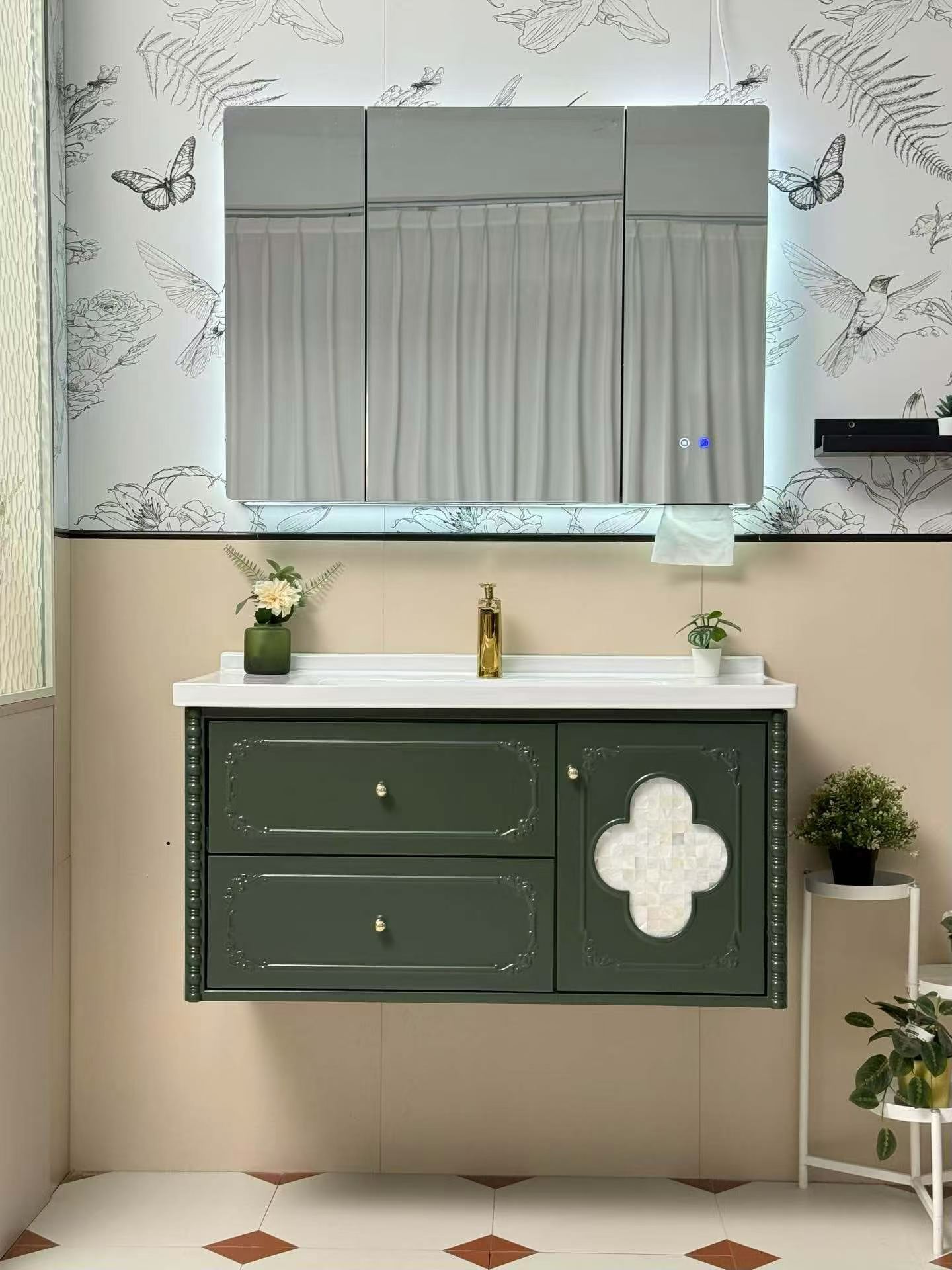
A miscalculation in vanity material cost can instantly erode project profit margins, turning a profitable contract into a loss leader. Specifying materials without a clear cost index often leads to quoting errors and uncompetitive bids, especially when clients demand value engineering without compromising quality. This guesswork directly risks your ability to win projects and maintain financial stability in a market with fluctuating raw material prices.
This guide serves as a standard operating procedure for material specification, establishing a clear cost index with MDF as the baseline (100). We will analyze the relative costs of particle board (80), plywood (120), and solid wood (150) for cabinet boxes and doors. We will also break down the financial impact of component choices, like drawer box materials, back panel thickness, and formaldehyde grades, giving you the data needed to value engineer hidden parts and protect your margins.
What Is the “Standard” Cabinet Spec (Plywood Box with MDF Doors)?
The industry standard for cabinetry combines a structural plywood box for durability with smooth MDF doors for a flawless paint finish, delivering an optimal balance of performance and cost.
Plywood for Cabinet Boxes: The Structural Foundation
The cabinet box, or carcass, is the workhorse of the entire unit. It’s built with plywood because of the material’s superior load-bearing capacity and moisture resistance. This construction ensures the cabinet remains rigid and stable over its lifespan, capably supporting heavy countertops or enduring the humidity common in bathrooms and kitchens.
- Plywood provides the structural integrity needed to hold screws, hinges, and drawer slides securely without failing.
- Its layered construction offers enhanced resistance to water damage, delamination, and warping.
- This material choice creates a long-lasting and reliable cabinet frame that protects your investment.
MDF for Doors: The Aesthetic Finish
Medium-Density Fiberboard (MDF) is the preferred material for cabinet doors, specifically because its uniform surface is perfect for a flawless paint or lacquer application. Unlike solid wood, MDF has no natural grain, which eliminates the risk of the finish cracking or splitting along grain lines over time. It provides a perfectly stable and smooth canvas.
- The engineered composition of MDF makes it highly resistant to warping, expansion, and contraction from temperature and humidity shifts.
- It provides an ideal surface for paint, resulting in a clean, consistent, and high-end look that solid wood struggles to achieve.
- This material is the best choice for achieving a smooth, modern aesthetic on the most visible part of the cabinetry.
Why This Hybrid Model Is the Industry Standard
This combination of a plywood box and MDF doors became the industry benchmark because it intelligently balances cost, durability, and visual appeal. It’s an engineered solution that puts the right material in the right place, creating a high-value product that doesn’t compromise on the distinct functions of structure and finish.
- It allocates budget toward structural strength where it is most critical—the cabinet box.
- It leverages the superior finishing qualities of MDF to deliver a premium, durable appearance on the exterior.
- This approach allows manufacturers to build a reliable and beautiful cabinet at an accessible, competitive price point.
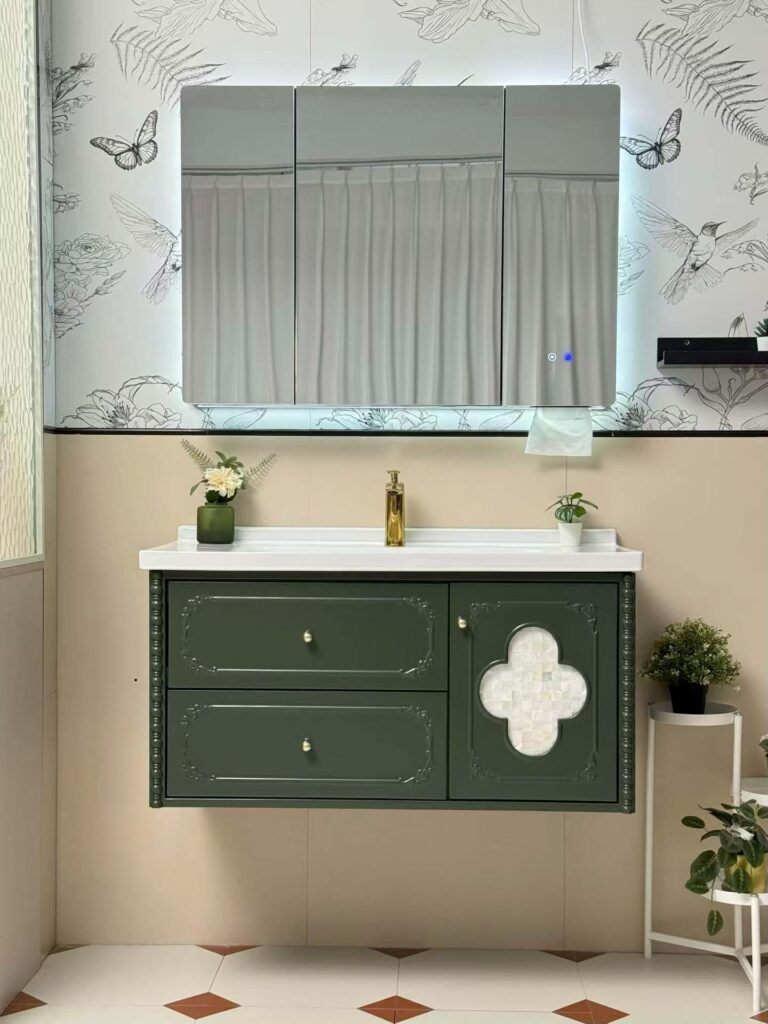
How Does the Cost Index Compare Particle Board (80) vs. MDF (100)?
MDF consistently costs 40-50% more than particle board because its refined manufacturing process creates a denser, more durable panel, offering superior performance that justifies the price in most applications.
Core Cost and Manufacturing Differences
The price difference between Medium-Density Fiberboard (MDF) and particle board is a direct result of their manufacturing. MDF is engineered from fine wood fibers that are compressed under intense heat and pressure, creating a dense, heavy, and uniform panel. This process is more complex and energy-intensive. Particle board, on the other hand, is made from larger wood chips, sawdust, and shavings bonded with adhesive. This simpler construction makes it cheaper and faster to produce, establishing it as the entry-level budget material.
| Material Specification | Cost Index & Composition | Typical Density (kg/m³) |
|---|---|---|
| Particle Board | Index: 80 (Made from larger, bonded wood chips) | 600-680 |
| MDF (Medium-Density Fiberboard) | Index: 100 (Made from fine, compressed wood fibers) | 700-800 |
Performance and Lifespan Value
The higher initial investment in MDF translates directly to better long-term value. Its dense construction provides greater strength, superior screw-holding capacity, and a much smoother surface ideal for high-quality paint finishes. Particle board is sufficient for low-stress applications like shelving or temporary furniture, but it’s more susceptible to damage and moisture. For frequently used vanities or cabinetry, MDF’s durability and extended service life make it the more cost-effective choice over time.
- MDF offers a longer lifespan of 15-20 years with proper care, compared to particle board’s typical 10-15 years.
- The dense composition of MDF gives it better structural integrity and impact resistance, which is critical for high-use furniture.
- For any professional B2B application, the performance gains from MDF almost always justify its higher upfront cost.
Boost Sales with Region-Specific Bathroom Vanities

How Does the Cost Index Compare Plywood (120) vs. Solid Wood (150)?
Plywood’s cost advantage comes from manufacturing efficiency that yields up to 80% of a log, while solid wood’s premium price is driven by timber scarcity and labor-intensive milling.
Plywood: Manufacturing Efficiency and Cost Savings
Plywood’s lower cost is a direct result of its production process. Manufacturers peel logs into thin veneers, allowing them to use 70-80% of the raw timber, a massive improvement over milling solid planks. This high material yield makes plywood the default structural material for large-scale commercial projects and modular construction where budget and performance are critical. For projects in humid environments, specialized grades like moisture-resistant plywood offer reliable performance without the significant expense of solid timber.
| Material Characteristic | Plywood | Solid Wood |
|---|---|---|
| Relative Cost Index | ~120 | ~150+ |
| Raw Material Utilization | High (70-80% log yield) | Low (Significant milling waste) |
| Primary Cost Driver | Production Efficiency | Timber Scarcity & Labor |
| Ideal Application | Structural carcasses, large projects | High-end furniture, aesthetic doors |
Solid Wood: Scarcity and Labor Drive Higher Costs
Solid wood carries a premium price, often costing three to five times more than plywood. The two main factors are the difficulty in sourcing high-quality, defect-free timber and the intensive labor needed to mill, process, and finish solid boards. These high costs mean solid wood is typically reserved for high-end applications like furniture or cabinet doors, where its natural aesthetic appeal is a primary requirement and budget constraints are less of a concern.
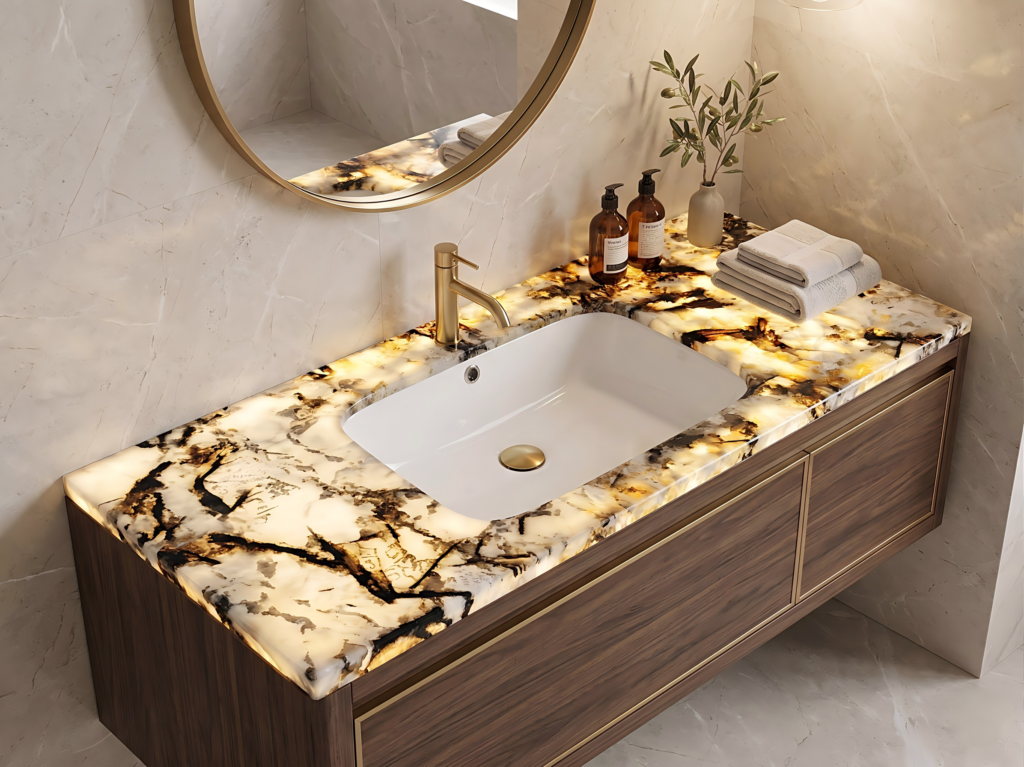
Which Drawer Box Material Is Better: Solid Pine or Plywood?
The industry no longer views this as a direct competition; modern cabinet engineering uses a hybrid approach, selecting plywood for structural stability and solid wood for strength and aesthetic value.
Plywood for Dimensional Stability and Moisture Resistance
Plywood has become the standard material for high-performance drawer boxes because its layered construction resists warping, twisting, and shrinking. This engineered stability is critical in environments with fluctuating humidity, like bathrooms and kitchens, ensuring drawers operate smoothly for their entire lifespan.
- The cross-grained veneer layers counteract natural wood movement, which maintains the drawer’s original shape and prevents jamming.
- It provides a consistent and reliable structural base while being more resource-efficient than solid wood.
- Its inherent resistance to moisture damage makes it a far superior choice for any application where water or humidity is a factor.
Solid Pine for Heavy Loads and Aesthetic Joinery
Solid pine remains valuable for specific applications, particularly where heavy load-bearing capacity and visual craftsmanship are the primary goals. It is often specified for high-end cabinetry where traditional joinery, such as visible dovetails, is a key design feature.
- It offers robust strength, making it ideal for deep drawers designed to hold heavy items like pots, pans, or tools.
- The natural wood grain is perfect for showcasing skilled joinery, adding perceived value to the finished product.
- Its main drawback is a greater susceptibility to expansion and contraction from changes in temperature and humidity, which can affect performance over time.
Market Trend: Performance Engineering Over Material Prestige
The modern cabinetry market prioritizes proven function over outdated tradition. Instead of pitting plywood against solid wood, effective manufacturers use a hybrid approach. They select the best material for each component based on its specific functional requirements and environmental exposure.
- This performance-engineered model uses plywood for stable, unseen structural parts like drawer boxes and cabinet carcasses.
- Solid wood is reserved for visible, high-touch elements like cabinet frames or door fronts where its aesthetic qualities are most impactful.
- The focus has shifted from simple material prestige to creating durable, long-lasting products that perform reliably in their intended environment.

What Are the Cost Savings Between 1/4″ and 1/2″ Back Panels?
The choice between a 1/4″ and 1/2″ back panel is a value engineering decision balancing raw material costs against structural needs; thinner panels are cheaper upfront, but thicker panels often eliminate the need for extra bracing and improve long-term durability.
Key Factors Determining the Cost Difference
A direct cost comparison between 1/4″ and 1/2″ back panels is not linear. The price difference depends heavily on the material specified—the cost gap for plywood will differ from that of MDF or particle board. More importantly, the structural requirements of the final product dictate the true cost. A 1/2″ panel inherently adds rigidity and stability to a cabinet carcass. This can reduce or eliminate the need for additional support bracing, offsetting some of the higher material expense with savings in hardware and assembly labor. Cabinetry often defaults to 1/4″ panels as a standard cost-saving measure, but this is only viable when the cabinet design includes other structural supports.
Analyzing Total Cost: Material vs. Labor and Performance
The total cost equation extends beyond the initial material purchase. A 1/2″ panel uses roughly twice the raw material of a 1/4″ panel, making its upfront price significantly higher. Yet, the thinner 1/4″ panels are lighter and easier for a single technician to handle and install, which can lower labor costs per unit. The final consideration is performance value. For high-end or heavy-duty cabinetry, the superior strength of a 1/2″ panel provides better long-term value by preventing the warping or damage that leads to costly replacements. This durability makes the thicker panel a calculated investment, not just an expense.
What Is the Impact of Formaldehyde Grades (E0 vs. E1) on Cabinetry?
Formaldehyde emission grades have created a clear market split, with E1 serving as the cost-effective industry baseline and E0 emerging as a premium standard for projects prioritizing indoor air quality.
E1 Grade: The Industry Standard for Cost and Safety
E1 is the widely accepted baseline for residential and commercial cabinetry. It provides a reliable balance between safety regulations and cost-effectiveness, meeting necessary health standards for most global applications without inflating project budgets.
- Serves as the baseline safety standard in many key markets, including Europe.
- Offers a practical balance between controlled formaldehyde emissions and affordable material costs.
- Ideal for general residential and commercial projects where budget is a primary decision factor.
E0 Grade: The Premium Choice for Health-Conscious Spaces
E0 grade materials offer significantly lower formaldehyde emissions and are increasingly specified in premium projects or environments occupied by sensitive individuals. This standard prioritizes superior indoor air quality, although it commands a higher material cost.
- Features minimal formaldehyde emissions to improve indoor air quality.
- Recommended for spaces frequently used by children, the elderly, or people with respiratory sensitivities.
- Positioned as a premium upgrade that adds tangible value and peace of mind in high-end residential and commercial builds.
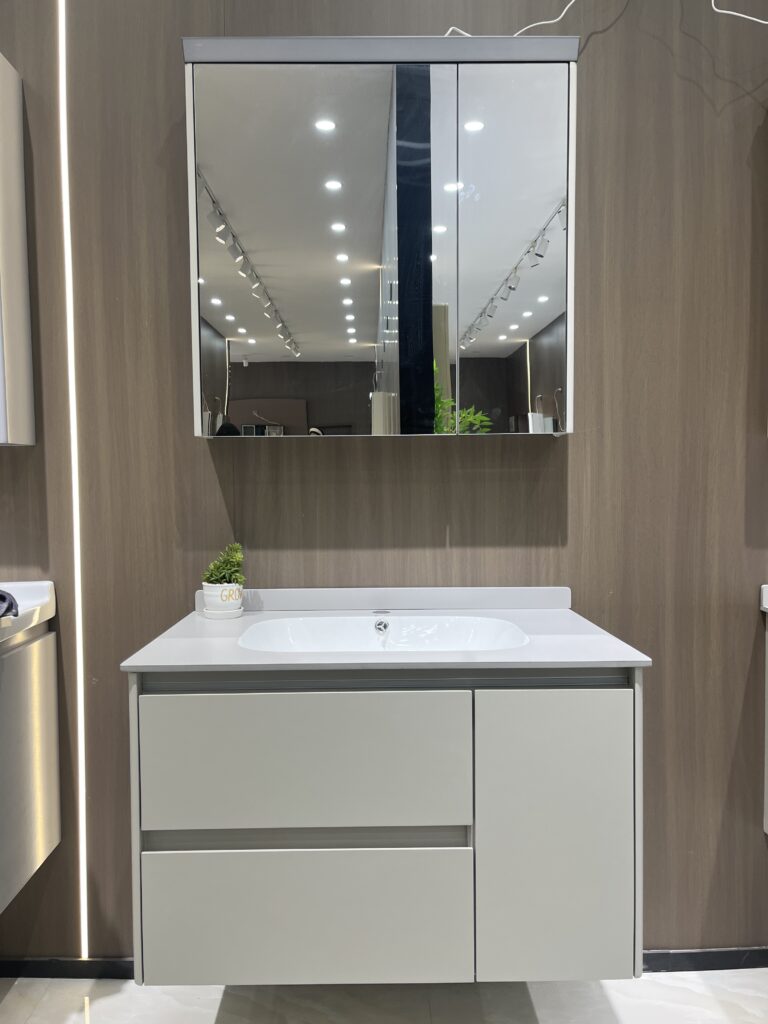
How Can You Value Engineer Hidden Parts to Save Costs?
Value engineering non-visible components has moved beyond simple cost-cutting; it is now a systematic discipline focused on optimizing lifecycle performance and manufacturing efficiency from the earliest design stages.
The goal is to analyze the entire product system to find efficiencies that don’t compromise long-term durability. This means balancing upfront savings with lifecycle costs. Any modification to a hidden part, like a cabinet back panel or drawer bottom, must be evaluated for its impact on structural integrity and maintenance requirements over the product’s lifespan.
Adopt a Holistic, Performance-First Approach
In 2026, smart value engineering is about proactive, performance-based optimization. Instead of reactively trimming material costs, the focus is on how changes to unseen components affect the product’s overall performance. Shifting from a 15mm to a 12mm internal shelf might save on material, but you must first confirm it meets the required load-bearing capacity for the vanity’s intended use. This performance-first mindset prevents downstream failures and protects brand reputation.
| Hidden Component | Standard Specification | Value Engineered Option |
|---|---|---|
| Cabinet Carcass | 15mm Plywood (Poplar Core) | 15mm Plywood (Lumber Core) or specified-density PVC for improved water resistance at a target cost. |
| Drawer Box | 15mm Plywood Sides, 5mm Bottom | 12mm Plywood Sides, 5mm HDF Bottom (if load requirements permit). Reduces material weight and cost. |
| Cabinet Back Panel | 9mm Plywood Panel | 5mm Plywood Panel. Still provides sufficient rigidity for most wall-hung applications while saving over 40% on back panel material. |
Integrate Cross-Functional Teams in Early Design Phases
The most effective cost savings are identified before a design is finalized. By integrating design, sourcing, and manufacturing teams during the preconstruction phase, you can identify potential inefficiencies early. A manufacturing expert might point out that a slight change to an internal support brace simplifies assembly, reducing labor costs. Sourcing can advise on material availability and cost fluctuations, allowing the design to be adapted for supply chain stability. This early collaboration prevents costly modifications later in the production cycle.
Leverage AI for Data-Driven Analysis
Guesswork is no longer a viable strategy. Leading manufacturers now use analytical tools and AI-powered pattern recognition to model the impact of material and design changes for hidden components. These systems can analyze thousands of data points to identify optimization opportunities that are not immediately obvious. By applying these data insights, you can make informed decisions that precisely balance cost, performance, and long-term durability without compromising the final product’s quality.
Conclusion
Choosing the right cabinet materials is about balancing budget with performance. The cost index shows that mixing materials, like using plywood for boxes and MDF for doors, helps you control expenses. Value engineering less visible components further optimizes your final unit price without compromising key features.
To apply these cost strategies to your own product line, send us your project specifications for a detailed quote. Our team can help you value engineer a vanity that meets your exact target price and quality standards.
Frequently Asked Questions
Price difference mdf vs plywood vanity?
A vanity constructed primarily from plywood is typically 15-30% more expensive than a comparable vanity made from Medium-Density Fiberboard (MDF). The higher cost of plywood is due to its layered construction, which provides superior structural strength and moisture resistance. MDF offers a smoother surface for painting, making it a cost-effective choice for doors and decorative panels.
Cost of solid wood bathroom cabinets?
Solid wood represents the premium tier for bathroom cabinets and is the most expensive option. Depending on the wood species (e.g., oak vs. walnut), a solid wood vanity can cost anywhere from 50% to over 150% more than a plywood equivalent. The cost is driven by raw material expense, skilled labor for joinery, and more complex finishing processes.
Cheapest material for bathroom vanity?
The cheapest material for bathroom vanities is particle board (also known as furniture board), often finished with a thermofoil or laminate veneer. While highly cost-effective, it offers the lowest durability and is extremely susceptible to moisture damage and swelling, making it suitable only for low-use or dry environments. Standard-grade MDF is the next step up in cost and performance.
Is plywood worth the extra cost?
Yes, for the cabinet carcass (the box), plywood is worth the extra cost. Its superior moisture resistance, structural rigidity, and screw-holding power significantly increase the vanity’s lifespan in a humid bathroom environment. The industry standard hybrid approach—using a plywood carcass for durability and MDF doors for a smooth, stable paint finish—leverages the strengths of both materials for optimal value and performance.
How to reduce vanity manufacturing cost?
Manufacturing costs can be reduced by adopting a hybrid material strategy: use plywood for the structural cabinet box and less expensive MDF for the doors and panels. Further cost reductions can be achieved by standardizing cabinet dimensions, optimizing cutting patterns to minimize material waste (nesting), simplifying joinery techniques, and selecting cost-effective, reliable hardware.
Value engineering furniture tips?
Value engineering in furniture focuses on maintaining function while minimizing cost. Key strategies include: 1) Strategic Material Selection: Use premium materials like plywood only for critical structural components. 2) Design for Manufacturability (DFM): Simplify designs to reduce complex machining and assembly steps, such as using slab doors instead of multi-part shaker doors. 3) Hardware Optimization: Select durable hardware that meets functional needs without over-specifying. 4) Finishing Efficiency: Use high-impact finishes on visible exterior surfaces and more economical options for internal, unseen areas.





0 Comments