
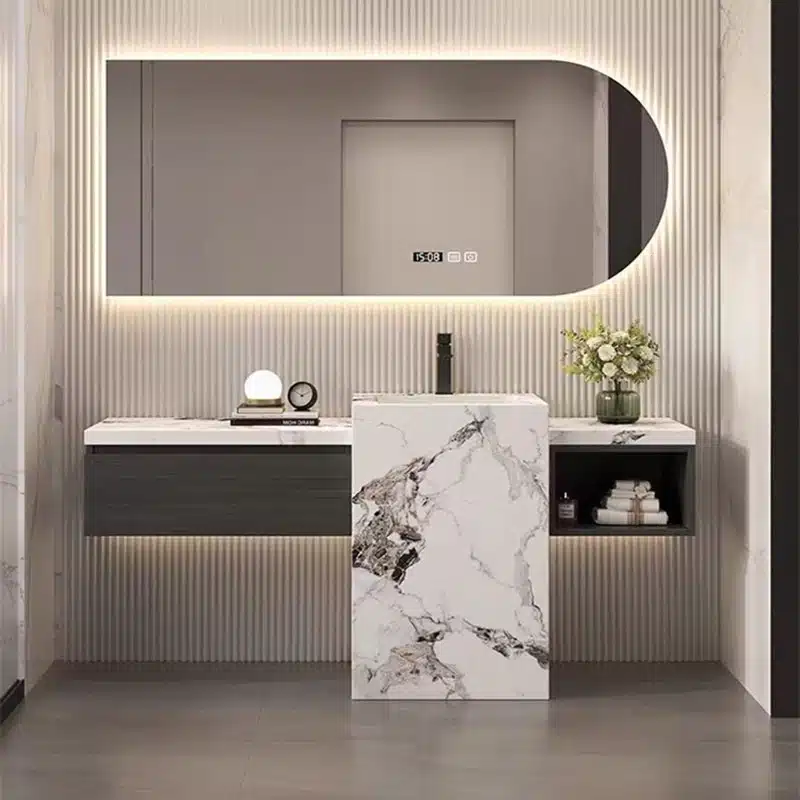
Selecting the wrong Blinggold bathroom vanity hardware can instantly devalue a high-end renovation, jeopardizing client satisfaction and your project’s profitability. A single poorly chosen pull or knob can make a custom vanity look cheap, turning what should be a portfolio piece into a costly callback. For designers and contractors, this small detail represents a significant business risk, where a minor aesthetic misstep undermines the entire project budget.
This guide provides a technical framework for specifying vanity hardware correctly for 2026 projects. We break down the core decisions, comparing the functional and aesthetic differences between brushed gold and nickel, T-bar and half-moon pulls. We also provide clear rules for mixing metal finishes and determining the proper scale for long pulls, ensuring every hardware choice protects your design intent and profit margin.
What Is the Easiest Upgrade?
Changing vanity hardware is the single most effective and accessible way to modernize a bathroom’s aesthetic without the cost and commitment of a full renovation.
Vanity Hardware: The Top Choice for Simple Updates
The most straightforward bathroom update with the greatest visual impact is swapping the vanity hardware. Replacing existing knobs and pulls instantly refreshes the space, making it the ideal entry point for any design update in 2026. This small change allows you to align the vanity with current trends without a major overhaul.
- Brushed finishes, especially in gold and other metallics, offer a look of understated sophistication over polished alternatives.
- Specialty options like crystal or uniquely shaped designs allow for greater personalization and can serve as statement pieces.
Affordable and Easy to Install
Replacing hardware is a cost-effective project perfectly suited for do-it-yourself updates. With most pieces priced between $2 and $30, the investment is minimal. The installation is simple enough for beginners using basic tools, removing the common barriers of cost and complexity associated with home improvement projects.
Durable Finishes for Lasting Style
Concerns about maintenance are largely a thing of the past. Modern hardware is engineered with high-quality finishes that stand up to the high-moisture bathroom environment. These finishes are designed to resist tarnishing and corrosion, ensuring the new look lasts and reducing the need for constant cleaning and upkeep.
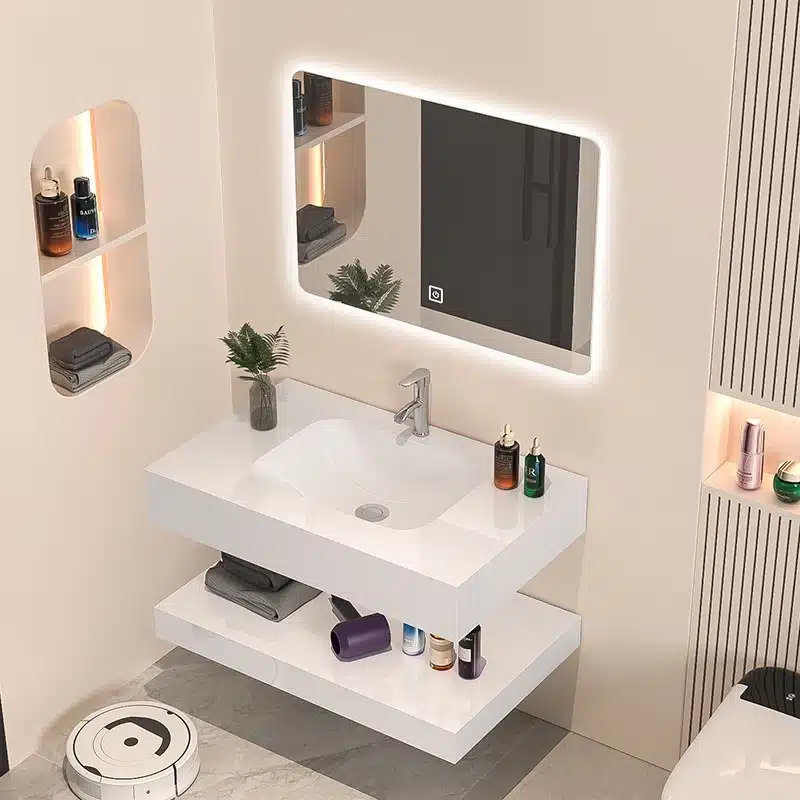
Why Is Knurled Brass Trending?
The rise of knurled brass reflects a 2026 market shift toward tactile luxury, where hardware must provide both a premium aesthetic and a functional, sensory experience.
The trend is less about the material itself and more about the texture. In 2026, designers and end-users are prioritizing finishes that engage the sense of touch. Knurling provides a distinct tactile feel, turning a simple, functional interaction like opening a drawer into something more intentional. It elevates the hardware from a necessary component to a core design element.
Emphasis on Tactile and Sensory Finishes
The demand for textures in interior design has grown significantly. Smooth, sterile surfaces are giving way to materials with character and depth. Knurled brass directly meets this demand by offering a grip that is both satisfying and highly functional, transforming everyday hardware into a small point of luxury.
- The textured surface provides a secure, non-slip grip, improving usability in kitchens and bathrooms where hands might be wet.
- It fits perfectly within the “Modern Heritage” aesthetic, which blends traditional materials like brass with contemporary, industrial-inspired details.
Practical Aesthetics for Daily Use
Beyond its unique look, the knurled pattern offers clear functional advantages. The textured surface is exceptionally effective at hiding fingerprints, minor smudges, and daily wear. This makes it a low-maintenance and practical choice for high-traffic applications, maintaining a clean appearance with minimal effort.
- The texture adds visual depth and creates a subtle, appealing contrast against smooth, modern cabinet fronts.
- Its inherent durability and ability to mask imperfections ensure the hardware looks new for longer, reducing long-term maintenance concerns.
Versatility with Natural Materials
The warm, muted tone of satin brass is a natural fit for the organic materials dominating current design palettes. This compatibility makes it an easy choice for creating cohesive spaces that feel curated, modern, and grounded. It acts as a metallic accent that connects different elements within a room.
- It pairs exceptionally well with natural wood grains like oak and walnut, as well as stone countertops and even linen textiles.
- The warm finish serves as a visual anchor, tying together cabinetry, flooring, and other decorative elements.
Create Your Standout Bathroom Cabinet Line

Brushed Gold vs. Nickel: Which Is Better?
Brushed nickel is the market-dominant workhorse for high-traffic bathrooms, while brushed gold offers a premium, warm accent for statement-making designs.
Aesthetics and Style
Brushed nickel’s muted, silvery tone gives it broad appeal, making it a reliable choice for modern and contemporary bathrooms with cool color palettes. It blends in seamlessly without demanding attention. Brushed gold, by contrast, provides a warmer, more luxurious feel. Its satin finish creates an immediate focal point, elevating transitional or upscale designs. The 2026 market shows a clear trend toward mixing these finishes, using nickel for core fixtures and gold for accent hardware to create a layered, personalized space.
| Feature | Brushed Nickel | Brushed Gold |
|---|---|---|
| Primary Use Case | High-traffic bathrooms, versatile modern designs | Statement pieces, upscale and transitional projects |
| Maintenance | Excellent at concealing fingerprints and water spots | Durable, but may require more care to preserve luster |
| Market Position | Market dominant, mid-range pricing | Premium alternative, commands higher prices |
| Matching Fixtures | Easy due to widespread availability | Can be challenging to match across different brands |
Durability and Maintenance
For any high-use bathroom, brushed nickel is the more practical option. Its matte surface is exceptional at hiding fingerprints, smudges, and water spots, significantly reducing cleaning time. The finish is known for its durability and resistance to daily wear. While brushed gold is also a durable finish, its warmer tone can sometimes highlight smudges more than nickel, requiring slightly more diligent cleaning to maintain its appearance. Both finishes are far superior to their polished counterparts like chrome, which show every mark.
Cost and Availability
Brushed nickel hardware dominates the market. It is widely available from nearly every manufacturer at an accessible, mid-range price point. This widespread adoption makes it easy to find matching faucets, shower heads, and accessories for a cohesive look. Brushed gold is positioned as a premium or designer finish. It typically costs more and is less common, making it more of an intentional upgrade for custom or high-end projects. Sourcing a full set of matching brushed gold fixtures often requires sticking to a single brand collection.
T-Bar vs. Half-Moon: Which Is Better?
The decision between T-bar and half-moon pulls is a choice between linear modernism and soft traditionalism, directly impacting a vanity’s overall design language.
Aesthetic and Design Impact
Your hardware choice sets the aesthetic tone for the entire vanity. T-bar pulls create a clean, linear look that aligns with modern, minimalist, or industrial bathroom designs. Their simple form emphasizes horizontal or vertical lines, making them an excellent match for flat-panel cabinet doors. In contrast, half-moon pulls introduce a softer, more traditional feel with their curved shape. They effectively break up the sharp angles of a vanity and add a decorative element that works well with shaker-style or classic cabinetry.
Look at the other fixtures in the space for guidance. T-bars are a natural fit with angular faucets and square basins, reinforcing a cohesive, geometric theme. Half-moon handles pair better with rounded mirrors, curved sink bowls, and classic tapware, creating a more fluid and gentle design narrative.
| Attribute | T-Bar Pull | Half-Moon Pull |
|---|---|---|
| Primary Design Style | Modern, Minimalist, Industrial | Traditional, Transitional, Shaker |
| Visual Feel | Linear, sleek, architectural | Soft, curved, decorative |
| Best Paired With | Angular faucets, flat-panel doors | Rounded mirrors, classic fixtures |
| Ergonomic Grip | Easy finger-pull from any angle | Substantial, full-hand cupped grip |
Functionality and Ergonomics
Beyond aesthetics, the daily feel and function of the hardware are critical. T-bars are generally easy to grab from any angle, which makes them highly practical in a busy bathroom. Half-moon pulls offer a solid, cupped grip that many users find more secure and substantial. The right choice often depends on the end-user’s preference and accessibility needs.
- T-bars are often easier for people with limited grip strength to use and are less likely to snag clothing than pulls with projecting ends.
- Half-moon pulls provide a larger surface to grasp, which can feel more comfortable for those who prefer a full-hand grip on drawers.
- As a source factory, we support OEM/ODM requests, allowing our clients to specify the exact hardware that meets their project’s functional and accessibility standards.
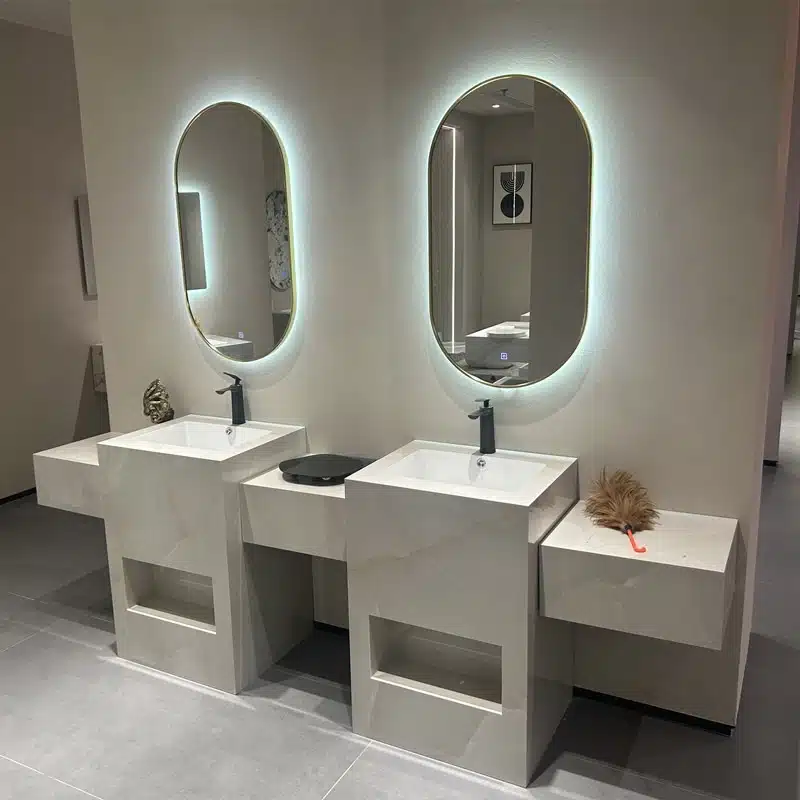
How to Mix Finishes?
A successful mixed-metal design looks intentional, not accidental, by limiting the palette and repeating each finish to create visual balance.
The old rule of matching every metal finish in a bathroom is gone. Today, mixing metals is a standard practice for creating a layered, sophisticated space. The key isn’t perfect coordination but thoughtful combination. Done correctly, it adds depth and character; done poorly, it looks chaotic. The following principles ensure your project looks curated and professional.
Limit Your Palette to Two or Three Finishes
To maintain a cohesive look, restrict your hardware selections to two, or at most three, different metal finishes. This strategy prevents the space from feeling cluttered and allows each finish to make a distinct statement. The most effective approach is to select one dominant metal for the primary fixtures and use a secondary, contrasting finish for smaller accents.
- Select one dominant metal for the main fixtures, like the faucet and shower head, and use a secondary finish for accents like lighting and cabinet pulls.
- Popular combinations often pair a warm tone with a cool one, such as brass with polished nickel or matte black with chrome.
| Finish Combination | Typical Dominant Finish | Typical Accent Finish |
|---|---|---|
| Gold & Matte Black | Matte Black (Faucets, Shower) | Brushed Gold (Hardware, Mirror Frame) |
| Brass & Polished Nickel | Polished Nickel (Faucets) | Satin Brass (Lighting, Cabinet Pulls) |
| Matte Black & Chrome | Chrome (Plumbing Fixtures) | Matte Black (Door Hardware, Accents) |
Create Balance Through Repetition
An effective mixed-metal design relies on repeating each finish throughout the space. Repeating a finish at least twice helps the combination look deliberate, creating a sense of visual rhythm. Without repetition, a lone accent piece can look like a mistake. Distributing the finishes evenly across the room ensures no single area feels too heavy with one particular metal.
- If you choose matte black for your cabinet hardware, consider using it again for the mirror frame or a towel bar.
- Distribute the finishes across different eye levels—high (lighting), middle (faucet, mirror), and low (cabinet pulls)—to ensure the look is balanced.
Should You Use Long Pulls?
Long pulls are specified for modern, minimalist designs not just for their clean aesthetic, but for the superior functional leverage they provide on wide, heavy drawers.
Functional Benefits for Drawers and Large Doors
Long pulls offer significant mechanical advantages, especially for drawers that are pulled horizontally. Their extended length provides better leverage and control, making it easier to open heavy or fully loaded drawers. This improved ergonomics is particularly noticeable on large pantry doors and slab-style cabinetry, where a firm, easy grip is essential—especially when your hands are wet or full.
- Offers superior leverage for horizontally pulled drawers, reducing the effort needed to open them.
- Provides an easier, more substantial grip, which is a practical benefit in high-use bathroom and kitchen settings.
- Ideal for heavy-duty applications like large drawers containing kitchenware or pull-out waste bins.
Design and Sizing Guidelines
The primary design rule for sizing is proportionality. A pull should be approximately one-third the width of the drawer front for a balanced look. For instance, a 30-inch wide drawer is best suited for a 10-inch pull. On very wide drawers, using a single long pull creates a cleaner, more contemporary line than installing two shorter pulls. This approach simplifies installation and reinforces a minimalist aesthetic where the hardware acts as a deliberate design element.
- Follow the “one-third” rule: select a pull that is about one-third the width of the drawer.
- A single long pull on a wide drawer produces a cleaner, more modern visual than two smaller pulls.
- Apply the long pull strategy consistently across all cabinetry for an intentional and polished appearance.
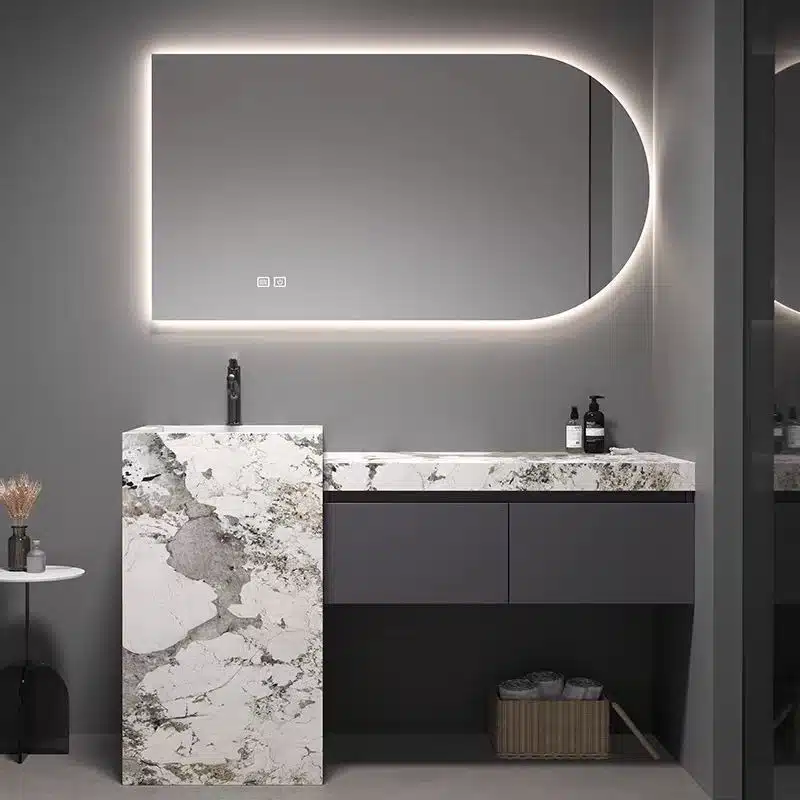
Where to Buy for Less?
For standard hardware, large retailers offer cost savings through multi-packs, but specialty e-commerce sites provide better per-unit pricing and a wider selection for specific or unique styles.
Major Home Improvement Retailers
Large home improvement stores are a primary channel for purchasing gold cabinet hardware. They excel at offering a wide variety of common styles and selling products in multi-packs, which lowers the cost per item. This makes them a practical choice for contractors or buyers needing standard, readily available designs.
- Retailers like Walmart, Lowe’s, and Home Depot carry extensive selections of popular finishes, including brushed and champagne gold.
- Pricing for multi-packs varies widely, from around $7 to over $77, depending on the hardware style, material, and quantity.
- These stores provide accessible options for both individual DIY projects and contractors looking for immediate availability.
Specialty Hardware Websites
Online retailers that specialize in hardware often provide more competitive pricing and a broader selection than general-purpose stores. These sites are built for customers who need specific styles or budget-friendly individual pieces without a bulk purchase requirement.
- Websites like Signature Hardware, Liberty Hardware, and Discount Home Furnishings are dedicated to hardware sales and offer deeper catalogs.
- Budget options on these platforms can start as low as $1.09 per knob, representing a significant saving for smaller projects.
- For unique or custom-made hardware, artisan platforms such as Etsy serve as a direct source for distinctive pieces.
Conclusion
The right hardware transforms a standard vanity into a premium product that aligns with current market demands. Finishes like brushed gold or knurled brass can elevate a design, while thoughtful combinations of pulls create a custom look. These small details are key to developing a distinctive and successful product line.
Review your current collection to see where these hardware trends can add value. Contact us to discuss how our material flexibility can help you manufacture vanities that capture these styles at your target price point.
Frequently Asked Questions
Trending cabinet hardware 2026?
In 2026, the dominant trends focus on warm, tactile, and personalized hardware. Brushed gold and other brushed metallic finishes continue to lead the market, offering an understated elegance over polished alternatives. Matte black remains a strong choice for creating bold contrast. Additionally, textured hardware, such as knurled, hammered, or fluted pulls, is highly sought after for adding sophisticated detail and a tactile feel to cabinetry.
Knurled brass vanity handles?
Knurled brass handles are a premier choice for high-end vanities. This style combines two major design trends: the warmth of a brushed brass finish and the industrial-luxe appeal of a textured, diamond-patterned grip. They provide a distinct tactile experience and visual depth, instantly elevating the look of a vanity while also offering excellent, non-slip functionality.
Mixing gold and black hardware bathroom?
Yes, mixing gold and black hardware is a sophisticated design strategy that creates a custom, layered look. The key to success is to be intentional. Assign one finish as the dominant color and the other as an accent. For example, use matte black for all faucets and the shower system, then use brushed gold for the vanity pulls, lighting, and mirror frame. This approach ensures the design feels cohesive rather than random.
Standard size for vanity pulls?
While there is no single standard size, a widely used design guideline is the “rule of thirds,” where the pull length is approximately one-third of the drawer or cabinet door’s width. Common center-to-center measurements for vanity pulls are 96mm (about 3.75 inches) and 128mm (about 5 inches). For a more modern aesthetic, oversized bar pulls that span nearly the full width of the drawer are also a popular choice.
Best hardware for white vanity?
A white vanity is highly versatile, so the best hardware choice depends on the desired style. For a bold, high-contrast modern look, select matte black. To create a warm, elegant, and on-trend appearance, brushed gold or champagne bronze is an excellent option. For a timeless and classic feel that complements any decor, brushed nickel and polished chrome are consistently reliable choices.
How to clean brass handles?
For modern lacquered or PVD-coated brass handles, which are designed to resist tarnishing, cleaning is simple. Use a soft, damp cloth with a bit of mild soap and water, then dry thoroughly. Avoid abrasive cleaners or harsh chemicals to protect the finish. For traditional unlacquered brass, which develops a natural patina, you can restore its shine by using a commercial brass polish or a paste made from lemon juice and baking soda.




0 Comments