

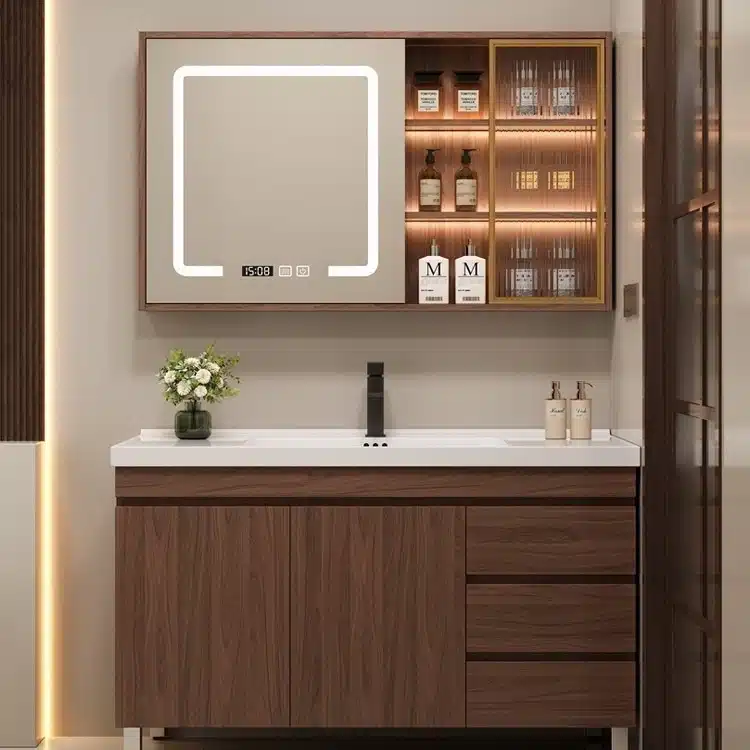
 An RTA (Ready-To-Assemble) vanity strategy is a critical decision that directly impacts your container shipping costs and overall profit margin. While the promise of tripling container capacity is tempting, a poorly executed flat-pack program can trigger a cascade of hidden costs from job site assembly errors, contractor pushback, and damaged inventory. The potential freight savings are significant, but the operational risks of missing hardware and poor instructions can quickly erode any financial gains.
This guide provides the technical data needed to evaluate the logistics and profitability of an RTA program. We analyze the economics of flat-pack shipping, comparing the structural integrity of cam-lock versus metal clip construction methods. We also break down the factors that influence market acceptance, from the quality of instruction manuals and video support to the ongoing debate between the “IKEA effect” and professional contractor preferences.
The Economics: Freight Savings of Flat Packs
Flat pack engineering isn’t just about assembly; it’s a logistics strategy that directly cuts freight costs by maximizing container density and minimizing wasted space.
Maximizing Container Space and Reducing Shipping Costs
Flat pack designs are engineered for one primary purpose: cube utilization. By eliminating the dead air inside a pre-assembled vanity, you can physically load more units into a standard shipping container. This improved stackability and density directly lowers the per-unit shipping cost. The data shows that proper load optimization can reduce freight expenses by as much as 25% compared to shipping fully assembled products. This efficiency also has a measurable environmental benefit, contributing to an estimated 20% reduction in CO2 equivalent emissions per shipment.
| Logistics Metric | Flat Pack (RTA) Efficiency | Pre-Assembled Inefficiency |
|---|---|---|
| Freight Cost Reduction | Up to 25% savings | Baseline cost; pays for shipping empty air |
| Container Utilization | High density (e.g., 150-200 units/40HQ) | Low density due to significant void space |
| Warehouse Storage | Minimal square footage required | Requires substantial floor and rack space |
| Carbon Footprint | ~20% lower CO2 equivalent emissions | Standard logistics emissions profile |
Impact on Storage and Warehouse Efficiency
The economic benefits extend beyond the shipping container. Once landed, flat-packed inventory requires significantly less warehouse space, which directly lowers overhead costs like rent and utilities. The standardized, compact boxes simplify every stage of warehouse management. Handling, sorting, and moving stock becomes faster and more labor-efficient. This streamlined process reduces the time and manpower needed for loading, unloading, and conducting inventory counts, creating compounding operational savings throughout the supply chain.
Market Growth and Sustainability Drivers
The flat pack market is not a niche; it’s a rapidly expanding sector driven by powerful economic and environmental pressures. The global flat pack container market is projected to grow from its current levels to $3.2 billion by 2033, reflecting a compound annual growth rate (CAGR) of 9.2%. This growth is fueled by the clear cost savings but is also accelerated by corporate sustainability mandates. Companies are increasingly encouraged to adopt modular, space-efficient designs to minimize their environmental impact, making flat pack a strategic choice for both profit and compliance.
RTA Construction Methods: Cam-Lock vs. Metal Clip?
The choice between cam-lock and metal fastening systems in RTA vanities is a direct trade-off between manufacturing speed for budget lines and long-term structural integrity for premium products.
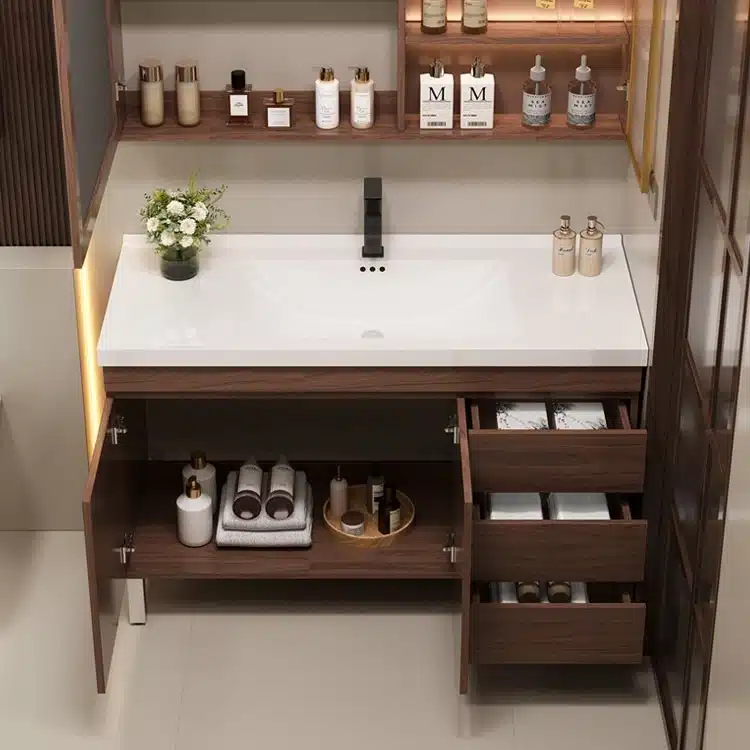
Cam-Lock Systems: The Mass-Market Standard
By 2025, cam-lock fasteners are the prevailing method for mass-produced RTA furniture. Their dominance comes from efficiency in both manufacturing and end-user setup, allowing for rapid, tool-friendly assembly. This system is engineered for cost-effective production at scale, making it the default for budget-focused brands.
- Favored by budget-segment manufacturers for its low cost and high throughput.
- Reduces assembly time significantly for the end-user or installer.
- Perceived as less durable over a multi-year lifecycle, especially when compared to metal alternatives.
| Construction Method | Primary Application | Key Advantage |
|---|---|---|
| Cam-Lock & Dowel Fastener | High-volume, budget-segment RTA | Fastest assembly, lowest manufacturing cost. |
| Reinforced Metal Plate & Clip | Mid-to-high-end RTA lines | Superior durability, resists loosening. |
| Traditional Dovetail Joinery | Luxury & custom RTA furniture | Maximum structural strength, premium appearance. |
Metal Plate and Reinforced Fasteners: The Durability Choice
For mid-to-high-end RTA cabinets, reinforced metal fastening systems and plates are gaining significant market share. These systems provide superior structural integrity and directly address durability concerns tied to frequent use. They offer a stronger, more lasting connection than simple cam locks by preventing the loosening that can occur over time from vibration and humidity changes.
- Adopted by quality-focused brands to enhance product longevity and justify higher price points.
- Offers greater resistance to joint failure and loosening over time.
- Acts as a key technical differentiator between budget and premium RTA product lines.
Traditional Joinery: High-End Craftsmanship
At the highest end of the market, some manufacturers incorporate traditional methods like dovetail joinery into RTA designs. This approach combines the shipping efficiency of flat-pack with the strength and aesthetic of classic furniture making. It appeals directly to a discerning customer base willing to pay a premium for visible craftsmanship and maximum durability.
- Provides maximum strength and a premium, crafted appearance that cam systems cannot replicate.
- Addresses market perceptions that RTA furniture cannot achieve high-quality construction standards.
- Typically found only in luxury or custom RTA cabinet offerings.
Boost Your Margins with Factory-Direct Vanities

“Tool-Free” Assembly Innovations?
Tool-free assembly systems are replacing traditional RTA hardware by using click-locking mechanisms to cut on-site labor costs and dramatically accelerate build times.
Pre-Installed Connectors and Click-Locking Mechanisms
Tool-free assembly technologies replace traditional hardware like screws and nails with integrated, pre-installed connectors. These systems use click-locking mechanisms that allow components to snap together securely, simplifying the entire build process from start to finish.
- Eliminates the need for separate tools, screws, or complex hardware bags.
- Parts are designed to interlock with a simple push or click, providing tactile and audible confirmation of a secure join.
- Reduces the number of loose components, minimizing complexity and the potential for lost parts during shipping or assembly.
Assembly Speed and Labor Cost Reduction
The primary benefit of tool-free systems is a dramatic reduction in assembly time. This efficiency translates directly into lower labor costs, especially for commercial installations or high-volume furniture rollouts. Assembly can be up to 10 times faster than conventional RTA methods, with some designs allowing for a complete setup in under 60 seconds. The intuitive nature of the assembly also reduces the need for skilled labor, expanding the pool of available installers and further controlling project costs.
Support for Modular and Sustainable Design
Beyond speed, these innovations are well-suited for modern manufacturing and environmental goals. The ease of disassembly makes tool-free furniture ideal for modular systems and supports a circular economy by enabling product reuse and recycling.
- Fits well with high-volume, modular production for furniture and commercial display systems.
- Intuitive disassembly allows products to be easily broken down, moved, or recycled at the end of their lifecycle.
- Adoption is growing in sectors focused on sustainability and circular design principles.
Quality Perception: Can RTA be High-End?
The term “high-end RTA” is no longer an oxymoron; it’s a legitimate market segment fueled by superior materials and design-forward branding, though it still has to overcome legacy skepticism from established buyers.
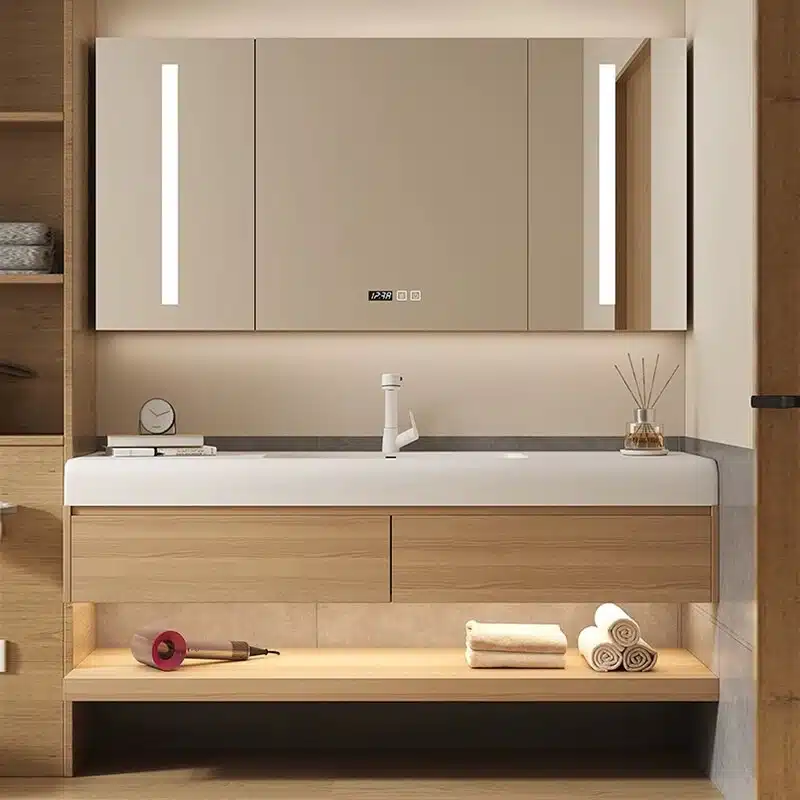
Shifting from Budget-Friendly to Designer-Grade
The RTA market is actively moving beyond its reputation as a budget-only solution. Manufacturers are strategically repositioning flat-pack furniture as a premium category by partnering with established designers and focusing on sophisticated aesthetics. This approach is gaining significant traction with younger, design-conscious consumers who prioritize style but still value the efficiency of the RTA model. The emergence of curator-driven collections is legitimizing high-end RTA, treating it as a serious contender against traditional pre-assembled furniture.
- Luxury RTA brands are carving out a distinct and growing market segment.
- Collaborations with known designers elevate product value and brand perception.
- Curated design is helping to validate high-end RTA as a serious category.
Premium Materials and Simplified Assembly
This market evolution is built on tangible engineering and material advancements. High-end RTA directly addresses historical quality concerns by using superior components like solid wood veneers, high-density PVC, full eucalyptus core plywood, and high moisture-resistant MDF. At the same time, innovations in assembly hardware, such as robust snap-fit and click-lock systems, improve the user experience and structural integrity. To build market confidence, leading manufacturers now offer extended warranties, signaling a commitment to product longevity that rivals pre-assembled goods.
- Material upgrades now include solid wood veneers, HMR MDF, and premium core plywoods.
- New assembly technologies like click-lock systems simplify construction without compromising strength.
- Manufacturers are offering extended warranties to build confidence in product durability.
Overcoming Legacy Perceptions in the Market
Despite clear progress, the premium RTA segment faces persistent challenges from outdated perceptions. Skepticism is common among older consumers and commercial clients who associate any flat-pack product with lower quality and disposability. This creates a significant hurdle for market adoption, especially for large-scale projects where durability is non-negotiable. Building trust and overcoming this bias requires a consistent track record of quality and effective marketing that clearly demonstrates the structural and aesthetic improvements of modern RTA products.
- Older consumer demographics often retain a traditional view of RTA as a budget-only option.
- Commercial clients can be slower to adopt high-end RTA for large-scale developments.
- Building trust requires consistent product quality and clear marketing that highlights modern upgrades.
Packaging Density: Loading 800+ units per 40HQ?
For flat-packed furniture, the primary logistics goal is maximizing volumetric capacity, not hitting the weight limit. Reaching 800+ units in a 40HQ container is a direct function of product size and packaging efficiency.
40HQ Container Specifications and Capacity
A 40-foot High-Cube (40HQ) container is the industry standard for shipping RTA furniture in bulk. Its generous internal space and taller internal height of 2.69 meters make it ideal for vertically stacking flat-packed goods, which is the key to reducing per-unit freight costs.
- Total volumetric capacity: 76 cubic meters.
- Maximum payload limit: Approximately 28,620 kg.
- Key advantage: Increased height allows for efficient stacking, which is critical for bulky but relatively lightweight goods like RTA cabinets.
Volumetric Optimization for Flat-Packed Goods
The logistics of RTA products prioritize volumetric optimization over raw weight. Pre-assembled furniture ships with a significant amount of empty, unsellable air inside the cabinet boxes. Flat-pack designs eliminate this wasted space, allowing us to load far more units into a single container and drive down freight costs for our distribution partners.
- RTA packaging minimizes air space, enabling dense, stable packing.
- Strategic vertical stacking and secure dunnage placement maximize every cubic meter of space.
- For furniture logistics, filling the container’s volume is far more critical than reaching its weight limit.
Factors Determining the 800+ Unit Count
Loading over 800 units into a container is achievable, but the final count is a direct calculation based on several key variables. Smaller items like bathroom mirrors or compact vanity units will naturally yield a higher unit count than larger, more complex pieces. The efficiency of the custom packaging is just as important as the product’s physical size.
- Product dimensions: Smaller vanities, mirrors, or modular components allow for a higher unit count per container.
- Packaging design: Minimalist, form-fitting packaging like our ISTA 3A rated e-commerce boxes increases the number of units that can fit.
- Loading strategy: While pallet configurations are common, floor-loading (hand-stacking) uniform boxes can further increase density by eliminating pallet-related space loss.
The “IKEA Effect” vs. Contractor Preference?
The RTA market balances the psychological value customers gain from self-assembly against the practical demand for fast, professional installation in high-end and commercial projects.
The Psychology of Self-Assembly
The “IKEA Effect” is a documented cognitive bias where customers place a higher value on products they assemble themselves. This feeling of accomplishment and personal investment translates directly to greater product satisfaction. Research confirms that the effort involved can increase a customer’s willingness to pay by over 60%. This dynamic creates a powerful advantage for distributors selling ready-to-assemble solutions, as the assembly process itself builds brand loyalty.
- Building a product fosters a sense of competence and emotional ownership.
- Studies show this effect can significantly increase a customer’s perceived value of an item.
- This psychological buy-in is a key asset for any business model based on RTA products.
The Demand for Professional Installation
A large segment of the market, especially in luxury residential and commercial projects, prioritizes convenience and speed above all else. These clients prefer professional contractors or “white-glove” services to guarantee a perfect installation without any personal effort. Time-constrained professionals value finished results, not the DIY process. This trend is growing as more consumers choose to outsource home-related tasks to specialists.
- Contractors favor products that are straightforward and efficient to install, reducing their labor time and costs.
- This segment is driven by a preference for finished results over the hands-on experience.
- The market for outsourced home improvement labor continues to expand.
A Strategy for Both Markets
FocusCabinet’s modular RTA options are engineered to appeal to both mindsets. The system provides distributors with the material flexibility to create value through customization, satisfying the desire for involvement. At the same time, the components are precision-manufactured for a fast, simple build, making them ideal for professional teams working on a deadline. This dual approach allows our partners to serve both budget-conscious DIY customers and high-end clients who demand professional service.
- Distributors can engage with product customization to meet specific project price points and specs.
- The precision engineering ensures a smooth, predictable assembly for professional installers.
- This flexibility allows you to capture business from the entire market spectrum.
Instruction Manuals & Video Support
By 2025, paper manuals are functionally obsolete for complex assemblies; video instructions are now the standard for reducing support costs, minimizing installation errors, and satisfying both DIY and professional installers.
The industry’s reliance on printed instruction manuals is ending. As products like bathroom vanities incorporate more features and assembly steps, clear communication becomes critical. Video formats have proven far more effective at demonstrating complex processes than static diagrams, directly addressing the varied skill levels of end-users from professional contractors to first-time DIY homeowners.
Shift Toward Video-Based Formats
Traditional paper manuals fail to adequately explain multi-step assembly workflows, leading to user frustration and installation errors. The move to video-based instructions is a direct response to this problem. Visual demonstrations provide clarity that text and illustrations cannot match, making it the expected standard for any product requiring detailed setup.
- Video manuals use visual demonstrations to simplify processes with multiple steps.
- This approach is becoming standard for products requiring detailed assembly or setup.
- It addresses the needs of diverse learning styles and technical skill levels.
Improved Comprehension and Reduced Support Costs
The primary business driver for adopting video instructions is cost reduction. When an installer can see a process performed correctly, their comprehension increases and the chance of error drops significantly. This directly lowers the volume of support calls, emails, and product returns related to assembly mistakes, cutting operational overhead and protecting brand reputation.
- Users can follow along with a live demonstration, minimizing errors.
- Clearer instructions lead to higher customer satisfaction and fewer product returns.
- Manufacturers can lower expenses tied to troubleshooting common installation issues.
Hybrid Content for Global Audiences
A sophisticated instructional strategy uses a hybrid approach. It combines different video formats to suit specific tasks. For example, a screen recording is perfect for walking a user through the digital setup of a smart mirror’s features. In contrast, live-action footage is ideal for showing the physical installation of cabinet hardware or mounting brackets. This blended method effectively serves a global audience with varying needs.
- Screen recordings can detail the setup for smart mirror functionalities.
- Live-action video is ideal for demonstrating cabinet and hardware installation.
- This method serves both professional installers and DIY customers effectively.
Scalability and Maintenance Considerations
While video is highly effective, it introduces operational challenges. Maintaining an accurate and up-to-date video library for an extensive, evolving product line requires a robust documentation platform and workflow. As product designs are updated or components change, the corresponding videos must be revised. The initial investment in high-quality video production is a key factor, but the long-term savings in support costs typically justify the expense.
- As products evolve, video content must be updated to remain accurate.
- Managing a large portfolio of instruction videos requires a structured system.
- The initial cost of producing high-quality video is a key consideration for scalability.
Conclusion
The choice between RTA and pre-assembled vanities directly impacts logistics costs and market positioning. Modern RTA construction offers everything from simple cam-locks for budget projects to robust dovetail systems for high-end lines. This flexibility allows you to align product quality and assembly with specific profit goals.
To see the construction quality firsthand, ordering a refundable sample is a practical next step. Our team can help specify the right materials and assembly method to fit your target market and price point.
Frequently Asked Questions
Are RTA vanities durable?
Yes, high-quality RTA (Ready-to-Assemble) vanities are extremely durable and often rival their pre-assembled counterparts. Durability is determined by the materials used, not the assembly method. Look for vanities constructed from furniture-grade plywood or solid hardwood, as these materials offer superior strength and moisture resistance compared to MDF or particleboard. Additionally, premium hardware like soft-close hinges and full-extension drawer glides contribute to long-term performance and a high-end feel.
How much shipping do I save with flat pack?
Shipping RTA vanities in a flat pack format can yield significant freight savings, with load optimization achieving cost reductions of up to 25%. This efficiency comes from improved cube utilization on trucks and in containers, allowing more units to be shipped per load. The stackable and compact nature of flat-pack boxes minimizes wasted space, directly translating into lower transportation costs for both businesses and consumers.
Difference between cam-lock and dovetail assembly?
Cam-lock assembly is a hardware-based system using metal cams and posts to connect cabinet panels, offering fast and simple construction. It’s common in modern, accessible RTA furniture. Dovetail assembly, in contrast, is a traditional joinery technique where interlocking wooden pins and tails create an exceptionally strong, glue-bonded joint without mechanical fasteners. Dovetail joints are a hallmark of high-end craftsmanship, typically used for solid wood drawer boxes to ensure maximum durability and longevity.
Do contractors charge more to install RTA?
Yes, contractors typically charge more for RTA vanity installation because the scope of work is larger. The project requires both assembly and installation, whereas a pre-assembled unit only requires installation. The additional time needed to unbox, inventory parts, read instructions, and build the cabinet base is factored into the labor quote. While you save on the product and shipping, expect to allocate a portion of those savings to the increased installation time.
Best RTA vanity brands for resale?
For strong resale value, focus on brands known for premium materials and timeless design. Brands like Mod-Creo, Stretta, and Fabuwood are consistently well-regarded because they prioritize all-plywood box construction, solid wood doors and drawer fronts, and high-quality hardware. These features signal quality and durability to potential home buyers, making them a wise investment that holds its value far better than options made from lower-grade materials like particleboard.
Can RTA cabinets hold granite tops?
Absolutely. A properly constructed RTA vanity cabinet is engineered to easily support the weight of heavy stone countertops, including granite, quartz, and marble. The key is structural integrity, which is achieved through quality materials like plywood and reinforced joinery (such as corner blocks or dadoes). As long as the cabinet is assembled correctly according to the manufacturer’s specifications, it will provide a stable and secure base for any stone top.





0 Comments