

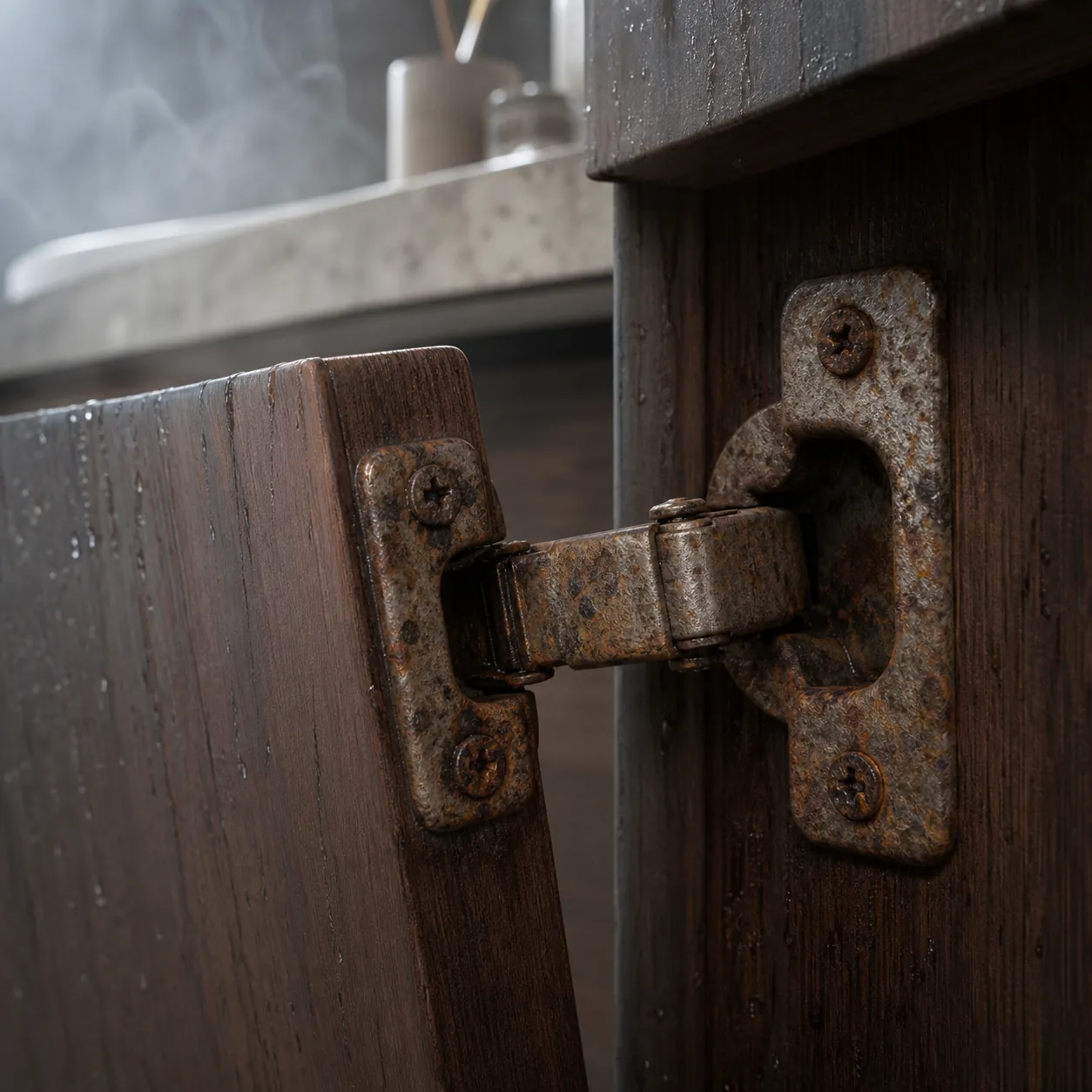
You have paid for the container. It reaches your warehouse, you break the straps, and the first vanity you unpack has a cracked door panel and a drawer that will not close. That scenario is exactly why importers ask about vanity order third party inspection cost before they sign a purchase order. An independent pre-shipment check is not an expense to argue about; measured against the cost of finding defects after payment, it is small and predictable.
This guide explains what third-party inspection covers, how inspectors price their work, and how to build that fee into your budget when you order from Main Focus Cabinet (MFBATH), a bathroom vanity manufacturer in Changge, Henan, China, operating since 2015. By the end, you will know what to agree with the factory before booking and which questions to put to your inspector.
Key Takeaways
Before you compare quotes, here is what the vanity order third party inspection cost conversation actually depends on. Six facts frame the whole decision.
- Every MFBATH vanity passes 5 inspection checks before packing, so an inspector verifies a documented baseline instead of starting from zero.
- The MOQ (minimum order quantity) is 15 sets per model, color, and size, with mixed loading allowed, which keeps trial orders small enough to inspect economically.
- Return rate is below 1% and backed by a 2-year full-cabinet warranty, so the risk you are paying to check is already narrow.
- Free samples arrive within 10 working days; bulk production takes 20–30 days; total lead time to US, Canada, and Mexico runs 4–6 weeks — plan the inspection inside that window.
- Payment runs 30% deposit to order and balance within one week of the draft bill of lading, FOB (free on board) Qingdao Port, so inspection lands before the balance is due.
- MFBATH is an ISO 9001 certified factory (obtained 2017, confirmed valid 2025), with 5,000-set monthly capacity, 95 employees, and a 10,000 m² plant serving 1000+ dealers across 20+ countries.
Table of Contents
Jump to the section you need.
- What a Third-Party Inspection Actually Covers
- How Inspection Pricing Is Structured
- Budgeting Inspection into Your Order Cost
- What to Agree with the Factory Before Booking
- Frequently Asked Questions
- The Bottom Line
What a Third-Party Inspection Actually Covers
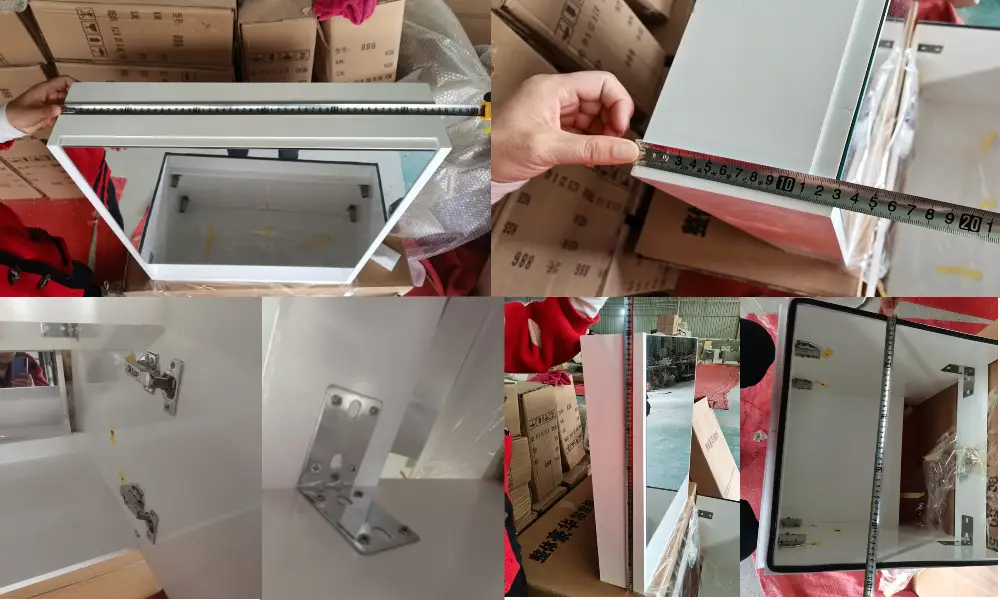
A third-party inspection works as an independent check of your order against an agreed standard, run by a company with no stake in whether the goods pass. For bathroom vanities the check normally covers four areas: quality, quantity, packing, and loading. The inspector pulls samples, measures against the spec sheet, and documents everything in a report you can hold the factory to. Once you know what sits inside that report, the vanity order third party inspection cost becomes a line item you can actually control.
Pre-Shipment vs. In-Line Inspection
Inspection services split into two broad types. In-line inspection happens while production is running: the inspector visits partway through the batch, checks workmanship and materials as cabinets move down the line, and flags problems early enough for the factory to correct them before more units are built. Pre-shipment inspection happens after production finishes and before the container seals, when the order is packed or ready for packing. First orders from a new factory benefit from in-line visits because they give you early warning; repeat orders with a stable process usually get enough protection from pre-shipment alone. A common pattern is in-line for the first run, pre-shipment for everything after.
What Inspectors Actually Check
The checklist mirrors the defects that show up in real claims. On quality, inspectors look at surface finish, door alignment, hinge operation, drawer slides, and waterproofing on PVC or plywood cabinets. On quantity, they count cartons and units against the packing list. On packing, they check carton strength, corner protection, and edge foam. On loading, they watch how cartons sit in the container, how they are strapped, and how weight is distributed. Independent firms test against recognized references — ASTM test standards cover furniture performance, and CE marking requirements matter when your market demands EU compliance checks.
How This Relates to the Factory’s Own Checks
MFBATH runs 5 inspection checks on every product before it reaches packing, and the internal QC reports plus photos and video are shared with buyers. A third-party inspector does not replace that system; he verifies it. When you hand the inspector the factory’s own reports, they become the baseline the visit is measured against, which makes the job faster, more focused, and easier to price than a blank-slate audit.
Material-specific checks deserve a second look because a vanity combines several substrates in one cabinet. MFBATH builds in PVC, which is 100% waterproof; plywood in standard, BWR, and marine grades; solid wood finished with a multi-layer PU waterproof coating; and sintered stone countertops rated at Mohs 7-8 hardness with 300°C heat resistance. Put each material you order on the checklist explicitly, and tell the inspector which grade you contracted, so a pass on plywood means the BWR grade you paid for, not the standard grade. The same logic applies to hardware: hinges, drawer slides, and soft-close mechanisms have defined cycle expectations, and your inspector should confirm they operate at the level the factory specifies.
Your choice of provider comes down to SGS, TÜV, or a similar firm. MFBATH supports third-party inspection with advance arrangement, so you can name your provider and book the visit before production finishes. Book early — inspectors’ calendars fill around peak shipping seasons, and the factory needs notice to stage the goods for full access. For more buying guidance in this format, browse the purchase guide library.
How Inspection Pricing Is Structured
No two inspection quotes look the same, but the structure behind them is consistent. Once you can read that structure, you can predict how your vanity order third party inspection cost moves as the order changes. Four building blocks do the heavy lifting: the rate per inspector-day, travel time to the factory, the sample rate you require, and the depth of the report you ask for. Understand those four, and a quote stops being a mystery.

Per-Man-Day Is the Common Denominator
Most inspection firms quote on a per-man-day basis: one inspector for one day at an agreed rate, with extra days added for larger orders or wider sample coverage. Some firms quote per container for standard pre-shipment checks, which works when the order is a full container load and the checklist is predictable. Others bundle planning, the visit, and the report into a project rate. The per-container and project numbers are convenient, but the per-man-day breakdown is what shows you what you are paying for, so request it either way.
Inspector-Days vs. Per-Container Rates
The label matters less than the work behind it. A per-container rate assumes one visit and a fixed amount of effort; the number of models, colors, and sizes changes how much effort that container really takes. A per-man-day model scales naturally. A 15-set trial order might need only part of a day, while a mixed container with several models, colors, and sizes pulls the same inspector across many more sampling points. When you compare quotes, compare the underlying days rather than the headline price.
Travel Time and Report Scope
Travel is usually billed separately. An inspector stationed near the factory in Henan adds little travel cost; one who flies in from another province adds a lot, so ask where the inspector is based before you compare firms. Report scope is the second variable. A standard report covers findings, photos, and a pass/fail summary. A detailed report adds per-carton sampling data, measurement sheets, and loading photos, which takes the inspector longer to compile. Match the scope to what your lender and your end customers actually require.
Season also moves the quote. When factories run near capacity and inspection firms are double-booked, rates tighten and availability shrinks, so the same job can cost more in a peak shipping window than in a quiet month. That is a scheduling argument, not a reason to skip the check: book the inspector at the same time you confirm the production slot, and you lock both calendars together.
The table below maps the factors that move a quote, what each one means, and how you can keep it under control.
| Pricing Factor | What It Means | How to Control It |
|---|---|---|
| Inspection type | In-line visits cost more per order because they happen during production and usually mean more touchpoints; pre-shipment is a single visit after packing. | Use pre-shipment for repeat orders and reserve in-line for first runs or process changes. |
| Order size | More sets, models, colors, and sizes mean more sampling points and more inspector time. | Inspect a sample sized to the agreed acceptable quality limit (AQL) instead of 100% of the order. |
| Location | Inspector travel time and distance to the factory are billed separately. | Confirm where the inspector is based and shortlist firms with local coverage. |
| Sample rate | The share of cartons and units opened and checked drives the hours on site. | Fix the AQL and sample size with the factory before the visit. |
| Reporting depth | Standard versus detailed reports change the time spent documenting findings. | Order the report depth your lender or customer contract actually demands. |
No firm publishes a fixed tariff, and rates shift with market and season, so treat any number you see online as context rather than a quote. The structure above is what you compare on: request the per-man-day breakdown, travel time, and report scope in writing from SGS, TÜV, or whichever firm you shortlist, and evaluate every quote on the same basis.
Inspect Before You Pay
Browse this product, solution, or service page to explore relevant offerings.

Budgeting Inspection into Your Order Cost
The clearest way to think about the vanity order third party inspection cost is to compare it with the cost of the problem it prevents. A load that reaches your customer with defects means freight back, rework, lost shelf time, and a relationship that no invoice can repair. Measured against those outcomes, an inspection fee is a modest line item — provided you place it in the right part of your budget.
Start with total landed cost. If you have not mapped everything a vanity order costs delivered to your door, work through the landed cost calculation first; inspection belongs in that worksheet alongside freight, duty, and clearance. Buyers who skip the line are not saving money — they are deferring the question of who absorbs defects.
Trial orders at MFBATH’s 15-set MOQ deserve special treatment. At that scale the fee is small in absolute terms because the sample size is small, and the value is outsized: a trial order is exactly where you learn a factory’s process before you commit to container volumes. On full-container orders the fee becomes a smaller share of total value, but the stakes are higher, so the case for inspection never weakens — it changes shape.
Use the sample stage to preview the baseline before you spend anything on inspection. MFBATH ships free samples within 10 working days, so you can review a finished cabinet in hand, agree the acceptance criteria with the factory on that sample, and hand the same criteria to your inspector later. A sample you approve in writing removes most of the ambiguity that inspections exist to resolve, and it gives both sides a physical reference instead of a written guess.
MFBATH’s internal system shrinks the inspection surface before the inspector arrives. Every product passes 5 inspection checks, and internal QC reports plus photos and video are shared with buyers, so your inspector works from a documented baseline and targets exceptions instead of re-inspecting everything. That keeps the job shorter and the quote lower. To calibrate your own expectations, cross-reference the vanity defect rate benchmarks published in this library.
Finally, weigh the risk you are paying to check. MFBATH’s return rate sits below 1%, supported by a 2-year full-cabinet warranty. That number does not make inspection unnecessary; it tells you what the factory’s own process already absorbs, and it gives you a defensible baseline when you negotiate who pays for defects the inspection does find.
What to Agree with the Factory Before Booking
Inspection protects you only when the rules are written down before the inspector shows up. The factory, the inspection firm, and you should all operate from the same agreement, and the agreement should exist before you pay the deposit. MFBATH makes this straightforward — third-party inspection is supported with advance arrangement — but the specifics are yours to set, and they directly shape the vanity order third party inspection cost.
The Six-Term Pre-Booking Checklist
Work through these six items and confirm each one in writing.
- AQL and sample rate — agree the AQL and the exact sample size the inspector will pull. The AQL sets how many defects per hundred units are acceptable; the sample size decides how many cartons get opened. Both belong in the agreement.
- Checklist scope — define what the inspector checks: surface quality, hardware function, dimensions, packing, and loading. Attach the factory’s 5-check report so the inspector verifies the same baseline you already reviewed.
- Timing before loading — book the visit so inspection finishes before the container seals. With bulk production at 20–30 days and total lead time of 4–6 weeks to the US, Canada, and Mexico, a few days of buffer keeps your sailing date intact.
- Report format — agree what the report contains and when you receive it. Standard findings plus photos may be enough; specify per-carton sampling data and loading photos if your lender or customer contract needs them.
- Who pays on re-inspection — decide in advance whether the factory covers a second visit if the first fails, and how defects are remedied before that visit. Written terms signed before the 30% deposit are the only version that counts.
- Access for photos — confirm the inspector can photograph production, packing, and loading areas. Photo documentation is what turns a report into evidence if a claim ever follows.
Agree the communication loop as well. MFBATH shares internal QC reports plus photos and video with buyers, so after the inspection you should receive three documents: the factory’s own reports, the inspector’s report, and a corrective action plan if anything failed. That triple record is what you forward to your customer, your bank, or your freight forwarder when a question arises, and it is what makes the whole process defensible months after the container has left Qingdao.
Payment and Shipping Context
Two contract details frame all of the above. Payment runs 30% deposit to order with the balance due within one week of the draft bill of lading, FOB Qingdao Port. That sequence places inspection naturally in the window between production finish and the draft B/L — before the balance is due — which gives you leverage: fix the inspection terms while the deposit is small, and hold the outcome against the final payment.
Also confirm the product scope the inspection covers. If your order spans several models or material options — PVC, plywood, solid wood, or sintered stone — samples should be drawn across every variant you ship, not just the lead model. When you are ready to compare what you are buying, review the bathroom vanity product lines with the checklist in hand.
Frequently Asked Questions
Buyers ask these four questions more than any others when they are deciding on third-party inspection.
How is third-party inspection cost usually calculated?
Inspectors typically quote per inspector-day plus travel time, scaled by order size and sample rate; the total depends on location and report depth, so request quotes from SGS, TÜV, or similar before you book.
Is inspection worth it on a small 15-set trial order?
Yes, because a trial order is exactly where you learn a factory’s process; the inspection fee is small relative to a full container, and MFBATH’s 5 checks per product plus shared QC reports already reduce the scope you need.
Who pays if the inspection fails?
Agree in advance whether the factory covers re-inspection and how defects are remedied; written terms signed before the 30% deposit are the only version that counts.
Does MFBATH allow inspectors into the factory?
Yes, third-party inspection is supported with advance arrangement, and internal QC reports plus photos and video are shared with buyers, so inspectors can verify against a documented baseline.
The Bottom Line
Third-party inspection is a budget line, not a debate. Compare quotes on per-man-day rates, travel time, and report scope; agree the AQL, checklist, timing, and re-inspection terms with the factory before you pay the 30% deposit; and let MFBATH’s documented 5-check system and below-1% return rate set the baseline your inspector verifies. Book with advance arrangement, and the vanity order third party inspection cost becomes a planned line instead of a surprise.





0 Comments