


The question arrives in nearly every first conversation with a new importer: does the factory have an export license? The worry behind it is legitimate. If a supplier cannot legally move goods out of China, everything that follows — the deposit, production, customs clearance, and the container’s arrival — sits on an unverifiable foundation. The problem is that the question assumes exporting works the way a driver’s license works: one document that the supplier either holds or does not hold. For ordinary manufactured goods, export compliance does not work that way, and bathroom vanities are ordinary manufactured goods.
For general cargo, no single export license is issued. What importers usually mean when they search for a vanity factory export license China is a simple certificate proving the factory may ship, and that certificate does not exist for products like bathroom vanities. What does exist is a chain of registrations and documents, and a buyer can verify that chain before paying a deposit. This article explains which checks actually answer the export-license question, which documents should travel with a vanity order, and how to tell a factory that exports in its own name from a middleman. It is written from the factory side of the table: we are MFBATH, a bathroom vanity manufacturer in Changge, Henan Province, and we assemble this document set on every order we ship.
Key Takeaways
- General cargo such as bathroom vanities does not require a single export license document; the legal requirement is customs registration and compliant declarations under the company’s registered name.
- The documents that prove export capability are customs declarations, commercial invoices, packing lists, and bills of lading from completed shipments — not a certificate on a wall.
- Registration is a registry fact, not a quality fact: customs registration tells you a company may declare shipments, not whether its cabinets survive a container ride.
- Entity consistency is the fastest filter: the name on the business license, the customs registration, the bank account, and the bill of lading shipper line should be one legal entity.
- Run the five checks in this article before paying a deposit, then start with samples. At MFBATH, samples take 10 working days and the minimum order is 15 sets per model, color, and size.
Table of Contents
- The Export License Question Most Importers Get Wrong
- What Actually Lets a Chinese Factory Export
- Documents That Travel With a Vanity Order
- Factory or Trader: Reading the Evidence
- Verification Workflow Before You Pay the Deposit
- Red Flags and Safe Defaults
- Frequently Asked Questions
The Export License Question Most Importers Get Wrong
Start by retiring the mental image of a stamp in a passport. Export licensing in China applies to restricted categories, not to general goods. Commodity-specific export licenses exist for controlled products — certain chemicals, dual-use equipment, and goods under quotas or special controls — and those categories are narrow. Bathroom vanities in plywood, PVC (polyvinyl chloride), solid wood, or stone-top construction are not in them, so no customs officer will ask your supplier for an export license before a cabinet container clears.
What has changed on the regulatory side also points the same direction. In recent years, China has streamlined the registration process for foreign trade operators; the operating requirement that matters at the border is customs registration for declaring shipments. The government checks the declarant at the port rather than issuing a product license for your cabinets. A company that has completed registration declares under its own name and its own customs registration code; a company that has not cannot put its name on an export declaration at all.
That is why the phrase itself explains the confusion: vanity factory export license China searches bundle three separate requirements — business registration, customs registration, and demonstrated shipping capability — into one imaginary certificate. Break the question into those three parts and each one becomes checkable. The sharper version of the question to ask a supplier is not “do you have the license?” but “which legal entity registers and declares your exports, and can you show me a customs declaration or bill of lading from a recent shipment under that name?” That question produces documents instead of a yes.
We keep this material organized for buyers who verify instead of assume: export compliance and certification questions for bathroom vanity imports live in our compliance and certification guides, and the end-to-end buying process is covered in our guide to importing bathroom vanities from China in 2026.
What Actually Lets a Chinese Factory Export
Three gates let a Chinese factory export, and all three are checkable on a video call. First, a business license whose registered scope covers manufacturing and sales; for exporters, the operating scope should also support foreign trade activity. Second, customs registration: the company registers with customs and receives a customs registration code used on export declarations that ties each declared shipment to the registered entity. The registration system and declaration rules are described in English on the China Customs official English website. Third, a track record of declarations: the factory has actually declared shipments, which shows up in customs declaration records and in the documents those shipments produced.
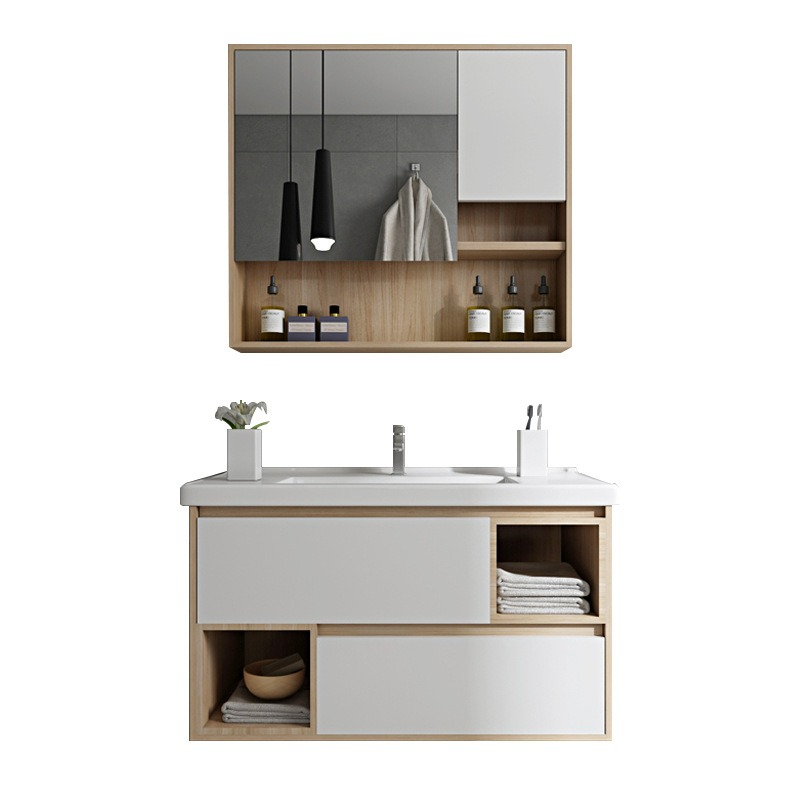
In one line, the practical meaning of a vanity factory export license China is this: a registered legal entity with a customs code and clean declarations behind it. An example of the operating profile behind those three gates: MFBATH was established in 2015 in Changge, Henan Province, and runs a 10,000-square-meter plant with 95 employees. It declares shipments under its own name, exports bathroom vanities in plywood, PVC, and solid wood with stone tops, plus LED mirrors and stone basins, to more than 20 countries through a network of 1,000-plus dealers, and holds a monthly capacity of about 5,000 sets with 40,000-plus configuration combinations. That level of operating detail — entity, address, capacity, product line — is what a genuine exporter can describe without hesitation, and the paperwork below is what backs it up.
Keep one distinction clean: quality certificates are not export permissions. ISO 9001 and ISO 14001 manage quality and environmental systems; they do not authorize shipments. MFBATH has held both certifications since 2017, with validity confirmed in 2025 — a fact worth asking any supplier to document in its own name rather than accepting a logo on a brochure. The table below maps the evidence you should collect and what each item does for you.
| Evidence to Request | What It Proves | How to Check It |
|---|---|---|
| Business license | The legal entity exists and its registered scope covers production and sales | Compare the name with the contract and the bank account; ask for a current copy |
| Customs registration | The entity is registered to declare export shipments | Ask for the customs registration code used on export declarations and confirm the entity name matches |
| Recent shipping documents | Completed international shipments under the company’s own name | Request redacted commercial invoice, packing list, and bill of lading; the shipper line should match the registered name |
| Samples and current photography | Production exists for the product you are buying | Order samples and compare them with production-line photos of your model |
Note what the table deliberately does not include: a government-issued export license number for your product, because for general goods there is none to supply. A supplier who promises a license document is describing its registration process, so ask for the evidence instead. If you want to see the product side of a registered manufacturer before starting a document review, you can review the bathroom vanity product catalog to compare the models you might order.
Documents That Travel With a Vanity Order
Once your container is loaded, the shipment travels with a document set, and that set is the closest thing to an export license that general cargo has. Ask for a copy of each document as part of the order: it proves the exporter produces clean paperwork, and it tells your customs broker exactly what to expect at entry. For a standard free on board (FOB) order from China, the set looks like this:
- Commercial invoice — the seller’s charge statement; the header entity must match your contract.
- Packing list — quantities, carton dimensions, and weights that customs and the forwarder use to plan the move.
- Bill of lading (BL) — the transport document issued by the carrier; the draft BL is reviewed before the balance payment, and the final BL controls release of the cargo.
- Certificate of origin — issued for markets that apply tariff preferences or origin checks at entry.
The certificate of origin deserves its own review because issuing rules differ by market and by preference program. We covered how these certificates are issued, what importers should check, and where errors usually appear in a dedicated guide to certificates of origin and export document sets — read it before you ask a supplier for a certificate, so you request the right type for your market.
One compliance requirement travels with the physical goods rather than the paperwork: wood packaging. Solid wood pallets and crates must meet ISPM 15, the international standard for wood packaging, which requires heat treatment and a visible mark on each piece of wood. Engineered wood such as plywood falls outside the treatment requirement, so packaging material choice changes the compliance burden. Ask the supplier which material it uses, request photos of any ISPM 15 marks before loading, and confirm your destination’s entry rules. The standard and the national contact points are published by the International Plant Protection Convention (IPPC).
Now the numbers that make the document flow concrete. MFBATH quotes FOB Qingdao Port. Orders start with a 30 percent deposit; bulk production of a standard container runs 20–30 days; the balance is due within one week after the draft bill of lading is issued; and the document set is provided with the shipment. Sample orders take 10 working days, and total delivery from Qingdao to the United States, Canada, and Mexico — production and freight combined — runs 4–6 weeks. These are the specifics a factory can put in writing, and they double as a benchmark: a supplier that cannot state its own figures at this level of detail has not shipped many vanity containers.
The order structure matters as much as the timeline. The minimum order quantity (MOQ) is 15 sets per model, color, and size, and mixed containers are allowed, so a first order can test several models at once. MFBATH’s standard warranty on vanities is 2 years, and the documented return rate sits below 1 percent — put both numbers into your supplier scorecard and ask competitors to state theirs in writing.
Factory or Trader: Reading the Evidence
The second question hiding inside the export-license search is identity: is the company quoting you the maker or the middleman? Both can export legally — a trading company can register, obtain its own customs registration code, declare in its own name, and buy product from factories. The problem is not that traders exist; it is a seller that presents itself as one thing and operates as another. The evidence review below works for both, because it tests documents, not job titles.
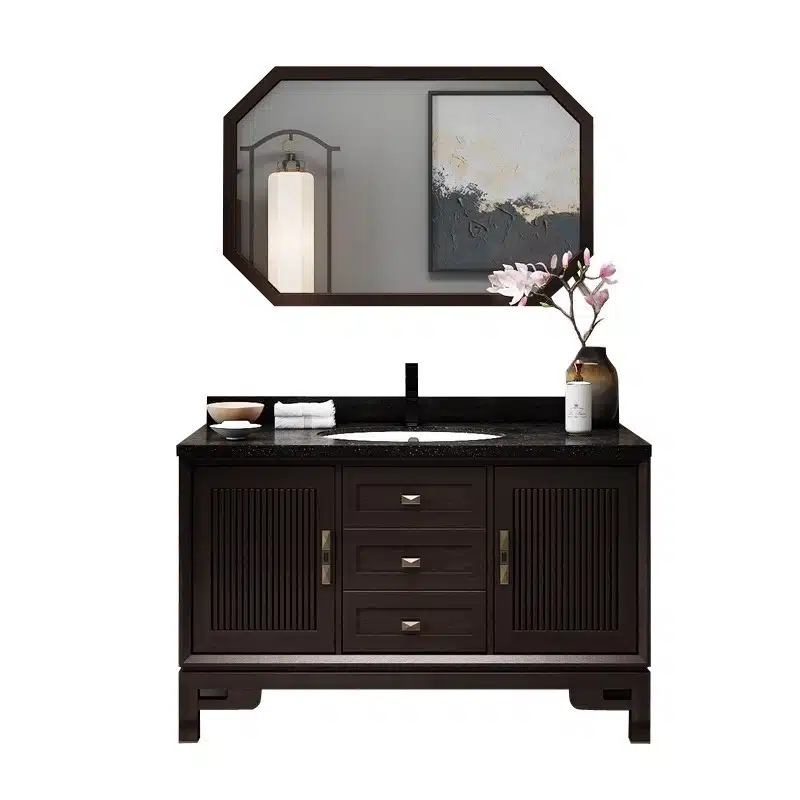
Start with the address triangle: the address on the business license, the plant address the salesperson gives you, and the loading address on past bills of lading. A factory’s registered address and its actual plant can differ on paper — leased facilities, group structures, and branch registrations are all normal — but the seller should explain the relationship without hesitation and show current site photography, including the production line for the product you are buying.
Then line up the document headers. Contract, commercial invoice, packing list, and bill of lading should name one legal entity. Inconsistent headers matter more than an attractive price, because they usually mean a broker who signs under one name and ships under another; that gap is where title problems and customs delays start.
Run the same test on certificates. A supplier claiming ISO certification should produce a certificate that names its own legal entity and carries a validity date — MFBATH’s ISO 9001 and ISO 14001 certificates, first issued in 2017 and confirmed valid in 2025, read exactly that way. This is also where the vanity factory export license China question resolves in practice: the identity evidence tells you whether the registered exporter is the company you are actually paying, which is the point of the whole exercise.
We have examined the factory-versus-trader decision from the pricing and communication side in a separate article with a factory vs. trading company comparison for bathroom vanity supply; this article concentrates on the document evidence, because documents are what survive a dispute.
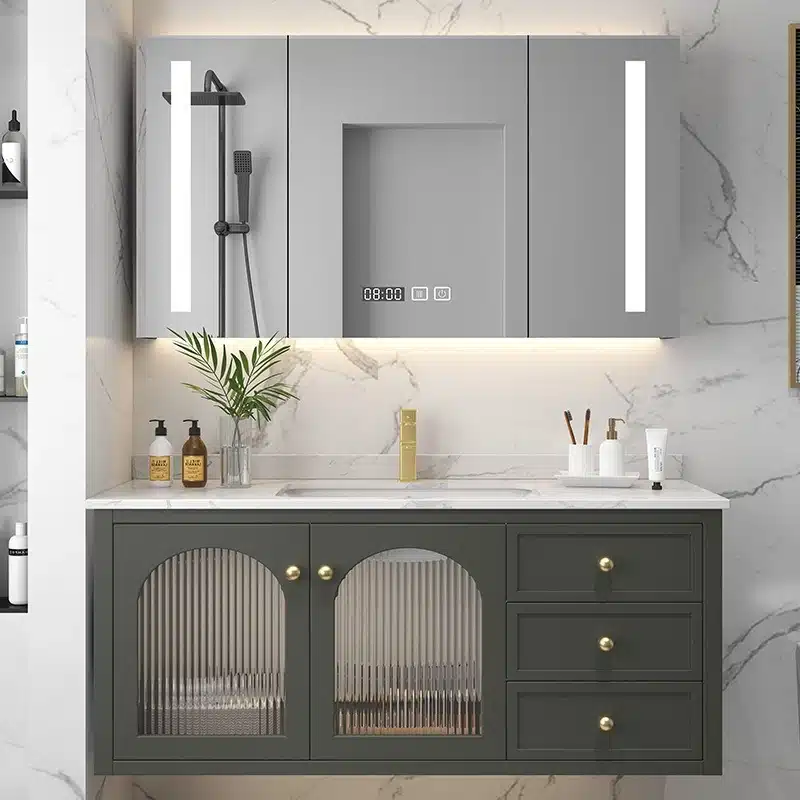
Import From a Factory Whose Export Paperwork Is Straightforward
Browse this product, solution, or service page to explore relevant offerings.
Verification Workflow Before You Pay the Deposit
Fold the checks above into a fixed sequence and run it before the deposit. With a responsive supplier, the whole pass takes an afternoon, costs nothing, and leaves you with a file you can reuse on the next order. The five steps below move from the entity to the product, and payment comes last on purpose.
- Step 1: pull the entity documents. Request the business license and confirm that the registered name, address, and operating scope cover manufacturing and sales. The name on this document is the anchor for every later check.
- Step 2: confirm customs registration. Ask for the customs registration code used on export declarations and where it appears on the company’s recent documents. Confirm the registered entity name matches the license.
- Step 3: inspect recent shipping records. Request a redacted commercial invoice, packing list, and bill of lading from a shipment in the last year. The shipper line must match the registered name, and a bill of lading number can be checked with the carrier or your freight forwarder.
- Step 4: verify the product. Order samples (10 working days at MFBATH), ask for current production photos of the exact models, and plan an independent third-party inspection before the first container ships.
- Step 5: put commercial terms in writing. Confirm the FOB port, deposit percentage and balance trigger, MOQ, production window, shipping time, and warranty in the quotation and the order confirmation.
The sequence is deliberately ordered: payment is the last thing to negotiate, not the first. A deposit schedule only protects you once the entity and the documents are clean. Negotiating price before identity means comparing numbers from entities you have not yet checked, and no discount compensates for a shipment that cannot be declared under the name on your contract.
The workflow also gives you the honest answer to the original question. A supplier that walks you through entity documents, customs registration, and past declarations in one sitting has just addressed the vanity factory export license China concern in the only verifiable way: with paperwork you can inspect rather than a phrase you have to trust.
Red Flags and Safe Defaults
Most problems announce themselves before the deposit if you listen to the documents. The flags below are the patterns worth stopping for in supplier vetting, and each one has a default that keeps a first order safe.

- A seller that cannot name the exact legal entity that registers and declares its exports.
- Document headers that change between the quotation and the invoice, or a bank account in a different name than the contract entity.
- No shipping records: no customs declaration, invoice, or bill of lading from the recent past that shows the company as shipper.
- Photography that cannot move: catalog images with no date, no current production-line shots, and no willingness to show the plant on a video call.
- Payment pressure that skips the normal sequence: full prepayment demands before production, or refusal to state the deposit split and the balance trigger in writing.
Each flag has a safe default. If the entity story is unclear, ask for documents before you discuss price. If shipping records are thin, start with a sample order. If the sample is right, run a small trial container at the MOQ — 15 sets per model, color, and size at MFBATH, with mixed containers allowed — before committing to volume. An independent third-party inspection before shipment puts a second set of eyes on loading, and a stated warranty with a documented return rate below 1 percent gives you a baseline for comparing suppliers.
Deciding which models belong in that first mixed container is a separate skill, because grade, construction, and finish trade-offs change with your market. Our guide on how to choose bathroom vanities for wholesale covers exactly that selection problem once the compliance side is settled.
Frequently Asked Questions
Can a trading company legally export without a factory of its own?
Yes. Export registration does not require the exporter to be the manufacturer. A trading company can complete foreign trade registration and customs registration under its own name and declare shipments exactly as a factory does. What you must keep separate is invoicing and document headers: decide which entity you are contracting with, and make sure the invoice, the packing list, and the bill of lading all carry that entity’s name.
Is it safe to ask a factory for its customs registration code?
Yes. The customs registration code used on export declarations is an operating identifier, not a password, and asking for it is routine in supplier vetting. The verification step matters more than the number: confirm the code belongs to the entity you are contracting with, and ask where the code appears on its recent declarations or bills of lading rather than accepting a screenshot with no context.
When does an exporter actually need a real export license?
Only for restricted goods. Commodity-specific export licenses in China apply to controlled categories such as certain chemicals, dual-use items, and goods under quotas or special controls. Bathroom vanities — plywood, PVC, solid wood, or stone-top — are general goods and move under routine export declarations, so no product-specific license is issued for them. If your product ever falls into a controlled category, the supplier must hold the relevant license before it ships, and that license names both the product and the exporter.
What is the wood packaging rule for a vanity container?
Solid wood packaging, mainly pallets and crates, must comply with ISPM 15, the international standard that requires heat treatment and a visible mark on each wood piece. Engineered panels such as plywood sit outside that treatment requirement, so ask the supplier what its packaging is made of, request photos of any marks before loading, and check whether your destination country applies additional entry conditions.
The Bottom Line
The export-license question is a shortcut that does not exist for general cargo: no single vanity factory export license China document a legitimate supplier can produce, and no single piece of paper should satisfy you. What exists is a verifiable chain — a registered entity, a customs registration code used on export declarations, consistent document headers, and shipping records you can inspect — so run the five-step workflow before you commit funds, order samples before you commit to a container, and put MOQ, deposit, balance trigger, production window, and warranty in writing. Ask for the evidence first; the suppliers who answer with documents are the ones worth the sample cost.




0 Comments