

Your China line is settled. Prices are quoted, MOQs are paid, and reorders arrive on schedule. Then a hotel chain asks for a Malaysia-made vanity, and a competitor quotes Vietnam. The China Plus One decision now sits on your desk.
This guide compares Southeast Asia vanity sourcing across Malaysia, Vietnam, and Thailand. You will see what each market actually manufactures. You will also see how minimum order quantity (MOQ), lead time, and inspection change when you add a second source. The verdict on when Southeast Asia beats China is stated plainly at the end.
Key Takeaways
- Malaysia’s wood-based and furniture sector stays active: MIDA approved 39 furniture and fixtures projects in 2024, with RM692.7 million in committed investment.
- Vietnam is one of the world’s most open trade economies; its trade-to-GDP ratio sits near 170%, and the economy grew 8% in 2025.
- Thailand’s value for vanity buyers is regional reach: container services into Laem Chabang and mature Bangkok warehousing serve ASEAN distribution.
- Minimum order quantity (MOQ) is 15 sets per model, color, and size across the full product line, with mixed containers allowed.
- Samples ship in 10 working days, and full production runs 20–30 days from order confirmation.
- Every piece passes five quality checks, and third-party inspection with SGS or TÜV is available when arranged in advance.
- Payment runs 30% deposit, with the balance due within one week after the draft bill of lading (BL), under free on board (FOB) terms from Qingdao Port.
Table of Contents
- Three Markets at a Glance: Malaysia, Vietnam, Thailand
- Malaysia: Mature Woodworking, Higher Value-Add
- Vietnam: Export Engine with Real Scale
- Thailand: Regional Reach, Thinner Factory Base
- Supply Chain Realities: MOQ, Lead Times, and Quality Control
- Import Route Math: Freight, Duties, and Payment Terms
- Southeast Asia vs China: Where the Balance Sits
- Frequently Asked Questions
- The Bottom Line
Three Markets at a Glance: Malaysia, Vietnam, Thailand
Southeast Asia entered the vanity sourcing conversation for structural reasons, not fashion. Trade friction, customer requests, and country-of-origin rules pushed importers to build a second source. The three markets respond to that demand in different ways. Malaysia brings wood heritage, Vietnam brings export scale, and Thailand brings regional reach.
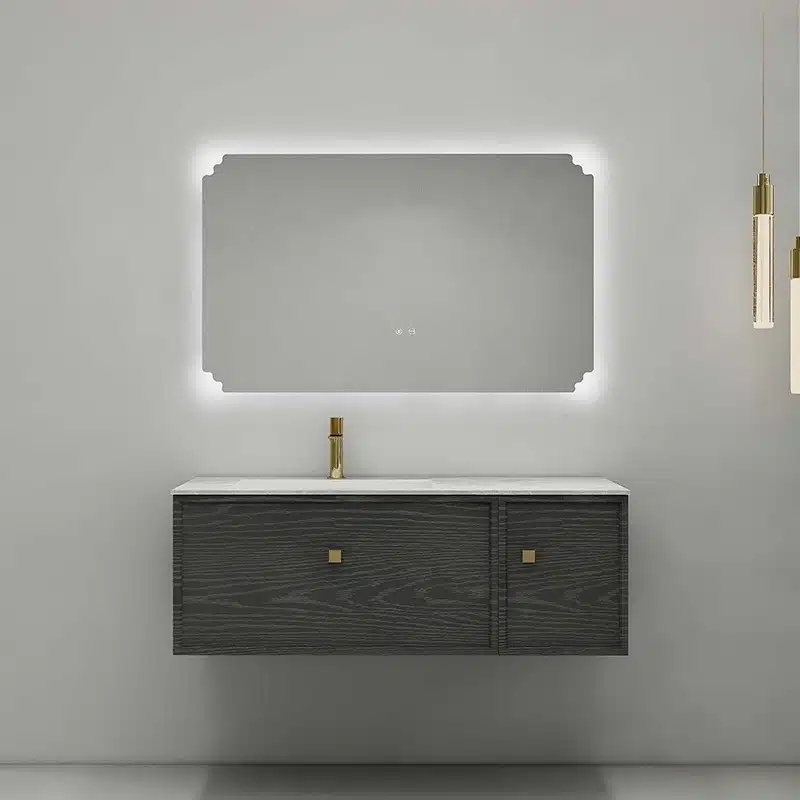
Every comparison below starts from our own benchmarks: MOQ 15 sets per model, color, and size, samples in 10 working days, and production in 20–30 days. Hold those numbers against every foreign quote you receive. A supplier that cannot match the structure is a different business model, not a worse one. Keep the reference line visible while you read.
This guide treats Southeast Asia vanity sourcing as a system: product fit, factory structure, route math, and risk. Each country section ends with a concrete buy recommendation. Use the table of contents to jump straight to your decision point if you already know the region.
Three Options at a Glance
| Market | Core Strength | Vanity Buyer Fit | Watch-Out |
|---|---|---|---|
| Malaysia | Wood-based and furniture manufacturing promoted as a distinct sector | Solid wood and rubberwood vanities, wood-framed mirrors, hotel joinery | Cabinet-specific capacity varies; confirm MOQ per model |
| Vietnam | Export-driven economy with a trade-to-GDP ratio near 170% | High-volume engineered wood, flat-pack and RTA vanities | Export pressure on lead times; qualify the factory |
| Thailand | Diversified manufacturing base with mature regional logistics | ASEAN warehousing, project delivery, hotel refurbishment | Fewer large vanity export factories; verify every claim |
One sourcing principle applies across all three countries. The flag does not make the factory. A small, well-run workshop in any of them can outperform a large plant with weak documentation. Audits, sample orders, and written terms decide the outcome.
Malaysia: Mature Woodworking, Higher Value-Add
Malaysia builds its furniture story on wood. The country has processed timber and rubberwood for decades, and its investment authority treats wood-based products and furniture as a distinct manufacturing sub-sector. The Malaysian Investment Development Authority (MIDA) approved 39 furniture and fixtures projects in 2024, with RM692.7 million in committed investment. Wood and wood products added 36 more projects at RM999.5 million. This is a funded, active industry, not a rumor.
MIDA’s own reading of the sector is useful to a buyer. The industry has shifted over three decades from exporting primary products to higher value-added goods. The agency also pushes local firms from original equipment manufacturer (OEM) work toward original design manufacturer (ODM) roles. That transition matters to you. A factory that designs its own line serves private label programs, while a pure OEM shop builds only your drawings.
What to Buy in Malaysia
Solid wood and rubberwood vanities are the natural buy, plus wood-framed mirrors and hotel joinery. Malaysian mills know timber drying, finishing, and veneer work well. Polyvinyl chloride (PVC) vanities and sintered stone tops are less central to the local story. Match your order to the strength, and you get honest value.
Read our OEM versus ODM manufacturing guide before screening Malaysian suppliers. The label a factory claims should match the service it actually delivers. Ask for client references in your product category, not your country.
The watch-out for Malaysia is capacity. Cabinet production there often centers on mid-sized workshops rather than mega plants. Verify monthly output against your order size before you plan a program. A 2,000-unit order needs a factory that produces 2,000 units, whatever the country.
Vietnam: Export Engine with Real Scale
Vietnam is the export heavyweight of the three. The World Bank reports the economy grew 8% in 2025, driven by manufacturing exports. Its trade-to-GDP ratio sits near 170%, which makes it one of the world’s most open, trade-oriented economies. Furniture is a core part of that export mix. Vietnamese plants now feed major retail and e-commerce programs in North America and Europe.
The scale shows in the product types. Vietnam produces high volumes of engineered wood, plywood, and ready-to-assemble (RTA) furniture. For vanity importers, that means flat-pack programs, e-commerce lines, and entry-level vanities with consistent output. The labor pool is deep, and container volume keeps freight options competitive. Quality varies widely between plants, so factory selection decides your outcome.
What to Buy in Vietnam
Buy high-volume engineered and plywood vanities, RTA lines, and stable SKUs that repeat quarterly. Custom short runs and mixed-model containers are less natural here. If your range is built on customization, Vietnam is a supporting source, not the main one.
The trade-off is pressure. Strong export demand pushes production slots and squeezes lead times. A Vietnamese quote may run well beyond the 20–30 days our line holds, and some suppliers expect a higher deposit before the first run. Build both into your cash flow before you switch.
Plan inspection carefully in Vietnam. Fast-growing export plants sometimes run quality systems that lag their sales volume. Book third-party inspection early and tie payment to the inspection result. This discipline costs little and prevents container surprises.
Thailand: Regional Reach, Thinner Factory Base
Thailand plays a different role in this conversation. Its manufacturing base is diversified, and its investment agency courts factories across sectors. For vanity buyers, the value is regional reach. Bangkok and Laem Chabang serve Association of Southeast Asian Nations (ASEAN) distribution, project deliveries, and hotel refurbishment across the region.
The pool of bathroom cabinet factories is thinner than Vietnam’s. Thailand is known more for ceramic sanitaryware and building materials than for volume vanity production. You can find wood and engineered cabinet workshops, but the number of export-ready vanity factories is small. Treat trade-show supplier lists with caution, and verify every claim on site.
When Thailand Earns a Place in Your Program
Three situations justify Thailand. Your customers sit inside ASEAN. A project requires local assembly or delivery. Or you want a second distribution point close to the market. Intra-regional duty treatment changes often, so check current rules with a customs broker for your specific Harmonized System (HS) code.
Logistics is Thailand’s quiet advantage. Bangkok sits close to major ASEAN markets, and warehousing is mature. If your business already sells inside the region, a Thai stock point can cut delivery times without a second factory. Start there before you commit to full production.
Keep expectations honest. A Bangkok hotel project may deliver faster from a Thai workshop, but the same workshop may ask for a full production run before quoting at all. Size the supplier against your actual order before you design a program around it.
Supply Chain Realities: MOQ, Lead Times, and Quality Control
Supply chain terms mean the same thing in every country; the numbers do not. Fix your own benchmarks before you compare suppliers across borders. Our factory works from a minimum order quantity (MOQ) of 15 sets per model, color, and size across the full line. Samples ship in 10 working days, and production runs 20–30 days. Those numbers are the reference line for this guide.
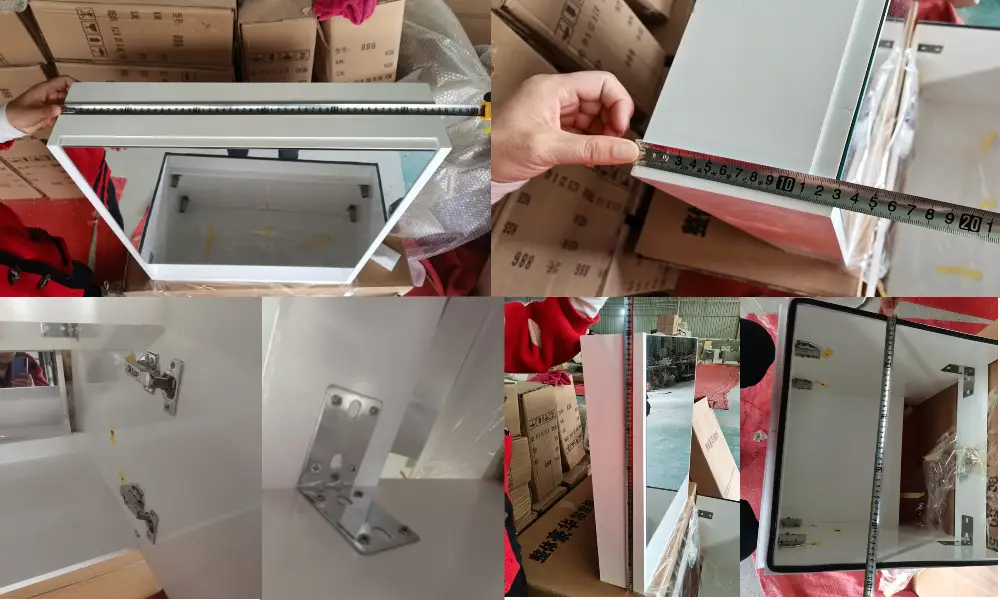
Southeast Asian factories quote different structures. Many expect per-model minimums well above 15 sets, and some skip the sample stage entirely. Others offer fine woodwork at volumes that never reach your scale. Ask for the MOQ table, the sample timeline, and the payment schedule in writing. A vague answer to any of the three is your due diligence result.
Quality control follows the same discipline everywhere. Our factory runs five quality checks on every piece, and third-party inspectors such as SGS and TÜV can audit the goods when arranged in advance. Importers normally pair this with a pre-shipment inspection against an acceptable quality limit (AQL). Apply the same routine to a Malaysian, Vietnamese, or Thai supplier. Our bathroom vanity quality control guide walks through the step-by-step version.
Audit Before You Commit
A factory audit separates real capacity from a brochure. Walk the floor, count machines, and watch one production batch from cutting to packing. Check certificates on site. We hold ISO 9001 for quality systems and ISO 14001 for environmental management, obtained in 2017 and confirmed current in 2025. Ask every Southeast Asia candidate for the same paperwork, and use our vanity factory audit checklist as the field guide.
Warranty and Returns
A warranty converts factory promises into a contract. Our whole-cabinet warranty runs 2 years, and the return rate sits below 1%. Ask each candidate for the warranty term, the return threshold, and the replacement process for damaged cabinets. If the answer is “we handle it case by case,” quantify it before you order.
Sample discipline applies to every country. Order samples before you negotiate container prices, and compare them against your existing line. Our samples ship in 10 working days, which keeps the comparison loop short. A factory that stalls on samples will stall on production.
Plywood Vanities Built for Any Market
Browse this product, solution, or service page to explore relevant offerings.
Import Route Math: Freight, Duties, and Payment Terms
Freight and payment terms decide more of your cost than the factory price does. Our standard route is free on board (FOB) from Qingdao Port: the factory delivers to the ship, and you control the ocean leg. Payment runs 30% deposit at order placement, with the balance due within one week after the draft bill of lading (BL) is issued. That draft BL is your proof the container is loaded, so hold the balance until you see it.
Container math starts with the box. A full container load (FCL) suits orders that fill a 20- or 40-foot box. Less-than-container-load (LCL) suits smaller shipments that share space with other cargo. Vanities cube out quickly, so measure volume per SKU before you promise a container to a buyer. Our mixed-container option lets different models and sizes share one shipment once the total reaches MOQ.
HS code classification shapes duties, and duties shape landed cost. The code for a wooden cabinet differs from the code for a PVC vanity or a mirror, and each code carries its own duty treatment in each destination. Rates change with trade agreements and policy shifts, so verify current schedules through official channels. The World Trade Organization (WTO) publishes tariff profiles by country and product. Our furniture HS code guide maps the main classifications.
The cost sheet does not stop at the factory gate. Add freight, insurance, duties, port handling, and inland delivery before you compare two sources. A lower unit price in one country can vanish under a higher freight rate or duty. On US, Canada, and Mexico lanes, our logistics planning has cut freight roughly 15% through routing and consolidation. Ask every supplier for a landed-cost worksheet, not a price list.
Currency and timing matter too. Most Chinese quotes run in US dollars, and our payment window closes within one week after the draft BL. Confirm the currency, the payment window, and the bank charges before signing a proforma invoice. Small differences compound across every container you order.
Southeast Asia lanes change the picture, not the method. Sea freight from Vietnam or Thailand to US West Coast ports runs a similar profile to China on some lanes, and intra-ASEAN delivery is short. Build the same worksheet for every route. The numbers decide, and you should not guess them.
Southeast Asia vs China: Where the Balance Sits
Here is the position: for bathroom vanities, China remains the default, and Southeast Asia is a strategic second source. That is capacity math, not nostalgia. A mature Chinese vanity factory combines low MOQs, short lead times, mixed containers, and certified quality systems in one order. Our own numbers are the benchmark: 95 employees, a 10,000 m² plant, 5,000 sets of monthly capacity, and over 1,000 distributors across 20+ countries. Few Southeast Asian cabinet factories offer that combination at your scale.

Buy the capability, not the flag. A factory in Changge, Henan can ship a 15-set sample order in 10 working days. A Malaysian or Vietnamese workshop may need a full production run before it takes you seriously. Qualify the factory first; the country label comes second.
Four cases push buyers toward Southeast Asia. Wood-led programs where Malaysian rubberwood mills hold genuine expertise. ASEAN delivery for hotels and projects inside the region that want short-haul freight and local support. Country-of-origin diversification when customers demand a second origin label, plus tariff-driven decisions, which are real but change often. Model tariff scenarios with a customs broker before you act.
China still wins on customization, speed, and mixed programs. Pantone-matched colors, custom sizes from 15 sets, white label and private brand runs, and a material range from plywood to PVC to sintered stone sit in one factory. Add certification depth: CE and UL certificates held, ISO 9001 and ISO 14001 current, and low-formaldehyde E1 panels compliant with CARB Phase 2 and TSCA Title VI. Rebuilding that stack in Southeast Asia takes years, not quarters. A Chinese bathroom vanity manufacturer profile shows how the stack is structured.
One caution on “we left China” stories. They usually describe commodity wood furniture, not engineered bathroom cabinetry. Vanity programs with mirrors, tops, and hardware are multi-skill products. Few Southeast Asian clusters assemble all of it under one roof yet.
The honest workflow is China Plus One, not China Versus One. Keep core volume on the factory that already runs your program, and use a Southeast Asia source for the specific product or lane it serves. Our China Plus One sourcing guide covers the transition pattern in detail. For the main line, browse the plywood vanities that ship from Qingdao and compare them against your SEA quotes before you commit.
Frequently Asked Questions
Which Southeast Asian country suits bathroom vanity sourcing?
Malaysia fits wood-led lines, Vietnam fits high-volume engineered and flat-pack programs, and Thailand serves regional distribution. Match the country to your product type and delivery lane. Then qualify the factory with an audit and a sample order before you commit.
What MOQ should I expect from Vietnam or Malaysia factories?
Structures vary by factory. Many expect per-model minimums above the 15-set threshold we use, and some require a full production run before sampling. Confirm the MOQ table, sample timing, and payment terms in writing before you negotiate container pricing.
Can I combine a China order and a Southeast Asia order in one container?
No. A container loads at one origin port, so a China full container load (FCL) and a Vietnam FCL stay separate shipments. Within a single factory, mixed models and sizes share one container once the total reaches MOQ.
How do I verify quality from a new Southeast Asia supplier?
Use the same controls as a domestic line: factory audit, sample approval, third-party inspection with SGS or TÜV arranged in advance, and payment tied to the draft bill of lading (BL). Our factory runs five quality checks per piece and offers third-party inspection on request.
The Bottom Line
Keep your core vanity volume on the factory that already delivers: MOQ 15 sets, samples in 10 working days, production in 20–30 days, five quality checks, and a 2-year warranty. Add Malaysia for wood-led lines, Vietnam for high-volume flat-pack programs, and Thailand as a regional distribution point. Qualify any Southeast Asia source with an audit and a sample order before you commit a container. Run the landed-cost math per SKU, and let the worksheet make the final call.





0 Comments