

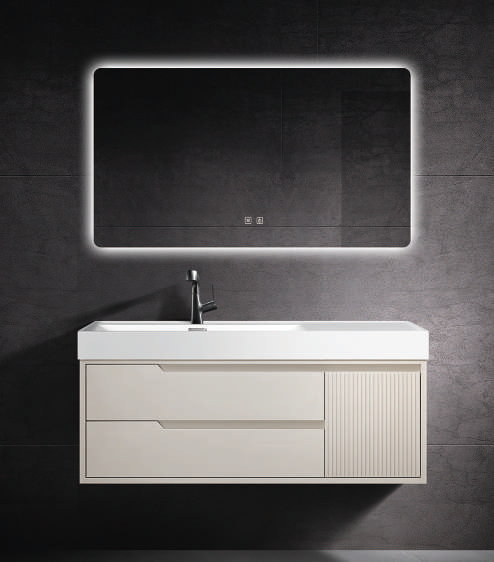
When a spec sheet says PU (polyurethane) finish, UV (ultraviolet-cured) coating, or water-based paint, you are looking at three different curing chemistries, not three color options. The PU vs UV vs water-based paint decision sets how hard the surface stays and how the cabinet handles a damp bathroom. It also controls unboxing smell and where your unit cost lands. Pick wrong and the defect surfaces in the first humid market you ship to. This guide compares the three systems across curing mechanism, hardness, moisture resistance, VOC (volatile organic compounds), substrate fit, cost tiers, and batch production behavior. It closes with inspection checks you can run before you commit to a container.
Key Takeaways
- Curing mechanism sets the floor: PU cross-links chemically over hours to days, UV cures in seconds under light, and water-based paint dries by evaporation.
- A PVC vanity is 100% waterproof at the material level; the finish layer controls gloss, color, and scratch resistance, not waterproofing.
- Solid wood vanities rely on a multi-layer polyurethane waterproof coating, the wet-room benchmark in our factory program.
- Finished boards meet E1 formaldehyde limits at ≤0.1 ppm, with CARB Phase 2 and TSCA Title VI compliance on file.
- Orders start at 15 sets per model, color, and size, and mixed container loading is supported.
PU vs UV vs Water-Based at a Glance
Finish systems fail differently, and each failure shows up in a predictable place. PU (polyurethane) builds a thick, flexible film that keeps hardening after application. UV (ultraviolet-cured) coatings harden almost instantly under light and produce one of the hardest surfaces used on cabinets. Water-based paint dries by evaporation, carries the lowest VOC of the three, and stays softer. Buyers who grasp those three mechanics can read any factory quote without guessing at the chemistry.
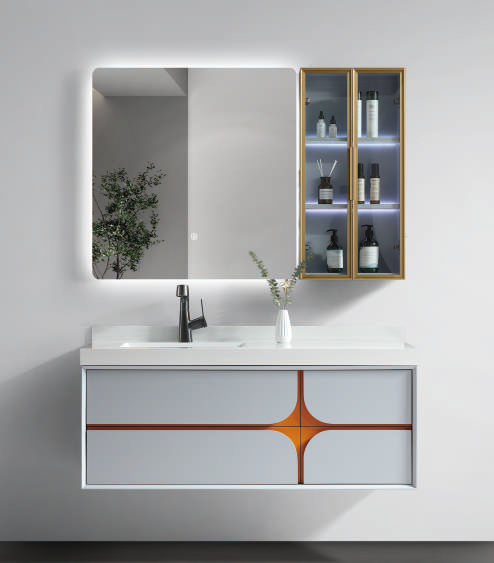
The table below compresses the decision into seven rows. Each row answers a question a real buyer asks: cure speed, hardness, humidity behavior, odor, substrate fit, cost tier, and batch production fit.
PU vs UV vs Water-Based Finish Comparison for Vanity Cabinets
| Attribute | PU (Polyurethane) | UV-Cured | Water-Based |
|---|---|---|---|
| Curing mechanism | Chemical cross-linking; full cure in hours to days | Ultraviolet light cures the film in seconds to minutes | Evaporation and particle coalescing; drying takes hours |
| Hardness and abrasion | Hard, tough film with strong impact resistance | Very hard, glossy film with high scratch resistance | Softer film; scratches sooner unless additives are used |
| Water and moisture resistance | High; the standard for wet-room furniture | High on sealed panels; edges and joints are the weak spots | Moderate; needs sealed substrate and extra coats |
| VOC and odor | Solvent-based types smell strong during cure; low-VOC options exist | Low VOC at application; brief odor during curing | Lowest VOC; mild odor while drying |
| Substrate fit | Solid wood, plywood, and sealed boards | Flat panels, PVC film surfaces, MDF, and plywood | Solid wood, plywood, and previously painted surfaces |
| Cost tier | Mid tier with balanced material and labor | Premium tier; curing equipment carries the cost | Entry tier; labor rises with every extra coat |
| Batch production fit | Flexible on mixed lines; cure time paces throughput | Fast cycles on flat panel lines; needs dedicated equipment | Easy cleanup and safe handling; slower drying needs space |
No system wins every row, and that is the point of the table. You pick the finish that matches your substrate, your market’s humidity and VOC rules, and your order rhythm. A solid wood vanity for a coastal hotel and a PVC unit for retail rarely want the same coating. Treat the table as a filter, not a verdict.
One phrase on a spec sheet is worth learning before you compare quotes: the coat system. A supplier who writes “sealer plus two top coats” is telling you exactly how much film you will receive, while a supplier who writes only “painted” leaves the build undefined. Film thickness, not the paint brand, decides how long a finish survives a bathroom, and the difference between one coat and three shows up in the second year of use.
How Each Finish System Works
All three systems start as a liquid layer and end as a solid film. The path between those two states explains every performance difference in the table above, so the mechanics deserve a closer look before you write a specification.
Polyurethane (PU) Coatings and Cure Time
Polyurethane is a polymer family with a long record in wood finishing. A PU coating cures through chemical cross-linking after it is applied, so the film keeps hardening over hours or days instead of freezing at one moment. That slow build gives the coating time to level out, which is why PU finishes show fewer brush marks and roller lines on complex shapes than fast-drying systems.
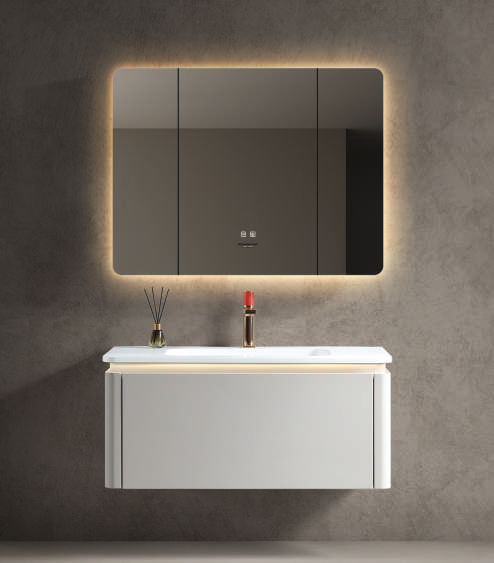
The payoff is a tough, flexible film that takes knocks without cracking. In wet-room furniture that combination matters more than gloss, because moisture attacks raw timber through joints and end grain rather than through the flat face. Our solid wood line applies a multi-layer polyurethane waterproof coating precisely for that reason, and the multi-layer PU coating process behind solid wood waterproofing is covered in a separate guide.
Two trade-offs keep PU from running away with every order. First, cure time paces throughput: a cabinet finished today still risks film damage if it is handled hard during the first day. Second, solvent-based polyurethane carries strong odor and higher VOC during cure, while waterborne polyurethane variants cut the smell at the cost of a slightly softer film. The chemistry of polyurethane explains why those variants behave so differently, and why the carrier matters as much as the resin.
PU also wins on repairability. A scratched or dented spot can be sanded and recoated without a visible seam. That is why hotel renovation programs favor it: a damaged door gets fixed on site instead of replaced. Compare that with UV films, which repair poorly because a spot patch cures to a different gloss. If your customer base includes projects that refurbish rather than discard, put repairability on the same line as hardness.
UV-Cured Coatings Deliver Speed and Hardness
A UV-cured coating hardens when ultraviolet light hits it, in seconds rather than hours. Photoinitiators in the wet film absorb the light and trigger polymerization almost instantly, so a coated panel can move from application to stacked within minutes on a flat panel line. That speed is the reason UV dominates high-gloss, high-volume flat surfaces in cabinet production.
The film that results is among the hardest finishes used on furniture. It resists scratching, holds gloss for years, and releases almost no solvent into the air during cure, which keeps application VOC low. Odor at unboxing is minimal, and for a retail or hospitality buyer that matters. A container that smells like a solvent factory on arrival produces complaints, returns, and chargebacks before anyone touches the product.
UV has boundaries worth respecting before you spec it. Curing is line-of-sight: shadowed corners, routed edges, and recessed areas can stay under-cured unless the line uses angled lamps. The finish performs well on flat, sealed panels such as PVC film surfaces, MDF, and plywood. It is a poor fit for complex solid wood profiles where light cannot reach every surface. Those limits, not the coating quality, decide where UV belongs in a vanity program.
Batch consistency is the quieter strength of UV. Because cure happens in a fixed instant under fixed lamps, gloss and hardness repeat from panel to panel, and a 200-unit run looks like one unit duplicated. That uniformity is exactly what retail and hospitality buyers need when they sell the same model through a catalog for two years. The trade-off sits in flexibility: changing gloss or color means reconfiguring the line, so UV rewards stable programs and punishes frequent design changes.
Water-Based Coatings Cut VOC With Trade-Offs
Water-based paint uses water as the carrier instead of solvent. As the water evaporates, polymer particles coalesce into a continuous film, which makes the system low in VOC and mild in odor. For buyers in regulated markets that is the strongest argument in this comparison. Volatile organic compounds contribute to smog and indoor air concerns that influence product approval in several regions.
The honest trade-off is film hardness. A standard water-based finish dries softer than PU or UV, so it scratches sooner under heavy use, and it needs more coats to reach the same build. Drying time also stretches the schedule: each coat must dry before the next, which consumes floor space and slows batch flow. On sealed substrates with enough coats, water-based paint still performs in moderate humidity; raw wood and constant wetting are where it struggles.
Sealing discipline decides success with this system. The first coat on bare wood raises the grain and opens pores, so a sealer coat before the color coats is not optional. Skip it and the film starves, blushes, or peels within a season. Modern waterborne coatings technology has narrowed the gap with solvent systems, but the gap has not closed. Specify the sealer and the coat count in writing, or the film thickness you assume will not be the film thickness you receive.
Water-based wins the commercial argument in two specific situations. First, markets with strict VOC rules where a solvent-borne finish simply cannot be sold. Second, programs that change colors often, since water-based lines clean up with water and switch colors in minutes rather than hours. For those buyers the softer film is an acceptable price for compliance and flexibility. The mistake is choosing water-based for a coastal, high-humidity, high-traffic program, where its weaknesses land directly on the customer.
PVC Vanities with Durable Factory Finishes
Browse this product, solution, or service page to explore relevant offerings.
Matching the Finish to the Substrate
The substrate decides which finish can do its job. A coating is only as stable as the panel underneath it, so substrate and finish belong in the same specification rather than in two separate conversations with different suppliers.
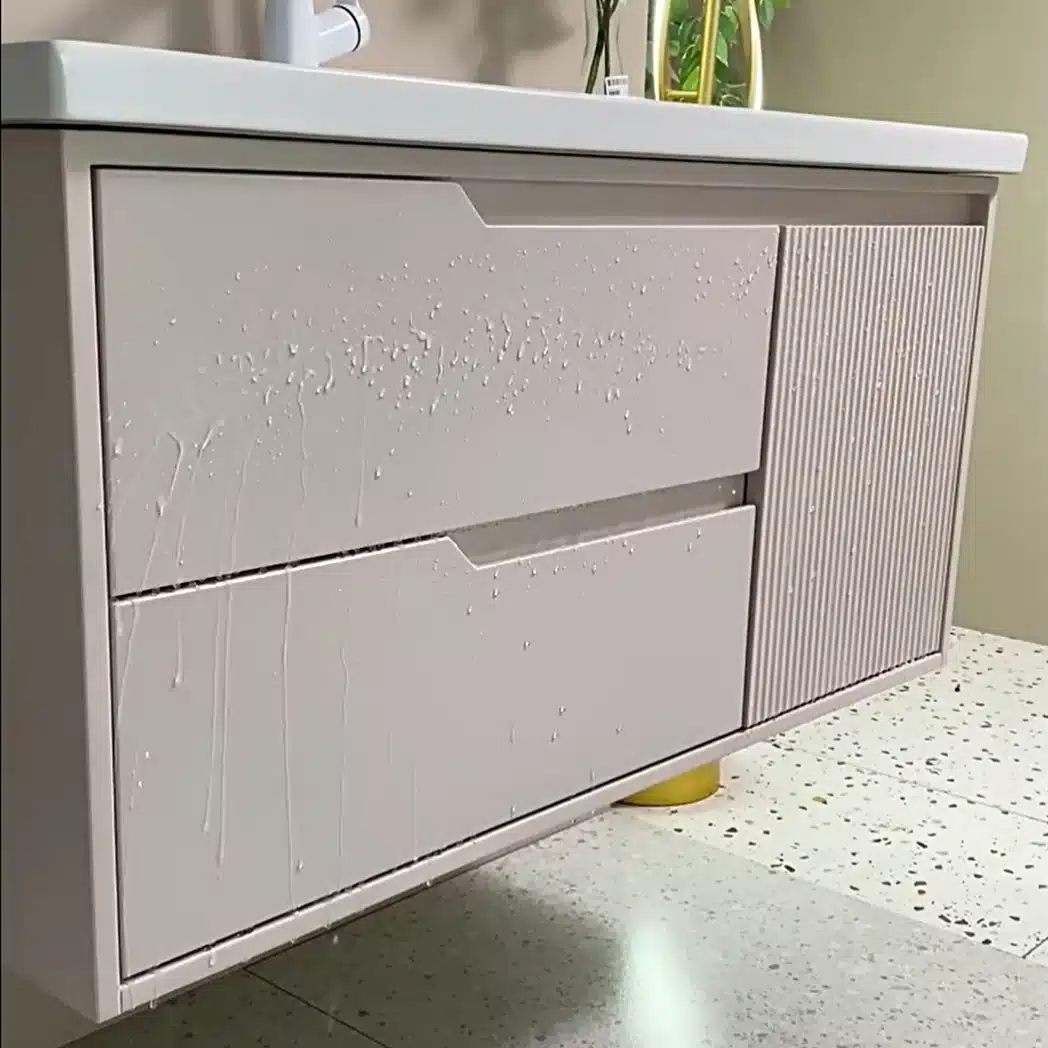
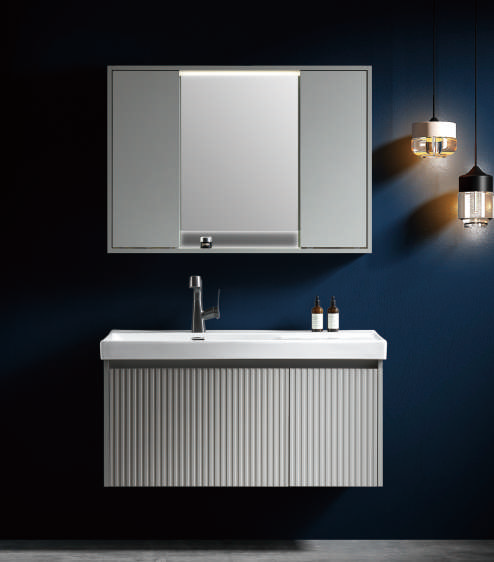
PVC (polyvinyl chloride) is 100% waterproof at the material level: it does not absorb water, does not warp, cleans easily, and resists scratching. That makes the finish on a PVC vanity a design layer rather than a protective one, with gloss level, color depth, and texture coming from the coating. UV-cured topcoats show up on high-gloss PVC units, while matte programs use the same material with a different topcoat. Grade still matters, because PVC board grades determine wall thickness and impact behavior. Our PVC bathroom vanity line carries this approach across widths of 24 to 60 inches and depths of 18 to 24 inches.
Plywood behaves differently because it is an engineered wood. Standard, BWR (boiling-water-resistant), and marine grades differ in adhesive and face quality, and the full spectrum is explained in our plywood grades guide. For finish selection the short version is this: a sealed plywood panel accepts water-based or UV finishes well, and the waterproof edge banding does the humidity work that paint cannot. Multi-layer construction resists warping, but edges remain the entry point for moisture, so edge coverage matters more than face gloss on plywood cabinets.
Solid wood is the demanding case. Timber moves with humidity, so a rigid film cracks where the wood flexes. Our solid wood vanities use a multi-layer polyurethane waterproof coating, because each layer flexes with the board and seals the surface against damp air. Oak, walnut, maple, and ash respond differently to the same finish, so sample approval carries more weight on wood than on any other substrate. If your program mixes materials, confirm which finish each substrate receives in the same purchase order.
Mixed-material orders deserve a caution that few quotes reveal. A vanity set can combine a PVC base, a plywood side panel, and a solid wood door. Each substrate may route through a different finishing process on the factory floor. When that happens, gloss and color can drift between components even though the spec sheet lists one finish name. Ask the supplier to state the finish per component, and check the sample set for tone match across materials before approving production.
Cost Tiers, Batch Yield, and QC Checks
Cost compares poorly as a single line item because the three systems spend money in different places. Water-based paint sits at the entry tier for materials, but labor climbs with every extra coat. PU sits in the mid tier, balancing material price, cure time, and rework rates. UV lands at the premium tier, and the coating is not the expensive part; the curing equipment is. Ask suppliers to split the quote by material, labor, and finishing equipment, and the tier logic becomes visible without a single factory tour.
Batch yield is where finish systems earn or burn margin. Dust in the spray area, uneven film thickness, incomplete cure, and orange peel all cluster in finishing, and all surface as rework or field complaints. Our factory runs five quality checks per piece and holds a monthly capacity of 5,000 sets, so finish defects are caught before packing rather than after shipment. When you compare suppliers, ask how their line handles cure-time scheduling: UV compresses cycles on flat panels, PU needs curing space in the production calendar, and water-based needs drying racks. A factory that cannot answer that question will find the answer in your container.
Yield risk also hides in the first pieces of a run. Coating lines need a warm-up period to stabilize film thickness, and the units finished in that window carry the highest defect rate of the batch. A supplier that counts those units into your order without rework is exporting its setup cost to you. Ask how the factory treats the first samples of a production run, and whether the QC gate applies to piece one or piece fifty.
Unboxing odor deserves its own line in the evaluation. A finish that smells strong on day one generates returns and negative reviews that no warranty language fixes, because the damage happens before your customer inspects the product. Our 2-year warranty per container and return rate under 1% hold up only when the product arrives clean, which is why odor checks appear in every pre-shipment review we run.
Run these checks before you sign off on a production run:
- Film consistency: hold doors and end panels side by side under even light; gloss variation and orange peel show up fast on flat faces.
- Edge and corner coverage: thin film at routed edges, cutouts, and miters fails first in humidity.
- Cure completeness: a tacky or soft film at pack-out means rushed curing; check it again at unboxing.
- Emissions paperwork: request the E1 (≤0.1 ppm), CARB Phase 2, and TSCA Title VI documentation for finished boards.
- Third-party inspection: book SGS or TÜV with advance notice; our factory accepts third-party QC on every order.
- Hardware spec: while the finish looks right, verify drawer slide load ratings and hinge models against your contract.
Tie payment to verification. Our terms run 30% deposit on order and the balance within a week after the draft bill of lading, so the window between production and payment is real. Use it: inspect, test, and approve before the balance moves, because a checked finish is cheaper than any warranty claim.
What This Means for Your Order
The three systems are not interchangeable grades of the same product; they are different chemistries with different failure modes. Match the finish to the substrate and the market first, then verify with samples and inspection, and the container that arrives will match the one you approved.
- Wet markets and solid wood: specify a multi-layer polyurethane waterproof coating and check cure time in the production schedule.
- High-gloss flat panels and fast runs: UV-cured finishes deliver hardness and speed on sealed flat surfaces.
- VOC-sensitive markets: water-based paint with a written sealer and coat count specification.
- Order mechanics: free samples in 10 working days, bulk production in 20–30 days, and 4–6 weeks total to the US, Canada, and Mexico, with MOQ at 15 sets per model, color, and size.
Send your target market and substrate mix with your first inquiry, and the factory can recommend a finish system with a sample to prove it. The 2025 catalog runs 100+ pages, it is free, and it covers the same finish options across the product range.
Frequently Asked Questions
Is water-based paint durable enough for bathroom vanities?
On sealed substrates and with enough coats, yes, for moderate humidity. Water-based films dry softer than PU or UV, so high-traffic and high-humidity projects should specify a PU or UV topcoat instead. Put the coat count in writing before production.
Why do solid wood vanities use a polyurethane coating?
Because timber moves with humidity, and a rigid film cracks where the wood flexes. A multi-layer polyurethane waterproof coating flexes with the board and seals moisture out through joints and end grain. That is the wet-room benchmark for our solid wood line.
How do I verify finish quality before a full container order?
Order free samples first; they ship in 10 working days. Check film consistency, edge coverage, and odor, and ask for E1 (≤0.1 ppm), CARB Phase 2, and TSCA Title VI documentation. For volume orders, book third-party inspection with SGS or TÜV in advance.
Start with free samples and a written finish spec, and the comparison above will carry the rest of the decision.


0 Comments