

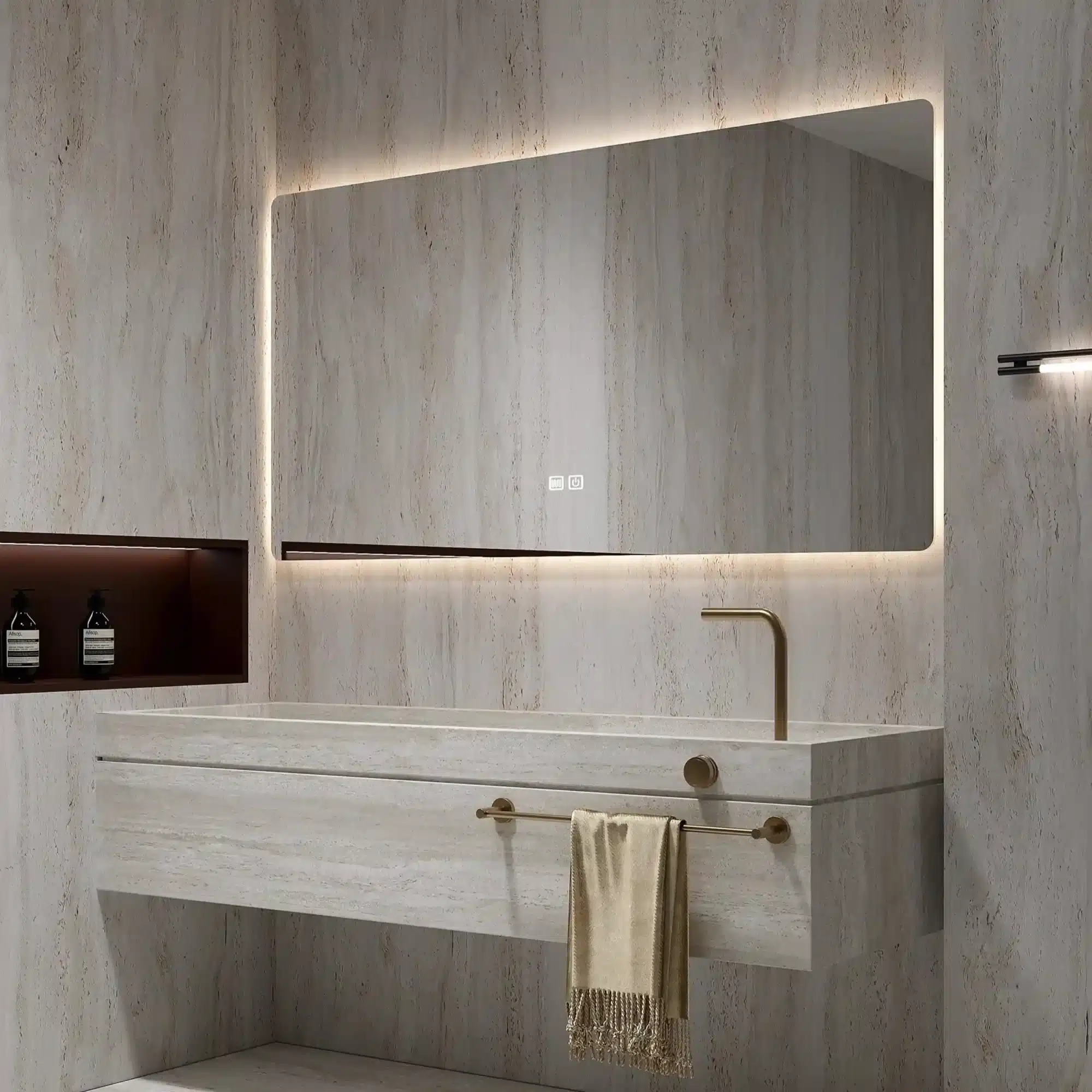
A flawed strategy for multi-family sourcing apartment bathroom vanity units is a direct threat to your project’s profitability and construction timeline. One wrong decision on materials, sizes, or suppliers can trigger a cascade of costly change orders, delay tenant move-ins, and create a long-term maintenance budget that spirals out of control.
This guide provides a standard operating procedure for procuring vanities for projects with over 200 units. We’ll analyze the economics of high-volume orders, the standardization strategy using a 30-inch and 48-inch mix, and the material debate between granite and quartz for rental durability. We’ll also cover finish selection, replacement management, and warranty terms to build a repeatable and cost-effective procurement model.
What’s the Economics of High-Volume Sourcing
True sourcing economics for multifamily projects depend less on abstract market reports and more on tactical decisions like material specification, order volume, and direct-from-factory procurement.
A formal economic analysis of high-volume sourcing isn’t feasible using publicly available market research. Most reports focus entirely on the residential rental market—construction starts, occupancy rates, and rent projections. They simply don’t cover the B2B procurement data needed for a real cost analysis, such as manufacturing inputs, supply chain optimization, or economies of scale for building materials like bathroom vanities.
Available Data Focuses on Rental Market Trends
The existing data is geared toward real estate investors, not procurement managers. It provides insights into the health of the rental market but offers no visibility into supplier cost structures or the pricing models that drive B2B negotiations. Understanding the economics of sourcing requires a shift from a real estate perspective to a manufacturing and logistics viewpoint.
| Sourcing Strategy | Minimum Order Quantity (MOQ) | Economic Impact & Use Case |
|---|---|---|
| Sample Order | 1 Set | Validates material quality and construction before a large capital outlay. The fee is typically refundable against a mass production order, making it a zero-risk quality assurance step. |
| Trial Order (Stock Mix) | 20 Sets (Mixed Models) | Lowers market entry risk for small-to-mid-sized projects. Allows for testing different styles and sizes across a property to gauge tenant preferences before committing to a single model. |
| Mass Production Order | 1x 40HQ Container (150-200 Sets) | Achieves the lowest possible cost-per-unit by maximizing production efficiency and container space. This is the standard for large multifamily developments where cost control is paramount. |
Data Needed for a Procurement Analysis
An accurate economic model requires specific, factory-level information. This includes raw material costs, production line efficiencies, and logistics data. Without access to these details, any high-level analysis remains speculative. The real cost drivers are found in the direct negotiations with a manufacturer, where material specifications like PVC density or plywood core type can be adjusted to meet a target price point for a large project.
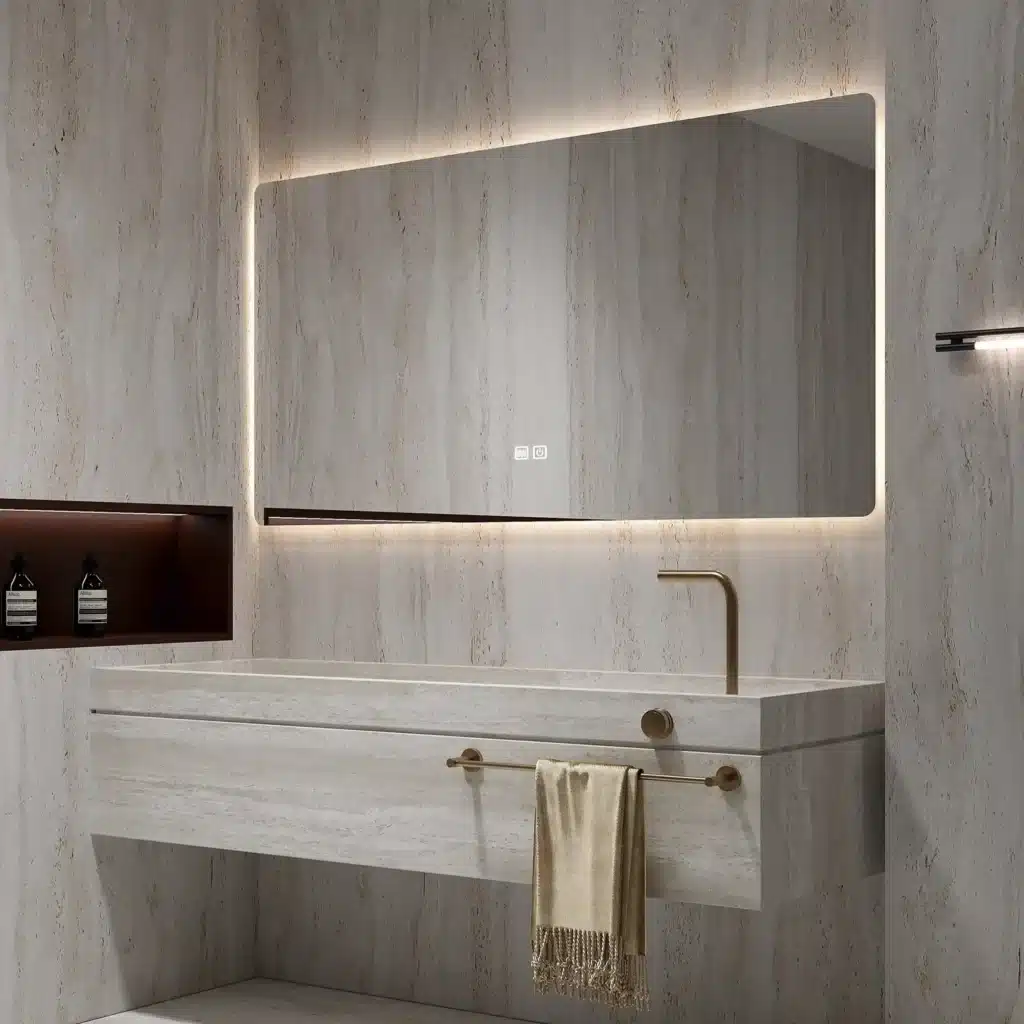
What’s the Standardization Strategy: 30″ & 48″ Mix
Adopting a dual-width vanity strategy using 30-inch and 48-inch standards is the most effective way to balance cost, installation consistency, and resident expectations across a multi-family portfolio.
The 30″ Vanity for Compact Units
The 30-inch vanity is the workhorse for smaller floor plans. In studios and one-bedroom apartments where every square foot matters, this size delivers essential single-sink functionality without compromising the bathroom’s layout. It’s a pragmatic choice that meets the core needs of residents in high-density units while maximizing usable space.
| Specification | 30″ Vanity Standard | 48″ Vanity Standard |
|---|---|---|
| Target Unit Type | Studios & One-Bedroom Apartments | Two-Bedroom & Larger Units |
| Primary Use Case | Essential function in space-constrained layouts | Enhanced counter space and premium feel |
| Sink Configuration | Single sink only | Spacious single sink (can accommodate double) |
The 48″ Vanity for Larger Layouts
For two-bedroom units and larger apartments, the 48-inch vanity provides a more substantial presence. This size better fits the scale of master bathrooms and offers generous countertop space, a key amenity for residents in larger units. It also allows for more premium finishes and design elements that align with higher rental price points.
- Standardized for two-bedroom apartments and larger floor plans.
- Allows for more countertop space and premium finishes.
- Aligns with resident expectations in more upscale units.
Operational Benefits of the Dual-Width Approach
Committing to a two-width strategy creates significant downstream efficiencies. It simplifies the bill of materials, making procurement faster and less prone to error. On-site, crews work with fewer variables, which reduces installation mistakes and ensures design consistency across the entire property. This standardization allows developers to leverage bulk purchasing power for better pricing across their portfolio.
- Reduces complexity in ordering and inventory management.
- Minimizes on-site installation mistakes and ensures consistency.
- Enables cost savings through high-volume, standardized orders.
Unlock Your Market with Custom Bathroom Solutions

“Universal” Finishes: Why Grey & Oak Win?
Grey and oak have become the default specification for multi-family projects because they offer a standardized, durable, and cost-effective neutral palette that minimizes tenant objections and simplifies portfolio-wide procurement.
Design Versatility for Broad Appeal
Grey and oak finishes establish a neutral foundation that works across nearly any apartment layout. By merging modern and rustic aesthetics, this palette avoids polarizing tenants and ensures the look remains relevant for years, protecting the asset from appearing dated. This adaptability is critical for maintaining high occupancy rates across a diverse property portfolio.
- Blends with both contemporary and traditional interior designs.
- Provides a warm yet industrial-chic look popular in modern apartments.
- Acts as a neutral foundation that tenants can easily personalize.
Durability and Low Maintenance for High-Traffic Areas
These finishes are engineered for the realities of rental housing. Modern formulations, particularly in high-pressure laminate and paint-free membranes, offer exceptional water and scratch resistance. This built-in resilience directly reduces long-term maintenance budgets and minimizes unit downtime by withstanding the wear and tear of high-traffic kitchens and bathrooms.
- Formulations in luxury vinyl and laminate resist water and scratches.
- Lowers operational costs by minimizing frequent repairs.
- Withstands the high-traffic use typical of rental units and communal spaces.
Market Standardization and Cost-Effectiveness
Widespread adoption by manufacturers has turned grey and oak finishes into a cost-effective industry standard. High-volume production keeps prices competitive, making these options accessible for large-scale projects. This market saturation also simplifies sourcing and logistics, allowing property managers to maintain design consistency and manage replacements efficiently across an entire portfolio.
- Competitive pricing results from high volume and broad manufacturer support.
- Simplifies procurement and replacement logistics for property managers.
- Allows for a consistent aesthetic across entire portfolios.
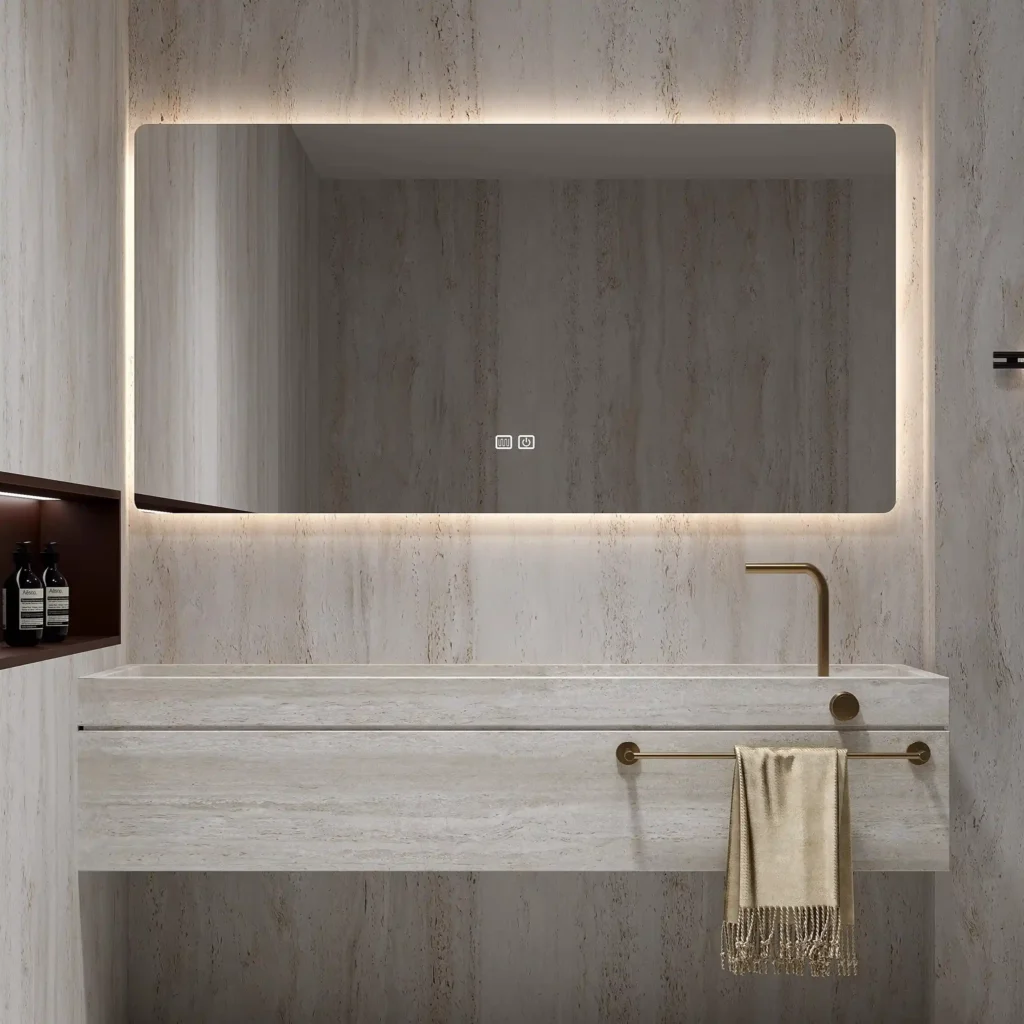
Granite vs. Quartz for Rental Properties?
For high-volume rental properties, quartz has become the operational standard, shifting the decision from upfront cost to long-term lifecycle value and reduced maintenance.
Why Quartz is Becoming the Rental Standard
In the multifamily market, quartz is now the default countertop material for its durability and low maintenance. Property managers prioritize materials that reduce operational burdens and minimize damage claims between tenants. Quartz delivers a lifespan of over 15 years, significantly reducing the replacement cycles required for materials like laminate. Its non-porous surface resists common stains and damage, which translates directly to fewer repair costs and faster unit turnover. As tenant expectations have risen, a quartz countertop is no longer a luxury but a feature that helps secure higher rental premiums and improve resident retention.
| Feature | Quartz (Engineered Stone) | Granite (Natural Stone) |
|---|---|---|
| Maintenance Requirements | None. Non-porous surface requires no sealing. | Requires periodic sealing (typically annually) to prevent staining. |
| Durability & Lifespan | Highly resistant to stains and bacteria. Lifespan of 15+ years. | Durable but can stain if seal fails. Lifespan of 10-15 years. |
| Design Consistency | Uniform color and pattern, ideal for portfolio-wide standardization. | Each slab is unique, making standardization across units impossible. |
| Best Use Case | High-volume multifamily projects where operational efficiency is critical. | Premium or luxury rentals where natural aesthetics justify maintenance. |
Lifecycle Costs and Return on Investment
The upfront costs for granite and quartz have become nearly identical in many markets, making lifecycle cost the primary financial differentiator. Quartz provides a better long-term return for most multifamily portfolios because its durability and low maintenance needs reduce ongoing expenses. Standardizing a property portfolio with quartz streamlines procurement, installation, and repairs, creating operational efficiencies that scale. Granite is now typically reserved for specific high-end properties where its natural, unique look is a key selling point and the budget accommodates higher maintenance protocols.
How to Manage Replacements?
Effective replacement management balances the upfront cost of different labor types against the long-term need for compliance and unit uptime.
Choosing the Right Installation Professional
The installation market offers a spectrum of service providers, and the right choice depends entirely on project complexity and budget. For a simple, direct swap of a vanity, a general handyperson is often sufficient and cost-effective. But if the replacement requires any modifications to existing water lines, a licensed plumber becomes non-negotiable to ensure the work is compliant with local building codes and avoids future liability.
- General handypersons typically charge between $50 and $150 per hour and are a practical choice for straightforward installations without plumbing changes.
- Licensed plumbers are essential for any project that involves altering water lines, guaranteeing all work meets legal and safety standards.
- Many full-service contractors offer integrated project management, bundling vanity installation with other turnover tasks like painting or lighting upgrades for greater efficiency.
DIY-Friendly vs. Professional Installation Trade-Offs
Property managers constantly weigh the immediate cost savings of DIY installations against the quality guarantees and compliance that come with professional work. The rise of DIY-friendly products offers a path to lower upfront expenses, yet professional installation remains the standard for complex jobs or large-scale projects where speed and reliability are paramount. The decision is a direct trade-off between short-term budget and long-term asset integrity.
- Modular systems and DIY-friendly vanities can significantly lower initial costs by removing labor expenses from the budget.
- Hiring credentialed professionals protects the property owner from compliance failures and ensures the installation is done right the first time.
- For multi-unit properties, professional teams complete replacements faster, which directly minimizes unit downtime and reduces vacancy loss.
Streamlining Turnover with Modular Solutions
For any multi-family operator, minimizing the time a unit is vacant during tenant turnover is a core operational goal. Modular, quick-install vanity solutions have become popular because they are engineered to accelerate the replacement process. These systems reduce complexity and installation time, directly supporting the financial health of high-turnover rental portfolios.
- Fast-install solutions are critical for property managers who need to reduce vacancy periods and accelerate revenue generation from new tenants.
- Modular designs create a predictable and efficient installation workflow, simplifying the scheduling and management of large-scale replacement projects.
- Leading manufacturers provide products engineered specifically for rapid installation, supporting the operational demands of the rental market.
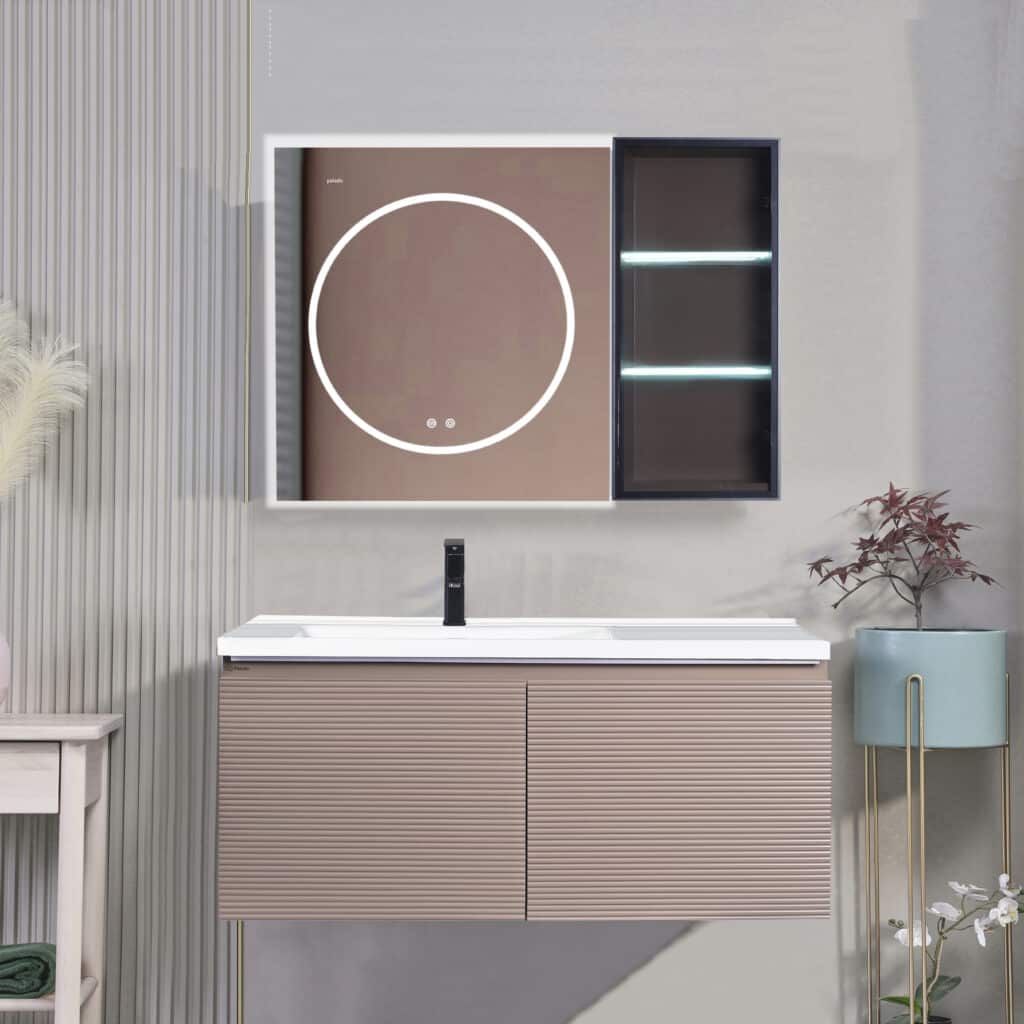
Can You Mix Kitchens & Baths?
The old design rules separating kitchens and bathrooms are gone; a unified aesthetic using shared materials and styles is now the industry standard for creating cohesive living spaces.
The practice of designing kitchens and bathrooms as isolated projects is obsolete. In 2026, the market demands a continuous aesthetic that flows through a property, which simplifies procurement and increases tenant appeal. By aligning materials, styles, and functional principles, developers can create a more cohesive and valuable product.
Adopting Unified Material Palettes
The design barrier between kitchens and bathrooms has dissolved. Both spaces now frequently share material palettes built on natural wood, stone, and mixed finishes. This strategy creates a consistent, high-end feel rather than treating each room as a separate entity.
- Materials like oak and marble are no longer confined to one room, establishing a uniform, premium environment.
- Combining textured surfaces with different finishes builds visual interest that flows seamlessly from the kitchen to the bathroom.
The Rise of Modern Transitional Design
Modern transitional style now accounts for over a quarter of residential remodels by blending traditional and contemporary elements. This flexible approach creates a cohesive design language that works equally well for both kitchen and bathroom applications, simplifying material sourcing for large-scale projects.
- This style allows for combining classic cabinet profiles with modern hardware or fixtures across both rooms.
- The industry has moved toward creating unified aesthetic experiences instead of designing kitchens and bathrooms in isolation.
Functional Cohesion and Accessibility
The convergence of design extends beyond aesthetics to include function. Universal design principles, including accessibility features and multi-functional layouts, are now commonly applied to both kitchens and bathrooms. This creates a more practical and unified living environment that appeals to a wider range of tenants.
- Design choices are increasingly driven by creating a consistent and user-friendly experience throughout the home.
- Accessibility standards are becoming a universal consideration for both spaces, not just a niche requirement.
What Are the Warranty Terms?
The multi-family vanity market operates on a standard one-year limited warranty that protects against manufacturing defects but explicitly excludes installation errors, wear, and environmental damage.
Standard Coverage and Duration
MFBATH provides a standard one-year limited warranty, which is the established industry benchmark. This coverage protects the original buyer against defects in materials and workmanship under normal residential use. It ensures the product’s structural integrity and finish from the date of purchase, giving property managers a baseline of quality assurance.
- Covers defects in materials and manufacturing for one year.
- Applies only to the original purchaser and is non-transferable.
- Warranty begins from the date of purchase and requires proof of purchase for claims.
Common Exclusions and Limitations
The warranty does not cover issues that arise from improper handling, installation, or external factors. Understanding these limitations is critical for partners to manage customer expectations and prevent claim disputes on large-scale projects.
- Excludes damage from improper installation, unauthorized modifications, or using harsh chemical cleaners.
- Does not cover normal wear and tear, such as minor scratches, scuffs, or fading from sunlight over time.
- Damage caused by excessive moisture, humidity, or environmental factors beyond normal residential conditions is not covered.
The Claims Process
To ensure a smooth resolution, MFBATH uses a straightforward claims process. Partners should inspect all deliveries immediately upon arrival and report any issues promptly to initiate a claim. Delays in reporting can jeopardize claim eligibility, especially for freight damage.
- Shipping damage must be reported within 48 hours of delivery to be eligible for a claim.
- Claims require clear photographic or video evidence of the defect, along with the original proof of purchase.
- The warranty covers the replacement of the defective part or product; it does not cover labor costs for removal or reinstallation.
Conclusion
A well-defined vanity program is essential for managing large-scale properties efficiently. Standardizing on a few core sizes and versatile finishes simplifies procurement, inventory, and long-term maintenance. This strategy directly reduces operational costs and ensures a consistent aesthetic across all units.
If you are planning a new build or large-scale renovation, our team can help you develop a custom vanity program. Contact us to request material samples and discuss your project’s specific budget and durability requirements.
Frequently Asked Questions
Best vanities for rental properties?
The best vanities for rental properties prioritize durability, moisture resistance, and ease of maintenance. Opt for cabinets made from High-Density Fiberboard (HDF) or plywood with a Thermofoil (RTF) or High-Pressure Laminate (HPL) finish, as these surfaces are non-porous and easy to clean. For the top, a cultured marble or quartz countertop with an integrated sink is ideal. This single-piece design eliminates seams, preventing mold growth and water damage while simplifying cleaning for tenants.
Wholesale vanities for apartment complex?
To purchase vanities wholesale for an apartment complex, you should engage directly with manufacturers or B2B distributors specializing in multi-family projects. This typically requires a minimum order quantity (MOQ) of 50-100+ units. The process involves submitting project specifications and floor plans to receive volume-based pricing. These specialized suppliers can also manage complex logistics, such as phased deliveries scheduled to align with your construction or renovation timeline, ensuring units arrive as needed.
Granite vs quartz for apartments?
For apartments, quartz is the superior choice over granite. Granite is a porous natural stone that requires regular sealing to prevent stains and bacterial growth, a maintenance task that cannot be guaranteed with tenants. Quartz is an engineered, non-porous material that is inherently resistant to stains, scratches, and bacteria without needing any sealing. Its consistent color and pattern also ensure a uniform look across all units, which is a key advantage for large-scale developments.
How to buy cabinets for multi-family?
Purchasing cabinets for a multi-family project involves a structured procurement process. First, define your material and hardware specifications (e.g., HDF cabinet boxes, thermofoil doors, soft-close hinges). Next, perform a quantity takeoff from architectural plans. Identify and vet B2B suppliers or manufacturers, requesting samples to verify quality. Submit a Request for Quotation (RFQ) to multiple vendors to compare pricing and lead times. Finally, coordinate a detailed logistics plan for phased delivery to the job site to align with the construction schedule.
Standard apartment vanity sizes?
Standard vanity sizes for apartments are optimized for common bathroom layouts and cost-efficiency. The most prevalent widths are 24, 30, 36, and 48 inches. Smaller studio or half-baths may use 18-inch or 24-inch models, while larger units might feature a 60-inch double vanity in the master bathroom. The standard depth is consistently 21 inches from the wall, and the height is typically 34 to 36 inches for ergonomic “comfort height” access.
Durable vanities for tenants?
To ensure durability against tenant use, select vanities with a plywood or HDF (High-Density Fiberboard) cabinet box, which resist moisture far better than standard particleboard. The exterior should have a seamless finish like Thermofoil (RTF) or laminate to prevent peeling and water intrusion. The most resilient countertop is an engineered material like quartz or a single-piece cultured marble top with an integrated sink, as this design is non-porous, stain-resistant, and lacks seams that can fail or collect grime.





0 Comments