

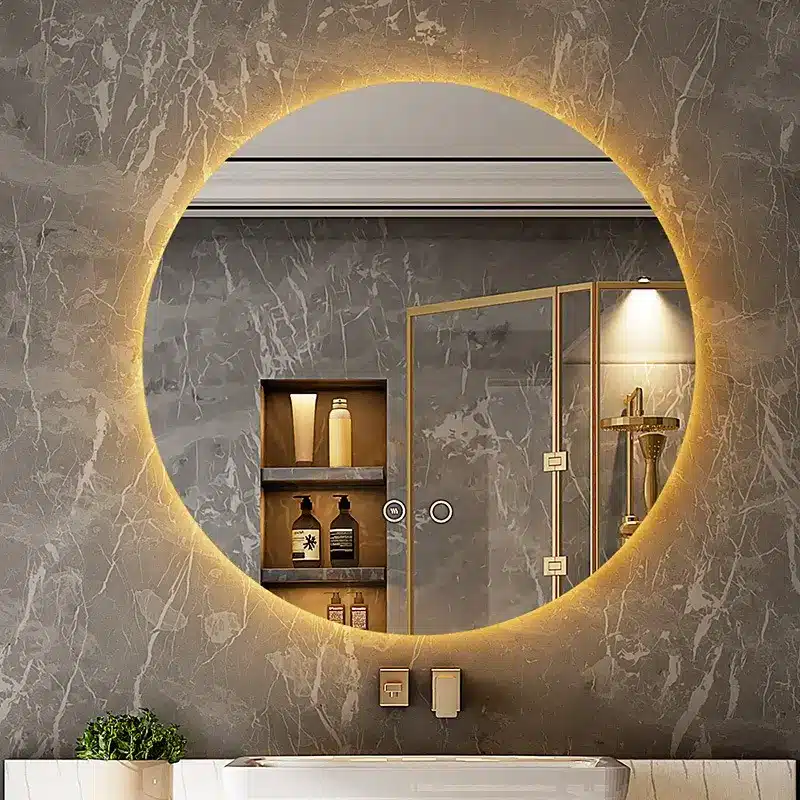
If you are researching the LED (light-emitting diode) mirror anti-fog function, how it works should be settled before you place a bulk order, not after the first container lands. The core mechanism is simple: a heating element behind the glass keeps the mirror surface above the dew point, so warm shower steam never condenses into visible fog. The engineering around that mechanism is where supplier quotes start to differ — how much of the glass the defogger zone actually clears, how quickly it responds, and what it asks of the power supply.
Suppliers use the term loosely. Some mean a heated pad, some mean a passive coating, and some mean both, which makes comparing quotes on paper messy. This guide explains the two approaches, shows what MFBATH builds into its smart mirror range, and walks through the verification steps a serious importer should run before signing. The manufacturer behind the products discussed here is Main Focus Cabinet (MFBATH), a smart mirror factory in Changge, Henan, China, founded in 2015, with a monthly production capacity of 5,000 sets.
Key Takeaways
- Heated glass is the active method: a pad behind the mirror keeps the surface above the dew point, and it clears the defogger zone rather than the full mirror.
- Coated glass is the passive method: a hydrophilic layer spreads condensation into a thin transparent film, with no warm-up time and no power draw.
- MFBATH pairs anti-fog heating with adjustable brightness and color temperature, touch control, a digital display for time, date, and weather, and energy-saving auto screen-off.
- Classic mirror sizes run from 24×36 to 48×72 inches (61×91 to 122×183 cm), with wood, metal, or PVC frames and anti-fog coating as an option.
- Custom orders start at 15 sets per model, color, and size; free samples ship within 10 working days, and bulk production takes 20–30 days.
- MFBATH is an ISO 9001 certified factory (2017, valid 2025), holds CE and UL listings, and follows the IEC 60598 series for luminaire safety.
Table of Contents
- Key Takeaways
- Table of Contents
- Why Bathroom Mirrors Fog Up
- How the Anti-Fog Function Works: Heated Glass vs Coated Glass
- What MFBATH Smart Mirrors Include
- What to Verify Before You Order in Bulk
- Anti-Fog Performance in Commercial Bathrooms
- How to Order Custom Smart Mirrors
- Frequently Asked Questions
- The Bottom Line
Why Bathroom Mirrors Fog Up
Fog is condensation, and condensation is physics. When a hot shower runs, the air in the bathroom loads with water vapor faster than most exhaust fans can pull it out. That warm, humid air meets the mirror surface, which stays near room temperature, and the air in direct contact with the glass cools below its dew point. Water vapor condenses into thousands of tiny droplets, and each droplet scatters light in a different direction. The result is a milky, semi-transparent film instead of a reflection.
A bathroom is unusually good at producing this effect. Steam generation happens in a small, enclosed space, the shower keeps feeding the air with moisture, and the mirror is usually the coldest large surface in the room. Glass is a poor insulator, so it sheds heat quickly, and the temperature gap between the air and the mirror is at its widest exactly when the room is most humid. That combination — high humidity, a cold surface, and little ventilation relief — is why a bathroom mirror fogs within a minute of the shower turning on, while the same mirror in a hallway stays clear all day.
In a home, a fogged mirror is an annoyance you wait out. In a hotel or a commercial washroom, it is a different problem entirely. Guests shower back to back, housekeeping turns rooms around in minutes, and a mirror that stays fogged for the first part of someone’s morning routine reads as a maintenance failure, even if the mirror itself works perfectly. The same pressure applies in gym locker rooms, spa changing areas, and office washrooms, where a run of guests can keep a room steamy for hours. If you are evaluating suppliers, the rest of the product knowledge library covers the quality checks that sit alongside anti-fog performance.
How the Anti-Fog Function Works: Heated Glass vs Coated Glass
Understanding the LED mirror anti-fog function, how it works in practice comes down to one question: does the mirror actively stop condensation, or does it passively manage the water that forms? The active approach heats the glass; the passive approach treats it. Both have legitimate uses, and the right choice depends on whether the mirror already carries electronics, how long the defogger needs to hold, and what the power budget allows.
Heated Glass: The Active Approach
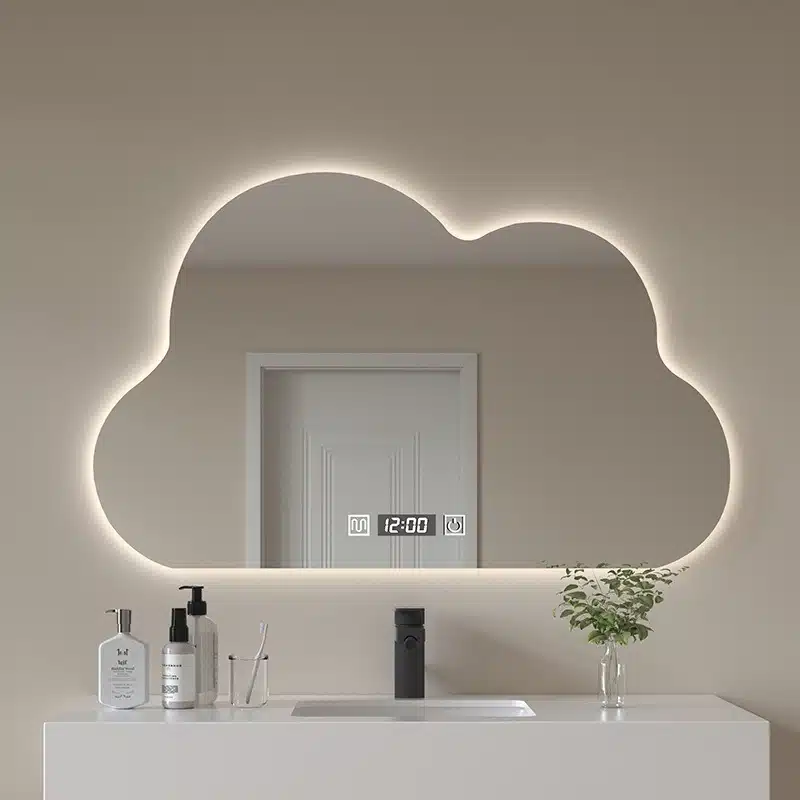
In a heated system, a resistive heating pad is bonded behind the mirror, usually across the lower portion of the glass or the full rear surface, depending on the model. When the element runs, heat conducts through the glass and raises the surface temperature above the dew point of the room air. Because the glass stays warmer than the air around it, water vapor has no reason to condense on it — the fog simply never forms. Glass thickness plays a role here: a thicker mirror takes slightly longer to reach temperature, which is one reason warm-up behavior varies between models even when the pad looks identical.
The practical detail buyers miss is the defogger zone. A heating pad sized for the lower third of the mirror keeps the lower third clear; it does nothing for the top edge. Some suppliers advertise an anti-fog feature and leave the actual heated area vague, and the difference matters in real use — a tall hotel mirror fogging above eye level still looks broken. Ask for the heated area as a percentage of the glass or as specific dimensions, and confirm it covers the zone your customers actually look into. Warm-up behavior deserves the same scrutiny: a pad that crawls to temperature leaves guests staring at a cloudy mirror, so manufacturers will tell you the unit has a fast warm-up, and you should verify that on the actual model rather than the brochure.
Coated Glass: The Passive Alternative
The alternative is a hydrophilic coating applied to the mirror face. Instead of raising the temperature, the coating changes how water behaves: droplets cannot bead up, so condensation spreads into a thin, even film that stays transparent. There is no warm-up time and no power draw, which is a genuine advantage on mirrors that have no wiring behind the glass. For a classic mirror in a corridor or a secondary vanity, that simplicity is the whole point.
The trade-off is capacity. A coating manages the water that lands on it, but it does not remove that water. During a long shower, the film gradually thickens and reflection quality drops until the surface dries. That is why coated glass suits classic mirror lines without electronics, while smart mirrors with touch control and digital displays — which already have power at the mirror — usually take the heated route. MFBATH, for example, offers anti-fog coating as an option on its classic mirror range.
The table below summarizes how the two systems compare on the points a buyer cares about.
| Aspect | Heated Glass (Defogger Pad) | Coated Glass (Hydrophilic) |
|---|---|---|
| Principle | Heating element behind the mirror keeps the surface above the dew point | Surface treatment spreads condensation into a thin transparent film |
| Performance | Clears the defogger zone actively; coverage depends on pad size and warm-up behavior | Works across the whole surface with no warm-up, but saturates during long showers |
| Power | Draws power while the element runs; pairs with energy-saving auto screen-off | No power draw |
| Typical use | Smart mirrors with electronics and a power supply at the mirror | Classic mirrors with wood, metal, or PVC frames |
Read the table the way a purchasing engineer would. The heated system buys you active clearing and pays for it in hardware and power; the coating costs nothing to run but only manages the water that forms. Neither approach is universally better — the right call depends on the mirror’s role in the bathroom and who uses it. For smart mirrors, heated glass is the common route, which is why the sections below focus on verifying that heating rather than choosing between the two.
What MFBATH Smart Mirrors Include
MFBATH’s smart LED mirrors bundle the anti-fog function with the electronics a modern bathroom expects. A typical unit combines anti-fog heating, adjustable brightness and color temperature, touch control, a digital display showing time, date, and weather, and an energy-saving auto screen-off mode. Optional voice control and Bluetooth connectivity are available on selected models, which matters when you are specifying mirrors for a hotel brand that wants smart features in the room.
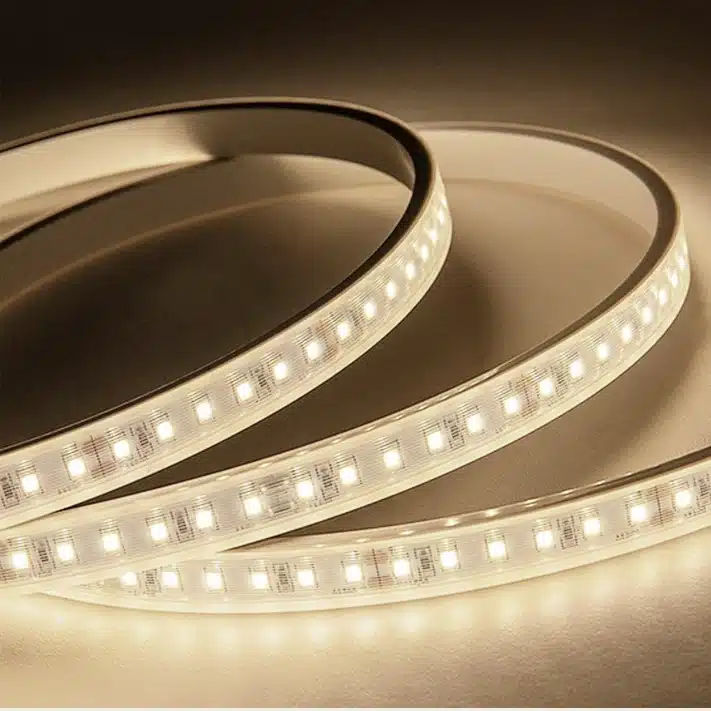
The display and the lighting are worth understanding before you commit. Adjustable brightness and color temperature let guests tune the mirror for makeup, shaving, or ambient light, and the range of that adjustment is a spec you should see in writing. Our CRI and color temperature guide explains how to read those figures when you compare suppliers, because the same label for warm light means different things to different factories.
Auto screen-off is the detail that keeps operating costs sane in commercial settings: the display and lighting switch off after a set idle period, and the energy-saving mode limits consumption between uses. Ask how the anti-fog heating interacts with that timer — some mirrors tie the heater to the screen state, others run it independently. The answer changes both the power draw and the guest experience, so it belongs on your spec sheet.
On the classic side, MFBATH offers round, rectangular, and oval mirrors from 24×36 to 48×72 inches (61×91 to 122×183 cm), with wood, metal, or PVC frames, and anti-fog coating as an option. That range supports mixed programs: the same project can carry a smart heated mirror in guest rooms and a coated classic mirror in corridors or secondary vanities where wiring is not available. One factory covering both cases simplifies your sourcing.
Smart Mirrors That Stay Clear
Browse this product, solution, or service page to explore relevant offerings.
What to Verify Before You Order in Bulk
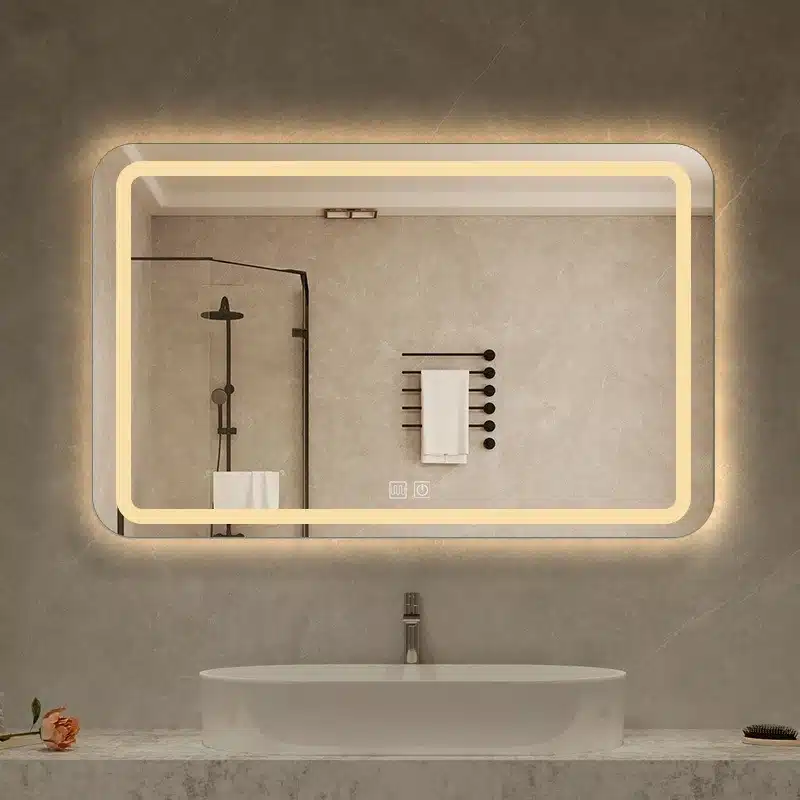
Start with the defogger zone. Whatever the brochure claims, you want the heated area stated as a percentage of the glass or as exact dimensions, then confirmed against the production sample. A mirror that advertises anti-fog and clears only a small patch behind the sink wastes your money and disappoints your customers. The same discipline applies to coating: ask whether it covers the whole face or stops short of the frame.
Then test warm-up behavior, because a claim of fast warm-up is meaningless without a baseline. On the sample, run the mirror in a steamy room and time how long the zone takes to clear. If you cannot test physically, ask the factory for a video of the same model under a real shower test. This is not being difficult; it is verifying a feature that every guest will test on day one.
Request the power draw specification in writing. The heating element adds load on top of the lighting and the display, and you need to know how the total behaves in normal use and during warm-up. Most smart mirror lighting runs on low-voltage power supplies, a sensible safety choice in a damp room — but confirm whether the heating element shares that supply and how it changes the input requirement. Low-voltage operation is common in smart mirrors, yet the specifics still vary by model.
Then check the paperwork. MFBATH holds CE and UL listings, and the factory is ISO 9001 certified (2017, valid 2025). For luminaire construction and testing, the reference framework is the IEC 60598 series, maintained by the IEC standards for lighting. If a supplier cannot show which standard its electrical design follows, that is a red flag. Independent UL safety testing adds a third-party check on top of the manufacturer’s own claims.
Finally, put every anti-fog claim in writing: heated area, activation method (timer, sensor, or continuous), warm-up behavior, and power draw. That spec sheet is the document you compare against delivered goods and the document you hand to a third-party inspector. If you are still weighing suppliers, the smart mirror feature comparison shows how these functions are evaluated against each other.
Anti-Fog Performance in Commercial Bathrooms
In a hotel, the anti-fog function is not used once a day; it is cycled dozens of times, often back to back. Each guest showers, the mirror clears, the room is turned, and the next guest repeats the cycle. That pattern favors a system that clears quickly and holds while the room stays steamy, and it penalizes a heater that needs a long recovery between cycles. Continuous operation is the other scenario: mirrors left running in spa areas or hotel bathrooms.

Heating also shares the mirror’s electrical environment, and that is where lifespan enters the conversation. The LED mirror lifespan depends heavily on driver quality, because the driver feeds the lighting, the display, and often the heater. A weak driver in a heated mirror tends to fail sooner than the same driver in a mirror without heating, so ask how the driver’s rating accounts for the added heating load. It is a small question that protects a much bigger investment.
Layout decisions shape performance too. A wall-mounted mirror above a vanity clears and stays clear when the defogger zone matches the user’s height; a mirror cabinet concentrates the heated area on the door you open. Cabinets earn their place in tight bathrooms because they add storage, but the mirrored door is the surface that fogs, so the heater placement has to match how the door is used. Choose the form factor first, then verify that the anti-fog coverage suits it.
How to Order Custom Smart Mirrors
MFBATH starts custom orders at 15 sets per model, color, and size — that is the MOQ (minimum order quantity) — and mixed loading is allowed, so you can combine several variants in one shipment. The threshold is low enough to test a market and high enough to keep production efficient, and it applies per configuration rather than per container. That structure suits buyers who want a pilot order before scaling.
Customization covers size, frame color matched to Pantone references, functions, and logo. You can spec the anti-fog system, the display behavior, the lighting range, and the frame material — wood, metal, or PVC — on the same order, and the factory confirms the spec sheet with you before production starts. If you need a first batch for a pilot hotel project, the 15-set MOQ is exactly the scale for it.
The timeline is straightforward: free samples within 10 working days, bulk production in 20–30 days, and a total lead time of 4–6 weeks to the US, Canada, and Mexico. Plan around the full window, because sample approval and the deposit payment sit inside it. One week of indecision on a sample usually costs two at the end of the schedule.
Payment terms follow the industry norm: a 30% deposit to start production, with the balance due within one week of the draft bill of lading, shipped free on board (FOB) from Qingdao Port. MFBATH supports 1,000+ dealers across 20+ countries from a 10,000 m² factory with 95 employees. If you want to see the current configurations, the bathroom mirror product page lists the models and options.
Frequently Asked Questions
Does the anti-fog function stay on continuously?
Smart mirrors typically pair anti-fog heating with auto screen-off and energy-saving modes; clarify whether heating runs on a timer or a sensor before ordering, because continuous use raises power draw.
Is anti-fog the same as a demister pad?
The terms are used interchangeably; a demister pad is the heated element behind the glass, while some mirrors use a passive coating instead. Ask which system a quoted mirror uses.
Can I add anti-fog to a custom smart mirror order?
Yes. MFBATH builds functions like anti-fog heating, touch control, and digital display to order from 15 sets per model, color, and size, with free samples in 10 working days.
How long does anti-fog heating take to clear a mirror?
Clear times depend on glass thickness and ambient humidity, so compare the heated area specification rather than a single minute count. Ask for the defogger zone as a percentage or exact dimensions, then verify it on the production sample
The Bottom Line
The LED mirror anti-fog function, how it works, decides whether your customers get a clear reflection or a fogged mirror at the worst possible moment. Heated glass clears actively but needs verification of zone coverage and power draw; coated glass manages moisture passively at no running cost. Confirm the specs in writing, test the sample, and check the safety documentation before you commit to a bulk order.


0 Comments