

custom bathroom vanity mistakes is the first checkpoint buyers should lock before they approve a supplier, budget, or production slot. The gap between what the spec sheet promises and what actually arrives in the container is something every veteran importer learns the hard way. I’ve seen a buyer lose $50,000 on a custom vanity order because the pre-production sample passed every quality tolerance check, but the mass production run didn’t match. That’s the core of most custom bathroom vanity mistakes—the failure happens long before the container shows up. It happens when the FOB pricing is locked in, the sample approval is signed off, and nobody double-checks the moisture content tolerance or the packaging spec for ocean freight.
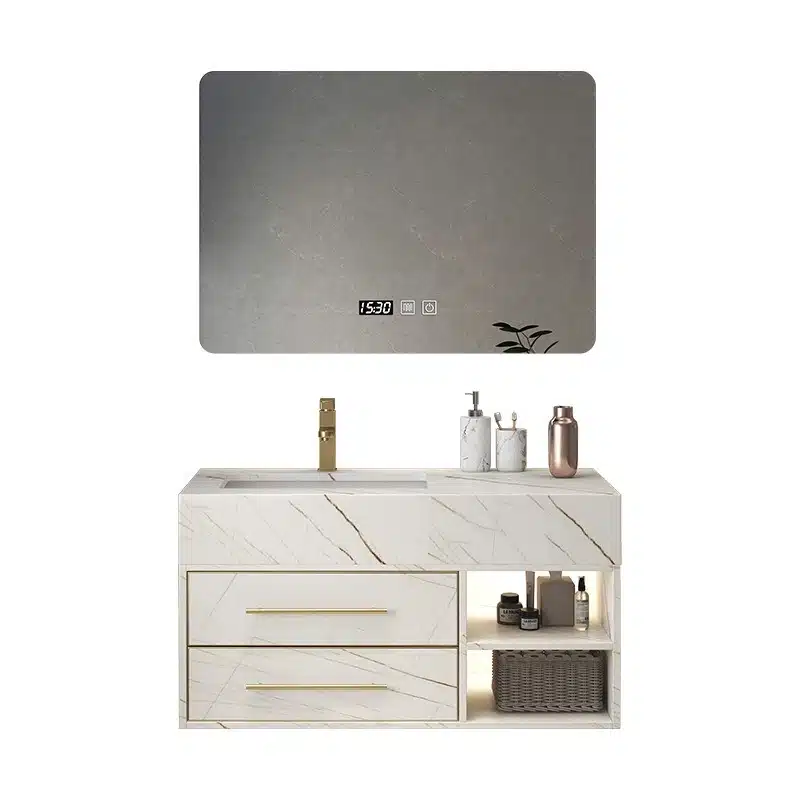
Mistake 1: Overlooking Regional Compliance and Certification
One missing UKCA mark.
January 2026. A distributor in Birmingham takes delivery paperwork for a 40HQ container—72 custom vanity units, FOB Ningbo at $38,500. The shipment looks clean until customs flags it. Reason: no UKCA documentation. The container sits. Demurrage starts at £85 per day. The construction site on the other end carries a penalty clause for every day bathrooms aren’t functional. That $38,500 order just metastasized into a six-figure exposure. The factory’s position? ‘You didn’t request UKCA on the PO.’ Technically accurate. Legally, the importer owns the liability. Practically, the distributor eats the whole loss.
This isn’t a rare edge case. The UKCA mark replaced CE marking for construction products placed on the GB market, but the transition has been unevenly absorbed across Asian supply chains. Most factories default to CE documentation because it covers the broader European market—and plenty of importers assume CE still satisfies UK requirements. It doesn’t. The UK now mandates UKCA (with limited CE recognition under transitional provisions running through 2026), and the designated standards and conformity assessment bodies differ from the EU framework. A supplier audit that checks for ‘European certifications’ without naming the exact mark, the applicable standard reference, and the issuing approved body is an audit that failed at the starting line.
-
- Can your supplier produce the actual certificate number and issuing body for this market—not a vague compliance claim, but a verifiable document with an expiration date?: If the answer is anything other than an immediate yes with the document attached, you’re speculating on compliance.
- Has this factory shipped to your exact region in the past 12 months, and can they share the customs clearance reference for those shipments?: Past clearance data proves the paperwork actually worked at the border. A pile of certificates with no shipment history doesn’t.
- Does your purchase order explicitly list the required certification mark as a condition of acceptance, directly tied to the final payment milestone?: If certification isn’t written into the commercial terms, the factory has no contractual obligation to provide it—and you have no leverage if it’s missing at the dock.
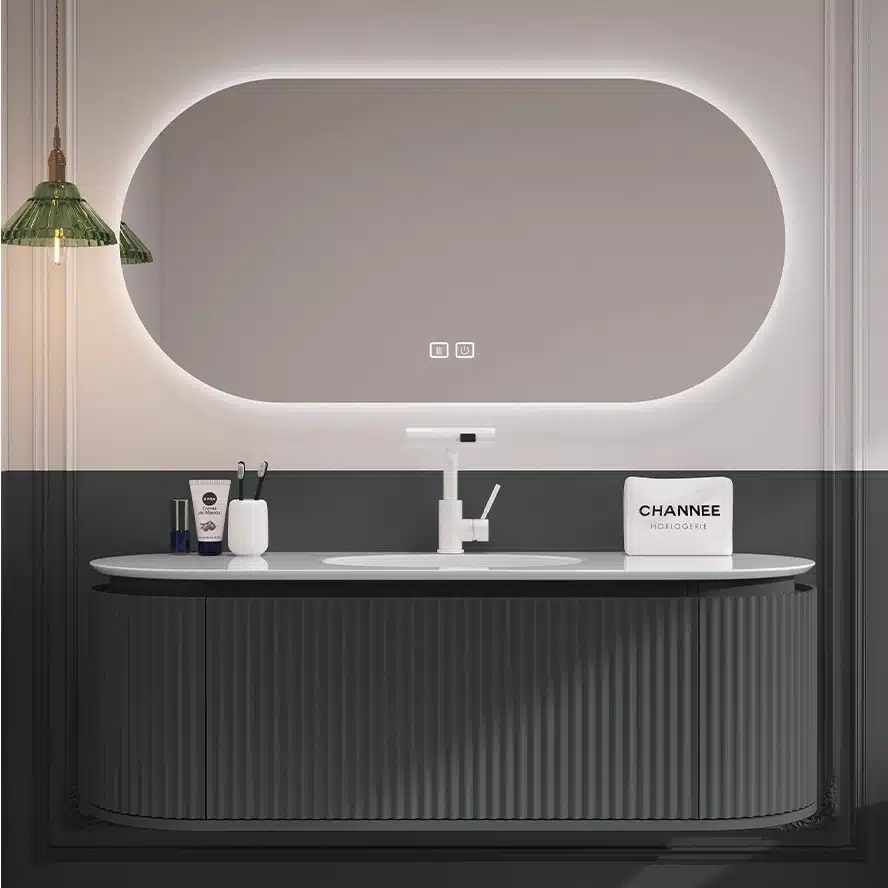
Mistake 2: Choosing the Wrong Material for Your Climate
Humidity delamination is a freight cost liability, not a maintenance issue.
The damage call lands sixty days after the container clears customs. A distributor in Panama opens a flat-pack carton and finds the vanity end panels have swelled past the edge banding. The FOB pricing was sharp. The sample approval was fast. But the P2 grade MDF specified in the contract behaves nothing like the MR grade board the sample shop used. You don’t discover that mismatch until the goods hit a coastal warehouse at 80% relative humidity.
Standard interior-grade engineered wood absorbs moisture through raw edges, cutouts, and screw holes. Once the internal moisture content climbs above 12%, the fiber structure expands irreversibly. In bathrooms with poor ventilation, 14–18% is common within six months. Drawers stop closing. Veneer peels. The core turns spongy. What looked like a competitive landed cost on the pro forma now carries a hidden line item: full batch rejection or local rework at triple the margin.
-
- Material Selection Rule: For any region with sustained ambient humidity above 70%, specify E1 or E0 moisture-resistant MDF with a minimum density of 720 kg/m³, or step up to marine-grade plywood. Insist on green-dyed core for visual verification — a cheap trick but an effective one when inspecting production line photos.
- Quality Tolerance Protocol: Request a mill certificate showing the board’s thickness swell rate after 24-hour immersion. For MR MDF, that figure must stay under 12%. Some factories stock board that drifts to 17% on a bad manufacturing lot. A single percentage point above 12% turns a five-year warranty into a first-season warranty claim.
- Pre-Shipment Accelerated Testing: The best B2B suppliers run a 72-hour humidity chamber test at 85% RH on a random pull from every production batch. Dimensional variance over 1mm across any edge or face fails the lot. This is exactly the type of QC gate that separates cosmetic compliance from structural survival.
An experienced buying office doesn’t debate whether engineered wood works in bathrooms. It debates at what moisture resistance grade the math still makes sense for a specific market zone. If the supplier cannot cite the core grade and the corresponding thickness swell data during the negotiation phase, the CIF price is irrelevant — because the landed cost will include a write-off.
| Material Type | Climate Risk | Common Failure | Focuscabinet Solution | Region-Ready Proof |
|---|---|---|---|---|
| Standard MDF | Absorbs moisture; swells and warps in humidity >70% | Delamination, door misalignment, mold growth | Upgraded to E1/E0 moisture‑resistant plywood with waterproof edge‑banding | 85% RH chamber test for 72h — expansion <1mm, no visible deformation |
| Particleboard | Disintegrates in coastal or tropical climates | Combined swelling and crumbling; hardware loosening | Replaced with multi‑layer solid wood core or high‑density PVC board | 5‑stage QC checks dimensional stability before and after humidity cycling |
| Unsealed Solid Wood | Cracks and gaps in dry climates; warp in humid | Joint gaping, drawer sticking | Kiln‑dried to 8–12% moisture content; sealed with UV‑cured finish | Pre‑production sample tested for end‑market climate simulation |
| Low‑grade PVC | Stable in humidity but can discolor under UV or heat | Surface yellowing, brittle edges | Premium PVC with UV inhibitors and reinforced inner structure | Accelerated aging test for colourfastness and impact resistance |
| Sintered Stone Basin | None — non‑porous, 100% waterproof | None; however, inferior stone may chip | High‑purity sintered stone with 6‑mm thickness; matching vanity top | Tested for thermal shock and stain resistance across climate zones |

Mistake 3: Not Specifying Drawer Soft‑Close Mechanisms
Assuming soft-close is standard is the fastest way to turn a premium vanity into a discount bin item.
The container lands. The custom vanity is unboxed in the showroom. You pull the drawer—and it slams shut with a sharp crack. That’s the moment you realize: soft-close was never in the spec. You didn’t write it down, and the factory didn’t include it. Now you’re sitting on 200 units that sound cheap, and your retail buyers will notice.
In B2B bathroom furniture, drawer soft-close is not a luxury add-on; it’s a signal of quality that separates a durable, mid-market product from a disposable one. Missing it triggers a cascade of after-sales headaches: customer complaints, return shipping, and margin erosion. A retrofit kit costs more than the original upgrade, and field installation rarely matches factory precision.
-
- Hardware Brand: Specify the exact soft-close system by brand and model. Common options are Blum, Grass, or DTC. Without a brand name, the factory will default to the cheapest generic slide that still “works”—for about six months.
- Cycle Rating: Insist on drawer slides rated for at least 50,000 open/close cycles. In humid bathroom conditions, unbranded slides often fail before 20,000 cycles, leading to sagging and slam.
- FOB Pricing Line Item: Negotiate the soft-close upgrade as a separate line item in your FOB pricing. Expect $2–$5 per drawer. That’s a fraction of the $50+ per unit you’ll lose processing returns and discounting damaged stock.
- Sample Approval Gate: Request a pre-production sample with the soft-close mechanism installed. Test it yourself: the drawer should close silently from a 2-inch gap, not lurch shut. This is your quality tolerance checkpoint.
Focuscabinet’s five-stage QC treats soft-close as a binary pass/fail checkpoint. During final inspection, every drawer is cycled multiple times to verify smooth, silent closing. If the mechanism doesn’t perform to spec across the batch, the entire shipment is held until the hardware is corrected. For distributors importing into competitive markets, that kind of consistency is what turns a specification sheet into a reputation.
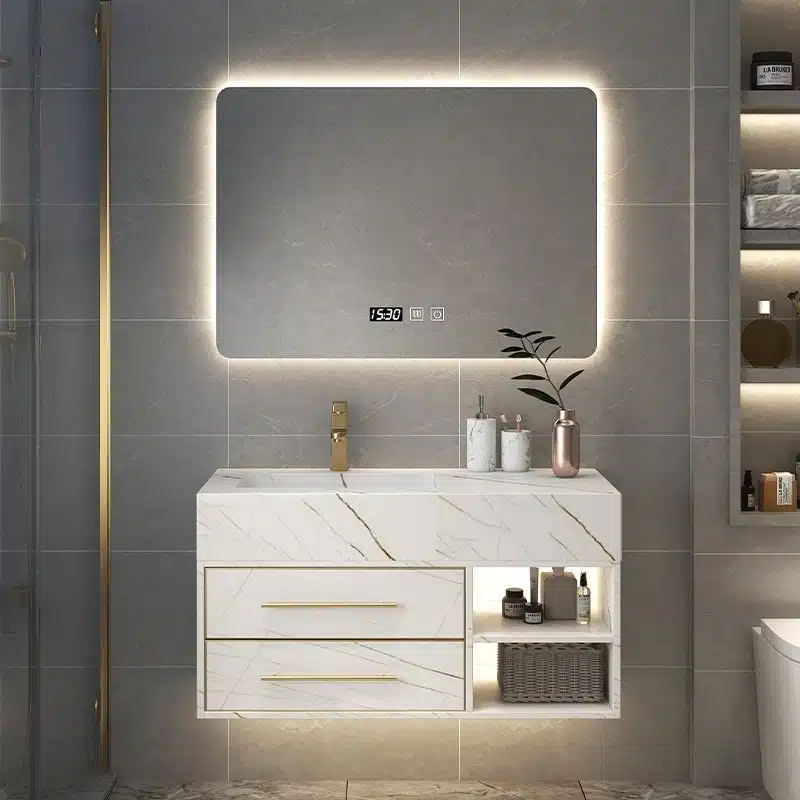
Mistake 4: Underestimating MOQ and Setup Costs
MOQ isn’t about how many units the factory wants to sell—it’s about how many the production line needs to break even on.
Did your supplier quote you 40 units because they’re flexible—or did they simply bury the $1,200 in setup costs inside your per-unit FOB price? I’ve audited enough factory quotes across Guangdong and Henan to spot the difference. A $180 vanity at 100 units becomes $210 at 40 units not because material costs shifted, but because fixed costs for CNC programming, mold prep, and line changeover got amortized across fewer pieces. The supplier didn’t do you a favor. They did math.
Setup costs in bathroom vanity manufacturing are real and non-negotiable. For a custom sintered stone basin alone, CNC programming and mold preparation run $300 to $800 depending on the edge profile. Add another $200 to $500 for a new cabinet door profile or a color-matched PVC edge banding that sits outside the standard library. These are one-time charges—but only if you meet the MOQ that makes the production run viable. Below that threshold, two things happen: the factory declines the order, or they accept it and recover the shortfall somewhere you won’t notice until the P&L hits your desk.
-
- Tooling Amortization Gap: A $600 CNC setup split across 100 units adds $6 per unit. Spread across 30 units, that jumps to $20 per unit. The $14 delta comes straight out of your margin—or your material spec if the factory downgrades to compensate.
- Raw Material Purchase Minimums: Sintered stone slabs and marine-grade plywood sheets carry supplier minimums. If your order consumes 60% of a slab, you still pay for 100%. Small orders multiply material waste and inflate your effective unit cost.
- Line Changeover Downtime: Switching a production line from one SKU to another burns 45 to 90 minutes of output. Factories price this into every run. Short production batches mean more changeovers per unit produced, which shows up as a fatter price per piece.
Skip the MOQ math on your next order and the damage materializes within 90 days. I’ve watched a distributor in Manchester absorb $8,700 in hidden amortization across three SKUs because they accepted a ‘flexible’ 35-unit minimum without auditing the price breakdown. That $8,700 was their entire container margin. Across four containers in a year, the same bathroom vanity MOQ underestimation compounds to roughly $35,000 in vanished profit. The per-unit price on a quote sheet is fiction if you don’t know what got baked into it.
Manufacturers running dedicated bathroom furniture lines structure their MOQs differently than general cabinetry shops. A 10,000㎡ production floor laid out for batch runs of bathroom-specific SKUs carries tooling libraries already built for common basin profiles and edge treatments. The CNC library already holds the program for a 600mm sintered stone top with a waterfall edge. You’re not paying to develop it. You’re paying to run it. The setup cost baseline starts lower, which means the MOQ floor drops without the per-unit penalty that kills your margin on a mixed container.
| Cost Element | Common Oversight | Typical Cost Impact | Focuscabinet Mitigation | Veteran Distributor Advantage |
|---|---|---|---|---|
| Custom Mould & Tooling Setup | Assuming standard cabinets share tooling with custom designs | $800–$3,500 per new SKU for CNC reprogramming, edge-banding dies, and drilling jigs | Catalogue-first customization approach—modify existing cabinet carcasses rather than engineering from zero; setup fee waived on orders exceeding 50 units per design | Preserves margin on small-batch market tests; eliminates upfront capex risk before validating regional demand |
| MOQ Per SKU / Finish | Expecting mixed-container flexibility without understanding production line changeover economics | Minimum 20–50 units per color/finish at most factories; sub-MOQ surcharges of 15–30% per unit erode landed profitability | Consolidated container policy—mix up to 4 SKUs per 20ft container without individual MOQ penalties, leveraging the 10,000㎡ factory’s parallel production lines | Enables curated regional catalogues with multiple finishes without overstock risk; ideal for testing 2–3 new colours per quarter |
| Sample & Prototype Fees | Treating the pre-production sample as a free negotiation chip rather than a billable engineering deliverable | $150–$600 per custom sample, plus express air freight ($200–$500); refundable only on orders above 100+ units at most suppliers | Sample cost credited 100% against first container order (minimum 30 units); five-stage QC includes a dedicated pre-production sample station with dimensional tolerance reports | Protects cash flow during the sampling phase; the credited model aligns manufacturer incentives with quality, not just speed |
| Packaging & Palletisation Setup | Assuming standard inner-box and pallet configurations fit regional warehouse racking or FBA requirements | $300–$1,200 for custom foam inserts, reinforced corner protectors, and pallet dimension adjustments; non-compliant packaging triggers warehouse rejection fees of $50–$150 per pallet | Region-ready packaging library—pre-engineered pallet footprints for North American 48″x40″ GMA, European 1200x800mm EURO, and Australian 1165x1165mm CHEP standards | Eliminates costly rework at destination 3PL; packaging compliance baked into the quote, not discovered at the receiving dock |
| Hidden Compliance Retrofitting | Discovering post-production that drawer clips, adhesives, or coatings fail regional VOC or safety standards, forcing costly retrofits | $2,000–$8,000 for rework, plus 4–8 week delay and potential container storage fees; worst case: full shipment rejection at customs | Region-ready compliance embedded at design stage—E1/E0 board selection, UKCA/CE hardware certification, and CARB Phase 2 compliance verified before cutting begins | Total landed cost certainty; no surprise compliance remediation eating into the 18–25% target margin on distributed vanities |
Mistake 5: Neglecting to Validate Packaging for Ocean Freight
The box is not just packaging; it’s your first warranty claim.
Last year, a distributor in Rotterdam opened a container of 48 bathroom vanities. Half the basin doors had hairline cracks. The sintered stone tops had shifted against each other, chipping edges down to the substrate. The culprit wasn’t a manufacturing defect—it was packaging that collapsed under 45 days of swell, stack pressure, and forklift vibration. The $50,000 order was a total loss, and the FOB price suddenly looked irrelevant.
Ocean freight is brutal. A 40HQ container sees vertical acceleration exceeding 2G in rough seas, constant salt-laden humidity around 85% RH, and point loads where a 12kg carton lands on a 6mm unsupported panel. Standard single-wall cartons with light foam inserts fail predictably. Without specified packaging, your sample approval means nothing—the mass production run won’t survive the journey intact.
-
- Box Grade: Demand 7-ply export-grade corrugated with a minimum edge crush test (ECT) of 12 kN/m. Single-wall or recycled-content boards collapse under vertical stacking in shared containers.
- Internal Bracing: Fitted EPS corner blocks or custom-molded pulp trays must immobilize each unit. Loose bubble wrap invites movement and surface abrasion on stone tops. Verify bracing holds after the ISTA 3E vibration test simulation.
- Moisture Barrier: Include a sealed polyethylene bag with desiccant inside every carton. In Focuscabinet’s pre-shipment protocol, this keeps internal humidity below 60% even when ambient is 85%—the same threshold used for wood expansion testing before dispatch. Without it, engineered wood edges absorb moisture and swell, throwing quality tolerances off by 1-2mm before the customer ever opens the box.
- Palletization & Load Securement: All cartons must be stretch-wrapped to heat-treated IPPC pallets with edge protectors. A loose single carton in a consolidated load becomes a projectile.
If a supplier quotes an attractive FOB price but can’t show a packaging test report, walk away. The benchmark you take to your next call: request the ISTA 3E certificate and a photo of a drop-test sample. No certificate, no order. That single document separates a production partner from a logistics liability.
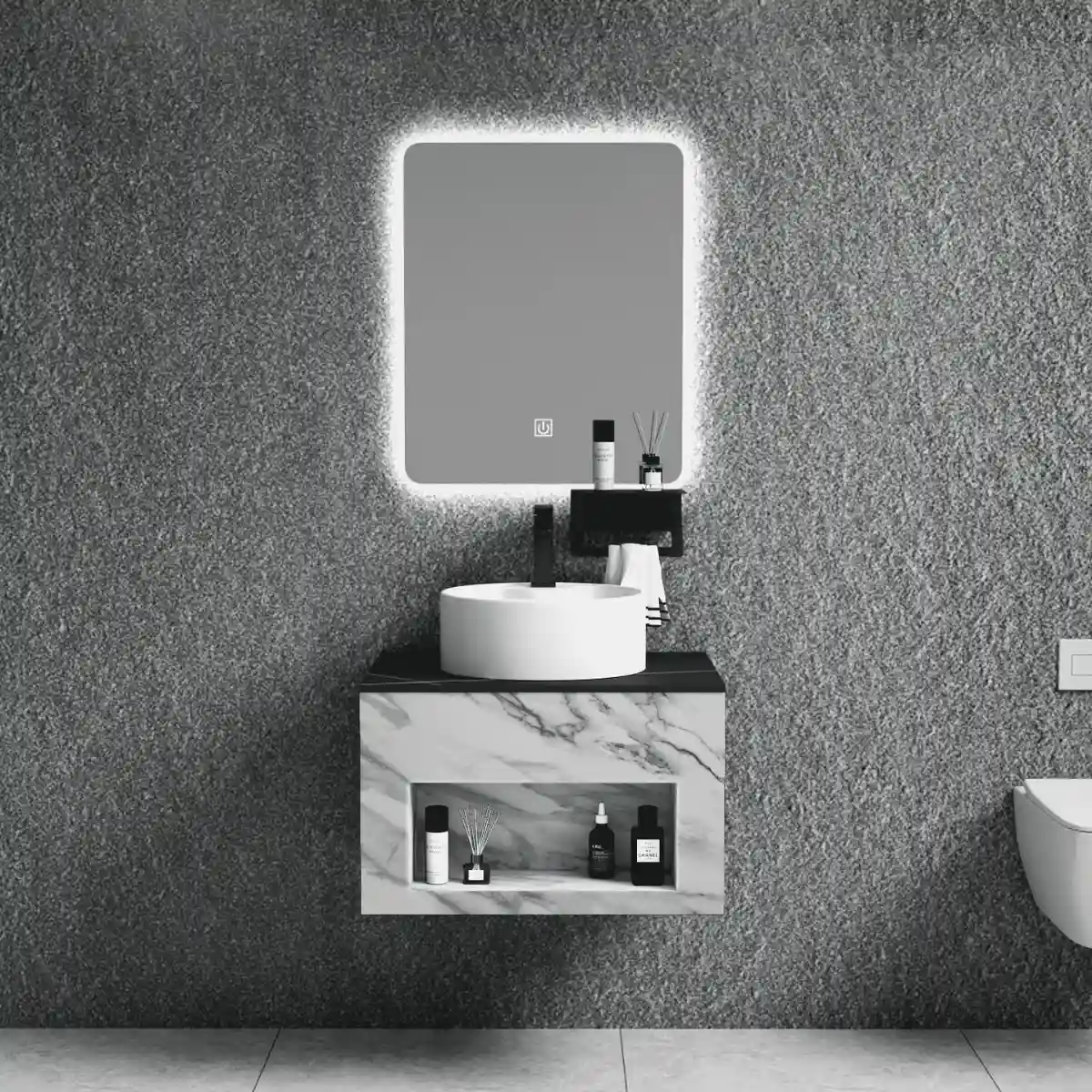
Mistake 6: Skipping a Pre‑Production Milestone Sample
Skipping the milestone sample is the fastest way to turn a profitable container into a liquidation pallet.
You’re standing in your warehouse, pallets stacked to the ceiling, invoices paid. Then you open the first box and the vanity doors are the wrong grain orientation. The soft-close runners are a different brand. The edge banding is already lifting because the subcontractor switched to a thinner PVC tape. The FOB pricing means you owned the goods the moment they left the factory gate, and the quality tolerance clause in your contract is now a weapon against you, not a shield.
This is the exact moment a $50,000 order becomes a write-off. The root cause? You skipped the pre-production milestone sample. You approved a digital render and a brochure, not a physical unit built from the actual batch of materials that would hit the production line.
-
- Material Verification: Exact MDF/HDF density, moisture content, and wood expansion tested at 85% relative humidity for 72 hours.
- Hardware Lockdown: Specific soft-close runner model and brand, not an ‘equivalent’ that costs half as much.
- Dimensional Check: All critical dimensions verified to a ±1mm tolerance. Anything beyond that is a future installation nightmare.
- Edge Banding & Finish: Correct thickness, adhesive type, and color sheen matched under standardized lighting.
In a factory that runs a genuine five-stage quality control system, the pre-production sample is stage two. It’s built from the same material batch destined for mass production. Before any bulk cutting, the sample goes through humidity chamber testing (85% RH) to confirm wood expansion stays within spec. Dimensional variances over 1mm are flagged and corrected. This isn’t a courtesy; it’s a contractual gate.
If your supplier treats the sample as optional, budget for a 20% defect rate and a lot of awkward customer calls. The sample approval is not a delay; it’s the cheapest insurance you’ll ever buy.
Next time you negotiate a purchase order, write this in the terms: ‘Pre-production sample must be approved in writing, with dimensional variance under 1mm and no material substitution, before mass production begins.’ That one line has saved more money than any price negotiation.
Mistake 7: Not Partnering with a Manufacturer That Offers Localized Design
A vanity that sells in Frankfurt won’t necessarily sell in Phoenix.
This scenario has played out numerous times. A distributor in Texas places a $60K order based on a showroom sample designed for the German market. The cabinets arrive looking beautiful — matte white finish, slim aluminum handles, soft-close drawers. Six months later, the returns start rolling in. The 18-inch depth doesn’t fit American plumbing rough-ins. The European drain placement forces plumbers to rebuild the trap assembly. Customers complain the cabinet feels ‘small’ because North American buyers expect 21-inch depth as standard. The entire batch ends up liquidated at 40% below wholesale.
Localized design isn’t about translating a spec sheet. It’s about knowing that Australian bathrooms require moisture-sealed carcasses because humidity spikes hit 85% RH during summer. It’s understanding that Middle Eastern projects demand specific wood moisture content below 8% to prevent cracking in arid climates. It’s recognizing that UK housing stock often has bathrooms under 5 square meters, so 450mm-width vanities move faster than 600mm units. These aren’t marketing bullet points — they’re inventory survival factors.
When a manufacturer ships identical SKUs to Dubai, London, and Miami, someone takes a write-down. The laws of physics don’t negotiate. In 2023, I audited a supplier who sent the same plywood vanity to Singapore and Stockholm. Both batches technically met the purchase order specs. Both arrived intact. But the Singapore units swelled within one monsoon season because the edge banding was designed for European humidity levels, not tropical 90% RH conditions. Meanwhile, the Stockholm batch developed hairline cracks from dry winter heating. Two markets, two failure modes, one root cause: nobody adjusted the design for where the product would actually live.
Focuscabinet’s approach cuts through this because their five-stage QC process includes a region-specific pre-check. Before production starts on a North American batch, they verify drawer-box dimensions against standard US rough-in depths. For Australian orders, they run accelerated humidity simulation at 85% RH and measure wood expansion — the actual internal pass/fail threshold is 1mm variance. Middle Eastern consignments get edge-sealing inspections under thermal cycling. This isn’t optional customization. It’s the difference between a repeat order and a chargeback.
-
- Dimensional mismatch: European vanities average 450-500mm depth; North American buyers expect 530-550mm. Ship the wrong one and your distributor network absorbs the return cost — roughly $35-50 per unit in restocking fees and freight.
- Plumbing incompatibility: Australian P-trap configurations differ from UK bottle traps. If the vanity cutout doesn’t match local plumbing, every installation becomes a custom job. Installers start warning retailers to ‘stay away from that brand.’.
- Material degradation: Non-localized edge banding and moisture barriers fail silently. No explosion, no recall notice — just a slow wave of customer complaints 8-14 months after installation, long after the supplier’s warranty window has closed.
Conclusion
A $50,000 order that skips sample approval often arrives with drawer slides that clatter instead of close silently. That’s not a quality issue — it’s a gap in the agreed quality tolerance. And an FOB price that didn’t include humidity-tested materials can leave you with swollen vanities that fail inspection on arrival, turning a profitable quarter into a scramble for replacement stock.
Start with the right specifications from the first milestone sample. Browse the solutions to see how each vanity integrates compliance certifications and moisture-resistant construction that survive an 85% RH test before they leave the factory.
Frequently Asked Questions
What certifications do I need for custom vanities?
Certifications depend entirely on your target market. UK projects require UKCA marks, while North America typically needs UL certification. Lock down full certification requirements for your market before confirming the order.
What material is best for humid bathrooms?
Plywood or PVC resists delamination far better than standard engineered wood in high-moisture regions. Sintered stone is the safest non-porous countertop choice. Prioritize moisture resistance over aesthetics in humid climates.
Are soft-close drawers standard on custom vanities?
No, soft-close mechanisms are rarely a default, even on premium orders. You must explicitly specify them in the spec sheet, or the factory will use standard hinges. Always state soft-close hardware explicitly in your technical specs.
What is the MOQ for custom bathroom vanities?
MOQ hinges on whether your design uses stock materials or requires new tooling. Custom runs usually need a higher threshold to cover setup costs. Confirm MOQ only after finalizing specs and customization scope.
Do I need a pre-production sample?
Yes, it is your final checkpoint to approve materials, color, and workmanship before mass production. Skipping it risks costly errors across the entire shipment. Always approve a pre-production sample before authorizing bulk production.





0 Comments