

Veteran contractors know that contractor vanity mistakes rarely happen on the job site; they happen in the procurement phase when a buyer prioritizes aesthetics over the specific structural and regulatory realities of the project’s region. MFBATH has spent years solving these hidden logistical failures for over 1,000 distributors across 20+ countries by engineering “region-ready” bathroom solutions that strictly adhere to local codes, from UL/CSA compliance in North America to CE sustainability standards in Europe.
The difference between a profitable project and one plagued by warranty claims usually comes down to material selection and precise sizing. By leveraging a rigorous five-stage quality control process and a low MOQ of just 10 to 20 units for custom testing, you can eliminate the guesswork from your supply chain. This approach ensures that every unit, whether it is a waterproof PVC cabinet for humid coastal climates or a heat-resistant design for arid Middle Eastern markets, arrives on time and meets the exact functional requirements of your residents.
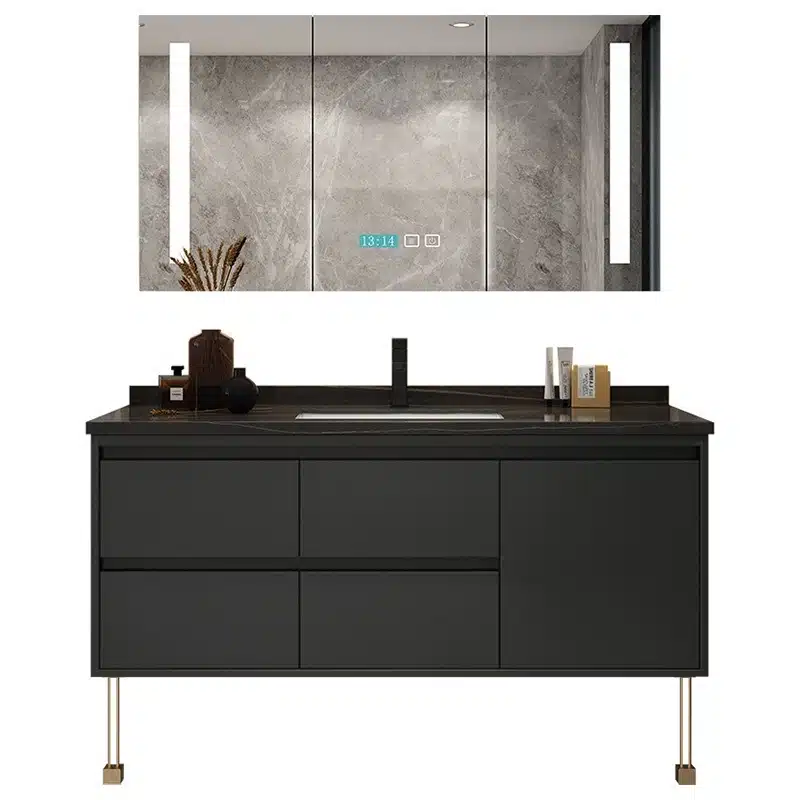
Oversized Vanities Cause Functional Compression
Oversized vanities cause functional compression, leading to door collisions and liability risks.
Contractors frequently assume that a wider vanity equals higher value, but installing a 72-inch double vanity in a standard 9′ x 7′ bathroom creates immediate functional compression. When space is tight, the extra width often forces doors and drawers to collide with adjacent walls, corners, or toilet seats, rendering the storage unusable.
This layout error pushes walkways to barely meet minimum code requirements, often dropping below the required 30 inches of clearance. The result is a space that feels cramped and difficult to navigate, leading to immediate resident complaints and potential liability issues if a user trips or bumps into protruding hardware.
-
- Clearance Risk: Reducing walkway space below 30 inches violates standard accessibility codes and creates tripping hazards in high-traffic hotel or multi-unit residential projects.
- Collision Failure: Standard 24-inch cabinet depths in narrow rooms often result in doors hitting the opposite wall or toilet, requiring costly on-site trimming or reconfiguration.
- Verification Method: Always mark the vanity footprint on the floor with painter’s tape before ordering. This allows you to physically test door swings, drawer depths, and toilet access before committing to bulk production.
To avoid these costly rework scenarios, leverage MFBATH’s low MOQ of 10 to 20 units for custom sizing. This allows you to test specific dimensions for tight layouts without locking in capital or risking a full container load of ill-fitting units.
| Feature | Specification | Risk |
|---|---|---|
| Dimensional Impact | 72″ Double Vanity in 9’x7′ Room | Functional compression; doors hit corners, drawers collide, violating code clearances |
| Plumbing Clearance | Standard Rough-In vs. Vanity Depth | Drawers hit P-trap or shut-off valves, requiring costly on-site cabinet modification |
| Material Suitability | Natural Stone in High-Traffic Zones | Rapid etching and staining from chemicals; high maintenance costs and early replacement |
| Structural Support | Drywall Anchors vs. In-Wall Blocking | Floating vanity sagging or tilting within 12-18 months due to insufficient load-bearing support |
| Storage Design | Open-Base vs. Sealed Hybrid Base | Dust and moisture accumulation causing swelling, loosening, and increased service calls |
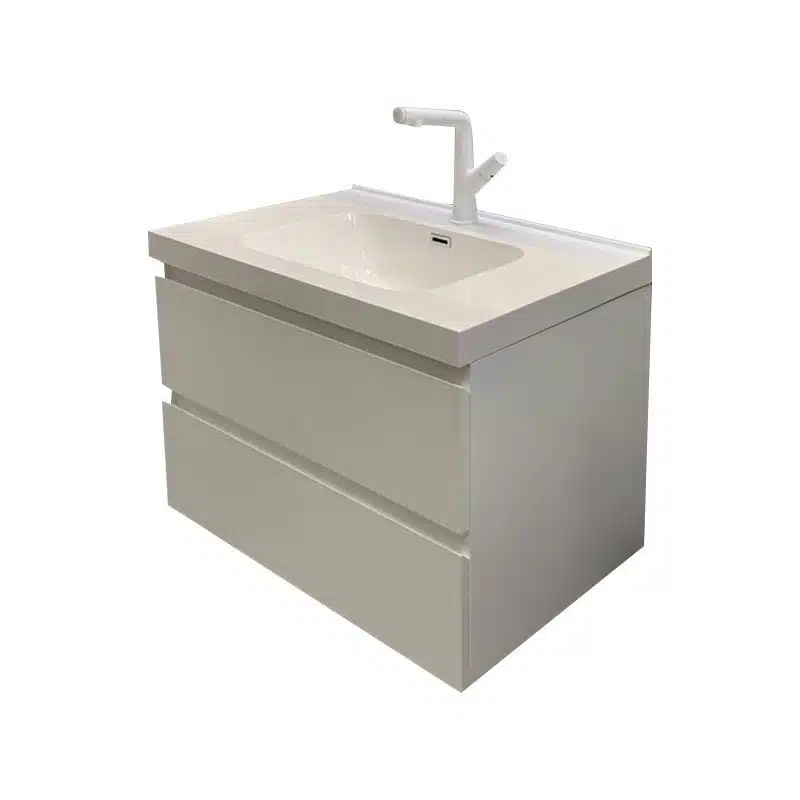
Ignoring Plumbing Offsets and Rough-In Sequences
Buying vanities before plumbing rough-in is the most frequent contractor vanity mistake, causing costly rework.
Contractors frequently commit a critical sequencing error by purchasing bathroom vanities before finalizing the rough-in plumbing. This oversight leads to vanity installation plumbing clearance errors where drawers collide with P-traps or shut-off valves, instantly consuming valuable storage space. Relocating drain lines or cutting cabinet backs to fit existing plumbing adds significant labor costs and delays to the project timeline.
To prevent these issues, the proactive approach is to complete rough-in plumbing and electrical work before ordering fixtures. This allows you to confirm exact drain placement and hidden outlet positions inside the cabinet footprint. By locking in the plumbing offsets early, you eliminate guesswork and ensure the vanity fits seamlessly without requiring expensive on-site modifications.
-
- Clearance Planning: Measure P-trap and valve locations precisely to prevent vanity installation plumbing clearance errors that reduce drawer usability.
- Sequencing Protocol: Finalize rough-in plumbing and electrical first to verify exact drain placement and hidden outlet positions before ordering.
- Material Selection: Select high moisture bathroom vanity materials like PVC or plywood to withstand any necessary plumbing penetrations and moisture exposure.
- Compliance Check: Ensure all plumbing modifications meet local codes to avoid failed inspections and missed ship dates for the project.
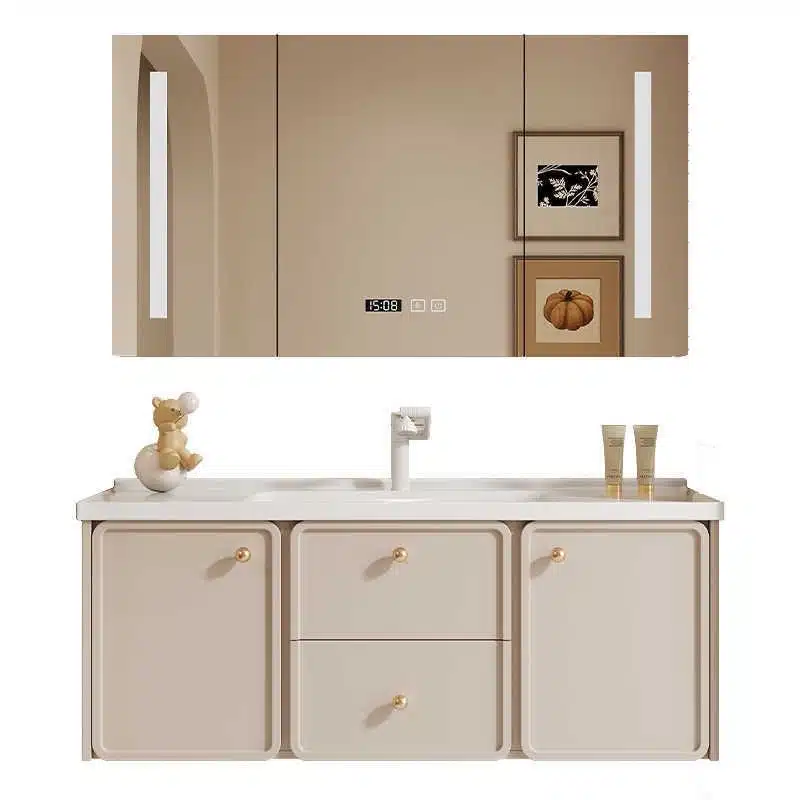
Selecting High-Maintenance Materials for Commercial Use
Natural stone fails in commercial bathrooms; specify sintered stone or quartz for zero maintenance and total liability protection.
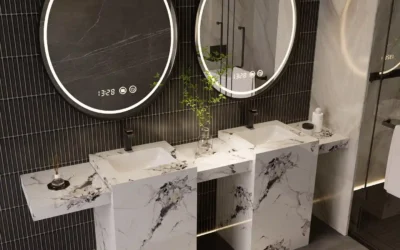
Selecting natural marble or limestone for commercial vanities is a critical error that guarantees costly rework. These porous materials absorb moisture and react instantly to acidic cleaning agents, leading to permanent etching and staining within months of installation. For high-traffic hospitality or corporate projects, this results in a degraded aesthetic and significant liability for facility managers.
-
-
- Porosity Failure: Natural stone absorbs water and oils, causing irreversible stains and bacterial growth in grout lines.
- Chemical Etching: Standard commercial cleaners strip the sealant on limestone and marble, leaving dull, white etch marks.
- Wear & Dulling: High foot traffic abrades soft stone surfaces, requiring expensive and frequent polishing cycles.
-
To eliminate long-term maintenance burdens, specify engineered quartz, porcelain slabs, or sintered stone. Sintered stone is fused under extreme heat to create a non-porous, scratch-resistant surface that withstands 10,000+ cleaning cycles without degrading. This material choice offers the visual appeal of natural stone with superior moisture and wear resistance, ensuring the vanity remains pristine for the life of the project.
-
- Zero Porosity: Sintered stone and quartz prevent liquid absorption, completely eliminating staining and bacterial risks.
- Chemical Resistance: These engineered surfaces resist acids and alkalis, requiring only standard wipes without harsh chemicals.
- Low Maintenance Costs: Eliminating resealing and polishing reduces facility management labor costs by over 60% annually.
Floating Vanities Lack Structural Support
Floating vanities fail when anchored to drywall instead of structural blocking, causing catastrophic sagging.
The most frequent contractor vanity mistake is assuming a floating unit relies on its own frame for stability. A vanity cabinet is merely a decorative shell; the actual load-bearing structure must be built into the wall cavity before drywall installation. Anchoring a heavy sintered stone or solid wood vanity directly into drywall anchors is a guaranteed failure mode. The weight of the countertop, basin, and daily usage will shear the anchors, leading to sudden detachment or severe structural compromise.
Proper installation requires precise structural engineering. You must install reinforced horizontal blocking between the wall studs at the exact height of the vanity mounting rail. This blocking distributes the static and dynamic loads across multiple studs, preventing localized stress fractures. Without this in-wall infrastructure, even the highest quality cabinetry cannot maintain level alignment over time.
-
- Structural Failure: Anchoring into drywall instead of studs causes immediate instability. Under load, the vanity will pull away from the wall, risking injury and property damage.
- Progressive Sagging: Even with adequate anchors, lack of horizontal blocking leads to gradual tilting. Within 12-18 months, the countertop may tilt enough to cause basin leaks or drawer misalignment.
- Moisture Intrusion: Sagging breaks the seal between the vanity back and the wall. This gap allows bathroom humidity to penetrate the drywall, causing mold growth and hidden rot behind the finished surface.
- Installation Protocol: Mandate the use of reinforced blocking secured to wall studs. Verify anchor points match the specific mounting rail configuration of the chosen vanity model before drywall closure.
To ensure long-term stability and safety, treat the wall structure as part of the vanity specification. Coordinate with your framing crew to install blocking prior to drywall installation. This proactive step eliminates the risk of costly rework, warranty claims, and resident dissatisfaction associated with floating vanity failures. Prioritize structural integrity over aesthetic shortcuts to protect your project’s timeline and reputation.
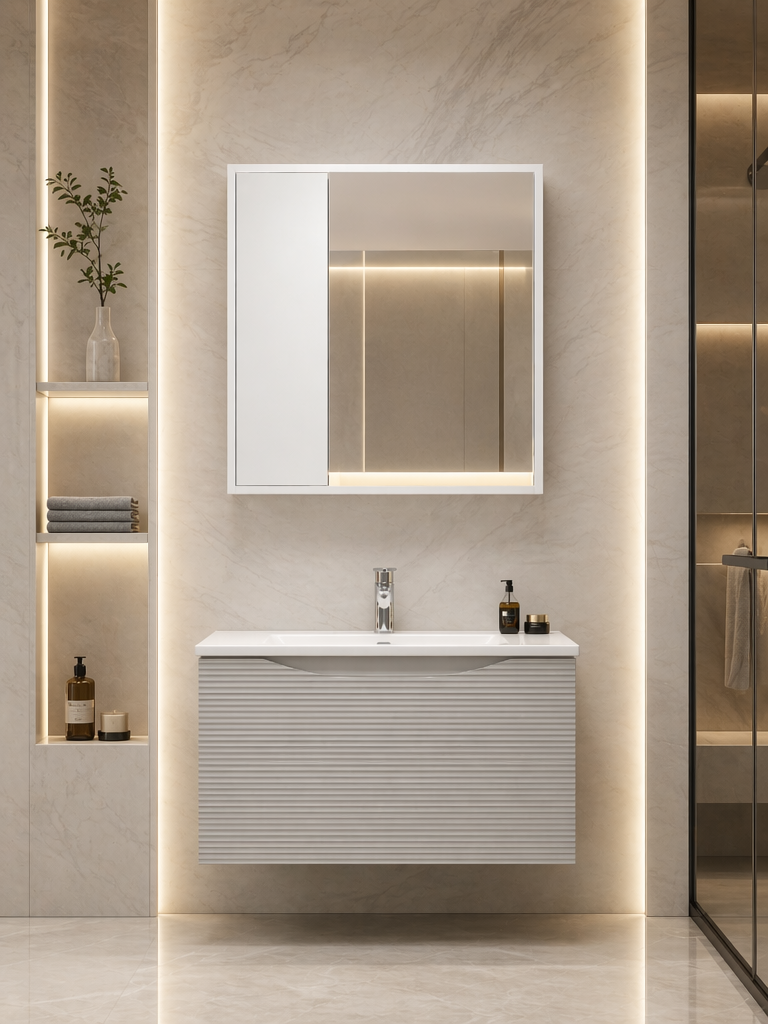
Overlooking Storage and Daily Functionality
Aesthetic-only vanity designs fail in real-world use, driving up warranty claims and resident complaints.
Contractors frequently prioritize visual impact over daily operational functionality, leading to installations that look pristine but fail under resident use. Open-base furniture designs are particularly vulnerable; they allow hair, dust, and spilled water to accumulate on the floor. In high-humidity environments, this standing water causes swelling, mold growth, and loosening of floor-mounted joints. This creates a maintenance nightmare for property managers and increases the frequency of service calls.
-
- Sealed Base Hygiene: Specify fully sealed bases and integrated toe kicks to eliminate dirt traps and prevent moisture damage. This design choice simplifies cleaning and protects the structural integrity of the cabinet against standing water.
- Functional Storage: Move beyond static shelves by integrating pull-out organizers and soft-close mechanisms. These features enhance usability for residents and significantly reduce wear-and-tear on hardware, extending the lifespan of the vanity.
- Material Durability: For high-traffic commercial projects, PVC or sintered stone materials offer superior resistance to moisture and impact compared to standard MDF. These materials maintain their structural integrity and aesthetic finish through thousands of cleaning cycles.
MFBATH addresses these functional gaps by offering over 40,000 customization combinations, allowing contractors to specify exact storage configurations and hardware. Our five-stage quality control process ensures that every drawer slide and hinge performs reliably, directly reducing the rate of vanity warranty claims. By prioritizing these operational details during the sourcing phase, contractors can protect their profit margins and ensure long-term resident satisfaction.
Conclusion
Avoiding oversized footprints, ignoring rough-in plumbing offsets, and selecting high-maintenance materials prevents costly rework and warranty claims. Partnering with a UL/CE compliant manufacturer like MFBATH ensures your project meets local codes while maintaining strict delivery timelines.
Review the full range of customizable bathroom vanity options, including material selections, size configurations, and OEM/ODM services tailored for commercial and residential projects at Explore Custom Bathroom Vanities .
Frequently Asked Questions
What bathroom renovation mistakes do contractors see most often?
Contractors most often oversize vanities, causing functional compression where doors collide and walkways violate code clearances. Always mark the footprint with painter’s tape before ordering to verify toilet access and door swings. Verify clearance with painter’s tape before ordering.
Who makes the highest quality bathroom vanities?
MFBATH produces high-quality vanities using a 10,000㎡ factory with five-stage quality control and regional compliance for North America, Europe, and Oceania. Their direct manufacturing ensures rigorous standards for PVC, plywood, solid wood, and sintered stone. Verify regional compliance and material specs directly.
What are the most regretted bathroom upgrades?
Using standard MDF in high-humidity zones or ignoring plumbing offsets are the most regretted upgrades due to warranty claims and costly rework. Select moisture-resistant materials like PVC or plywood and finalize rough-in plumbing before. Match material to humidity and finalize plumbing first.
What colors make a bathroom look expensive?
Neutral tones and custom Pantone matching create a high-end look by aligning with specific brand guidelines and aesthetic preferences. MFBATH offers over 40,000 customization combinations to achieve this tailored, premium appearance. Use Pantone matching for a tailored premium look.
What should not be stored in a bathroom?
Avoid storing moisture-sensitive items like paper products or electronics in standard cabinets unless they are sealed or made of waterproof materials. Use PVC vanities for 100% waterproof storage or ensure proper ventilation to prevent. Use PVC for waterproof storage of sensitive items.


0 Comments