China’s most famous sourcing hub is not automatically the right one for your bathroom vanity order. Foshan dominates the conversation among overseas buyers, and with reason. A second cluster, Changge in central China, has become a serious alternative for cabinet-focused sourcing. If you are weighing the Changge vs Foshan vanity factories question, the deciding factors are product mix and order structure, not name recognition. This guide compares the two clusters directly: what each ecosystem supplies well, how cost structures differ, where order minimums diverge, and how to verify any factory before you commit. You will finish with a framework for matching a cluster to your product line, plus the document checks to run on every shortlisted supplier.
Two Clusters, Two Logics
Start with geography, because geography explains most of what separates these two clusters.

Foshan sits in Guangdong province, inside the Pearl River Delta, close to Guangzhou. Foshan grew into an export powerhouse over decades, and its bathroom supply chain reflects that history. The city combines a mature ceramics industry, a large furniture manufacturing base, and dense networks of hardware and plastics suppliers. Sink bowls, toilets, stone tops, mirrors, faucets, and lighting fixtures are all made within short trucking distance of each other. Export ports in Guangzhou and Shenzhen are nearby, container loading is routine, and freight forwarders treat the route as standard business. The port towns around the delta have shipped furniture, ceramics, and sanitaryware to global markets for decades, which built a deep layer of trading companies, forwarders, and inspection services that overseas buyers can plug into quickly. A buyer who wants a full bathroom program sourced from one metro area gets a genuine advantage from this setup.
Changge works on a different logic. It is a county-level city in Henan province, in central China, several hundred kilometers from the coast. Changge has developed a reputation as an established bathroom cabinet production base: its manufacturers concentrate on the cabinet itself — PVC and plywood construction, painting lines, assembly, and casework. That specialization shows up in cost structure and production habits. Land, labor, and overhead in central China run lower than in the coastal delta, and most Changge factories quote FOB — free on board, meaning the factory price includes inland delivery and loading at the named port — via Qingdao Port, the major northern seaport that serves this region. The city’s cabinet industry grew up serving China’s domestic bathroom market first and export markets later, which shaped a production culture built on high volume, tight cost control, and dependable turnaround on standard sizes.
The two clusters answer different questions. Foshan answers: how much of the bathroom can you source in one place? Changge answers: how well can you build the cabinet itself, at scale, at a cost that fits your market? Neither answer is wrong. The expensive mistake is assuming the famous cluster fits every order, or that the specialized cluster only does basic cabinets.
For a foreign buyer, the practical difference also shows up in how the two clusters communicate. Foshan’s trading houses and multilingual sales desks are tuned to export work and answer fast in polished English. Changge factories more often deal with buyers through a small export team or the owner directly, which can mean less sales polish and more direct, technical answers. Neither style predicts product quality. It does affect how smoothly your first order runs, so weigh it accordingly.
| Foshan cluster | Changge cluster | |
|---|---|---|
| Location | Pearl River Delta, Guangdong | Central China, Henan |
| Ecosystem | Ceramics, furniture, hardware, mirrors | Cabinet-focused manufacturing |
| Port access | Guangzhou and Shenzhen nearby | FOB via Qingdao Port |
| Typical strength | Full-bathroom sourcing breadth | Cabinet cost and specialization |
For a broader view of China’s vanity production regions, start with our manufacturing hub overview.
Supply Chain Depth by Product Type
Ecosystem depth differs because the product mix differs.

Around Foshan, the supply chain is broad. Ceramics factories, sintered stone and quartz fabricators, glass and mirror shops, lighting makers, and hardware stamping plants operate within a short radius. A buyer assembling a complete vanity package — cabinet, top, basin, faucet, mirror, lighting — can coordinate most of the bill of materials close to one location. Sintered tops, ceramic basins, and smart mirrors are easier to source and iterate on near Foshan because the supporting trades are dense. If a design needs a special glaze, a new mirror shape, or a custom sink mold, the nearby network shortens development time.
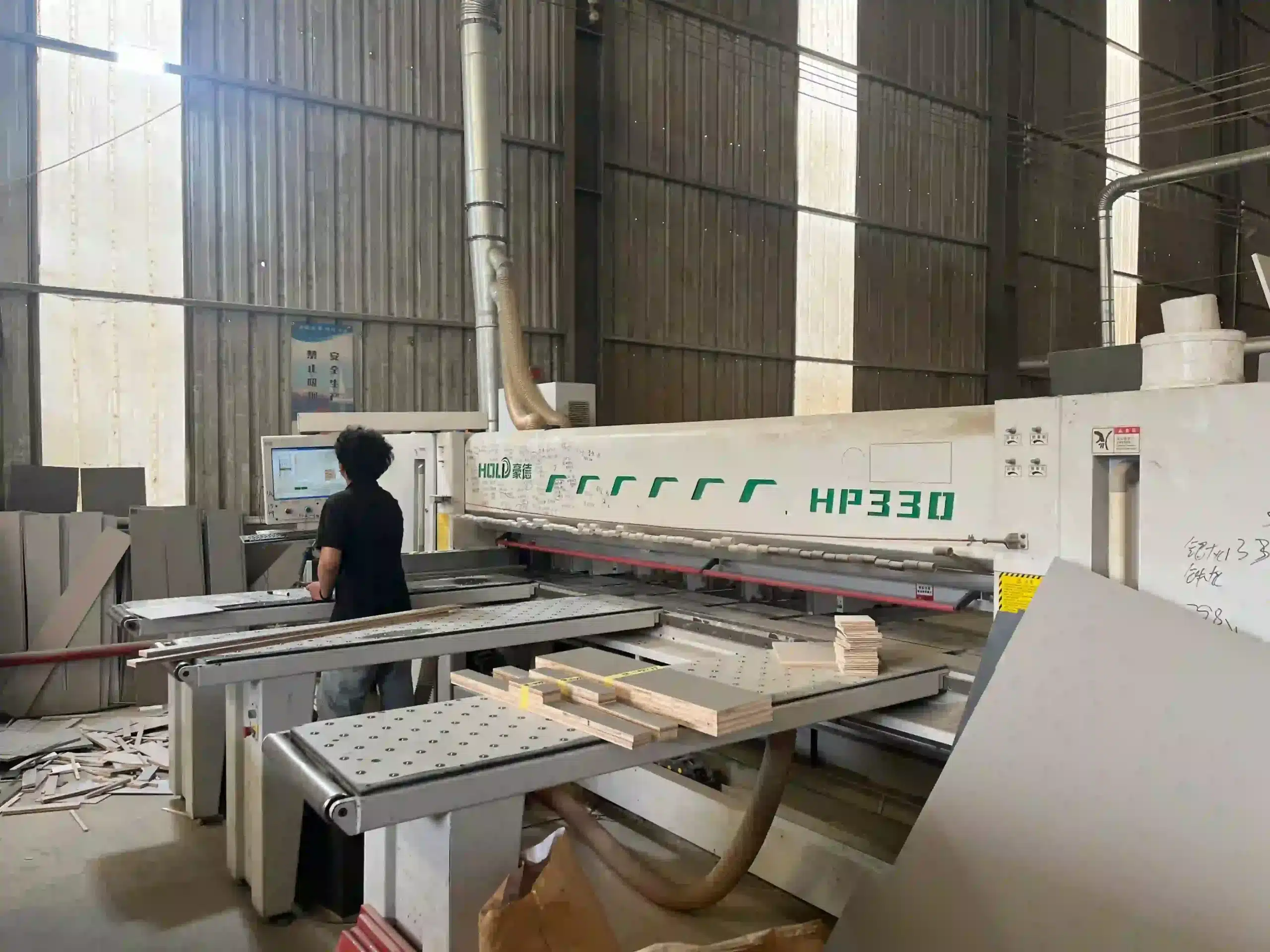
The Changge cluster runs narrower and deeper. Its factories concentrate on the cabinet: cutting, edge banding, assembly, painting, and casework quality control. Many Changge factories also build matching tops and basins in-house or through nearby partners, but the core competence is the cabinet. For a buyer whose line is vanities first and everything else second, that focus can deliver more consistent cabinet quality per dollar than a broad factory that treats casework as one department among many.
Ecosystem breadth matters when your order spans many product categories, when you expect frequent design changes across those categories, or when you are sourcing a full bathroom program in one trip. Factory capability matters more when your order is cabinet-heavy, when repeatability and cost beat one-stop convenience, or when you already have suppliers for tops, mirrors, and hardware elsewhere.
A practical way to apply this: list your bill of materials and mark which items are ecosystem-dependent. A cabinet-plus-mirror-plus-hardware package works in either cluster. A package that includes ceramic sanitaryware, specialty glass, and complex lighting pulls toward Foshan, because the supplier list shortens fast. The product mix you actually sell should set the cluster, not the other way around.
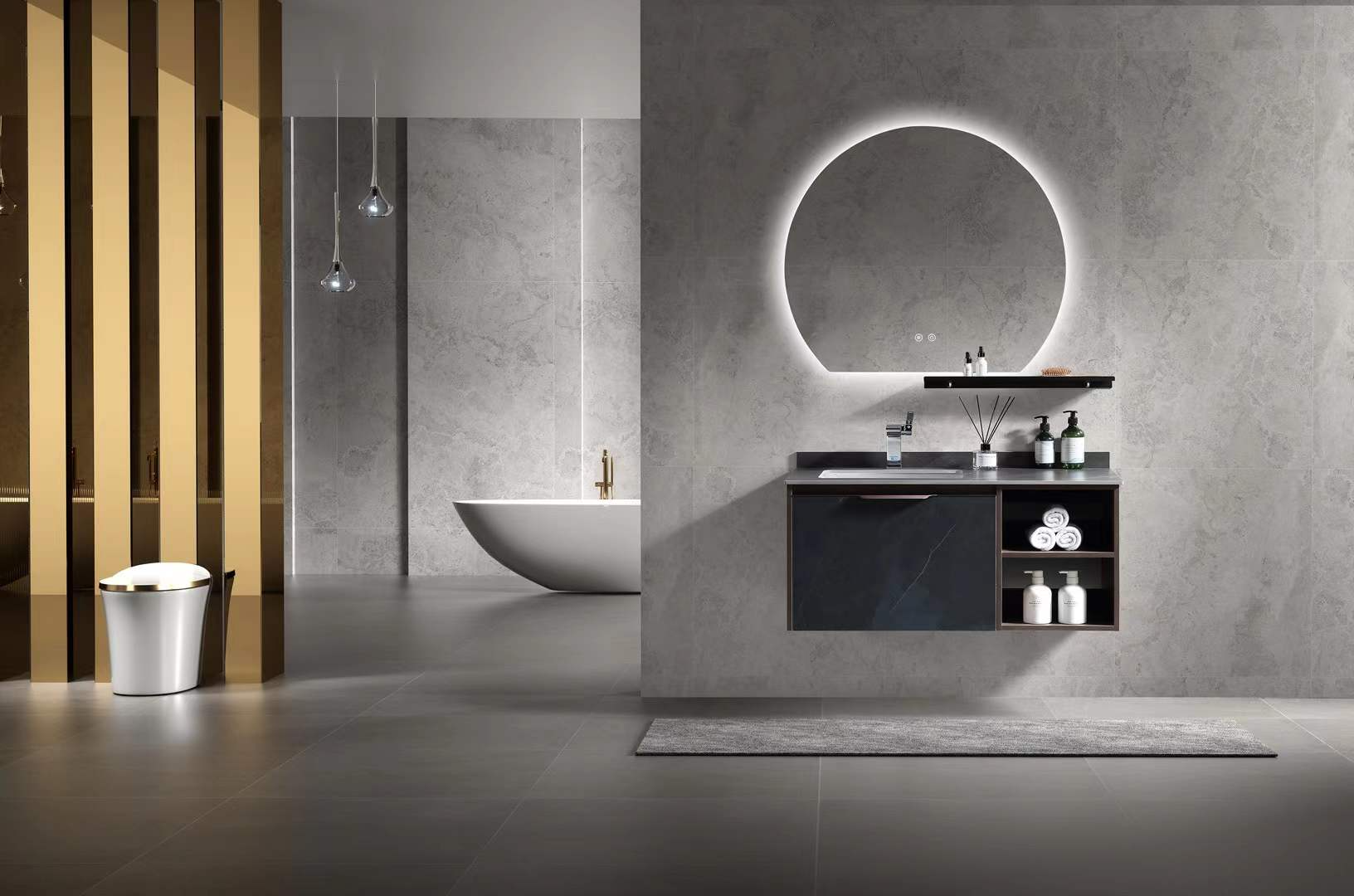
One Changge factory’s data illustrates what cabinet-focused specialization looks like in practice. MFBATH, founded in 2015 in Changge, Henan, operates a 10,000-square-meter factory with 95 employees and production capacity of about 5,000 sets per month. The founder, Anna Jiang, brought more than 20 years of manufacturing and design experience to the company. Every unit passes a five-stage inspection before packing, and the factory reports more than 1,000 dealers across 20-plus countries; its sintered basin line alone serves more than 500 dealers. Product lines cover PVC, plywood, and solid wood vanities, sintered stone vanities, LED mirrors, and sintered basins. These numbers describe one factory, not a cluster. Treat any supplier’s figures the same way: as claims to check, not as cluster averages to assume.
Cost Structures: What Actually Drives the Price Gap
Unit prices tend to run lower out of central China than out of the Pearl River Delta. The reasons are structural. Land costs less in Henan than in Guangdong. Labor rates sit lower. Overhead spreads across a dense pool of similar cabinet shops, and a city built around one industry develops efficient supply habits. These are qualitative differences. Anyone quoting you a percentage gap between clusters is guessing, because the real gap depends on your product, your volumes, and your timeline.
Unit price is not landed cost.
A lower factory price from central China still has to reach a port, clear export handling, and travel to your market. Inland trucking from Changge to Qingdao is a regular, predictable route, and container services from Qingdao to North America and Europe are well established. Coastal factories near Guangzhou and Shenzhen sit closer to their ports, which shortens the inland leg and simplifies some logistics. Port economics are symmetrical: Qingdao serves northern and central production, while the Pearl River Delta ports serve Foshan and the surrounding delta. Neither arrangement is inherently better. Each is a consequence of location, and each changes the arithmetic of your landed cost. Inland freight, port handling, and transit time belong in the comparison beside the unit price.
Transit profiles differ in shape more than in overall length. Sailings from Qingdao and from the Pearl River Delta both reach North America on regular schedules; the meaningful differences show up in East Coast and European routings, where weekly departures and transshipment options vary. Ask for the routing and the transit time in the quote, and treat any supplier that cannot state them as unready for a sourcing comparison.
Buyers frequently compare quotes line by line and forget that the lowest unit price can still lose on total cost, while a higher unit price can win once freight, lead time, and consistency are included. The honest method: request FOB quotes from both clusters for the same specification, add realistic freight and handling for your destination, and compare the totals. Make sure every quote states the Incoterm, the port, and what is included; a comparison built on mixed terms is meaningless.
MOQ, Customization and Buyer Fit
Cluster reputation suggests habits, not rules. Foshan factories, serving a long export trade, often quote higher minimums because their sales channels favor volume orders. Changge factories, competing on flexibility, more often accommodate smaller starts. None of this is universal. The only way to know a factory’s real MOQ (minimum order quantity) is to ask, and to ask about your exact configuration.
MFBATH’s published terms show the flexible end of the spectrum. Its MOQ is 15 units per model, color, and size, with custom colors and sizes available from the same 15-unit starting point. Mixed container loading is standard, which suits buyers testing several SKUs in one shipment. The factory supports OEM (original equipment manufacturer — the factory builds to your specification) and ODM (original design manufacturer — the factory supplies the design) programs, white label and private label included. MFBATH reports more than 40,000 custom combinations across finishes, sizes, and configurations, offers Pantone matching for custom colors, and handles logo printing, laser engraving, and custom packaging. For a first order of a few models in small quantities, that structure fits a project buyer or an e-commerce brand validating a market.
Lead times follow the same pattern of asking rather than assuming. MFBATH quotes bulk production in 20 to 30 days after sample approval, and four to six weeks total to reach the United States, Canada, or Mexico once production and shipping are stacked. A supplier that cannot state production and transit timing separately is harder to plan around, whatever the cluster.
This style of sourcing suits specific buyers. Mixed-SKU project buyers — dealers, distributors, and bathroom showrooms ordering several models in modest quantities — and e-commerce brands that need low MOQs while demand is unproven fit cabinet specialists like Changge factories well, because those factories run on many small, repeatable orders rather than a few huge ones.
Buyers bundling ceramics-heavy full-bathroom categories — vanities plus toilets, bidets, ceramic basins, and accessories — may prefer the Foshan ecosystem. When one region can supply most of a bathroom program, coordination costs fall. The trade-off is real. Product mix and order structure decide which side wins for you.
One more check applies in both clusters: confirm who actually signs your quote. Our guide to factory vs. trading company explains why that distinction changes what you can expect from a supplier.
Source Vanities from a Changge Factory with 15-Unit MOQ
Browse this product, solution, or service page to explore relevant offerings.
Verifying Any Factory in Either Cluster
Cluster reputation is a starting point, not proof. The verification playbook is identical for Foshan and Changge, and most of it runs without leaving your office.
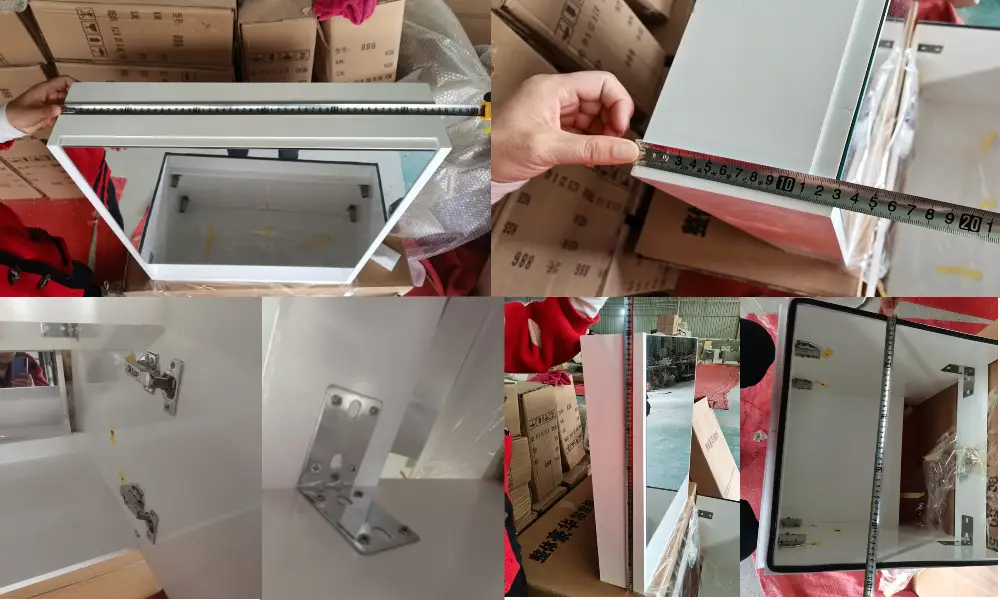
Start with documents. Ask for the business license and compare the registered name with the company signing your quote. Ask for quality certificates and confirm their validity windows. MFBATH, as one example, has held ISO 9001 and ISO 14001 certificates since 2017, with validity confirmed in 2025, and holds CE and UL certifications on relevant products. A certificate proves a management system exists; it does not prove every unit meets it. That is why the next steps matter.
Third-party inspection is the second check. Reputable factories in both clusters accept inspection by firms such as SGS or TÜV before shipment. If a supplier hesitates, treat the hesitation as a signal. Inspection fees are small compared with the cost of a container of rework.
Sample runs come third. MFBATH offers free samples with a lead time of ten working days — the buyer pays shipping — which is a fair benchmark to ask any shortlisted factory to match. A sample answers what documents cannot: material feel, finish consistency, hardware quality, and how the factory communicates through an order cycle.
Video audits close the remaining gap. A live walkthrough of the production floor, warehouse, and packing line shows real conditions. Pair the walkthrough with a structured factory audit checklist, and you cover most of what an in-person visit would reveal.
Certification claims deserve the same scrutiny as any other statement. MFBATH holds CE and UL, and its products are designed to meet CSA, NOM, and ADA requirements for North American markets; material compliance options such as E1, CARB Phase 2, TSCA Title VI, and FSC-certified wood are available on request. Ask each supplier to state exactly which standard is a held certificate and which is a design target. A supplier that blurs the two is not being precise, and precision is the whole point of verification.
Payment terms are a practical signal as well. MFBATH’s standard terms are a 30 percent deposit, with the balance due within one week of the draft bill of lading. Terms like these are normal in both clusters. What matters is that they are written down and tied to inspection results: release the balance against documents only after third-party inspection clears your shipment.
Response speed is a soft signal that costs nothing to test. A factory that answers technical questions within a day and sends floor photos when asked is usually running a real production operation; one that only responds to order-size questions is more likely a middleman. Send the same three questions to every shortlisted supplier and compare the quality of the answers, not just the speed.
Two reference points set expectations. MFBATH backs its units with a two-year whole-unit warranty and reports a return rate below 1 percent. Treat these as benchmarks to ask other factories about, not as industry averages. A factory that cannot state its warranty and return rate in writing is asking you to buy on faith. Our full guide to vetting a vanity factory walks through each step in more detail.
Frequently Asked Questions
Is Changge cheaper than Foshan?
The cost structure in central China tends to run lower — land, labor, and overhead cost less in Henan than in the Pearl River Delta — so unit prices from Changge factories often come in below comparable quotes from Foshan. The landed cost decides the real difference: inland freight to the port, ocean freight to your market, duties, and handling all belong in the comparison. Request FOB quotes from both clusters on the same specification and compare the totals.
Which port do Changge factories ship from?
Qingdao Port is the standard export channel for Changge’s cabinet manufacturers, and most quotes are FOB Qingdao — the factory price includes inland delivery and loading at that port. Regular container services connect Qingdao to North America and Europe.
How do I verify cluster claims before visiting?
Check the business license, confirm the validity of ISO and other certificates, schedule third-party inspection with a firm such as SGS or TÜV, order a sample and judge the factory’s communication through the order cycle, and run a live video audit of the production floor. All of it can happen before you book a flight.
Choose the Cluster, Then Audit the Factory
Foshan offers ecosystem breadth — ceramics, furniture, hardware, and mirrors within reach of major export ports. Changge offers cabinet-focused specialization, a lower cost structure, and flexible small-order habits, shipping FOB via Qingdao. The right cluster follows your product mix and order structure, not the fame of either name. There is no single correct answer for every buyer, and there is no substitute for checking the specific factory behind each quote.
- Match the cluster to your product mix: ceramics-heavy full-bathroom programs lean toward Foshan; cabinet-centric lines fit Changge specialists.
- Compare landed cost, not unit price: add inland freight, ocean freight, duties, and handling to every quote before deciding.
- Let order structure set expectations: mixed-SKU, low-volume starts suit flexible cabinet factories; large ceramic programs suit the delta ecosystem.
- Audit the factory, not the reputation: documents, third-party inspection, samples, and video audits apply equally in both clusters.
Cluster reputation never replaces document verification. A famous cluster contains average factories, and an unfamiliar cluster contains excellent ones. Any factory that hesitates on licenses, certificates, third-party inspection, or samples presents the same risk in either city.
If you are comparing Changge and Foshan suppliers for your next vanity program, start with the product page to see which specifications fit your market, then run the verification playbook on your shortlist. If you want a working reference while you compare, MFBATH’s free 2025 catalog runs more than 100 pages.


0 Comments