

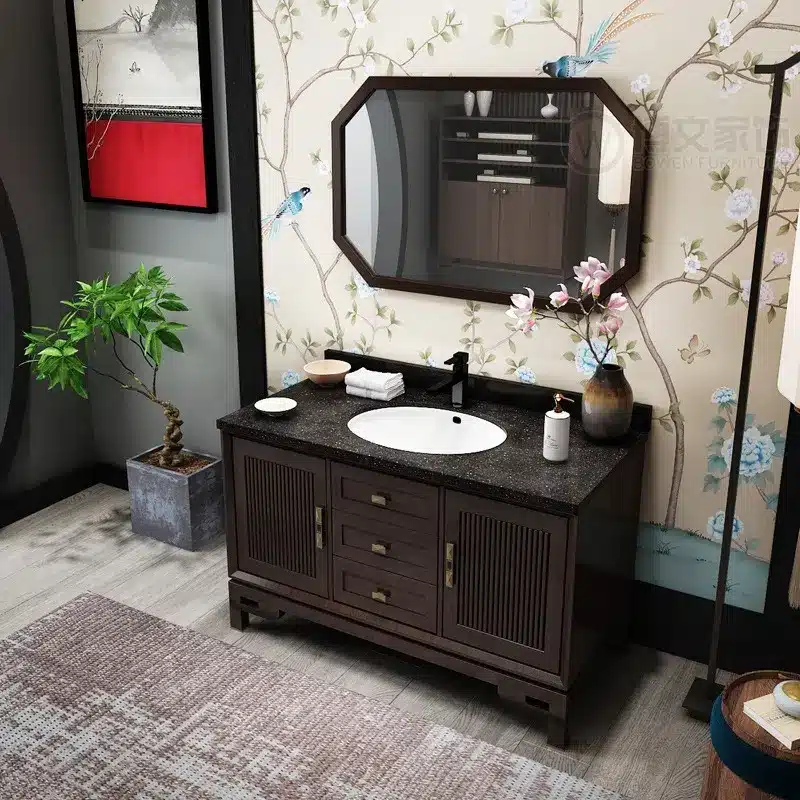
Vanity legs are the structural interface between the cabinet and the floor. They do more work than most spec sheets admit. A well-chosen leg keeps the carcass off standing water. It lets air move under the box, gives a mop a clear path, and compensates for floors that are rarely level.
This guide is a vanity legs materials comparison written for buyers who must live with the decision. It covers solid wood versus steel versus PVC, the style families that define a product line, and the load-rating questions most suppliers cannot answer. You will leave with a decision checklist you can hand to any factory, including ours.
Key Takeaways
- Solid wood legs use oak, walnut, maple or ash, sealed with a multi-layer PU waterproof coating across 20 standard finishes.
- PVC legs are 100 percent waterproof, making them the low-risk default for coastal and high-humidity bathrooms.
- Steel legs gain corrosion resistance from chromium; stainless contains at least 10.5 percent, which is why it survives splash zones.
- Load safety comes from leg geometry, fixing method and test protocol, not from a number printed on a brochure.
- Custom leg programs start at a 15-set MOQ per model, color and size, with samples in 10 working days.
- Every cabinet ships with a 2-year warranty, a return rate below 1 percent, and 5 inspection points per product.
- Third-party inspection by SGS or TÜV can be arranged before shipment, which is how you verify a load claim.
Table of Contents
- Why Legs Decide More Than Looks
- Materials Compared: Wood, Steel and PVC
- Styles That Define a Vanity Line
- Load Ratings: What to Ask Instead of Guessing
- Moisture, Finish and Maintenance
- Custom Legs at Low MOQ
- Matching Legs to Your Buyer’s Bathroom
- Frequently Asked Questions
- The Bottom Line
Why Legs Decide More Than Looks
Legs and feet are the first load-bearing parts of a vanity, and usually the last things buyers inspect. They lift the carcass off the floor and out of standing water. They create a ventilation gap that slows the moisture cycle under the cabinet, and they give a mop or vacuum a clear run. For installers, they are also the correction device for floors that slope.
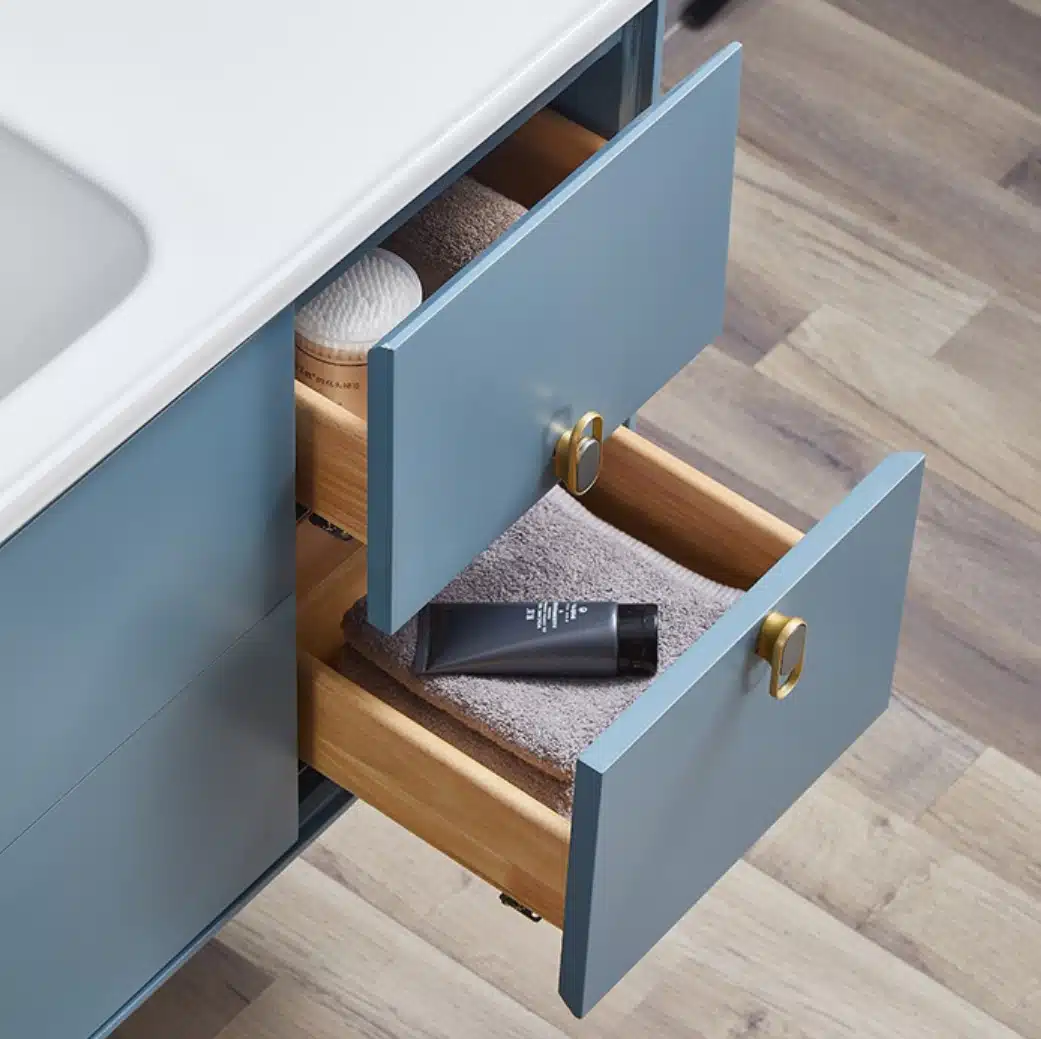
Skip the leg spec and the failure shows up in year two. Doors start to rub, drawers drag on the runner, and a cabinet that looked level on day one sits proud on one corner. What failed was not the door. It was the support under it.
Legs also buy you plumbing tolerance. A raised cabinet leaves room for supply lines and a P-trap that meets code without a chase. On tile that was never flat, four adjustable feet turn an afternoon of shimming into a two-minute turn. Installers notice this more than buyers do, and installers write the review that decides your next bid.
That is why this decision belongs in the sourcing conversation, not the decoration conversation. The floor-standing versus floating construction choice changes the leg requirement entirely, and we build both lines in-house. Every cabinet we ship carries a 2-year warranty, and our return rate sits below 1 percent. Legs are one of the reasons we can hold that line.
Materials Compared: Wood, Steel and PVC
Three material families dominate vanity legs: solid wood, steel, and PVC. A fourth option, the adjustable leveling foot, is less a style and more a correction tool that pairs with any of the first three. This section is the vanity legs materials comparison that belongs in your file before you issue a request for quotation.
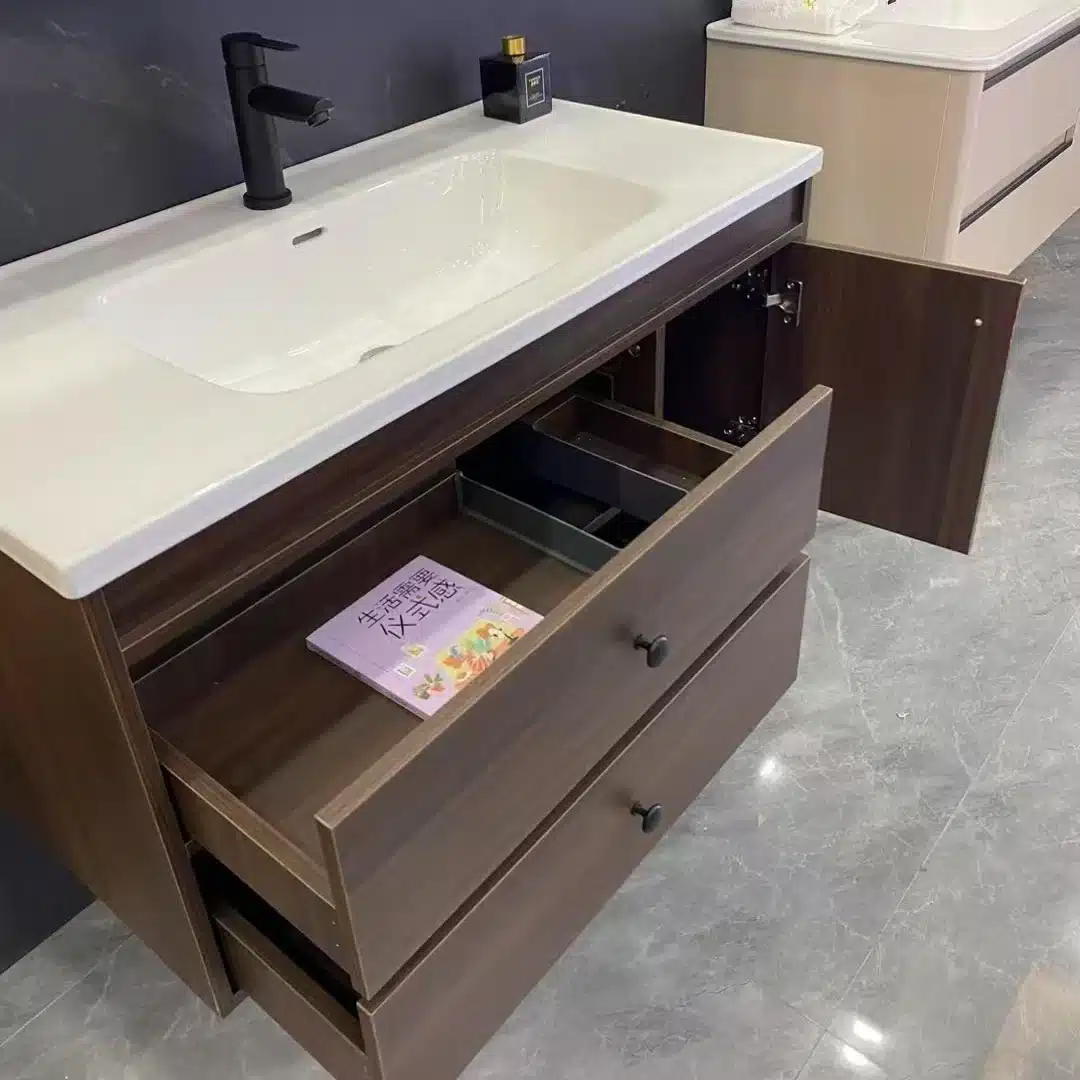
Read the table, then check the verdicts below it. Each row ends with a use case, because material performance only means something in a room. The row you choose becomes the skeleton of your catalog page.
Read the load column with the cabinet width in hand. A 60-inch double-sink vanity carries more weight on each leg than a 24-inch single, because the box spreads the load differently. Ask the factory for the leg spec that pairs with each width in your line. We publish the pairing in the product drawings, and the 5-point inspection covers it at every unit.
| Leg type | Material profile | Moisture behavior | Load characteristics | Finish options | Strongest fit |
|---|---|---|---|---|---|
| Solid wood leg | Oak, walnut, maple or ash; multi-layer PU waterproof coating | Coated faces resist splash; end grain must stay sealed | Stiff and heavy; strength depends on section size and joinery | 20 standard finishes; Pantone-matched paint on request | Residential lines, boutique hotels, mid-century styles |
| Steel or stainless leg | Carbon steel with powder coat, or stainless with at least 10.5 percent chromium | Powder coat can chip; stainless resists rust | High strength per section; thin profiles stay rigid | Chrome, brushed nickel, matte black, powder coat | Commercial traffic, open console vanities |
| PVC leg | Rigid PVC compound, 100 percent waterproof | Immune to standing water and steam | Moderate; size up on tall cabinets | Wide color range; matches PVC cabinet bodies | Coastal bathrooms, humid markets |
| Adjustable leveling foot | Plastic or metal screw foot with rubber base | Corrosion-resistant base; check rubber condition | Carries weight but is not a style element | Minimal visual presence | Sloped floors; pairs with every leg type |
Solid wood legs are our default recommendation for residential and boutique-hotel lines. Oak, walnut, maple and ash are all in our standard program, and the multi-layer PU coating is applied before assembly, so the finish wraps the visible faces. Wood also absorbs small floor movements without cracking. Choose this row when style drives the sale.
Steel legs win where traffic decides. A stainless profile with at least 10.5 percent chromium resists the tarnishing that kills cheap plated legs in public restrooms, a property documented in the stainless steel corrosion resistance literature. Powder-coated carbon steel is fine in dry zones, but we advise stainless near constant splash.
PVC legs are the humidity insurance policy. They are 100 percent waterproof, match our PVC cabinet bodies, and shrug off coastal air that attacks wood over time. If your buyer sells to beach towns or steamy climates, this row is the safe call. The full PVC versus solid wood material trade-offs guide walks through the edge cases.
Adjustable feet are not optional in our shop. We fit them where the floor is unknown, which is every bathroom. They are the difference between a vanity that rocks and one that passes inspection.
Mixed systems are common and worth asking about. A wood leg with a threaded metal bracket at the top gives you the look and a stronger fixing point into the carcass. A PVC leg with a stainless leveler covers the humidity without a single exposed joint. Every combination on our line is drawn, sampled and inspected as one assembly.
Styles That Define a Vanity Line
Style is where legs stop being engineering and start being a product line. The leg silhouette is often the first thing a photo shows, and it is what separates one catalog from the next. Spec the silhouette before you spec the color.
Tapered legs are the mid-century signature. They narrow toward the floor, read as lighter, and pair naturally with walnut and oak. Choose them for residential lines and design-led catalogs; our walnut tapered program is one of the most requested leg families in the factory. The taper is cut before the PU coating goes on, so the finish runs the full length of the leg with no raw seam at the base. That detail is what keeps water from wicking up the end grain.
Square or block legs read modern farmhouse. They carry more visual mass, suit painted finishes, and hide a leveling foot better than a taper does. They are a solid choice for apartment lines where the buyer wants warmth without fuss.
Thin metal legs belong to the industrial and minimalist shelf. A hairpin or rod profile opens the floor visually, which is why console vanities use them. The trade-off is contact area: fewer points mean the floor condition matters more.
A plinth or skirt base is a full-height enclosure, not a leg. Hotels favor it because it hides supply lines and prevents a mop catching on exposed feet. Maintenance crews will thank you, and that goodwill shows up in reorders.
Adjustable leveling feet are the utility option. They sit under any of the styles above, and they are the component that actually protects the box. Treat them as standard equipment, not an upgrade.
Our rule: match the silhouette to the market, then add leveling feet underneath. A tapered walnut leg sells the room; a hidden leveler protects the box. Style brings the order, engineering keeps it.
Load Ratings: What to Ask Instead of Guessing
Nobody can give you an honest load number from a photo. Load ratings depend on leg geometry, material, fixing method, and the test protocol behind the number. Most suppliers quote a figure they cannot reproduce in front of you. This is where the vanity legs materials comparison falls apart, because a number without a test method is a guess.
We do not publish kilogram ratings for legs, and we suggest you treat any supplier who does with caution. Instead, ask the five questions below. They will tell you more than a spec sheet ever will.
- What is the leg section and wall thickness? A 40 mm square solid-wood leg and a 25 mm tube do not carry the same load.
- How is the leg fixed to the carcass? Screws into the bottom panel fail differently than bolts through a metal bracket.
- How was the rating tested? Static loading is not the same as a child climbing a drawer.
- Distributed versus concentrated: is the rating for evenly spread weight or a single point load?
- Where does the check sit in production? Our factory runs 5 inspection points per product, and third-party inspectors from SGS or TÜV can be booked before shipment.
Think about what actually happens in the room. A loaded cabinet spreads its weight evenly across four points, which is a distributed load. A guest sitting on the edge of a stone top puts a concentrated load on the two front legs. The second case is the one that breaks legs, so test for it.
Insider rule: a supplier who answers “do not worry, it is strong enough” instead of specifying geometry and test method has not tested anything. Send the RFQ to the next factory.
The honest answer is a description, not a number. Ask how the vanity behaves when a heavy adult leans on the edge, and how the leg transfers that force into the floor. A leg that twists under concentrated load is a leg you will replace.
You can run the same test on a sample before you commit. Put a loaded box on the legs, push the front edge, and watch for twist. When you are ready to compare models, the vanity product range lists the current builds.
Legs Spec’d for Your Market
Browse this product, solution, or service page to explore relevant offerings.

Moisture, Finish and Maintenance
Moisture is the enemy of every leg material, and finish is the first line of defense. On solid wood we apply a multi-layer PU waterproof coating before assembly, so the film wraps the visible faces and seals the vulnerable ones. That is the difference between a vanity that survives a coastal market and one that returns.
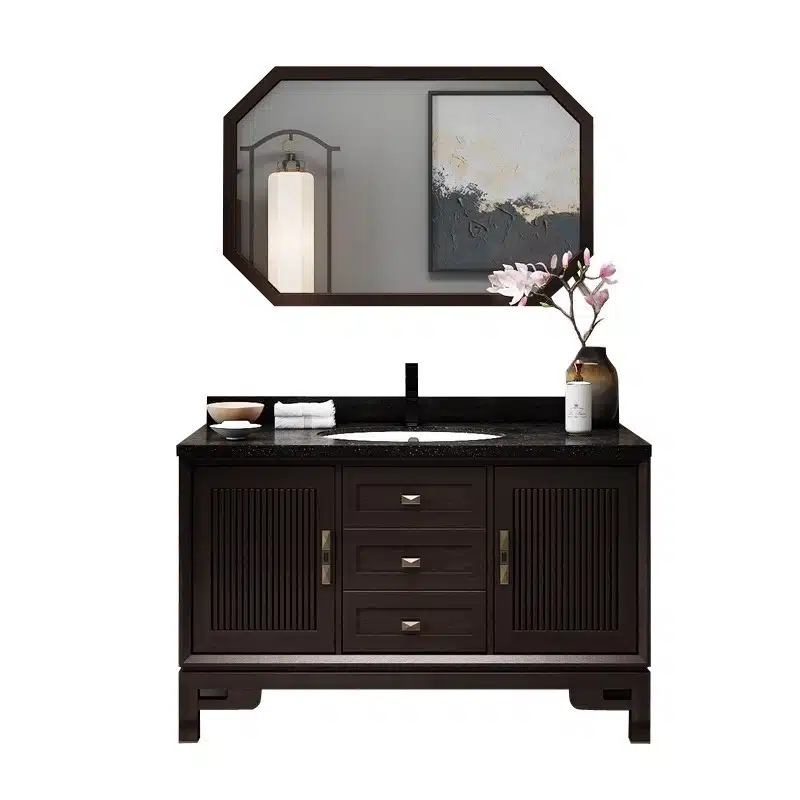
Metal hardware follows the same logic. Chrome, brushed nickel and matte black are our standard finishes, and each is a physical layer, not a dye. Ask which plating sits on the leg cap before you approve the sample.
We match the finish to the shipping climate, not just the color chart. Humid markets get the full PU build on wood and powder-coated or stainless steel below. Dry interior markets can use standard lacquer without changing the leg geometry. State the climate when you request a quote, and the factory will confirm the finish before sampling.
Maintenance is three moves: wipe the legs with a damp cloth, avoid abrasive cleaners near the finish, and check the leveling feet once a year. That routine prevents most of the leg complaints we see in warranty data. For the full upkeep sequence on wood lines, the solid wood maintenance routines article walks through the schedule.
Custom Legs at Low MOQ
Legs are one of the easiest parts of a vanity to customize, and one of the most direct ways to make a line look proprietary. Our MOQ is 15 sets per model, color and size, so a custom leg program does not require a container of one SKU. That threshold exists so first orders stay testable.
The options cover what buyers actually ask for: Pantone-matched colors for painted legs, height adjustments between standard and tall profiles, and branded hardware including leg caps and leveling feet. Combined with materials, finishes, basins and mirrors, that is 40,000+ custom combinations on record. Most of them start with a leg question.
Lead times stay practical. Samples ship in 10 working days at no charge, and production runs 20 to 30 days after approval. Shipment is FOB Qingdao, with a 30 percent deposit and the balance due after the draft bill of lading.
Custom legs also mix cleanly with stock models in one container. Mixed loads keep the container cube full while you test a new silhouette against an established seller. If the trial sells through, the same tooling scales to full production without a redesign. That is the low-risk path we recommend to first-time buyers.
Quality systems matter when the leg spec is custom. The factory is certified to ISO 9001 and ISO 14001, both held since 2017 and confirmed current in 2025. Where branded hardware crosses into the EU, the CE marking rules for the EU apply to the assembled product. For the UK side of the question, the UKCA and CE guidance is worth reading before you lock a hardware spec.
Custom does not mean slow or fragile. Every product still passes the 5-point inspection, and the 2-year warranty covers the whole cabinet, legs included. That is the same warranty we put on standard stock.
Matching Legs to Your Buyer’s Bathroom
The same leg spec looks different across hotel, residential and commercial projects. Match the decision to the room, and the warranty claims drop with it. Here is how we split the advice.
Hotels should bias toward plinth bases or steel legs with adjustable feet. Housekeeping moves carts, mopping happens daily, and guest weight concentrates on drawer fronts. A stable, splash-tolerant base is cheaper than a maintenance ticket. If the design calls for open legs, stainless is the safer call than painted steel.
Residential buyers choose with their eyes. Tapered wood legs sell the mid-century look, and block legs carry the farmhouse line. The technical requirement is modest, so style can lead. Keep PU-coated wood as the default and offer PVC legs where the climate is damp.
Public restrooms are the hardest duty cycle. Traffic is constant, cleaning chemicals are aggressive, and nobody reports a wobbly leg until it breaks. Specify steel or PVC with heavy leveling feet, and put the maintenance schedule in writing.
Apartment and renovation work sits between the two extremes. Buyers want the style of a tapered wood leg but the certainty of a floor that may slope. Offer the wood silhouette with a leveling foot threaded into the base, and you cover both. This is the combination we ship most often to multifamily projects.
Tops follow the same logic. A sintered stone top changes the weight distribution on the legs, so read the sintered stone versus quartz comparison before you pair a heavy top with a light silhouette. Once the base is right, check the soft-close hinge choices for commercial bathrooms to finish the spec.
Frequently Asked Questions
Are solid wood vanity legs safe in humid bathrooms?
Yes, when the finish is right. Our solid wood legs use a multi-layer PU waterproof coating applied before assembly, with oak, walnut, maple and ash available across 20 standard finishes. For extreme humidity or coastal air, PVC legs are the 100 percent waterproof alternative.
What is the difference between a vanity leg and an adjustable foot?
A leg is the visible structural support. A leveling foot is a screw-adjustable base that compensates for sloped floors. We pair the two: the leg carries the style, the foot carries the level.
Can leg height, color and hardware be customized?
Yes, from 15 sets per model, color and size. Pantone-matched colors, height changes, and branded leg caps and leveling feet are standard custom options within our 40,000+ combinations.
Should floor-standing vanities use legs or a full plinth base?
Legs read lighter and ease cleaning; plinths hide plumbing and suit hotel housekeeping. Both sit under the same 2-year warranty. The deciding factor is whether your buyer mops open floors or needs a sealed base.
The Bottom Line
Decide by scenario, then by style, and always by the questions the supplier can answer. Wood legs with PU coating sell residential style; stainless or PVC handle wet and heavy traffic; leveling feet are non-negotiable under every one of them. Start your custom program at 15 sets with a 10-working-day sample, and demand geometry, fixing method and test description in writing. If the answers stay vague, move to the next factory.





0 Comments