
Sintered stone has moved in the last decade from an Italian luxury material to a standard option in commercial and residential bathroom vanities — and with that shift came a flood of half-true marketing claims. “Unbreakable.” “Zero maintenance.” “Lasts forever.” None of those is quite right, and the difference matters when you are buying 15 units or 500.
This guide explains what sintered stone actually is, the physical properties behind the marketing (Mohs hardness, heat resistance, porosity, UV stability), and — most importantly for a buyer — how those properties compare with ceramic and other basin materials over a real service life in bathrooms.
What Sintered Stone Actually Is
Sintered stone is not a coating, a laminate, or a painted surface. It is a slab made by pressing natural minerals — primarily quartz, feldspar, and silica — under extremely high pressure and temperature until the particles fuse into a single dense sheet. The process is called sintering: the material is heated below its melting point so the mineral grains bond at their contact points, producing a solid body with no resin binder.
That last detail is the one that separates sintered stone from most engineered surfaces. Quartz countertops, for example, are roughly 90% quartz held together by a polymer resin matrix. Sintered stone skips the resin entirely — the mineral content binds itself. The result is a surface that behaves more like a sheet of ceramic rock than like a resin composite: harder, more heat-tolerant, and free of the polymer degradation that eventually plagues resin-based products.
The production route also means sintered stone is produced as large-format slabs. In vanity manufacturing, those slabs are cut into countertops and integrated basins. Because the material is uniform through its full thickness — not a surface layer over a substrate — a cut edge looks like the face of the sheet, which is why edge details and seamless basin-countertop integrations are possible without visible transitions.
For a buyer, the practical takeaway is that sintered stone vanities are built from one continuous material across the countertop and basin. That is a structural advantage for commercial bathrooms, where joints and seams are the first places water and bacteria find their way in.
The Hardness Story: Mohs 7–8, Explained for Buyers
The most quoted number in sintered stone marketing is Mohs hardness of 7–8. To make that number useful, you need a scale: Mohs runs from 1 (talc, scratched by a fingernail) to 10 (diamond). Most materials you meet in a bathroom sit in a narrow band:
| Material | Mohs hardness | Typical scratch sources in daily use |
|---|---|---|
| Solid surface (acrylic/resin) | 2–3 | Keys, rings, metal zippers |
| Ceramic basin glaze | 5–7 | Abrasive cleaners, metal tools |
| Natural granite | 6–7 | Hard grit, steel |
| Sintered stone | 7–8 | Almost nothing in normal use |
| Diamond | 10 | — |
A Mohs rating of 7–8 means sintered stone is harder than steel knife blades (around 5–5.5) and harder than most ceramic glazes. In practical terms: dropped metal objects, dragged faucets, and abrasive scrubbing will not leave permanent scratches the way they do on solid surface or standard ceramic. For a commercial bathroom where maintenance staff clean aggressively, this is a durability variable you can put a number on.
The honest caveat: hardness is not indestructibility. A sharp, focused impact — a heavy ceramic soap dish dropped from counter height onto a thin edge — can chip sintered stone, exactly as it can chip granite or ceramic. What hardness gives you is resistance to the slow accumulation of surface damage: scratches, scuffs, and wear patterns that make a basin look tired after two or three years. If chipping under heavy abuse is your primary concern, the edge thickness and installation details matter more than the material choice; our crack and chip prevention guide covers the installation and handling points that cause most field failures.
Heat Resistance: What 300°C Means in a Real Bathroom
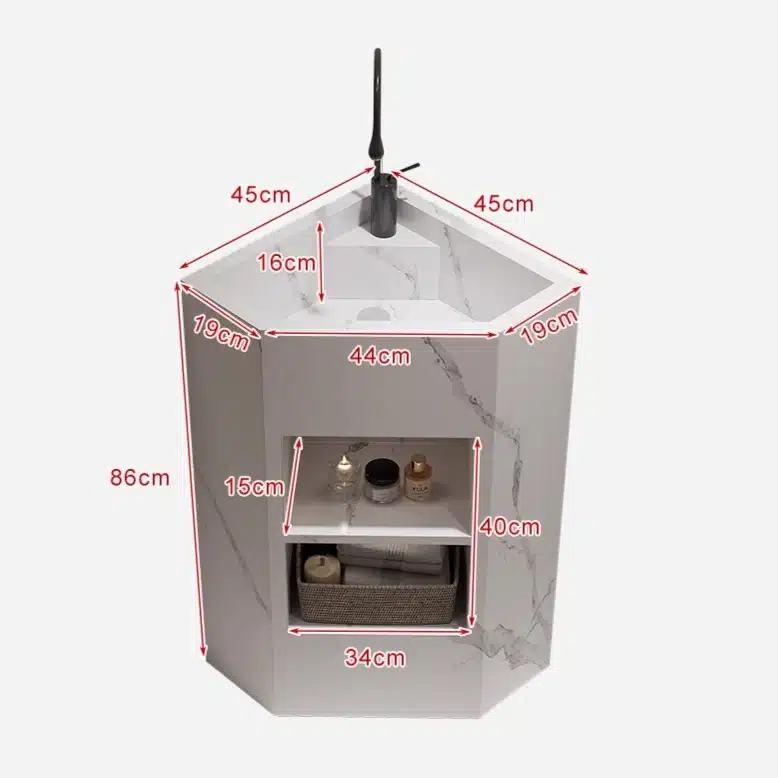
Sintered stone is rated for heat resistance up to 300°C (572°F). To translate: boiling water sits at 100°C, a curling iron in direct contact reaches roughly 200°C, and a straightening iron can pass 230°C. A hot cup of coffee does not get near these numbers.
So what does 300°C resistance actually protect against in a bathroom vanity?
- Hot tools left in contact. Hair straighteners and curling irons are the realistic thermal threat in bathrooms. On a resin-based quartz top, a hot tool left face-down can soften and permanently mark the resin. Sintered stone shrugs off the same contact.
- Thermal shock from hot water. Rapid temperature changes crack some materials through differential expansion. A sintered stone basin with 80°C water dumped into it while the slab sits at room temperature will not crack from thermal shock within its rated range.
- Fire and smoke adjacent scenarios in hospitality: a carelessly placed candle or a lit cigarette end. Neither will mark sintered stone.
For a wholesaler or hotel specifier, the 300°C figure is not about everyday use — it is about protecting the unit against the two worst-case daily events in a bathroom: dropped hot tools and careless guests. That is exactly the abuse pattern that drives warranty claims on cheaper basins.
One specification note: the 300°C rating applies to the sintered stone body itself. If the vanity pairs the stone with other materials — an LED mirror, PVC drawer boxes, engineered wood carcass — the overall unit’s heat tolerance is limited by those components. Keep the rating claim attached to the stone, not to the whole vanity.
Non-Porous Surface: The Maintenance and Hygiene Argument
Sintered stone’s density produces a non-porous surface with an open-pore rate close to zero. Unlike glazed ceramic — where the glaze is a surface layer that can craze or wear — sintered stone is dense through its full thickness. Three buying-relevant consequences follow:
Stains do not set. Coffee, hair dye, makeup, and hard-water minerals sit on the surface instead of soaking in. Cleanup is soap and water; aggressive chemicals are rarely needed. For rental properties and commercial bathrooms where turnover cleaning happens fast, this reduces labor time per unit.
Bacteria have nowhere to establish. A non-porous surface does not host colonies inside micro-cracks the way worn glaze or scratched acrylic can. This is why sintered stone is a standard material choice in healthcare-adjacent and high-turnover settings.
No surface wear to manage. Glazed ceramic’s weakness is that the glaze is thin; once it scratches or crazes, water and stains work their way into the bisque underneath. Sintered stone has no glaze to wear through — the surface property is the material itself. Our comparison of sintered stone versus ceramic basins digs into the cost and durability numbers of that difference across a 5-year service life.
UV Stability: Why Color Stays Put
Most polymer-based surfaces — acrylic solid surface, resin-bound quartz, printed laminates — degrade under prolonged UV exposure. The resin matrix yellows or the printed layer fades. In most indoor bathrooms this is a non-issue, but it matters in three situations: vanities near large windows or skylights, sun-facing hotel bathrooms, and outdoor-adjacent installations like pool pavilions.
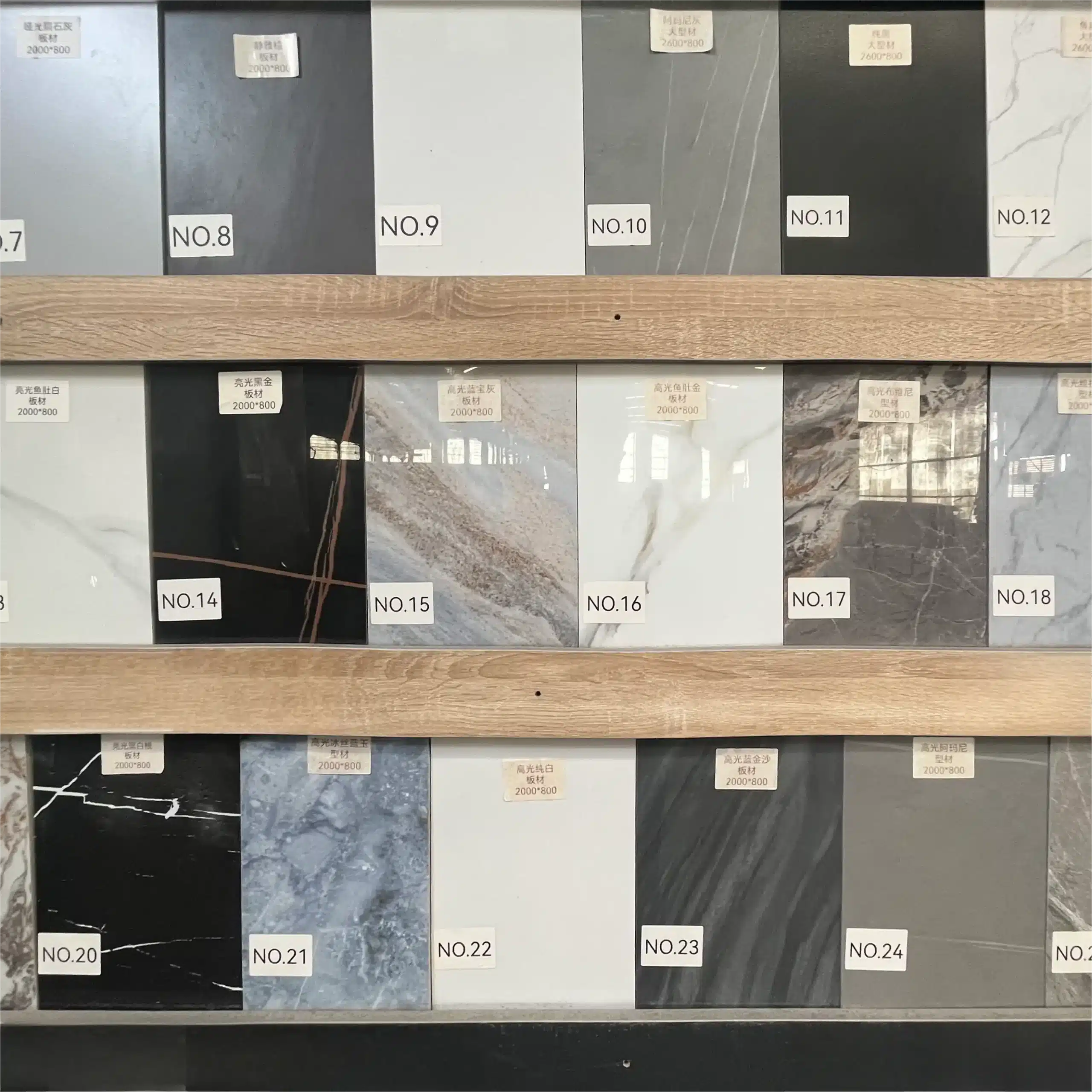
Sintered stone’s color is the mineral itself, not a coating or print. UV exposure does not fade it, which is why the material is also common in outdoor kitchens. The buyer’s shortcut: uf your project places vanities in sun-exposed locations, sintered stone removes the fading complaint from your warranty risk list entirely.
Sintered Stone vs Ceramic: The Lifecycle Comparison
For a buyer choosing between the two most common basin materials, the honest comparison is not “which is better” but “which fails less in your use case” — and at what price premium.
| Factor | Ceramic basin | Sintered stone basin |
|---|---|---|
| Raw material | Clay, fired and glazed | Quartz, feldspar, silica, sintered |
| Surface | Glaze layer over bisque | Dense through full thickness |
| Mohs hardness | 5–7 (glaze-dependent) | 7–8 |
| Heat resistance | ~200°C glaze limit | 300°C |
| Porosity | Porous bisque under glaze | Non-porous throughout |
| Scratch recovery | Cannot repair glaze | Minor marks can be polished |
| Typical warranty risk | Glaze crazing, rim chips | Edge impact chips |
| Price position | Baseline | Premium over ceramic |
The pattern across real warranty data is consistent: ceramic basins fail through glaze-related damage (crazing, staining after glaze wear, rim chipping), while sintered stone’s failure mode is concentrated at edges and installation points. That is why the case study on sintered stone basin returns showed a 30% reduction in basin-related returns after switching from glazed ceramic — the failure mode moved from “everyday wear” to “rare impact.”
Sintered Stone Vanities and Basins for Wholesale Buyers
Browse this product, solution, or service page to explore relevant offerings.
Sintered Stone in Vanity Applications: What to Spec
In vanity manufacturing, sintered stone appears in three configurations, each with different spec points:

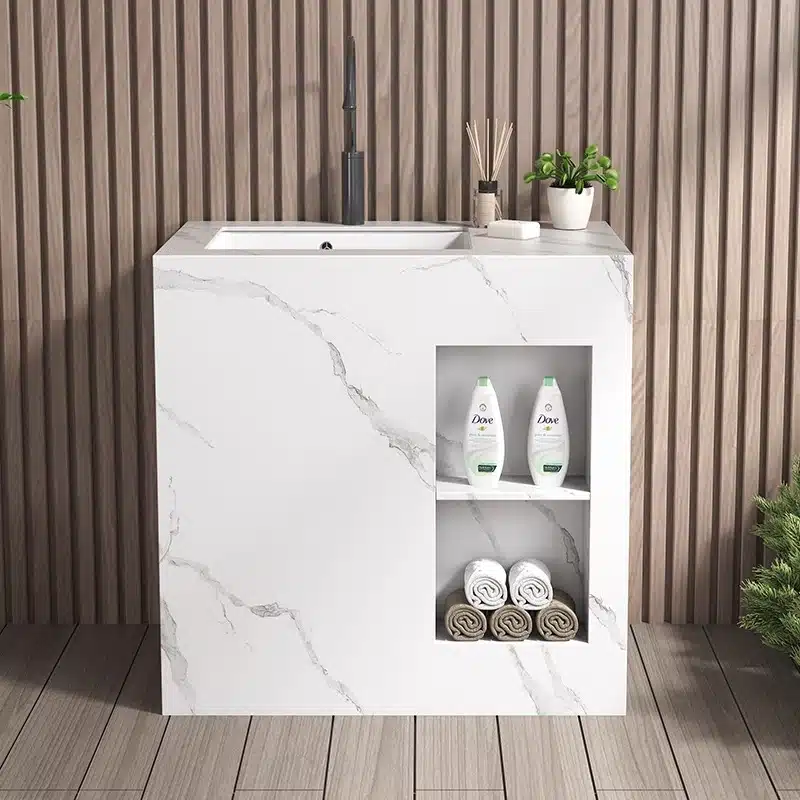
Integrated basin-countertop units. The basin is formed as part of the sintered stone countertop slab — one continuous piece with no seam between the top and the basin. This is the premium configuration: no joint to leak, no rim to collect grime, and the cleanest look. Available from 600mm to 2000mm widths, in single and double basin layouts.
Countertop with separate basin. The countertop is sintered stone and the basin is a separately installed unit. This configuration gives design flexibility — mixing basin materials or shapes — but reintroduces seams that need proper sealing. Choose it when design intent matters more than maintenance simplicity.
Sintered stone veneer over engineered structure. A thin stone layer over a plywood or PVC carcass. This is a cost-optimized build: the stone appearance on top, an engineered structure below. The performance difference is at the edges and cutouts, where a thin layer is more vulnerable to impact than a full slab.
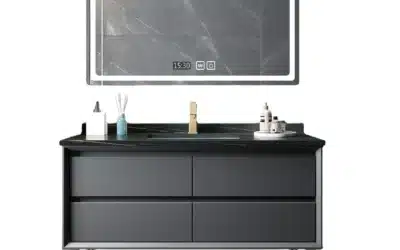
For floating (wall-mounted) units, sintered stone pairs naturally with the minimalist look: 600–1800mm widths with soft-close drawers and single or double basins. If you are comparing stone options for a project, our sintered stone vs. quartz vanity guide covers the commercial hotel angle, and the sintered stone sourcing guide runs through the technical spec sheet.
What to Verify in Samples and Certifications
Sintered stone’s advantages show up over years, not in a photo. When you evaluate a sample, verify these four things:
1. Edge quality. Run a fingernail along every edge and cutout. Sintered stone edges should feel uniformly dense — no powdery residue, no visible lamination lines. Powdery or crumbly edges indicate a lower-density product or rushed cutting.
2. Uniform color through thickness. Because the color is the material, a proper sample shows the same tone on the face and the cut edge. A printed or coated product will show a visible core difference.
3. Real heat and stain tests. Your sample is meant to be tested: leave a coffee stain for 12 hours, drag a steel tool across the surface, and check what a hot metal cup at 250°C does in five minutes. A factory that resists sample testing is a factory with something to hide.
4. Documentation. Sintered stone lines should carry material certifications and emissions data. MFBATH’s sintered stone vanities use ISO 14001-compliant material sourcing, and the factory’s ISO 9001 quality system (certified since 2017, verified current in 2025) covers production control. For European and North American markets, check the certification guide for sintered stone basins before you commit to a material spec — certification failures at customs or project approval stage are expensive to discover late.
How Sintered Stone Behaves Under Commercial Cleaning
Commercial bathrooms are cleaned differently from residential ones: industrial disinfectants, bleach-based solutions, alkaline degreasers, and hard-water scale removers — often applied daily and left in contact longer than any label recommends. Resin-based surfaces are the main casualties here; aggressive chemicals can cloud, soften, or yellow a resin matrix over a year of daily cleaning.
Sintered stone’s mineral composition makes it chemically inert against the standard cleaning arsenal. Bleach, hydrogen peroxide, ammonia, and acidic descalers do not attack a fully sintered mineral surface. The practical effect for facility owners: your cleaning protocol does not need to be re-designed around the vanity — the vanity survives the protocol you already run. In hard-water regions, scale forms on the surface but removes clearly with a descaler without leaving etching marks, which is a recurring complaint with polished ceramic glazes.
There is one maintenance nuance to spec correctly: the finish. Sintered stone comes in matte, satin, and polished finishes. Polished finishes show water spots and fingerprints more readily in high-traffic bathrooms; matte finishes hide them but require a mild cleaner to stay consistent in appearance. For hotel and commercial spec, satin is the common compromise — the design detail matters as much as the material when your buyer inspects a room after turnover cleaning.
Shipping, Handling and Installation: Where Sintered Stone Units Actually Break
Every material has a weakest point, and for sintered stone it is not the surface — it is the handling chain. Full-slab sintered stone is heavy, and a vanity with an integrated sintered stone top is one of the heavier units in a bathroom product range. The units that arrive damaged almost always fail at one of three moments:
- Container loading. Slabs stacked without proper separation, or countertops loaded with the basin side bearing weight, develop invisible stress fractures that surface as cracks after installation. Loading photos during container loading are worth requesting, not just for the record — they reveal how the factory treats the units.
- Forklift and hand-truck transitions. A unit that must be lifted by two people should never be moved by one hand-truck trip. Instruction labels on cartons matter less than pallet construction: proper pallet size, corner protection, and strap placement prevent most in-transit damage.
- Installation. The most common field failure is mounting-related: wall-hung units fixed through the stone without proper backing, or floor units leveled by force instead of shims. A 600–1800mm wall-mounted unit needs its brackets installed exactly per the factory spec — see the mounting guidance in the sintered stone vanity sourcing guide before you sign off on an installation manual.
For a distributor, the buying implication is simple: the difference between a 1% and a 5% damage rate is usually packaging and handling discipline, not the material. Ask the factory how units are packed for LCL shipments, request loading photos, and make the first shipment’s damage count part of your vendor scorecard. The sintered stone sourcing guide covers container-loading protection in detail.
Making the Sourcing Decision
Sintered stone is not the cheapest option per unit — ceramic basins cost less to produce, and that difference passes through to your FOB price. The buying case for sintered stone is built on lifecycle numbers: lower maintenance labor, fewer stain and scratch callbacks, no glaze to wear out, and a 300°C heat tolerance that eliminates the most common hot-tool damage claims. For wholesalers selling to property managers, hoteliers, and landlords — buyers who measure cost per year rather than cost per unit — those factors justify the premium.
The right decision framework: if your market sells on lowest purchase price, ceramic wins and the differences above are irrelevant. If your market sells on lower total cost of ownership — maintenance, callbacks, replacement cycles — sintered stone is the stronger argument, and the 15-unit MOQ (per model, color and size) makes it practical to test the proposition with a small first order before committing volume.
Frequently Asked Questions
Is sintered stone scratch-proof?
No material is, but Mohs hardness of 7–8 makes sintered stone harder than steel knife blades and most ceramic glazes — keys, rings, and abrasive cleaning will not leave permanent scratches in normal use.
Does sintered stone chip or crack?
Hardness is not indestructibility: a sharp, focused impact can chip an edge, exactly as it can granite or ceramic. Field failures concentrate at edges and installation points, so packaging, handling, and mounting matter more than the material itself.
What is the MOQ for sintered stone vanities?
15 units per model, color and size, with widths from 600mm to 2000mm and custom sizes and colors available. Samples take 10 working days; bulk production takes 20–30 days.


0 Comments