
If you are reading this, you have probably already discovered the awkward truth about importing bathroom vanities: most Chinese factories will not even talk to you until your order clears 100 units per SKU. That is why a 15-unit MOQ changes the game for first-time importers, online resellers, and regional wholesalers who want to test a market before committing to a container.
This guide walks through exactly how to size a first trial order at a 15-unit minimum: how the MOQ is calculated, how to split your units across models, what to check in samples, which quality points to write into the PO, and how the payment and lead-time math works from a factory in Changge, Henan, shipping FOB Qingdao.
Why a Low MOQ Matters for First-Time Vanity Importers
A trial order exists to answer one question: will these vanities actually sell in my market at a margin I can defend? Everything else — freight, duties, warehousing — is a detail you can fix later. The problem is that the traditional import playbook forces you to answer that question with a full container, which ties up $15,000–$30,000 in product before you have seen a single customer reaction.
A 15-unit MOQ changes the risk profile in four concrete ways:
- Cash exposure drops to a few thousand dollars. At typical FOB prices for a standard 24–48 inch vanity, 15 units is a manageable first commitment, not a bet-the-company order.
- You can test multiple models in one order. Fifteen units per model, color and size means a 45-unit order can cover three different models — enough to learn which SKU moves before you reorder deep.
- You build a factory relationship before you need volume. Suppliers remember trial customers who paid on time and reordered; that history becomes your negotiating chip for better pricing and priority production slots later.
- You validate quality claims against your own spec sheet. A 15-unit order is big enough for a real QC inspection but small enough that a batch problem costs you little.
If you are coming from the other direction — you already sell vanities and want to add a supplier — a low-MOQ trial is also the cleanest way to A/B test a new factory without disrupting your existing stock. The same logic applies whether you are a distributor testing a new product line or an e-commerce brand sampling a private-label design.
For a deeper look at how minimums are set and negotiated across the industry, see our guide on navigating MOQs for custom vanities.
What “15 Units per Model, Color and Size” Actually Means
The phrase “low MOQ” is meaningless until you know the unit of measurement. Different factories quote different floors: some count per container, some per SKU, some per colorway. At MFBATH, the MOQ is defined as 15 units per model, per color, per size. In plain language:
- A 30-inch matte white PVC vanity: 15 units minimum.
- The same 30-inch vanity in two colors: 15 per color, or 30 total.
- A different size (say 48-inch): another 15 per model per size.
What this means in practice is that your first order is flexible enough to test variety without paying per-SKU penalties. A 45-unit order can be split across three models, or across one model in three sizes, or one size in three colors — as long as every combination hits 15.
One important allowance: mixed loading is supported. Different models and sizes can be combined into the same shipment, so you are not forced to fill a full container with one SKU. That makes the 15-unit MOQ genuinely usable for trial orders, not just a marketing number.
The only real constraint is to plan your mix before you order. Changing a colorway after production starts usually means a re-run of the painting or veneer line, which costs you lead time rather than money — but it is still a delay nobody wants on a first order.
Step 1: Define Your SKU Mix Before You Contact the Factory
Your first order is a test, so design it like one. The goal is maximum market learning per unit shipped, which means your mix should answer three questions:
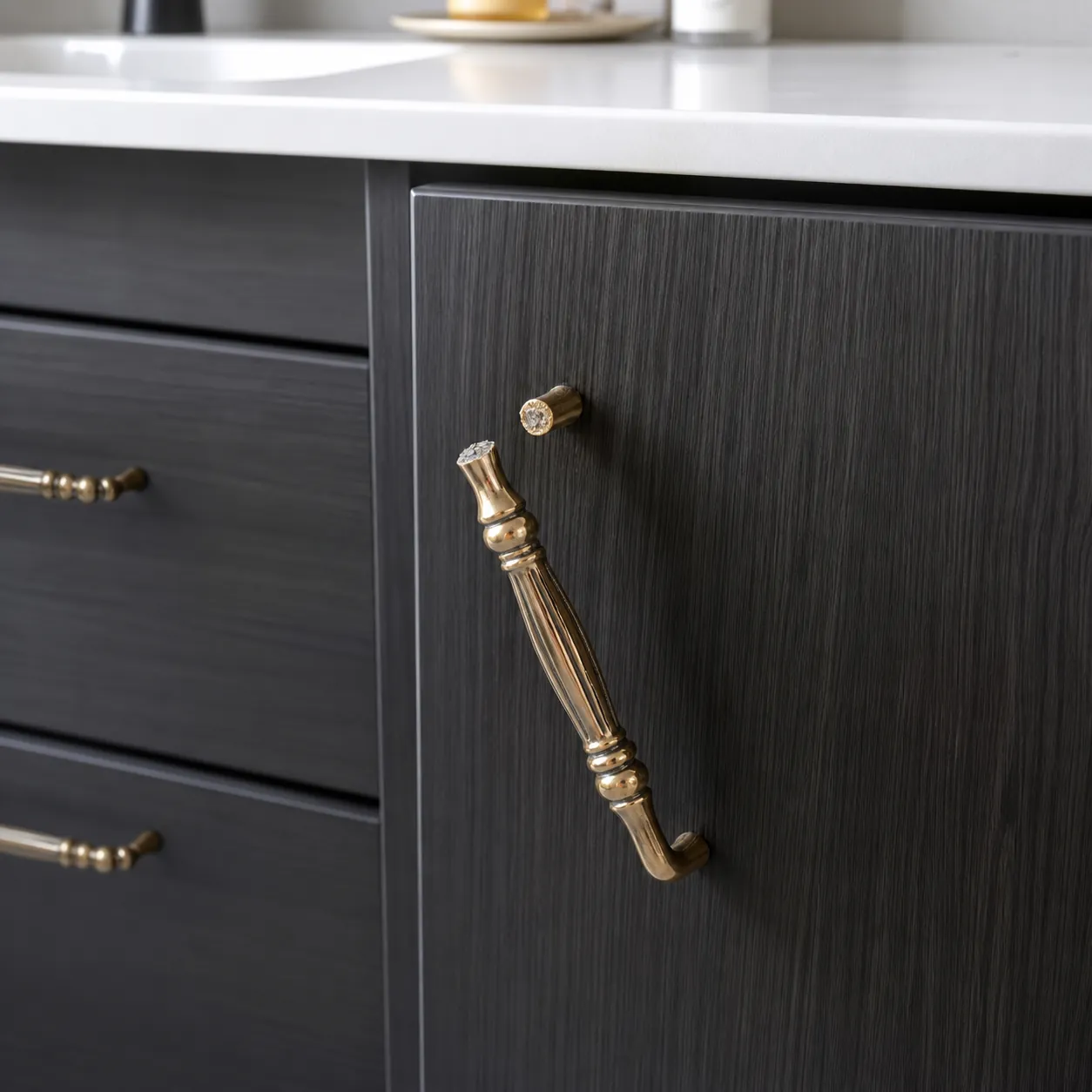
Which material category fits your market? PVC vanities are fully waterproof and the strongest value play for humid climates and rental segments. Plywood vanities offer a better balance of feel and price for standard residential use. Solid wood (oak, walnut, maple, ash) carries the highest margin potential but the highest price point. If you genuinely do not know your market’s preference yet, a common first-order split is two material families — for example, PVC for a volume SKU plus solid wood for a margin SKU. Our PVC vs. plywood material guide covers the durability differences in detail.
Which sizes cover your best-selling range? For the North American market, 24–60 inch widths cover essentially all standard layouts, with 30–48 inch dominating single-basin sales and 60–72 inch covering double basins. If you are a first-time importer, do not spread across six sizes. Pick two adjacent sizes — say 30 and 36 inches — where your market data (or competitor listings) show the most demand. You can always add sizes on the reorder.
Which finish will you lead with? White and light wood tones move fastest in most markets, but your local segment may differ. If you can order 15 units per color, test a proven neutral (matte white) against one wildcard (a wood-grain or matte black). That gives you a read on whether your customers buy on price or on style.
Once your mix is defined, write it down as a table — model, material, size, color, quantity. A 45-unit first order could look like this:
| Model | Material | Size | Color | Units |
|---|---|---|---|---|
| Vanity A | PVC | 30 inch | Matte white | 15 |
| Vanity B | PVC | 36 inch | Matte white | 15 |
| Vanity C | Solid wood | 36 inch | Walnut | 15 |
| Total | 3 SKUs | 45 units |
Send that to the factory and ask for a per-line FOB quotation. If the numbers are not broken down per model, push back — you need line-level pricing to know which SKU makes you money later.
Before you commit, also check the difference between buying from a factory versus a trading company — it directly affects ho you are actually negotiating this MOQ with.
Step 2: Order Samples First – and Test What Matters
Never skip samples on a first order. A vanity looks simple, but the difference between a $150 cabinet and a $400 cabinet hides in details you cannot see in a product photo: edge banding quality, drawer slide feel, hinge cycle life, and whether the finish can survive a humid bathroom.
Sample terms worth locking in before you order : sample lead time is 10 working days at MFBATH, and samples are supported for free — you pay shipping. That 10-day window is short enough to keep your launch timeline intact.
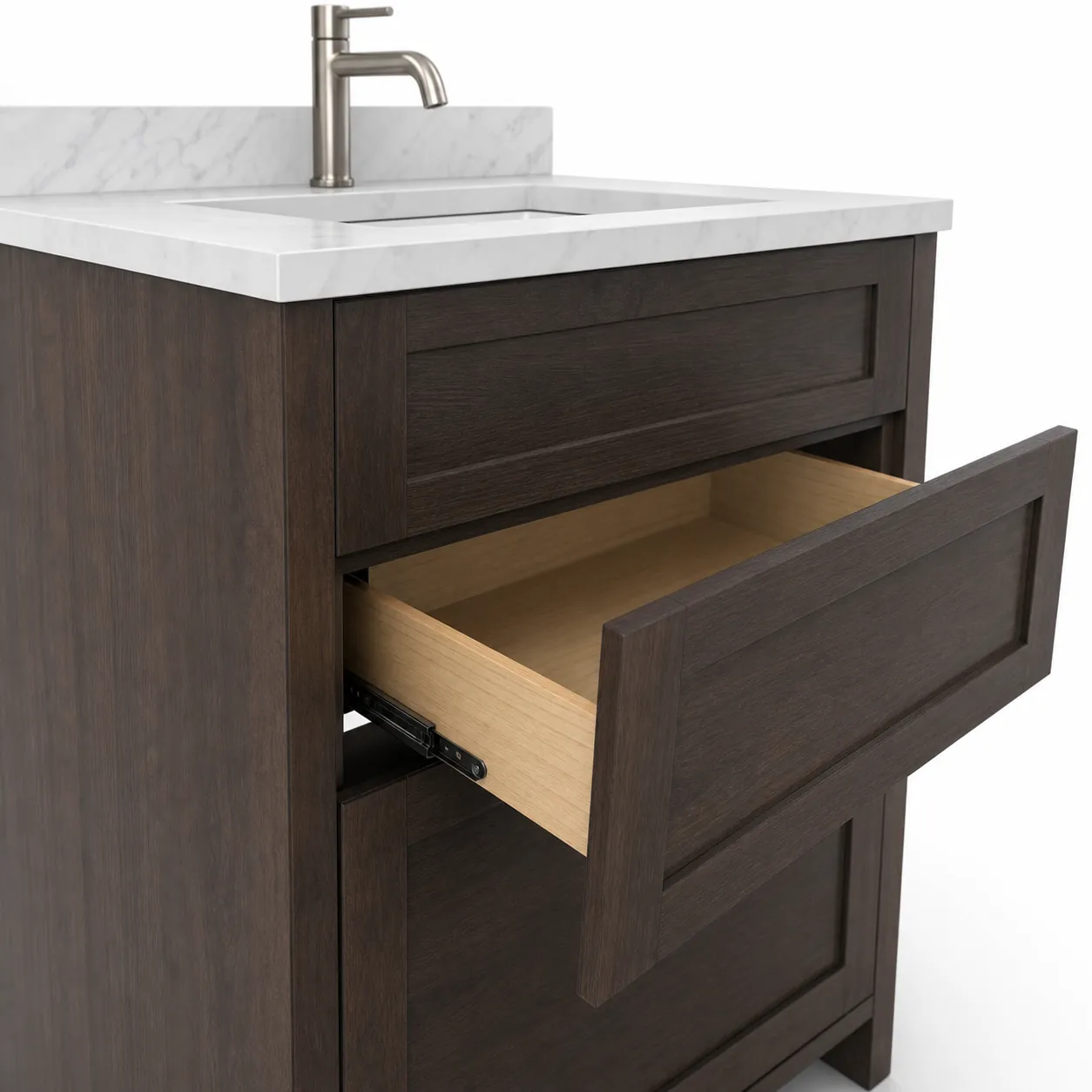
When the sample arrives, work through a checklist rather than eyeballing it:
- Joinery and box construction. Check the carcass corners: are they dadoed and glued, or butt-jointed? Look for exposed raw edges and water-entry points, especially at the bottom panel. See our sample inspection checklist for the full 20-point walkthrough that catches most rework issues before production.
- Drawers and slides. Open and close every drawer 20 times. Pay attention to the slides: undermount slides carry weight better than side-mount at the same price point, and soft-close dampers should engage smoothly on every cycle.
- Hinges and doors. Doors should sit flush with even reveals, and soft-close hinges should not slam at any point in the arc.
- Finish and edge sealing. Run a fingernail along panel edges — peeling edge banding is the most common cheap-factory tell. Check that all cut edges are sealed, not just visible ones.
- Basin and plumbing fit. If the vanity comes with an integrated basin or a countertop cutout, dry-fit the basin and check overflow placement and drain alignment. Plumbing that does not line up on a sample will not magically line up in production.
- Moisture behavior. If you can, run a water test on an unfinished corner or inside the cabinet base: a 30-minute soak that leaves the board swollen or delaminated is a fail, not a note.
Take photos of every check and send them back to the factory with your comments. A supplier that engages with sample feedback seriously is a supplier worth scaling with; one that dismisses it will be painful at the container level.
Step 3: Lock Down QC Points in the PO
The sample is your quality reference; the PO is your enforcement document. For a first trial order, put at least four QC checkpoints in writing:
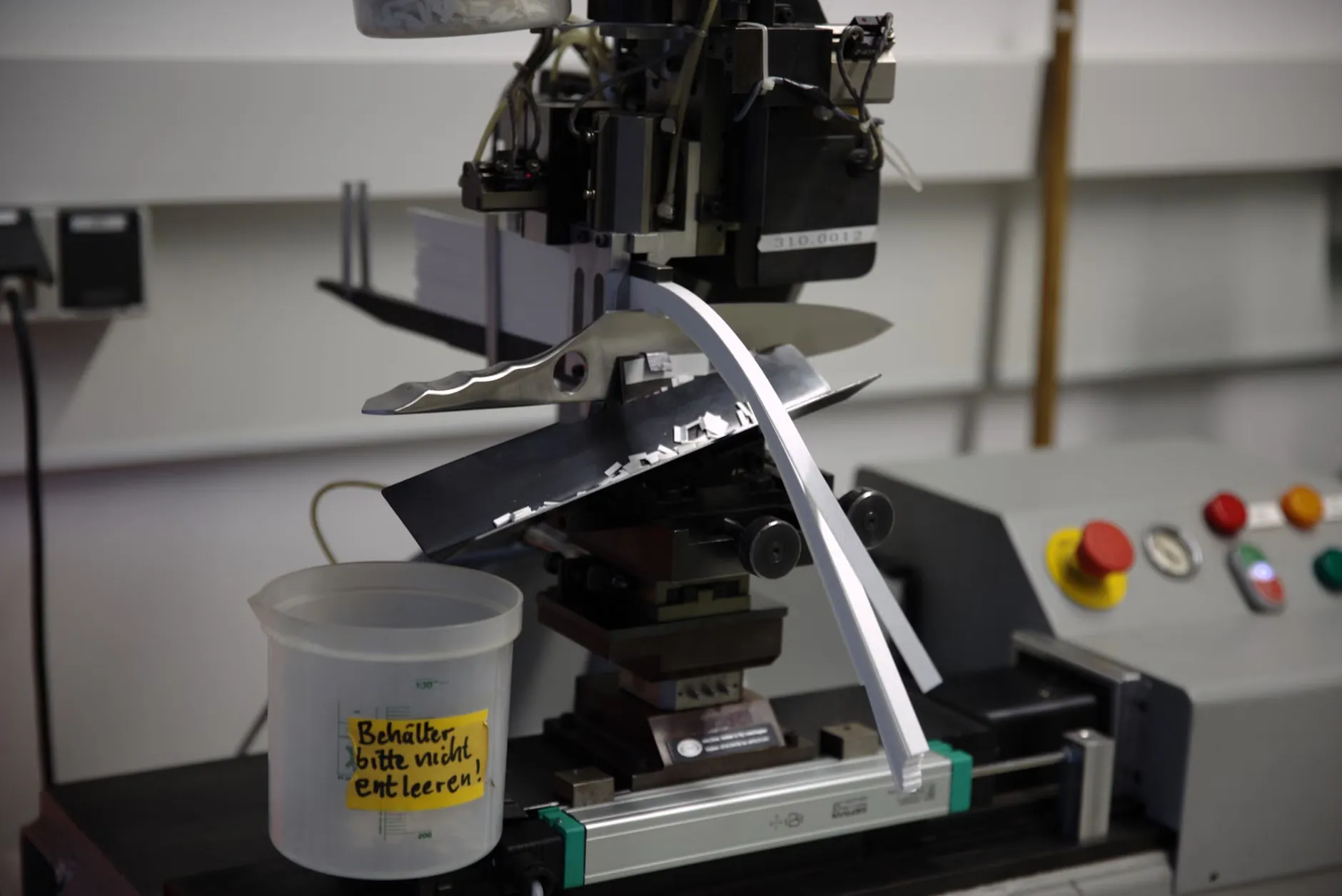
1. Inline inspection at the painting/veeneering stage. This is when color and finish defects are cheapest to catch. Ask for photos or a 6eno walkthrough before the batch is fully assembled.
2. Pre-shipment inspection with a written report. A 5-point inspection covering dimensions, hardware, finish, assembly, and packaging — every unit in a 15-unit batch can realistically be checked, which is one of the quiet advantages of a small first order.
3. Third-party inspection option. If you want independent verification, SGS or TÜV inspectors can visit the factory before shipment, provided they are booked in advance. The factory supports third-party inspections rather than resisting them — treat resistance as a red flag.
4. Container loading documentation. Photos of the loading process, including how cartons are stacked and braced, protect you in a damage claim. Ask for them in advance; they are cheap for the factory and valuable for you.
If you are unsure what a factory’s quality system should look like on paper, ISO 9001 certification (held by MFBATH since 2017, confirmed current in 2025) is the baseline to ask for. And before you wire any money, run the supplier verification steps in our China factory scam guide — business registration, factory address, and photo/video verification of the actual plant.
Bathroom Vanity Sourcing with a 15-Unit MOQ for Distributors
Browse this product, solution, or service page to explore relevant offerings.
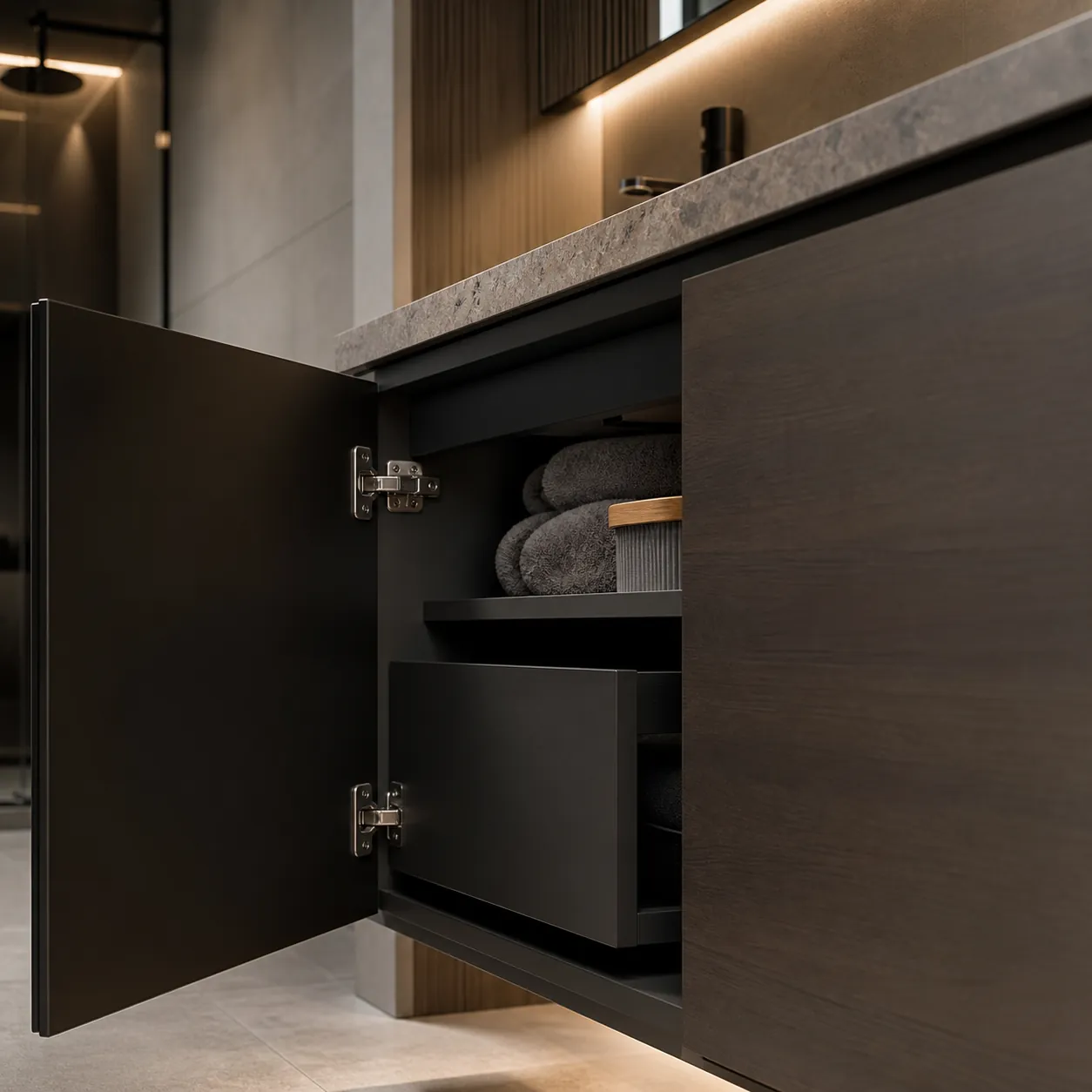
Step 4: Container Math for a 15-Unit Start
A 15-unit order will not fill a container, and it should not try to. Shipping a trial order as LCL (less than container load) is normal: you pay for the cubic meters your cartons occupy, not for a full box.
The math that matters on a trial order is landed cost per unit, not freight per unit. Build it line by line:
| Line item | What it covers |
|---|---|
| FOB price per unit | Your quotation line item |
| Ocean freight | Per cubic meter / CBM share — LCL rates, plus destination charges |
| Customs duties and taxes | HS classification for bathroom cabinets — check whether your region applies additional duties on wooden furniture |
| Port handling, drayage, delivery | From destination port to your warehouse |
| Inspection fees | Third-party agency, if used |
Until you have run this calculation, you do not actually know your margin. The bulk import savings guide walks through how OEM pricing, packaging density, and container utilization compound at scale — the trial order is where you build that cost model with real numbers instead of estimates.
Two practical notes for LCL on a first order. First, ask the factory to pack for density: flat-pack or knocked-down options reduce the CBM you pay for, which directly cuts your per-unit freight on a small order. Second, expect the per-unit freight on an LCL trial to be meaningfully higher than your future FCL cost — that is fine, it is the price of learning. What matters is that the trial order teaches you the full landed-cost structure so your first container order is priced correctly from day one.
Payment, Lead Time and Documentation
Importers fail their first trial orders on cash-flow surprises more often than on product quality. Lock these three things down before you confirm the PO:
Payment terms. The standard terms are 30% prepayment to place the order, with the balance due within one week of receiving the draft bill of lading. That is a supplier-friendly structure — the factory pays for materials and labor out of your deposit — but it is also predictable: you know exactly when the final payment lands, and you see the draft BL before you pay, so you are never asked to pay against a promise.
Production lead time. Sample production takes 10 working days; bulk production takes 20–30 days. On a trial order, add a week of buffer to the bulk window and do not book your freight or promotions against the aggressive end of the range. If the factory consistently ships at the fast end, that becomes a data point for planning your first container.
Shipping terms. Shipments move FOB Qingdao Port, one of China’s busiest container ports, which keeps your freight options open — you control the forwarder, the vessel, and the inland side of the cost. If you have never worked with a forwarder before, FOB is the friendliest starting point because the factory’s responsibility ends cleanly at the port.
Warranty in writing. On a trial order, the warranty clause is the cheapest insurance you will ever buy. Confirm the terms in the PO — at MFBATH, the cabinet carries a 2-year warranty on the complete unit, and the return rate on production runs is under 1%. Write down exactly what the warranty covers (cabinet structure, doors, drawers, hinges, finish) and what it does not (installation errors, water damage from plumbing failures, intentional damage).
Common First-Order Mistakes
The trial order is small, so the mistakes are cheap — but they compound when you scale the same habits to a container. Four patterns show up repeatedly:
Ordering too many variants. Fifteen units per model/color/size is a floor, not a target. A first order spread across eight SKUs teaches you nothing about any of them. Two or three SKUs, deeply understood, beat eight SKUs you never reorder.
Skipping the sample because “it is only 15 units.” The sample is not about the 15 units; it is about the 100, 500, or 2,000 units you will order next. Every defect the sample catches is a defect you did not pay for in bulk.
Neglecting the document trail. Keep the PO, the sample feedback, the QC reports, and the inspection photos in one folder. When a future dispute or a customs question arrives, the document trail is your evidence — and it also lets you compare factories apples-to-apples later.
Treating MOQ as the only number. A 15-unit MOQ is a door opener, not a business plan. What actually determines whether you reorder is the same thing that always has: unit economics against your market price, quality consistency, and on-time delivery. Evaluate the trial on those three axes, not on how friendly the minimum was.
If you want to see how other buyers structure their first orders — including how they allocate units across models and what they negotiate — our guides on sourcing vanities with low MOQs and cutting FOB costs on your first order walk through real order structures.
Building Your First Order: The 5-Step Recap
- Define 2–3 SKUs across material, size, and color — each combination at the 15-unit minimum.
- Request samples (10 working days), run the 20-point checklist, and send photo feedback.
- Write the PO with inline inspection, pre-shipment inspection, and loading photos.
- Calculate landed cost per unit with real freight and duty numbers.
- Confirm payment terms (30% deposit, balance after draft BL), production window (20–30 days), and the 2-year cabinet warranty in writing.
A 15-unit MOQ exists to remove the risk from your first step into importing. Used properly — samples first, a tight SKU mix, QC points in writing, and honest landed-cost math — it turns a small order into the foundation of a pricing and supplier model you can scale. The factory’s job is to make that easy: 5,000 sets of monthly production capacity, a 95-person team, and ISO 9001/14001 systems mean the 15-unit customer gets the same process as the container customer.
Frequently Asked Questions
What does a “15-unit MOQ” mean in practice?
Fifteen units per model, per color, per size. A 45-unit first order can be split across three models, three sizes, or three colors — and different models can be combined into the same LCL shipment with mixed loading.
How long do samples take, and what do they cost?
Sample production takes 10 working days and samples are free — you pay the shipping. Work through the 20-point sample inspection checklist before approving bulk production.
What are the payment terms for a first trial order?
30% prepayment places the order; the balance is due within one week of receiving the draft bill of lading. Bulk production runs 20–30 days, and shipments move FOB Qingdao Port.



0 Comments