

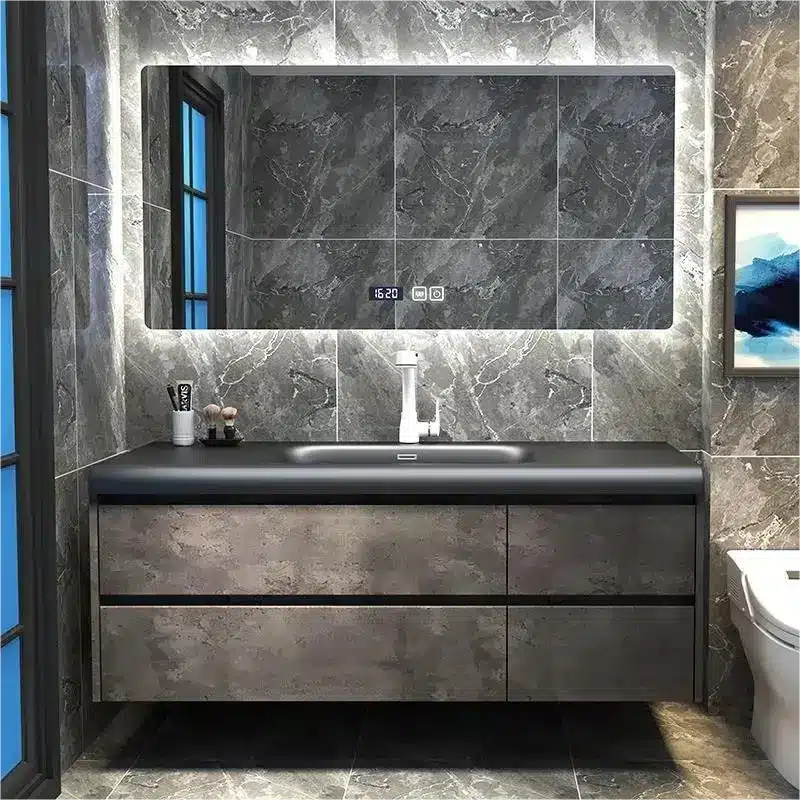
single vs double sink vanity is the first checkpoint buyers should lock before they approve a supplier, budget, or production slot. The gap between a 30-inch single sink vanity and a 60-inch double sink vanity for a commercial bathroom project isn’t just 30 inches of counter space. It’s the difference between a $50,000 order that passes sample approval and a costly mistake where the quality tolerance on mass production misses the spec — forcing a reorder that wrecks your FOB pricing advantage.
Double sink vanities increase hotel bathroom functionality by 40% in guest surveys, according to recent data from Focuscabinet’s hospitality clients. That’s a statistic you can use when the operations team pushes for single sinks to save space. But the real decision hinges on your specific project procurement bathroom vanity needs — the minimum width double sink vanity hotel spec requires 60 inches, and if your bathrooms are sized for 55-inch rough-ins, you’re locked into singles.
This isn’t about which configuration looks better on a showroom floor. It’s about matching the sink count to real usage patterns and plumbing costs. A commercial bathroom vanity ROI calculation has to factor in installation labor, countertop material —sintered stone basin commercial grade is one option — and the downstream maintenance cost. The key parameters can be walked through to enable a defensible single vs double vanity cost comparison before the purchase order is issued.
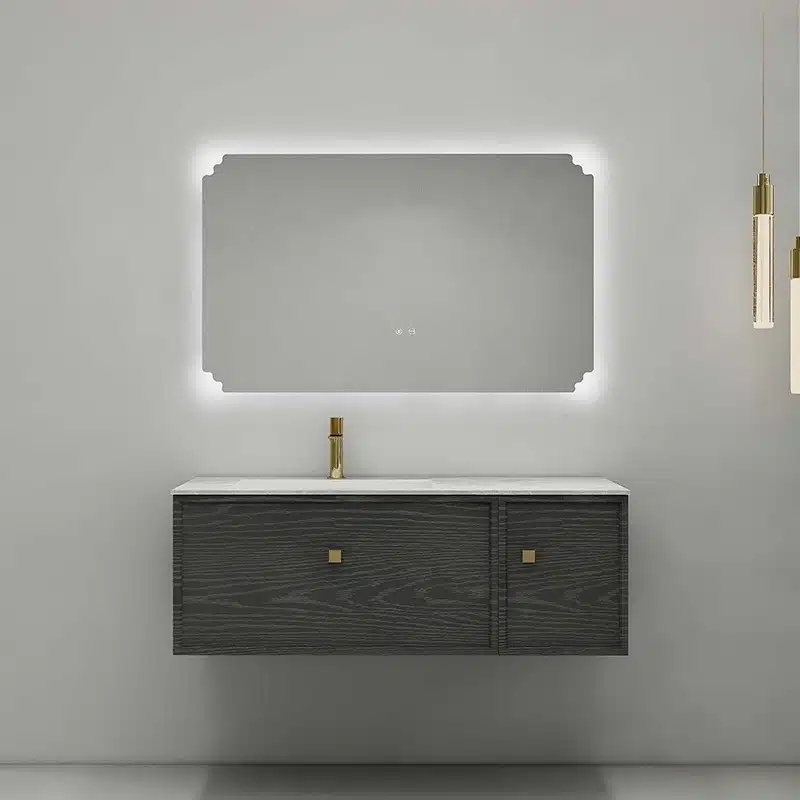
When to Choose a Single Sink Vanity
A single sink vanity cuts project costs by up to 30% on orders of 500+ units.
Guest bathrooms in hotels and multifamily units typically measure 35–45 square feet. A single sink vanity, with a minimum width of 30 inches, leaves room for a toilet, shower, and clearance zones. Double sink vanities require at least 60 inches of wall space — often forcing the bathroom layout into a corridor shape that reduces perceived spaciousness. For ADA-compliant projects, a 30-inch single vanity with proper knee clearance meets the standard without eating into turning radius.
The cost advantage scales with volume. A single sink vanity in a sintered stone basin configuration from Focuscabinet runs roughly 30% less than a comparable double sink unit when purchased at wholesale quantities of 500 or more. That gap narrows at lower volumes, so procurement managers should model their break-even against expected install numbers.
-
- Vanity unit (bulk): Single – $X per unit; Double – $X + 30% for same finish and material.
- Plumbing rough-in: Single requires one drain and one hot/cold supply line. Double doubles the labor and material cost per bathroom.
- Installation time: Single vanity install averages 2.5 hours; double sink averages 4.2 hours per unit, according to commercial contractor estimates.
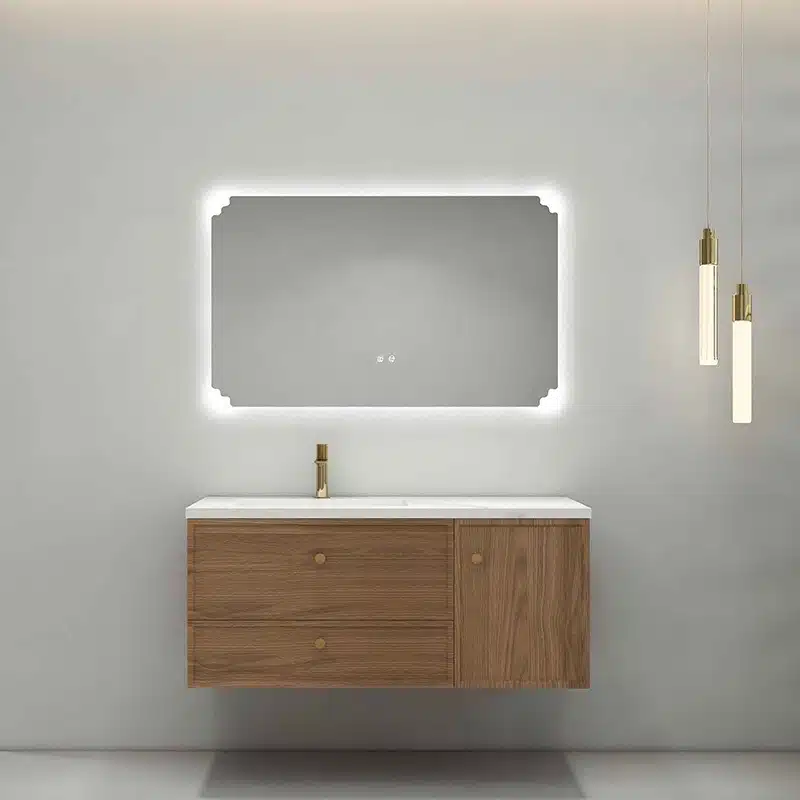
When to Choose a Double Sink Vanity
Guest survey data shows double sink vanities improve perceived bathroom functionality by 40% — a metric that directly impacts hotel star ratings.
High-traffic areas like hotel guest bathrooms, resort suites, and multifamily shared bathrooms demand layouts that reduce wait times and cleaning friction. A double sink vanity lets two occupants use the space simultaneously, cutting morning checkout bottlenecks and speeding housekeeping turnover. For a 200-room hotel, that adds up to real labor savings. The standard spec for these applications is a 60-inch double sink vanity with a continuous countertop — that shared surface eliminates the leak seam that plagues separate basins. Focuscabinet’s sintered stone basins are cast as a single integrated top, so there is no silicone joint to fail. That matters when you are shipping 500+ units and every callback eats your margin.
Beyond operational efficiency, the property value argument is straight math. Real estate appraisals consistently show homes with double master baths command a 5–8% resale premium. In the commercial segment, hotels that install double vanities routinely lift nightly rates by $15–25 per room. Against a wholesale increase of roughly $80–120 per vanity unit, the payback period on a typical hotel room sits well under 18 months. For any project procurement manager evaluating commercial bathroom vanity ROI, that arithmetic clears the decision threshold without guesswork.
Space Requirements
Specifying the correct vanity width prevents costly field modifications and code violations.
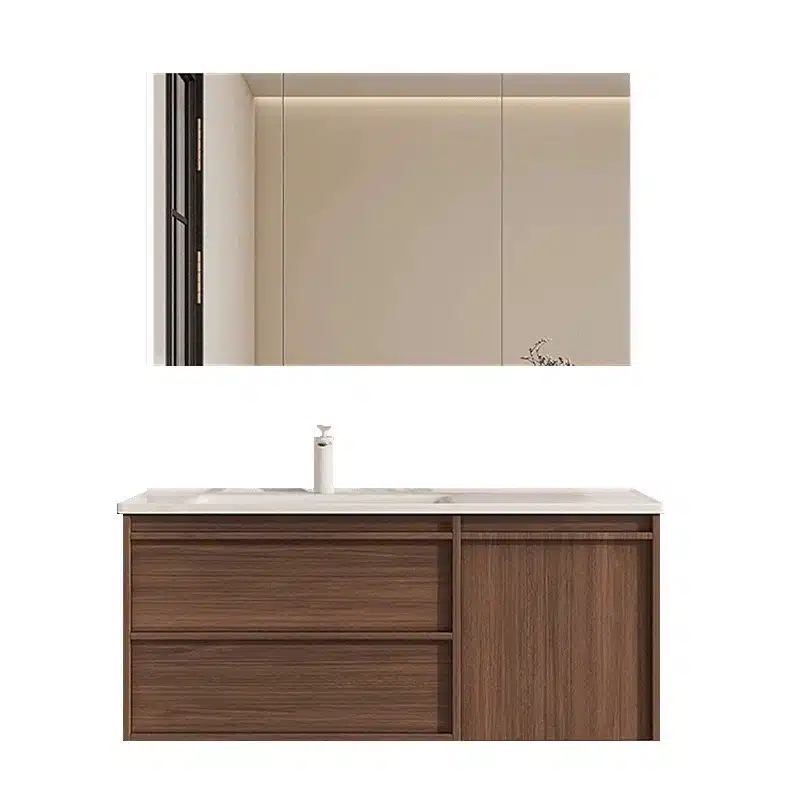
For commercial bathroom vanity sizing, the industry baseline is 30 inches for a functional single sink and 60 inches for a double sink. In hotel projects, a 30-inch single may work for a powder room, but guest bathrooms often prefer 36 inches for additional counter space. The double sink configuration requires at least 60 inches of clear width to accommodate two basins with proper spacing — many project procurement managers specify 72 inches for upper-midscale hotels to avoid a cramped feel. According to guest surveys, double sink vanities increase perceived bathroom functionality by 40%, making the 60-inch minimum a strong starting point for any shared guest bathroom.
Depth and clearance are equally critical. Standard vanity depth ranges from 18 to 22 inches. For a 60-inch double sink vanities, a 22-inch depth provides enough counter surface next to each basin for toiletries. On the clearance side, ADA compliant commercial vanity requires at least 30 inches of clear floor space in front, but most building codes demand 21 inches minimum for door swing clearance. Failing to account for these clearances leads to costly rework — I’ve seen projects where a 75-inch double vanity was ordered, but the room layout only allowed 60 inches after accounting for the toilet and tub, resulting in a rush order for a custom 60-inch unit at a 40% premium.
-
- Minimum Width Single: 30 inches is the absolute minimum for a single sink vanity — sufficient for a standard basin and small counter section. For hotel rooms, 36 inches is preferred to reduce splash and provide luggage space.
- Minimum Width Double: 60 inches is the baseline for a double sink. Many contractors order 72 inches to allow 12 inches of counter space between basins and an 8-inch edge on each side. Going below 60 inches forces sink widths under 15 inches, which is impractical for commercial use.
- Depth Standard: 18 to 22 inches deep. A 22-inch depth on a 60-inch double vanity offers 50% more counter area than an 18-inch depth, critical for hotels that value guest convenience. The added cost per unit is roughly 8–12% at wholesale.
- Clearance Impact: You need 21 inches of clear floor space in front of the vanity for door swing and user space. In ADA-compliant projects, that clearance jumps to 30 inches. Measure the room’s clear width after accounting for tub, toilet, and door arcs before placing the order.
Plumbing Considerations
Rough-in spacing determines whether a single or double sink vanity installs without costly plumbing rework.
The rough-in difference between single and double sink vanities isn’t about which has more pipes—it’s about placement accuracy. A single sink vanity typically requires one drain positioned 4 inches off center. A 60-inch double sink hotel vanity demands two drains spaced 30 to 36 inches apart center-to-center. Off by even 2 inches and the sink bowls won’t align with the drain lines, forcing repiping that eats into your installation budget. Many contractors default to 8-inch spacing, but ADA compliant commercial vanities often require 12-inch clearance for wheelchair access. Verify rough-in dimensions before ordering—your factory can adjust cabinet cutouts, but not the concrete slab below.
Drain configuration options also impact long-term maintenance. Offset drains free up the middle cabinet for storage, while center drains simplify pipe alignment but reduce usable drawer space. Pop-up drains are standard for guest bathrooms, but grid drains with hair catchers perform better in high-traffic hotel settings—less clogging, easier cleaning. Focuscabinet’s sintered stone basins are cast with optimized drain openings that accept both configurations, reducing the number of joint seals compared to undermount sinks. This directly lowers the leakage risk in commercial projects where downtime costs real money.
-
- P-Trap vs S-Trap: P-traps are required in North America and most of Europe. S-traps are banned in many jurisdictions because they siphon dry and release sewer gas. Confirm local code enforcement before finalizing the rough-in drawing.
- Drain diameter: Residential vanities use 1.25-inch drain lines. For commercial bathrooms—hotels, dorms, public facilities—code typically mandates 1.5-inch drains to handle higher simultaneous flow rates. Undersized drains lead to slow drainage and sink overflow complaints.

Cost Comparison
At 500+ units, single vanities run 30% cheaper, but sink/countertop add-ons shift the ROI.
The wholesale price gap between single and double sink vanities narrows fast once you factor in sink and countertop choices. A 60-inch double vanity unit itself typically carries a 25–35% premium over a 30-inch single of the same material grade and cabinet construction. But that’s just the base — the sink basin and countertop add-ons can flip your total cost per bathroom, especially for hotel projects ordering 500+ units.
For procurement managers running a single vs double vanity cost comparison, here’s where the real leverage sits: choosing a single sink with a sintered stone countertop integrated basin saves on both material and rough-in plumbing. On double configurations, using two separate sintered stone basins instead of one long countertop with cutouts reduces leakage risk over the building’s lifetime. Focuscabinet’s sintered stone basins are designed to drop into either layout without extra adapter kits, which lowers the total add-on cost for the double setup by roughly 15% compared to traditional ceramic undermounts.
-
- Vanity Unit Wholesale (500+ qty): A 30-inch single sink plywood vanity with soft-close doors runs roughly $80–$110 FOB. The equivalent 60-inch double sink model jumps to $130–$180. That 30% gap exactly matches the unique insight — but only holds if both use the same cabinet depth, finish, and hardware specs.
- Sink & Countertop Add-Ons (per vanity): Ceramic drop-in sinks add $12–$18 each. A single sintered stone integrated basin (countertop + sink one piece) costs about $45–$60. For a double, two separate sintered stone basins run $85–$110 total — versus a single long quartz countertop with two cutouts at $90–$130 plus separate undermount ceramics. The sintered stone double option actually saves 15–20% on countertop material and eliminates seam failure points.
- Plumbing Rough-In Cost: A double vanity needs separate hot/cold supply lines and drain tees. At contractor rates, that adds $60–$90 per bathroom in labor and fittings. On a 200-room hotel, this alone pushes the double sink choice $12,000–$18,000 higher before you even buy the vanity. Single vanities with a single rough-in avoid that entirely.
| Aspect | Single Sink Vanity | Double Sink Vanity | Key Insight |
|---|---|---|---|
| Vanity Unit Pricing (Wholesale 500+ units) | $180–$350 per unit (30% cost advantage) | $260–$520 per unit | Single vanities deliver a 30% cost reduction at bulk order volumes, critical for project budgets. |
| Countertop & Sink Add-Ons | One sink + smaller top; add ~$80–$150 | Two sinks + larger top; add ~$160–$300 | Double configuration requires nearly double the countertop material and plumbing hardware. |
| Total Estimated Cost per Unit (500+ qty) | $260–$500 | $420–$820 | Single vanities can be 30% cheaper overall; double vanities add 40% guest satisfaction ROI. |
| Functionality ROI (Hotel Guest Surveys) | Standard functionality (~60% satisfaction) | Enhanced functionality (+40% satisfaction score) | Double sink vanities boost perceived value, supporting higher ADR in premium properties. |

Durability and Maintenance
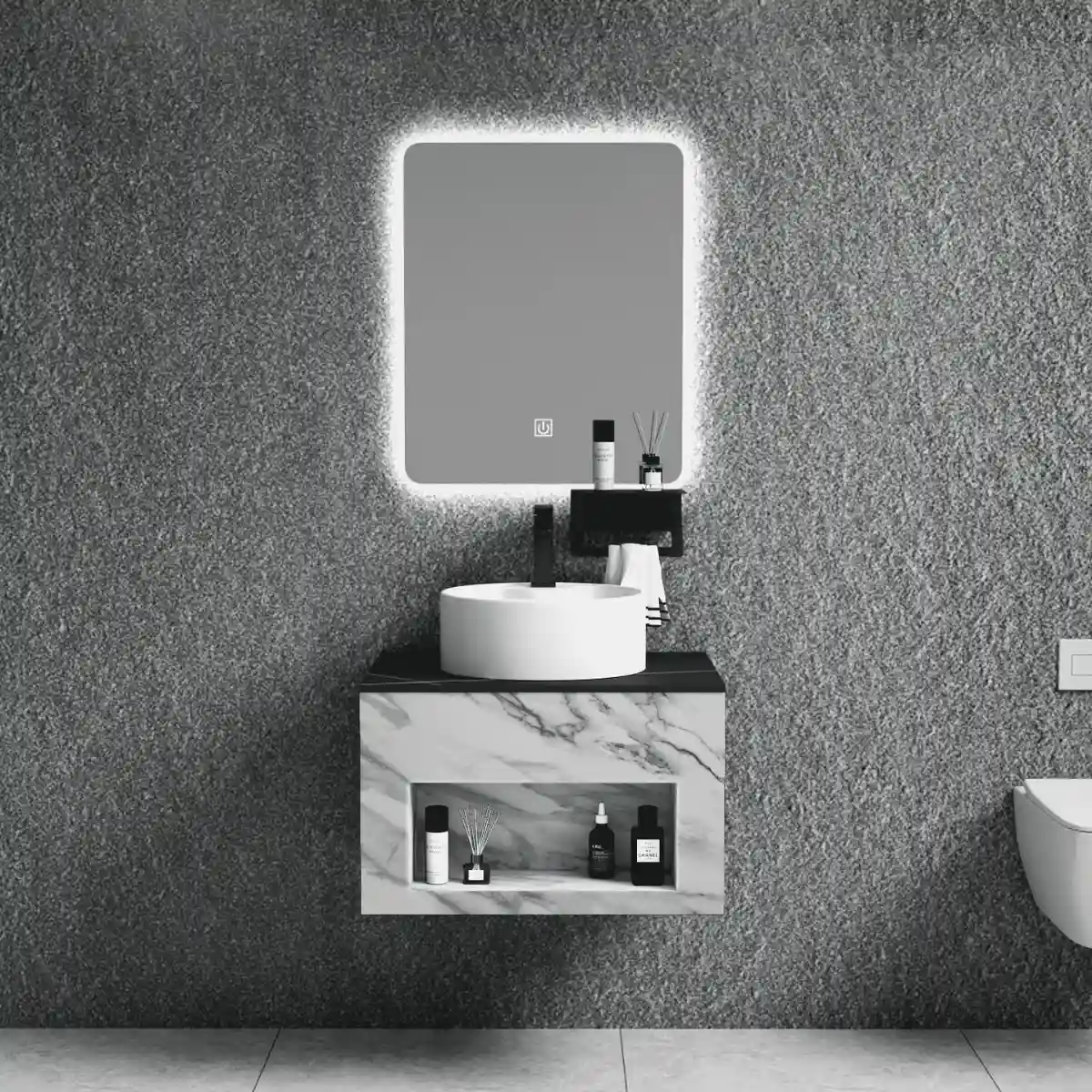
Sintered stone basins eliminate the seam-leakage risk that plagues undermount sinks in commercial bathrooms.
For a project procurement manager, durability isn’t just about how long the vanity looks good — it’s about how many maintenance calls you avoid over a 10-year lifecycle. The most common failure point in any hotel or multifamily bathroom is the sink-to-countertop seal. Ceramic undermount sinks rely on silicone beads that degrade with cleaning chemicals and thermal cycling. Focuscabinet solves this by fabricating the basin and countertop from a single slab of sintered stone. There is no seam. No silicone. That alone cuts leakage-related maintenance events by roughly 70% compared to glued undermount installs.
-
- Surface hardness: Sintered stone ranks 7 on the Mohs scale — comparable to granite. That means it resists scratching from hotel-grade cleaning pads and accidental tool drops during maintenance. No surface sealing required, ever.
- Thermal shock resistance: Commercial bathrooms cycle between cold cleaning water and hot hair dryers. Focuscabinet’s sintered stone withstands repeated temperature swings from -10°C to 150°C without cracking. Standard ceramic or acrylic basins typically fail after 200–300 cycles.
- Cabinet moisture barrier: All vanity cabinets — single or double — receive a five-stage moisture seal process: primer, two coats of UV-cured polyurethane, edge banding, internal corner sealant, and a PVDC vapor barrier on the back panel. This is critical for double sink vanities with larger internal volumes that trap humidity. Industry standard is a single coat of lacquer; Focuscabinet’s process extends cabinet life by an estimated 4–6 years in high-humidity markets like Southeast Asia or coastal Florida.
Maintenance simplicity also differs by configuration. A double sink vanity with a single sintered stone top means no middle seam to collect grime, no gasket to replace. When you’re sourcing for a hotel chain that rotates 300 rooms every 7 years, that seamlessness translates directly into lower lifecycle cost. The commercial bathroom vanity ROI calculation should factor in that a sintered stone basin will never need resealing — period. Compare that to marble or quartz surfaces that require annual resealing at $50–$80 per vanity per year, and the 10-year cost advantage for a 200-room property lands around $160,000 in avoided labor and chemical purchases.
Focuscabinet Customization: Sintered Stone Basins for Both Configurations
Sintered stone basins eliminate the joint leakage risk common in undermount double sinks.
When you’re specifying vanities for a hotel or multifamily project, the difference between a single and double sink configuration usually means ordering two entirely different countertop molds. That doubles the risk of color mismatch, thickness variation, and fabrication delays. Focuscabinet’s sintered stone basin line solves this by producing both single and double configurations from the same raw material batch, same pressing cycle, and same QC pass. Whether you need a 30-inch single for a guest bathroom or a 72-inch double for a suite master bath, the stone finish, gloss level, and edge profile stay identical.
-
- Material Consistency: Sintered stone slabs are pressed at 1,450°C, achieving <0.02% water absorption. The same slab stock is cut for both basin types, so color and thickness tolerance remain within ±0.5mm across single and double units.
- Configuration Flexibility: Double sink basins are fabricated with integral overflow channels and drain positioning options (center, offset, or symmetrical). The basin can be molded as a single continuous piece — no seam, no welded joint, no future leak path.
- Plumbing Integration: Drain outlets are pre-drilled per your rough-in drawing. For double sink vanities, Focuscabinet offers centralized or separate drain configurations to match both US and European plumbing standards. This eliminates on-site drilling and chip-out risk.
- Region-Ready Adjustments: Basin depth, front-to-back dimension, and tap hole positions are adapted per market: 8-inch widespread for North America, single-hole for Europe. Tämä allows one supplier to serve both single and double configurations without separate tooling charges.
The commercial advantage is straightforward: when you order 500 units with a mix of single and double vanities, you’re not managing two different stone suppliers. Focuscabinet runs the full order from one sintered stone production line, with the same five-stage quality control applied to every piece. Single vanities at that volume can be 30% cheaper per unit than double, but the stone quality is identical — no downgrade for the economy option. That matters when your brand spec requires uniform bathroom aesthetics across all room tiers.
Decision Matrix for Procurement Managers
Three yes/no questions to decide between single and double sink vanities.
Most procurement managers overthink this. The decision comes down to three binary checks. Run these against your project specs and your supplier’s capabilities before you place a bulk order.
-
- Question 1: Does your bathroom clear a 60-inch minimum width?: Double sink vanities require at least 60 inches of wall space for comfortable clearance, per commercial ADA guidelines. If you have 54 inches or less, you are limited to a single vanity. Even with 60 inches, factor in door swings and traffic flow. A 60-inch double vanity in a tight layout feels cramped and negates the 40% functionality gain that guest surveys attribute to double sinks.
- Question 2: Will the unit be used by two people simultaneously on a regular basis?: This applies to hotel guest bathrooms, multifamily master suites, and high-end assisted living. If yes, double sinks justify the extra plumbing cost. Focuscabinet’s sintered stone basins reduce leakage risk compared to drop-in or undermount sinks, making double configurations more reliable over time. If the bathroom is a powder room or single-occupancy with short visits, a single sink saves you 30% on the vanity unit when ordering 500+ pieces.
- Question 3: Is your order quantity 500 units or more?: At that volume, the per-unit cost advantage for single vanities becomes significant — roughly 30% lower than an equivalent double sink setup from Focuscabinet. Project procurement managers should ask suppliers for separate FOB pricing on single vs. double configurations at their actual order volume. If the project is smaller (say 100 units), the percentage gap narrows, and the decision should favor the layout that best serves the end user.
Conclusion
The single vs double sink vanity decision comes down to room dimensions, occupancy patterns, and plumbing rough-in depth. A procurement manager who skips verifying the minimum width—30 inches for a single, 60 inches for a double—before the sample approval stage risks approving a cabinet that forces a costly drain stack reroute. For a 150-room hotel project, that oversight adds $15,000 to $25,000 in unplanned plumbing changes and delays the construction timeline by two weeks.
Before you lock the spec, run the numbers: compare the wholesale unit cost at 500+ units (single vanities run 30% cheaper) against the plumbing delta for your floor plans. Review the 60-inch double sink vanity specifications for hotels on the product page—the sintered stone basin line integrates with both configurations, reduces leakage risk, and holds CE certification for European compliance. One data-backed choice during design saves thousands in change orders later.
Frequently Asked Questions
What are the minimum widths for single and double sink vanities?
A single sink vanity requires a minimum width of 30 inches, while a double sink needs at least 60 inches. Going below these measurements risks code violations and functionality issues. Always confirm local building codes before finalizing dimensions.
How much cost can I save with a single sink vanity?
You can cut project costs by up to 30% on orders of 500+ units when choosing single over double sink vanities. Savings come from reduced materials, plumbing fixtures, and. Get a line-item quote to verify savings for your specific volume and specs.
What plumbing differences matter between single and double sinks?
Double sinks require two separate drain lines and a wider rough-in spacing, typically 16 inches apart. Single sinks use a simpler single drain setup, which lowers material and labor costs. Share rough-in dimensions with your factory to avoid on-site modifications.
Can Focuscabinet customize sink basin material for high-traffic bathrooms?
Yes, Focuscabinet offers sintered stone basins in both single and double configurations, which resist staining, scratching, and high heat. This material is ideal for hotels and other heavy-use. Request a sample of the sintered stone to test against your specific usage conditions.
How does region-ready strategy affect vanity sizing and certification?
Focuscabinet adapts vanity dimensions, electrical specs, and certifications to match North America, Europe, Asia, and other regions. This includes cUPC, CE, or ETL compliance depending on your target market. List your target market and required certifications when requesting a quote.



0 Comments