
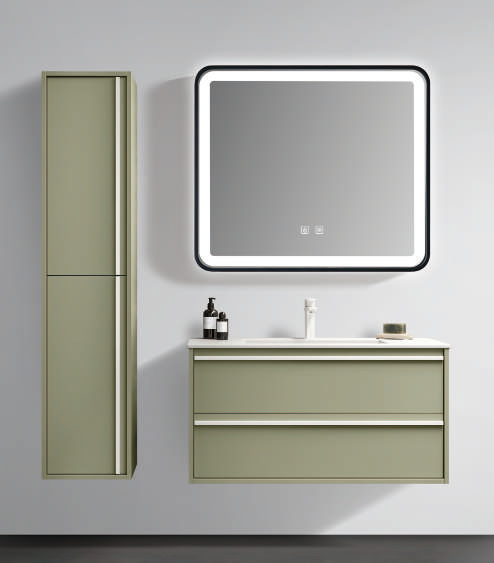
Sourcing from a capable OEM bathroom vanity china manufacturer is the one variable that separates a successful brand launch from a container of unsellable inventory. Many importers face a common scenario: the final product that arrives at the port barely resembles the approved prototype, with mismatched colors, poor joinery, and inconsistent finishes. This isn’t just a logistics headache; it’s a direct threat to your brand’s reputation and bottom line, leading to costly returns and customer complaints that can derail a product line before it even starts.
This guide provides a technical framework for vetting and partnering with the right factory. We’ll move past simple supplier lists to analyze the critical differences between white label, private label, and true OEM partnerships so you can choose the right model. We will examine the operational benchmarks that define a top-tier manufacturer, including their 3D CAD capabilities, prototyping speed, and processes for matching specific Pantone or Sherwin-Williams color codes. You’ll also learn how to use NNN agreements to protect your intellectual property and confirm a factory’s ability to handle custom packaging and logo etching for a market-ready product.
Why RTA is Dominating Vanity Imports in 2026
Ready-to-assemble vanities are gaining import market share because their logistical efficiency and lower labor requirements create a cost advantage that even new tariffs can’t completely erase.
Economic and Labor Factors Fueling RTA Growth
Ready-to-assemble (RTA) vanities have secured a larger share of the market by directly addressing two major industry pressures: rising costs and skilled labor shortages. Their affordability makes them the default choice for cost-conscious projects, while simple assembly removes the need for specialized installers. The rapid expansion of e-commerce has also made these products far more accessible, allowing brands to reach a national consumer base without a physical footprint.
- RTA vanities provide substantial cost reductions compared to pre-assembled units, making them a practical choice for budget-driven projects.
- The modular, simplified assembly process minimizes reliance on specialized labor, which cuts down installation time and project costs.
- Growing online sales platforms and detailed digital catalogs have accelerated market adoption, putting RTA products in front of more buyers.
Navigating Tariff Pressures on Imported Goods
The RTA import market faces a significant headwind with the 25% federal tariff on imported bathroom vanities that went into effect in late 2025. This tariff directly impacts the pricing structure of entry-level RTA products, which rely heavily on lean margins. The increased cost is being passed down the supply chain, with final consumer prices expected to rise as a result.
- The federal tariff introduces a major cost layer for all imported vanities, squeezing profit margins for importers and distributors.
- Industry analysts predict that retail prices for RTA vanities could climb by 25–35% as these tariff costs are absorbed into the final price.
- Even with this challenge, the inherent efficiency of the RTA model helps it maintain a price advantage over more expensive domestic alternatives.
Supply Chain Efficiency and Digital Tools as an Advantage
RTA’s competitive edge is anchored in its hyper-efficient supply chain. Flat-packing allows manufacturers to ship significantly more product in the same amount of space, drastically reducing freight costs per unit. This logistical saving helps offset the financial impact of tariffs. Additionally, the widespread adoption of digital design tools and online visualizers makes it easier for buyers to configure and order products, keeping RTA vanities a highly competitive option against semi-custom cabinetry.
- The modular, flat-pack design of RTA vanities optimizes container space, which significantly lowers per-unit shipping and logistics costs.
- Digital planning tools and online configurators are lowering the barrier to entry for buyers, allowing easy customization and direct ordering.
- A lean supply chain ensures RTA products remain more cost-effective than semi-custom or fully-assembled options, even with added tariffs.
Wood Quality vs. Assembly Hardware: What Matters Most?
A vanity’s lifespan is a two-part equation: wood quality and sealing determine its survival against moisture, while joinery and hardware dictate its functional performance over time.
The Critical Role of Wood Quality and Sealing in Durability
For bathroom vanities, the core material and its protective seal are the first line of defense against the high-humidity environment. This is what determines the product’s fundamental lifespan. High-quality solid hardwoods and water-resistant plywood offer the best resistance to warping and structural degradation. Engineered materials like high-moisture-resistant (HMR) MDF provide excellent dimensional stability and a smooth surface for finishes, making them a practical choice for high-use applications. Regardless of the core material, the sealing process is non-negotiable. An effective multi-layer coating prevents moisture from penetrating the wood, which is the primary cause of swelling, decay, and eventual failure. A vanity made from particleboard, even with good hardware, will not last in a bathroom setting.
How Joinery and Construction Methods Define Structural Integrity
The way a vanity is built is just as important as the materials used. Superior construction methods create a rigid, durable frame that prevents loosening and failure. Advanced joinery, such as dovetail and mortise-and-tenon construction, provides immense mechanical strength that far exceeds simple adhesives or screws. These techniques create interlocking joints that distribute stress across the entire frame. Reinforced corner blocks add another layer of stability, ensuring the cabinet can withstand the daily forces of opening doors and drawers. While assembly hardware like hinges and drawer slides is important for the user experience, its effectiveness is entirely dependent on the strength of the underlying frame it’s attached to.
Why Integrated Design Is the Key to Longevity
Neither wood quality nor hardware can guarantee performance in isolation. Long-term durability comes from a thoughtful integration of both. A durable vanity is a system where high-grade materials are joined with expert construction techniques and fitted with reliable hardware. Excellent wood cannot compensate for weak joinery that allows the frame to flex and sag. Likewise, premium soft-close hinges cannot fix a cabinet door made from a material that will swell and delaminate. The interaction between materials, sealing, and assembly methods is what creates a product that functions correctly for years, not just months.
Unlock 40,000+ Custom Vanity Combinations.

Who Are the Top 10 RTA Bathroom Vanity Manufacturers?
The Ready-to-Assemble (RTA) vanity market is split between premium domestic brands offering established quality and direct-from-factory suppliers providing deep material customization and significant cost advantages for volume buyers.
When sourcing RTA vanities in 2026, buyers are navigating a diverse landscape. At one end are well-established North American and European brands known for premium materials like solid hardwoods, extensive warranties, and strong retail presence. At the other end are direct-source manufacturers, often based in China, who provide unparalleled flexibility in materials, specifications, and pricing. This allows importers, wholesalers, and large-scale project managers to dial in product specs to meet specific budget targets. The list below includes both types of players, from luxury handcrafted furniture makers to agile, high-capacity factories.
| Manufacturer | Core Proposition | Target Market / Price Point |
|---|---|---|
| FocusCabinet | Direct-source factory offering budget-to-premium material flexibility (PVC, Plywood, Solid Wood) and e-commerce-ready packaging. | B2B Wholesalers, Project Contractors, E-commerce Brands |
| James Martin Furniture | Premium handcrafted vanities using North American hardwoods and traditional dovetail joinery. | Luxury Residential, High-End Retail |
| Lily Ann Cabinets | Factory-direct US distributor focused on affordable pricing with quality features like a 12-step finishing process. | DIY Homeowners, Value-Focused Contractors |
| Kohler | Global brand known for superior build quality, innovative design, and exceptional warranty coverage. | Premium Residential & Commercial Projects |
Why FocusCabinet Excels in Plywood Quality & Production Agility
As a direct manufacturer in China, FocusCabinet provides durable and regionally adapted bathroom solutions to over 1,000 distributors worldwide. Our 10,000㎡ factory uses precision CNC machinery and a five-stage quality control system to produce vanities from materials like moisture-resistant plywood, ensuring all components align perfectly for quick assembly. This manufacturing control allows partners to source reliable, market-ready products engineered to their exact specifications and price points. We empower brands to choose their desired material grades, from standard Poplar Core plywood to premium Full Eucalyptus Core for superior hardness and water resistance.
- Offers a diverse material portfolio including high-density waterproof PVC, multi-grade plywood, premium solid woods, and scratch-proof sintered stone.
- Engineers products to meet specific regional standards, including UL/CSA for North America and CE for Europe.
- Maintains a high production capacity of 5,000 vanity units per month to support large-scale supply chain demands.
- Provides extensive customization and supports new brand incubation with a low MOQ of just 20 units for custom production orders.
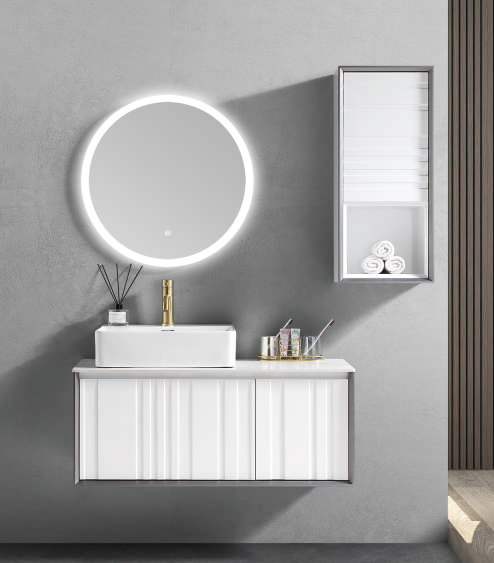
Cam-Lock vs. Dovetail Clips: Which Assembly System Is Better?
Dovetail joints provide superior long-term structural integrity for premium brands, while cam-lock systems offer cost-efficiency and fast assembly for ready-to-assemble (RTA) and budget-focused product lines.
Dovetail Assembly: The Standard for Durability and Aesthetics
Dovetail joints create a strong, interlocking wood connection that significantly enhances cabinet durability. The fan-shaped geometry forms a continuous point of contact along the entire joint, providing exceptional structural integrity. This method offers a clean, hardware-free interior that signals a premium, long-lasting product built with craftsmanship.
- Forms interlocking wood joints with strength comparable to traditional mortise-and-tenon joinery, supporting heavy loads without failure.
- Creates superior structural integrity, critical for hanging cabinets and preventing separation over years of use.
- Leaves no visible plastic or metal hardware inside the cabinet, resulting in a seamless, high-end appearance.
- Used in high-end cabinetry to justify a premium price point due to its proven craftsmanship and longevity.
Cam-Lock Assembly: Designed for Cost-Efficiency and Simple Installation
The cam-lock system uses metal fasteners inserted into pre-drilled holes for rapid, tool-minimal construction. This method prioritizes speed and cost-efficiency, making it ideal for ready-to-assemble (RTA) and budget-conscious product lines. While practical, the reliance on a few connection points and sometimes plastic components can compromise long-term integrity compared to dovetail.
- Enables quick installation requiring minimal tools, which simplifies the process for both distributors and end-users.
- Allows for easy disassembly and adjustment, a practical benefit for transportation and post-install modifications.
- Lowers overall production costs, making the final product more competitive in price-sensitive markets.
- The trade-off is lower structural strength, with visible hardware that may bend, break, or loosen over time.
Which System Fits Your Brand’s Needs?
The right assembly method depends entirely on your target market and brand positioning. Dovetail construction is a non-negotiable feature for luxury, long-life products where perceived value is paramount. Cam-locks serve markets where affordability, flat-pack logistics, and ease of assembly are the primary decision drivers.
- For premium bathroom vanities, specifying dovetail assembly in both drawers and cabinet boxes reinforces brand value and product longevity.
- For cost-sensitive segments or large-scale commercial projects, cam-locks offer a practical balance of simple assembly and affordability.
- A flexible factory partner can provide both options, allowing you to engineer products specifically for your target customers’ expectations and price points.
What Are the Biggest Red Flags in Cheap Flat Packs?
The biggest failures in budget flat-pack vanities stem from two core issues: using materials like low-grade fiberboard that can’t survive bathroom humidity and prioritizing low production costs over functional, ergonomic design.
When sourcing flat-pack vanities, it’s easy to get distracted by a low price tag. The real cost often appears within a few years as critical failures emerge from choices made at the factory level. These are not minor cosmetic issues; they are fundamental flaws in material science and engineering that render the product unfit for its intended environment.
Low-Grade Materials and Poor Sealing
A primary issue in the cheap flat-pack market is the use of materials completely unsuited for humid bathroom environments. Manufacturers often use low-grade MDF or particleboard with finishes that lack durability. The paint or laminate might look good in a showroom, but it fails to create a waterproof barrier. This allows moisture to penetrate the core, causing rapid swelling, delamination, and structural failure.
- Finishes prioritize initial showroom aesthetics over real-world moisture resistance.
- Painted surfaces are often inadequately sealed with thin, flexible paints that crack and peel, allowing moisture to penetrate the core material.
- The base materials, like low-density fiberboard, swell and delaminate when exposed to the constant humidity of a bathroom.
Impractical Design and Wasted Space
Beyond material failures, cheap flat packs frequently feature poor structural designs that compromise usability. Floor-sitting bases are a common cost-saving measure, but they waste visual space, make small bathrooms feel cramped, and complicate cleaning. Fixtures are another area where costs are cut at the expense of function. Vessel sinks, for example, look modern but they dramatically reduce usable counter space and create ergonomic challenges for daily use.
- Floor-sitting vanity designs can make small bathrooms feel more claustrophobic and are harder to clean around.
- Vessel sinks are a common choice for budget style, but they sacrifice critical, practical counter area.
- The overall design prioritizes low manufacturing and shipping costs over long-term functionality and user convenience.
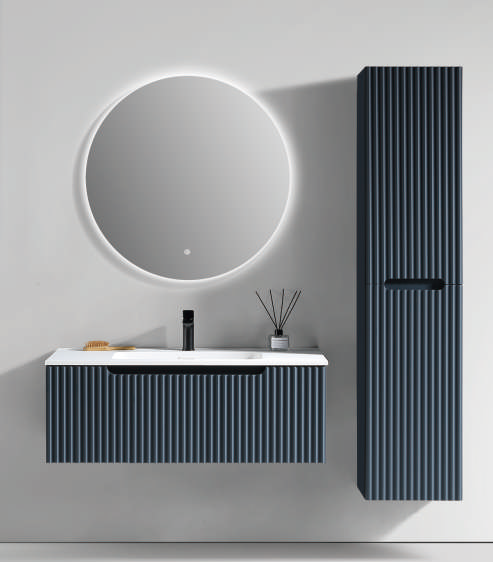
How Much Freight Can You Save with RTA vs. Fully Assembled?
Choosing RTA (Ready-to-Assemble) over fully assembled vanities consistently cuts direct freight expenses by 30-50% by maximizing container and truck space.
Cost Savings Through Compact Shipping
The primary advantage of RTA cabinets is logistics efficiency. By shipping in a compact, flat-packed format, they occupy a fraction of the freight volume compared to bulky, pre-assembled units. This reduction in cubic space directly translates to lower freight charges, with many businesses reporting savings between 30% and 50%. On a per-unit basis, this can mean saving $50 to $100 per cabinet. For large-scale projects or container shipments, a single truck can transport components for multiple jobs, dramatically improving load efficiency and lowering the landed cost of each unit.
Faster Lead Times and Availability
RTA cabinets provide a clear advantage in availability and speed. Because they are stocked as flat-packed components, most product lines are ready to ship within 2-3 business days. This contrasts sharply with fully assembled cabinets, which typically require lead times of 3-6 weeks for stock orders and can extend to 6-12 weeks for custom configurations. The ability to dispatch inventory quickly makes RTA a superior choice for projects with tight deadlines or for e-commerce brands that need to maintain consistent stock levels.
Reduced Risk of Transit Damage
The nested and secure packaging of RTA components significantly lowers the risk of damage during shipping. Components are tightly packed in reinforced cartons, often with molded foam, which minimizes movement and protects against impacts. This is why many manufacturers offer “E-commerce Ready” packaging that passes the ISTA 3A Drop Test. If damage does occur, the logistical benefit continues. Instead of dealing with the return and replacement of an entire assembled cabinet, suppliers can ship just the affected part, often within 1-2 business days. This simplifies claims, reduces waste, and gets projects back on track with minimal delay.
Conclusion
Finding the right manufacturing partner is about aligning production capabilities with your brand’s specific vision. Key details like NNN agreements for design protection, precise color matching, and durable e-commerce packaging are what elevate a product line. A true OEM relationship allows you to build a unique brand identity, not just resell standard catalog items.
If you are ready to develop a custom bathroom vanity line, our team can guide you through the process from initial design to final production. Contact us to discuss your project requirements or order a refundable sample to assess our quality.
Frequently Asked Questions
OEM bathroom vanity manufacturer china?
An effective Original Equipment Manufacturer (OEM) for bathroom vanities in China will have robust quality control systems like ISO 9001, verifiable material sourcing (e.g., CARB2/EPA TSCA Title VI compliant panels), and a proven track record of exporting to your target market. Look for manufacturers with strong in-house engineering teams that can translate your designs into production-ready specifications and manage complex international logistics.
Private label cabinet supplier?
A private label cabinet supplier enables you to sell a proven product line under your own brand. The ideal partner offers a comprehensive catalog of base models, finishes, and hardware that you can customize. Key evaluation criteria include their production capacity to scale with your growth, quality consistency across batches, and their ability to provide marketing support materials like high-resolution imagery and detailed product specifications for your e-commerce platforms.
Custom vanity factory china?
When sourcing from a custom vanity factory in China, prioritize those with documented expertise in bespoke projects. Unlike mass-producers, a true custom factory will have flexible production lines capable of handling unique dimensions, non-standard materials, and complex designs. Request a portfolio of past custom work and verify their prototyping process, as this is critical to ensuring the final product meets exact specifications before committing to a full production run.
How to start a vanity brand?
To launch a vanity brand in 2026, focus on a robust e-commerce strategy leveraging digital design tools to attract customers. First, identify a niche (e.g., premium RTA, sustainable materials). Second, secure a reliable import supply chain, factoring in the 25% federal tariffs on vanities to ensure price competitiveness. Third, build a strong online presence with high-quality digital catalogs and mobile-friendly ordering, as these are key market drivers. Finally, establish efficient logistics for delivery and a clear process for customer installation support.
MOQ for custom color vanities?
The Minimum Order Quantity (MOQ) for custom color vanities typically ranges from 50 to 200 units per color and per style. This is because custom colors require a dedicated production setup, including unique paint or stain mixing, line cleanup, and separate inventory management. Factories may offer lower MOQs for a surcharge or as part of a larger, long-term contractual agreement.
NNN agreement furniture china?
An NNN (Non-Disclosure, Non-Use, Non-Circumvention) agreement is essential for protecting your intellectual property when manufacturing furniture in China. Unlike a standard NDA, an NNN is specifically drafted to be enforceable in Chinese courts. It legally prevents the factory from using your designs for other clients (Non-Use), selling your product directly to your customers (Non-Circumvention), and sharing your proprietary information. It must be written in Chinese and governed by Chinese law to be effective.




0 Comments