


The debate over RTA vs assembled cabinets directly determines the profitability of every 40-foot container you import. As ocean freight costs fluctuate and warehouse space becomes a premium asset, shipping pre-built vanities means paying to transport empty air—a logistical error that erodes margins before a single unit is sold. This decision is no longer about customer convenience; it’s a critical calculation that impacts your entire supply chain’s financial health.
This guide moves beyond simple price tags to provide a complete cost analysis. We’ll run the numbers on labor expenses to see if they truly negate RTA savings, calculate the warehouse footprint difference, and explore why flat-packed items often arrive with less damage. We will also introduce a hybrid model for operational flexibility and end with a clear breakdown of the potential profit inside a standard 40HQ container.
What Is the “Shipping Air” Problem?
Maritime shipping is responsible for about 3% of global CO₂ emissions, releasing pollutants that cause an estimated 60,000 premature deaths annually and making logistical efficiency a critical environmental and public health issue.
The term “shipping air” refers to two interconnected problems in logistics. The first is the literal inefficiency of shipping bulky, pre-assembled goods that take up container space with empty, unutilized volume. The second, more systemic issue, is the significant contribution of commercial maritime shipping to global air pollution. This industry moves over 80% of the world’s goods by burning fossil fuels, emitting roughly 1,000 megatons of CO₂ each year.
Key Pollutants from Commercial Shipping
Commercial ships are a major source of harmful atmospheric pollutants. The reliance on heavy fuel oil results in emissions that have widespread effects far beyond the shipping lanes themselves.
- Sulfur oxides (SOx) and nitrogen oxides (NOx): These compounds contribute directly to acid rain and are linked to severe respiratory and cardiovascular illnesses. The shipping industry alone accounts for 9% of global SOx and up to 30% of global NOx emissions.
- Particulate matter (PM): Fine soot particles released from ship exhausts are a primary cause of an estimated 60,000 cardiopulmonary and lung cancer deaths around the world each year.
- Greenhouse gases: Beyond CO₂, ships also release methane and other gases that trap heat in the atmosphere and accelerate climate change.
Health and Environmental Consequences
The pollution from maritime transport has direct, measurable impacts on both ecosystems and human populations, often concentrated in coastal regions but extending hundreds of kilometers inland.
- In East Asia, emissions from shipping were connected to between 14,500 and 37,500 premature deaths in a single year.
- Particulate emissions can travel as far as 900 km inland, degrading air quality for communities that are nowhere near a port.
- For major coastal cities, ships can represent a significant portion of local pollution, sometimes accounting for up to 7% of all mobile source nitrogen oxide emissions.
Future Projections and Global Impact
Without aggressive regulatory changes and a shift toward cleaner technologies, the environmental burden of global shipping is set to increase dramatically.
- If current industry trends hold, total shipping emissions are projected to grow by up to 50% by 2050.
- As other economic sectors work to decarbonize, shipping’s share of total global emissions could rise from 3% to as much as 17% by mid-century, making it one of the largest polluting industries on the planet.
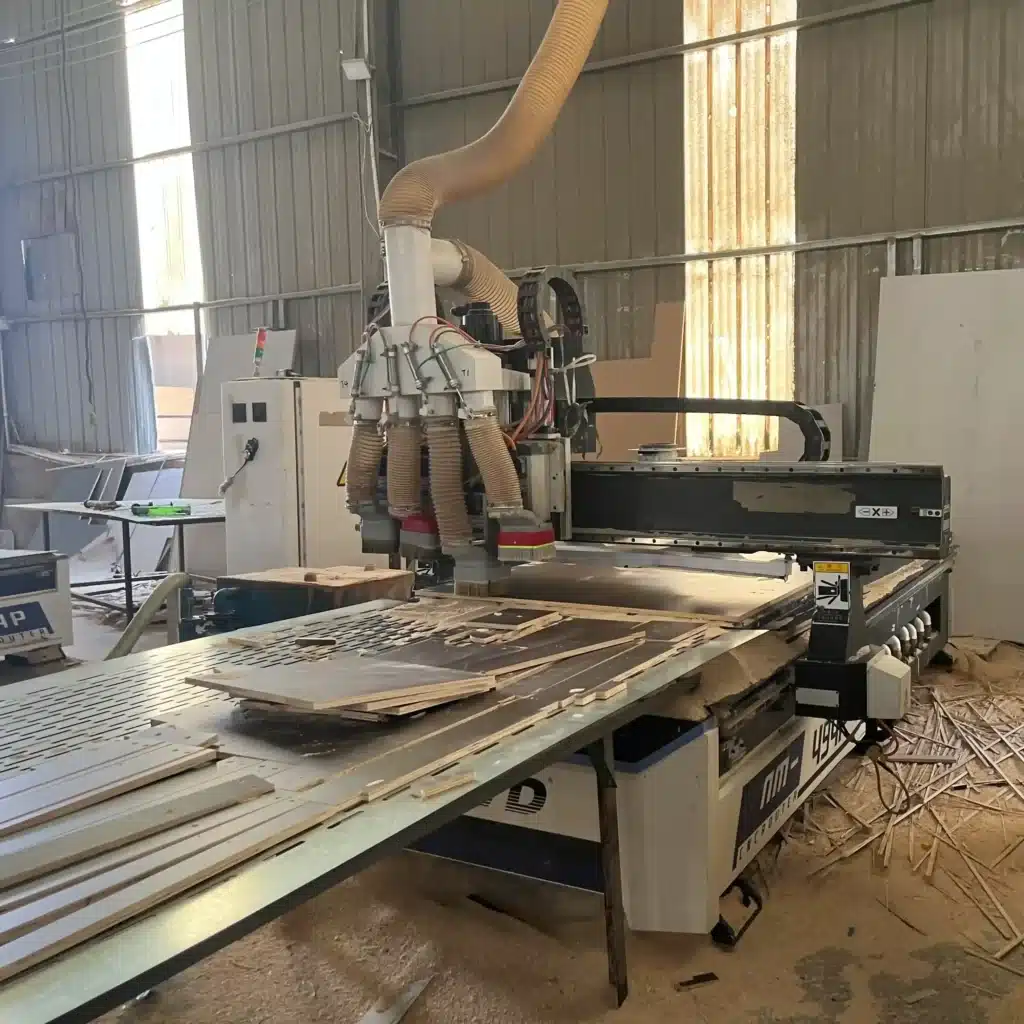
RTA vs. Assembled: Which Is Better?
The choice between Ready-to-Assemble (RTA) and pre-assembled vanities is a direct trade-off: RTA offers significant cost and speed advantages by shifting assembly risk to you, while pre-assembled units deliver factory-guaranteed quality at a higher price and longer lead time.
Cost and Delivery Speed
The primary distinction between RTA and assembled cabinets is their cost structure and delivery timeline. RTA options are engineered for maximum cost-efficiency and a rapid turnaround. By shipping flat-packed and delegating assembly to the buyer, RTA vanities typically offer a 15-20% price reduction. This logistical efficiency also means delivery times are short, often within one to two weeks. Pre-assembled cabinets prioritize convenience, but this comes at a premium. The factory labor and increased shipping volume translate to a higher price and much longer lead times, which can extend to three months.
| Metric | Ready-to-Assemble (RTA) | Pre-Assembled |
|---|---|---|
| Unit Cost | 15–20% Lower | Baseline (Higher) |
| Delivery Lead Time | 1–2 Weeks | Up to 3 Months |
| Shipping Efficiency | High (Flat-Pack) | Low (Bulky Volume) |
| Accountability | Buyer/Installer assumes assembly risk | Manufacturer guarantees construction |
Assembly, Quality, and Risk
Your choice determines who is responsible for the final build quality. Assembled cabinets arrive with factory-guaranteed workmanship, built in a controlled environment with industrial tools that ensure consistency. This minimizes on-site errors and simplifies installation. Manufacturers of assembled units also assume accountability for transit damage and typically offer more comprehensive warranties. RTA cabinets shift the assembly risk directly to the customer or their installer. You become responsible for quality control during the build. While a properly constructed RTA vanity can match the quality of a pre-assembled one, any errors in the process are your liability to fix or replace.
Get Custom Bathroom Vanities Your Market Craves

Does Labor Kill the Savings?
The financial case for RTA cabinets hinges entirely on local labor rates; the model breaks down when on-site crew costs exceed the initial savings from shipping and materials.
A common misconception is that Ready-to-Assemble (RTA) vanities are always the cheaper option. While they offer significant upfront savings on materials and freight, the total project cost is determined by the expense of on-site assembly. This creates a clear financial trade-off: savings on goods versus spending on labor. Forgetting to factor in assembly time and local wages can completely erase any perceived benefit.
The Breakeven Point for Labor Costs
The financial advantage of RTA cabinets disappears as on-site labor rates climb. Analysis shows a distinct inflection point where the initial savings are fully offset by high assembly expenses. Below this point, RTA delivers a strong cost advantage. Above it, the math favors pre-assembled units where labor is a fixed, known cost baked into the product price.
| Cost Factor | RTA (Ready-to-Assemble) Model | Pre-Assembled Model |
|---|---|---|
| Upfront Product Cost | Lower due to flat-pack shipping and no factory assembly labor. | Higher, as it includes factory assembly costs and bulkier shipping. |
| On-Site Labor | A variable cost that must be added to the project budget. | $0. Assembly is already completed by the manufacturer. |
| Financial Breakeven Point | Cost-effective when crew rates are below ~$128 per hour. | More economical when crew rates exceed ~$128 per hour. |
How Regional Wages Influence Cabinet Choice
The decision between RTA and pre-assembled is fundamentally a local one, driven by regional wage standards. In markets with lower labor rates, contractors and builders can maximize their margins by leveraging the material and shipping savings from RTA products. The cost of their crew to assemble the units is low enough to preserve the initial discount. But in premium markets with high labor costs—think major metropolitan areas—skilled trade rates are expensive. Here, builders find that pre-assembled units reduce total project costs. The time saved by not having to assemble cabinets on-site is worth more than the discount on the RTA product itself.

How to Save Warehouse Space?
Effective warehouse optimization isn’t about expanding square footage; it’s about maximizing cubic volume with vertical racking and using smart systems to accelerate inventory turnover.
Optimize Layouts with High-Density and Vertical Storage
The most direct way to increase capacity is to stop thinking in square feet and start thinking in cubic meters. RTA vanities, with their compact, flat-pack design, are perfectly suited for high-density storage. Instead of expanding your warehouse footprint, you can use tall racking systems to turn the empty air above your inventory into profitable storage space. This approach, combined with narrow aisle racking, dramatically reduces the amount of floor space wasted on aisles and cuts down on handling costs.
- Use vertical storage like tall racking systems to leverage the full height of your facility. This converts unused air space into active inventory storage.
- Implement high-density systems such as narrow aisle racking to reduce aisle width and maximize the space dedicated to holding product.
Implement Smart Inventory and Flow Systems
A smart layout only works if it’s supported by smart systems. Data-driven inventory management is key to optimizing space. By knowing exactly what you have and where it is, you can improve inventory turnover and shrink the footprint required for both long-term storage and short-term handling.
- A Warehouse Management System (WMS) gives you real-time inventory tracking and allows for dynamic slotting, placing high-demand vanities in the most accessible locations based on sales data.
- Cross-docking is ideal for fast-moving stock. Products move directly from the receiving dock to the shipping dock, bypassing storage entirely and freeing up valuable rack space for other inventory.
RTA vanities have a fundamentally lower damage rate during transit because flat-packing eliminates the two biggest failure points of assembled cabinets: vulnerable corners and pre-stressed structural joints.
Why Does RTA Survive Better?
Reduced Damage from Flat-Packing
Pre-assembled cabinets ship as large, hollow boxes. This form factor makes them inherently vulnerable to corner damage and structural cracks from impacts during loading and transit. RTA vanities are packed as a dense set of individual flat components, a method that provides natural protection. This logistical difference is a primary driver of lower damage claims for RTA products.
- Each component is wrapped and cushioned separately, isolating it from shocks and vibrations that would otherwise transfer through an entire assembled frame.
- Flat packs create a stable, dense package that is easier to handle than a bulky assembled unit, reducing the risk of being dropped or mishandled by logistics teams.
- If any damage occurs, it is almost always limited to a single, easily replaceable part instead of compromising the entire cabinet structure.
Protection Against Joint and Structural Stress
The most common point of failure for assembled cabinets during shipping is the stress placed on factory-made joints. Constant vibration and impacts weaken glue, loosen screws, and can crack seams. RTA cabinets completely bypass this problem by shipping without any assembled joints to begin with.
- There are no pre-assembled corners or glued seams to crack under the strain of a long journey by road or sea.
- A cabinet’s structural integrity isn’t put to the test until it is assembled in a controlled environment on-site.
- This design shifts the risk away from the unpredictable shipping process to the final, professional installation stage.

What Is the “Hybrid Model”?
The hybrid model is a strategic procurement method that blends the cost savings of RTA with the quality control of factory assembly for complex or high-risk units.
Combining RTA and Pre-Assembled for Quality Control
This approach balances cost efficiency and risk management within a single project. The strategy involves ordering standard, high-volume cabinets—like base and wall units—in a ready-to-assemble (RTA) format to maximize freight and material savings. At the same time, you source complex or specialty units pre-assembled directly from the factory.
- Standard base and wall cabinets are sourced as RTA to capture the lowest material and shipping cost per unit.
- Specialty items like lazy susans, blind corner cabinets, and intricate drawer systems are ordered pre-assembled.
- This ensures factory-level quality control on the most error-prone components, avoiding costly on-site assembly mistakes and delays.
Off-Site Assembly for On-Site Efficiency
An alternative hybrid model focuses on optimizing labor and logistics. Contractors purchase all cabinets in RTA format to get the cost benefits but assemble them in a controlled warehouse environment before delivery to the job site. This method separates the assembly process from the potential chaos of an active construction site, eliminating delays caused by limited space, weather, or scheduling conflicts with other trades.
This strategy is especially effective for multi-unit residential or commercial projects. It allows for parallel operations where one team assembles vanities in a workshop while another team prepares the job site for installation. The result is a streamlined workflow that combines RTA material savings with the efficiency of pre-assembled delivery.
How Much Profit in a 40HQ?
True container profitability isn’t about negotiating the shipping rate; it’s about maximizing space utilization to drive down the landed cost of every single unit.
Optimizing Per-Unit Freight Costs
In 2026, the focus has shifted from the total container rate to the landed cost per item. While a 40HQ container to North America runs about $2,400–$2,500, that figure is just the starting point. The real leverage comes from packing density. By fitting just 5–10% more product into the same container, an importer effectively lowers the freight cost allocated to each unit. This seemingly small gain directly protects your profit margin on every sale, turning logistics from a simple expense into a competitive advantage.
| Metric | Inefficient Loading (Assembled) | Optimized Loading (RTA) |
|---|---|---|
| Container Capacity (40HQ) | ~150 Vanity Sets | ~180-200 Vanity Sets |
| Per-Unit Freight Cost (at $2,500) | $16.67 | $12.50 – $13.89 |
| Profit Impact | Baseline | Adds $500–$750 in pure profit per container |
The Impact of Container Space Utilization
How well you use a container’s volume is the single largest driver of profit. Wasted space is paid-for freight that carries nothing, directly eroding your margins. With carrier operating margins dropping, they have little room to offer rate discounts. This makes strategic loading the primary mechanism for protecting your business. Experienced importers use mixed-order strategies with flat-packed RTA products to achieve up to 95% space utilization. Inefficient loading isn’t just a minor operational issue; it’s a direct cause of lower profitability because it forces you to spread fixed shipping costs over fewer products.
Conclusion
The choice between RTA and assembled vanities is more than a simple cost comparison; it’s a strategic decision that impacts shipping volume, warehouse efficiency, and damage rates. Selecting the right format depends entirely on your business model, from high-volume wholesale to project-based installations or e-commerce. Understanding these logistical and financial variables is key to building a more profitable import strategy.
Evaluate how an RTA or hybrid model could fit into your supply chain. Contact our team to discuss your specific needs or request a refundable sample to test our quality firsthand.
Frequently Asked Questions
Is RTA cheaper than assembled vanity?
Yes, Ready-to-Assemble (RTA) vanities are almost always cheaper than their pre-assembled counterparts. The savings come from two main areas: eliminating the cost of factory labor for assembly and significantly lower shipping costs due to the compact, flat-pack packaging. This makes RTA a more budget-friendly option upfront.
Cost to assemble bathroom vanity?
The cost to assemble a bathroom vanity can be zero if you do it yourself, requiring only your time and basic tools. If you hire a professional handyman or contractor, you can expect to pay between $150 and $400 for assembly alone. This cost can vary based on the vanity’s size, complexity, and local labor rates. Note that this price is for assembly only and does not include installation, plumbing, or countertop placement.
Are RTA cabinets good quality?
The quality of RTA cabinets is determined by their materials and construction, not by the fact they are unassembled. High-quality RTA cabinets are excellent and often feature premium materials like solid wood frames, plywood boxes (instead of particleboard), dovetail drawer joints, and soft-close hardware. The quality spectrum is wide, so it’s critical to review product specifications to ensure you are getting a durable, well-made product.
Shipping cost RTA vs assembled?
Shipping costs for RTA cabinets are significantly lower than for assembled cabinets. RTA products are flat-packed, which drastically reduces their volume and weight, allowing more units to fit on a single pallet or in a container. This shipping efficiency translates directly into lower freight charges for the customer. Assembled vanities are bulky, fragile, and occupy a large amount of space, which increases their shipping and handling costs substantially.
How long to assemble RTA vanity?
For a person with basic DIY skills, assembling a standard single-sink RTA vanity typically takes between 1 to 3 hours. The exact time depends on the vanity’s complexity, the clarity of the instructions, and your familiarity with the tools. More complex units with multiple drawers or intricate features may take longer. Preparing a clean workspace and organizing all parts beforehand can speed up the process considerably.
Pros and cons of unassembled cabinets?
Pros: The primary advantages are a lower purchase price and reduced shipping costs. Unassembled cabinets are also easier to transport into homes, especially through narrow hallways or up staircases. There is also a lower risk of damage during transit compared to a large, fully assembled unit.
Cons: The main disadvantage is the requirement for self-assembly, which costs you time and effort. It requires basic tools, a suitable workspace, and the ability to follow instructions carefully. Any errors during assembly could potentially compromise the cabinet’s structural integrity or finish.





0 Comments