


The rta vs assembled cabinets decision on a large multi-family project isn’t about style; it’s a critical logistical calculation that can either protect your profit margin or trigger liquidated damages from schedule delays. One wrong assumption about freight capacity, on-site labor rates, or job site storage can cascade into chaos. Choosing pre-assembled units might seem faster, but it can triple your shipping costs and create a storage nightmare on a tight urban site. Opting for ready-to-assemble seems cheaper upfront, but it can introduce unpredictable labor expenses and quality control issues if not managed correctly.
This guide moves beyond simple pros and cons to provide a technical framework for general contractors. We will break down the freight math for shipping 800 RTA units versus 250 assembled ones and calculate the real cost of using $50/hour union labor for on-site assembly. We will also analyze damage rates in transit, the structural difference between cam-lock and glue-and-dowel construction, and a hybrid warehouse model that can offer the best of both worlds.
The Freight Math: 800 Units (RTA) vs. 250 (Assembled)?
Flat-packing Ready-to-Assemble (RTA) cabinets allows you to ship over three times the volume in the same freight space as pre-assembled units, creating massive cost efficiencies on large-scale projects.
Volume and Space Efficiency
The primary advantage of RTA cabinets in large-volume orders is volumetric efficiency. Shipping flat-packed reduces total volume by 30–50% compared to fully built cabinets. This means an order of 800 RTA vanities can often be consolidated into a single shipment, whereas a much smaller order of 250 pre-assembled units would require multiple freight vehicles. The compact boxes maximize every cubic foot of container space, a critical variable for managing project logistics and budgets.
Cost Implications at Scale
Reduced shipping volume directly lowers freight charges. This logistical saving, combined with the inherent material savings of $50 to $100 per cabinet, makes the RTA model far more economical for large orders. RTA cabinets typically cost 20-40% less than their pre-assembled counterparts because you aren’t paying for factory assembly labor. As order quantities increase, the high shipping fees and larger storage footprint of bulky, pre-assembled cabinets make them financially impractical for multi-unit developments.
| Metric | Ready-to-Assemble (RTA) | Pre-Assembled |
|---|---|---|
| Shipping Volume Efficiency | High (800 units occupy similar space to 250 assembled) | Low (Inefficient use of cubic space) |
| Unit Cost Savings | 20-40% lower ($50-$100 saved per cabinet) | Baseline (Includes factory assembly labor) |
| In-Transit Damage Risk | Low (Secure, reinforced flat-pack design) | Higher (Vulnerable to shifting and impact) |
Damage and Replacement Logistics
RTA components are packaged securely in reinforced, compact boxes, making them less susceptible to damage during transit. In contrast, fully assembled cabinets present a large, vulnerable surface area. If a single part like a door or panel is damaged, it can be replaced quickly without needing to ship an entirely new cabinet. For large projects, this is a critical operational advantage. A damaged component can often be replaced within 1-2 business days, preventing costly timeline delays that would occur while waiting for a full replacement unit.

Site Labor Costs: $50/hour Union Labor?
With on-site labor now accounting for over half of total project costs, any strategy that reduces time spent on the job site directly protects the project’s bottom line.
Persistent Labor Shortages and Rising Wages
In 2026, the construction industry continues to face structurally elevated labor costs. Persistent skilled trade shortages, combined with an accelerating rate of retirements, have made labor the primary binding constraint on projects. Union wages remain high, and sourcing skilled workers is intensely competitive. Roughly half of all new hiring is dedicated simply to replacing workers who are leaving the industry, not to expanding capacity. This dynamic ensures that wages stay high and the availability of skilled installers remains tight.
| Labor Factor | RTA (Ready-to-Assemble) | Pre-Assembled |
|---|---|---|
| On-Site Time Requirement | Requires assembly labor before installation (approx. 45-120 minutes per unit). | Zero assembly time required; ready for immediate installation upon arrival. |
| Cost Structure | Lower material cost, but requires budget allocation for on-site or shop assembly labor. | Higher material cost, as factory assembly labor is included in the unit price. |
| Best Fit Scenario | Large-scale projects where batch assembly in a dedicated area can be done efficiently. | Time-sensitive projects with high-cost labor where minimizing on-site hours is critical. |
The Financial Impact on Project Budgets
On-site labor now represents 50-60% of total project costs, shifting the financial calculus for general contractors. Every hour spent on a job site has a magnified impact on the budget. Contractors are not just competing with each other for talent; they also face wage competition from high-tech manufacturing and data center construction, which often poach skilled trades with premium pay. This pressure makes managing labor efficiency a top priority. The choice between RTA and assembled cabinets becomes a direct calculation: is it cheaper to pay for assembly on-site or to absorb the cost of factory assembly within the product price?
Unlock 40,000+ Custom Bathroom Designs

Storage Constraints on Urban Job Sites?
On space-constrained urban job sites, the physical footprint of materials is a liability. Success depends on just-in-time logistics and vertical storage solutions to prevent operational gridlock.
Just-in-Time Delivery and Phased Scheduling
Urban projects operate on a completely different set of logistical rules. There’s no room for stockpiling materials for weeks on end. Instead, sophisticated just-in-time (JIT) delivery models are the standard. Materials like bathroom vanities arrive exactly when needed for a specific phase of construction, minimizing on-site storage requirements. This tightly coordinated scheduling prevents site congestion, reduces the risk of material damage or theft, and cuts down on waste. Digital inventory management platforms are critical here, allowing project managers to track materials in real-time and optimize delivery windows to maintain a smooth workflow.
Vertical and Modular On-Site Storage Solutions
When ground-level space is measured in inches, not acres, contractors have to think vertically. Innovative storage solutions are deployed to maximize the limited footprint available. These methods focus on creating secure, flexible, and efficient enclosures for materials that are temporarily on-site.
- Vertical Racking Systems: These allow crews to stack materials safely, turning vertical air space into usable storage and freeing up the horizontal ground plane for equipment and personnel.
- Mobile and Modular Units: Shipping containers or other modular storage units can be deployed, moved, and removed as the project’s needs evolve. This provides secure, weather-resistant storage that adapts to the construction schedule.
- Climate-Controlled Storage: For sensitive materials like finished vanities with delicate lacquer, climate-controlled units are often used. This is frequently paired with off-site warehousing for bulk items, which are then ferried to the site in smaller, manageable quantities.

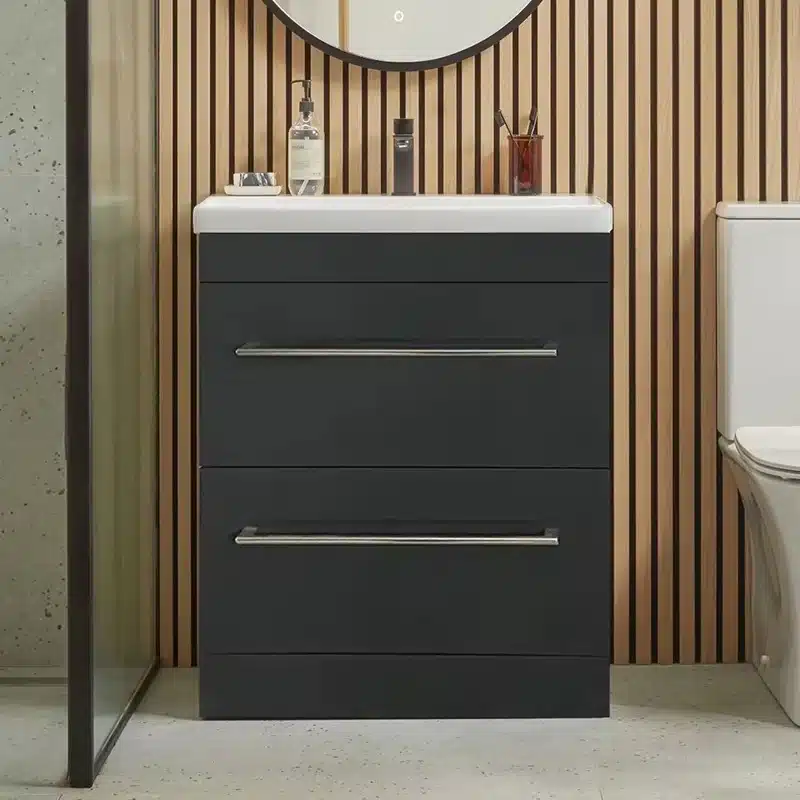
Damage Rates: RTA is Safer in Transit?
The flat-pack engineering of RTA cabinets fundamentally lowers shipping damage rates compared to pre-assembled units by minimizing movement and protecting vulnerable components.
Flat-Pack Design Reduces Impact Risk
Ready-to-assemble (RTA) cabinets ship in a compact, flat-packed state, which provides inherent protection from the shocks and stresses of transportation. Unlike bulky, rigid, pre-assembled cabinets that act as large levers during transit, the fragmented RTA design is far less vulnerable to shifting and impact. The physics are straightforward: less empty space and a lower center of gravity reduce the potential for damage.
- Individual components are tightly secured within reinforced packaging, which prevents internal movement and collisions between parts.
- This shipping method shields weak points like corners, joints, and door alignments that are fully exposed and prone to damage on fully constructed cabinets.
Improved Product Integrity and Lower Costs
Lower damage rates for RTA cabinets translate directly into measurable financial and logistical advantages for large-scale projects. Receiving shipments with high product integrity means fewer replacement orders, less administrative time managing returns, and better inventory control. This reliability is a critical operational benefit when project timelines are tight.
- Reduced damage lowers direct replacement costs and avoids the hidden expenses of project delays and wasted labor.
- Predictable, damage-free deliveries ensure project milestones are met without setbacks caused by unusable or missing inventory.
“Pre-Assembled RTA” (Cam-Lock vs. Glue/Dowel)?
The debate between cam-lock and glue-dowel construction is secondary to the real driver of long-term durability: the quality of the hardware and the grade of the core materials.
Cam-Lock Systems: The Standard for Assembly Speed
Cam-lock systems are the default in the RTA market because they are simple and fast. This design allows for rapid on-site assembly without specialized tools, making it the preferred method for optimizing both shipping logistics and construction timelines. The entire system is built for efficiency from factory to job site.
- They are engineered for flat-pack shipping, which directly cuts freight volume and reduces the risk of damage during transit.
- The long-term strength of the joint depends entirely on the quality of the cam hardware. Inferior metal can lead to loosening or failure over time.
Glue-Dowel Construction: A Focus on Joint Permanence
Glue-and-dowel construction, often combined with dado joints, creates a permanent and rigid bond. Manufacturers who prioritize structural integrity and long-term performance over rapid assembly favor this method. It produces a cabinet box that functions as a single, solid unit once the adhesive cures.
| Feature | Cam-Lock System | Glue-Dowel System |
|---|---|---|
| Assembly Speed | Fast; requires no special tools or cure time. | Slower; requires clamping, alignment, and adhesive cure time. |
| Joint Type | Mechanical and reversible. Can be disassembled. | Permanent and bonded. Cannot be disassembled without damage. |
| Primary Use Case | High-volume RTA projects focused on logistical efficiency. | Pre-assembled or premium RTA focused on structural rigidity. |
| Failure Point | Low-quality cam hardware or over-tightening during assembly. | Poor manufacturing precision or incorrect adhesive application. |
The Deciding Factor: Material Grade and Component Quality
The construction method alone does not guarantee a cabinet’s quality. The grade of the core materials—like high-density PVC, water-resistant Plywood, or HMR MDF—and the precision of the components are far more critical for long-term performance. A well-engineered cabinet using heavy-duty cams will easily outperform a poorly built unit that relies on low-grade glue and staples.
- How precisely the components are manufactured and assembled has a greater impact on joint strength than the method itself.
- Always evaluate the quality of the hardware (e.g., standard vs. DTC or Blum hinges) and core panel specs when assessing cabinet durability.
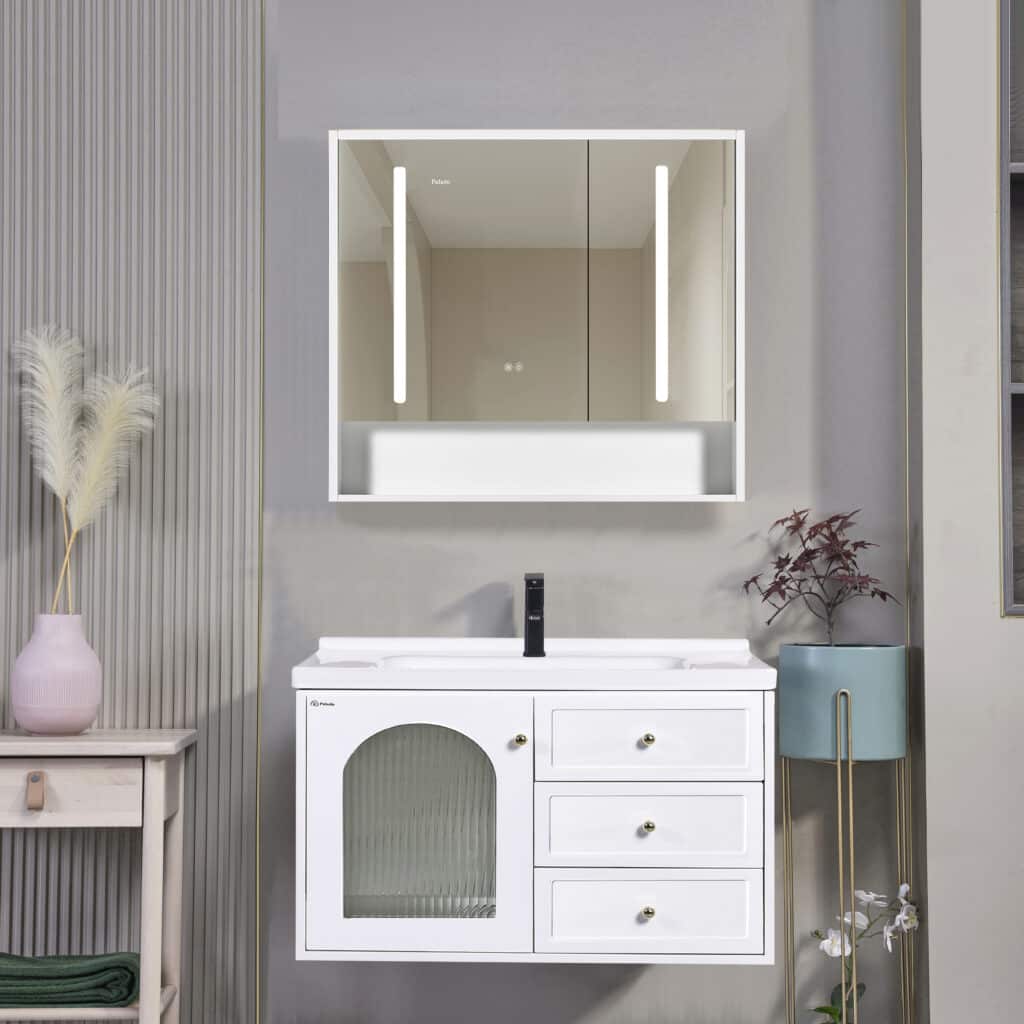
Speed of Install: The Case for Assembled?
Assembled cabinets trade higher material costs and longer shipping lead times for a compressed on-site installation schedule, positioning them for time-critical projects rather than large-scale developments.
Project Timeline Compression
Assembled cabinets are designed to eliminate on-site assembly entirely. Professional installation teams can complete a project in just two to four days because the units arrive ready to hang. This rapid turnaround is the primary advantage for contractors managing aggressive deadlines or for clients who value convenience over absolute cost savings. The entire assembly phase is front-loaded to the factory, allowing on-site labor to focus solely on installation.
Cost and Shipping Considerations
This installation speed involves clear trade-offs. Assembled units carry a significant cost premium over their RTA counterparts and often require extended shipping lead times that can exceed three weeks. These factors make them a better fit for individual, high-margin projects. For large-scale multi-unit developments, the model breaks down. Budget-conscious contractors in these scenarios typically prefer RTA cabinets, as the potential for efficient batch assembly on-site delivers far better cost control across hundreds of units.
The Hybrid Model (Local Assembly Warehouse)?
The hybrid model merges the cost efficiency of centralized component manufacturing with the logistical speed and customization of regional assembly, creating a balanced and responsive supply chain.
Global Component Manufacturing with Localized Assembly
This approach leverages the cost benefits of mass-producing components at a central factory while using regional facilities for final assembly. Shipping flat-packed parts to locations closer to the job site drastically cuts down on both transit time and freight costs, bypassing the logistical headaches of moving fully assembled units across long distances.
- Achieves economies of scale in manufacturing but stays responsive to local market demands.
- Lowers the risk of transit damage and simplifies logistics compared to shipping bulky, pre-built cabinets.
- Enables much faster final delivery to project sites from nearby distribution hubs.
Balancing Automation, Flexibility, and Cost
A key feature of the hybrid facility is its blend of automated systems for repetitive tasks and skilled manual workstations for custom work. This setup allows for quick shifts in production volume and design specifications without the massive capital outlay required for a fully automated line, delivering major efficiency gains.
- Combines automated machinery with manual assembly lines for a highly adaptable workflow.
- Easily accommodates product customization with minimal downtime for changeovers between cabinet models.
- Delivers documented efficiency gains up to 40% over traditional manufacturing models.
Conclusion
The decision between RTA and assembled vanities goes beyond the initial price tag. General contractors must balance freight efficiency and storage space against on-site labor costs and installation speed. Ultimately, the right choice depends on your specific project logistics and budget.
Our team can help you model the costs for your next project to determine the most profitable approach. Request a refundable sample to test our product quality and assembly process firsthand.
Frequently Asked Questions
Is RTA cheaper than assembled for projects?
Yes, Ready-to-Assemble (RTA) cabinets are significantly cheaper for projects. They typically cost 20-40% less than their assembled counterparts, which can result in savings of $50 to $100 per cabinet. This cost advantage becomes even more substantial on large-scale orders, driven by both lower material costs and reduced shipping fees.
How long to assemble a vanity?
The assembly time for an RTA vanity depends on skill level and cabinet complexity. A professional installer can typically assemble a standard vanity in 20-40 minutes. For a first-time DIYer, it is more realistic to budget 45-90 minutes to unbox, review instructions, and complete the assembly carefully.
RTA cabinets quality vs assembled?
The material quality of RTA and assembled cabinets is often identical. Manufacturers frequently use the exact same components—doors, frames, cabinet boxes, and hardware—for both options. The primary difference lies in the assembly process: pre-assembled cabinets are built in a factory with specialized equipment, while RTA cabinets are assembled on-site. When assembled correctly, an RTA cabinet is just as durable and high-quality as its factory-built version.
Shipping cost difference RTA vs assembled?
The shipping cost for RTA cabinets is substantially lower than for assembled cabinets. Because they are shipped flat-packed, RTA cabinets reduce shipping volume by 30-50%. This high-density packing allows more units to fit on a single truck, which directly translates to significantly lower freight charges, especially for bulk orders.
Best RTA cabinets for commercial use?
For commercial applications, the best RTA cabinets are those built for high-traffic and long-term durability. Key features to look for include all-plywood box construction (avoiding particleboard), solid wood dovetail drawer boxes, heavy-duty soft-close hardware from premium brands, and a durable, easy-to-clean finish like a conversion varnish or high-pressure laminate (HPL).
Do contractors prefer RTA or assembled?
Contractor preference varies based on the project’s specific needs. For large-scale projects like apartment complexes or hotels, many contractors prefer RTA cabinets due to the major cost savings on materials and shipping. For smaller, high-end custom jobs or projects with tight timelines and high labor costs, contractors may opt for pre-assembled cabinets to save on-site assembly time and ensure factory-perfect construction.





0 Comments