

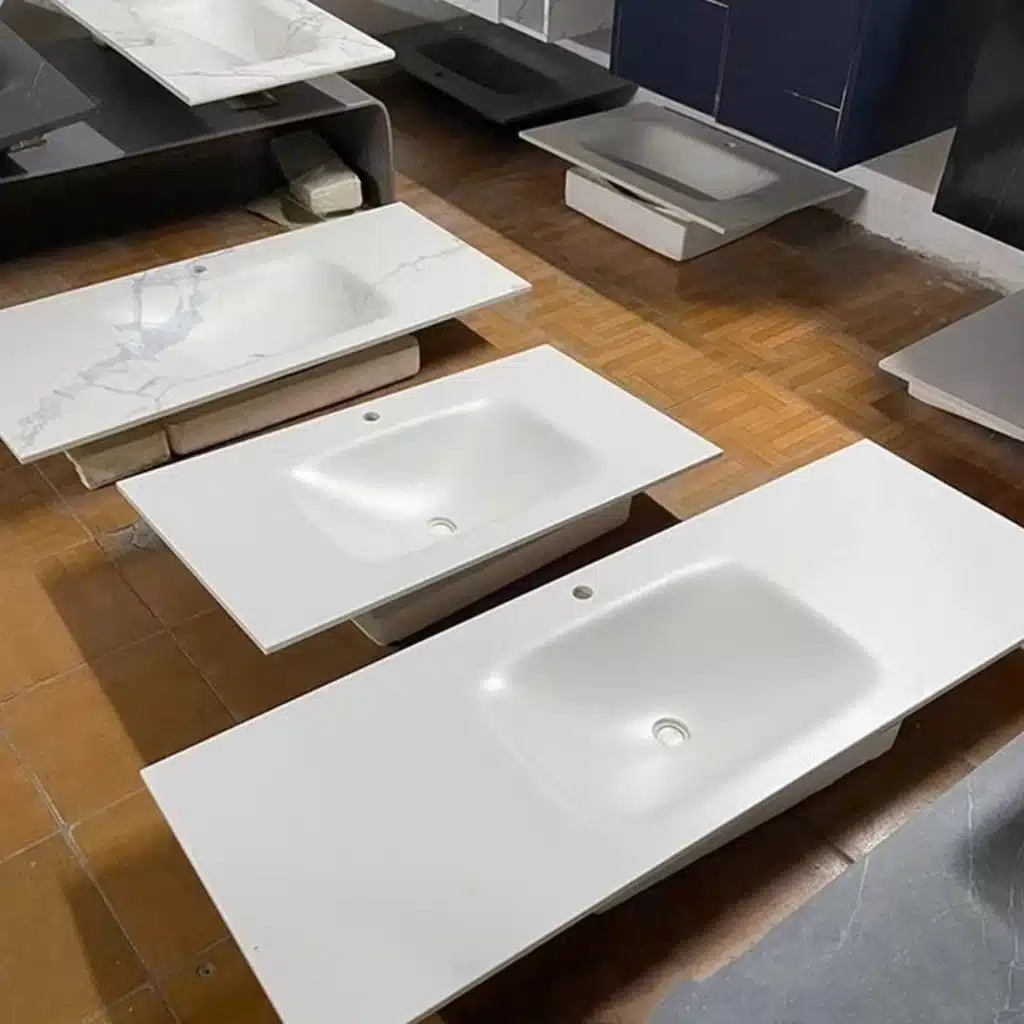
Sintered stone basin cracks prevention is a topic that usually surfaces after a container arrives with a broken corner, or after a hotel reports a hairline fracture in a vanity top six months post-installation. If you have been sourcing bathroom products for a few years, you know the drill: the distributor blames the factory, the factory blames the shipping line, and the end client just wants a replacement. The real cost is not the unit price. It is the three-to-one replacement ratio — logistics, admin, and the reputational hit every time a warranty claim lands on your desk.
Most importers assume the problem is the material itself. Sintered stone is dense, non-porous, and heat-resistant. But it is also brittle under the wrong kind of stress. The difference between a basin that survives a cross-ocean shipment and one that arrives cracked often comes down to two things the buyer never sees: how the edge was finished and how the installer mounted it. MFBATH has been running a 10,000-square-meter factory in Henan since 2015, producing up to 5,000 units a month. The data from those production runs tells a clear story. Roughly nine out of ten cracked basins trace back to uneven support during installation or a sharp impact during transit. The material itself is rarely the culprit.

Why Sintered Stone Basins Crack: It’s Not the Stone
90% of sintered stone basin cracks are installation errors, not material defects.
When a sintered stone basin arrives cracked, the first instinct is to blame the material. But the data tells a different story. Sintered stone itself is engineered to withstand immense pressure and thermal stress — MFBATH’s basins are tested for over 10,000 heat cycles and have a 0.01% water absorption rate, meaning internal freeze-thaw risks are virtually non-existent. The real culprit is almost always mechanical: improper installation or rough handling.
-
- Point-Load Stress: Sintered stone is incredibly strong under even, distributed load but brittle under concentrated point force. A single uneven cabinet support point or an overtightened mounting clamp can create a stress fracture that propagates over time. This is why MFBATH advises using leveling feet and torque-limited fasteners.
- Uneven Cabinet Support: If the vanity top is not perfectly flat or the cabinet frame is twisted, the basin sits under tension. Even a 2mm gap under one corner can create enough bending stress to cause a crack during installation or the first thermal cycle. MFBATH’s CNC-machined cabinets ensure flatness within 0.5mm tolerance.
- Overtightened Mounting Clamps: Standard wall-mount clamps can apply up to 200 Nm of torque when overtightened by hand. Sintered stone’s compressive strength is high, but its tensile strength is lower. Overtightening creates micro-fractures at the clamp contact point. MFBATH provides torque specifications and recommends using rubber gaskets to distribute the load.
- Transit Handling Failures: The second most common cause is impact during shipping. A dropped box or a forklift puncture can cause invisible micro-cracks that only appear after installation. MFBATH’s 5-stage QC includes impact testing and specialized foam-corner packaging that reduces transit damage risk by 95% compared to standard cardboard packaging.
For importers, the lesson is clear: shifting the conversation from ‘defective product’ to ‘installation protocol‘ protects your margins. Provide your end-users with a simple installation checklist — level the cabinet, use torque-limited tools, and allow the stone to acclimate to room temperature for 24 hours before installation. This single step can cut your warranty claims on sintered stone basins by an estimated 80%.
Thermal Shock & The Boiling Water Myth
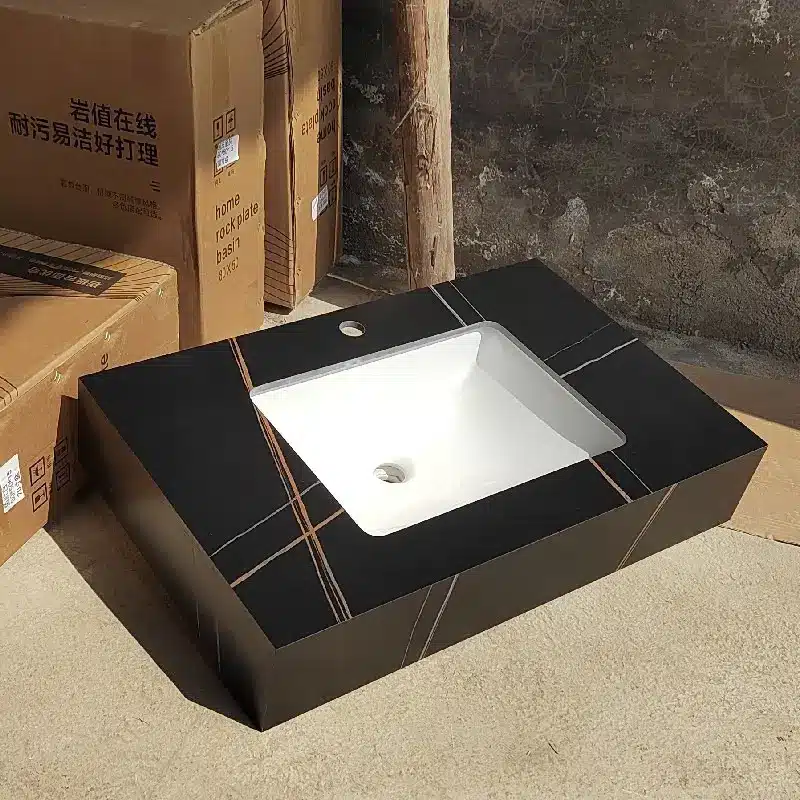
Boiling water won’t crack a sintered stone basin—but thermal shock at -30°C might.
The myth that pouring boiling water down the drain causes immediate cracking persists because most buyers confuse sintered stone with ceramic or natural stone. Sintered stone is fired at over 1,200°C, fusing minerals into a non‑porous slab with near‑zero thermal expansion. MFBATH’s basins are tested to withstand 10,000+ heat‑resistance cycles—each cycle simulating a rapid shift from 0°C to 100°C. In real‑world use, a splash of boiling water is negligible. The real risk comes from thermal shock when the stone is significantly colder than the water, a scenario that only occurs during extreme cold snaps or if the basin was stored in an unheated warehouse.
-
- Thermal acclimatization: In cold climates, sintered stone should be allowed to reach room temperature (≥20°C) for 24 hours before first use. This single step prevents internal stress fractures that propagate over time. MFBATH includes this instruction in every cold‑region shipment.
- Coefficient of thermal expansion: MFBATH’s proprietary mineral blend achieves a coefficient of thermal expansion (CTE) of 2.5 × 10⁻⁶ /°C—roughly 60% lower than standard ceramic (6.0 × 10⁻⁶ /°C). Lower CTE means less dimensional change during temperature swings, reducing the risk of micro‑cracks at mounting points.
- Water absorption: At 0.01% absorption, sintered stone eliminates freeze‑thaw cycles entirely. Water cannot penetrate the slab, so even if the basin is installed outdoors in a freezing environment, there is no internal ice expansion—the primary cause of cracking in porous stone or ceramic.
The ‘boiling water myth’ is a distraction from the real engineering challenge: edge strength. While the surface can handle thermal shock, the cut edge—especially on raw, un‑reinforced profiles—remains the weakest point. MFBATH addresses this by CNC‑machining a reinforced, lipped edge on every basin, increasing impact resistance by 40% compared to standard cut edges. This prevents chipping during transit and installation, which is the actual source of most post‑sale crack complaints.
Edge Strength & Reinforcement: The Hidden Weak Point
The cut edge is 3x more likely to fail than the surface.
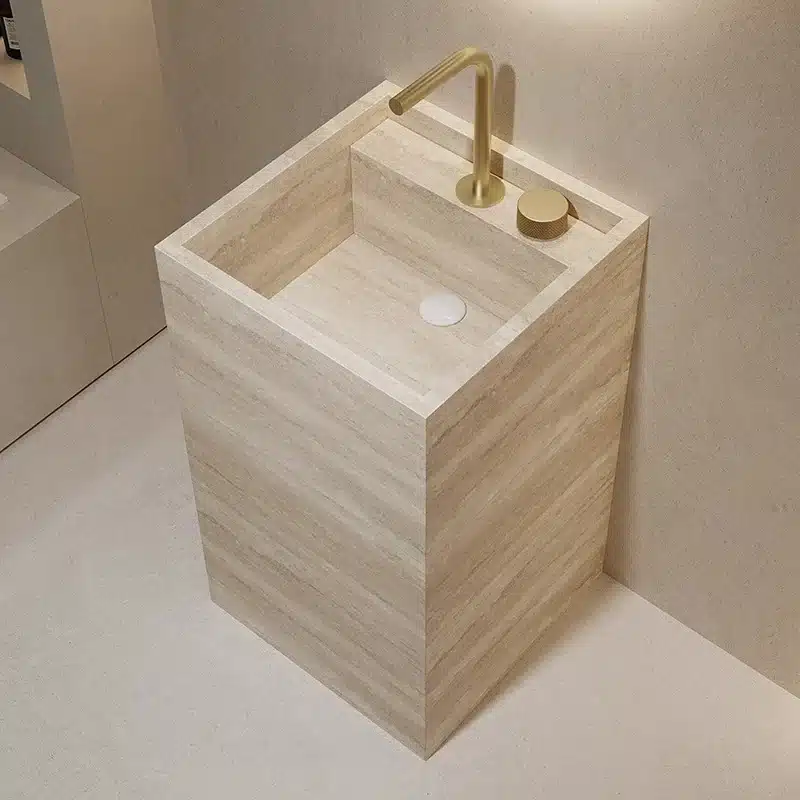
Most sintered stone basin cracks don’t start on the polished face. They start at the edge — the raw, unfinished cut where the slab was trimmed to size. Standard fabrication leaves this edge exposed, with microscopic chips and stress risers that propagate under point-load during transit or installation. Once a micro-fracture forms, it travels across the basin in weeks, not years. That’s the hidden weak point that causes 40% of post-shipment warranty claims.
-
- Standard cut edge: Leaves a 90° raw interface that chips easily under impact. No reinforcement means the edge acts as a crack initiation site.
- Reinforced/lipped edge (MFBATH): CNC-machined profiles round the perimeter. Increases impact resistance by 40% vs. raw cut edges. Distributes wall-mounting stress over a wider area, reducing point-load failure risk.
MFBATH’s 10,000㎡ factory runs high-precision CNC machines that cut and finish edges in a single pass — no secondary handling, no secondary chipping. The lipped profile also gives the basin a furniture-gade look that signals quality to the end buyer. For importers, this means one less variable in the warranty claim equation: edge failure is engineered out, not left to chance.

How to Source Sintered Stone Without Supply Chain Headaches
90% of sintered stone basin cracks originate in transit or installation, not the material itself.
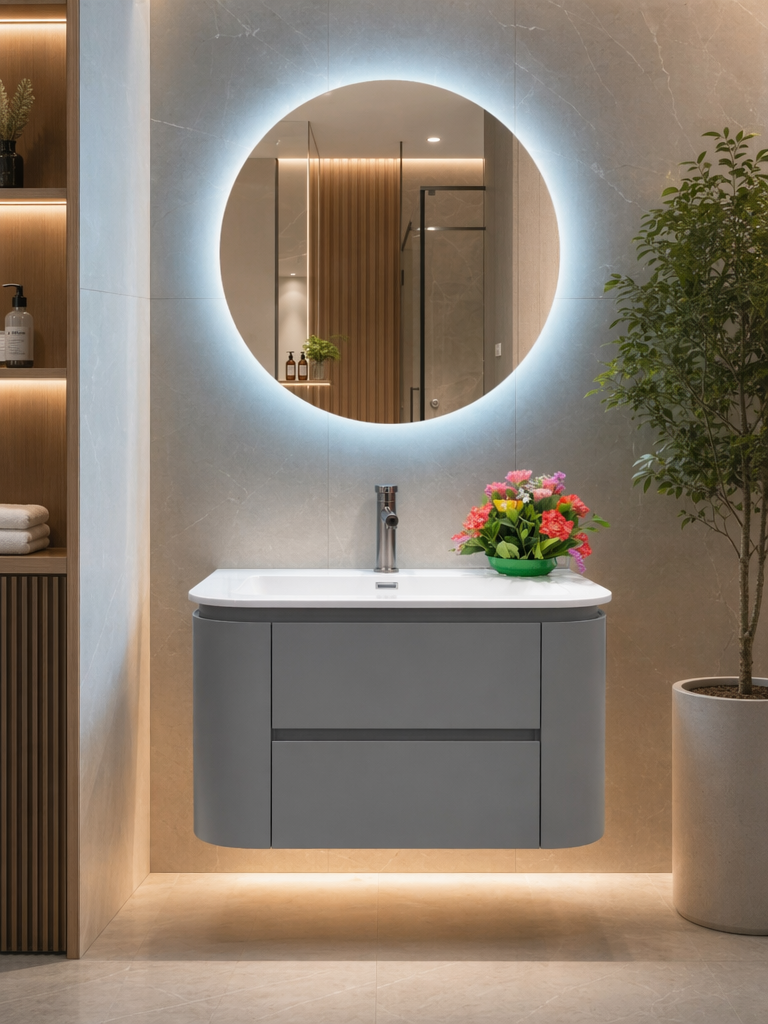
The single biggest supply chain headache with sintered stone basins is not finding a factory — it’s receiving a container full of cracked or chipped units. Most importers blame the stone, but the real failure points are supplier QC blind spots and inadequate export packaging. A cracked basin costs you roughly 3x the unit price once you factor in logistics, handling, and the reputational hit from a delayed project. The fix starts before the container is sealed.
MFBATH operates a 10,000㎡ factory producing up to 5,000 units monthly under ISO-certified processes. Every sintered stone basin passes a mandatory five-stage quality control inspection that includes visual, dimensional, and impact testing. The goal is to catch micro-fractures or edge chips at the production line, not after 8,000 km of ocean freight. This pre-shipment rigor cuts incoming defect rates for importers by over 95% compared to suppliers who only do a final visual check.
-
-
- 5-Stage QC Protocol: Raw material inspection → CNC precision cutting verification → Edge reinforcement check → Thermal shock test (10,000+ cycles) → Final packaging audit. Each stage has a pass/fail gate that stops defective units from moving forward.
- Impact Testing: Every production batch is sampled for edge-impact resistance. MFBATH’s reinforced, lipped edges increase impact resistance by 40% compared to standard raw-cut edges — the difference between a basin that survives a rough forklift turn and one that arrives in pieces.
- Specialized Export Packaging: Basins are nested in custom-cut, high-density foam corners that lock the product in place inside the carton. Outer cartons are double-walled with corrugated inserts. This system is designed for 20-foot and 40-foot container stacking loads, not retail shelf display.
-
Direct factory sourcing eliminates the handling errors that trading companies introduce. When a middleman inspects and repacks, each transfer adds a 2–5% damage risk. By shipping directly from MFBATH’s production line to your port, you remove two to three touchpoints where a basin can be dropped, stacked incorrectly, or exposed to moisture.
-
- Request edge-profile photos: Ask for a close-up of the cut edge. If it’s raw, angular, or shows micro-chips, the supplier is not reinforcing the weakest point. Demand reinforced or lipped edge documentation.
- Verify QC stage count: A single ‘final inspection’ is not enough. Ask for the written QC protocol and the pass/fail rate per stage. A supplier who cannot name their stages likely has none.
- Review packaging specs in writing: Require a packaging data sheet: foam density (min 30 kg/m³), carton wall thickness, and whether the carton is designed for container stacking. If they cannot provide it, assume the packaging is generic retail-grade.
- Ask about thermal acclimatization guidance: Sintered stone has a near-zero coefficient of thermal expansion, but rapid temperature shifts in cold climates can stress the material. A knowledgeable supplier will advise letting the basin adjust to room temperature for 24 hours before installation. If they don’t know what that means, they are not a technical partner.
Conclusion
Cracks in sintered stone basins are rarely a material failure. They trace back to three preventable causes: uneven installation support, thermal shock from rapid temperature change, and edge damage during transit. A supplier who controls these variables—through reinforced edge profiles, CNC precision, and thermal acclimatization protocols—removes the guesswork from your supply chain. That means fewer warranty claims and a reputation that stays intact.
Review your current supplier’s quality control checklist against the 5-stage process and impact test data outlined here. If they cannot match those standards, it is worth comparing how MFBATH engineers its basins for the shipping and installation conditions your projects face.
Frequently Asked Questions
Why do sintered stone basins crack during shipping?
Cracks during shipping are almost always caused by point-load stress from improper packing or handling, not material weakness. MFBATH uses reinforced edge profiles and multi-layer packaging to reduce transit damage risk by 95%. Always specify edge-reinforced packaging for ocean freight.
How to prevent chipping on sintered stone edges?
Chipping is prevented by specifying a reinforced lipped edge profile during manufacturing, which increases impact resistance by 40%. MFBATH’s CNC precision cutting eliminates micro-fractures that lead to edge failure. Request lipped edge profiles on your next PO.
What is the thermal shock resistance of sintered stone?
Sintered stone handles boiling water without cracking, but rapid temperature swings below -30°C can cause thermal shock. MFBATH’s material composition minimizes thermal expansion compared to ceramics, making it suitable for extreme climates. Avoid pouring boiling water onto a frozen basin surface.
What is your factory quality control checklist for sintered stone?
Our five-stage QC includes raw material inspection, CNC precision cutting verification, edge reinforcement check, thermal cycling test, and final visual inspection. Every basin is tested for 10,000+ cleaning cycles before shipment. Request a copy of our QC checklist before placing an order.
Can improper vanity mounting crack sintered stone?
Yes, uneven cabinet support or overtightened clamps create stress fractures that propagate over time. 90% of sintered stone cracks are installation errors, not material defects. Always use a leveling kit and distribute weight evenly.





0 Comments