
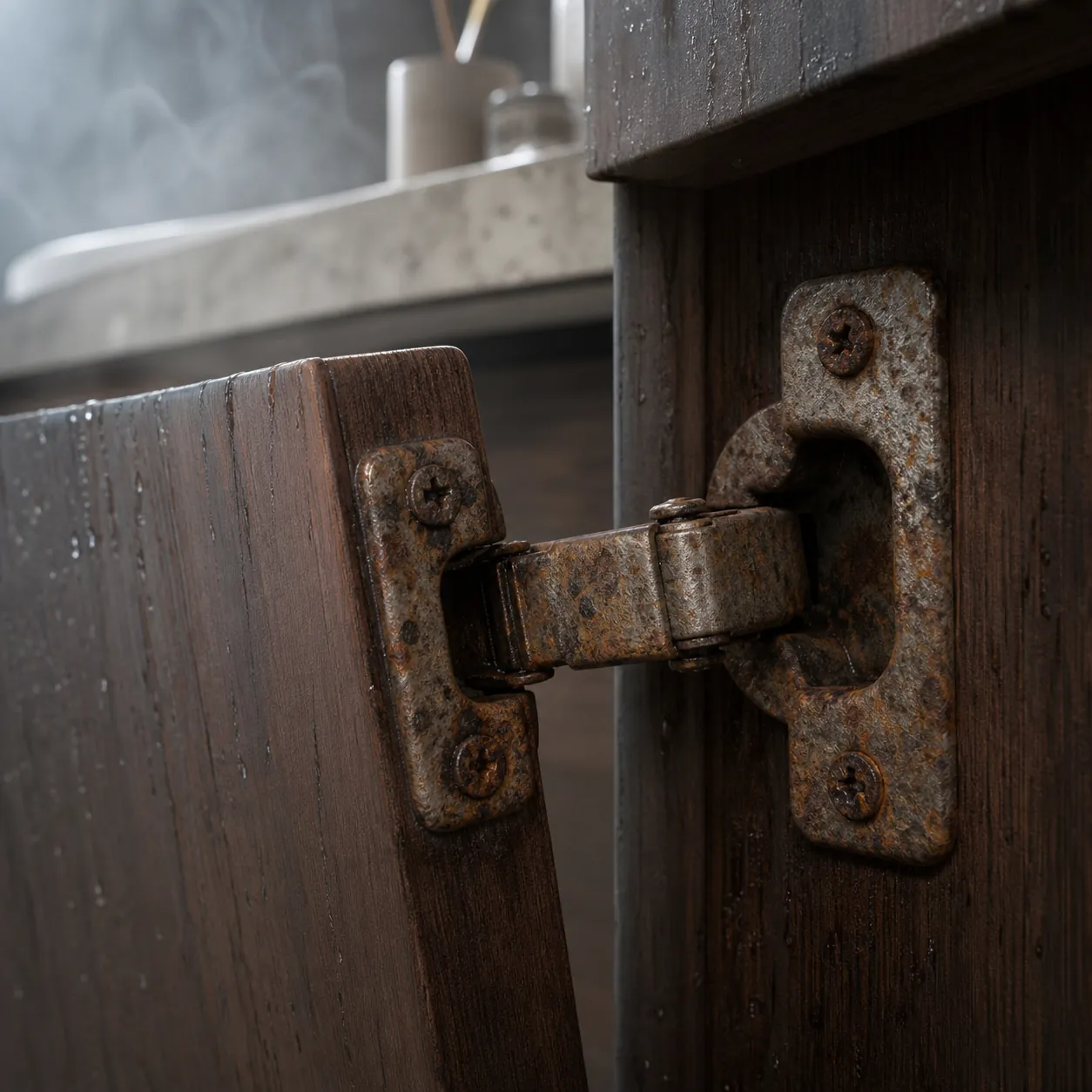
Receive the container into a quarantine status, not directly into saleable stock. Before unloading, record the container and seal numbers, photograph the doors and the load, and check for water ingress, condensation, and a shifted load. Count every carton against the packing list, inspect every carton externally, and open a representative sample from each SKU, finish, and production lot. Check the cabinet, top, basin, mirror, hardware, and labelling against the approved specification, then release only conforming stock and keep the rest on quality hold. Count everything, inspect every carton externally, sample internally by SKU, and expand the inspection whenever defects appear.
Key Takeaways
- Quarantine the container until it is counted, inspected, and documented.
- Inspect every carton externally and open a representative sample from each SKU, finish, and lot.
- Release only conforming stock; keep the rest on quality hold with a written disposition.
Why Should the Container Be Quarantined?
Damage discovered after stock is mixed into the warehouse is hard to attribute. Once cartons are put away, the evidence of how they arrived is gone, and the supplier can argue that the damage happened in your storage or in your customer’s hands.
A quarantine status keeps the shipment identifiable until the count, the external inspection, and the sample inspection are complete. It also gives your team a clear rule: nothing moves to a picking location until the receiving report is approved.
The quarantine does not need to be a separate building. A marked area, a system status, and a physical label are enough, provided everyone respects the boundary. The receiving report is what moves the stock from received to available.
What Should You Check Before Breaking the Seal?
Record the container number, the seal number, the carrier, the arrival date, and the purchase order. Photograph the seal before you cut it, and photograph the container doors, the floor, and the first row of cartons.
Look for water. Staining on the floor, rust on the door hardware, condensation on the ceiling, or a damp smell all suggest moisture exposure. Wood-based cabinets and stone tops are vulnerable to water damage, and the damage may not be visible until the carton is opened.
Look for movement. A load that has shifted may have crushed cartons at the front or left a gap that let the load fall. Photograph the condition before unloading, and stop if the load is unstable or unsafe to unload.
Check the documentation. The bill of lading, the packing list, and the commercial invoice should agree on the quantity and the description. If the seal is broken, missing, or does not match the documents, note it on the delivery paperwork and notify the carrier and the supplier before you proceed.
How Should Cartons Be Inspected During Unloading?
Inspect every carton externally. Look for crushed corners, tears, water stains, soft panels, re-taping, and labels that do not match the packing list. Do not assume that a damaged carton means a damaged vanity, but do open it before storing it.
Keep the cartons moving in a controlled flow. Unload by pallet or by block, count as you go, and keep the damaged cartons separate from the undamaged ones. Photograph the damaged cartons with the container number or the pallet label visible.
Check the labels against the packing list. For a hotel or multi-room order, the carton should identify the room set, the item, and the carton number within the set. A carton that cannot be matched to a set is a receiving problem even if the product is perfect.
Do not discard the packaging. If a claim is needed, the carton, the inner protection, and the packing list are evidence. Keep them until the claim is closed.
Keep a photographic record of the receiving process, not only of the damage. Photograph the seal, the open doors, the load pattern, the damaged cartons, and the product defects, with the container number or the pallet label in the frame. A dated photographic sequence is far more persuasive than a description written from memory a week later.
Our guide to container loading photo documentation explains what the factory should photograph before the doors close, which is the reference you compare against at receiving.

How Much Should You Open?
Inspect all cartons externally, then open a representative sample. At minimum, open the first and last cartons unloaded, cartons from the top, middle, and bottom of the load, and at least one carton from each SKU, finish, and production lot.
Increase the sample for high-value, fragile, new, or historically problematic items. If the sample reveals a defect, expand the inspection until you know whether the problem is isolated or systemic. A single cracked top in a sample is a reason to inspect more, not a reason to accept the lot.
Record what you opened and what you found. The sample plan and the results should be part of the receiving report, so a later dispute can be evaluated against the method you used.
For a mixed order, check the set completeness. A vanity carton without its top, basin, or hardware pack is an incomplete set even if each component is individually acceptable.
What Should You Check on the Product?
Check the cabinet against the approved sample and the specification. Confirm the material, the finish, the edge banding, the door and drawer alignment, the hardware model, and the interior finish. Look for swelling, edge lift, scratches, and missing parts.
Check the countertop. Confirm the material, the colour and veining against the approved reference, the edge profile, the cutout position, and the absence of chips or cracks. For a multi-room order, compare the top with the other tops in the same set and with the approved lot sample.
Check the basin and the mirror. Confirm the model, the finish, the overflow, and the drain opening. For a lighted mirror, check the glass, the edge, the driver, the touch control, and the defogger before the mirror is stored.
Check the hardware pack. Hinges, handles, brackets, and fixing kits should match the bill of materials, and the pack should belong to the unit. Missing or mismatched hardware is one of the most common causes of an installation delay.
Measure a sample. Verify the overall dimensions, the basin position, the faucet hole spacing, and the critical clearances against the approved drawing. Use the tolerance limits agreed with the supplier; if no limits were agreed, establish them before releasing stock rather than making an informal judgement.
Our guide to bathroom vanity quality inspection explains the factory-stage checks that should have caught these issues before shipment, and our article on export packaging for bathroom vanities explains what the packaging is designed to protect.
How Should Stock Be Released?
Use clear statuses: accepted, accepted with a concession, quality hold, and rejected. Record the reason for each status and keep the held or rejected stock physically separate from saleable inventory.
Release only when the count reconciles, the external inspection is complete, the sample inspection is complete, and any defect has a disposition. The receiving report should identify the container, the seal, the quantities, the sample plan, the findings, and the responsible person.
For a defect that is still under discussion, keep the stock on hold and tell the supplier in writing. Do not release it and then try to negotiate retrospectively; once it is in saleable stock, your leverage is weaker.
Store the accepted stock correctly. Keep it dry, raised off the floor, and protected from impact and direct sunlight. The OSHA materials handling and storage standard is a useful baseline for keeping stacks stable and aisles clear, although the product’s own storage requirements still govern.
Setting Up a Vanity Receiving Standard?
Tell us the SKU mix and the order types you handle. We will help build a receiving checklist and a practical sample plan that your warehouse team can use on every container.

The Bottom Line
Treat the container as quarantined inventory until it has been counted, inspected, sampled, and documented. Check the seal and the container, inspect every carton externally, open a representative sample, verify the product and the set, and release only what conforms. The receiving report is not paperwork; it is the evidence that decides who pays when something is wrong.
If you are setting up a receiving standard for vanity containers, tell us the SKU mix and the order types you handle, and we will help build a sample plan and a receiving checklist around them.
Frequently Asked Questions
Should every carton be opened?
No. Inspect every carton externally and open a representative sample by SKU, finish, and lot. Expand the sample when you find a defect, and use full inspection for a small or high-value shipment.
What if the carton is damaged but the product looks fine?
Record the carton damage, inspect the product, and photograph both. A damaged carton with an undamaged product can be accepted with a note, but the record protects you if a concealed defect appears later.
Who pays for damage found at receiving?
It depends on the delivery terms, the carrier’s liability, the insurance, and the evidence. Document the condition at delivery and notify the responsible parties promptly; the receiving report is the basis for the claim.
How long should the inspection take?
Long enough to count, inspect externally, sample internally, and reconcile the documents. Rushing the receiving inspection moves the cost to the installation or the customer.
What is the most common receiving mistake?
Signing a clean delivery receipt and discovering the damage after the container is empty. Note the exceptions before you sign.




0 Comments