

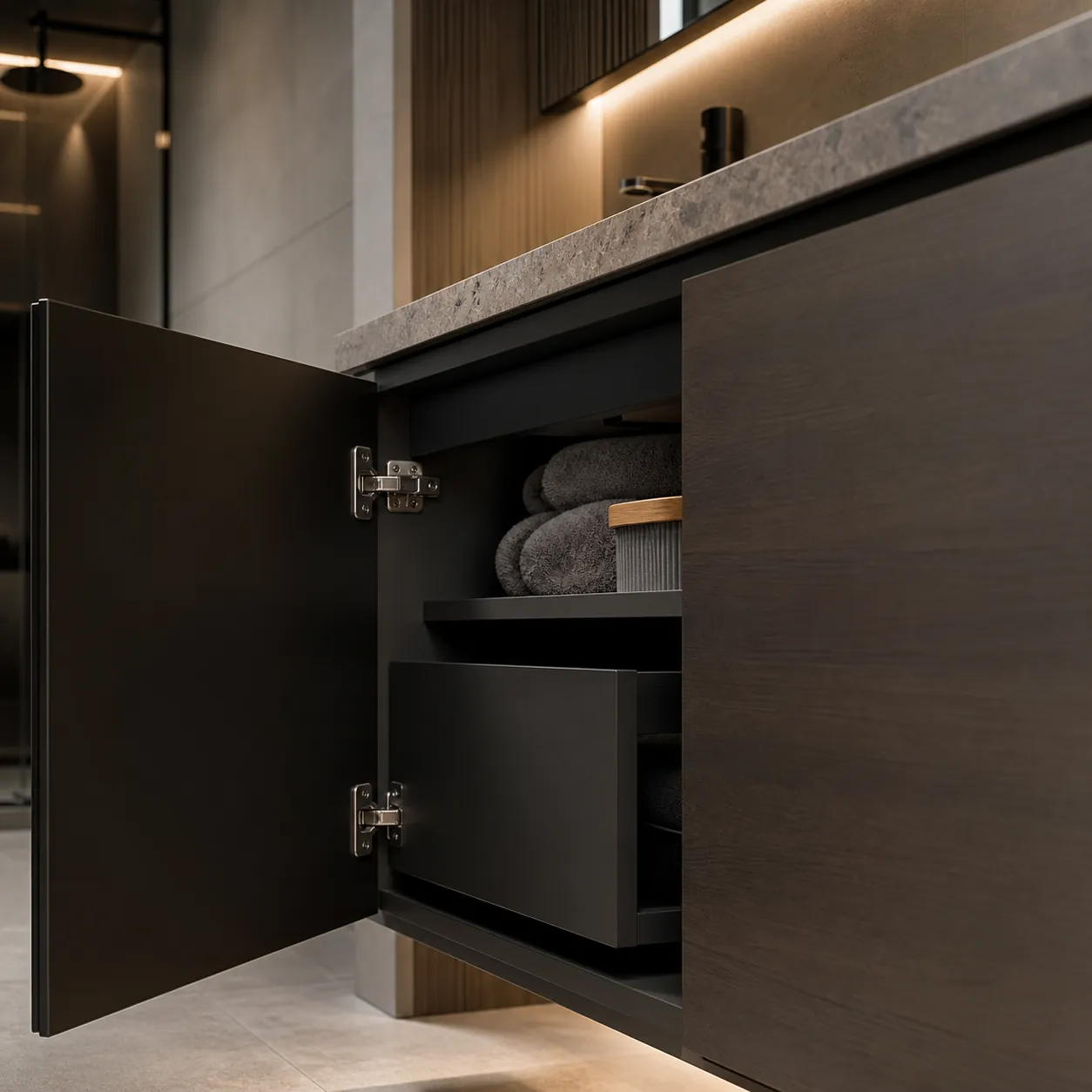
A hotel vanity and mirror mock-up is a quality gate, not a showroom display. Approve it only after the actual cabinet, top, basin, faucet, mirror, and lighting are installed in a real room and tested under the project’s lighting, with every room type represented. The sign-off should lock dimensions, materials, finish, hardware function, mirror light quality, defogger operation, plumbing clearances, accessibility, and installation method, and it should name the documents and samples that become the production reference. Done properly, the mock-up prevents a whole-floor defect; done as a visual walk-through, it produces a photograph that nobody can enforce. This guide sets out what to check, who should sign, and how to carry the approval into mass production.
Why Is a Mock-Up Different From a Sample?
Key Takeaways
- A mock-up is a system test, not a sample display; install the actual cabinet, top, basin, faucet, mirror, and lighting in a real room.
- Sign off dimensions, materials, finish, hardware, mirror light, defogger, plumbing clearances, accessibility, and installation method for every room type.
- Attach the approval record, drawings, finish samples, and photos to the production reference so mass production can be checked against it.
A sample is a product. A mock-up is a system: the product installed in the room, connected to the services, seen in the lighting it will actually have, and used the way a guest will use it.
That difference matters because most hotel failures are interface failures rather than product failures. The vanity is the right size but the door hits the towel rail. The mirror is the right model but the light is the wrong colour against the wall finish. The basin is correct but the faucet spout lands on the back rim. The cabinet is square but the floor is not, and the installer packs the gap in a way that voids the warranty.
A sample approval cannot catch these. A mock-up can, if it is installed with production components and reviewed by the people who will have to live with the result.
The mock-up also sets the standard for workmanship. Once approved, it becomes the reference against which the first production units and the installed rooms are judged. Without that reference, every later disagreement becomes a matter of opinion.
What Should Be Installed in the Mock-Up?
Install the complete assembly, not a partial one. The cabinet, countertop, basin, faucet, waste and trap, mirror, lighting, accessories, and any side or back splash should be the production specification, installed with the production method.
Use the actual faucet and basin models, not placeholders. The faucet determines the hole pattern, spout reach, and deck clearance; the basin determines the cutout and the water position. A mock-up built with a different faucet proves nothing about the interface you are approving.
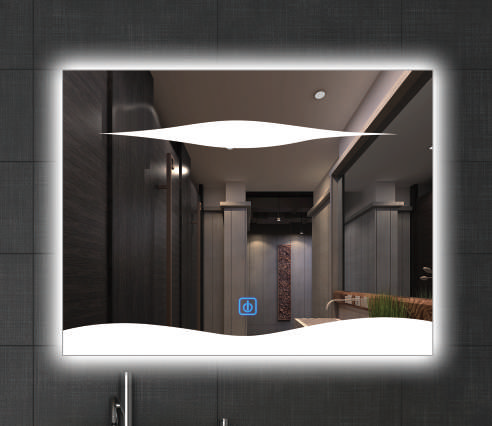
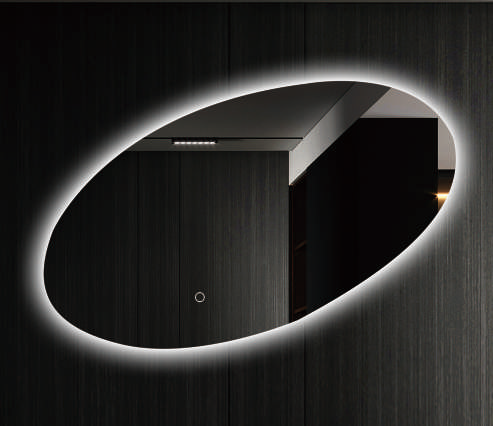
Use the actual mirror and driver. Mirror colour temperature, CRI, brightness, and defogger performance are part of the guest experience, and they cannot be judged from a specification sheet. Power the mirror and run it long enough to see the light on the wall and the defogger in operation.
Include the room’s finished surfaces. The wall finish, tile, floor, and lighting all affect how the vanity and mirror read. A mock-up in a bare concrete room is a product review, not a design review.
If the project has multiple room types, build a mock-up for each type or a representative sample of each. A standard room, a suite, and an accessible room are different products for approval purposes, even when they share a cabinet family.
What Should the Approval Cover?
Review the mock-up in a fixed order so that nothing is skipped.
Documents and drawings. Confirm that the approved specification, shop drawings, finish samples, and product data sheets match what is installed. Record the drawing revision. A mock-up approved against a superseded drawing is not an approval. Our guide to writing a vanity specification sheet for RFQs explains the level of detail that should be fixed before the mock-up is built.
Dimensions and clearances. Measure the cabinet height, depth, and width; the counter height; the basin position; the mirror height and width; and the clearances to walls, doors, towel rails, and accessories. Check that drawers and doors open through their full range without hitting anything.
Materials and finish. Confirm the cabinet material, the top material, the edge profile, the finish colour, and the grain direction. Compare them with the approved samples under the project lighting, not under a work light. Check that the finish is uniform across doors, drawer fronts, and visible panels.
Workmanship. Check door and drawer alignment, gaps, edge banding, sealant lines, and the junction between the top and the wall. Check that the mirror is level and that its edges are clean. Our article on cabinet assembly tolerance explains which dimensional checks a factory should be able to document.
Function. Operate every door and drawer. Check soft-close action, hinge adjustment, drawer slide smoothness, and the stability of the cabinet on the wall or floor. Run water through the faucet and check the flow, the drain, and the trap for leaks. Check that the basin drains without pooling.
Mirror and lighting. Check brightness, colour temperature, CRI, and uniformity on the wall. Check the touch control, the defogger, and any smart feature. Confirm that the driver is accessible for service and that the mirror can be removed without damaging the wall.
Accessibility. For accessible rooms, check knee clearance, vanity height, pipe protection, mirror height, faucet reach, and turning space against the project’s accessibility drawings. The U.S. Access Board ADA standards are a useful reference where the project is subject to ADA, but the project’s own approved drawings and local code take precedence.
Maintenance. Ask housekeeping and engineering to review the mock-up. Can the room be cleaned without damaging the finish? Can a tap or waste be serviced without removing the cabinet? Can a mirror driver be replaced without taking down the mirror? These questions are cheaper to answer now than after a thousand rooms are built.
Who Should Sign the Approval?
The sign-off should include the parties who can change the design or stop production: the owner or owner’s representative, the hotel brand or operator representative, the architect or interior designer, the general contractor, the millwork or vanity installer, and the supplier.
Where the project has separate plumbing and electrical contractors, include them. The vanity, faucet, mirror, and lighting interfaces cross trades, and a mock-up approved without the trades that install those interfaces will produce disputes later.
Record the signatures, the date, the drawing revision, and the list of items approved. A verbal approval or a set of photographs is not a substitute. The approval record should state that the mock-up establishes the standard for appearance, dimensions, materials, workmanship, and installation for the production units.
How Do You Carry the Approval Into Production?
Retain the approved sample or a set of labelled reference photographs, and keep them with the production file. The factory should have access to the same references, not a different set.
Check the first production unit against the mock-up before the line continues. Measure the dimensions, check the finish, operate the hardware, and compare the colour and sheen under the same lighting. If the first unit deviates, stop and correct the process rather than inspecting the deviation into the batch.
Apply the same logic to the mirror. The first production mirror should be checked for light colour, brightness, defogger operation, and edge quality against the approved unit.
Record the first-article result. If the project has a warranty or defect-liability process, the first-article record is evidence that the production standard was set and checked. Our guide to comparing vanity warranty terms explains how warranty coverage and exclusions should be read alongside the approval record.
Control changes after approval. If a material, finish, hardware item, mirror driver, or installation detail changes, require a written change notice and decide whether a new mock-up or first article is needed. A silent substitution after approval is the most common way a good mock-up fails to protect the project.
Approve the Mock-Up With the Production Documents Attached
MAIN FOCUS CABINET builds bathroom vanities, tops, basins, and LED mirrors for hotel projects. Send the room types and the mock-up checklist; the approval package can include the drawings, finish samples, and production reference you sign off.
What Should the Approval Record Contain?
Keep it short enough to be used and complete enough to be enforced.
Include the project name and location, the room type or mock-up identifier, the date, the drawing revision, and the specification revision. List the installed components with model numbers: cabinet, top, basin, faucet, mirror, driver, lighting, and accessories.
List the items approved, the items approved subject to correction, and the items rejected. For each correction, assign a responsible party and a date. Attach the photographs, the measurement record, and the signed drawings.
State the production reference explicitly: which sample, which photographs, and which drawings govern the production units. If the mock-up is retained on site, record where it is stored and who controls access.
Frequently Asked Questions
Can a mock-up be approved from photographs?
No. Photographs cannot show scale, light quality, clearance, or the feel of a door and drawer. They can support an approval, but they cannot replace the installed review.
Is one mock-up enough for a hotel with several room types?
Only if the room types share the same vanity and mirror configuration. Different sizes, layouts, finishes, or accessibility requirements need their own approval.
Who pays for the mock-up?
That is a commercial term, not a quality term. Agree it in the contract and state whether the mock-up is a sample charge, a production unit, or a separate deliverable.
What happens if the mock-up is approved and production cannot match it?
The approval becomes the standard, and the gap is a non-conformity. That is the point of the exercise: it gives the buyer a documented basis for rejection or correction instead of a debate about expectations.
Should the installer be at the mock-up review?
Yes. The installer sees the interfaces that the designer and the supplier do not, and their sign-off makes the installation method part of the approved standard.
The Bottom Line
A hotel vanity mock-up earns its cost when it is treated as a controlled approval: production components, real room conditions, measured checks, named signatories, and a record that travels into mass production. Approve the system, not the sample, and the first hundred rooms will match the room you signed off.
If you are preparing a hotel mock-up, send us the room schedule, the vanity and mirror specifications, and the project lighting details, and we will help build the approval checklist around the components you are installing.




0 Comments