

A force majeure clause in a hotel vanity supply contract must be written for a manufacturing and shipping chain, not borrowed from a hotel event contract. It should define the events that can actually stop production or delivery, require prompt notice and mitigation, say what happens to finished goods and deposits, set a long-stop point, and exclude ordinary commercial problems. Without those terms, a factory delay becomes an argument about whether it was foreseeable, and the hotel project absorbs the cost.
Key Takeaways
- Write the clause for a manufacturing and shipping chain, not a hotel event contract.
- Define qualifying events, exclusions, notice, evidence and mitigation.
- Deal with finished goods, deposits, the long-stop and termination.
Why Event-Contract Language Fails a Vanity Order
A hotel event contract excuses a party from providing a room, a meeting space or a service. A vanity supply contract excuses a party from manufacturing, inspecting, packing, shipping and delivering a physical product that may already be partly built when the event occurs. The performance is different, the costs are different, and the point at which the parties can walk away is different.
A generic clause usually says that neither party is liable for delays caused by events beyond its reasonable control. That sentence is a starting point, not a clause. It does not say which events qualify, how the affected party proves them, what happens to the deposit, whether the buyer must accept the finished goods later, or when the buyer can cancel and recover its money. Those are the questions that decide the outcome.
Vanity orders add a further complication: the product is often customized for a specific hotel, with a specific finish, stone batch, mirror type and room allocation. Once production starts, the goods may have little resale value to the factory. The clause therefore has to deal with finished or partly finished goods, not just with a missed date.
Events to Name and Events to Exclude
The clause should name the categories of events the parties intend to cover. Typical examples include natural disasters, fire, flood, severe weather, war, civil unrest, government action, border or port closure, epidemic or pandemic restrictions, and widespread failure of utilities or transport. The list should be drafted for the actual supply chain: a factory in one province, a port in another, and a shipping route that may cross several jurisdictions.
Equally important is the list of events that do not qualify. Ordinary commercial problems should be excluded: capacity shortfalls, cash-flow problems, a subcontractor’s default, a price increase in board or hardware, a quality failure that requires rework, a late approval from the buyer, or a delay caused by the buyer’s own instructions. Those are risks the supplier is expected to manage, and a clause that lets them in turns force majeure into a general excuse.
| Category | Usually included | Usually excluded |
|---|---|---|
| Natural events | Earthquake, flood, fire, severe storm, epidemic restrictions | Seasonal rain that could be planned for |
| Government action | Export ban, port closure, new border restriction, quarantine | Ordinary customs inspection delay |
| Supplier chain | Nationwide transport shutdown, utility failure | One subcontractor’s capacity or quality failure |
| Commercial | Not applicable | Price increase, cash flow, labour shortage, poor planning |
The wording should also make clear that an event qualifies only if it was beyond the affected party’s reasonable control and could not have been avoided by reasonable planning. A factory that has no alternative power supply may still be expected to have a plan for a short outage; a factory facing a government closure is in a different position.
Notice, Evidence and Mitigation
The clause should require the affected party to notify the other promptly, in writing, with enough detail to allow the buyer to respond. The notice should identify the event, the affected obligations, the expected impact and the steps being taken to mitigate it. A notice that says only “production is delayed” is not enough for a hotel project that needs to re-sequence trades.
Evidence should be specified. Depending on the event, that may include government notices, port or carrier statements, utility notices, photographs, insurance reports, production records and correspondence with subcontractors. The buyer should not have to accept a claim without documents, and the supplier should not have to prove an event twice.
Mitigation should be an ongoing obligation, not a single statement. The supplier should be required to use reasonable efforts to reduce the delay, including re-sequencing production, sourcing an alternative component within the approved specification, using another port or carrier, or prioritizing the affected hotel rooms. The buyer should have a corresponding duty to respond to approvals and instructions promptly, because a slow decision can become the real cause of the delay.
Finished Goods, Storage and Title
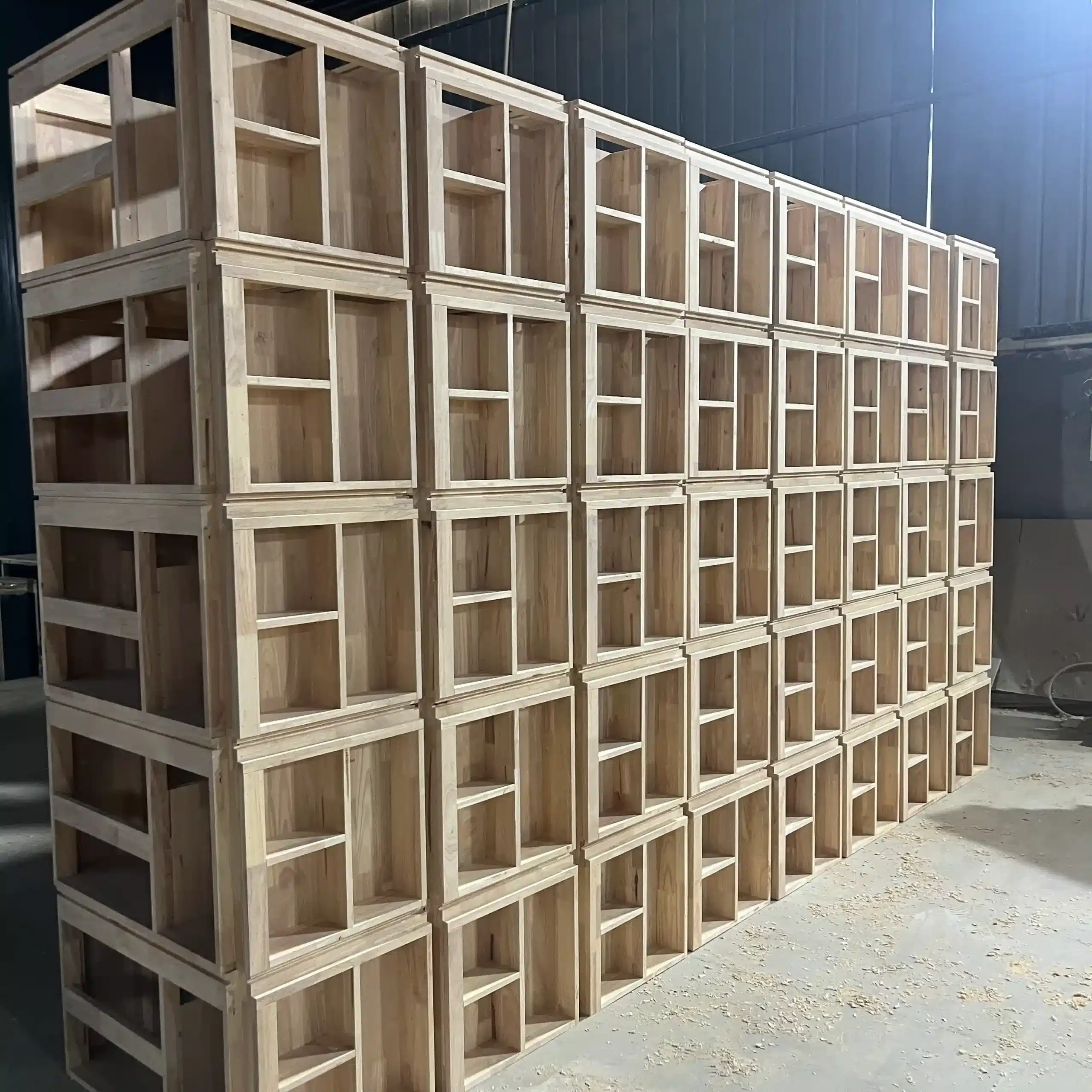
A vanity order may be complete when the event occurs. The clause should say whether the supplier must preserve the finished goods, where they will be stored, who pays for storage and insurance, and when title and risk pass. If the goods are customized, the buyer may be the only realistic buyer; the clause should reflect that commercial reality rather than pretending the supplier can sell them elsewhere.
The buyer should have a right to inspect the goods before they are stored or shipped, and the supplier should have a duty to protect them from damage. The storage conditions matter for vanities and mirrors: a damp warehouse can damage boards, stone and mirror backing even if the goods were perfect when packed. The clause should require storage that is consistent with the product’s packaging and the supplier’s own handling instructions.
If the delay continues, the parties need a mechanism to deal with the stored goods. Options include shipping to a warehouse nominated by the buyer, extending storage at the supplier’s cost for a defined period, or terminating the order and agreeing a settlement for the finished goods. The clause should not leave the goods in limbo, because a factory with no instruction may stop protecting them.
Price, Payment and Deposits
Force majeure suspends performance; it does not automatically change the price. The clause should say whether the contract price remains fixed, whether documented additional costs are recoverable, and whether the buyer can require the supplier to mitigate cost as well as time. A supplier should not be able to use a force majeure event as a route to a price increase that would otherwise be excluded by the contract.
The deposit is the buyer’s main lever. The clause should state what happens to it if the event continues: whether it is refunded, applied to finished goods, held against a later delivery, or released against a bank guarantee. If a letter of credit is involved, the clause should address the expiry and amendment of the credit, because a credit that expires during the delay may leave the buyer without a payment route and the supplier without security.
The payment terms guide explains how letters of credit and telegraphic transfers allocate risk in a vanity order. The force majeure clause should be read together with those terms, not as a separate legal island.

The Long-Stop and Termination
A force majeure clause without a long-stop can suspend the contract indefinitely. The clause should set a point at which either party may terminate if the event continues, and it should state the consequences: refund of the deposit, payment for work properly performed, return of materials, and release from further obligations.
The long-stop should be tied to the project’s real needs, not to a generic period. A hotel opening date, a seasonal deadline or a phased handover may make a delay beyond a certain point useless even if the goods could eventually be delivered. The clause should allow the buyer to terminate for convenience or for delay at that point, with a defined settlement.
Termination should not be the only remedy. The buyer may prefer to accept a later delivery with a price adjustment or a re-sequenced scope. The clause should allow the parties to agree a variation, but it should also preserve the buyer’s right to terminate if no acceptable variation is offered.
Subcontractors and the Extended Supply Chain
Vanity production often depends on subcontractors for stone tops, mirrors, hardware and packaging. The clause should say whether a subcontractor’s failure counts as force majeure. As a general rule, it should not, unless the subcontractor is affected by the same qualifying event and the supplier can show that alternative sources were not reasonably available.
The supplier should be required to flow the notice and mitigation obligations down to its subcontractors, and to disclose the subcontractors that are critical to the order. That disclosure is useful before a dispute, not after. It also helps the buyer assess concentration risk when a single stone or mirror supplier serves the whole order.
The mid-project price increase guide covers the commercial leverage a buyer has when a supplier tries to change terms after the order is placed. A force majeure clause should not become a back door to the same result.
Interaction With Delay Damages, Warranty and the Project Schedule
The clause should state how a force majeure extension interacts with any delay damages, liquidated damages or project penalties. If the supplier is excused for the event, the buyer may still have obligations to its own client; the clause should make clear who bears that risk and whether the buyer can pass it through.
Warranty should not start before the goods are installed and accepted, or the buyer may lose part of the warranty period while the goods sit in storage. The clause should align the warranty start with delivery, installation or acceptance, and it should confirm that storage does not consume the warranty.
The project schedule should be updated as part of the notice, not months later. A revised delivery date, a revised installation sequence and a revised inspection plan are the practical outputs of a force majeure event. Without them, the clause has protected the supplier but not the project.
Drafting Checklist
- Define the qualifying events and the exclusions in the contract, not in a side letter.
- Require written notice, evidence and ongoing mitigation.
- Address finished goods, storage, insurance, title and risk.
- State what happens to the deposit, the letter of credit and any payment security.
- Set a long-stop and the consequences of termination.
- Decide whether subcontractor failures qualify and require flow-down.
- Align warranty start and delay damages with the event.
- Require a revised delivery and inspection plan.
The warranty terms comparison shows why the start date and the exclusions should be agreed before the order, not after a delay. The UCC excuse for failure of presupposed conditions is a useful reference for the common-law framework, but a well-drafted clause should be more specific than the default rule.
Supplying a Hotel Vanity Project?
Send us the project schedule and contract structure. We will help align production, inspection and delivery terms with your force majeure and payment requirements.

The Bottom Line
A force majeure clause for a vanity supply contract should be a short, practical operating manual: which events count, how they are proved, what happens to the goods and the money, and when either party can walk away. If the clause cannot answer those questions, it is not protecting the project; it is only postponing the argument.
For the buyer, the test is simple: read the clause and ask what the factory would do with a finished, customized order if the port closed for a month. If the answer is not written down, the clause is incomplete.
Frequently Asked Questions
Does force majeure automatically excuse a late vanity delivery?
No. The supplier must show that a qualifying event occurred, that it affected the delivery, and that it gave the required notice and mitigation. A generic claim of delay is not enough.
Should a price increase count as force majeure?
Usually not. A price increase is a commercial risk that the supplier is expected to manage. If the contract allows a price adjustment, it should be a separate clause with its own triggers and evidence.
What happens to a deposit if the delay continues?
The clause should say. Common options are refund, application to finished goods, or release against a guarantee. Without a term, the deposit may be held while the parties argue.
Can the buyer cancel and buy elsewhere?
Only if the clause gives that right, usually at the long-stop or after a defined period of suspension. The buyer should also check whether the alternative supplier can match the approved sample and the project schedule.
Does storage time count against the warranty?
It should not if the clause is drafted properly. Warranties should start at delivery, installation or acceptance, and storage should be treated as a separate custody period.
What evidence should the supplier provide?
Government or port notices, carrier statements, utility notices, photographs, production records, insurance reports and correspondence. The clause should list the evidence rather than leave it to negotiation.




0 Comments