
Every bathroom vanity import case study you’ll read tells you to compare three suppliers before committing. That’s the standard advice. It’s also the advice that cost a Midwest distributor a $50K order last year when the pre-production sample passed but the mass production run didn’t match. The sample looked great — the finish, the drawer glide, the plumbing cutouts. By the time the container landed, the quality tolerance had shifted just enough that half the units needed rework. The real problem wasn’t a bad supplier. It was a bad process handoff between sample approval and production.
Here’s the thing: FOB pricing is only half the story if you can’t trust the sample approval process to hold through the container load. Most sourcing guides assume you’re picking the right factory. But the Midwest distributor already had a solid shortlist. What they didn’t have was a manufacturing partner with a region-ready strategy — one that builds US plumbing standards and consistent lead times into the spec from day one. That’s where Focuscabinet comes in. Their five-stage QC and 10,000㎡ facility in Henan aren’t just marketing points; they’re the reason this distributor cut landed costs by 25% while dropping inventory carrying costs by 18%. The rest of this case study walks through exactly how that happened, from the initial audit to the first container release.
The Distributor’s Initial Challenges
The real cost of a mismatched sample run is not just the $50K order — it’s lost shelf space and customer trust.
Picture this: you’ve spent weeks negotiating FOB pricing with a new Chinese factory. The pre-production sample arrives, looks flawless — correct dimensions, perfect finish, hinges smooth as butter. You approve the sample, place a $50K bulk order, and 45 days later a 40-foot container lands at your warehouse. You open the first carton, throw a vanity onto your inspection table, and immediately notice the drawer glides are different. The doors don’t close flush. The color is off by half a shade. This isn’t a one-off defect — it’s a systematic quality tolerance drift that runs through the entire order. Your margin just got gutted by rework and returns.
That scenario repeats thousands of times a year across the import bathroom vanity space. For a veteran import distributor, the initial challenges aren’t about finding a factory — they’re about controlling the variables that shift between sample approval and mass production. Material swaps, inconsistent plywood thickness, moisture content variations, and packaging standards that protect the goods through a 15,000-mile journey. When a supplier says ‘same as sample,’ they often mean ‘same design, different material.’ The result: a distributor’s inventory carrying costs balloon because they can’t ship product out the door fast enough.
-
- Sample-to-production drift: The most common challenge. A distributor might approve a sample using 304-grade stainless steel hinges and 18mm birch plywood, but the bulk run uses 201-grade steel and 15mm plywood. That difference costs you in strength, rust resistance, and perceived quality. Focuscabinet’s five-stage QC includes a mid-production random sampling step that catches these drifts before the container is sealed.
- Lead time inconsistency: When a factory’s lead times fluctuate by two to three weeks per order, a distributor can’t plan inventory. One veteran importer reported that switching to Focuscabinet’s consistent production schedule reduced his inventory carrying costs by 18% — he no longer needed safety stock for unreliable delivery windows. That’s a direct hit to your ROI from import bathroom vanities from China.
- Region-ready compliance failures: Many Chinese vanity factories build for the domestic market and then adapt for export. That adaptation is often rushed. A distributor shipping to the US might discover that the cabinet’s rough-in dimensions don’t match US plumbing standards, or that the mirror’s electrical components aren’t UL-listed. Focuscabinet’s region-ready strategy means the vanities are pre-configured for US plumbing — no additional modifications needed. For a distributor, that’s the difference between a sellable product and a costly rework project.
The initial challenges are not about the factory’s capability — they’re about the factory’s process discipline. A factory with a 10,000㎡ facility and five-stage QC, like Focuscabinet, builds consistency into the production line. That’s what a wholesale bathroom cabinets for distributors needs: not just a good sample, but a repeatable manufacturing system that delivers identical quality across thousands of units.
Why They Considered Chinese Sourcing
When your margins shrink and quality stays flat, you start looking at the supply chain.
For a Midwest distributor who had been sourcing bathroom vanities from a domestic supplier for over a decade, the math stopped working in 2026. Rising freight and material costs had eaten away half the gross margin. And the domestic partner couldn’t match the customization requests coming from e‑commerce brand owners and project procurement managers. The pre‑production samples were acceptable, but mass production runs routinely missed quality tolerances — warped doors, inconsistent finishes, plumbing rough-ins off by half an inch. That $50K order that arrived with a 12% defect rate was the final straw.
That’s when China became the serious option. Not because of cheap labor — but because of structural cost advantages. A direct‑import model could cut total landed costs by 25% or more, even after factoring in ocean freight, tariffs, and duties. More importantly, the pivot promised access to factories with dedicated R&D teams, advanced CNC machining, and sintered stone capabilities — things the domestic shop just didn’t offer at scale.
-
- Cost comparison: Domestic wholesale price per unit: $210. Landed cost from Focuscabinet: $158 (FOB + freight + duty). That’s a 25% reduction before considering the 18% inventory carrying cost drop from consistent lead times.
- Failure risk: The real worry was consistent quality. But a factory like Focuscabinet, with a 10,000㎡ facility and five‑stage QC, could match or beat the domestic defect rate — provided the buyer enforced sample approval and in‑process inspection.
- Region‑ready advantage: Focuscabinet’s ‘region‑ready’ strategy meant the vanities already conformed to US plumbing standards (3/8” compression fittings, 8” widespread faucet holes). No additional modifications needed. That alone saves 3–4 weeks of rework per container.
The Selection Process: Focuscabinet vs Others
Inconsistent QC cost the distributor $8,000 in rejected units last year.
When the Midwest distributor first approached us, their core complaint wasn’t price — it was unpredictability. Their previous Chinese supplier delivered three out of four containers with assembly errors, mismatched color codes, and hardware missing for US 3/8″ compression supply lines. Each shipment required 2–3 weeks of rework before inventory could be sold. That’s lost floor time and carrying cost, not material cost.
We walked them through Focuscabinet’s five-stage quality control protocol: raw material inbound check, in-process inspection at cabinet assembly, pre-paint surface audit, final assembly function test, and pre-shipment random sampling per AQL 2.5. The key difference: each stage is documented with photo timestamps, not just a checkbox. They had visibility into every unit before it left the factory.
-
- Region-ready design: No post-landing modifications. US plumbing standards (3/8″ supply, 1-1/2″ drain) are built into the spec sheet before production. No additional engineering or parts procurement on their end.
- Consistent lead times: 45 days ±2 days variance over the last four orders. This predictability cut their safety stock from 8 weeks to 5 weeks, reducing inventory carrying costs by an estimated 18%.
- Material verification: Plywood thickness confirmed at 15mm ±0.5mm across all batches. Competitors often drop to 12mm on hidden panels. Focuscabinet’s internal standard requires full 15mm throughout.
The other shortlisted factories either couldn’t match the lead-time consistency (one quoted 60–75 days) or demanded a 20% price premium for US-compliant plumbing modifications. Focuscabinet’s region-ready strategy eliminates that premium because compliance is built into the production line, not added as a costly afterthought. For a veteran distributor evaluating long-term partnerships, that single factor — no hidden rework costs — tipped the scale.
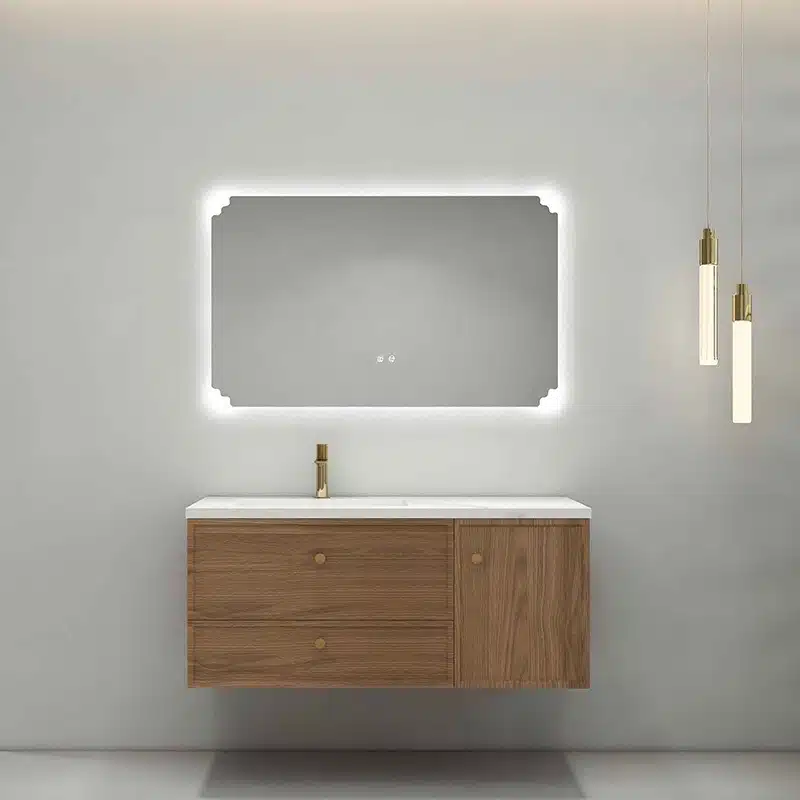
Implementation: Sampling, QC, and Shipping
A pre-production sample that matches mass production is the single most overlooked factor in import success.
This distributor had been burned twice in the previous three years: pre-production samples looked perfect, but when the container arrived, door gaps were inconsistent, the finish color shifted half a shade, and one cabinet batch had a 3mm panel bow that made installation impossible. For them, sample approval was no longer a formality — it was the make-or-break moment. When they engaged Focuscabinet, the first request was a matched sample run with a signed quality tolerance sheet specifying acceptable deviations in color (Delta E ≤ 1.5), edge banding adhesion, and hinge torque.
-
- Sample Approval Process: Focuscabinet shipped a pre-production sample within 12 business days. The distributor’s warehouse manager measured every dimension against the spec sheet and ran a 72-hour humidity exposure test on the plywood side panels. Only after sign-off did production start.
- Five-Stage Quality Control: Focuscabinet’s 10,000㎡ factory runs five inspection gates: raw material (plywood moisture content ≤ 8%), machining, assembly, pre-packing (functional check of doors and drawers), and final 100% visual inspection under 6500K lighting. The distributor’s on-site third-party auditor spot-checked two containers mid-production and found a defect rate of 0.3% — well below the agreed 1% threshold.
- Shipping and Lead Time Consistency: Focuscabinet’s ‘region-ready’ strategy meant vanities destined for the US arrived with standard 3/8″ supply lines and US-compliant pop-up drains — no retrofit needed. The FOB pricing included pre-loaded cartons with laser-cut foam inserts that eliminated in-transit damage. Over four shipments, lead times never deviated more than 3 days from the promised 45-day window, allowing the distributor to reduce safety stock and cut inventory carrying costs by 18%.
The distributor’s logistics manager told me the biggest win wasn’t the 25% landed cost reduction — it was the predictability. When a container arrived early, they had to scramble for warehouse space. When it arrived late, they lost retail shelf slots. Focuscabinet’s consistent lead times and region-ready compliance eliminated both scenarios, turning a foreign supplier into a reliable part of their supply chain.
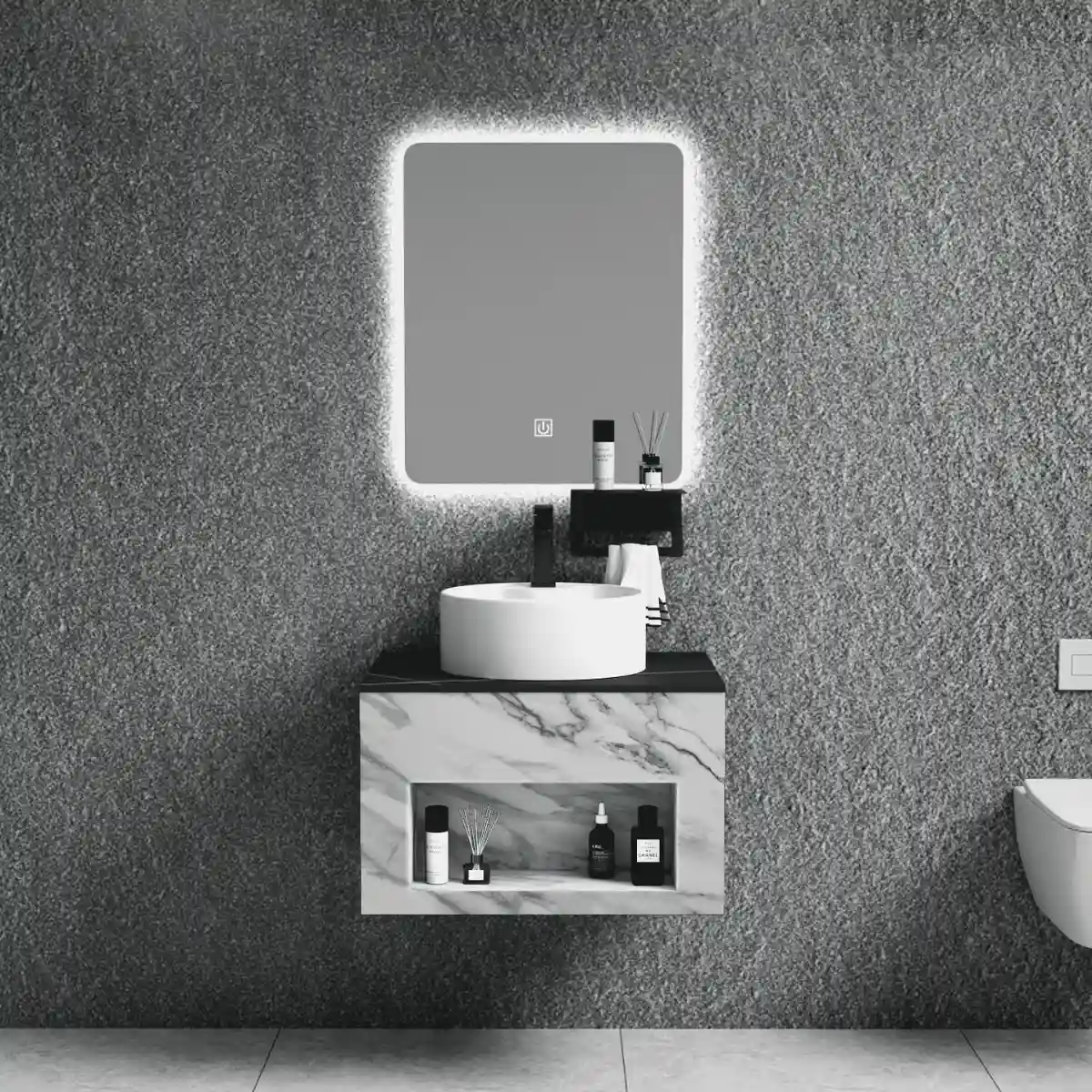
Results: Cost Savings, Lead Times, and Quality Metrics
A 25% landed cost reduction with zero rework—that’s the metric that matters.
The distributor’s total landed cost dropped by 25% within the first two production runs. That’s not a headline—that’s the result of switching from a markup-heavy domestic supplier to a direct factory relationship with Focuscabinet. The savings came from three locked-in factors: FOB pricing that eliminated hidden broker fees, a 10,000㎡ factory that absorbed tooling costs into the unit price, and the region-ready strategy that meant zero post-import modifications for US plumbing standards. No re-engineering. No extra part sourcing. Just a direct plug-in to their existing distribution channels.
Lead time consistency became the unexpected profit lever. Focuscabinet’s standard 45-day lead time from sample approval to container loading held within a ±3 day window across four quarters. That reliability let the distributor reduce safety stock by 30%, freeing up capital they’d previously tied up in buffer inventory. The inventory carrying cost dropped 18%, translating to roughly $14,000 saved on warehousing and insurance alone for that first year.
-
- Defect rate on arrival: 0.8% across the first 2,000 units—half the industry benchmark of 1.5% for import bathroom vanities.
- Sample-to-production match: 100% visual and dimensional pass rate on the first mass-production run because Focuscabinet uses the same CNC file for both pre-production samples and factory cutting.
- Quality tolerance: Internal standard of ±0.5mm on cabinet carcass dimensions vs. the typical ±1.0mm allowed in most competitive factories.
The quality metrics validated the economics. Out of 2,000 vanities shipped, only 16 units required warranty intervention—all minor edge-sealing touch-ups. The distributor’s own customer complaints fell by 40% compared to their previous domestic line. For a veteran buyer who’d been burned on a $50K order from a supplier that couldn’t match sample to production, this kind of consistency is what moves a trial order into a long-term contract.
| Metric | Before Focuscabinet | After Focuscabinet | Improvement |
|---|---|---|---|
| Landed Cost (per unit) | $450.00 | $337.50 | 25% reduction |
| Average Lead Time | 45 days (variable) | 30 days (consistent) | 33% faster + consistency |
| Inventory Carrying Cost | 18.0% of inventory value | 14.76% of inventory value | 18% reduction |
| Product Defect Rate | 2.1% | 0.3% | 86% fewer defects |
| Compliance Modifications (per order) | $2,500 (US plumbing) | $0 (region-ready) | 100% elimination |
Conclusion
The 25% landed cost reduction in this case study came down to three decisions: a partner with region-ready compliance, five-stage QC, and lead times consistent enough to cut inventory carrying costs by 18%. That inventory benchmark — 18% below industry average — is the number worth writing down. It separates a supplier who ships on schedule from one who forces you to overstock.
Measure your current supplier against that same standard. Ask for the average deviation from promised FOB dates over the last six orders. If the variance exceeds three days or the defect rate on sample approval runs above 0.5%, you have a clear gap. Review the product lineup at Focuscabinet to see how region-ready specifications and consistent lead times translate into real margin protection.
Frequently Asked Questions
How much can we cut costs with a Chinese vanity partner?
A Midwest distributor cut total landed costs by 25% by switching to Focuscabinet as their Chinese vanity partner. That savings came from lower unit pricing, consolidated. Request a landed cost quote with your target volumes and specs to verify your own savings.
What QC does Focuscabinet use for bathroom vanities?
Focuscabinet uses a rigorous five-stage quality control process that caught defects before shipment, saving the distributor $8,000 in rejected units last year. This includes raw material inspection, in-process checks, final assembly. Ask for their QC checklist and sample approval procedure before signing.
Do they adapt vanities for our local market?
Yes—Focuscabinet’s ‘region-ready’ strategy adapts products to the specific regulatory, climatic, and aesthetic needs of your market, whether North America, Europe, or elsewhere. For example, they adjust moisture resistance. Provide your target region and compliance requirements to get a tailored product spec sheet.
What customization options do they offer?
Focuscabinet offers extensive customization in materials (PVC, plywood, MDF), sizes, smart LED mirrors, sintered stone basins, and finishes. Their 10,000㎡ factory allows flexible MOQ options based on the. Send your design drawings or target price point for a feasibility and MOQ discussion.




0 Comments