

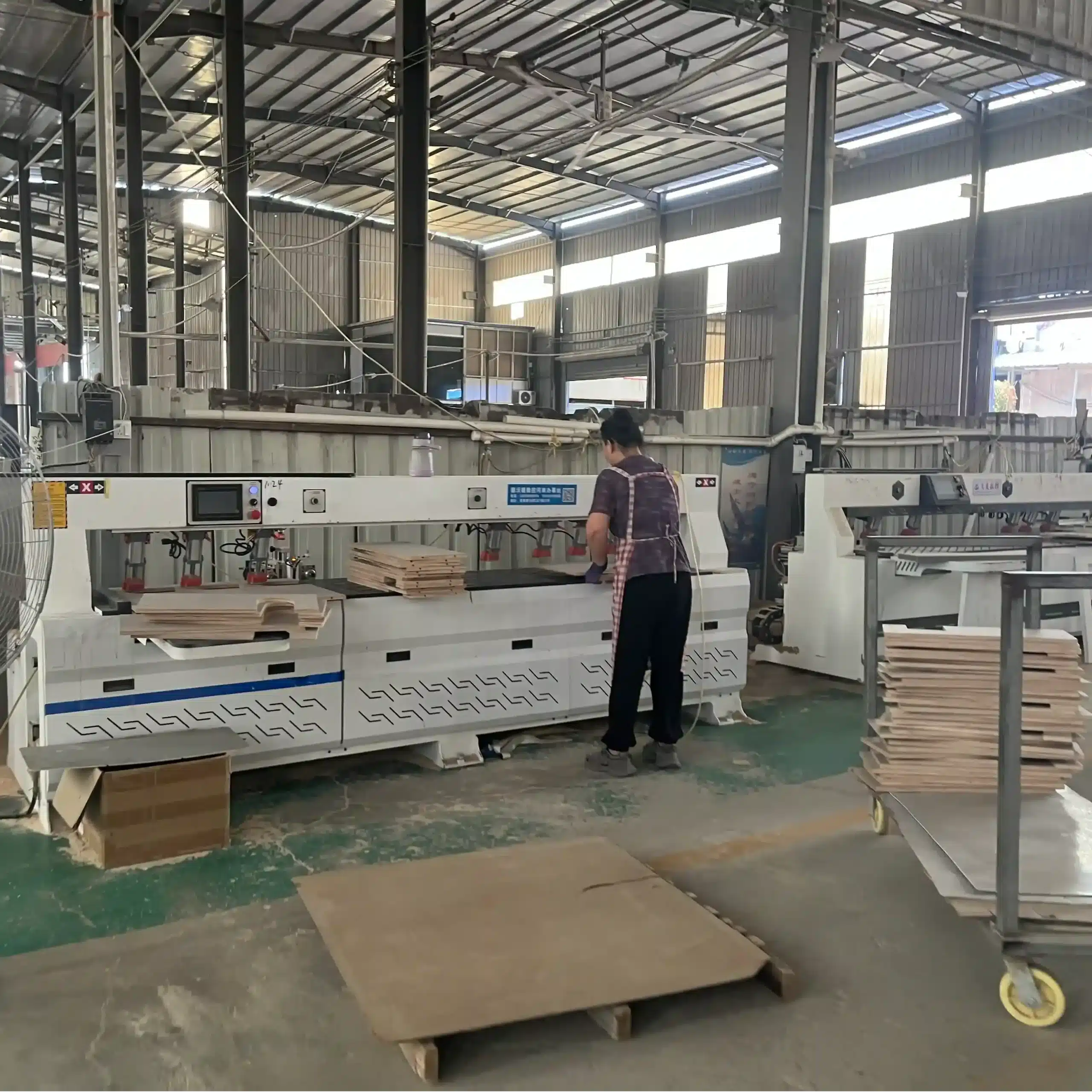
A distributor warehouse that stores vanities and mirrors well is run to a written storage standard, not to habit. The standard sets the climate band and logs it, states which cartons may stack and which never do, defines racking and floor-stacking rules that keep compression on the carton’s strongest edges, and connects the receiving check to the rack. Vanities and mirrors are furniture plus fragile assemblies: board products that move with humidity, tops that must stay flat, and mirrors whose backing hates condensation. A short, enforced standard prevents the slow crush, warp and edge-lift that show up as customer complaints months later, and it costs almost nothing to write.
Key Takeaways
- Write a storage standard: climate band with daily logging, stacking rules, racking limits, handling methods.
- Keep compression on the carton’s vertical edges; tops and mirror crates never carry load.
- Connect receiving to the rack with a documented put-away path and keep the climate log as evidence.
Climate: The Band That Protects Board and Mirror
Wood-based boards take up and release moisture with the air around them. In a warehouse that swings from damp to dry, panels swell, straighten, cup and move, and the movement shows up later as door misalignment, cracked joints and edge lift. Mirror backing has the opposite problem: condensation on a cool mirror in a humid space attacks the coating from the edges inward.
The widely used target band for furniture storage is a moderate, stable interior climate: roughly eighteen to twenty-four degrees Celsius with relative humidity in the forty to fifty-five percent range, and minimal daily fluctuation. The stability matters as much as the number; a warehouse that sits at a steady sixty percent is kinder to stock than one that lurches between thirty-five and eighty.
The standard should require a simple instrument per storage zone, a daily log, and alarm levels that trigger action rather than discussion. Where the building cannot hold the band, the standard should at least keep stock off exterior walls and off the floor, away from loading doors, and should require longer acclimatization before installation. The ASHRAE Handbook chapters on air conditioning of wood and paper product facilities are the technical reference behind these bands.
| Storage factor | Standard | Why |
|---|---|---|
| Temperature | Approximately 18–24 °C, stable | Limits board movement and condensation risk |
| Relative humidity | Approximately 40–55% RH, logged daily | Protects panels, finishes and mirror backing |
| Airflow | Gentle circulation; no direct draughts on stacks | Prevents localised drying and cold spots |
| Stock position | Off exterior walls and floor; away from doors | Avoids condensation and damp zones |
| Acclimatization | Stated rest period before installation after transport | Lets panels equalise before fixing |
Stacking: Compression on the Edges, Never the Faces
A vanity carton is designed to carry load on its vertical edges, not on its faces. Crushed cartons almost always show a stack that ignored that fact: cartons laid on their sides, heavy tops placed on cabinet boxes, or towers built above the height the carton was designed for. The standard should state three rules in plain language.
First, orientation follows the carton marking: this-side-up means this side up, and a cabinet carton stands on its base. Second, only cartons of the same footprint and rated strength stack on each other, with the heaviest at the bottom and the count per layer and layers per stack taken from the packaging specification, not from whoever is stacking that afternoon. Third, some cartons never carry anything: stone tops, basins and mirror crates stay on their own pallets or cradles, flat and supported as designed, with nothing above them.
Partially opened cartons and display samples leave the stacking pool. An opened carton has lost its structure, and a display unit waiting for the showroom is not packaging at all. The packaging drop-test guide explains what the carton was engineered to survive; the warehouse standard keeps it inside that envelope after it arrives.
Racking and Floor Stacking
Racking is the safer home for vanity stock where the building has it, because it takes the stack out of the crushing business entirely. The standard should state the rack type for each product family: long cartons on wide-span or cantilever racks, mirror crates on padded shelves, stone tops on their cradles with the beam spacing matching the support points the manufacturer specifies.
Beam spacing matters more than it looks. A wide spacing between front and back beams asks the carton to bridge a span it was not designed for; the result is a sagged carton and a bowed panel inside. The packaging specification or the factory should confirm the safe span, and the standard should record it per carton type.
Where stock is floor-stacked, the standard should set the maximum stack height per product family, require tier boards between layers where the cartons are not flat and uniform, and keep aisles wide enough that handling equipment does not clip the stack corners. The Logistics Operational Guide’s ground storage and stacking guidance is a solid reference for the storage-side rules, and it pairs with the handling rules below.
Handling: The Moment Damage Happens
Most warehouse damage happens in movement: a fork tine through a carton face, a corner clipped turning out of an aisle, a mirror crate set down on its edge. The standard should assign handling methods per product family and keep the rules short enough to train in an afternoon.
Cabinet cartons move on pallets or with a hand truck under the base, never dragged, never carried by the corner that holds the basin cutout. Stone tops and mirror crates move on their cradles with two people or dedicated equipment, kept vertical or flat exactly as the crate marks state, and never tilted “just for a moment”. The receiving inspection checklist is where the carton condition is first recorded; the storage standard keeps that condition intact afterwards.
The standard should also state what happens to a damaged carton: photograph it, inspect the contents at once, grade the damage, and move the unit out of the sellable pool or into a documented repair. A crushed carton that is quietly restacked is a customer complaint on a delay.
From Receiving to the Rack
The flow from container to rack should be a single documented path: unload, verify against the packing list, inspect, label, and put away to the location the system assigns. Stock that waits on the dock overnight is stock in the worst room of the building, exposed to doors, weather and traffic.
Put-away should respect the product families: cabinet cartons to their racking or floor stacks under the stacking rules, tops and mirror crates to their cradle locations, hardware and accessory cartons to shelving where they cannot crush anything. The put-away record should note the location, so a recall or finish-matching exercise can find every unit of a batch without a hunt.
The inventory model matters here too. A distributor running a stocked programme, rather than direct shipping, carries the storage risk for months, and the warehouse stocking versus direct-ship comparison explains how that changes the economics. The storage standard is what makes the stocked model safe to run.
Seasonal Peaks, Docks and Overflow
Storage standards are tested twice a year, when the containers arrive faster than the racks empty. The standard should say what happens at peak: where overflow stock goes, what may never be improvised, and who signs off the temporary layout. The rules that bend at peak are the ones that cause the damage, so the standard should name the ones that do not: climate logging continues, tops and mirror crates keep their exclusions from any stack, and aisles keep their minimum width even when the overflow shelving creeps into them.
The dock is the other seasonal risk. Containers that cannot be unloaded in a day leave cartons on a dock exposed to weather and temperature swings that the warehouse band never sees. The receiving plan should assume the unload is completed promptly, and the standard should treat the dock as transit space, not storage: nothing sleeps there by default. Where a delay is unavoidable, the stock should move to the least-worst interior space with a logged climate reading, not stay on the dock.
Overflow locations should be recorded like any other location. The most common peak-season failure is not damage but disappearance: a carton moved to “somewhere near the mezzanine” and rediscovered months later, out of sequence, with a finish the current batch no longer matches. If the location is not in the system, the stock is not really stored.
Checks, Records and the Audit Trail
The standard should end with a short inspection routine: a daily climate log, a weekly walk that looks at stack condition and aisle clearance, and a monthly cycle check on a sample of locations that opens cartons only where a problem is suspected. Every finding is photographed and logged.
The records join the batch history. When a finish or warp question arrives from a dealer months later, the climate log and the put-away record answer the storage questions in minutes, and the conversation moves to what actually caused the problem. The moisture resistance guide covers the material side of the same question; the climate log is the warehouse’s half of the evidence.
Stocking Vanities in Your Warehouse?
Send us your carton types and building conditions. We will help set the stacking, racking and climate rules that keep your stock sellable.

The Bottom Line
Write the storage standard down: a climate band with a daily log, stacking rules that keep compression on the carton edges, rack and floor-stack limits per product family, assigned handling methods, and a documented path from receiving to the rack. Vanities and mirrors survive a warehouse that treats them as furniture plus fragile assemblies, and they punish a warehouse that treats them as generic boxes.
Frequently Asked Questions
What humidity should we hold in the warehouse?
Around forty to fifty-five percent relative humidity with the temperature near eighteen to twenty-four degrees, and stable. The daily log and the trend matter as much as the number.
Can stone-top crates be stacked?
No. Tops and mirror crates stay flat on their pallets or cradles with nothing above them. Their packaging is designed for support in a defined orientation, not for load bearing.
How high can cabinet cartons stack on the floor?
Only to the height stated in the packaging specification for that carton, on a flat, even floor, with tier boards where the layers are not uniform. When the specification is silent, ask the factory rather than guessing.
Why does beam spacing matter in racking?
Wide beam spacing makes a carton bridge a span it was not designed for, which sags the carton and bows the panel inside. Match the beam spacing to the carton’s supported span.
What should we do with a crushed carton?
Photograph it, open and inspect the contents immediately, grade the damage, and move the unit out of the sellable pool or into a documented repair. Never restack it and hope.
How long should stock acclimatize before installation?
Long enough for the panels to equalise after transport, typically a stated rest period in the installation space with the doors open. The exact time should come from the supplier’s installation instructions.




0 Comments