
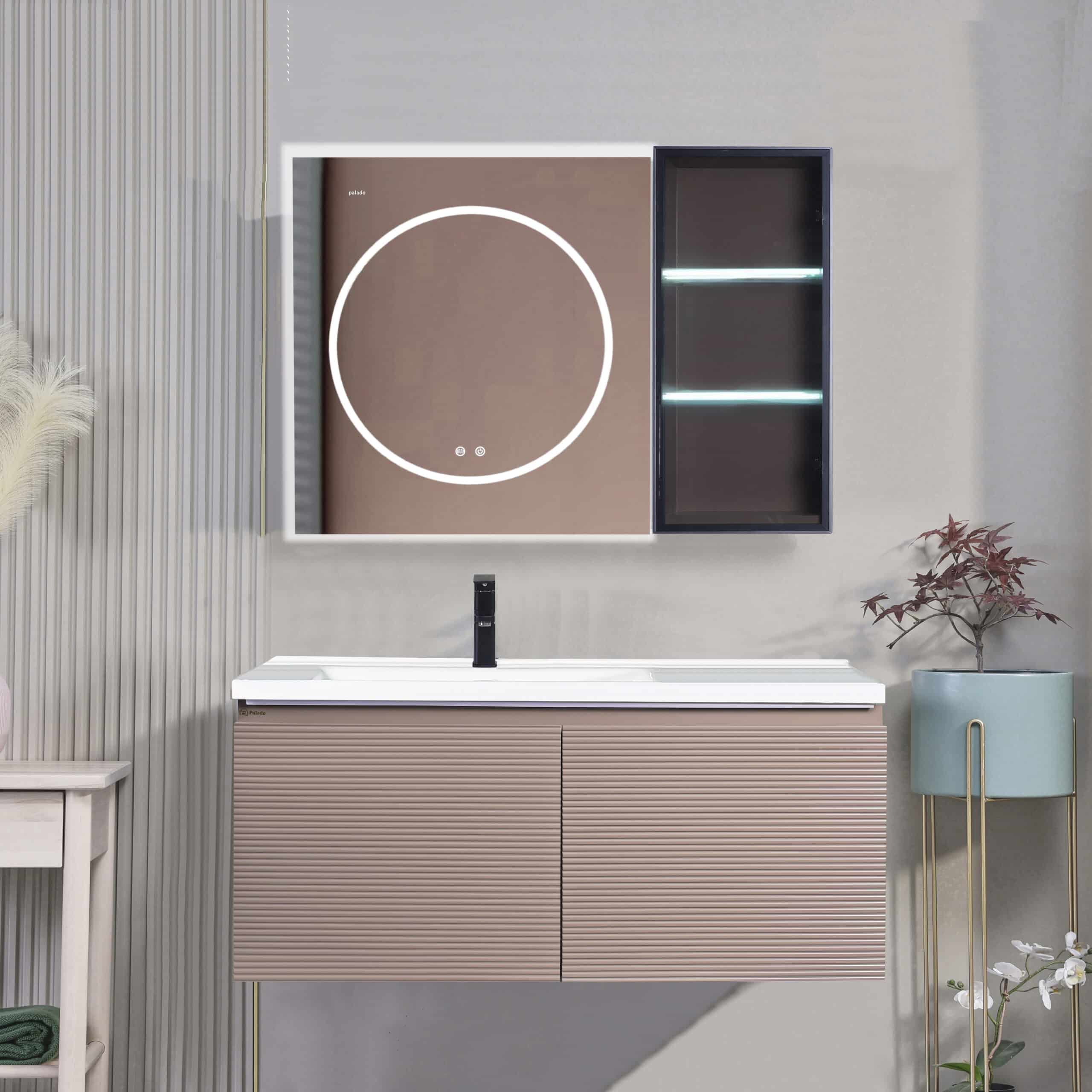
A bathroom vanity MOQ negotiation strategy starts with one number: 15. For a first-time importer, a 15-set minimum per model, color, and size can look like a wall. The order feels too large for a test, and the conversation stalls before it starts. The wall is built from choices you control, not from factory policy.
MFBATH, the brand of Main Focus Cabinet in Changge, Henan, has served 1000+ dealers across 20+ countries since 2015. Its published floor is 15 sets per model, color, and size, and experienced buyers treat that number as a starting line. This guide breaks the negotiation into five levers: order scope, mixed containers, phased orders, payment terms, and customization credits. Each lever has a concrete ask you can bring to the factory.
Key Takeaways
- A working bathroom vanity MOQ negotiation strategy uses five levers, and each one works inside the published 15-set floor.
- The minimum order quantity (MOQ) is 15 sets per model, color, and size, and mixed loading lets one container span several models toward that total.
- Free samples leave within 10 working days, so the low-cost test happens before any deposit moves.
- Bulk production runs 20–30 days, and total lead time to the US, Canada, and Mexico is 4–6 weeks.
- Payment terms are 30% deposit to order and the balance within one week of the draft bill of lading, free on board (FOB) Qingdao Port.
- Custom sizes, colors, and logos start at 15 sets per configuration, backed by Pantone color matching and 1000+ standard finishes.
Table of Contents
- Key Takeaways
- Why MOQ Feels Non-Negotiable
- Lever 1: Scope the Order, Not the Number
- Lever 2: Mixed Containers and Shared Minimums
- Lever 3: Phased Orders That Lock Volume
- Lever 4: Payment Terms as a Negotiation Asset
- Lever 5: Customization Credits
- What a Realistic MOQ Conversation Looks Like
- Frequently Asked Questions
- The Bottom Line
Why MOQ Feels Non-Negotiable
A minimum order exists because a factory commits floor space, material, and labor to your line. Every model, color, and size needs its own cutting program, finish setup, and QC record. MFBATH runs 5 quality checks per product, and those checks cost the same whether the run is 15 sets or 150. The minimum covers that fixed cost, which is why the factory defends it.

Read the minimum the way the factory writes it: 15 sets per model, per color, per size. That phrasing multiplies fast. Two models in three colors create six separate minimums on paper, even when the factory sees one order. The number that blocks you is rarely the base MOQ. It is the number of variants you asked for.
Mixed loading changes the picture. MFBATH counts different models and sizes in one container toward the total MOQ, so 15 sets can span two or three models instead of one. That policy turns the negotiation from a wall into a list of choices. The factory’s fixed costs stay covered, and your first container tests a market instead of betting on a single SKU.
Scale is part of the answer. MFBATH runs a 10,000 square meter factory with 95 employees and a monthly capacity of 5,000 sets, and its sintered stone basin line alone serves 500+ dealers. A 15-set floor is a small fraction of a month’s output, so the minimum exists to keep production lines efficient, not to block small buyers. Understanding that distinction changes how you ask.
A common mistake is to treat the MOQ as a price lever. Asking for a lower minimum without changing scope simply moves the negotiation to a discount conversation the factory does not want. The floor is a production term, not a margin term. Buyers who treat it as a production term get answers; buyers who fight it get silence.
Lever 1: Scope the Order, Not the Number
The fastest way to lower a minimum is to stop counting models and start counting variants. Ten models at 15 sets each multiplies into a three-digit total; one model in one color at 15 sets stays at 15. The factory’s floor did not move; your scope did. Scoping is the first lever because it costs nothing and changes everything.
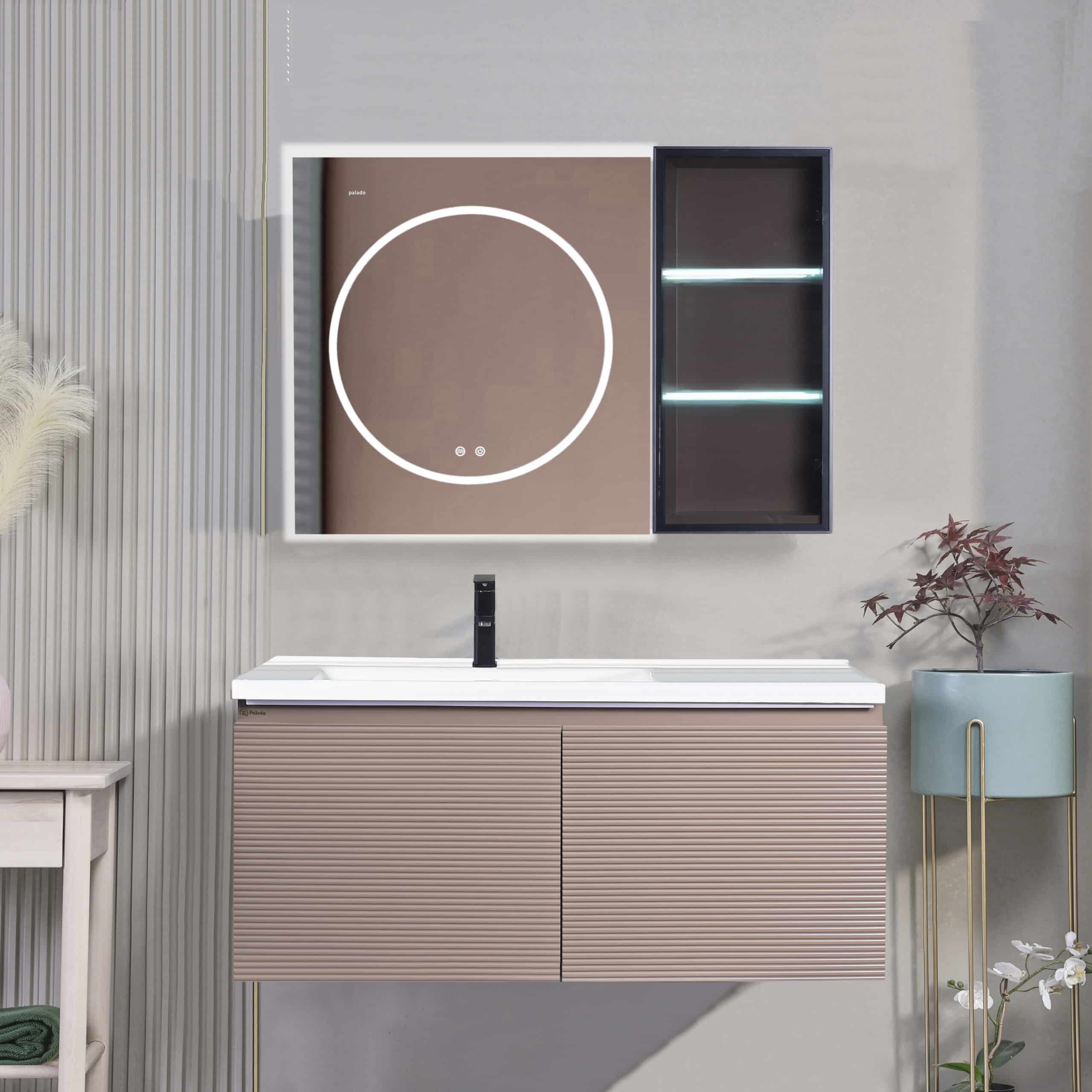
Start with the width that sells in your market. MFBATH builds PVC vanities from 24 to 60 inches wide and 18 to 24 inches deep, so the range can hold a full showroom. A first order that concentrates on one width, one finish, and one door layout keeps every check aligned. Narrow scope also makes the free sample cycle of 10 working days genuinely useful.
The Three Dimensions That Multiply MOQ
Every variant multiplies the minimum three ways: model, color, and size. Cut any one dimension and the total drops. MFBATH lists 1000+ standard finishes, which is an advantage once you scale and a trap on a first order. Choose one finish from the catalog, then add colors only after the first run sells.
A Scoped First Order Becomes a Faster Second Order
A narrow first order shortens the production path and gives the factory a clean reference for the next run. Bulk production at MFBATH runs 20–30 days, and a focused mix keeps that window honest. Dealers respond to stock, not to variety you cannot hold. Scoping the first order is the difference between a container that sits and a container that sells.
SKU discipline pays twice. A tight list keeps your warehouse simple, your deposits smaller, and your reorder decisions fast. MFBATH’s 40,000+ customization combinations wait for you on the other side of a proven first run. The factory can build variety; your market has to earn it first.
Lever 2: Mixed Containers and Shared Minimums
Mixed loading is the factory’s own answer to the MOQ wall. MFBATH accepts different models, colors, and sizes in one container, and every set in that container counts toward the total minimum. One 15-set order can sample the market instead of betting on a single SKU. The negotiation you want is not “lower the number” but “spread the number.”
The container math works at the order level, not the carton level. Exact set counts depend on carton dimensions, so ask the factory for a loading plan before you fix the mix. A written plan that shows 15 sets across three models is a stronger ask than a letter requesting a lower minimum. Ask for it, and check the packing list against it when the container lands.
Compare this with the single-model route. One model in one finish is easier to price and pack, and a dealer with one strong SKU may prefer it. For a first order, mixed loading wins because it spreads sell-through risk across models while keeping every unit inside the 15-set floor. The FCL and LCL loading guide explains when each container strategy pays off.
Ask for the loading plan in writing, and match it to the models you saw in the factory catalog. MFBATH’s product range shows the models you can combine into one shared minimum. A supplier that counts mixed sets toward the MOQ should prove it in the packing list without a fight. That proof is part of the deal.
Mixed containers also smooth the freight side of the deal. One full container with a mixed load usually costs less per set than several small shipments, because the port and inland legs repeat for each delivery. The saving shows up in your landed cost, not in the factory’s quote. Keep the mix stable across reorders so the loading plan repeats without rework.
Lever 3: Phased Orders That Lock Volume
A factory does not need a promise of 100 sets to say yes. It needs proof that the first 15 sets will reorder. Phasing turns one scary number into two believable ones: a trial order and a repeat order. MFBATH ships free samples within 10 working days, so the test cycle starts before any deposit moves.
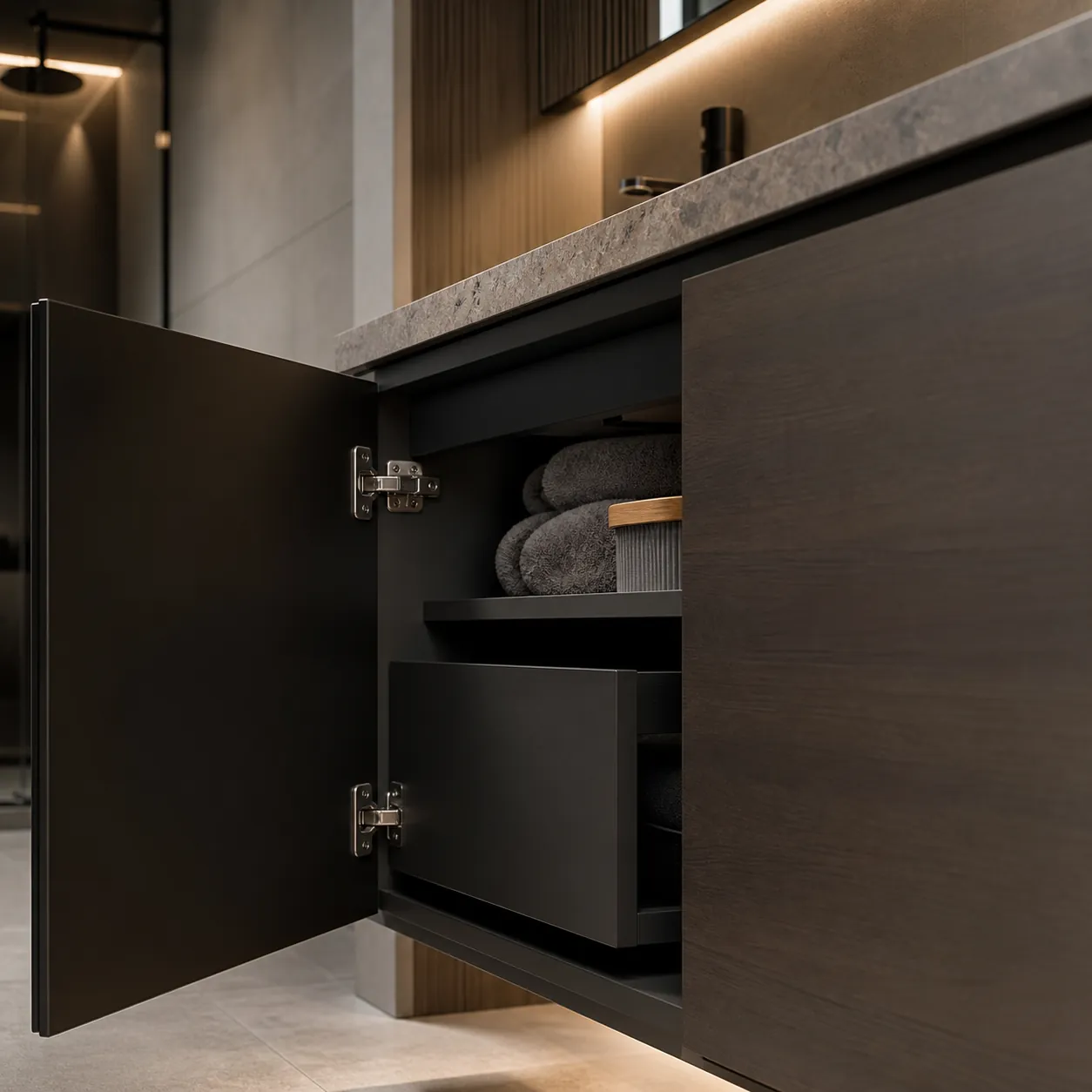
The timeline supports phasing. Bulk production runs 20–30 days, and total lead time to the US, Canada, and Mexico is 4–6 weeks from order. A first order placed in week one and landed inside that window lets you reorder against real sell-through instead of projections. Dealers restock what moved.
Lock Volume With a Written Intent
The ask that works: commit to a trial order at 15 sets, then state the repeat quantity you intend to order if the first run clears. The factory hears volume, and you keep flexibility. A written intent carries more weight than a verbal target, and it costs nothing to send. Send it with the purchase order, not after.
MFBATH’s 2-year full-cabinet warranty and a return rate below 1% make the phase logic safe. A low-return supplier is the partner you can promise a second order to. Third-party inspection with SGS or TÜV is available with advance notice, so the trial run can carry the same checks as a full container. Keep the phased plan in one document.
Keep the sample pair from the trial run. The approved sample and the factory’s retained copy stay the reference for every reorder, so the repeat order quotes against the same cabinet. MFBATH’s 5 quality checks per product apply to each phase equally. A documented first run makes the second run a routine, not a new negotiation.
Lever 4: Payment Terms as a Negotiation Asset
Payment terms are the quiet half of a bathroom vanity MOQ negotiation strategy, and they are part of the minimum even when nobody says so. A factory that waits for its money quotes a higher floor. MFBATH’s terms are 30% deposit to order and the balance within one week of the draft bill of lading, shipped free on board (FOB) from Qingdao Port. That sequence puts most of the payment timing on your calendar.
The negotiation lever is timing, not rate. Pay the 30% deposit on schedule, and ask the factory to hold your slot in the 20–30 day production window. A buyer who clears the balance on the draft bill of lading date earns priority without asking for a discount. The 15-set trial order guide shows how the same terms work at small scale.
FOB Qingdao means your risk starts at the port, and the Incoterms rules published by the ICC define exactly where. Name the correct term in the purchase order, and the factory knows you understand the deal. Buyers who read the term before signing negotiate from a position of clarity. That clarity is a form of leverage.
Hold the sequence in your head: 30% deposit, production in 20–30 days, balance on the draft bill of lading, 4–6 weeks to your door. Every step carries a date, and dates are what you trade in negotiation. Offer certainty on your side of each date, then ask for certainty on theirs.
Prepare the documents before the call. A purchase order with the model list, the loading plan, and the payment schedule shows the factory you have done the work. Suppliers read preparation as commitment, and commitment earns scheduling priority. The deposit date you name becomes the anchor for the whole production calendar.
Vanities Built Around Your MOQ
Browse this product, solution, or service page to explore relevant offerings.
Lever 5: Customization Credits
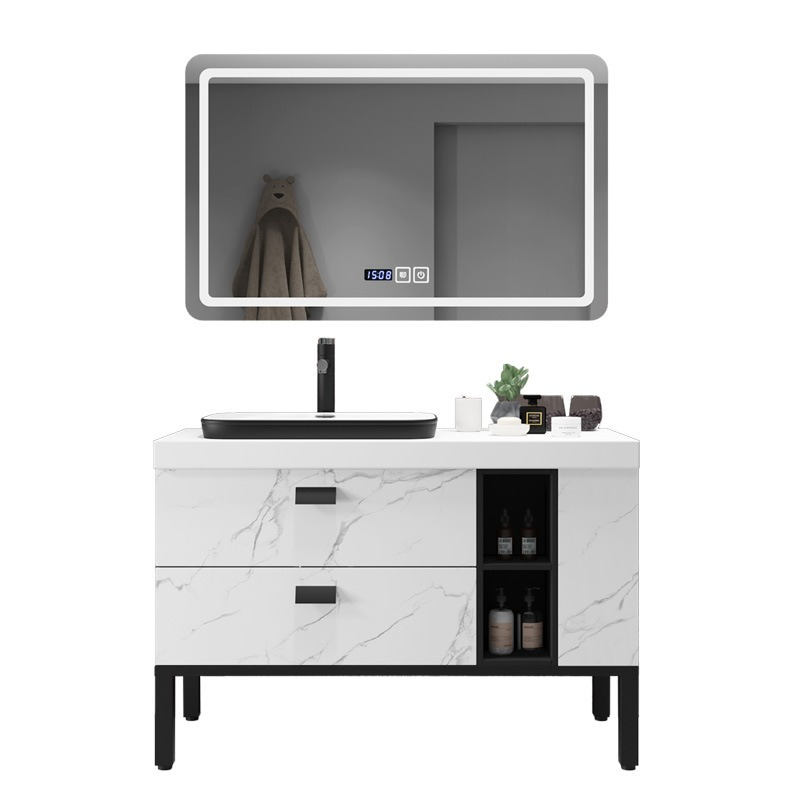
Custom orders are the last thing a first-time importer should ask for, and usually the first thing they mention. MFBATH starts custom sizes, colors, and logos at 15 sets per configuration, with Pantone color matching and 40,000+ customization combinations behind it. The capacity exists. The question is whether your first order should use it.
Weigh the trade-off. A custom color makes your product hard to compare, which protects margin, but it also makes the run harder to reorder if the finish stalls. A standard finish keeps the factory’s setup fast and your reorder costs low. For a first order, pick the standard finish and bank the custom credit for order two.
Custom configurations still run through the factory’s quality system. MFBATH holds ISO 9001 and ISO 14001, certified since 2017 with validity confirmed in 2025, plus CE and UL for applicable product lines, and every product passes 5 quality checks. If your market sits in the EU, review the official CE marking guidance before you finalize custom electrical features. Ask how a custom run keeps those checks; the answer reveals how the factory treats your 15 sets.
The OEM path is where customization scales. When your brand outgrows one container, the OEM MOQ strategy guide shows how private-label programs layer onto the same 15-set floor. Customization is not a first-order tool. It is a growth lever you pre-negotiate and pull later.
Logo work follows the same rule. MFBATH applies custom logos at the same 15-set minimum, so a branded first run is possible, but a plain first run is easier to sell if the market shifts. Brand the repeat order once sell-through is proven. Your logo costs nothing to delay and everything to rush.
What a Realistic MOQ Conversation Looks Like
A realistic bathroom vanity MOQ negotiation strategy does not start with “lower the MOQ.” It starts with a scoped list, a container plan, and a payment schedule. Walk through each lever as a question the factory can answer yes to. The table below turns the five levers into a three-column script.
| What You Ask | What the Factory Hears | Win Condition |
|---|---|---|
| Scope the order. “Can we start with one model and one finish?” | A buyer who knows what sells | 15 sets on one SKU, approved in days |
| Mix the container. “Can 15 sets span three models in one container?” | A partner testing the market | One container, one shared minimum |
| Phase the volume. “Trial 15 sets now, repeat at volume if it sells.” | Volume that will return | Bulk lead time of 20–30 days holds |
| Time the payment. “30% deposit on schedule, balance on the draft bill of lading.” | A buyer who pays on time | Priority slot in the production window |
| Bank the custom credit. “Standard finish now, custom color on order two.” | A buyer who plans to scale | Pantone match ready for the next run |
Watch for the factory’s answers, not just its yes. A written loading plan, a named production slot, and a confirmed sample date are answers you can bank. A verbal agreement on any of the five levers is not. Take the conversation to email, and let the record carry the negotiation forward.
Run the conversation in this order. Scope first, because it shrinks every other number. Container second, because it spreads risk. Phasing third, payment fourth, customization last. More sourcing scripts and order documents live in the purchase guide library for the next stage of the deal.
Frequently Asked Questions
Can I order fewer than 15 sets on my first order?
MFBATH sets the floor at 15 sets per model, color, and size, and mixed loading lets you split those 15 sets across models inside one container. Free samples arrive within 10 working days, so the low-cost test happens before you commit to bulk. Scope the first order to one or two models and the floor feels smaller.
Does mixed loading really count toward the MOQ?
Yes. Different models and sizes in one container count toward the total minimum at MFBATH. Ask for a written loading plan before you confirm the mix, and check the packing list against it when the container lands. The same order can test three models at one shared minimum.
What payment terms should a first-time importer expect?
The standard sequence is a 30% deposit to order and the balance within one week of the draft bill of lading, FOB Qingdao Port. Bulk production runs 20–30 days, and total lead time to the US, Canada, and Mexico is 4–6 weeks. Pay the deposit on schedule and the timing becomes your bargaining asset.
The Bottom Line
A bathroom vanity MOQ negotiation strategy does not depend on a factory bending its floor. It depends on scoping one model, spreading the minimum across a mixed container, phasing orders, paying on schedule, and saving customization for later. MFBATH’s 15-set minimum, free samples in 10 working days, and 20–30 day production window give a first-time importer a workable path. Start with the scope, and the rest of the conversation follows.




0 Comments