

Every vanity importer signs a warranty promise at some point, and most price it wrong. The math looks simple: a 2-year warranty is just two years of possible claims. In practice it is a reserve budget, a spare parts plan, a freight rule, and a negotiation card rolled into one. This article runs the warranty math for bathroom vanities with numbers you can verify — the coverage structure, the return-rate reality, and the concrete spare parts plan that keeps claims cheap instead of expensive. By the end you will have a vanity warranty spare parts plan you can attach to your next purchase order instead of a vague promise to “sort it out later.”
The examples use the published terms of Main Focus Cabinet (MFBATH), a Changge, Henan factory operating since 2015, because its numbers are specific and checkable: a 2-year whole-cabinet warranty, a documented return rate under 1%, a minimum order quantity (MOQ) of 15 sets per model, color, and size, and FOB Qingdao Port terms. If your own supplier cannot give you numbers this concrete, that is your first red flag.
Key Takeaways
- A 2-year whole-cabinet warranty covers the unit, not just manufacturing defects — confirm which one your supplier offers.
- A documented return rate under 1% gives you a defensible line item for warranty reserves instead of a guess.
- Five quality checks per piece and third-party inspection options are the factory-side controls that keep claims rare.
- Spare parts planning starts at order time: hinges, drawer slides, LED drivers, seals, and handles should be orderable in small quantities.
- MOQ of 15 sets per model, color, and size lets you stock modest spare-part depth instead of betting on volume.
- Warranty terms are a documented, auditable part of the factory file set — ISO 9001 quality management systems require complaint handling to be on record.
- Put the warranty policy in writing before the PO, and verify it against the certificate and the QC report trail, not the sales page.
Table of Contents
- Warranty Math: What a 2-Year Whole-Cabinet Warranty Covers
- Return Rates: What Under 1% Means for Your Pricing
- Spare Parts Planning: What to Stock and How Much
- The Cost Side: Warranty Reserves, Freight, and Claim Handling
- Building a Warranty Policy Buyers Can Verify
- Frequently Asked Questions
- The Bottom Line
Warranty Math: What a 2-Year Whole-Cabinet Warranty Covers
Warranty language is where vague marketing hides. Two common formulations sound identical and price differently. A “manufacturing defects” warranty lets the factory decline anything that looks like wear, moisture, or user damage — which in a bathroom is most things. A whole-cabinet warranty covers the unit as delivered, which is a broader promise. MFBATH’s published terms are the second kind: the entire cabinet carries a 2-year warranty, confirmed by the factory in 2026 as covering the whole cabinet rather than only manufacturing defects. That difference matters when a drawer slide fails at month 14: under a defects-only policy the claim is arguable; under a whole-cabinet policy it is a replacement part and five minutes of labor.

Coverage scope is only half the math. The other half is what sits behind the promise: five inspection checks per piece before packing, in-house QC reports with photos and video, and third-party inspection available on request through agencies such as SGS or TÜV. A factory that runs five QC gates has a defect curve that starts low. A factory that offers only final visual checks is pricing the same 2-year promise against a much higher claim rate, and that difference shows up in your reserve budget, not in their brochure.
Warranty risk is really material risk. PVC vanities with 100% waterproof construction resist moisture by design, which is why they dominate humid-market programs. Plywood lines separate into standard, BWR (boiling-water-resistant), and marine grades — the grade determines how long the edges survive bathroom humidity. Solid wood carries the highest claim potential, which is why serious suppliers build multi-layer polyurethane coating systems before they attach a warranty to it. When a supplier offers you a warranty, ask which materials it covers and how the construction matches the material’s known failure modes. The answer tells you whether the warranty is priced actuarially or written for marketing.
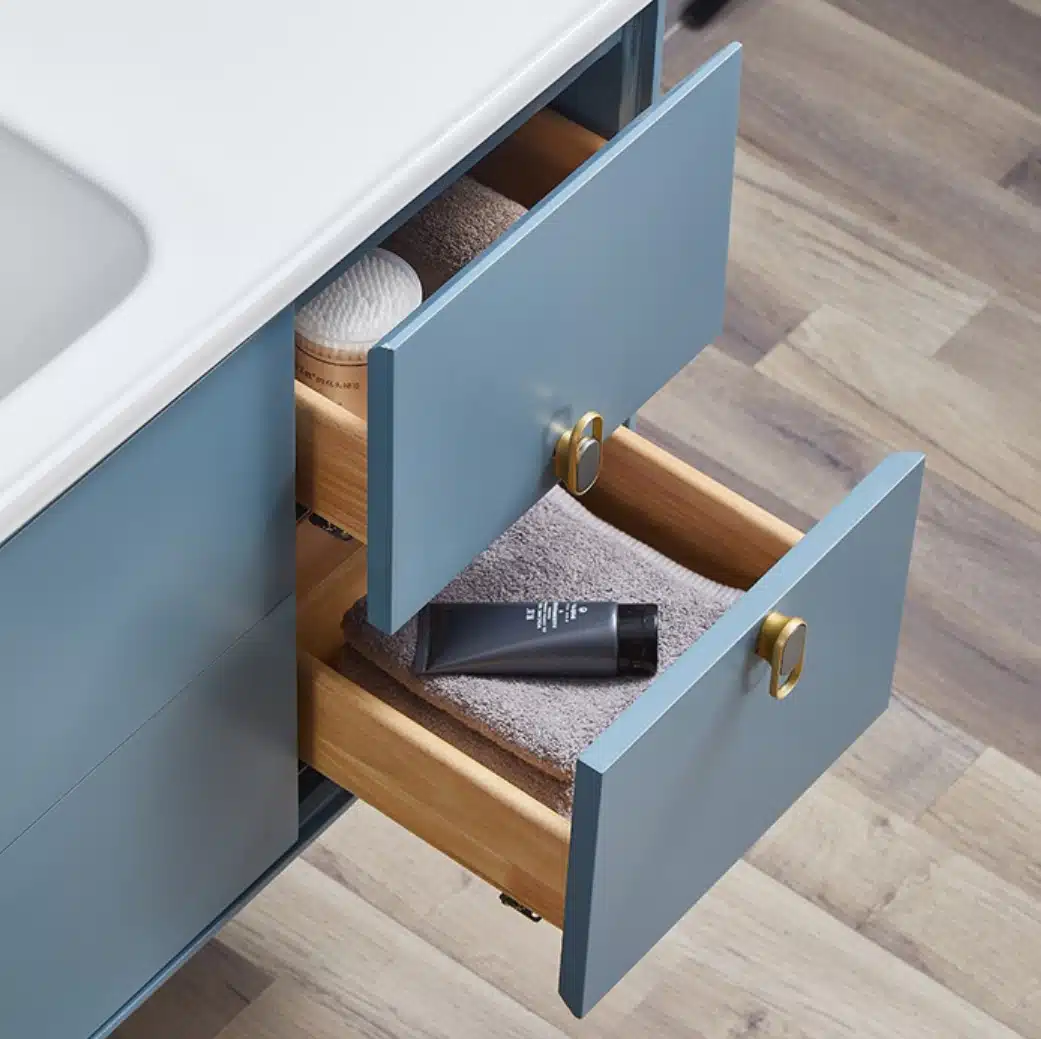
For the importer, the practical question is: which parts fail in a bathroom vanity, and does the warranty cover the replaceable ones? The failure map is short and stable. Hinges and drawer slides are the highest-cycle mechanical parts. LED mirrors fail at the driver or the strip, not the glass. Seals and silicone joints degrade from humidity. Handles loosen. The 2-year window is long enough to catch all of these, which is exactly why a serious factory can offer it and a reseller of anonymous stock cannot.
Return Rates: What Under 1% Means for Your Pricing
Return rate is the single most under-negotiated number in vanity sourcing. MFBATH documents a return rate under 1% across its product line, and that one figure does more work than any warranty clause: it converts warranty cost from a guess into a line item. If you import 500 sets at a landed cost of $180 each and 1% fail, your warranty exposure is roughly 5 units per cycle. At 3%, it is 15 units. The difference between 1% and 3% is not a small rounding error — it is the difference between a warranty reserve that fits inside normal margin and one that eats the profit of an entire container.
Ask how the number is measured. A factory quoting a return rate should be able to show the QC report trail behind it: which inspection stage catches which defect class, what the rework rate is, and what the complaints log for the last 12 months looks like. If the answer is “we don’t track that,” the rate you hear on a sales call is a number, not a fact. The same discipline applies to your own side: record serialized claim data from your first container onward, because the second-order math — which model, which batch, which color — is what turns a warranty department into a sourcing tool. For the claims side of that math, the guide to handling warranty claims walks through the water-damage and swelling cases that dominate bathroom failures, and how to document them so the factory’s QC report trail lines up with your evidence.
Return rate also sets your freight logic. A returned vanity is a freight event twice: back and forth, plus repackaging. At under 1% you can route claims through a parts kit (discussed below) and almost never repatriate a whole cabinet. At higher rates the economics flip, and you will find yourself paying more to move a failed unit than the unit cost itself. That is why warranty negotiation is really a conversation about defect prevention: five QC gates, moisture-controlled plywood or 100% waterproof PVC construction, and packaging that survives the container. The factory’s factory QC reports are the evidence you collect before, not after, the claims start.
Spare Parts Planning: What to Stock and How Much
The spare parts plan is the warranty math done properly. A claim costs you four things: the part, the labor, the freight, and the customer’s patience. Stocking the right parts kills the last three. The failure map from the first section translates directly into a stock list. Hinges and slides should be stocked at a multiple of your installed count — roughly 2% of the units you have shipped for hinges, and 1% for drawer slides, adjusted upward for high-traffic commercial installs. LED mirror drivers and strips are the mirror line’s equivalent: cheap to stock, expensive to expedite. Seals, handles, and touch-up kits round out the set. A practical vanity warranty spare parts plan assigns a part number to each of these before the first container ships, so a claim becomes “ship part MF-1162” instead of “send us a photo and we will see.” For a full framework on what to carry, the vanity spare parts stocking guide on this site covers the item-level detail.
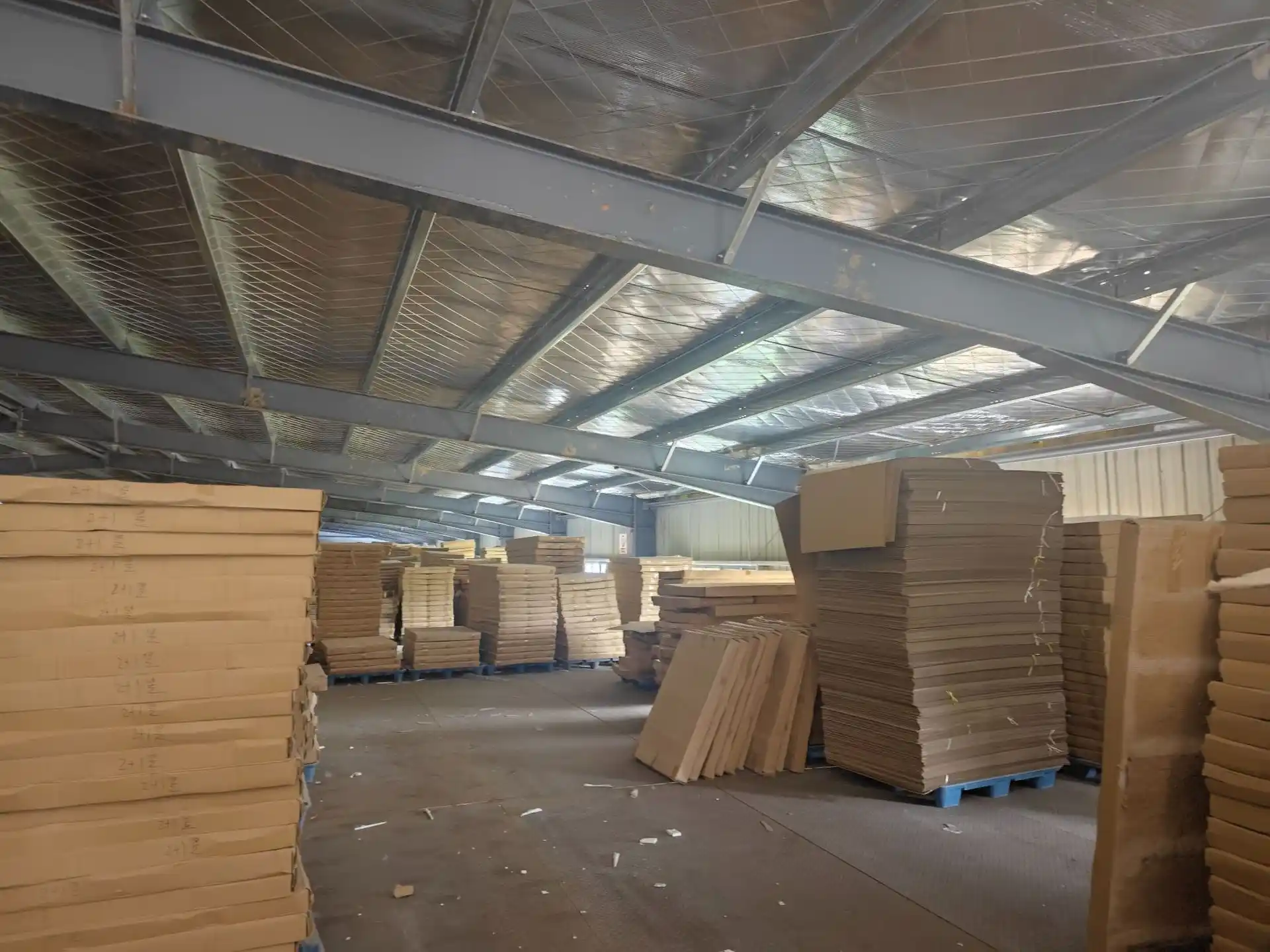
Quantity math starts at the MOQ. At 15 sets per model, color, and size, a trial order of 45 units can carry three models, and each model can be mirrored with a small parts add-on rather than a second full container. Mixed loading is supported, which means hinges and drivers for five models can ride in the same container as the goods they serve. That is the real purpose of a low MOQ in warranty planning: you can buy parts depth incrementally instead of committing to a warehouse bet on a single SKU.
| Part Group | Typical Failure Window | Stock Rule of Thumb | Claim Resolution |
|---|---|---|---|
| Hinges (soft-close) | Months 12–24 | ~2% of shipped door count | Ship part only; 10-minute swap |
| Drawer slides | Months 18–24 on heavy use | ~1% of shipped drawer count | Ship part; swap slides as a pair |
| LED mirror driver / strip | Random; driver-dependent | 1–2% of shipped mirror count | Ship driver kit; plug-in replacement |
| Seals and silicone | Months 20–24 in humid rooms | Flat stock; cheap, ship generously | Ship with install instruction card |
| Handles and touch-up kits | Transit and install damage | 0.5–1% of shipped unit count | Ship kit; no return needed |
The spare parts conversation is also a supplier quality test. Ask what spares the factory itself keeps on the shelf and how fast they can ship them. A factory that cannot name its own replacement parts inventory is telling you its warranty is a marketing page. A factory that publishes its sample lead time — MFBATH quotes 10 working days for samples and 20–30 days for bulk production — can usually ship a hinge or a driver inside the sample window, which is fast enough to close most claims while the customer still feels served.
Document the parts plan in the purchase order, not in your head. Add a schedule to the PO listing each part group, the part numbers, and the agreed per-unit prices for the warranty period, and note that replacement parts ship FOB Qingdao Port under the same commercial terms as the main order. This matters more with custom programs: MFBATH’s 40,000+ custom combinations span Pantone-matched finishes, branded hardware, and private-label packaging, so a custom color or a laser-engraved logo is effectively a unique part number. If the parts schedule is written down, the warranty survives personnel changes on either side; if it is not, the warranty dies with the salesperson who promised it.
Whole-Cabinet Vanity Warranty and Spare Parts Support
Browse this product, solution, or service page to explore relevant offerings.

The Cost Side: Warranty Reserves, Freight, and Claim Handling
Budget the reserve before you negotiate the price, or the price will quietly own your margin. A simple model: take your expected claim rate, multiply by average claim cost (part plus freight plus handling), and set that as a percentage of revenue. At a 1% claim rate and a $25 average parts-and-freight claim cost on a $180 landed unit, the reserve is roughly 0.14% of revenue — a rounding error. At a 4% claim rate with $60 average claim cost, the reserve is about 1.3% of revenue, and now you are paying for a second employee or losing the price advantage you negotiated. The spread between those two scenarios is why return rate, not warranty length, is the number that deserves your attention in the sourcing call.
Freight policy decides whether claims stay cheap. The three sensible rules are: never repatriate a whole cabinet under warranty (the freight doubles the cost), ship parts kits with a one-page install card, and use the draft bill of lading milestone — the balance is due within one week of the draft bill of lading, so a warranty clause attached to the same document trail is enforceable on both sides. Payment terms at 30% prepayment with the balance on draft BL give you leverage that is worth writing into the warranty section of the PO: replacement parts ship FOB Qingdao Port unless the claim is a documented factory defect, in which case the factory’s freight terms apply.
Claim handling is a process, not a promise. Decide in advance who photographs the defect, what the evidence threshold is (photo plus model plus batch), and who authorizes the parts kit. The factory side should match this with a complaints log; under ISO 9001 quality management systems, corrective action on complaints is a documented requirement, which is why an ISO 9001-certified factory — MFBATH has held the certificate since 2017 and confirmed it current in 2025 — can usually show you its complaint handling records without hesitation. If the factory cannot produce a complaint log, assume the claims are still coming; they just are not being counted.
Test the claims process during the sample phase, before the warranty is ever exercised at scale. MFBATH quotes 10 working days for samples, and that window is your chance to run a drill: open a mock claim on the sample unit — a deliberately scratched panel, a hinge with a visible defect — and time how long the factory takes to respond, whether it asks for the right evidence, and whether it ships the replacement part without friction. A factory that handles a mock claim cleanly in the sample phase will handle a real claim cleanly in year two. One that stalls on a free sample is a preview of year two as well. The drill costs you nothing but a photo and an email, and it converts the warranty clause from a paper promise into a tested process before your first container is even booked.
Building a Warranty Policy Buyers Can Verify
A warranty policy is only as strong as its documentation trail. Before you commit to a supplier, assemble four documents: the signed warranty clause with coverage scope and exclusions, the ISO 9001 certificate with a verifiable issue date, the QC report trail from the most recent production batch, and a written spare parts price list. MFBATH can supply all four, and the ISO 9001 factory audit verification guide explains how to check that certificate rather than admire it. In the United States, the Magnuson-Moss Warranty Act background on warranty practice is a useful reference for how the promise is framed, and the spare part entry covers the aftermarket logic behind parts availability.
Then price the policy into the deal deliberately. Ask for the warranty terms in the same email as the FOB quote, not in a later “sales support” document. Confirm the claim procedure with a written answer. If the supplier’s MOQ is 15 sets per model, color, and size — MFBATH’s published level — a 45-set trial across three models is enough to test both the product and the claims process. You will learn more about the warranty from one genuine claim handled well than from any certificate, so run the trial order with your parts plan already drafted. The vanity MOQ guide covers how to size that first order, and the manufacturing excellence guides on this site collect the QC and audit material you will want next to the warranty clause when you negotiate.
Frequently Asked Questions
Is a 2-year warranty long enough for commercial bathroom vanities?
For the components that actually fail in a vanity — hinges, slides, LED drivers, seals — 2 years covers the failure window, which is why MFBATH offers a 2-year whole-cabinet warranty with a documented return rate under 1%. The warranty length matters less than the claim process and the parts stock behind it.
How many spare parts should I stock for a vanity container?
Use the rule of thumb in the table above: about 2% of shipped door count in hinges, 1% of drawer count in slides, 1–2% of mirror count in LED drivers, plus flat stock of seals and handles. At MOQ 15 sets per model, color, and size, parts can ride along in the same mixed container.
What documents verify a factory’s warranty promise?
Ask for four items: the signed warranty clause, the ISO 9001 certificate with issue date, the QC report trail from the latest batch, and a written spare parts price list. The factory should also produce a complaints log; under ISO 9001, corrective action records are part of the quality management system.
The Bottom Line
Warranty math is return rate, parts plan, and documentation — in that order. Anchor your reserve to a verified return rate under 1%, stock hinges, slides, and LED drivers before the container sails, and collect the four warranty documents before you sign the PO. Then run a 15-set-per-model trial to test the claims process itself, and your vanity warranty becomes a sales asset instead of a cost line.



0 Comments