
When you order a bathroom vanity in a color that only exists in a client’s mood board, the outcome depends on how the factory’s color program actually works — not on a screenshot and not on a supplier’s promise. Importers who get burned on color usually discover too late that the factory quoted “color matching” without a defined process or a locked reference. This article explains how a pantone color matching furniture factory executes custom finishes: how the finish library is built, how a custom color is matched and approved, how quality control protects batch consistency, what minimums and sample timelines look like, and what to put in a color specification before you source from China. It is written for wholesalers, importers, and hotel and commercial project buyers who need reproducible color on every container — not luck on the first one.
How a Pantone Color Matching Furniture Factory Builds Its Finish Library
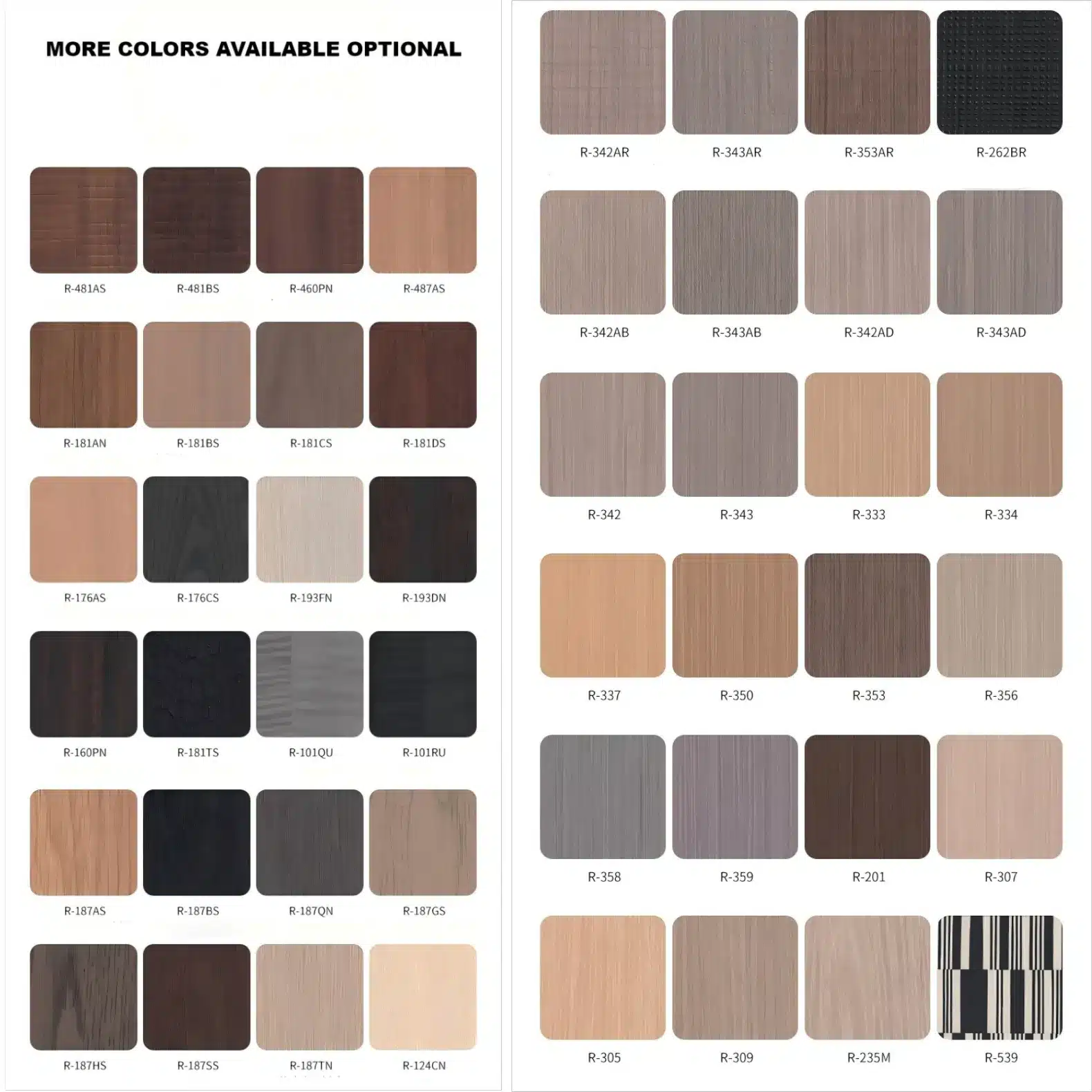
A color program is the factory-side system that turns a color reference into a repeatable finish, and it is the first thing to understand before you ask for a custom color. At MFBATH (Main Focus Cabinet), a bathroom vanity manufacturer in Changge, Henan, China, founded in 2015, the program is built on a finish library of 1,000+ standard finishes — matte white, gloss black, wood grain, and other stock colors that can ship without a matching cycle. Beyond that library, the factory supports 40,000+ customization combinations, including Pantone color matching, so a buyer is rarely limited to catalog colors. The facility itself is not a small workshop: 10,000 sq m of floor space, 95 employees, and a network of 1,000+ distributors in 20+ countries. That scale matters, because a color program is only as good as the production line behind it.
Start with the standard library. A standard finish is a proven recipe: it has already been run on the line, its raw materials are repeatable, and the QC team already knows its behavior in production. For a buyer, ordering from the library means the shortest lead time and the lowest risk, because there is no matching cycle at all. Matte white, gloss black, and wood grain finishes cover the bulk of commercial work — hotels, apartment buildings, and retail washrooms tend to reuse a small set of neutrals — and those are exactly the colors a mature finish library holds in depth. If your project can live within the library, the color question is already answered before you ask it.
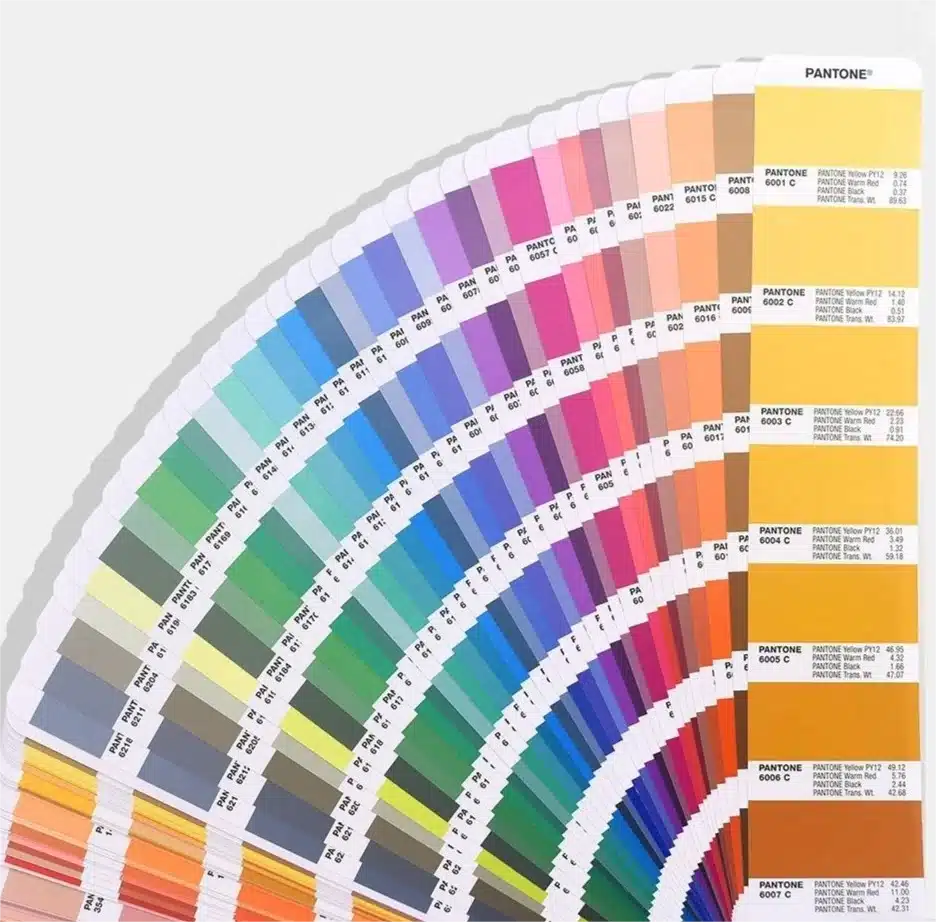
Where Pantone enters the picture. The Pantone Matching System is a standardized color language that lets a buyer in Chicago and a factory in Henan agree on a specific hue without passing physical chips back and forth. Instead of describing “a warm gray with a hint of brown,” you write a five-character code, and both sides know exactly which color is under discussion — Pantone’s official site describes the system and its color guides in detail. That shared language is the foundation of every custom color conversation, and it is also why factory color programs deserve scrutiny before you send an inquiry. A code only has value when the factory has a working method to translate it into an actual sprayed, wrapped, or laminated finish.
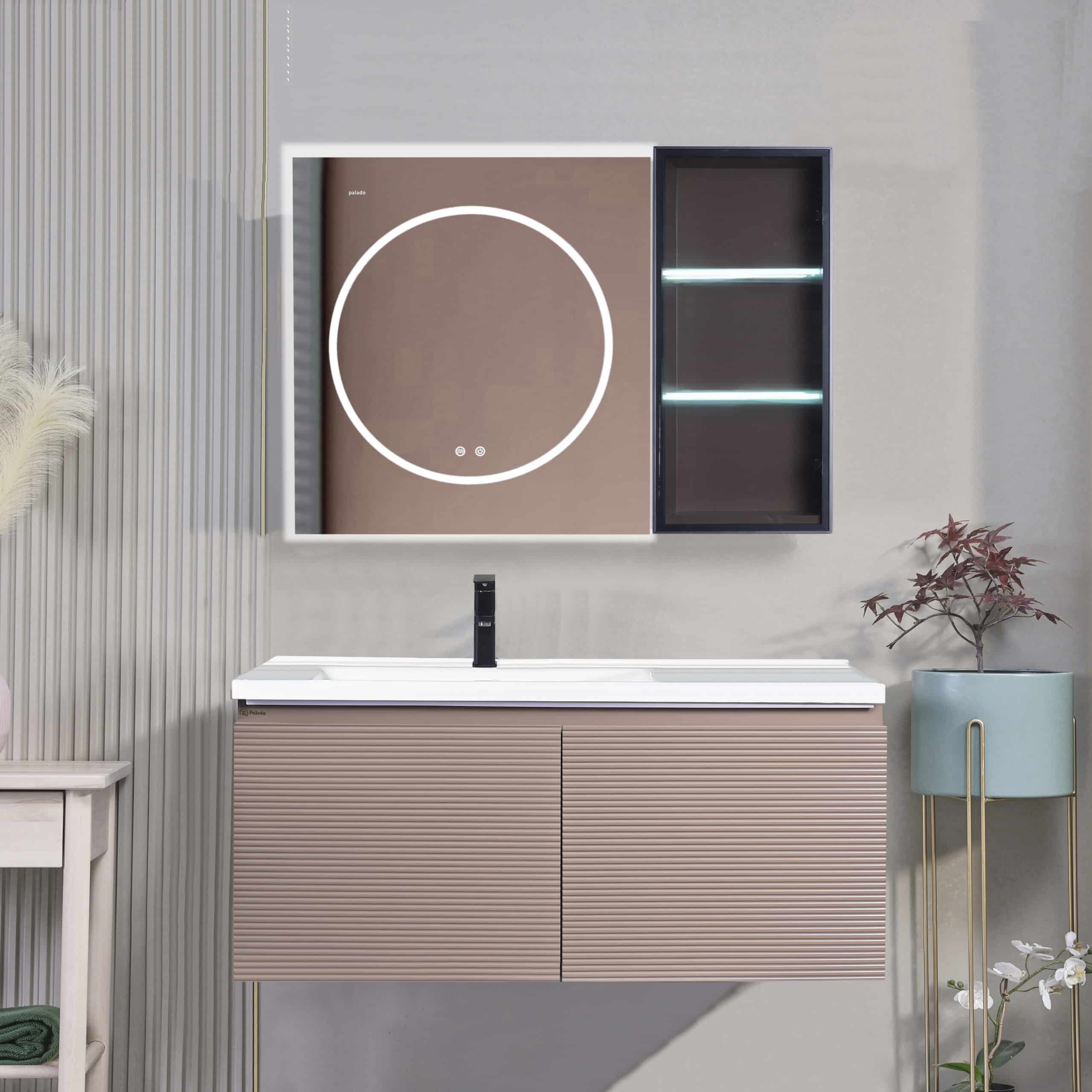
From code to combination. Once a Pantone code is accepted as the reference, the factory fits it into its combination system: the 40,000+ customization combinations cover finish type, color, hardware, and size variations. In practice, this means a custom color rarely forces a fully new product — it rides on an existing vanity structure, which is one reason minimums stay reasonable. If you are sourcing colored vanities at volume, it helps to understand how the manufacturing side of that system works before you negotiate, and a closer look at how colored vanity manufacturing is structured will show you what a color program has to support behind the scenes.
Factory, not trader. A trading company can forward a color request, but it cannot show you the finish library, the color lab, or the line where the recipe runs. When color consistency is the goal, the difference between a factory and a trading company is the difference between owning the process and renting it. If your supplier cannot name its standard finish count or walk you through a matching cycle, that is not a small detail — it is the whole program.
How Custom Pantone Colors Are Matched and Approved
Matching starts with a reference, and the quality of that reference decides how many matching rounds you will need. The strongest submission is a Pantone code plus a physical chip or a finished panel from the target product; a photo is useful context but never the reference, because screens and cameras shift color. When the factory receives the reference, the color lab converts it into a working recipe: the pigment mix for painted or lacquered parts, the film selection for wrapped surfaces, or the stain and topcoat combination for wood.
The substrate changes the result. The same Pantone code will not look identical on PVC (polyvinyl chloride) film, on plywood veneer, and on solid wood, because each surface absorbs and reflects light differently, and gloss level, grain, and texture sit on top of the hue itself. A factory that understands this will tell you up front what the achievable result looks like on your chosen material, rather than discovering the mismatch at the sample stage. For buyers deciding between materials, the PVC-versus-plywood vanity trade-off matters as much as the color, because the same code delivers a different visual on each substrate.
The matching cycle then runs in a predictable order: the lab produces a drawdown or a sample panel, you approve it or request adjustment, and the factory locks the approved version as the production reference. Expect at least one round of adjustment on complex colors — metallics, high-gloss, and deep wood tones rarely land on the first pass. What matters commercially is that the process has a defined end: an approved physical panel that both sides accept and that becomes the standard for every future order. Ask for that endpoint in writing before the matching starts, so “close enough” never becomes the default.
Lock the reference into the order. Once the panel is approved, name it in the purchase order — reference code, gloss level, and date of approval. Without that step, a reorder six months later can drift, because the production team no longer knows which version of the color was accepted. Keep one approved panel on your side and ask the factory to retain the matching sample on its side, so every batch-to-batch comparison has a fixed point. This is ordinary discipline, and it prevents the most common color dispute in import purchasing: both sides comparing against different memories of the same color.
Color Quality Control: Light Booths, Batch Consistency, and the 5-Stage Check
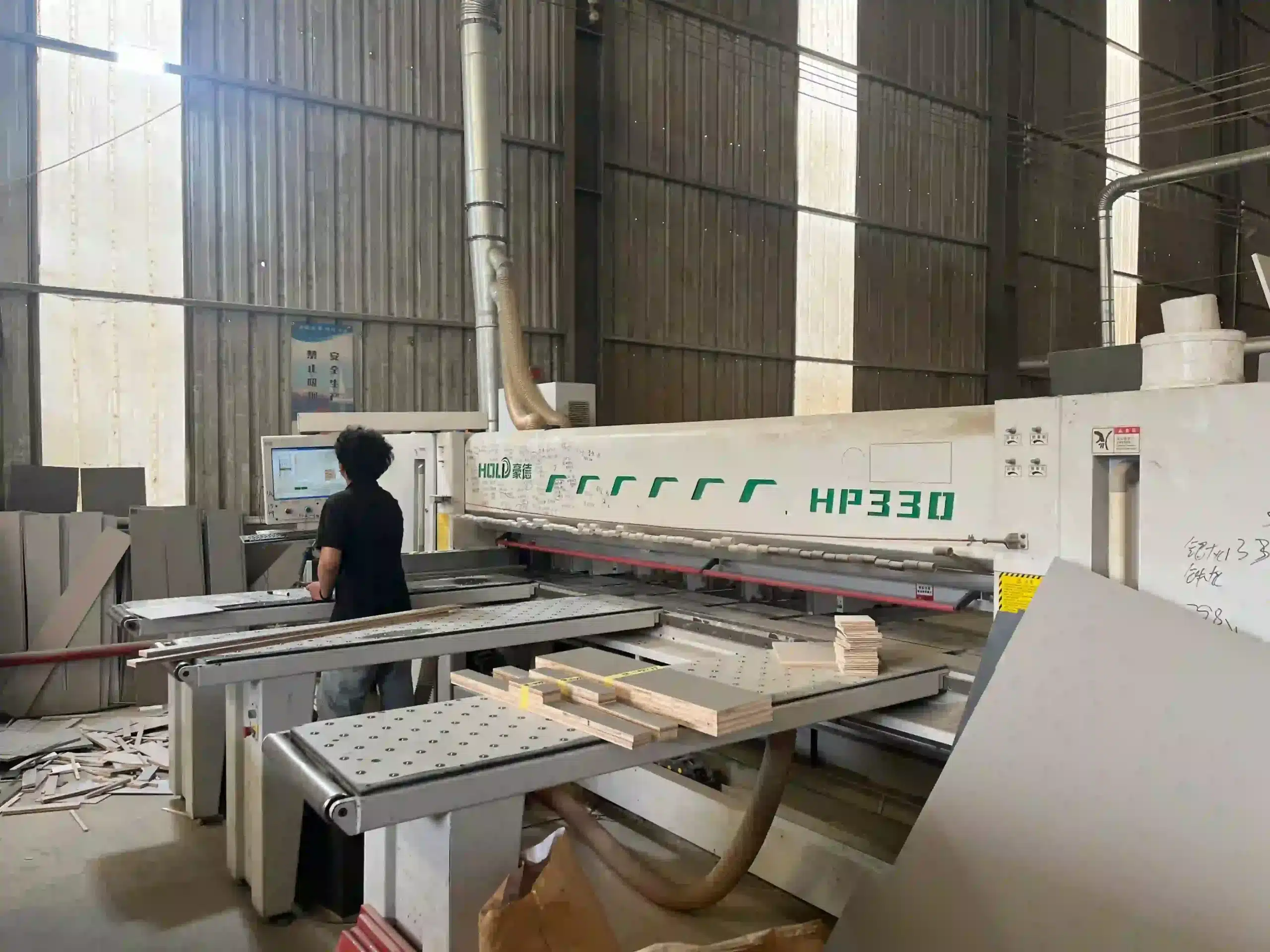
Color QC (quality control) is where color programs succeed or fail, and it is the part of the process buyers most often skip when comparing factories. Every unit from MFBATH passes 5 stages of quality control — a 5-stage quality check — before packing, and when color is part of the order, that check includes evaluating the finish under controlled light. The standard tool in finish evaluation is the light booth: a cabinet that simulates daylight and other standard light sources, so two panels can be compared under identical illumination instead of under the factory’s fluorescent tubes, which flatter some colors and distort others.
Batch consistency is the second pillar. A finish matched once can still vary between production runs if the recipe is not held constant — same film batch, same pigment mix, same application settings, same drying conditions. The practical defense for a buyer is documentation: ask the factory to photograph every production run against the approved panel, and state in the order that the approved panel is the acceptance standard. That turns an argument about “close enough” into a measurable comparison, and it protects your second order as much as your first.
Third-party checks and compliance. Color programs also sit inside the broader quality system, so verify what surrounds them. MFBATH holds ISO 9001 and ISO 14001 — quality management and environmental management standards from the International Organization for Standardization (ISO) — both maintained since 2017 and confirmed current in 2025. The finishes are low-VOC and compliant with the E1 emission class, CARB Phase 2 (California Air Resources Board), and TSCA Title VI (Toxic Substances Control Act) requirements, with CE and UL markings held on applicable products. If your market is the United States, the EPA’s page on formaldehyde emission standards for composite wood products explains the TSCA Title VI framework in detail. And because no factory audit is complete without an outside pair of eyes, third-party inspection companies such as SGS (Société Générale de Surveillance) and TÜV (Technischer Überwachungsverein) are welcome at the factory — arrange them in advance so the schedule can accommodate the visit.
Production capacity sets the floor under all of this. A factory with 5,000 sets per month of capacity can run color-matched batches without disrupting standard production; a small workshop juggling a single line is far more likely to rush a color order to protect its schedule. Capacity, QC depth, and color discipline are the same conversation, which is why buyers should check the QC workflow and the physical facility together, not separately.
Custom Pantone Color Finishes for Wholesale Vanity Lines
Browse this product, solution, or service page to explore relevant offerings.
Minimums, Samples, and Lead Times for Custom Colors
Minimums are where custom color programs become practical or impractical, so confirm them before you fall in love with a finish. MFBATH’s standard MOQ (minimum order quantity) is 15 units per model, per color, per size. For custom colors, the minimum depends on the material: custom colors on PVC vanities start from 15 units per color, while custom colors on plywood vanities start from 50+ units. Custom sizes start from 15 units per size, and once your total order reaches the MOQ, mixed container loading is supported, so different models and sizes can be combined in a single container.
| Pantone color matching furniture factory program | MOQ (minimum order quantity) | Sample lead time | Bulk production |
|---|---|---|---|
| Standard finish from the 1,000+ finish library | 15 units per model, per color, per size | 10 working days | 20–30 days |
| Custom Pantone color, PVC vanity | From 15 units per color | 10 working days | 20–30 days |
| Custom Pantone color, plywood vanity | From 50+ units | 10 working days | 20–30 days |
| Custom size, any finish | From 15 units per size | 10 working days | 20–30 days |
The sample loop. Custom colors are confirmed through a physical sample, not a rendering: sample lead time is 10 working days, samples are free, and you pay the shipping. That is fast enough to fit a procurement schedule and cheap enough to run in parallel for two or three finish options. A detailed walkthrough of the custom vanity sample process in China is worth reading before you place your first color order, because the sample stage is where most color problems surface — and where they should be solved.
Production and delivery timing. Once the sample is approved, bulk production runs 20–30 days. Total delivery to the US, Canada, or Mexico is 4–6 weeks, including logistics tracking, with containers shipping from Qingdao port on FOB (free on board) terms. Payment is a 30% deposit to place the order, with the balance due within one week of receiving the draft BL (bill of lading). For buyers comparing programs across suppliers, the MOQ guide to bathroom vanities lays out how these numbers shift with order size and finish type.
Warranty and returns close the loop. The cabinet carries a 2-year warranty on the complete cabinet, and the return rate stays below 1%. Color disputes are rare when the approved panel is the reference — which is exactly why the sample step is not optional, and why the minimums above are the price of admission for a color you can reorder with confidence.
What to Put in a Color Specification When Sourcing from China
The color specification is the contract between your expectations and the factory’s output, and most color disputes trace back to a spec that never existed. Before you send an inquiry, write the color requirements down in a way a production team can follow. A one-page spec costs you ten minutes and saves weeks of matching and correction. Here is what it should contain:
- Pantone code and gloss level. State both the code and the finish sheen (matte, satin, or gloss). Two finishes with the same code but different gloss levels look like different colors.
- Substrate and finish type. Say whether the color applies to PVC film, plywood with lacquer, or solid wood with stain and topcoat. The same code behaves differently on each, so the spec must name the material.
- Physical reference. Attach one chip or finished panel and label it with the order number. The reference travels with the order, and the approved sample panel becomes the acceptance standard for production and inspection.
- Approval conditions. Specify that the sample will be evaluated against the reference under standardized light, and confirm the factory will use the same conditions in its light booth.
- Batch consistency expectation. State that every production run must be photographed against the approved panel and that the photos accompany the inspection documentation. No numbers are needed — the requirement is simply that the comparison is visible.
- Change notification. Require the factory to flag any change in raw material, film batch, or application process that could shift the color, before the change happens rather than after a batch ships.
Keep the process visible. A spec is only as strong as the follow-through: request production photos of the finished color, ask for the inspection records, and compare the container units against the approved panel when they arrive. If you have not yet chosen a supplier, apply the same discipline in reverse — verify the vanity factory before you send samples, because a color program is only as trustworthy as the facility running it. A factory with a documented QC workflow, published minimums, and a standard sample loop will answer a color spec without hesitation; a factory without one will promise and improvise.
Wood sourcing documentation. If your project involves plywood or solid wood vanities and you need to demonstrate responsible sourcing, ask what timber documentation the factory can provide. The Forest Stewardship Council (FSC) maintains the global standard for certified forest products, and its site explains what supply-chain documentation a responsible supplier should be able to show. Timber traceability is a separate question from color, but it belongs in the same spec review, because both are about evidence rather than assurances.
None of this is bureaucratic padding. A written color specification shortens the matching cycle, removes ambiguity from approval, and gives your receiving team something concrete to hold against the container when it lands. It is the difference between ordering a color and ordering a process — and only the second one survives contact with a factory schedule.
Frequently Asked Questions
What is the minimum order for a custom Pantone color on a vanity?
Custom colors on PVC vanities start from 15 units per color, while custom colors on plywood vanities start from 50+ units. Standard finishes from the 1,000+ finish library follow the standard MOQ (minimum order quantity) of 15 units per model, per color, per size.
How long does a custom color sample take, and what does it cost?
Sample lead time is 10 working days. Samples are free; you pay the shipping. After approval, bulk production takes 20–30 days, and total delivery to the US, Canada, or Mexico is 4–6 weeks including logistics tracking.
What should I send the factory to match a color?
Send a Pantone code plus a physical chip or a finished panel from the target product. Photos are useful context but not a reference. Keep the approved sample panel on both sides — it becomes the acceptance standard for production and inspection.
The Bottom Line
Custom color is reproducible when the process is defined. Choose a factory with a documented color program — a finish library of 1,000+ standard finishes, 40,000+ customization combinations, a 10-working-day sample loop, and a 5-stage quality check — and lock the approved panel into your purchase order. Send a Pantone code plus a physical reference, confirm the MOQ and lead time in writing, and verify the factory before you commit. Do that, and color becomes a routine specification instead of a sourcing risk.


0 Comments