

The factory qc report furniture suppliers email with every batch looks official, yet most answer the wrong question. A pass stamp without sample size, measured values, or defect details tells you nothing about the risk in that container. A report earns its place when it works as a decision tool, and this guide shows you how to read it that way.
Key Takeaways
- A usable report carries batch number, production date, model, quantity, sample size, defect count, and a clear verdict.
- Four inspection stages matter: incoming, in-process, final, and outgoing checks. A final-only report misses raw material risk.
- Verify furniture tolerances on paper: ±2–3 mm dimensions, ΔE color difference, edge banding, hardware cycles, and box drop tests.
- Third-party inspection from SGS or TÜV needs advance booking, and statistical sampling sets the defect threshold.
- Photo and video evidence should accompany every report so claims stay verifiable from your desk.
- Acceptance triggers written into the purchase order decide recheck, rework, or reject before payment release.
- Reference benchmark: MFBATH runs 5 checks per product and holds ISO 9001 and ISO 14001 (International Organization for Standardization) certifications valid since 2017.
This article covers what a usable QC report should include, how to verify the numbers, and what to demand before you release payment. You get the four inspection stages, the measurements that matter, third-party cross-checks, and the triggers that justify recheck, rework, or reject. The wider framework on factory systems and audits lives in Verifying Certification Claims: What a Real ISO 9001 Factory Audit Looks Like.
In This Guide
- What a Usable QC Report Should Include
- Four Inspection Nodes From IQC to OQC
- Key Measurements and Tolerances That Matter
- Cross-Checking Factory Reports With Third-Party Inspection
- Acceptance Triggers for Recheck and Reject
- Frequently Asked Questions
What a Usable QC Report Should Include
A QC report is a data record, not a marketing sheet. Every batch needs identifiers that tie the document to the production line that made the goods. Without those identifiers, the report may describe a batch that never matches your container.
Batch-Level Identifiers
Batch number, production date, model, color, and quantity must match the packing list line by line. The report should also name the factory location and the QC operator who signed it. Main Focus Cabinet, the MFBATH brand, has run its 10,000 m² plant in Changge, Henan since 2015, and every internal report carries the same batch trail.
A mismatch between batch numbers is a stop sign, not a paperwork quirk. Traceability breaks the moment a defect appears in the field, because the report no longer proves which materials and which shift produced the goods. Verify one batch number against the packing list before you read a single measurement.
Add the certification record to the same file. The certificate number, issuing body, and validity date sit next to the report so the quality claim stays checkable. A certificate without a number deserves the same skepticism as a report without a batch identifier.
Sampling and Defect Fields
The report must state how many units were inspected and how the sample was drawn. Furniture buyers should look for sampling under ISO 2859-1, published by the International Organization for Standardization, with the Acceptable Quality Limit (AQL) named in plain text. A zero-defect verdict without a sample size carries no weight.
Defect counts need classification by severity: critical, major, and minor. Critical covers safety and function failures, such as a broken hinge or a cracked stone basin; minor covers cosmetic marks that pass a touch-up. Demand the breakdown by class, because classification decides whether the batch reworks or ships.
Record the inspection date and the inspector’s identity in the same row. When a batch ships weeks after its report date, ask why the data is stale and request a fresh check. Stale reports hide the defects that rework should have caught.
Define the verdict vocabulary in the contract. Conditional pass, rework, and reject carry different commercial outcomes, and a factory that uses only pass and fail leaves no room for touch-up runs. Agree the definitions before the first report lands.
Photo and Video Evidence Rules
A report that cites defects without photos cannot be verified from your desk. Demand one overall shot, one close-up per defect, and a video clip that makes the defect the subject. Main Focus Cabinet attaches photos and video to every internal QC report, and that habit belongs in your supplier agreement.
Set the evidence rules in writing. Photos must carry the batch label in frame, and close-ups must include a ruler or reference scale. A defect photo without scale is a decoration, not evidence, and video alone proves function such as drawer slides and soft-close hinges.
File naming should carry batch and stage, like FQC-2025-0711-001. That discipline lets you pull the evidence for a specific batch years later, which is exactly what a warranty claim requires. Name your convention in the contract and audit it on the first order.
Require an English report from the start. A report in Chinese only slows your team, and translation mistakes hide measurement units and verdict meanings. Ask for the same template on every order, because a stable format makes batch-to-batch comparison possible.
Four Inspection Nodes From IQC to OQC
Quality control runs at four checkpoints, and a usable report shows data from all of them. IQC (Incoming Quality Control) verifies raw materials on arrival, and IPQC (In-Process Quality Control) catches problems during production. FQC (Final Quality Control) checks the finished cabinet, while OQC (Outgoing Quality Control) covers packing and loading.
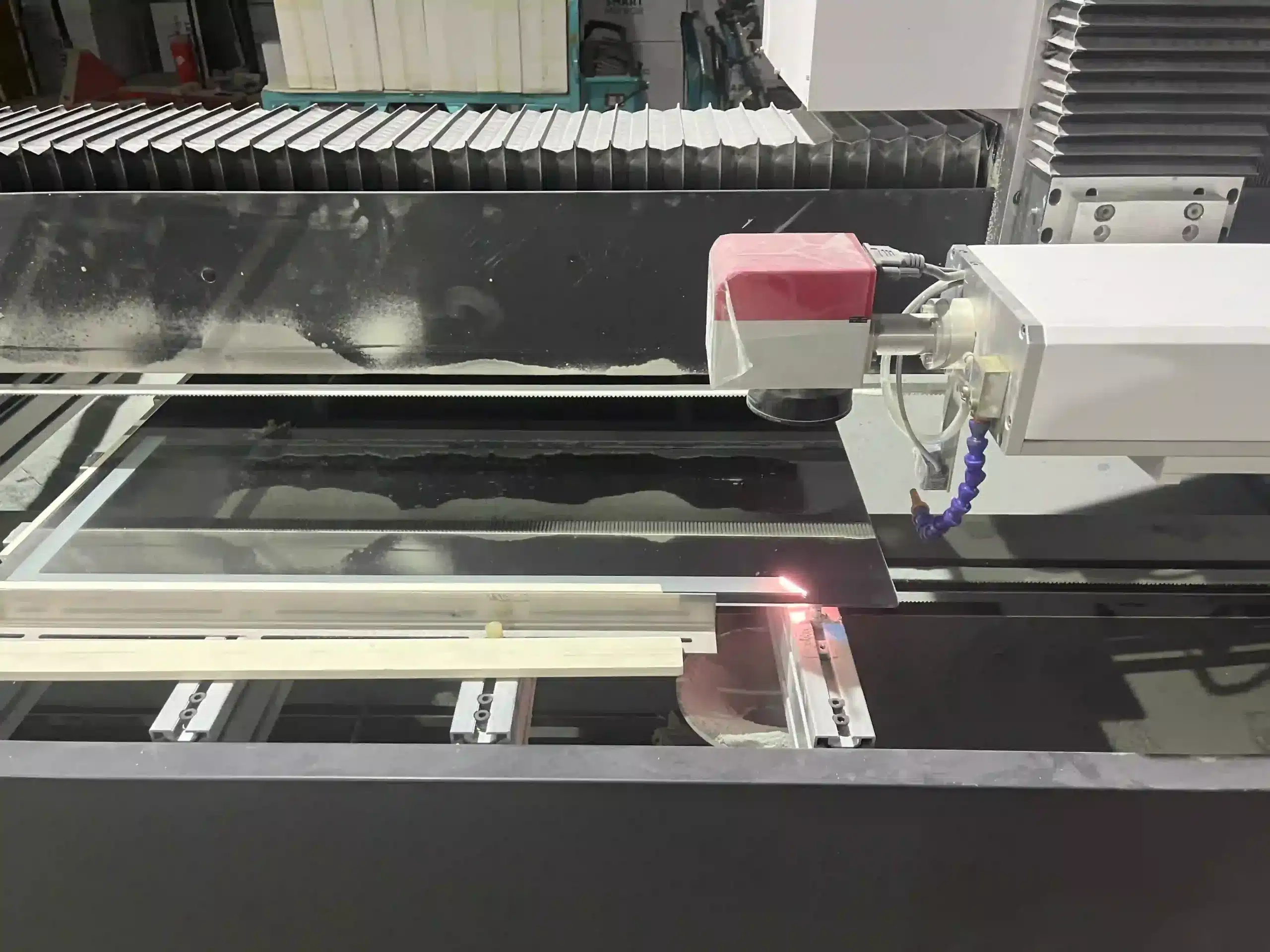
Each stage answers a different risk. IQC catches a bad stone slab or a substituted board before it enters the line, and IPQC flags misaligned edges while rework is still cheap. OQC verifies that the container matches the packing list, and skipping any node pushes the defect downstream where the cost multiplies.
What Each Stage Should Catch
Incoming inspection for bathroom cabinets covers the materials that carry water risk: stone slabs, boards, hardware, and packaging. A report with IQC data on slab thickness and surface checks tells you the factory tests what it buys. Main Focus Cabinet runs 5 inspection checks on every product, spread across these four stages.
Final inspection is where finish and function converge. Doors close squarely, drawers cycle without binding, and the basin surface shows no chips. Outgoing inspection then verifies labeling, box condition, and load count, so the report ends where your forwarder picks the goods up.
| Stage | What Gets Checked | When It Happens | What the Report Shows |
|---|---|---|---|
| IQC | Stone slabs, boards, hardware, packaging | On arrival at the factory | Material conformity and batch records |
| IPQC | Dimensions, edge work, assembly | During production | Inline measurements and defect counts |
| FQC | Finish, function, hardware, surfaces | After assembly | Pass or fail per unit and per batch |
| OQC | Packing, labeling, load count | Before shipment | Packing list match and loading records |
The five checks per product map to the four stages. Incoming material checks, inline dimension checks, assembly checks, finish checks, and final function checks each leave a signature in the report. Ask the factory how the five checks split across stages, and confirm the split matches the report structure.
Report cadence matters as much as format. Per-batch reports beat weekly summaries because a weekly summary averages away the defects you need to see. Ask for one report per production batch, issued within 24 hours of the last check.
Ask for the loading photos inside the OQC record. The report should show the container floor, carton orientation, and load count before the doors close. A container that loads without a report is a shipment you cannot verify.
A five-stage flow extends this framework for contractor-grade vanities. The walkthrough in Bathroom Vanity QC: 5-Stage Inspection for Contractors covers each stop in detail. Use it to check whether your factory’s report covers every gate you care about.
Key Measurements and Tolerances That Matter
Measurements turn claims into numbers you can verify. Each inspection record should list the measured value, the reference spec, and the tolerance, so the report shows deviation rather than a bare pass. Furniture buyers need a short checkpoint list, and the table below covers the six that generate most field claims.

Tolerances mean nothing without the approved sample behind them. Sign the sample and the dimension drawing at the start of the order, and every report row then compares against that baseline. A door that sits 5 mm off its frame fails the ±2–3 mm furniture tolerance, even when the cabinet looks fine in a photo.
Reading Tolerances Against Your Spec Sheet
Start with overall dimensions, where the common furniture tolerance runs ±2–3 mm against the approved drawing. Color difference comes next: a ΔE value against the approved sample tells you whether two batches will look different side by side. Edge banding adhesion and seam visibility round out the visible checks.
Moisture content matters for solid wood, and the report should state the measured percentage against the documented range for that species. Hardware function is a cycle test, and slides plus soft-close hinges must survive repeated use without binding. Each row belongs on your purchase order checklist, not just in the factory’s template.
Material-Specific Checks for Bathroom Cabinets
Bathroom cabinets face water, heat, and humidity, so material checks go beyond wood furniture basics. A PVC cabinet should document its 100% waterproof construction, while solid wood units need the multi-layer polyurethane coating noted in the finish record. Stone basins should show hardness around 7–8 on the Mohs scale and heat resistance to 300 °C if the supplier claims them.
LED smart mirrors add an electrical layer, so anti-fog function and adjustable color temperature belong in the functional test section. Ask the factory to photograph the mirror running during FQC, because a spec sheet cannot prove the anti-fog layer works. The report format stays the same, but the test list changes with the product.
Packaging sits in the same table because transit damage is a furniture claim classic. A box drop test record, matched with the U.S. CPSC furniture safety guidance, covers the two risks that follow shipment: damage and compliance. Demand the drop test result in writing before the container loads.
Ask who performs the measurements. A dedicated QC team with calibrated calipers, moisture meters, and gloss meters produces data you can trust. An operator measuring the same cabinet they built has a reason to round the numbers.
Calibration records should appear in the report appendix. A caliper that reads 0.5 mm off makes a ±2–3 mm tolerance decision meaningless. Request the calibration date and the instrument serial number once per order.
| Check Point | Typical Spec | Why It Matters |
|---|---|---|
| Overall dimensions | ±2–3 mm against the approved drawing | Cabinets fail to fit site openings |
| Color difference | ΔE against the approved sample | Mismatched batches look different side by side |
| Moisture content | Documented range for the wood species | Warping and cracking after installation |
| Hardware function | Slide and hinge cycles with soft-close | Door sag and drawer binding in service |
| Edge banding | Adhesion and seam visibility | Peel and moisture ingress over time |
| Packaging | Box drop test before loading | Transit damage claims and returns |
Bathroom Vanity Manufacturing with Documented QC
Browse this product, solution, or service page to explore relevant offerings.

Cross-Checking Factory Reports With Third-Party Inspection
A factory’s own report is the supplier’s data, and third-party inspection is the independent check. Booking SGS, TÜV, or another recognized firm costs money and time, which is why buyers skip it on small orders. On a full container headed to the United States, Canada, or Mexico, that check is cheaper than a field failure.
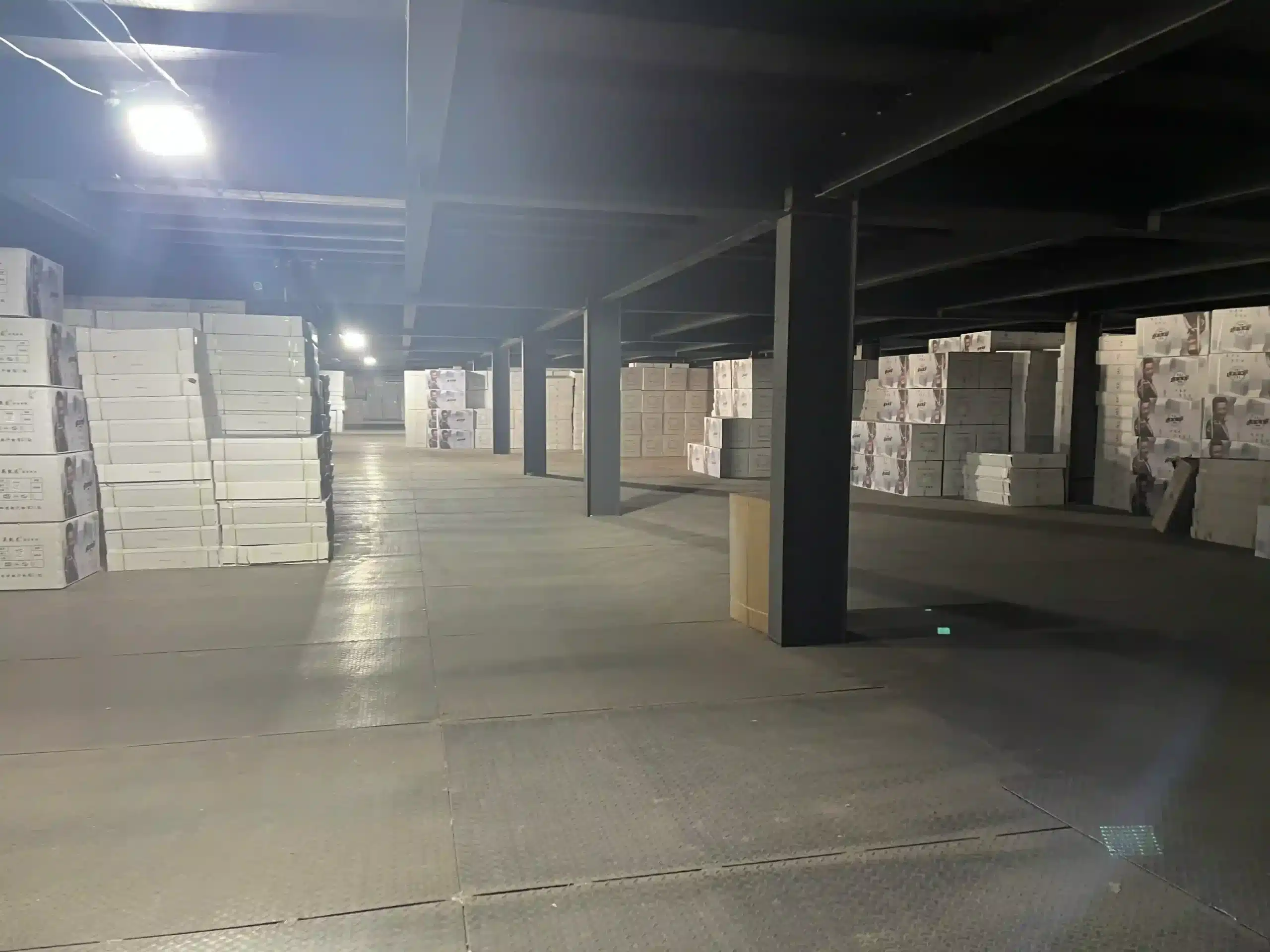
Third-party inspectors sample finished goods to the same standard and report their own defect counts. When the two documents line up, you have independent confirmation of the factory data. When they disagree, the gap tells you how much trust the internal report deserves.
Main Focus Cabinet supports third-party audits and inspections from firms such as SGS and TÜV with advance arrangement. Orders start at a Minimum Order Quantity (MOQ) of 15 sets per model, color, and size, and shipments leave Free On Board (FOB) Qingdao. The 4–6 week total lead time to the U.S., Canada, and Mexico means the inspection date must fit inside production.
Book Third-Party Inspection Early
SGS and TÜV calendars fill during peak shipping seasons, so advance booking is the only reliable path. Book the inspection when production starts, not when the container is already waiting at the gate. The 20–30 day production window gives you room to lock the slot and adjust if the batch runs late.
Choose the inspection type before you book. In-line checks catch issues mid-production, final inspection verifies finished goods, and pre-shipment inspection covers packing and loading. The trade-offs between the options are laid out in Bathroom Vanity QC Checklist: 3-Stage Factory Inspection.
Compare Third-Party Data With Factory Data
Run the two documents side by side on the same fields: sample size, AQL level, defect counts, and verdict. The official ISO 9001 quality management standard defines the system that should produce consistent internal data. Main Focus Cabinet holds ISO 9001 and ISO 14001, obtained in 2017 and confirmed valid in 2025, and its story is documented in MFBATH ISO 9001 Bathroom Vanity Manufacturer.
Treat a wide gap as a supply risk signal. If the factory reports zero defects and the inspector finds a failing batch, the internal process does not reflect the product. That gap justifies a recheck before you release the balance payment, which typically falls due within a week of the draft bill of lading.
The third-party report should travel with the batch. Send the findings to the factory with a deadline for corrective action, and log the response in the same file. Corrective action plans matter more than the defect itself, because they show whether the next batch will repeat the problem.
Acceptance Triggers for Recheck and Reject
Acceptance rules belong in the purchase order, written before production starts. The report data feeds the decision: sample size, defect counts by class, and measurement deviations determine whether a batch passes, reworks, or gets rejected. Without defined triggers, every borderline batch becomes a negotiation.
Payment structure makes the report the gate. A 30% deposit starts the order, and the balance falls due within a week of the draft bill of lading, so the QC report lands before the payment date. That sequence exists so you check the data before releasing money.
Put the Triggers in the Purchase Order
Define the numbers in the contract. Any measurement outside ±2–3 mm triggers a full batch recheck. A moisture reading above the documented range triggers rework or reject for solid wood units. A hardware failure rate above the AQL level requires a recheck, and a failed box drop test stops the shipment until packaging is corrected.
State the verdict rules too. Critical defects fail the unit, repeated critical defects fail the batch, and rework gets re-inspected under the same sampling plan. Keep the accepted report, photos, and third-party findings on file for the warranty period, where a 2-year term and a return rate below 1% form a realistic benchmark.
Build replacement timing into the contract. Samples take 10 working days, and production runs 20–30 days, so a rejected batch needs a schedule, not a promise. Confirm the replacement slot in writing before you reject the original goods.
Rejections carry logistics cost. Goods already staged for loading may trigger storage fees, so the trigger list should allow rework at the factory before the shipment date. The 4–6 week delivery promise only holds when the batch clears inspection on time.
The acceptance decision should name the responsible party. The QC manager signs the verdict, and the sales contact confirms the commercial outcome such as rework credit or replacement. Written names beat department stamps when a claim arrives later.
Factory audits belong in the same system. Audit China Bathroom Cabinet Manufacturer: 5 Steps covers how to verify a supplier before the first purchase order. The audit findings feed the same trigger list, so the report, the inspection, and the audit all point at the same risk.
Frequently Asked Questions
How do I verify that a factory QC report is genuine?
Check batch identifiers against the packing list, demand photo and video evidence, and compare internal data with third-party inspection results. A report without batch traceability carries no evidentiary value.
What does AQL mean and what level should I request?
AQL stands for Acceptable Quality Limit, the defect threshold set under ISO 2859-1 sampling. The report must state the level and sample size so you know how many defects the factory accepts for the batch.
What should I do when a QC report flags defects?
Ask for the defect photos, classify each issue by severity, and apply the triggers written into your purchase order. Typical outcomes are recheck, rework before shipment, or rejection with a replacement run.
The Bottom Line
A QC report earns its place in your file when it carries batch identifiers, stage-by-stage data, photo evidence, and an AQL-based verdict. Cross-check those numbers with third-party inspection before the balance payment falls due, and keep the trigger list in the purchase order. Do this on every batch, and the report stops being paperwork and becomes your early warning system.




0 Comments