
A container of bathroom vanities sits at the Port of Manzanillo while a customs broker calls, asking for electrical compliance paperwork nobody prepared. For buyers researching NOM certification Mexico bathroom vanity requirements, that stalled container is the cautionary tale behind this guide.
Mexico’s standards system is neither mysterious nor optional. It separates mandatory technical regulations from voluntary ones, and bathroom products land on different sides of that line depending on whether they contain electronics. This guide maps where vanities, mirrors, and smart LED units actually sit. It covers the labeling rules that touch every import, the conformity assessment process, and the documents a serious factory should hand over. It closes with a week-by-week action plan for your first Mexican order.
NOM vs NMX: How Mexico’s Two-Tier Standards System Works
The most common beginner mistake is treating all Mexican standards as equal. Normas Oficiales Mexicanas (NOM) are mandatory technical regulations. Federal authorities issue them through national standardization committees, and they are published in the Diario Oficial de la Federación (DOF), the federal official gazette. Products inside a NOM’s scope cannot legally clear customs or remain on retail shelves without demonstrated conformity. The Secretaría de Economía, Mexico’s Ministry of Economy, describes NOM as regulations of mandatory character in its official normalization guidance.
Normas Mexicanas (NMX) are voluntary standards. They are developed by national standardization bodies together with the private sector, and the Secretaría de Economía promotes their use. NMX references show up in procurement specifications, tender documents, and quality claims. Nobody stops a shipment over an NMX by itself, but a distributor can reject goods against one, so the distinction has real commercial weight.
A third concept ties the system together: conformity assessment. Compliance with a NOM is demonstrated through testing, inspection, and certification performed by accredited conformity assessment bodies. These organizations operate accredited laboratories and issue certificates for defined products and certificate holders. Mexico calls them organismos de evaluación de la conformidad, and they are the practical gatekeepers between a factory and market access.
Here is the structure at a glance:
- NOM — mandatory technical regulations, issued by federal authorities, published in the DOF. They function as the market access gate for regulated products.
- NMX — voluntary standards developed by national standardization bodies. They function as commercial and quality currency in contracts and tenders.
- DOF — the official gazette where every NOM text, amendment, and entry-into-force date is published.
- Conformity assessment bodies — accredited laboratories and certification organizations, such as ANCE and NYCE, that test and certify products against NOM criteria.
For an importer, the operational question is never “Is Mexico strict?” It is “Which regime does my specific SKU sit under?” That answer decides whether your preparation takes weeks or months.
Where Bathroom Vanities Sit: Furniture Is Usually Not the Hard Part
Here is the part that surprises many buyers. Bathroom furniture does not sit at the center of Mexico’s mandatory safety regime. A review of published NOM catalogs does not surface a NOM dedicated to bathroom cabinetry or vanity furniture. In practice, wood, PVC, plywood, and sintered stone vanities are treated as furniture, and furniture generally faces commercial information and labeling rules rather than mandatory safety certification. Your customs broker should confirm this classification for your exact product in writing.
That does not mean zero obligations. For a buyer planning a NOM certification Mexico bathroom vanity program, the labeling and classification steps are where the real workload sits. The general commercial labeling standard described later in this guide reaches consumer products, and Mexican retail chains will expect Spanish-language labeling before they list a new supplier. Voluntary NMX references for furniture can also appear in distributor agreements and project tenders. Treat them as commercial requirements worth documenting, not criminal exposure.
Customs classification still decides the practical outcome. The tariff heading your broker assigns to the vanity determines duty treatment and whether any specific import requirement attaches to the shipment. Get that classification opinion in writing before you ship, and avoid quoting duty percentages from blog posts. Rates change, programs apply differently by importer, and your broker or the official tariff schedule is the only source that matters for your shipment.
The product-level map looks like this:
| Product type | Typical regulatory character | Importer action |
|---|---|---|
| PVC, plywood, or solid wood vanity without electronics | No dedicated safety NOM identified; general commercial information rules apply | Confirm HS classification in writing; prepare Spanish labeling |
| Vanity with sintered stone top or basin | Furniture treatment; material data supports quality claims | Collect material data sheets; confirm packing specification |
| LED mirror or smart mirror | Electrical product territory; NOM safety standards can apply | Engage an accredited certification body before production |
| Mixed container of vanities and LED mirrors | Each SKU assessed on its own merits | Build a per-SKU compliance matrix before ordering |
One note on chemical hygiene. North American buyers know CARB Phase 2 and TSCA Title VI because the United States enforces them on composite wood products. Our review did not find those rules mirrored as a blanket Mexican furniture NOM at import. Even so, factory documentation of E1 or stricter formaldehyde classes strengthens distributor conversations and project bids. Ask for the certificates regardless, because your retail customers will.
LED Mirrors Change the Calculus: Electrical Products Enter NOM Territory
Plug anything into the wall and the regulatory conversation changes. LED mirrors contain drivers, LED strips, touch switches, and sometimes defogger pads or Bluetooth modules. Mexico’s electrical and electronic product safety framework exists for exactly this kind of product. The flagship standard is NOM-001-SCFI-2018, published in the DOF, which addresses safety requirements for electrical and electronic household appliances and related equipment. Whether a specific LED mirror falls inside that standard’s scope, or inside a luminaire-specific standard, is a classification decision. Make it with an accredited certification body, not with a forum post.
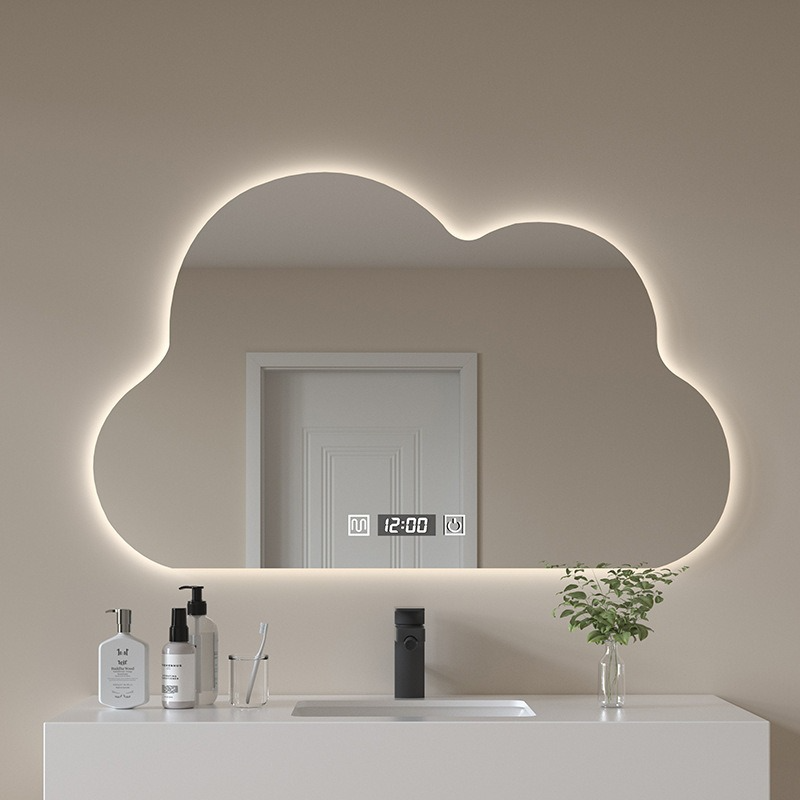
The practical lesson is component-level thinking. Compliance for an electronic mirror is built from its parts: the LED driver, the plug and cord set, the switchgear, and the ingress protection rating appropriate for wet bathroom zones. If your factory sources suitable components and can supply datasheets for each of them, the certification path shortens. If the mirror ships with an undocumented driver, expect every question to take longer.
Certificates from other markets help, but they do not substitute. A factory that holds CE and UL certificates demonstrates design discipline, and the test reports behind those marks give a Mexican certification body useful context. Mexico maintains its own conformity assessment requirements for regulated electrical products, though, so treat foreign marks as supporting evidence rather than a shortcut.
Build quality matters for reasons beyond paperwork. Glass thickness affects durability and how safely a mirror carries its electronics over years of humidity exposure. Our guide to bathroom mirror glass thickness explains what to specify alongside the electrical file.
When you request quotations for LED SKUs, ask for these five items at the same time:
- A wiring diagram and component list with supplier names for the driver, LED strip, and switchgear
- Driver specifications and any available test reports
- Plug and cord set confirmation suited to the Mexican market
- An ingress protection rating statement appropriate for bathroom installation
- Installation and user documentation ready for Spanish translation
A supplier that produces these documents quickly is telling you something about its engineering depth. A supplier that stalls is telling you something too.
Labeling Rules That Touch Every SKU: NOM-050-SCFI-2004
Even a plain plywood vanity touches Mexico’s labeling regime. NOM-050-SCFI-2004, Información comercial – Etiquetado general de productos, sets general commercial labeling requirements for products sold in Mexico. The Secretaría de Economía lists the standard as in force, originally published in 2004 and confirmed through later review. Where a product category has no specific labeling NOM of its own, this general rule is the one that applies.
The label carries the commercial information a consumer needs to make an informed choice. Typical data elements include the generic product name, quantities or dimensions, country of origin, warnings where relevant, and identification of the responsible company. Confirm the exact content, language, and format requirements with your compliance advisor. Retail chains check labels during onboarding, and authorities can inspect them anywhere in the channel.
The logistics of labeling deserve attention early. Labels can often be applied at origin, and in some situations corrective labeling is handled after arrival under customs supervision. The conditions differ by case, so ask your broker which option your shipment qualifies for. Either way, label artwork review belongs on your pre-shipment checklist, not in the scramble after goods land.
One more point that importers learn the hard way: the importer of record owns the exposure. If labels are deficient, customs or market surveillance reaches the importer first, and the conversation with the factory happens afterward. Assign label responsibility in your purchase agreement, and keep approved artwork versions on file.
How NOM Conformity Assessment Works and How Long It Takes
For regulated products, NOM conformity is not self-declared. Accredited conformity assessment bodies perform the testing and certification, and two names surface constantly in the electrical space. ANCE, the Asociación de Normalización y Certificación, is a nonprofit founded in 1992 whose roots lie in product certification for the electrical sector. NYCE presents itself as a NOM certification body covering the electrical, electronics, energy efficiency, and related sectors, including luminaires and household appliances. Both also engage in standards development work, which is why their names appear in so many certification conversations.
The process generally follows this sequence:
- Application and product definition. The certification body reviews your SKU and confirms which standard or standards apply.
- Type testing. Samples are tested in an accredited laboratory against the applicable standard’s requirements.
- Review of factory controls. Depending on the scheme, the body may review manufacturing controls or conduct a factory audit.
- Certificate issuance. A certificate is issued for the defined product, model range, and certificate holder.
- Surveillance and renewal. Follow-up requirements depend on the scheme under which the certificate was issued.
On timing, be skeptical of anyone who quotes a single universal number. Duration depends on product complexity, laboratory queues, sample availability, and how clean your documentation is. Build a buffer measured in weeks to months, and get the timeline estimate in writing from the body you select. Start the conversation before you commit production dates, not after the deposit is paid.
Who holds the certificate also matters. Certification schemes commonly tie the certificate holder to a legal presence or representative in Mexico. That is why many overseas factories support the process with documentation. The importer or a Mexican representative typically holds the certificate itself. Confirm the holder mechanics with the certification body at the quotation stage so there are no surprises when the goods reach the border.
Explore MFBATH vanities and LED mirrors built for North American programs
Browse this product, solution, or service page to explore relevant offerings.
Importer Due Diligence: The Document Checklist to Send Your Factory
Before you sign a purchase order for a Mexico-bound program, send a document request. Serious factories answer quickly. Trading companies stall, and their answers often come back second-hand. This checklist covers both the regulatory angle and the quality angle in one email.

- Quality system certificates. ISO 9001 and ISO 14001 copies with visible validity dates.
- Formaldehyde documentation. E1, CARB Phase 2, or TSCA Title VI evidence for any composite wood components.
- Electrical file for LED SKUs. Wiring diagram, driver specification, and component test reports.
- Existing market certificates. CE or UL copies if the factory holds them, together with the underlying test reports.
- Inspection policy. In-house quality control steps and openness to SGS, TÜV, or other third-party inspections.
- Packing specification. Carton construction, protection for stone tops and glass, and transport test evidence.
- Label support. Who prepares Spanish labels, and where in the workflow they are applied.
Tie documents to milestones rather than collecting them passively. Request certificates at the request-for-quotation stage, before prices are final. Confirm inspection bookings before you pay the balance. Align label artwork with the production schedule so nothing waits at the port for a missing PDF.
If this is your first container into Mexico, pair the compliance file with a conservative volume plan. Our guide to first container import strategy for furniture covers how to structure that shipment. The 15-unit MOQ trial order guide shows how to validate a supplier without overcommitting inventory. Compliance diligence and order sizing are the same discipline: reduce what you cannot yet verify.
How a Compliance-Ready Factory Supports Your Mexico Program
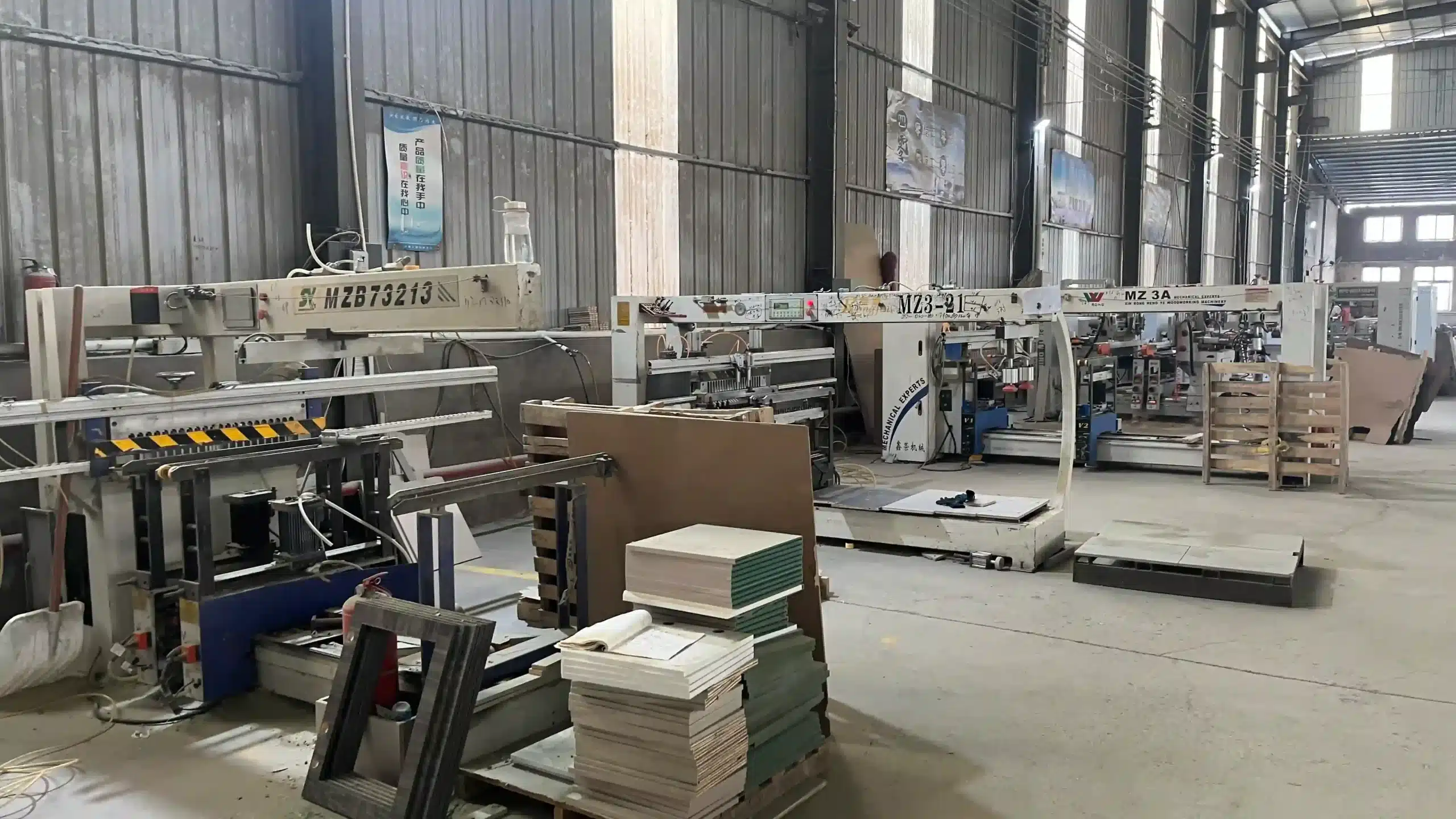
Factory selection is a compliance decision as much as a pricing decision. Main Focus Cabinet, which sells under the MFBATH brand, has operated from Changge in Henan Province since 2015. The company runs a 95-person team with monthly capacity of 5,000 vanity units. More than 1,000 dealers in over 20 countries distribute its products, including buyers in North America and Mexico.
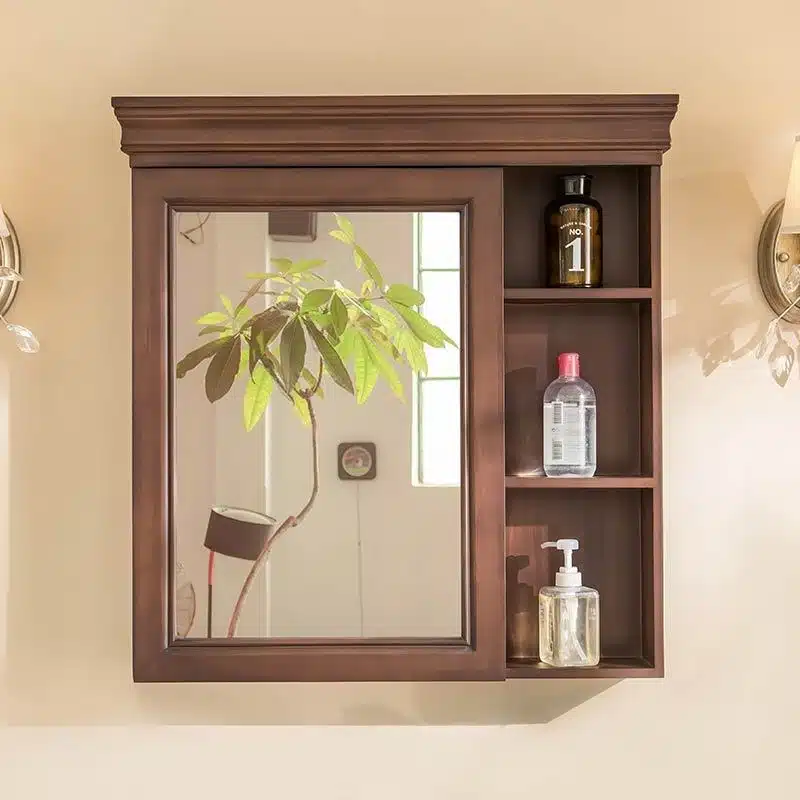
The quality infrastructure is documented. MFBATH has held ISO 9001 and ISO 14001 certification since 2017, with validity confirmed again in 2025, and the company holds CE and UL certificates. Every unit passes five inspection stages before packing, and the factory supports SGS and TÜV third-party inspections for buyers who want independent eyes. Free samples are available, with sample production running about 10 working days.
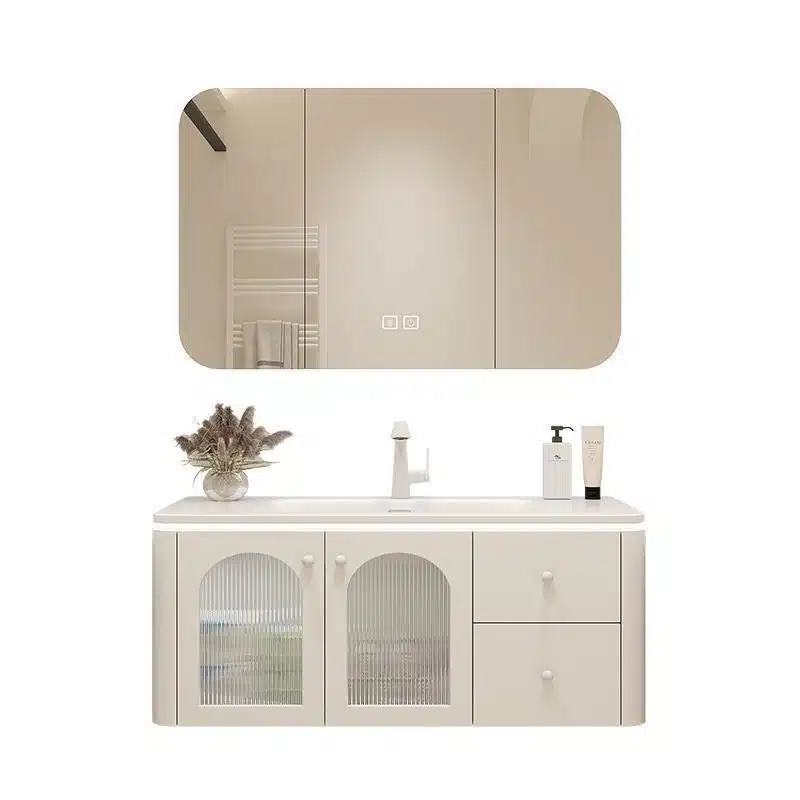
On positioning, precision matters. MFBATH bathroom vanities and LED mirrors are designed to meet the compliance requirements of their target markets, and the engineering team works with buyers on market-specific documentation. The company does not claim NOM certification for its products. Buyers pursuing Mexican market approval run the certification process through accredited bodies. The factory supports them as a documentation and engineering partner. Material options span PVC, plywood, solid wood, and sintered stone, with E1, CARB Phase 2, and TSCA Title VI formaldehyde classes, low-VOC finishes, and FSC-certified options on request.
Trade terms shape your compliance timeline too. Bulk production runs 20 to 30 days, and total delivery timelines of four to six weeks are quoted for the United States, Canada, and Mexico. Shipments leave FOB Qingdao, and the company describes logistics options that can reduce freight costs by roughly 15% for North American customers. The minimum order is 15 units per model, color, and size, with mixed containers supported. That lets you test a vanity line and an LED mirror line in one shipment. Payment terms are 30% deposit with the balance due within one week against the draft bill of lading, backed by a 2-year warranty.
You can review the full range of vanities and smart LED mirrors in the MFBATH product catalog. For buyers serving multiple regions from one supplier, our comparison of CE and UKCA compliance for bathroom cabinets covers the European side of the same diligence. Sintered Stone 101 explains the material side for stone-top programs.
Frequently Asked Questions
Do bathroom vanities need NOM certification to enter Mexico?
This review identified no dedicated mandatory safety NOM for bathroom furniture. Vanities mainly face commercial information and labeling rules. Confirm HS classification and labeling requirements with your customs broker.
Do LED mirrors need NOM compliance in Mexico?
Mirrors with drivers, LED strips, or switches enter electrical product territory where NOM safety standards can apply. Have an accredited certification body classify your SKU before production, not after arrival.
Can a Chinese factory hold the NOM certificate?
Certification schemes commonly tie the certificate holder to a Mexican importer or legal representative. Factories typically support testing and documentation while the importer holds the certificate. Confirm holder rules with the certification body.
From Inquiry to Cleared Container: A Timeline for Your First Mexican Order
The buyers who clear Mexican customs smoothly are rarely the ones with the biggest budgets. They are the ones who sequence the work correctly. Here is a realistic timeline for a first Mexico-bound order.
- Weeks 1–2: Confirm your Mexican entity’s import registration status with your broker. Get the HS classification in writing. Send the seven-item document checklist to candidate factories.
- Weeks 3–4: Evaluate samples. Open the certification conversation with an accredited body for any LED SKU, and start Spanish label artwork in parallel.
- Weeks 5–8: Production runs, typically 20 to 30 days for bulk orders. Book your pre-shipment inspection and finalize installation documentation.
- Before shipment: Compile the compliance file: certificates, inspection reports, packing list, and approved label photos in one folder your broker can open on day one.
- Arrival and clearance: Your broker files with the compliance file attached. Answer any document queries the same day they arrive.
The container that stalls in Manzanillo is the one whose paperwork started late. That is the whole discipline of NOM certification Mexico bathroom vanity planning: build the file before you build the order, and Mexico becomes a repeatable market rather than a gamble.




0 Comments