

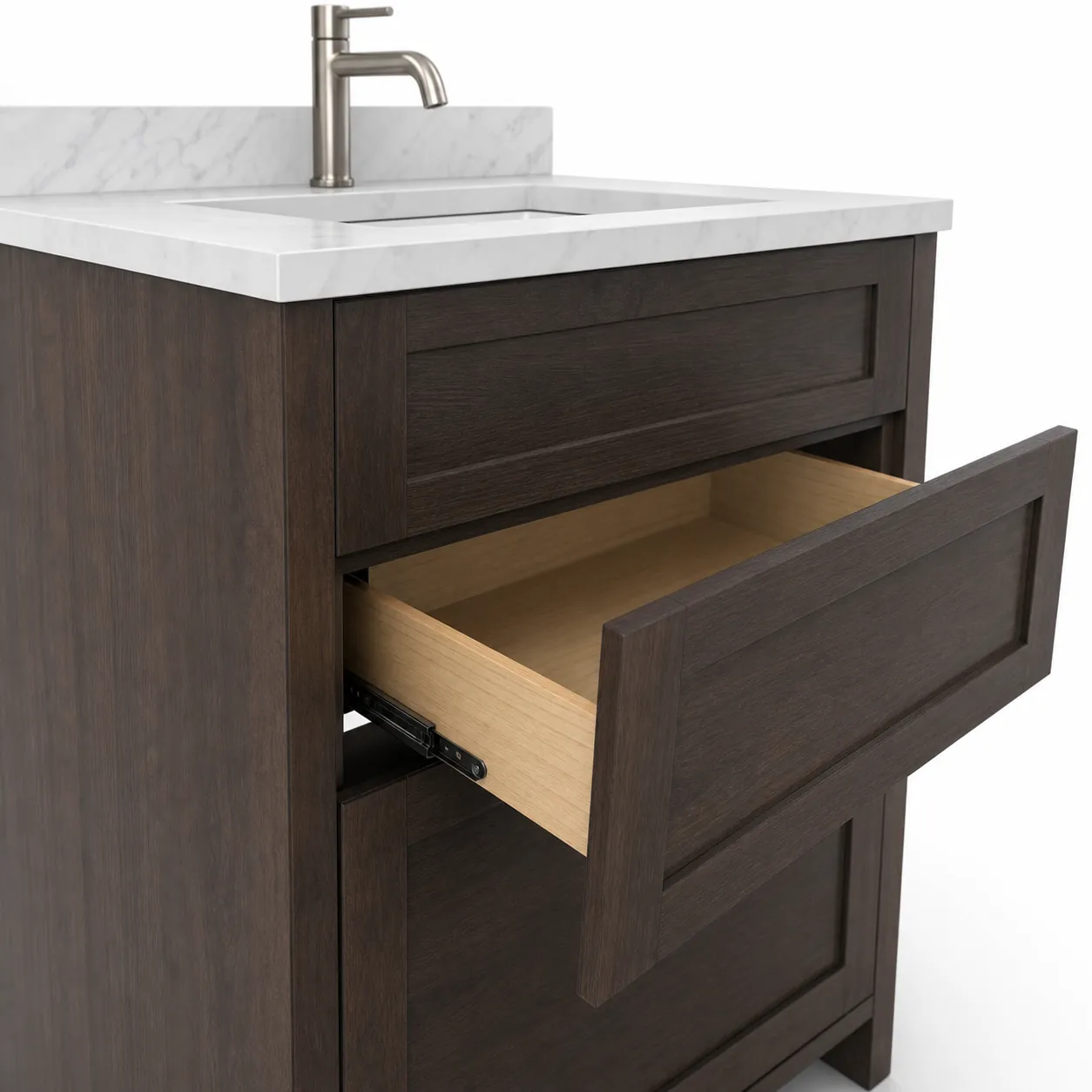
soft-close vanity hardware is the first checkpoint buyers should lock before they approve a supplier, budget, or production slot. An assembly-line supervisor in Changge runs a finger along the piston rod of a soft-close damper before it enters the hinge cup. He checks for a micro-film of grease that tells him the seal is intact. No grease, and the damper will start chattering in 6 months inside a humid bathroom. A buyer sourcing soft-close vanity hardware never sees this step on a spec sheet. They see “soft-close” on the quote and assume parity. The gap between these two moments—the factory floor check and the import purchase order—is where a $50K order turns into a warranty liability. A distributor I know learned this when his pre-production samples glided perfectly, but the mass production run started slamming doors in under a year. The dampers had the same appearance. Different internal seals.
The real cost of soft-close vanity hardware lives inside three numbers: cycle rating, load capacity, and seal degradation curve. Most importers talk about the first one. They ask if the hardware hits 50,000 cycles. That number alone tells you almost nothing. A spring mechanism can hit 50K on a dry test bench in a factory and then collapse in 18 months when a coastal hotel bathroom pushes 85% humidity through the drawer cavity every morning. The damper loses gas, the slide starts to slam, and your brand gets the blame—not the component supplier who quoted FOB Shenzhen at $0.18 per unit. You approved the sample. You signed off on the quality tolerance.
Here is a benchmark you can use on your next supplier call: for any order where more than 40% of your units ship to regions with average bathroom humidity above 60%, insist on 80,000 cycle-tested hardware as your floor. Not 50K. Not “standard soft-close.” Eighty thousand, with a load rating that covers a fully loaded drawer box of at least 30 kilograms. If your supplier cannot produce the test certificate from DTC or Blum, you are buying a warranty claim on an installment plan. Focuscabinet runs DTC hardware at 80K cycles as standard on its vanity lines, with an optional Blum upgrade path that hits 200,000. That number matters less than knowing what your batch actually ships with. Ask for the batch test report, not the catalog image.
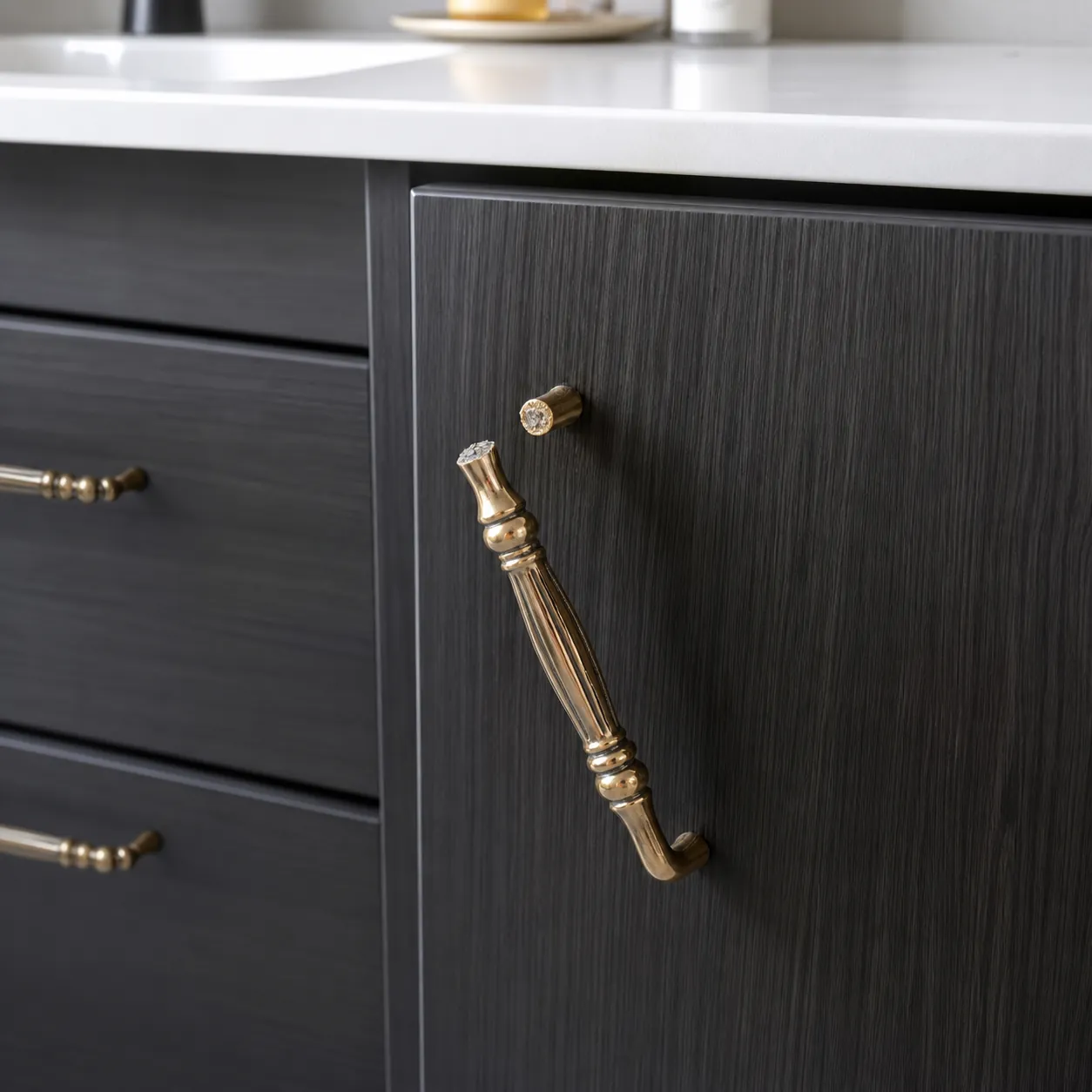
Why Soft-Close Hardware is Non-Negotiable for Bathroom Vanities
Hardware spec gaps under 0.3mm surface tolerance separate a 10-year vanity from a 2-year warranty liability.
A $50,000 vanities order arrived at Long Beach. Drawers stuck. Doors hung crooked. The MDF boxes looked fine. The culprit? Zinc-plated soft-close slides that corroded during the 28-day Pacific crossing. The buyer approved the pre-production sample in a dry showroom, 3,000 miles from the nearest ocean. Nobody checked the hardware spec for salt-spray resistance. That container sat in a warehouse for 11 weeks while lawyers argued over who ate the replacement cost.
Micro-Damage: The Cumulative Toll of No Damping
A 20-inch vanity drawer that slams shut 15 times a day generates impact force that travels through the drawer box, into the slide mounting screws, and straight into the particleboard or plywood side panel. Multiply by 365 days across a 200-room hotel project. What started as a tight drawer becomes a wobbly box with stripped screw holes by month 14. The face frame joint loosens. The finish separates at the corner. None of this shows up in the first sample approval.
Hydraulic damping changes the math. The final 2 inches of travel decelerate from 200mm per second to zero with zero impact transfer. The slide brackets don’t take a hit. The panel fasteners stay seated. For a distributor holding a 3-year wholesale warranty on 500 units, that damping mechanism eliminates the most common service call source: cabinet body fatigue from repeated mechanical shock.
The real cost hides in what doesn’t fail. Drawers that don’t crack. Doors that don’t droop. Hinge screws that don’t back out. Skip the damper and you build a warranty that expires somewhere between 18 and 24 months.
Moisture: Where Generic Dampers Die Quietly
Bathroom humidity sits between 70% and 95% during morning shower cycles. Steam penetrates every unsealed surface. Inside the damper cylinder, a microfilm of condensation forms on the piston shaft. Generic dampers use nitrile seals that harden and lose their grip after 12 to 18 months of wet-dry cycling. The hydraulic fluid weeps past the seal. The damping fade follows. By year 2, a ‘soft-close’ drawer slams shut at full speed.
The failure threshold is well-documented. Internal cycle testing at Focuscabinet’s Henan factory confirms that DTC dampers with stainless-steel piston assemblies hold their rated damping force through 80,000 humid-cycle activations. Off-brand dampers in the same test chamber degraded below 40% of rated performance at 28,000 cycles. That gap is not subtle. It shows up in the first container to hit a coastal market.
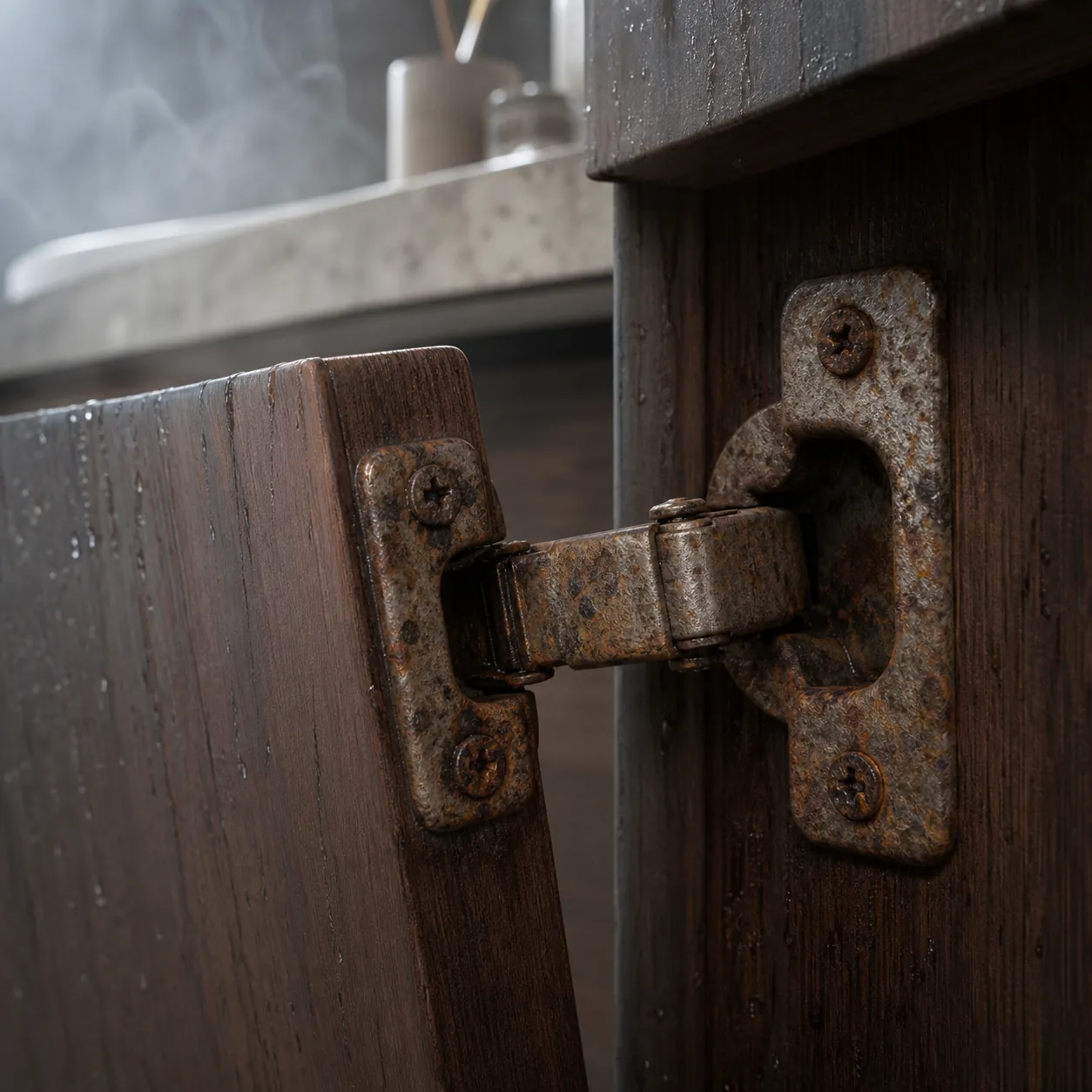
Corrosion attacks the mounting plate next. A 304-grade stainless hinge cup survives near-saltwater bathrooms on a Florida barrier island without pitting. Zinc-plated cold-rolled steel does not. Ask for a 72-hour neutral salt spray test report on the hinge body. If the supplier cannot produce it, walk away. The replacement hardware cost destroys whatever margin you captured on the initial FOB pricing negotiation.
The Tolerance Factor
Humidity does something else that skip-lot QC misses. Solid wood drawer sides swell 1% to 2% in width when moisture content climbs from 8% to 12%. A slide mounted at a 12.7mm side clearance works during sample approval in a dry warehouse. Ship to Singapore. That clearance shrinks to 12.0mm. The soft-close mechanism now binds against the cabinet interior wall. The drawer reaches half-close and stops.
Quality tolerance for gap spacing on humidity-rated vanities runs 0.5mm tighter than standard kitchen cabinetry. The 80,000 cycle-tested DTC undermount slides used in Focuscabinet production account for this with integrated adjustment cams that compensate for 1.5mm of side-panel movement. Most importers find out about this spec gap when 200 returned units land in their returns center.
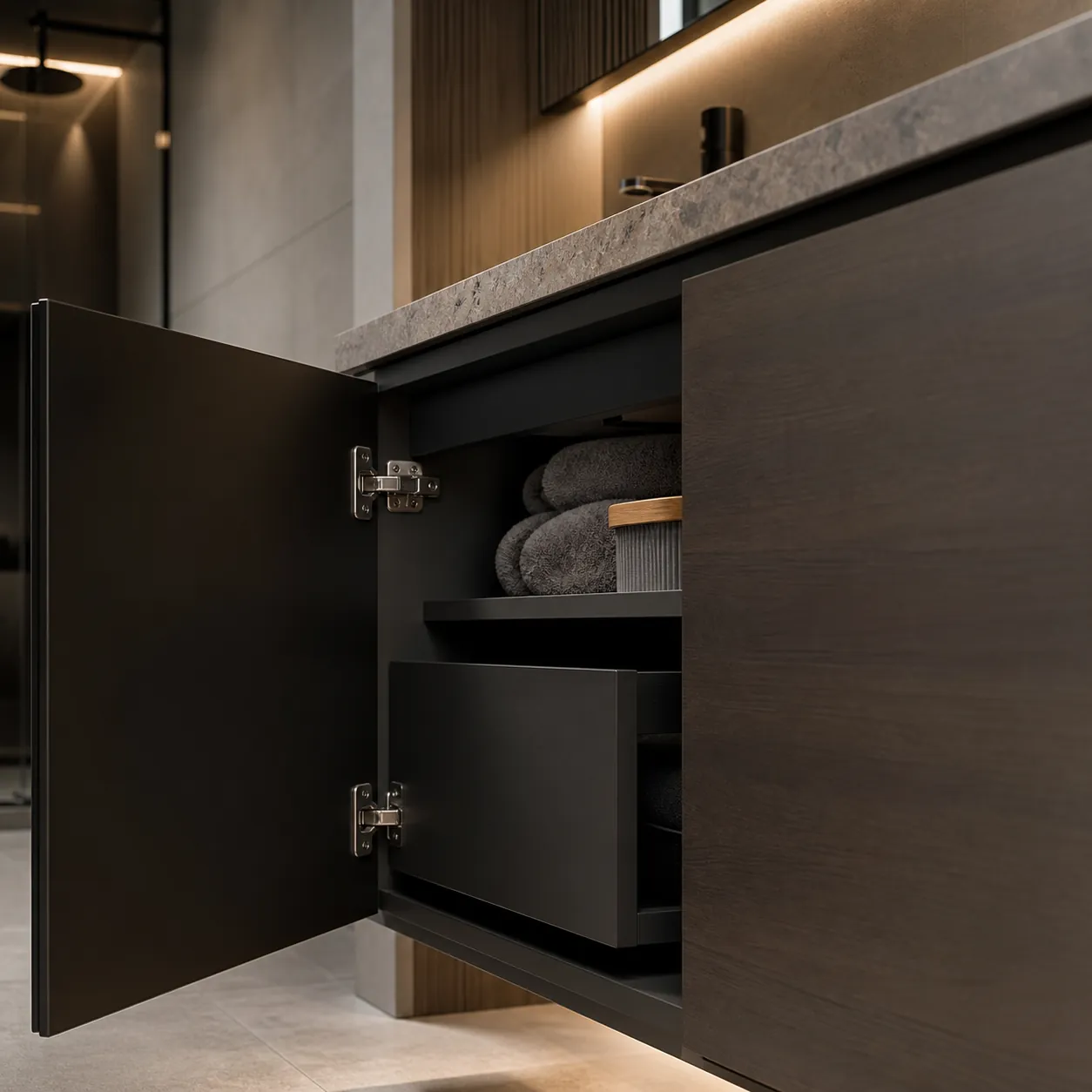
Anatomy of a Soft-Close Mechanism
Hydraulic dampers outlast spring versions 4:1 in humid bathrooms — sealed fluid units are non-negotiable for import batches.
Inside every soft-close hinge sits a tiny mechanism that decelerates the door over the last 15–20 mm of travel. Two distinct designs dominate the market, and they perform very differently once humidity enters the equation.
Hydraulic vs. Spring Dampers in Hinges
Hydraulic dampers use a sealed cylinder filled with silicone oil. As the hinge closes, a piston forces fluid through a calibrated orifice, creating smooth, silent resistance. Spring dampers replace that fluid with a coiled steel spring that compresses on closing. The spring solution costs less — often half the price per hinge — but the trade-off appears fast in a steamy ensuite.
Bathrooms average 70–85% relative humidity after a shower. Over 12–18 months, unsealed spring chambers collect micro-corrosion on the coil. At that point, the “soft” feel disappears; the door crashes shut with a bounce. Hydraulic units, provided the O-ring seal stays intact, maintain consistent damping regardless of moisture.
-
-
- Hydraulic core: Silicone oil resists heat and humidity. Cycle ratings of 80,000–200,000 are achievable with proper seal design. Standard on DTC and Blum hinges.
- Spring-loaded core: Costs 30–50% less upfront but loses closing force rapidly in coastal or high-humidity regions. Most fail to reach 30,000 consistent cycles.
-
Focuscabinet runs 80,000-cycle DTC hinges as the default across its vanity lineup. Distributors serving Southeast Asia, Florida, or the Gulf should upgrade to Blum dampers — those units carry a documented 200,000-cycle endurance, backed by independent lab reports. The math for a bulk shipment is simple: five generic spring dampers replaced under warranty eat the margin from twenty sold units.
Integrated Soft-Close Drawer Slides: Full-Extension and Undermount
Drawer slides with integrated soft-close work differently from hinge dampers. Instead of a separate attachment, the damping cylinder rides inside the slide rail itself. When the drawer reaches the last 50 mm, a hooked activator tab engages the piston, pulling the drawer closed in one controlled motion.
Full-extension slides expose the entire drawer box — a critical spec for hotel vanities where guests expect to reach the back corner without tilting. Undermount versions hide all hardware beneath the drawer, keeping side panels clean for furniture-style bathrooms. Both designs need to manage the combined weight of the drawer box, contents, and the momentum of a fast push.
-
- Cycle rating check: Demand a third-party test report. Claims without documentation regularly fall apart past 40,000 cycles. 80,000 cycles matches a 15-year residential lifespan.
- Load capacity: Standard undermount slides handle 35 kg dynamic loading. Heavy-duty options rise to 45 kg for oversized double-bowl drawers. Verify the rating at full extension, not only at closed position.
- Corrosion layer: Look for zinc-plated steel or stainless rollers. Raw steel races develop rust spots once bathroom RH crosses 65%. A salt spray test certificate from the slide supplier adds real confidence.
Bundling 80K-cycle DTC slides with hydraulic hinges creates a single-supplier accountability chain for the entire motion system. When a container lands in Rotterdam or Houston, the moisture exposure during transit already stresses the hardware. Sealed hydraulic dampers shrug that off; spring-loaded units often arrive with degraded performance before they’re even installed.
Key Performance Metrics for Importers
Cycle ratings mean nothing without humidity data attached to the test report.
A batch lands. It passes incoming QC. Three months later, end users report drawers that no longer catch and doors that slam shut. The supplier swears the hardware was rated for 50,000 cycles. The test lab never conditioned the samples at 85% humidity. That omission is the difference between a quiet bathroom and a warranty disaster.
The 30K Failure Wall
Soft-close claims without certified test data tend to collapse around the 30,000-cycle mark. The damper fluid thins, seals degrade, and the mechanism reverts to a standard slam hinge. This failure point hides in plain sight because factory lab conditions rarely simulate the wet-dry cycle of a real bathroom. A damper that survives 80,000 dry cycles can fail at 25,000 when humidity cycles between 40% and 95% daily.
Focuscabinet specifies DTC hardware tested to 80,000 cycles as the production baseline. For projects with extended warranty periods or high-traffic commercial settings, Blum upgrades deliver 200,000-cycle performance. The spec sheet matters. The test conditions behind that number matter more.
Load Capacity Is a Warranty Boundary
Drawer slides carry a rated kilogram load. That number assumes even weight distribution and a dry environment. A bathroom vanity drawer packed with shampoo bottles and cleaning supplies hits 15 kg fast. If the slide rating is 20 kg on paper, the margin looks comfortable. Add humidity, an uneven load, and three years of daily use. The margin vanishes.
Undermount slides for bathroom vanities need a minimum dynamic load rating of 30 kg. Anything less invites sagging and progressive misalignment. Full-extension slides expose the entire drawer box, so any weakness in the runner shows as wobble at full pull-out. Ask for the dynamic rating, not the static one. Static numbers look higher on a quote but mean nothing in daily use.
-
- 50K cycle rating: Adequate for guest bathrooms with low daily use. Still requires humidity-conditioned test data to verify real-world endurance.
- 80K cycle rating: Focuscabinet’s standard DTC hardware floor. Sufficient for master bathrooms and moderate commercial traffic when paired with corrosion-resistant damper seals.
- 100K+ cycle rating: Blum and equivalent premium tracks. Spec these for hotel projects, high-turnover rental properties, or any application where a callback costs more than the hardware upgrade.
Weight Creep in Drawer Boxes
Solid wood drawer boxes weigh more than MDF. A 24-inch-wide solid wood box with a full face front adds 4 to 6 kg to the slide load before anything goes inside. Importers who price by the box material alone miss this calculation. The slide rating must account for the box weight plus the expected contents. If the supplier cannot produce a load test report that factors in the actual drawer box construction, walk away.
The five-stage quality control process at the production facility includes a loaded-cycle test on assembled units. Drawers go through continuous open-close runs with weighted inserts that match regional usage patterns. A drawer destined for a North American master bath carries different weight expectations than one for a European guest powder room. The test protocol adjusts accordingly.
Branded vs. Generic: What’s Worth Paying For?
Branded hardware avoids warranty claims, but certified generics survive only with test-proof.
A distributor in Jeddah lost a 300-unit hotel contract in 2026. The soft-close drawer slides on the vanity order failed within 14 months—just enough time for humidity to eat through the generic damper seals. The warranty claim hit $47,000 and the next order went to a competitor using DTC as a minimum baseline. That single event tells you everything about why the branded-vs-generic decision isn’t a cost conversation. It’s a liability calculation.
What Makes Branded Hardware Worth the Premium
DTC and Blum control the spec for a reason. Every Blum Blumotion hinge ships with a test certificate confirming 200,000 cycles at full load. DTC’s integrated soft-close slides hit 80,000 cycles before performance degrades. These aren’t marketing numbers. The production standard at Focuscabinet’s factory defaults to DTC hardware because it passes five-stage quality control without triggering the rework queue that generic dampers cause. When a container of 500 vanities lands in Rotterdam or Long Beach, the importer isn’t cross-checking damper performance at the port. They trust the factory-level spec holds across the entire batch. Branded hardware makes that trust bankable.
The Generic Trap: When Saving $3 Per Unit Costs a Container
Generic dampers drop unit cost by $2.50 to $3.80 per hinge set. On a 500-unit order, that’s $1,250 to $1,900 in apparent savings. The trap closes 18 months later. Generic seals in coastal or tropical humidity degrade unevenly. Some drawers start slamming in month 14; others lose soft-close action entirely by month 20. The failure pattern isn’t random—it’s predestined by the elastomer quality inside the damper cylinder. Most ‘soft-close’ claims from no-name hardware fail after 30,000 cycles when there’s no certified test data attached. For a family bathroom getting 20 open-close cycles a day, 30,000 cycles is about four years. For a hotel vanity doing 50 cycles daily, it’s under two years.
Focuscabinet’s internal supplier log shows the pattern clearly. When a Southeast Asian distributor requested a cost-down option in 2026, the factory ran a side-by-side 72-hour humidity chamber test. The generic units showed damper fluid weepage at hour 41. The DTC units ran clean through hour 72. That test result killed the cost-down option before it reached the purchase order.
Certified Generic: The Middle Lane That Actually Works
-
- Acceptable: A certified generic that passes a manufacturer-run 80,000-cycle test with a test report you can attach to your purchase order. Focuscabinet maintains this as its floor spec—anything below gets rejected at QC Stage 3.
- Better: DTC hardware as the factory-standard build. 80,000 cycle rating, consistent batch performance, and available replacement parts. This covers 80% of residential and light commercial projects without triggering the Blum price jump.
- Best: Blum Blumotion upgrade for high-end hotel, luxury residential, or any project where the vanity must outlast a 10-year building depreciation schedule. 200,000 cycles. The cost difference is roughly $8–12 per drawer set. Over a 15-year commercial lifecycle, that’s noise.
The only move that fails outright is specifying generic hardware with no paper trail. If the supplier can’t produce a cycle-test report from a named damper manufacturer, assume the seals won’t survive a humid shipping lane. For veteran importers reviewing sample approval sheets, ask for the damper manufacturer’s part number and a dated test report—not just a ‘soft-close’ checkbox on a spec sheet. The difference between a silent drawer and a warranty liability is printed on that one page.
Conclusion
The hardware inside a bathroom vanity determines the warranty workload for the next decade. Skipping cycle-test verification or settling for untested generic dampers turns a vanity into a service liability, especially in humid coastal markets where seal degradation accelerates within 18 months. A specification sheet showing 80,000 cycle-tested DTC hardware—or 200,000-cycle Blum upgrades—is the difference between a product that stays silent and one that generates complaint tickets.
-
- Unverified soft-close claims typically fail after 30,000 cycles—demand certified test data from every supplier.
- Generic dampers lose effectiveness within 18 months in humid regions due to internal seal degradation.
- DTC hardware rated at 80,000 cycles is the practical floor; Blum upgrades reach 200,000 cycles reliably.
- Hydraulic dampers outperform spring mechanisms for moisture resistance in bathroom environments.
When evaluating your next container load, compare the hardware line item against the real cost of warranty claims on imported vanities. The per-unit delta between a generic damper and a DTC or Blum mechanism looks small on the FOB pricing sheet, but the math shifts fast when a single batch failure triggers replacement shipping and installer callbacks across dozens of accounts. Review the current hardware specifications on the product page to confirm cycle ratings and moisture-resistance certifications before committing to a production run.
Frequently Asked Questions
What soft-close hardware resists bathroom moisture best?
Sealed hydraulic dampers with anti-corrosion plating outlast spring versions 4:1 in humid bathrooms. Confirm the damper’s sealed cylinder and anti-rust treatment, and request a 48-hour salt spray report for bathroom-grade validation. Test samples in accelerated humidity before finalizing your spec.
What cycle-test rating indicates a 10-year lifespan?
Demand a minimum of 80,000 cycles tested under bathroom humidity conditions. A 50K rating can fail early in high-moisture settings unless humidity data is attached to the report. Always correlate cycle rating with humidity exposure in the test protocol.
Is soft-close hardware standard on all vanities?
Not universally; some brands include it standard, but many Chinese factories offer it as an optional upgrade. Always list soft-close hinges and glides explicitly on your purchase order to avoid. Specify soft-close hardware in your PO even if the catalogue shows it.
Are branded dampers worth the extra cost for bulk orders?
Branded mechanisms provide consistent damping and easier replacement parts, but a factory with rigorous five-stage QC can deliver comparable reliability at lower cost. Demand batch-test certifications for cycle life and moisture resistance regardless of brand. Focus on QC paperwork over brand labels.


0 Comments