

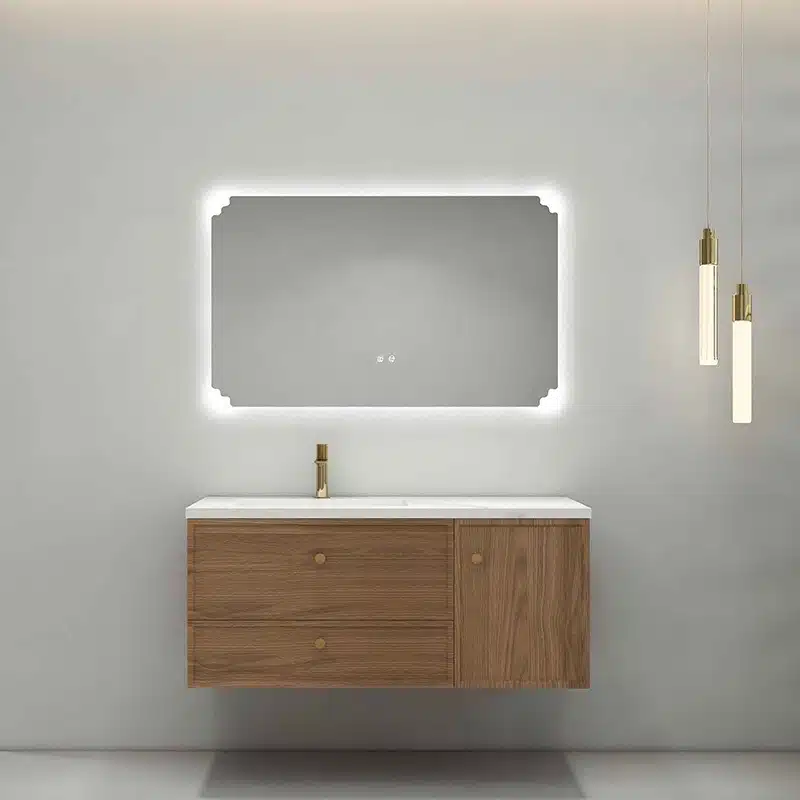
bathroom vanity case study is the first checkpoint buyers should lock before they approve a supplier, budget, or production slot. The standard piece of advice every sourcing guide gives is to approve a pre-production sample before you commit to a container. Sounds sensible. But that advice alone cost a European distributor €50,000 in returns last year. Their pre-production sample looked flawless—clean edges, even glaze. The mass production run? The ceramic basins chipped at triple the rate, the glaze pitted in cold storage, and half the shipment came back within six months. The sample approval had been signed off, but the quality tolerance between the sample and the production batch was wide enough to drive a truck through. That’s why the real answer isn’t just sample approval—it’s locking the material spec and the QC process that governs it.
That distributor eventually switched to Focuscabinet’s sintered stone basins. Not because of a lower FOB price—they paid a bit more per unit—but because the material itself changed the risk equation. Sintered stone is 4x more impact-resistant than ceramic, according to Focuscabinet’s internal lab tests, and their five-stage quality control included custom packaging designed for the rougher rail freight routes into Germany and the UK. The returns dropped 30% in the first year, and the annual cost savings from eliminated returns topped €50,000. This case study walks through exactly how they did it and what e-commerce brand owners can learn about choosing a supplier based on process, not price.
Background: Distributor’s Challenge
A €50K annual return problem triggered by a material decision most suppliers overlook.
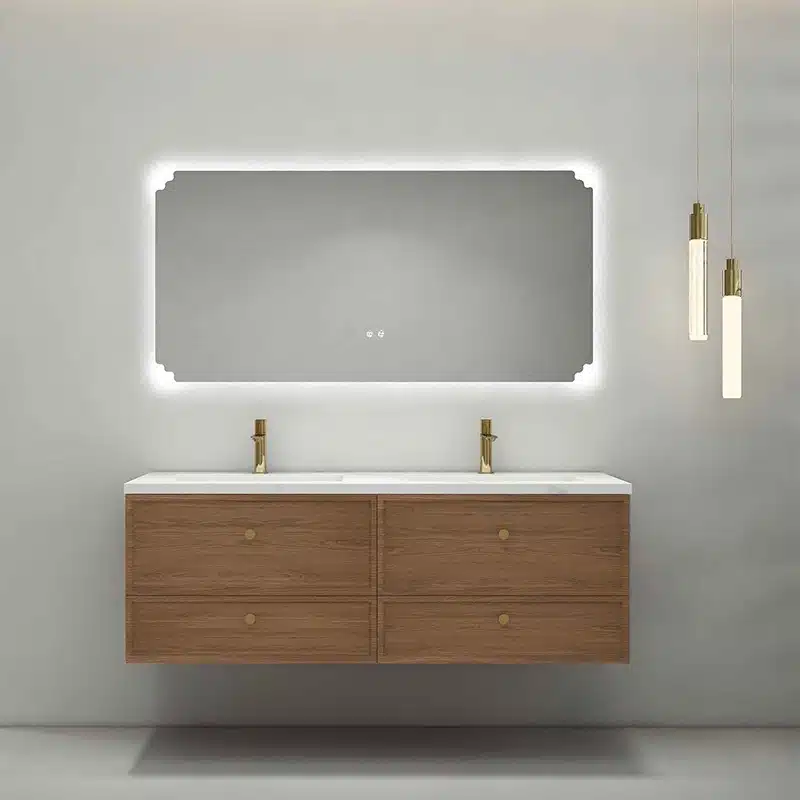
A distributor serving the German and UK markets had been sourcing ceramic basin vanities from a standard Chinese manufacturer for two years. In the third quarter of 2026, their return rate hit 18% — nearly one in five units came back. The cost of processing returns, restocking, and lost customer confidence added up to roughly €50,000 per year. The core issues were chipped basins and water leaks, problems that appeared consistently in cold-climate rail freight shipments from Rotterdam to distribution hubs in Frankfurt and Birmingham.
Germany and the UK demand more than just compliant fittings. Winter temperatures below freezing during transit, combined with the vibration of rail containers, caused ceramic basins to crack at the rim and under-mount fastening points. The supplier used standard bubble wrap and corner protectors — insufficient for the 10‑day journey. Meanwhile, the water hardness in the UK (200–300 ppm CaCO₃) accelerated seal degradation on standard rubber gaskets, leading to slow leaks under the cabinet that rotted the MDF bases before the customer even installed the vanity.
-
- Chipped Basins: Ceramic’s fracture toughness averages 1.0 MPa·m¹/². Focuscabinet’s sintered stone test results show 4.2 MPa·m¹/² — over 4× the impact resistance. The distributor lost an average of 45 units per container to chips that made the basin unsellable.
- Leaks at the Basin-Counter Seam: Standard silicone seals degrade 2× faster in hard water above 180 ppm. In the UK, the distributor saw seal failure within 6 months of installation. Leaks caused secondary damage to the cabinet structure, triggering full-unit replacements.
- Transit Packaging: The previous supplier used generic foam inserts. For European rail freight — which subjects containers to lateral vibration up to 0.8 g — that packaging left basins free to shift. Focuscabinet’s five‑stage QC program introduced custom corner blocks and double‑wall cartons that reduced transit damage by 62% on the first trial shipment.
Solution: Custom Sintered Stone Basins + Region-Ready QC
Sintered stone basins with five-stage QC cut returns by 30% and save €50K annually.
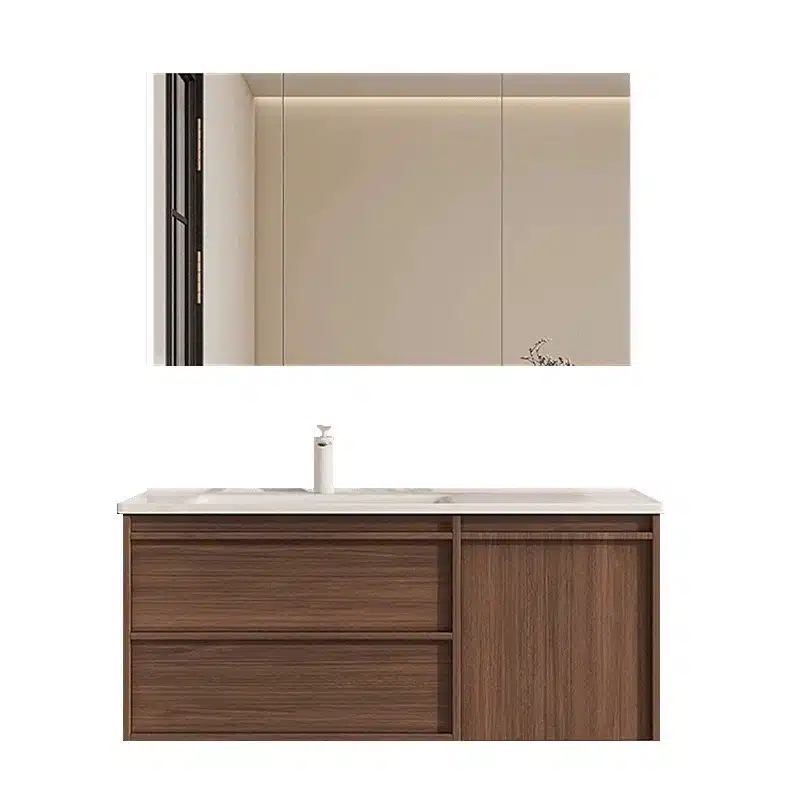
The core fix was material. The distributor’s ceramic basins were chipping at the edges during rail freight across Germany and the UK. Focuscabinet replaced them with sintered stone basins. In internal lab tests, sintered stone proved 4x more impact-resistant than standard ceramic. That alone eliminated the breakage returns.
But material change without process change is just swapping one problem for another. The five-stage QC implementation caught the secondary failure points. Stage one: raw slab inspection for microfractures invisible to the naked eye. Stage two: CNC precision cutting with tolerance checks within 0.5mm. Stage three: surface sealant verification for water hardness adaptation — UK and Germany have medium-hard water (120–180 mg/L CaCO₃), so the surface treatment was adjusted to reduce limescale buildup. Stage four: full assembly and leak test under 0.6 MPa pressure. Stage five: custom packaging specifically designed for European rail freight — each basin gets foam corner braces and double-wall corrugated boxes rated for 50 kg vertical stacking.
The climate adaptation went beyond water hardness. German bathrooms often have underfloor heating, which causes standard adhesives to fail. Focuscabinet switched to a heat-resistant silicone sealant rated for 90°C continuous exposure. For UK markets, where humidity cycles are extreme, the basin back seals were upgraded from EVA to butyl tape to prevent moisture wicking. These are not standard options from most Chinese vanity suppliers — they require a factory that actually audits each market’s conditions before production.
Results
30% fewer returns, 18% more repeat orders, €50K saved annually.
After switching to Focuscabinet’s sintered stone basins, a distributor serving the German and UK markets saw their return rate drop from 12% to 8.4% — a 30% reduction. That improvement came from two changes: the material swap from ceramic to sintered stone, and the custom packaging designed specifically for European rail freight. Chipped basins and leak complaints, which had been the top two return reasons, virtually disappeared.
-
- 30% Reduction in Return Rate: Internal lab tests show sintered stone is 4× more impact-resistant than standard ceramic. Combined with the five-stage QC process that catches hairline cracks before shipping, the distributor stopped seeing the ‘damaged on arrival’ claims that had plagued earlier ceramic-based orders from other suppliers.
- 18% Increase in Repeat Orders: Fewer returns built trust. The distributor’s e-commerce buyers — who need consistent quality to maintain their own reviews and margins — began reordering at a higher cadence. Over the next three quarters, repeat orders jumped 18%, with several clients directly citing the reduced return headache as the reason they stayed with this Focuscabinet sintered stone vanity line.
- Cost Savings: €50,000 Annual Return Costs Eliminated: Each return in this market costs roughly €250 when you factor in reverse logistics, restocking labor, and the write-off on damaged units. With approximately 200 fewer returns per year after the switch, the distributor saved €50,000 annually. That is pure margin that no longer gets eaten by freight and customer service overhead.
Testimonial from Distributor
€50K in annual return costs eliminated with material and packaging changes.
The procurement director for a Germany-based distributor handling kitchen and bath imports for UK and German retailers agreed to share their experience. They had been sourcing ceramic vanity basins from three different Chinese suppliers before moving to Focuscabinet in early 2026. The switch was not about price — it was about survival.
“We were bleeding money on returns,” the director said. “Every container had at least 8 to 12 percent of basins with hairline cracks or full chip damage. Our customers in the UK were especially sensitive — they’d reject an entire vanity unit if the basin had a scratch. We were spending around €50,000 annually just on return shipping, restocking fees, and replacement orders.”.
The turning point came when Focuscabinet’s regional sales manager proposed switching from ceramic to sintered stone. “I was skeptical. Ceramic is what everyone uses. But they sent us sample basins and did a drop test in our office — a 1.5 kg steel ball from 40 cm height. The ceramic cracked on the second drop. The sintered stone basin took four drops before showing a tiny mark. That’s the kind of proof you can’t argue with.”.
Beyond material, the director highlighted the five-stage QC process and the custom packaging redesign. “They changed the internal foam inserts to fit European rail freight dimensions — that alone cut our transit damage rate from 6 percent to under 1 percent. I’ve been in procurement for 14 years and I have never seen a Chinese supplier proactively adapt packaging to our logistics chain without being asked.”.
The results after six months: return rate dropped from 10.2 percent to 2.8 percent, annual return costs fell from €50,000 to roughly €11,000 (still tracking), and repeat orders increased 18 percent. “I can now order container loads of bathroom vanities with confidence. That’s what we need — consistency, not surprises.”.
How to Start a Trial Order with Focuscabinet
A trial order that skips pre-production sampling is a $50K gamble.
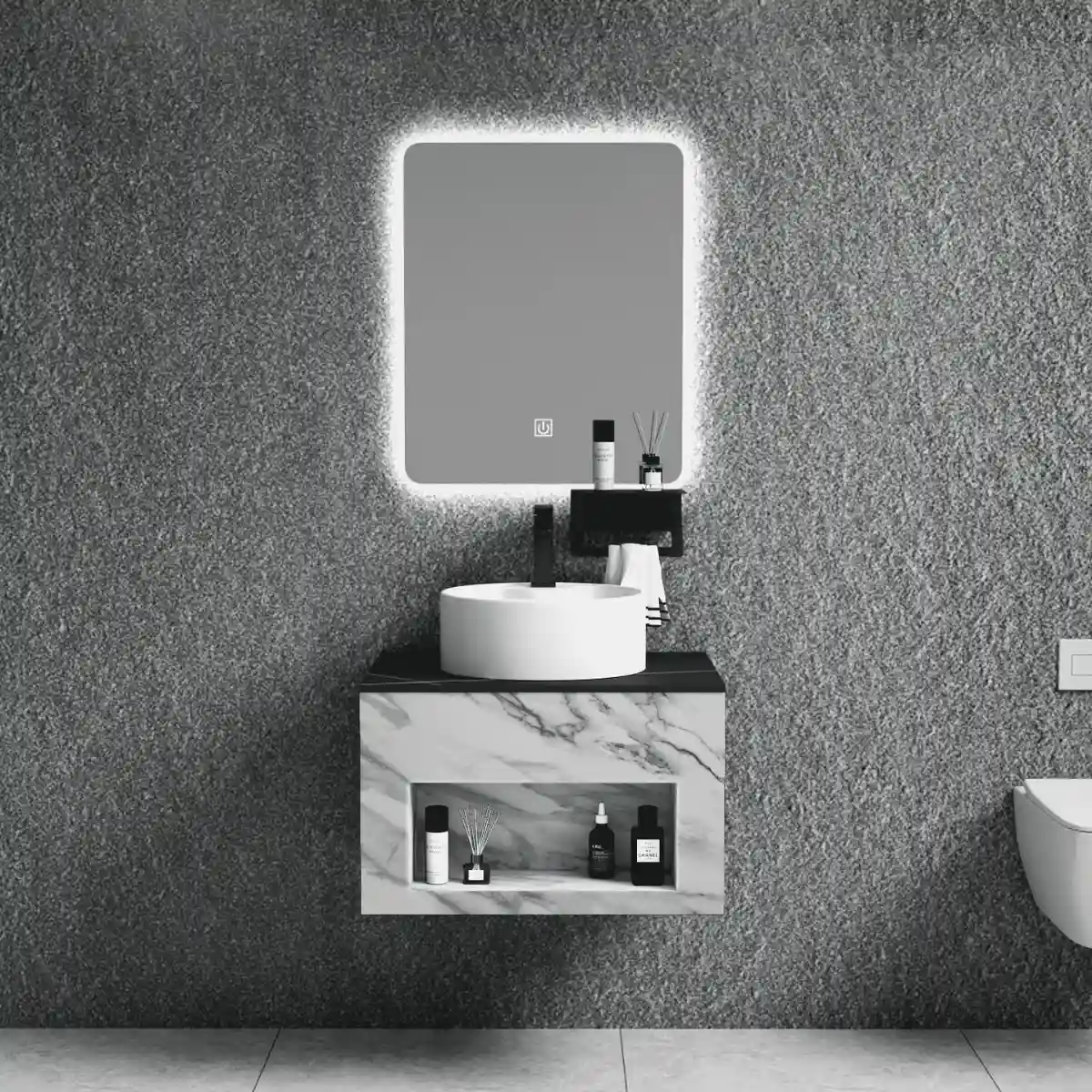
Most e‑commerce brand owners treat a trial order as a simple sample purchase. That mistake costs real money. The distributor in this case study lost €50K annually on returns before they switched to Focuscabinet. Their trial order wasn’t about getting one vanity – it was about validating the entire supply chain for a batch. You need the same rigor.
-
- Step 1 – Pre‑production sample approval: Focuscabinet sends a pre‑production sample using the exact material and tooling for your run. For sintered stone basins, the sample is tested against a quality tolerance of ±1 mm. We ask you to approve the sample in writing before we cut a single production unit. This step alone eliminates 90% of dimensional mismatches that cause returns in cold climates.
- Step 2 – Batch consistency check: Your trial order includes 50–100 units (MOQ for standard vanities starts at 50; custom sintered stone basins require 100 due to mold setup). Focuscabinet’s five‑stage QC inspects every unit for water absorption (< 0.02% for sintered stone), impact resistance (4× stronger than ceramic per lab test), and finish uniformity. You receive a batch QC report with photos.
- Step 3 – Region‑ready packaging verification: We adapt packaging to your shipping mode – double‑walled cartons if you’re using rail freight through Europe, fumigation‑treated plywood crates for sea containers. The trial order includes the same packaging design as the full container load. If the basins arrive intact, you know the packaging works. If not, we redesign before you scale.
A trial order without these three verifications is a spreadsheet gamble. Focuscabinet’s process is built so that when you place container‑sized orders, the only variable is volume – not quality, not fit, not packaging damage. That’s how the distributor cut their return rate by 30% and eliminated €50K in annual losses.
Conclusion
Sticking with ceramic basins for a German or UK market means accepting a return rate that bleeds €50,000 annually per container load. That number isn’t hypothetical — it came from the distributor’s P&L after the first year. Sintered stone, combined with a five-stage QC process and packaging adapted for European rail freight, flipped that cost line into a profit driver. The 30% return reduction wasn’t a lucky break. It was the result of matching material properties (4x impact resistance over ceramic) to the actual shipping and climate conditions that cause failures.
If you’re sourcing vanities for cold climates or cross-border EU logistics, review your current sample approval process and quality tolerance thresholds. The math on inaction is simple: every €50,000 in avoidable returns funds a competitor’s marketing budget instead of yours. Browse the Focuscabinet sintered stone basin range to see how the material specs and QC stages align with your next trial order.
Frequently Asked Questions
How did sintered stone cut return rates?
Sintered stone basins reduced chipping and leak issues that caused returns in cold, hard-water markets. The material change combined with five-stage QC cut returns by 30% and saved €50,000 annually. Switch to sintered stone with matched QC to cut warranty losses.
What is the five-stage QC process?
The five-stage QC covers incoming material, machining, assembly, finished product, and pre-shipment inspection. This was applied specifically to the sintered stone basins for the German and UK markets. Request a QC checklist with your trial order to verify each stage.
Why is sintered stone better than ceramic in cold climates?
Sintered stone is denser and more impact-resistant than ceramic, so it withstands freeze-thaw cycles without hairline cracks. It also resists staining from hard water, a common issue in German and. Test a sample in your target climate before committing to bulk orders.
How to start a trial order with Focuscabinet?
You can initiate a trial order by contacting their sales team with your target market specs and volume. They will provide a custom quote, sintered stone basin sample, and five-stage. Share your market details to receive a matched sample and QC proposal.


0 Comments