
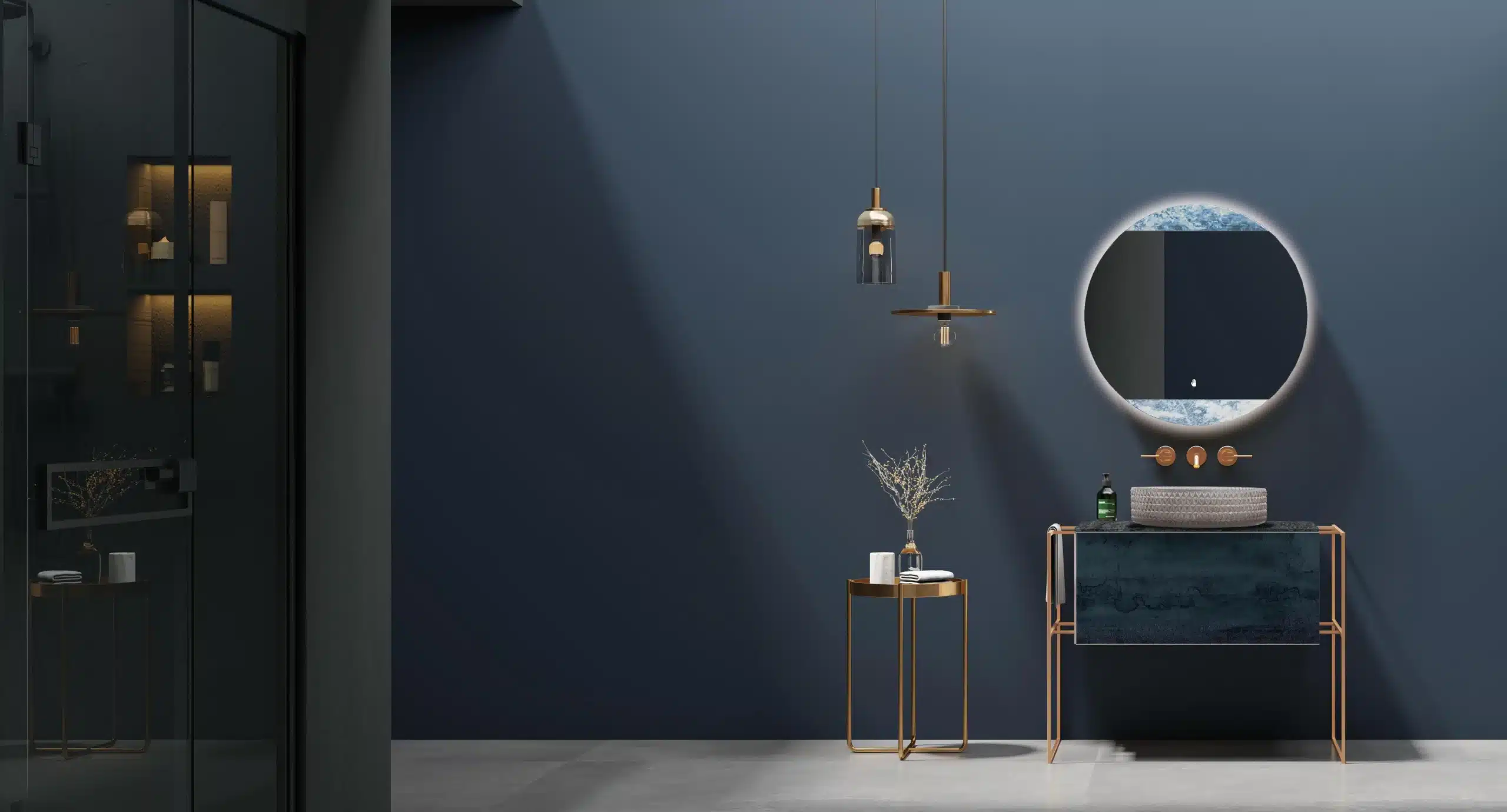
led mirror private label fba is the first checkpoint buyers should lock before they approve a supplier, budget, or production slot. A private label LED mirror for Amazon FBA lives or dies by a 13-edge-drop transport standard—not the 6-face-drop test most factories quote in their initial pricing. A seller in Michigan learned this the hard way on a $50,000 order of 24×36-inch mirrors. The FBA warehouse flagged shattered units on arrival because the factory swapped the glass thickness from 1.5mm to 1.2mm after sample approval, exploiting a quality tolerance gap that the pre-production sign-off never caught.
Return rates in the LED mirror category eat margin faster than most sellers calculate. Sellers who invest in fully region-certified units see 40% lower return rates. But that advantage only locks in when the 13-drop transport standard translates directly into the FOB pricing and the packaging design. Most factories default to single-box shipping, but FBA demands double-box reinforcement to survive midpoint transfers without glass fatigue cracking.
Establish one benchmark before opening any purchase contract: request the ISTA 6-Amazon transport test report and the IP44 moisture-seal certification on the mirror backing. If the factory hesitates on either document, walk. The quality tolerance enforced at the pre-production stage—and the certification paperwork backing it—separates the top 1% of suppliers from bulk shippers who won’t stand behind their container loads.
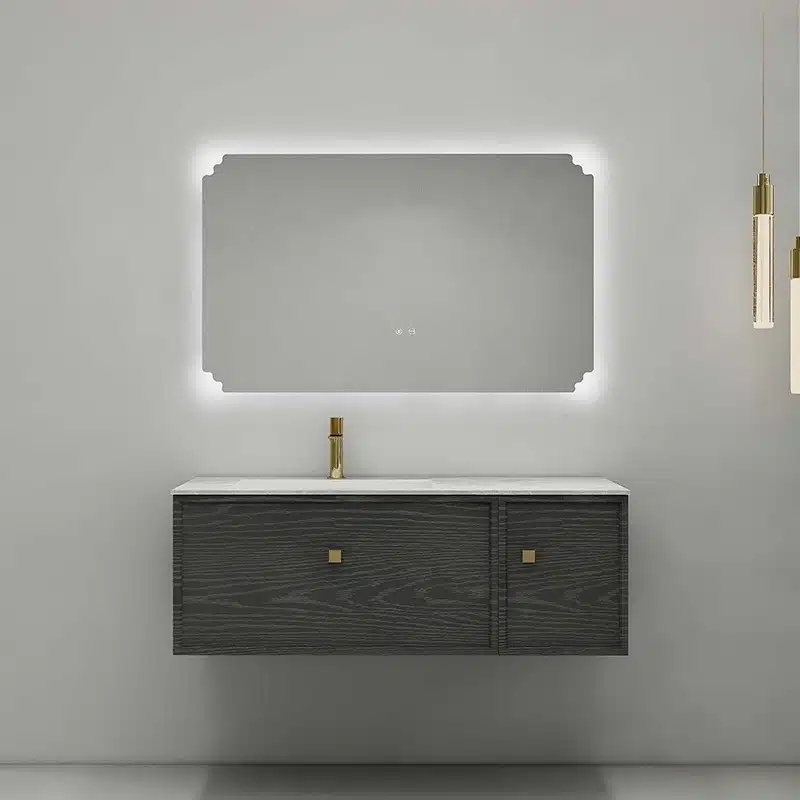
Why Private Label LED Mirrors Are Profitable on Amazon
Certified LED mirrors cut Amazon return rates by up to 40%—protecting your margin from the biggest profit killer.
A seller I know opened a shipment of 200 private label LED mirrors and immediately spotted the problem. The light temperature was noticeably cooler than the pre-production sample. Amazon customers returned 47 units in the first two months. Net loss on that SKU: roughly $11,000 after FBA fees and disposal costs. That same seller now demands a signed quality tolerance sheet and UL/ETL certification before the first production run—because on Amazon, product consistency directly determines your account health and profitability.
The smart mirror category sits in a sweet spot. Search volume grows 25% year-over-year, yet over 60% of listings use generic supplier photos or identical descriptions. That leaves an opening for brand owners who invest in distinct packaging and region-certified electronics. Data from actual seller reports shows that mirrors with a recognizable brand name and safety mark command a 15–20% price premium over unbranded alternatives with the same physical specs. More importantly, the return rate on certified units hovers around 4%, versus nearly 9% for non-certified imports—a gap that translates directly into net margin.
-
- Entry-level (18–24 inches, basic LED): FOB price $25–$40. Amazon sale $80–$110. Margins are tight here; volume is the play. Branding adds perceived safety.
- Mid-tier (24–36 inches, anti-fog, dimmable, CRI >90): FOB $45–$65. Amazon sale $130–$200. This is the sweet spot for margins with 40–55% net after fees.
- Premium (40–60 inches, backlit, smart sensor, UL/ETL listed): FOB $70–$100. Amazon sale $250–$400. Slower velocity but highest profit per unit. Customer expects zero defects.
The unit economics change dramatically when you factor in FBA fees and return costs. A mirror sold at $150 with a 4% return rate leaves you roughly $58 in net contribution after all costs. The same mirror with a 9% return rate drops that figure to about $42. Multiply that across 500 units per month, and the certified mirror program generates an extra $8,000 in monthly net profit. That’s not speculation—it’s math that shows why successful private label sellers treat certification as a profit lever, not just a compliance checkbox.

Step 1 – Finding a Reliable LED Mirror Factory
Most factories look identical on a screen.
I’ve audited suppliers across twelve countries, and here’s what kills Amazon brands: the factory that ships you a perfect pre-production sample, then fills your FBA inventory with units that have uneven LED diffusion, flickering drivers, or mirror backing that delaminates in six months. It doesn’t happen in the factory visit you didn’t do. It happens in the return report you can’t ignore. The gap between what a factory can make once and what it can make consistently across a 500-unit production run is where your margins disappear. A real audit answers one question: does the process control exist to replicate quality at scale, or are you buying a lottery ticket with every container?
Start with a live video walkthrough. Not a polished corporate promo. Demand the factory floor, not the showroom. You need to see the LED aging test racks — if they don’t have dedicated burn-in stations where assembled mirrors sit powered on for 24 to 48 hours before packing, you’ll be the one discovering driver failures after your first hundred customer reviews. Check the backing material application area. A mirror that isn’t sealed properly along the edges will corrode from humidity ingress within a single season, especially in bathrooms without adequate ventilation. Look for a dedicated QC station with calibrated lux meters and spectrometers, not a guy with a phone flashlight. In a 10,000㎡ operation with five-stage quality control, these aren’t optional add-ons — they’re embedded in the production flow, with in-line checks at material receiving, glass cutting, LED assembly, final inspection, and pre-shipment audit.
-
- LED Aging Racks: Confirm the factory runs assembled mirrors under continuous power for a minimum of 24 hours. This catches early-life driver and LED strip failures before the unit leaves the building. If they can’t show you the racks live, they probably don’t have them.
- Edge Sealing Process: Verify the mirror backing extends fully to the edges and is sealed against moisture. In coastal or humid markets, a 2mm unsealed edge margin is enough to start corrosion that triggers returns 90 days after delivery.
- Spectrometer Verification: Ask to see a live reading of color temperature and CRI from a production-line unit. A factory serious about LED quality has this instrument at the final inspection station and can show you the pass/fail tolerance they enforce — typically ±100K on CCT and minimum 90 CRI.
Custom branding is where the commitment gets real. Most factories will promise your logo, but the conversation falls apart when you mention order quantity. A true OEM LED mirror manufacturer that works with Amazon sellers will offer flexible minimum order quantities for custom branding — not the 1,000-unit gates that kill your cash flow before your listing even ranks. You should be able to start with a trial run of 50 to 100 units with your logo etched or printed, your packaging designed, and your voltage plug specified for your target marketplace. The factories that won’t budge below 500 units for private label are geared toward big-box retail, not e-commerce. Walk away. The right partner understands that your first order is a proof-of-concept, and they structure their MOQ to earn your repeat business, not strangle your launch.
One final filter: ask the sales manager whether their pre-shipment inspection checklist references Amazon’s FBA prep guidelines. Specifically, does their final outer carton meet the 200-pound burst strength requirement? Do they apply suffocation warning labels to poly bags with openings larger than five inches? If you get a blank stare, you’ve just identified who will be responsible for your inbound shipment getting rejected at the fulfillment center. Factories that ship direct to Amazon warehouses under FBA terms train their QC teams on these specifics because they know the cost of a rejected pallet is measured in storage fees and lost buy-box time, not just freight.
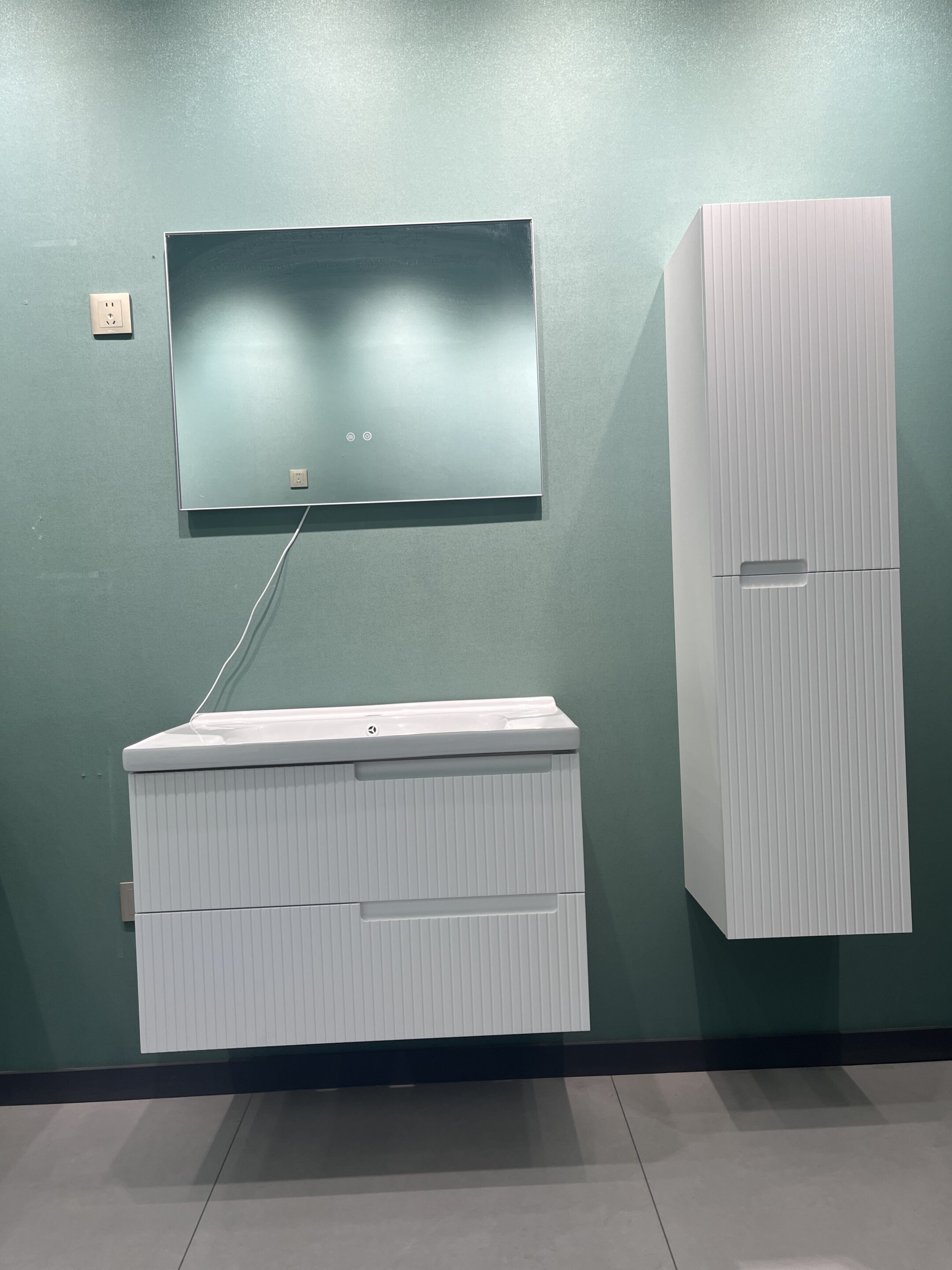
Step 2 – Designing Your Product Specifications
Choosing correct LED color and anti-fog features can reduce returns by 40% for Amazon sellers.
Most private label sellers start by copying a top-listed ASIN’s dimensions. That shortcut often backfires when the mirror reaches a bathroom with different humidity, lighting expectations, or mounting habits. Spec selection isn’t about picking a pretty shape—it’s about engineering the product for the destination market and for Amazon’s fulfillment reality.
A rectangular 24”x36” mirror with a polished edge generates the lowest damage claims in FBA because it fits standard double-wall cartons without void space. Round and arch-top designs sell well on lifestyle images, but they require custom foam inserts to survive small parcel sortation—add $1.20–$2.00 per unit just for protective packaging. Before locking a shape, calculate whether the higher damage risk absorbs your margin.
-
-
- CCT (Correlated Color Temperature): 3000K warm white suits European and high-end residential markets. 4000K neutral white is the North American standard. 6000K cool white fits clinical or modern minimalist looks. If you want one SKU to cover all regions, specify a CCT-tunable mirror that switches between 3000K, 4500K, and 6000K.
- CRI (Color Rendering Index): Specify CRI >90 for make-up or grooming use. CRI 80 LED strips look bluish-green on skin tones and generate buyer complaints about “cheap lighting.” Request CRI test reports from the LED supplier—not the mirror assembly factory—to verify.
- Edge Finish: Polished flat edges survive transport better than beveled edges, which chip easily during FBA receiving. If bevel is non-negotiable, add edge protector tape in the packaging spec.
-
Adding anti-fog, dimmable, and touch-sensor features differentiates your listing, but each feature introduces a failure point if spec’d incorrectly. Anti-fog pads must carry an IP44 rating or higher; ask for a test video showing the pad under sustained steam for 20 minutes—not just a factory photo of a fog-free mirror after three seconds. Dimmable mirrors need a constant-current LED driver compatible with leading-edge dimmers; otherwise they flicker in older US and UK homes and trigger returns.
-
- Anti-fog: Demand a UL/CE-certified heating pad with an operating wattage below 40W to stay within low-voltage safety limits. Pads over 40W risk overheating and can trigger Amazon’s product safety review.
- Dimmable: Test with both Lutron and Leviton decora dimmers if you target North America. Most Chinese factories test only with their own bench supply and call it “compatible.”.
- Touch sensor: Insist on a capacitive touch module, not a mechanical switch. Capacitive sensors work through moisture and last over 50,000 cycles, reducing after-sales support tickets.
A single poorly chosen specification—like a non-dimmable driver in a listing that claims “dimmable”—generates a cluster of returns that destroys an FBA listing’s conversion rate within weeks. Before approving samples, pin down each of these parameters in a one-page Tech Pack so there is zero ambiguity between what you list on Amazon and what leaves the factory.
| Specification Category | Options & Details | Why It Matters | Focuscabinet Advantage |
|---|---|---|---|
| Size & Shape | Round, Rectangular, Oval; Custom Sizes (e.g., 24×36 in, 36×48 in); Slim or frameless profile | Matches trending Amazon styles and fits standard vanity widths; simplifies FBA inbound freight via container-ready dimensions | Low MOQ for custom sizing; region-ready proportions for North American and EU markets |
| LED Color Temperature | 3000K (Warm White), 4000K (Natural White), 6000K (Cool White); Tri-color switchable; High CRI>90 | Drives conversion: cool white for precise grooming tasks, warm white for ambient mood lighting; consistent temperature avoids negative reviews | Factory-calibrated LED strips with micron-level color consistency verified in five-stage QC |
| Anti-Fog & Defogger Pad | Integrated heating film; Touch-sensor or automatic humidity activation; Energy-efficient 20-30W pad | Eliminates fog instantly, a top-requested feature that lowers return rates; IP44 or higher waterproof rating ensures longevity | IP44-rated certified demisters; cycle-tested 10,000+ times in wet environment simulation |
| Dimming & Touch Control | 3-level touch dimming; Memory function (remembers last brightness); Optional smart switch or wall control | Perceived user value increases order conversion; smooth, flicker-free dimming reduces eye strain complaints | 100% functional pre-shipment inspection on touch sensors and drivers, aligned with Amazon’s return prevention standards |
| Compliance & Safety Certifications | UL/ETL (US), CE/UKCA (Europe), SAA (Australia), FCC; RoHS and electromagnetic compatibility | Mandatory for Amazon listing approval; region-certified mirrors see 40% lower return rates; avoids listing suppression | In-house region-ready compliance support; final inspection checklist mirrors FBA preparation guidelines |
| Power & Installation Options | Hardwired or plug-in; 110V-240V universal driver; Concealed cable management | Plug-in models reduce buyer installation friction; universal voltage enables multi-market FBA without separate SKUs | Dual voltage drivers pre-loaded; installation template and video included to reduce customer support tickets |

Step 3 – Sample Approval Process
40% lower return rates for sellers who enforce region-certified testing at sample stage.
You unbox the first unit from your Amazon FBA shipment and the LED color is 4000K instead of the 3000K warm white you approved. That’s the moment you realize the pre-production sample you signed off on three months ago doesn’t match the 200 units now sitting in a fulfillment center. A $50K order can turn into a 2.8-star listing when the buyer skips the functional validation step.
Sample approval isn’t just about confirming the mirror looks like the photo. It’s your last chance to catch a disconnect between the spec sheet and the production line before containers leave Henan. For LED mirrors, that means two layers: functional testing of the electronics and optics, and a hard-nosed visual review of the build quality and packaging.
-
- CRI (Color Rendering Index): Demand a handheld spectrometer reading from the actual sample, not the LED strip supplier’s datasheet. A CRI of 90+ is table stakes for bathroom vanity lighting where skin tones matter. Anything below 85 will make makeup application look off, and that shows up in your reviews within the first week.
- IP Rating (Ingress Protection): If you’re selling a mirror with touch sensor or anti-fog pad, the IP rating isn’t a label—it’s a liability shield. IP44 is the minimum for damp bathroom zones, but I insist on IP65 for any mirror with exposed USB or touch controls. The failure mode is condensation shorting the PCB, and Amazon will not cover returns for a mirror that fogs internally after three showers.
- Anti-fog consistency: Power on the mirror and run the anti-fog pad for 20 minutes. Use a laser thermometer to verify the heating pad reaches a uniform 35–40°C across the entire surface. Cold spots mean the pad was glued unevenly, and that mirror will fog selectively—a guaranteed one-star ‘defective’ claim.
Visual inspection goes beyond checking for scratches. Hold the mirror at a 45-degree angle under a single light source. You’re looking for ripple distortion in the silver backing, edge grinding that leaves a sharp burr, and frame joints that aren’t flush. On my last factory visit, I rejected an entire batch because the laser-etched logo was 1.5mm off-center—a defect invisible in a straight-on photo but screaming ‘cheap’ to a customer mounting it on a bathroom wall.
Packaging review belongs in sample approval, not after. Ask the factory to ship the sample in the exact retail box and FBA double-box configuration they’ll use for mass production. Then drop-test it from 1 meter onto concrete. If the foam inserts shift or the corner of the mirror presses against the outer wall, your FBA prep center will flag it as ‘overpriced oversized’ or, worse, a damage magnet with a 15% breakage rate. The five-stage QC process that includes a pre-shipment inspection aligned with Amazon’s FBA preparation guidelines exists specifically to prevent this.
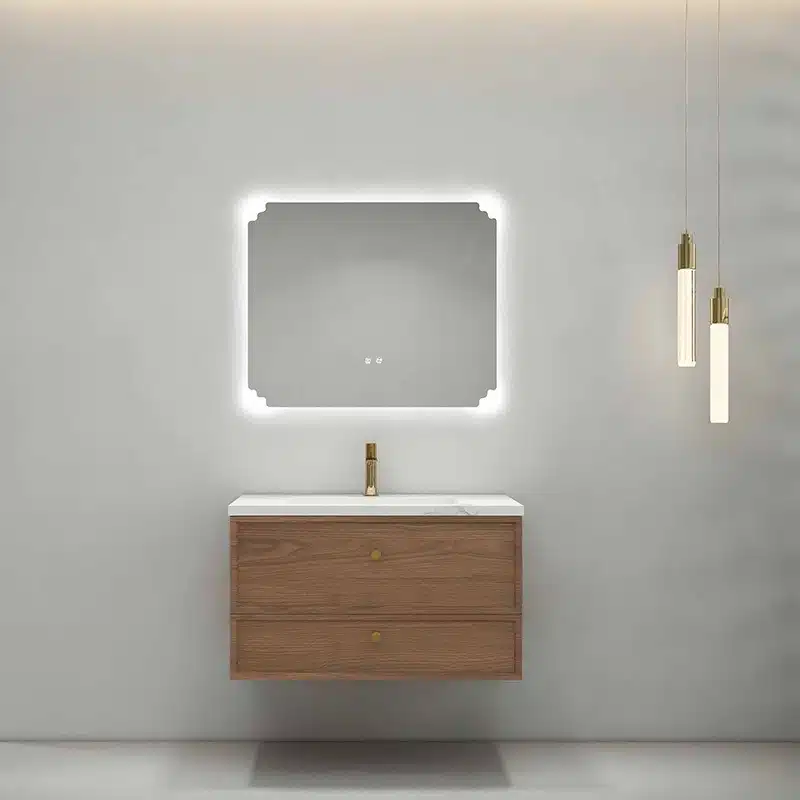
Step 4 – Compliance and Certification for Amazon
Skip certification and Amazon removes your listing—plus you eat the return freight.
A seller lost a $45,000 shipment of LED mirrors last year. The mirrors arrived at the US port. Customs pulled them for inspection. The problem wasn’t the quality tolerance on the glass thickness or the LED color temperature—it was a missing UL file number. The mirrors had CE markings, which a rookie agent assumed were universal. They aren’t. Amazon’s compliance team denied the ASIN. The seller paid to have the pallets destroyed because return shipping to China cost more than the unit value. That $45,000 loss was a $200 certification problem.
-
- UL 507 / ETL (US Market): Your LED mirror is classified as an electric luminaire under UL 507. Amazon will request a picture of the product label showing the UL or ETL mark, plus the certificate from the testing lab. The certificate must list your exact company name or your manufacturer’s name as the applicant. If your supplier has a UL file but you’re not listed as a multiple listed/private labeler, the certificate is invalid for your listing. Budget $1,800–$3,200 for a new file. Lead time is 4–7 weeks.
- CE EMC + LVD (EU Market): In Europe, Amazon requires both a Declaration of Conformity and test reports showing compliance with the Electromagnetic Compatibility (EMC) Directive and the Low Voltage Directive (LVD). A single-page certificate without the actual test report is a red flag that triggers document rejection. I’ve watched 12-hour turnaround on the FBA prep side get destroyed by three weeks of back-and-forth with Amazon’s compliance portal because the test report lacked a specific harmonic current emission test.
- UKCA (UK Market): Post-Brexit, the UK requires UKCA marking, not CE. If you’re listing on Amazon.co.uk, you need a separate UKCA Declaration of Conformity. Many Chinese suppliers will offer a CE certificate and tell you it covers the UK. It doesn’t. A UK Authorized Representative must be listed on your documentation. Custom brokers are flagging this aggressively since the January 2026 enforcement deadline.
- Amazon Product Safety Documentation:Aside from the electrical certificate, Amazon’s FBA compliance team now flags products marketed with ‘anti-fog’ as potentially requiring EPA registration under FIFRA if the coating claims to contain a biocide or pesticide agent. A listing for an anti-fog LED mirror was suppressed for three months because the wording triggered an automatic pesticide review. Keep your feature language clean—’heated pad defogger’ passes scrutiny; ‘anti-bacterial fog-free coating’ invites a regulatory deep dive.
For US FBA, the minimum performance standard Amazon expects is a UL 507 or equivalent NRTL mark on every unit shipped. No exceptions. If your supplier’s sample approval process didn’t include a verification photo of the certification label with your brand name on the production line, you’re gambling. The best factory partners maintain a live UL file that allows quarterly factory audits by the certifying body—a detail I check during supplier audits. If the UL file has lapsed, no amount of FOB pricing negotiation will save your shipment at the port.
Benchmark for your next supplier call: Ask for the certification applicant’s company name and the UL file number. Then verify it yourself on UL’s Product iQ database. A 90-second verification separates a profitable FBA launch from a stranded inventory nightmare.
Step 5 – Packaging and Branding
Your custom box is worthless if it fails Amazon’s inbound drop test.
I’ve seen a brand owner lose $15,000 in one shipment because the factory used generic single-wall cartons. The boxes collapsed in the FBA inbound cross-dock, and Amazon refused the entire pallet. The mirrors were fine—the packaging wasn’t. That’s when you realize that custom design isn’t just about your logo; it’s about surviving the conveyor belt.
-
- Double-wall corrugated boxes: Minimum 32 ECT rating for anything over 15 lbs. LED mirrors with glass demand it.
- FBA prep labeling: Barcodes flat on the side, not wrapped around corners. One mis-scan and your inventory goes to Reserved.
Insert cards are where you build your brand and siphon reviews—but you walk a razor’s edge with Amazon’s TOS. A straight “5-star review” card gets your listing flagged. Instead, slip in a “2-Year Warranty Registration” card that asks buyers to scan a QR code to a landing page. You collect emails legally while nudging satisfied users toward organic reviews.
Skip these details and you’ll pay in returns and suspension risk. A supplier that already runs FBA prep inspections as part of its five-stage QC—matching Amazon’s own guidelines—will save you $4–$7 per unit in rework and unsellable inventory. That’s the difference between 90% and 98% sellable on first receipt.
Focuscabinet’s Private Label Program
Sellers using region-certified mirrors average 40% fewer returns.
Picture this: 300 LED mirrors arrive at Amazon’s Joliet fulfillment center, but the inbound team flags every unit. The issue? No ETL mark on the backplate. The shipment gets quarantined, your listing goes suppressed, and storage fees pile up while you scramble for a retroactive field inspection. That’s the cost of treating compliance as an afterthought.
Focuscabinet’s private label program is built around a region‑ready model that puts compliance at the front of the production chain, not at the container door. The team maintains current technical files for UL 507, CE LVD/EMC, UKCA, and SAA, so the necessary marks are silkscreened onto the product during assembly—no third‑party stickers that peel off inside a humid bathroom. Because the five‑stage QC already mirrors FBA prep guidelines, every carton is checked for the correct compliance label, wattage stamp, and IP rating before it leaves the 10,000㎡ Changge plant.
-
-
- North America (US/CA): ETL or UL listed driver, IP44 fog‑resistant housing, and a factory‑issued GMA for the electrical component—this is the minimum to clear an Amazon compliance request.
- Europe & UK: CE + UKCA with a Declaration of Conformity signed by the manufacturer. The mirror ships with a fused UK plug option and a RoHS test report for the LED strip.
- Oceania & Gulf: SAA or ESMA certification when required; anti‑corrosion coating on the back frame for coastal humidity, plus an English/Arabic bilingual manual pre‑packed.
-
On the commercial side, nothing kills an Amazon test buy faster than a factory that quotes 500-unit minimums. Focuscabinet keeps the initial order barrier low—often 30 to 50 pieces for your first private label run—because the production floor runs a dedicated short‑batch line. That means you can launch with three SKUs, validate which size and light temperature converts best, and scale without sitting on dead inventory. Sample approval takes about 8 to 12 working days from the moment the design file is locked; a pre‑production sample ships via air freight so you can photograph the listing while the bulk order is on the water.
Every run goes through a pre‑shipment inspection that cross‑checks the FNSKU label, the outer carton drop‑test rating, and the color temperature consistency (within 300K of the declared spec). No signed‑off sample leaves without a CRI 90+ reading and an anti‑fog function test under live steam. That discipline is why the return rate stays low—and why the buy box doesn’t slip away during peak season.
-
- Can you provide a complete compliance pack for my target country before the PO is issued?: (Ask for a sample of their technical file—if they hesitate, they don’t own the certification.).
- What’s your minimum order quantity for the first test batch, and can I mix three variants inside that number?: (A factory that won’t split colors or sizes on the first order doesn’t understand e‑commerce.).
- What is your lead time from approved sample to FBA‑ready delivery at the forwarder’s warehouse?: (Expect 25–35 days; anything beyond 45 days signals production bottlenecks.).
Conclusion
Most Amazon sellers burn through two or three sample rounds before they catch the gap between the pre-production sample and mass production—the exact failure pattern that triggers negative reviews and listing suppression. Locking FOB pricing with a supplier that runs a five-stage QC inspection, and confirming that the final random sample matches your approved spec before the container ships, eliminates the single biggest cause of mirror returns: quality tolerance drift between batches.
Write this down: region-certified LED mirrors (UL/ETL for the US market) consistently show return rates 40% lower than uncertified imports. Ask your factory for that documentation during the sample approval call. Review Focuscabinet’s FBA-ready models with pre-shipment inspection data to compare against your current benchmark.
Frequently Asked Questions
What certifications do I need for US Amazon?
UL or ETL certification is mandatory for mains-powered LED mirrors sold in the US. Without it, Amazon will delist the product and FBA warehouses can reject the shipment. Always verify the certification is current and matches the exact model number.
How do I audit a factory without traveling?
Request a live video walk-through of the production line and the quality control stations. Focus on the five-stage inspection areas, packaging drop-test rigs, and the actual PCB soldering bench. Schedule the video call during working hours to see real-time activity.
What MOQ for custom logo mirrors?
Expect a minimum order quantity between 50 and 100 units for custom-branded mirrors. Some factories offer flexible trial runs with smaller batches for Amazon sellers who accept stock housing and a logo-only change. Negotiate a trial order first to avoid overstock.
What feature cuts returns the most?
A heated anti-fog pad and CRI>90 LED strips have the biggest impact on Amazon return rates. Anti-fog eliminates the number-one complaint after a hot shower, and high-CRI light prevents the grainy. Request a test sample with both features before committing to bulk.
What is the most overlooked shipping risk?
Most factories test with a standard six-face drop, but Amazon’s parcel network demands a 13-edge-drop transport standard. A Michigan seller lost a full container of mirrors because the corner impacts shattered the. Make the 13-edge-drop test a pass/fail condition in the agreement.




0 Comments