
Solid wood vanity maintenance is the single most overlooked factor in ensuring a luxury bathroom project survives its first decade. MFBATH has spent over a decade outfitting distributors across 20+ countries, and the data is clear: proper finish care extends the lifespan of premium oak and walnut vanities to 20-40 years, while neglecting humidity control destroys them in half that time. Buyers who skip the maintenance conversation during the specification phase inevitably face warranty claims and premature replacements that damage their reputation.
The engineering gap between a vanity that lasts and one that fails usually comes down to the finish system and regional humidity. While MDF vanities require zero maintenance but rot within six to ten years, solid wood requires a marine-grade spar varnish or high-quality polyurethane to survive the daily steam of a bathroom. Specifying the right finish from the factory floor is cheaper than repairing water damage after installation.
Why Solid Wood Vanities Fail: Hidden Moisture Risks
Solid wood is hygroscopic; without marine-grade sealing, humidity causes irreversible structural decay at joints.
The primary engineering failure in solid wood vanities is not the wood itself, but its hygroscopic nature. Unlike PVC or sintered stone, wood actively absorbs and releases moisture to match ambient relative humidity. In bathroom environments with daily fluctuations, this causes the material to swell and contract. When this movement is restricted by rigid joinery or improper sealing, internal stress fractures the finish and compromises the structural integrity of the cabinet.
Moisture ingress is the leading cause of premature replacement for solid wood vanities. Water vapor penetrates microscopic pores in the finish, particularly at high-risk zones like sink cutouts, drawer slides, and back panels. Once moisture reaches the raw wood substrate, it causes swelling that prevents drawers from closing and leads to delamination of veneers. This decay is often invisible from the exterior until the hardware fails or the cabinet frame warps beyond repair.
-
- Warping: Humidity causes uneven expansion, pulling doors out of alignment and creating gaps that allow further moisture intrusion.
- Joint Failure: Repeated swelling and contracting break the adhesive bond in glued joints, leading to loose frames and collapsed shelves.
- Finish Peeling: Trapped moisture beneath the finish creates blisters and peeling, exposing raw wood to immediate damage.
Proper sealing is the only effective barrier against these risks. Industry standards for high-humidity applications require marine-grade spar varnish or multi-layer polyurethane coatings. These finishes create a hydrophobic barrier that prevents water vapor from reaching the wood fibers. Without this rigorous sealing protocol, even premium hardwoods like oak or walnut will succumb to moisture damage within a few years, negating the initial cost savings compared to engineered alternatives.
Real Finish Breakdown: Marine Varnish vs. Standard Polyurethane
Marine varnish extends finish life by 5-10 years in wet environments compared to standard polyurethane.
Specifying the correct finish is the single most critical decision for the longevity of a solid wood vanity. Standard polyurethane creates a rigid film that cracks under the stress of wood expansion and contraction in high-humidity bathrooms. This failure mode leads to moisture intrusion at the joints, causing warping and eventual structural decay within 3 to 5 years.
-
- Standard Polyurethane: High risk of cracking and peeling in humid environments. It lacks the elasticity to move with the wood, leading to premature failure and costly replacements for hotel projects.
- Marine-Grade Spar Varnish: Engineered with UV inhibitors and flexible resins that expand and contract with the wood. It provides superior moisture resistance, protecting the solid wood from humidity fluctuations and extending the finish life by 5 to 10 years.
- Maintenance Protocol: Annual inspection of the finish is required. Use mild soap and water for cleaning. Reapply a thin coat of marine varnish every 3 to 5 years to maintain the moisture barrier and prevent scratches or stains from penetrating the wood grain.
Solid Wood vs. MDF: The 30-Year Lifecycle Cost Analysis
Solid wood vanities last 20-40 years, outlasting MDF by 3x and saving $6,000+ in replacement costs over 30 years.
When specifying bathroom furniture for luxury residential or boutique commercial projects, the choice between solid wood and MDF is not just aesthetic—it is a financial calculation. While MDF offers a lower initial price point, its structural integrity degrades rapidly in high-humidity environments. Properly sealed solid wood vanities, such as those crafted from premium oak or walnut, provide a 20-40 year lifecycle, effectively tripling the service life of standard engineered alternatives.
The core engineering challenge lies in moisture management. Solid wood is hygroscopic, meaning it naturally absorbs and releases moisture based on ambient humidity. Without a high-performance barrier, this expansion and contraction leads to joint failure and warping. The best finish for wooden bathroom vanity durability is a marine-grade spar varnish or a multi-layer polyurethane sealant, which prevents water intrusion at critical stress points like drawer slides and sink cutouts.
-
- Lifecycle Duration: Solid wood lasts 20-40 years with proper maintenance, whereas MDF typically requires replacement every 6-10 years due to swelling and delamination.
- Refinishing Capability: Solid wood can be sanded and refinished to remove scratches and stains, restoring its original appearance indefinitely. MDF cannot be refinished; once the surface is damaged, the unit must be discarded.
- 30-Year Cost Analysis: A $2,000 solid wood vanity saves over $6,000 in total lifecycle costs compared to replacing three separate MDF units over the same period, factoring in material, labor, and disposal.
- Humidity Maintenance: To maintain wood bathroom vanity humidity levels, run exhaust fans for 20-30 minutes post-shower and clean weekly with mild soap to preserve the marine varnish barrier.
For developers and architects, the decision to specify solid wood is a commitment to long-term asset value. By selecting a manufacturer that utilizes high-precision CNC machining and rigorous five-stage quality control, you ensure that the joinery is tight enough to resist moisture ingress from day one. This approach transforms bathroom vanities from disposable fixtures into enduring architectural elements.
| Feature | Specification | Advantage |
|---|---|---|
| Material Core | Solid Wood (Oak/Walnut) vs. MDF | Solid wood offers 20-40 year lifespan vs. 6-10 years for MDF; refinishable vs. non-refinishable. |
| Finish Type | Marine-Grade Spar Varnish vs. Standard Polyurethane | Marine varnish provides superior moisture/UV resistance, extending finish life by 5-10 years in humid bathrooms. |
| Lifecycle Cost (30 Years) | $2,000 Initial Investment vs. $8,000+ Replacement Costs | Solid wood saves $6,000+ over 30 years by eliminating frequent replacements required for engineered wood. |
| Maintenance Protocol | Mild Soap Cleaning + Annual Resealing | Prevents moisture intrusion at joints and maintains structural integrity without harsh chemicals. |
| Repairability | Sanding & Refinishing vs. Full Replacement | Solid wood allows localized repair of scratches/stains, preserving aesthetic value; MDF requires unit replacement. |
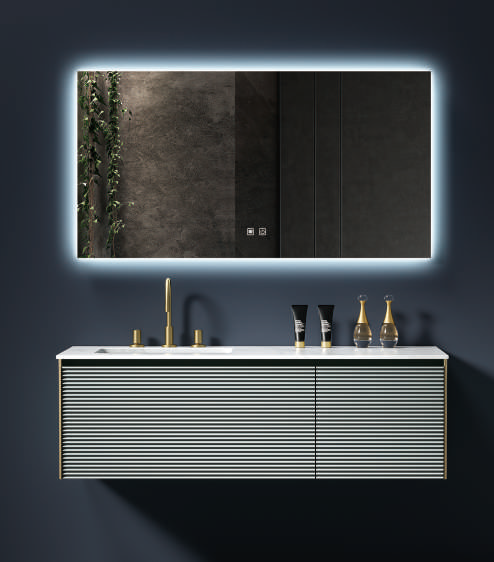
How to Source Custom Solid Wood Vanities Without Quality Risks
Partner with manufacturers using CNC precision and five-stage QC to eliminate solid wood vanity quality risks.
Sourcing custom solid wood vanities without quality risks requires moving beyond basic material selection to focus on manufacturing precision and rigorous quality control. The primary failure mode for solid wood in bathrooms is moisture intrusion at joints, leading to warping and structural decay. To mitigate this, specify manufacturers utilizing high-precision CNC machines for exact material cutting and assembly, ensuring tight tolerances that prevent gaps where water can penetrate.
A robust five-stage quality control process is non-negotiable for luxury projects. This involves inspecting the wood species, checking the joinery integrity, verifying the finish application, testing the hardware functionality, and conducting a final aesthetic review before packaging. This systematic approach ensures that every unit meets the durability standards required for high-traffic commercial and residential spaces.
When specifying wood species, prioritize natural density and humidity resistance. Oak and Teak are superior choices for bathrooms due to their inherent resistance to moisture compared to softer woods like Maple. For the finish, specify marine-grade spar varnish or high-quality polyurethane (3+ coats) to create a durable barrier against water and UV damage. This finish type significantly extends the lifespan of the vanity in wet environments.
-
- Wood Species: Select premium Oak or Walnut for luxury projects. These species offer superior durability and resistance to humidity-induced warping, ensuring a longer lifespan compared to standard engineered woods.
- Finish Type: Specify marine-grade spar varnish or high-quality polyurethane. These finishes provide the best protection against moisture and UV damage, extending the vanity’s life by 5-10 years in wet environments.
- Customization: Utilize Pantone color matching for exact brand alignment and branded hardware for a cohesive aesthetic. This level of customization allows for unique designs that stand out in competitive markets.
Customization options extend beyond materials to include branding and packaging. Partner with manufacturers that offer logo printing or engraving on mirrors and cabinets, as well as custom-designed packaging that aligns with your client’s brand guidelines. This attention to detail enhances the unboxing experience and reinforces brand value for the end user.
Flexibility in ordering is also a key factor in mitigating risk. Look for manufacturers that support low minimum order quantities (MOQs) for custom orders, typically between 10 to 20 units. This allows you to test new designs or colors in the market without committing to large, risky inventory investments. High production capacity, such as 5,000 units monthly, ensures reliable delivery for larger projects as well.
Conclusion
Proper solid wood vanity maintenance protects your investment by preventing moisture damage and finish degradation. Marine-grade varnish and consistent humidity control ensure the unit lasts decades rather than years. This approach saves significant replacement costs and maintains the high-end aesthetic required for luxury projects.
Review the bundle guide to compare finish options and compliance standards for your specific market requirements.
Frequently Asked Questions
What should buyers look for when sourcing solid wood vanity maintenance?
Buyers should verify that the factory uses marine-grade spar varnish or epoxy coatings rather than standard polyurethane. This specific finish is critical for preventing moisture intrusion at joints and extending the finish life. Prioritize marine-grade sealing for long-term durability in humid bathrooms.
How to verify factory certifications for solid wood vanity maintenance?
Verify that the manufacturer holds ISO certifications and regional compliance such as CE or UL/CSA depending on your target market. These certifications ensure the materials meet specific regulatory and climatic standards for. Request valid ISO and regional compliance certificates before finalizing orders.
What are typical MOQ requirements for wholesale orders?
MFBATH supports a low MOQ of 10 to 20 units for custom orders to help partners test markets risk-free. This flexibility allows distributors to validate product performance without committing to large-scale. Start with a low MOQ to test market response before scaling.
How to handle international shipping and customs clearance?
Ensure the supplier provides region-ready products that are pre-compliant with local regulations like AS/NZS or WELS standards. This engineered compliance simplifies customs clearance by meeting specific regulatory and aesthetic needs of the destination. Select region-ready products to streamline customs and regulatory approval.
What quality inspection standards apply before shipment?
Every product undergoes five rigorous inspections throughout the production stages to ensure durability and aesthetic perfection. This process utilizes high-precision CNC machines and automated lines to maintain consistency across all units. Rely on multi-stage inspections to guarantee consistent quality and durability.




0 Comments